
Seasonal dining room ideas help your home feel fresh without a full makeover. Small changes like a runner, a centerpiece, or a new set of cushions can shift the mood fast.
This guide shows simple ways to style a dining table for spring, summer, fall, and winter using real-life details like mixed chairs, open shelving, and everyday items left out.
You will get practical steps for each season, plus a few shopping and DIY options so you can match your space and budget.
Use these ideas to create photos that do well on Pinterest and a dining space that works for daily meals, homework, and guests.
1. Airy Spring Dining Room Ideas With Cane Chairs and Tulips
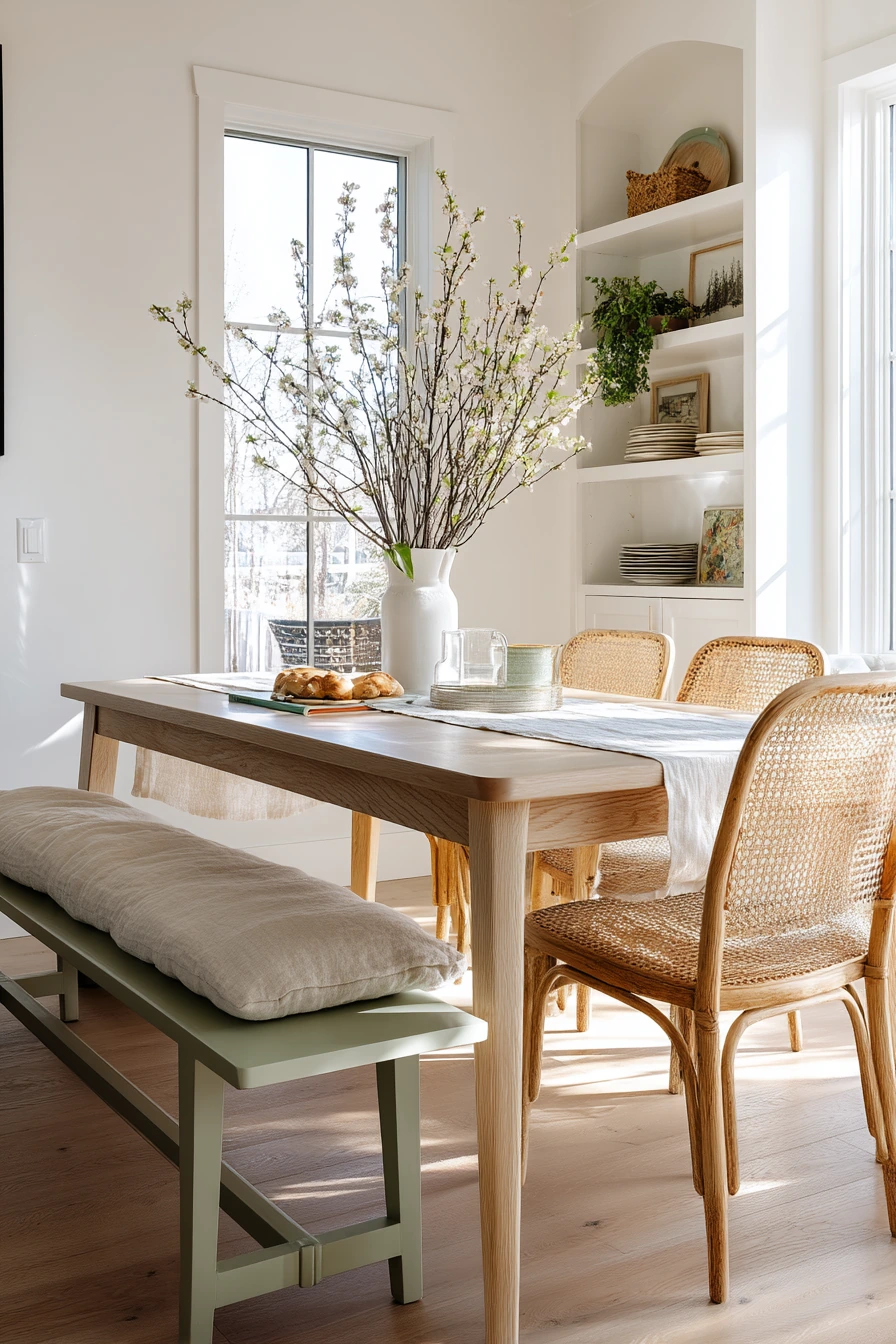
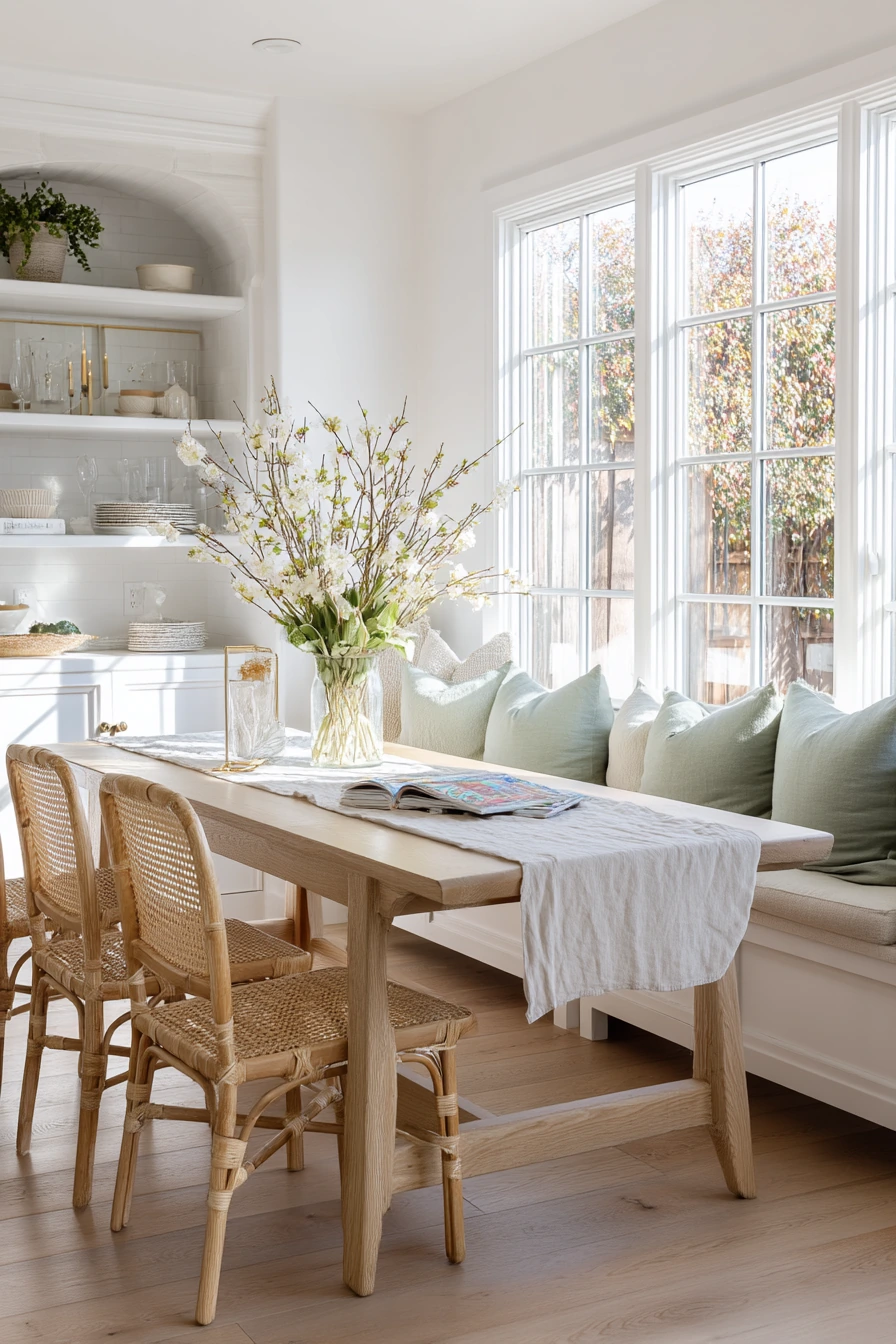
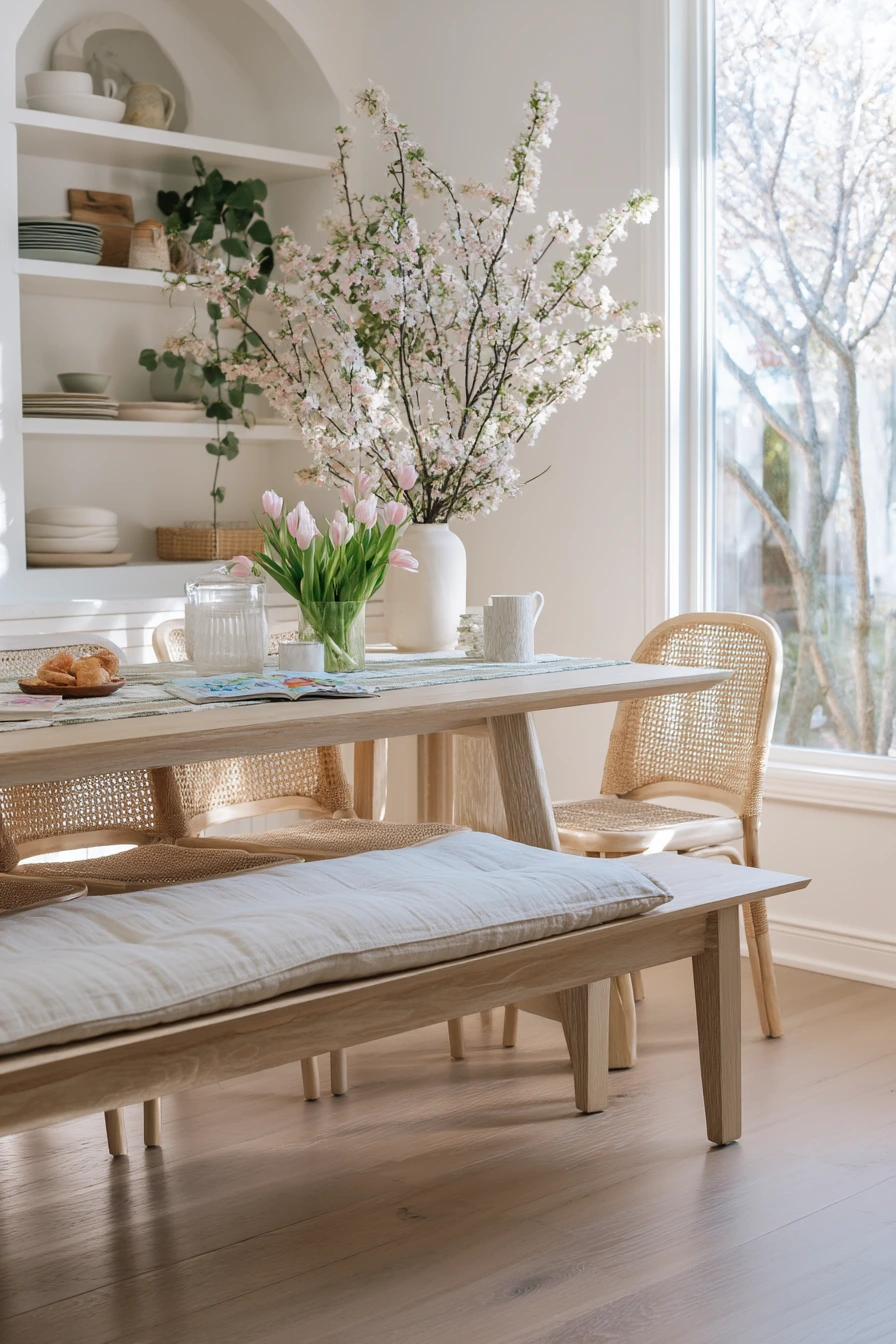
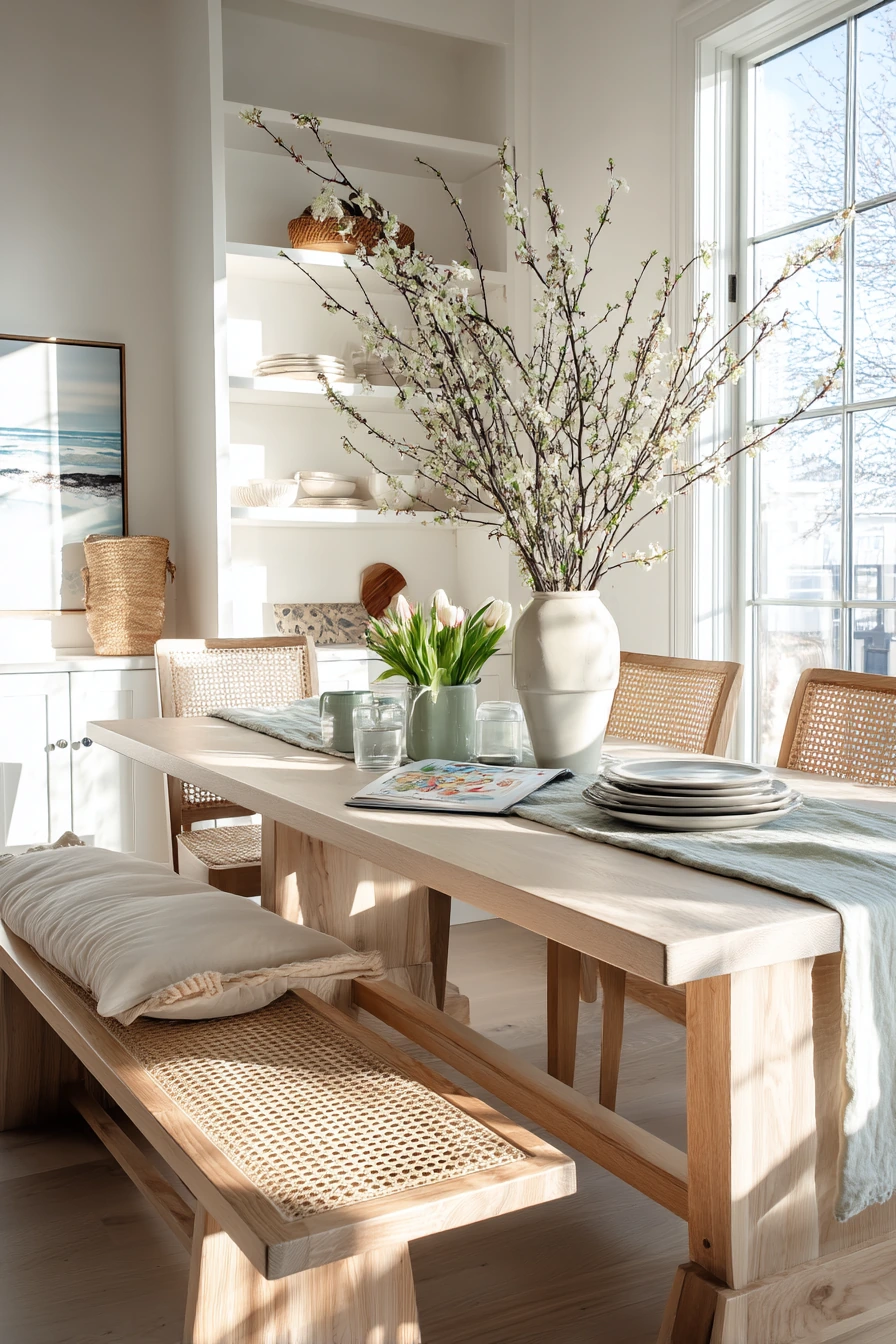
An airy spring dining space feels light, clean, and lived-in. Start with a white oak table and mixed cane chairs to bring texture without making the room heavy. A pale linen runner keeps the center calm, so your spring stems can stand out.
For the centerpiece, use tulip branches in a simple ceramic vase. Keep it a little loose, not tight, so it looks natural. Soft sage accents work well in spring because they read as fresh but still neutral. Try sage napkins, a small bowl, or a cushion on the bench.
Let the room show real life. A children’s coloring book on the bench and one water glass half full make the space feel like a family home, not a showroom. If you have open shelving with stacked plates, keep the stacks tidy and leave a little breathing room so the shelves feel airy. If sunlight makes plant shadows across the floor, do not fight it. It adds a soft, sun-washed mood.
- Use a pale linen runner to soften the wood and set a spring base.
- Choose tulip branches or simple blooms in a ceramic vase for height.
- Add sage accents with napkins, a small tray, or a seat cushion.
- Keep open shelving light by spacing stacks of plates and bowls.
- Style one “real life” item, like a coloring book, then tidy the rest.
Pro Design Tip: Mix cane chairs with one solid wood chair at the head to create a balanced, collected look while still feeling calm.
Budget Considerations: Cane chairs can be pricey; look for secondhand pairs and repaint or reseal the frames for a fresh match.
2. Relaxed Summer Dining Room Ideas Near a Patio Door
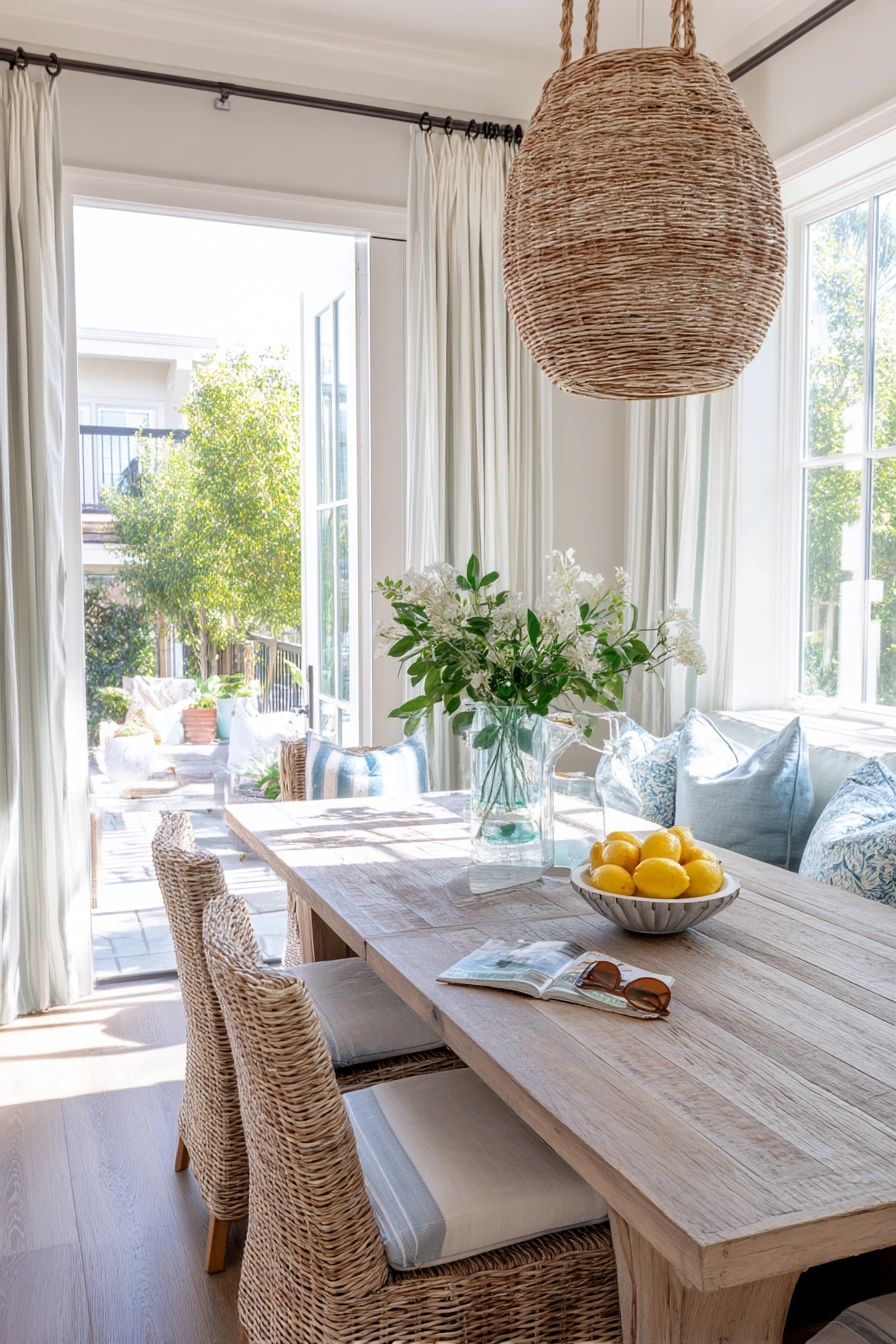
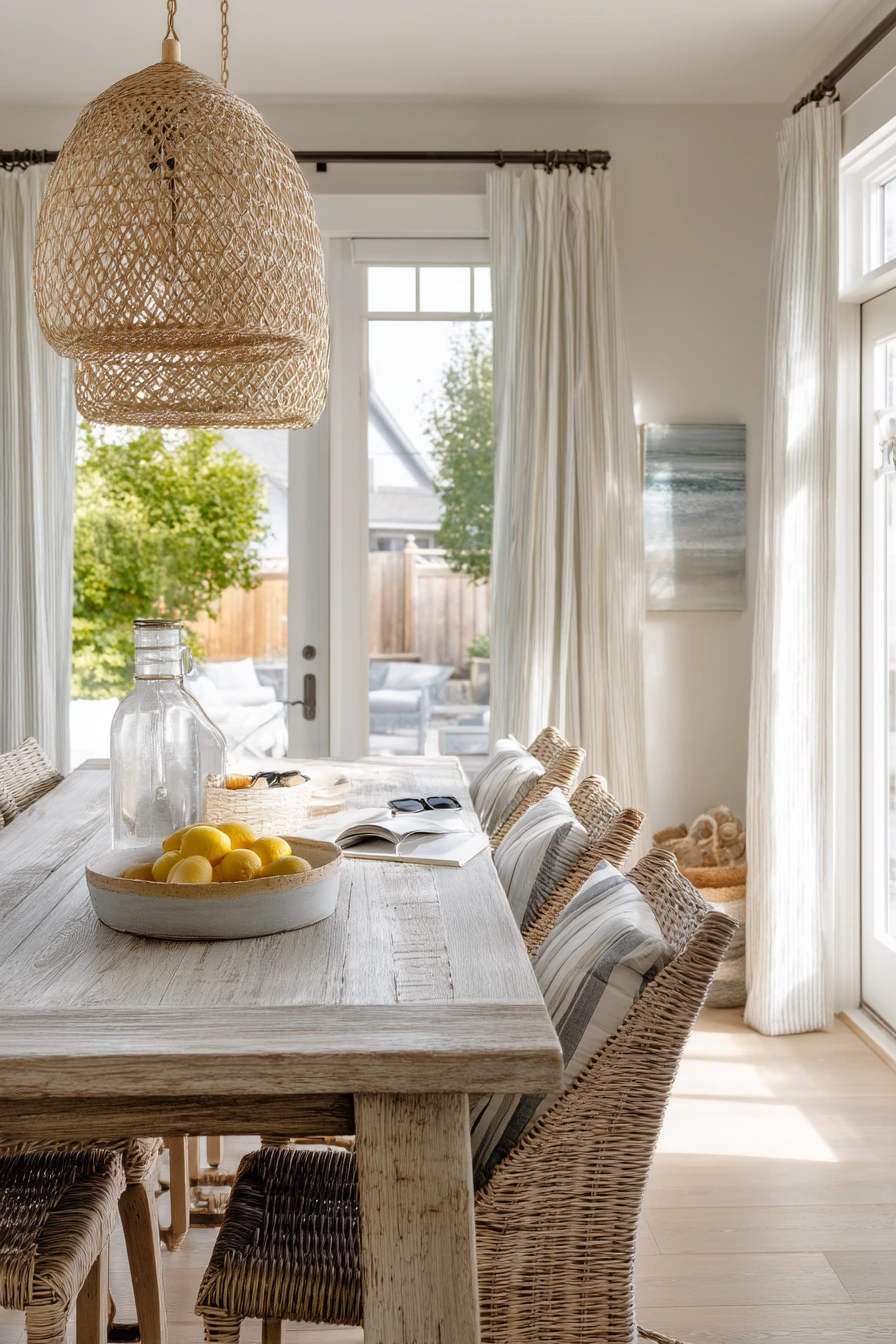
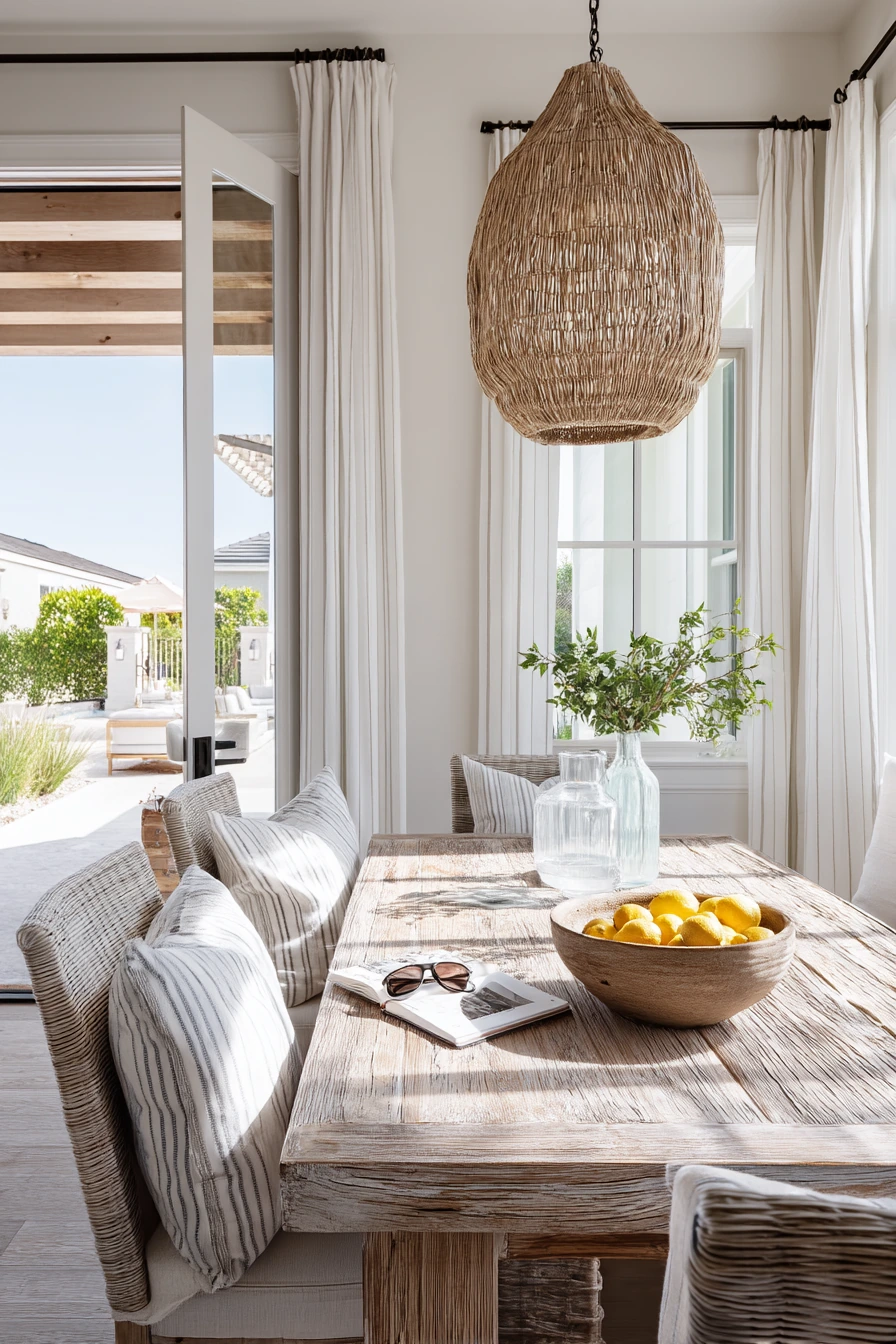
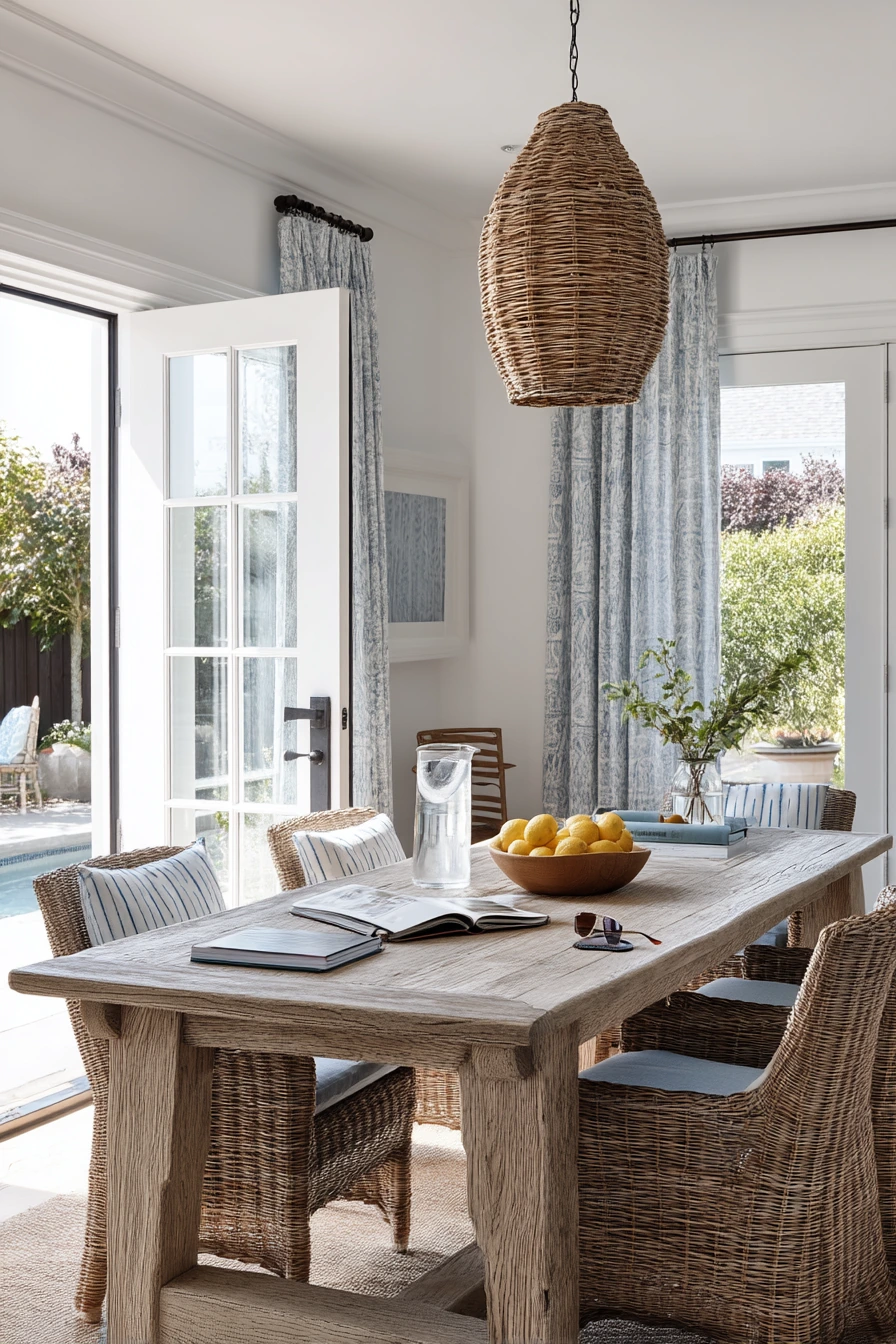
A relaxed summer dining room works best when it feels close to the outdoors. If your table sits near a patio door, lean into that easy flow. A weathered wood table brings a casual base, and striped cushions add a simple pattern that reads like beach style without trying too hard.
For color, use sea-glass tones like soft blue, pale green, and sandy beige. A bowl of lemons is an easy summer centerpiece that also feels useful. Keep the rest light: breezy curtains, simple plates, and clear glasses. If the door is open, a hint of warm air and sunlight makes the whole setup feel natural.
Add a few realistic details for a lived-in look that still feels tidy. A paperback left on one chair, sunglasses beside a water carafe, and sandals tucked under the table all tell a summer story. The goal is to look effortless, not messy. Keep surfaces mostly clear, and let the woven pendant light be the main texture overhead.
- Layer striped cushions on chairs for comfort and a summer pattern.
- Use lemons in a bowl for color, scent, and an easy centerpiece.
- Pick sea-glass tones for napkins, placemats, or a small vase.
- Swap heavy drapes for breezy curtains to brighten the room.
- Keep one casual item out, like a paperback, then clear the rest.
Pro Design Tip: Repeat one warm tone, like honey wood, in three spots (table, pendant, tray) to make the room feel pulled together.
Budget Considerations: Woven pendant lights vary in cost; a plug-in rattan shade or a thrifted basket-style shade can give a similar look.
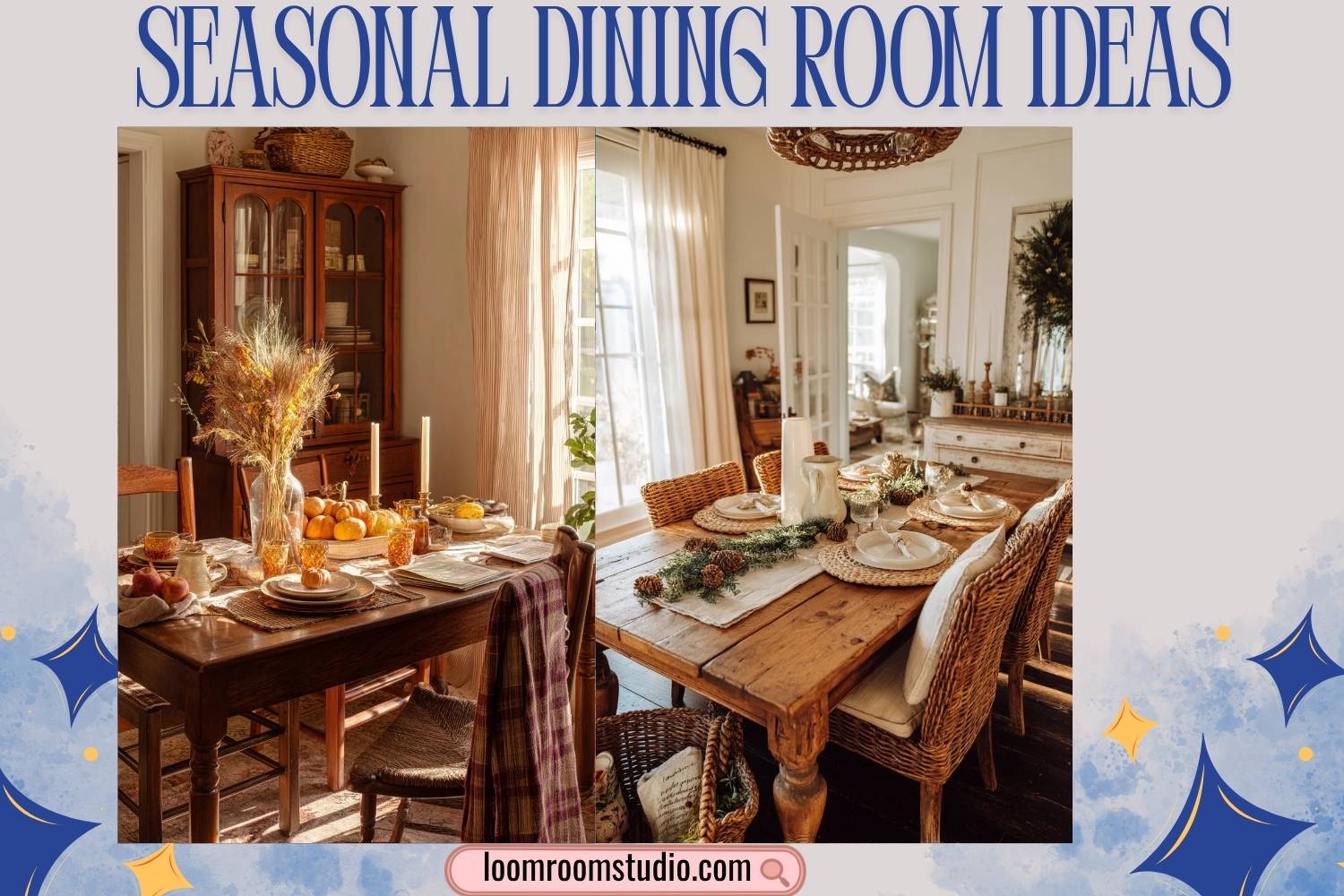
3. Early Autumn Dining Room Ideas With Walnut Wood and Amber Glass
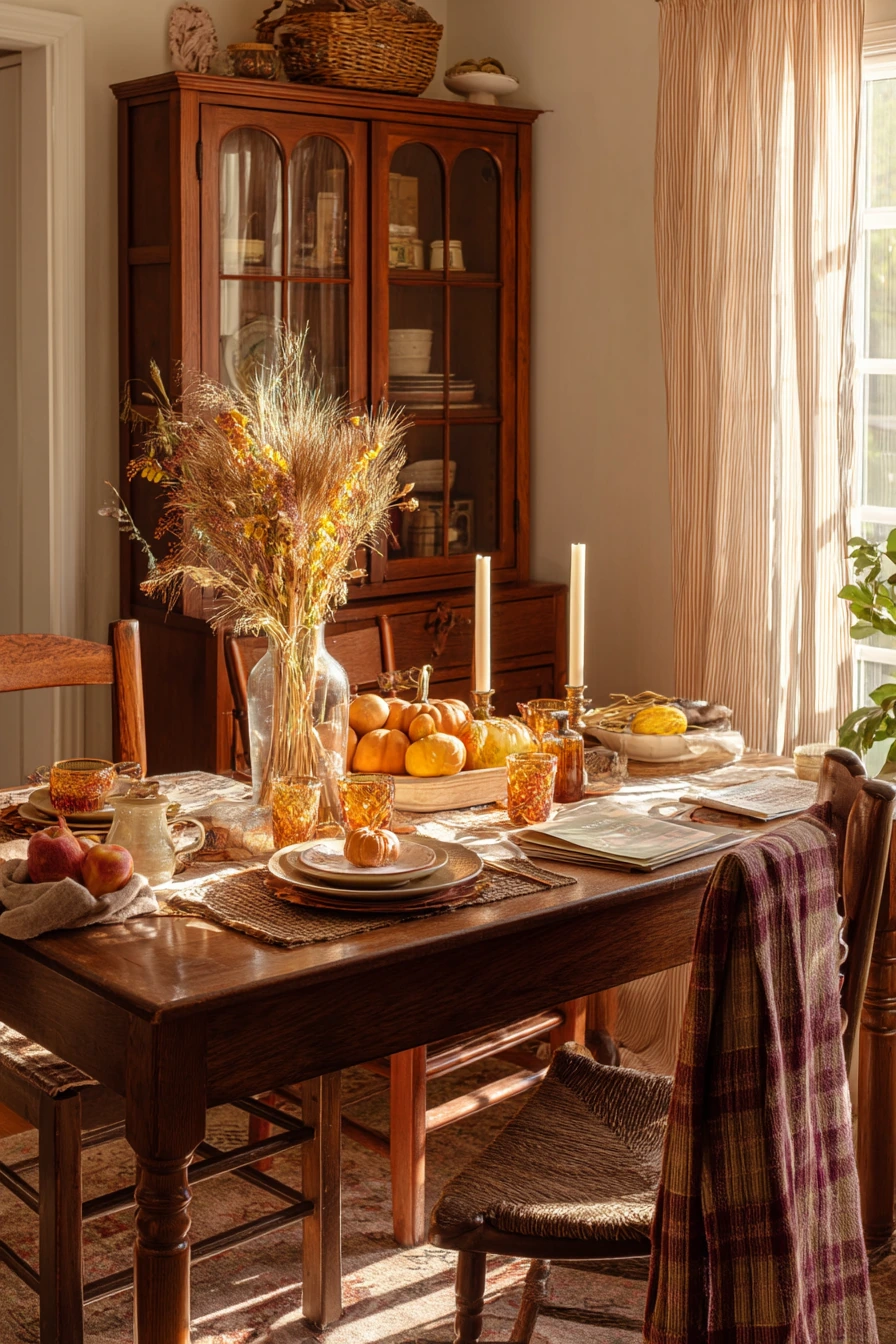
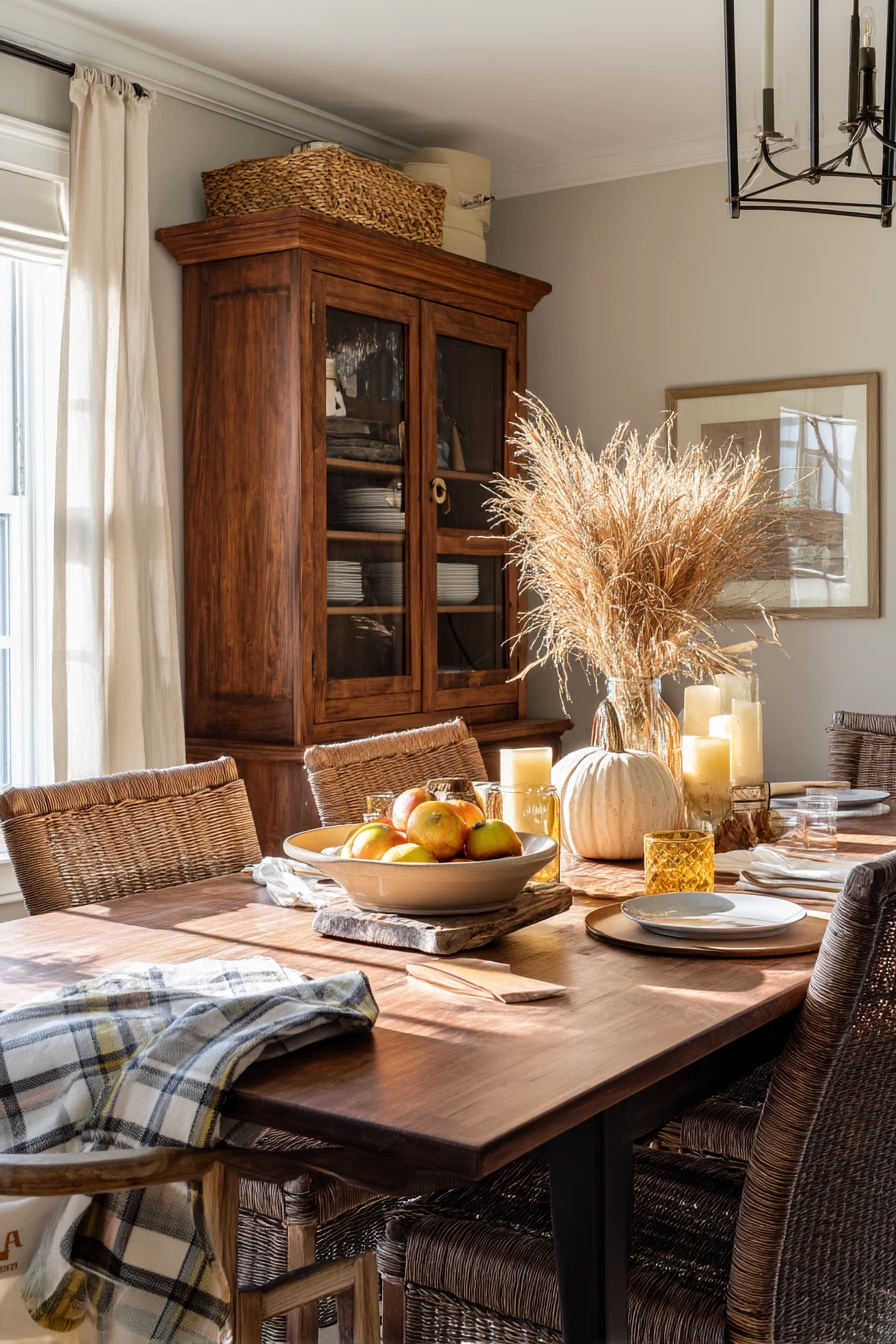
Early autumn dining room ideas look best when they feel earthy and a little golden, not overly themed. A walnut table sets the tone right away. Pair it with simple stoneware so the wood grain stays the star. Keep place settings relaxed, like everyday dishes you actually use.
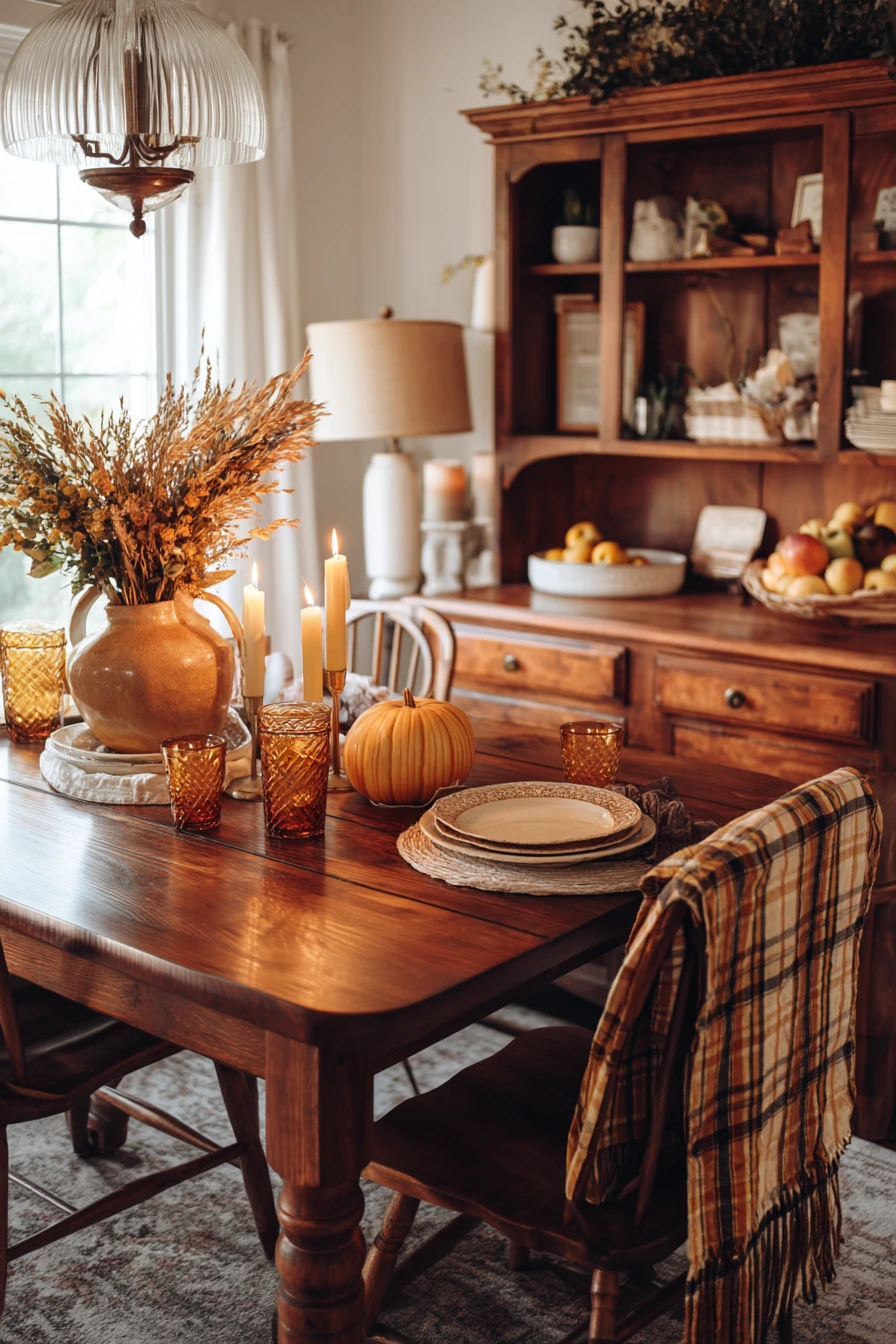
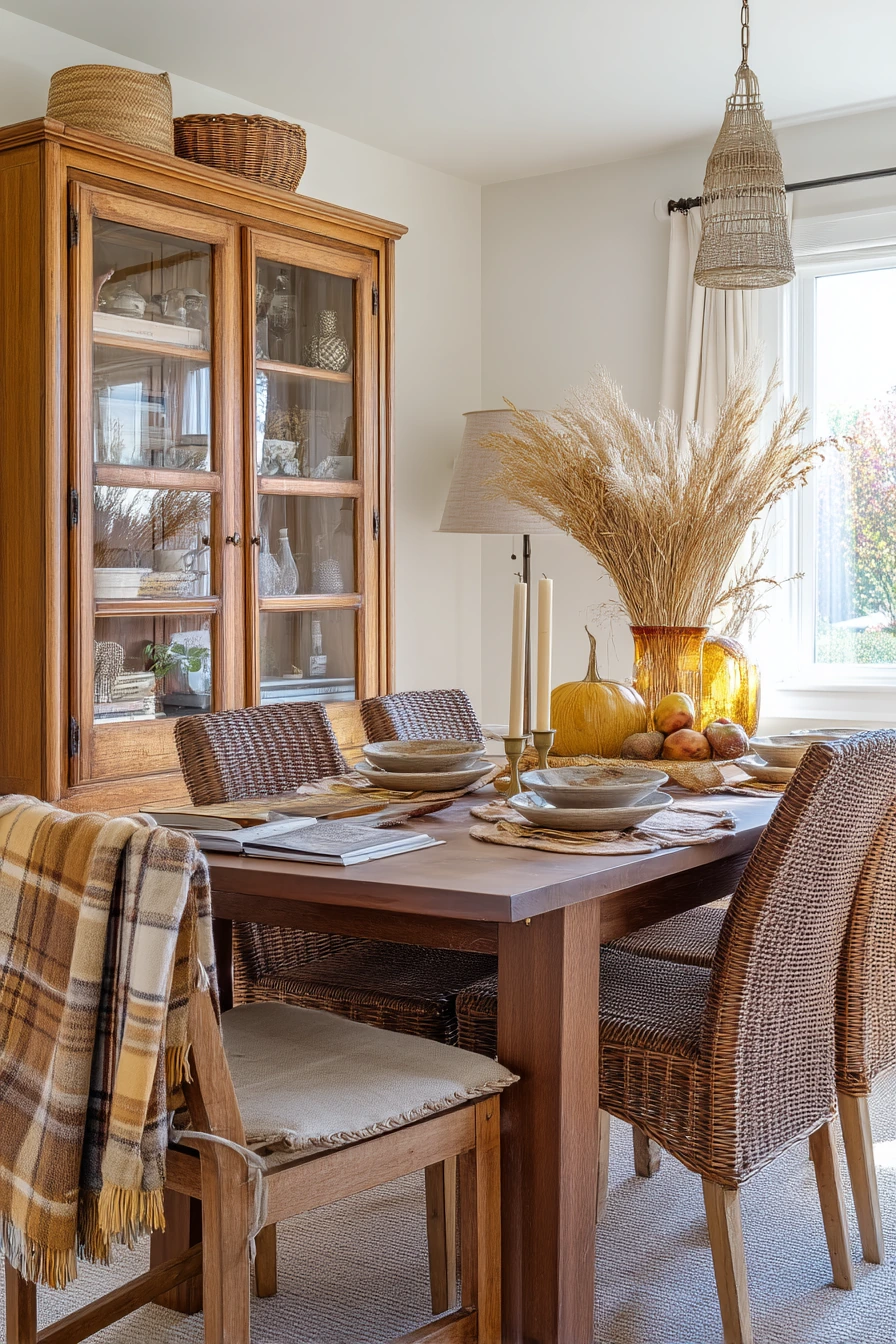
For the centerpiece, choose muted pumpkins and dried grasses. Stick to soft orange, tan, and green-brown shades so the table feels calm. Amber glass candleholders add warmth, even before you light them. A plaid throw over one chair brings in a cozy pattern and makes the room feel ready for cooler nights.
Let the space show normal life in a neat way. A grocery tote on the floor, folded mail near a fruit bowl, and one chair slightly pulled out makes the scene believable. If you have a warm wood hutch, style it with a few stacked serving pieces and keep the rest closed for a clean backdrop. Use a mix of lamp glow and soft window light to make evenings feel inviting.
- Use stoneware in warm neutrals to match walnut wood.
- Choose muted pumpkins instead of bright orange for a softer look.
- Add amber glass candleholders for an easy autumn glow.
- Drape a plaid throw on one chair to add pattern and warmth.
- Keep “real life” items contained, like mail in a tray and tote by the hutch.
Pro Design Tip: Use odd numbers in your centerpiece, like three pumpkins or three candleholders, to make the table feel natural and balanced.
Budget Considerations: Amber glass can be thrifted cheaply; mix different shapes for a collected look without buying a full set.
4. Intimate Winter Dining Room Ideas With Brass Candlesticks and Evergreens
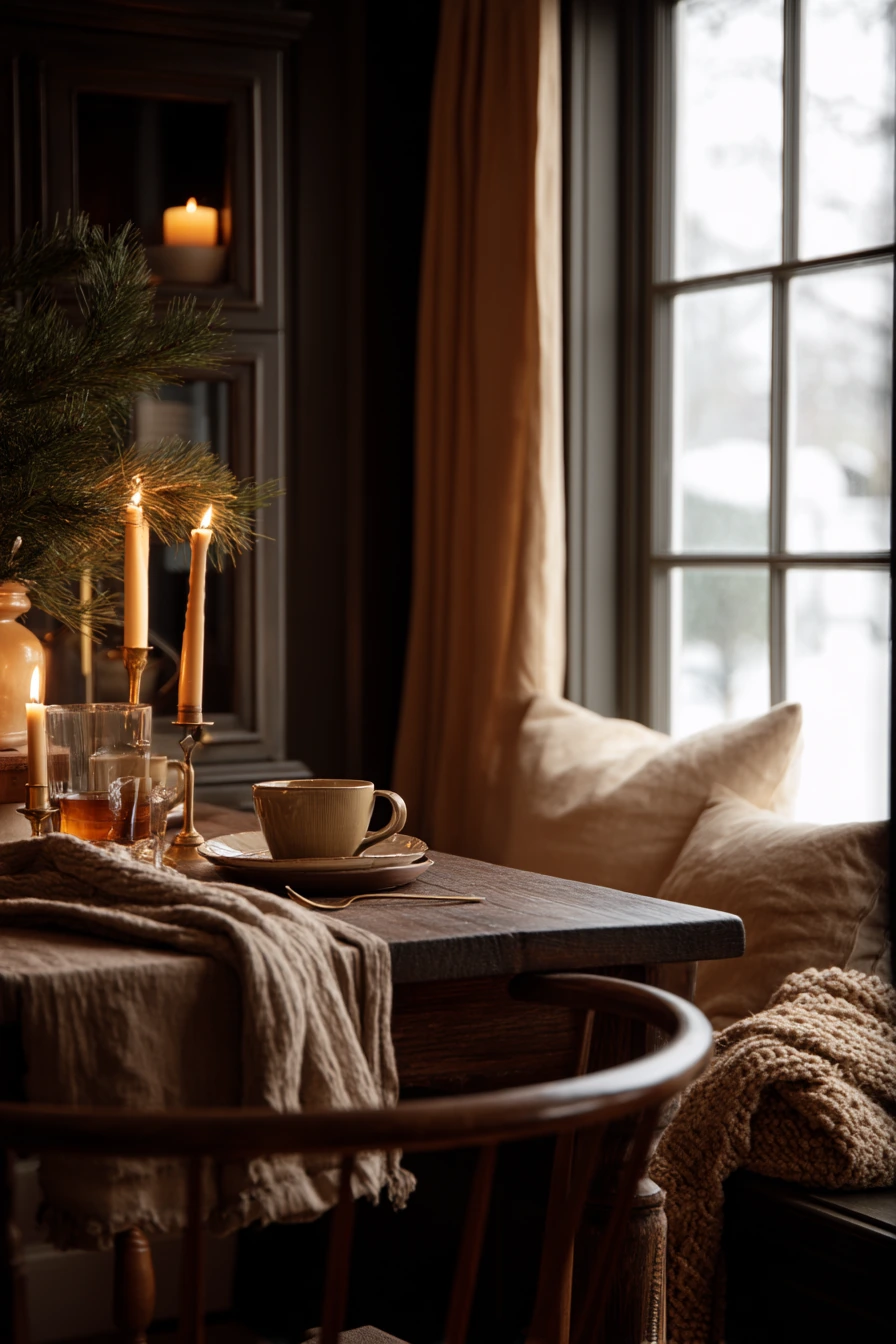
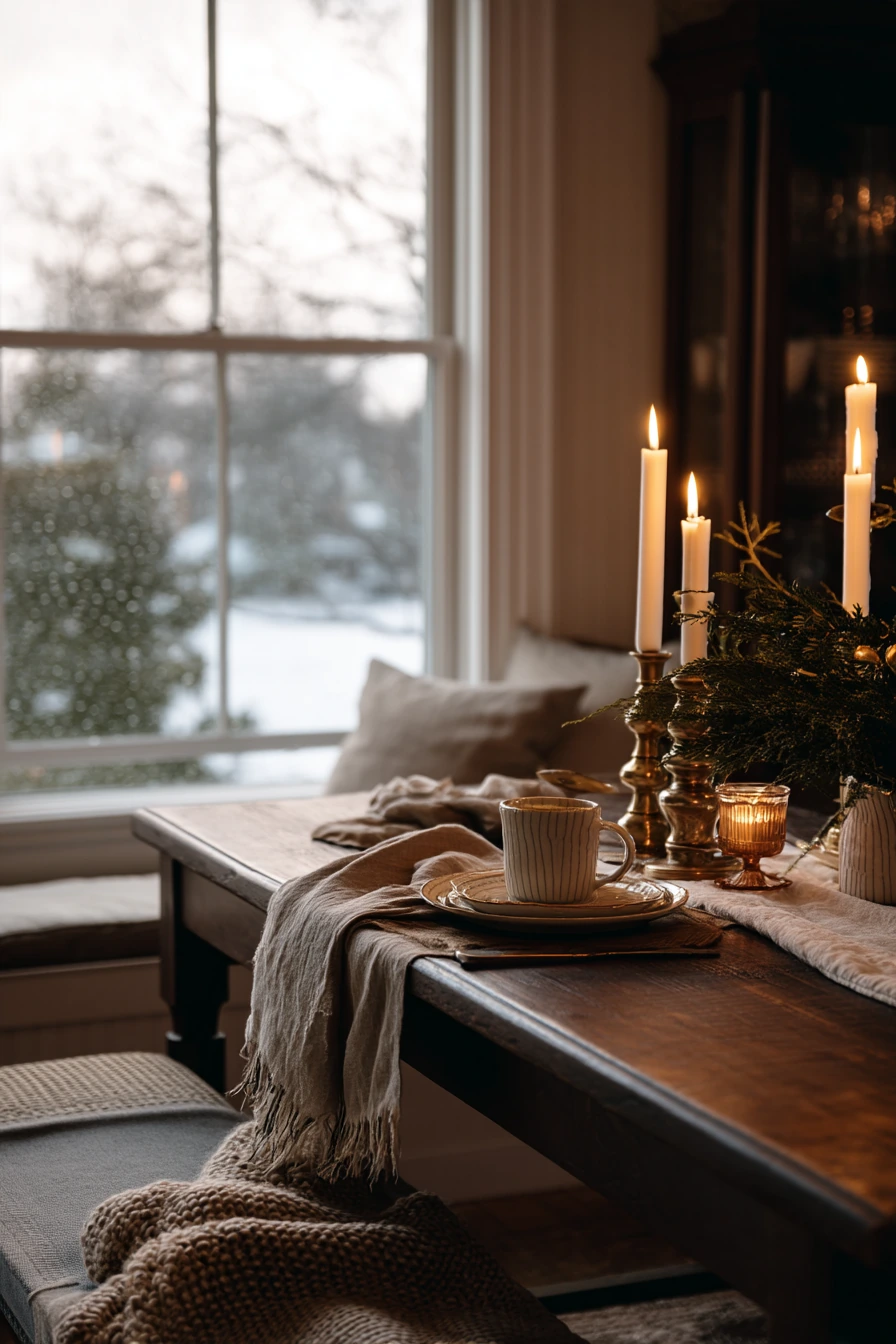
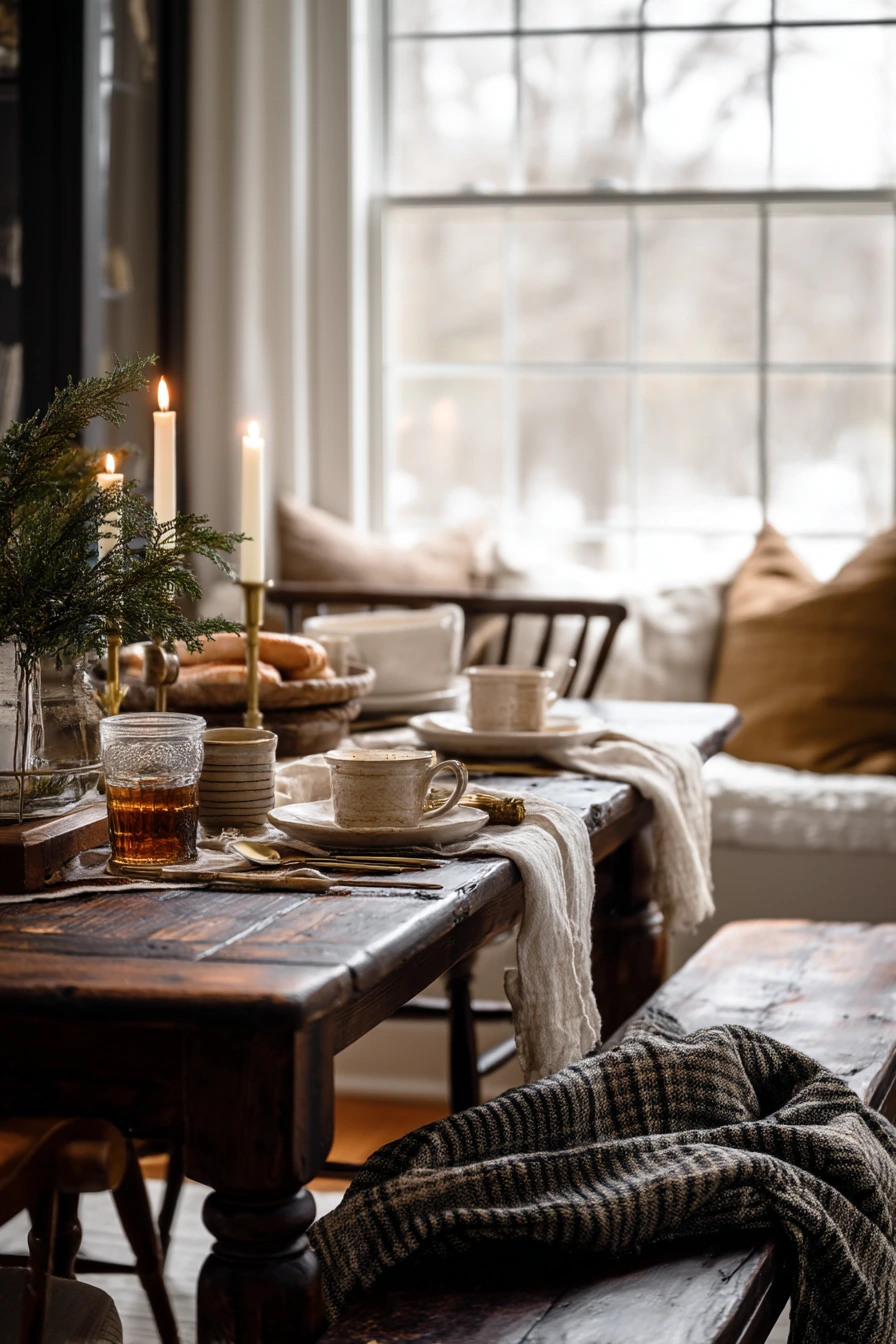
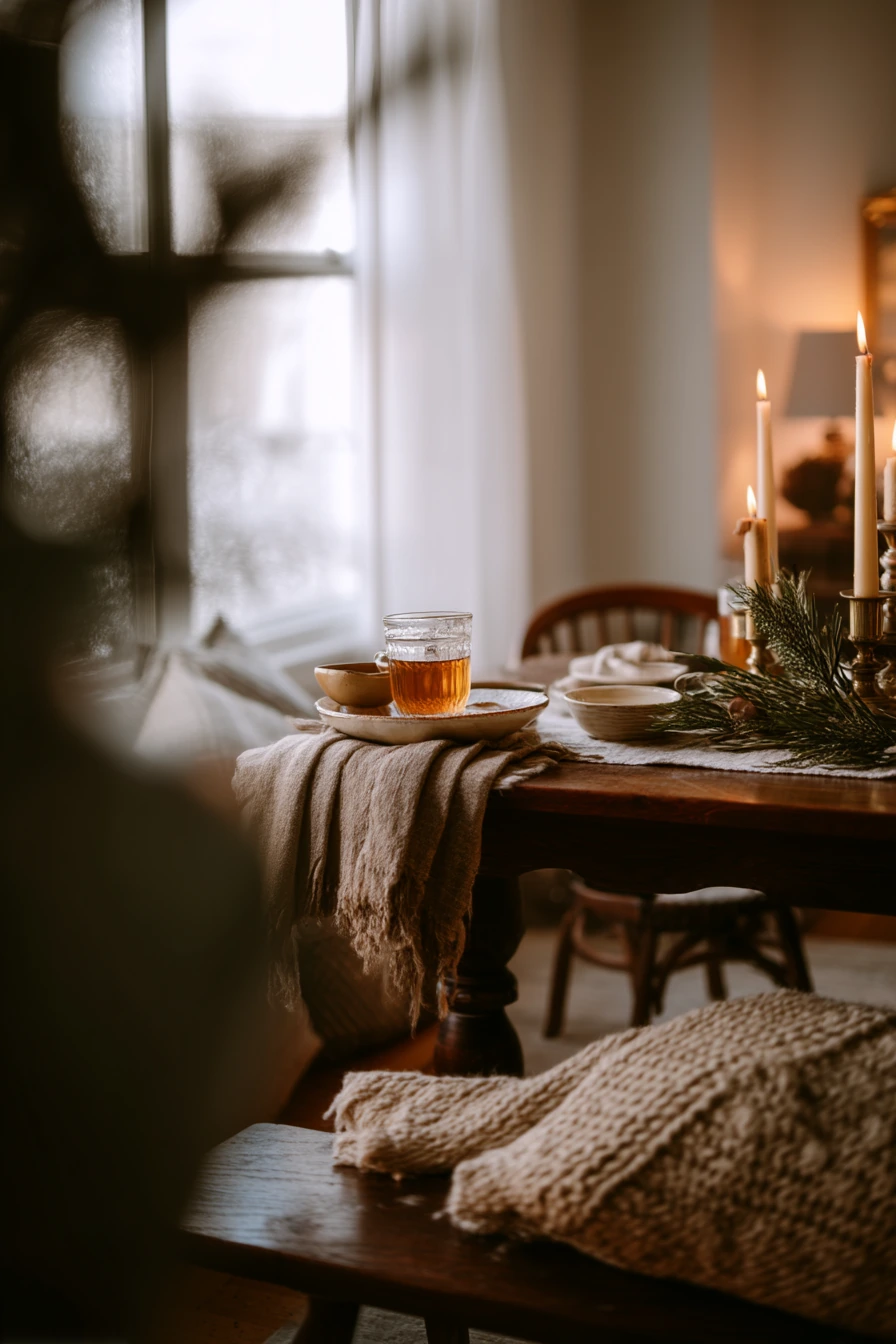
Winter dining room ideas should feel quiet and warm, especially for simple weeknight meals. A dark wood table sets a cozy base. Layer neutral linens like a runner plus napkins in soft beige or gray. This keeps the look calm while still feeling special.
Bring in seasonal green with evergreen clippings. A small bundle down the center of the table works better than a tall arrangement in winter because it keeps sight lines open. Brass candlesticks add a gentle shine against darker wood and make the room feel amber-lit once candles are lit. Add a textured wool throw on a bench for warmth and comfort.
For a realistic winter scene, use details that feel like a quiet evening. Stacked mugs on a sideboard suggest hot drinks. A knit scarf draped over a chair and one glass with leftover tea adds that “end of the day” feeling. If you have a frosty window backdrop, let it show. Do not over-decorate every surface. In winter, less clutter helps the room feel calm.
- Layer neutral linens to soften a dark wood table.
- Use evergreen clippings for an easy, natural centerpiece.
- Add brass candlesticks for warm shine and evening light.
- Place a wool throw on a bench to add texture and comfort.
- Style a sideboard with stacked mugs and a simple tray for winter drinks.
Pro Design Tip: Choose candles in the same color family as your linens so the glow looks soft, not high contrast.
Budget Considerations: Evergreen clippings can be free from yard trimmings; use a simple twine wrap and reuse your candlesticks year after year.
5. Seasonal Dining Room Ideas for a Tiny Apartment Dining Nook
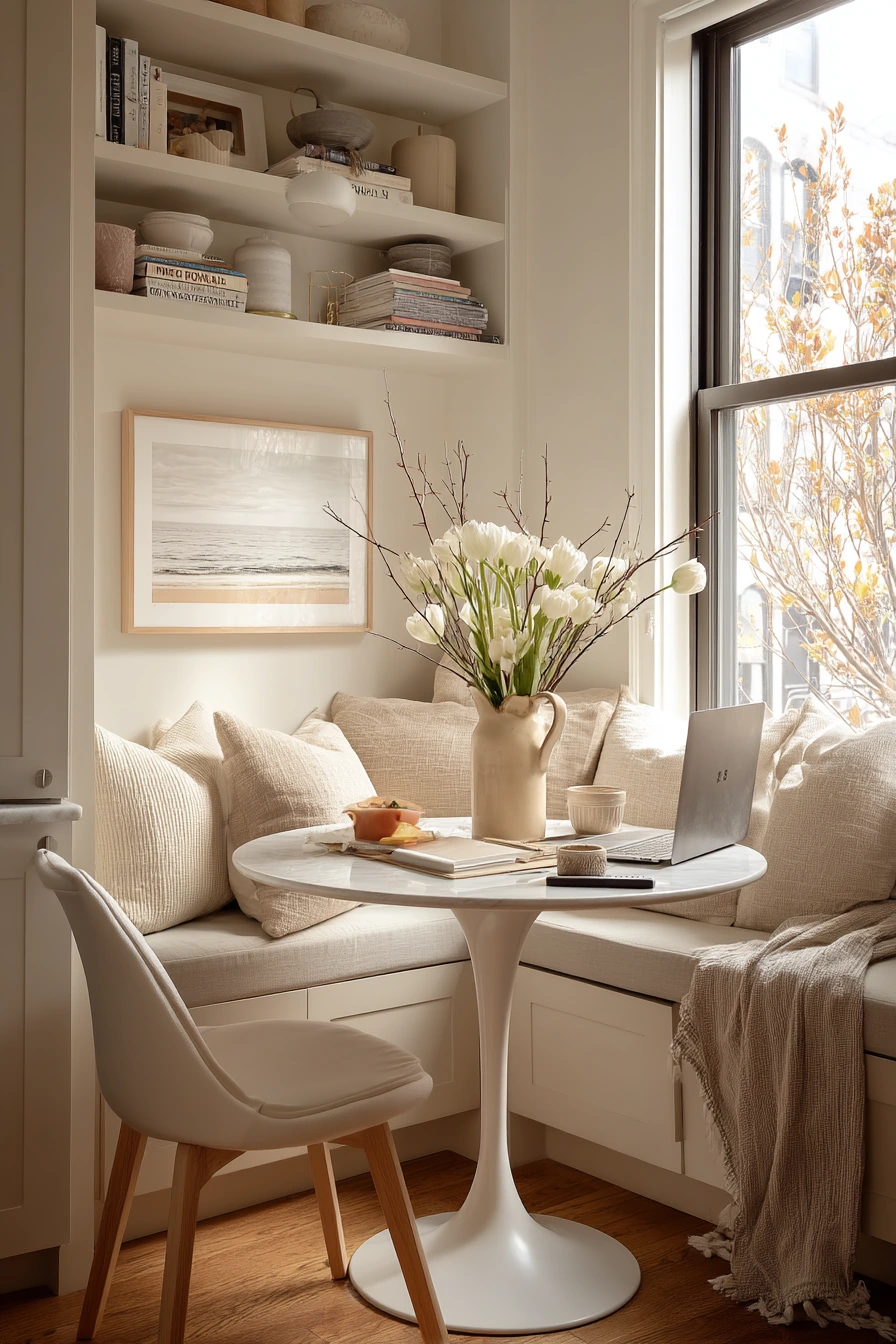
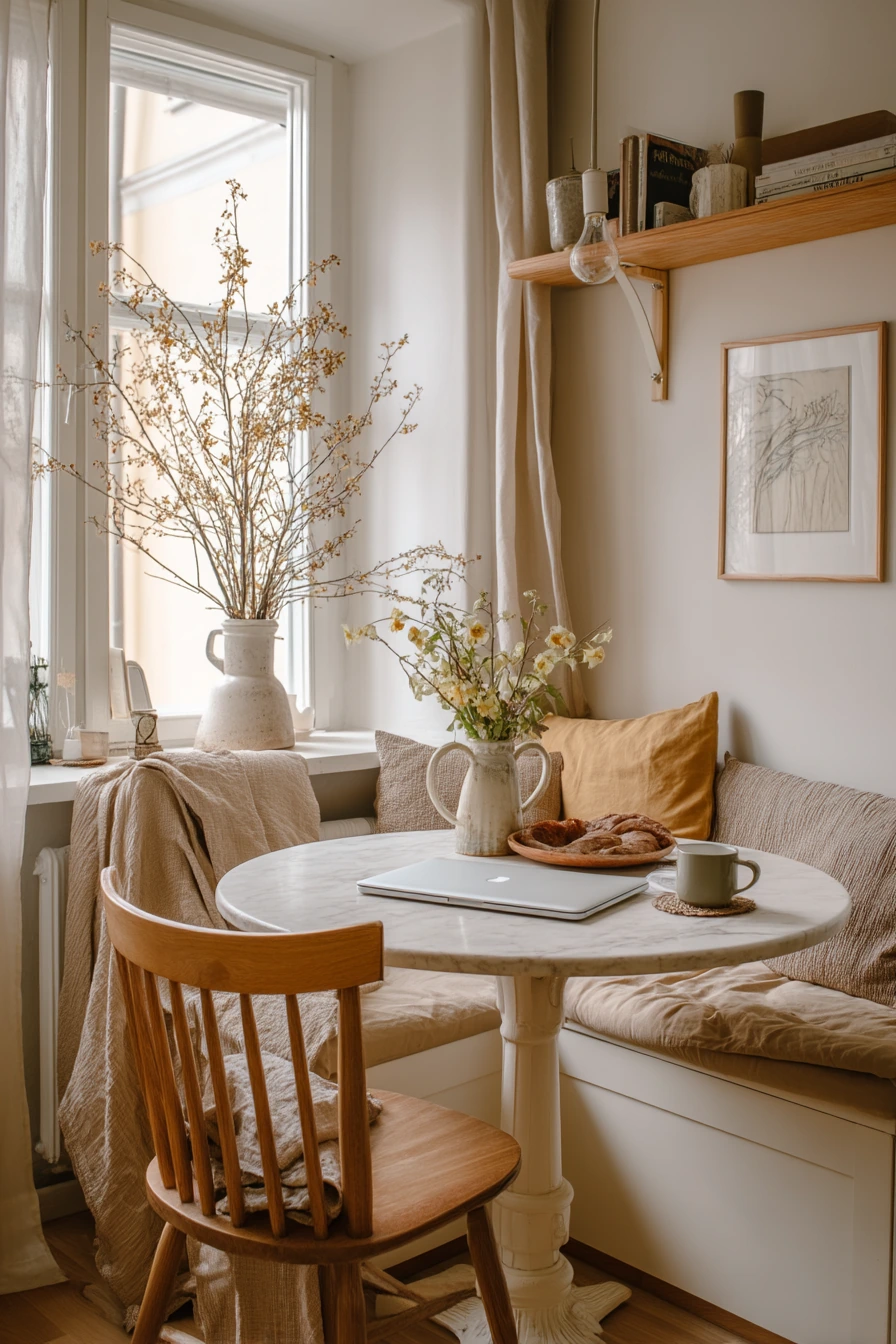
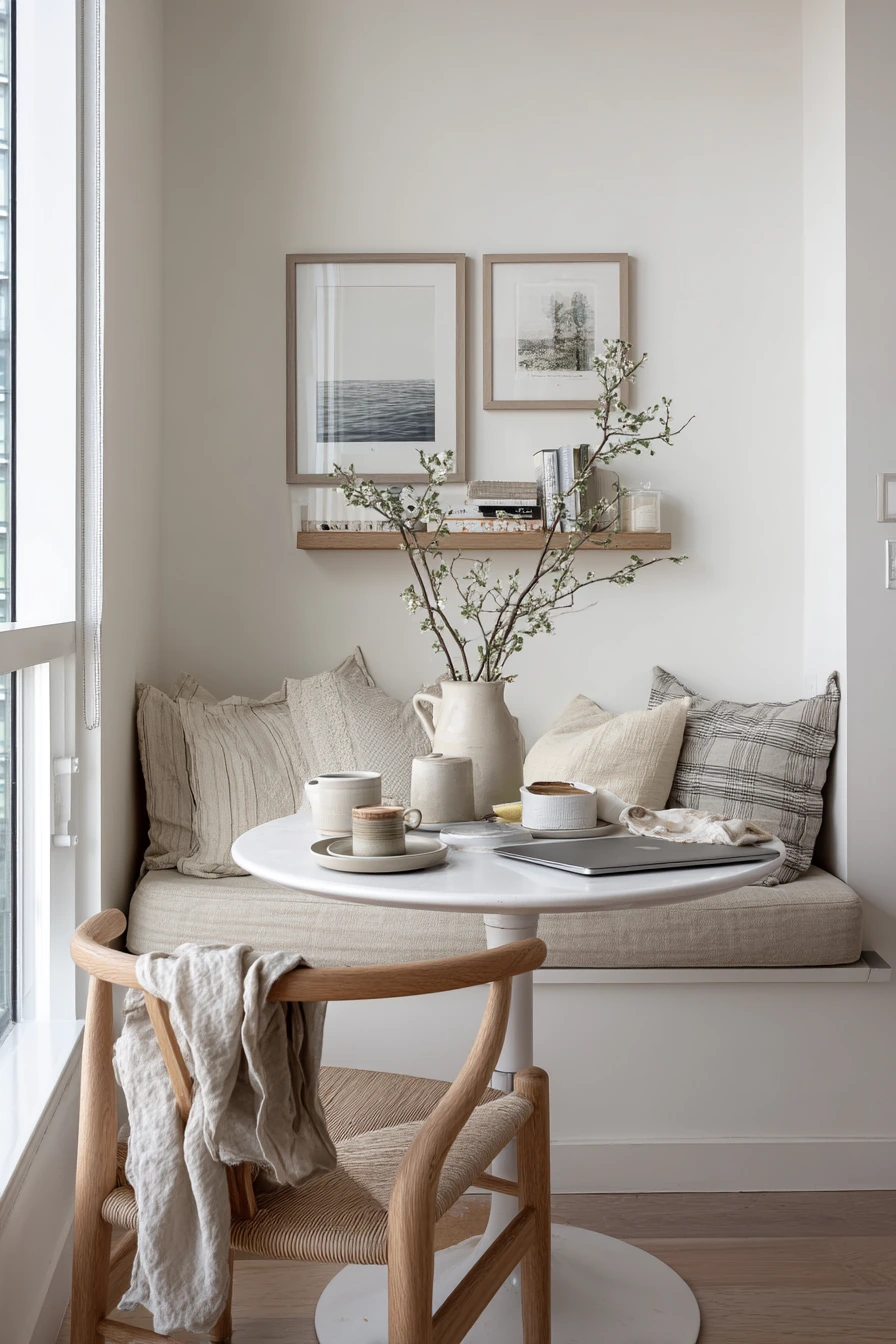
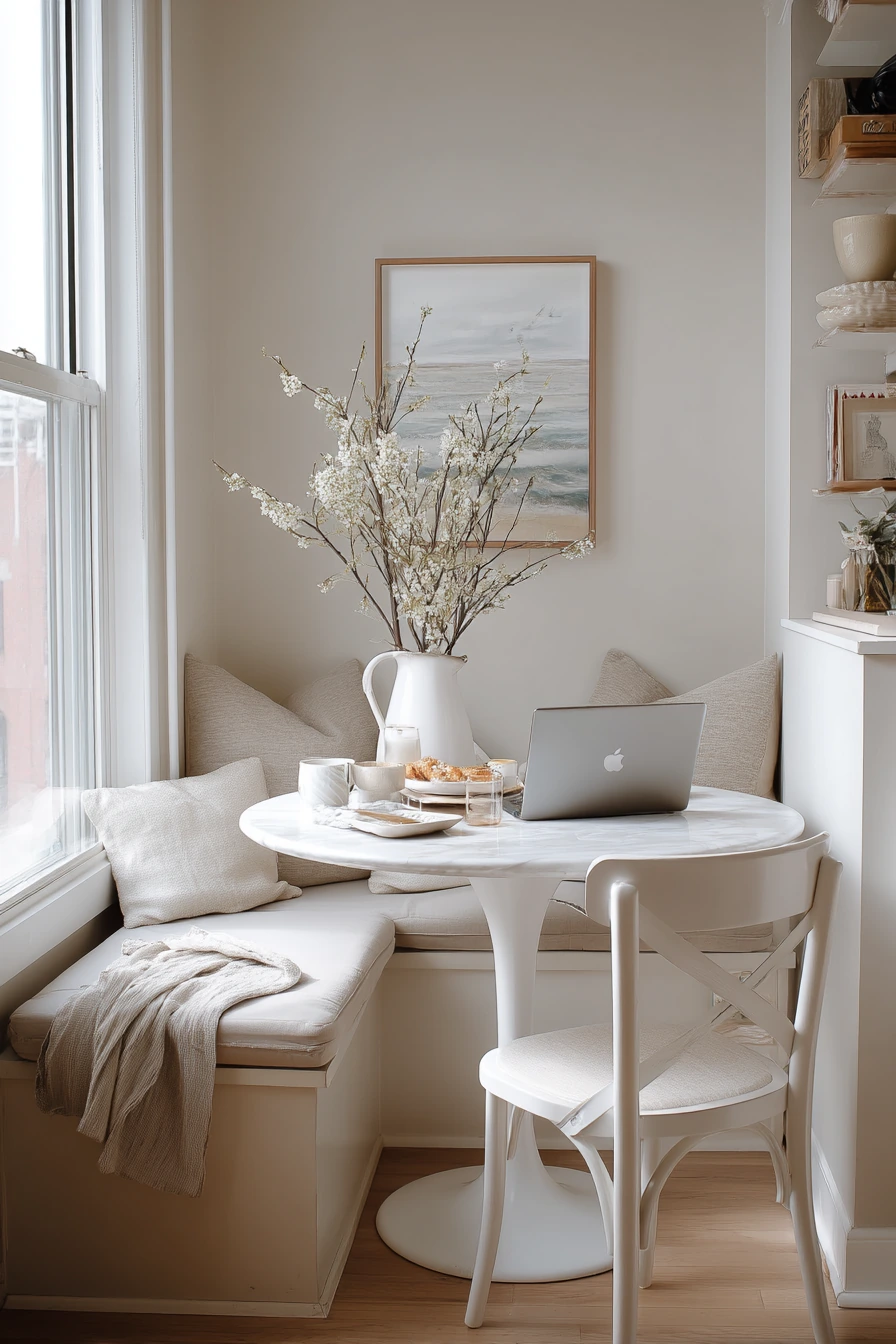
A tiny apartment dining nook can still change with the seasons. Start with what fits: a compact round pedestal table, two chairs, and a built-in bench if you have one. Because the space is small, the easiest seasonal switch is textiles. Think of interchangeable cushions, a runner, or a small tablecloth in muted tones that work with your walls.
Keep the centerpiece simple. A few branches in a jug is enough, and you can swap the branches as seasons change. Add framed art leaning on a shelf for a casual look. It also makes the nook feel styled without hanging new decor every season. Soft morning window light helps the space look open, so keep the shelf and tabletop mostly clear.
Real life matters in a small space. A charging cable near the bench, a folded laptop closed after breakfast, and one wrinkled napkin can still look tidy if you limit it to one or two items. Use a small tray or bowl to hold cords and keys. Keep one neutral set of dishes in easy reach so you do not need extra storage. This kind of setup feels nimble, practical, and charming.
- Swap bench cushions and chair pads to change the seasonal color.
- Use a small runner or napkins instead of a full tablecloth.
- Style branches in a jug and change them as the season shifts.
- Lean framed art on a shelf to add height without wall holes.
- Hide daily clutter with a tray for cords, keys, and small items.
Pro Design Tip: In small nooks, keep one “hero” item per season, like a runner or cushion set, and keep the rest neutral.
Budget Considerations: Sewing simple cushion covers from linen-look fabric is often cheaper than buying new pillows each season.
6. Fall-to-Holiday Dining Room Ideas for a Real Family Home
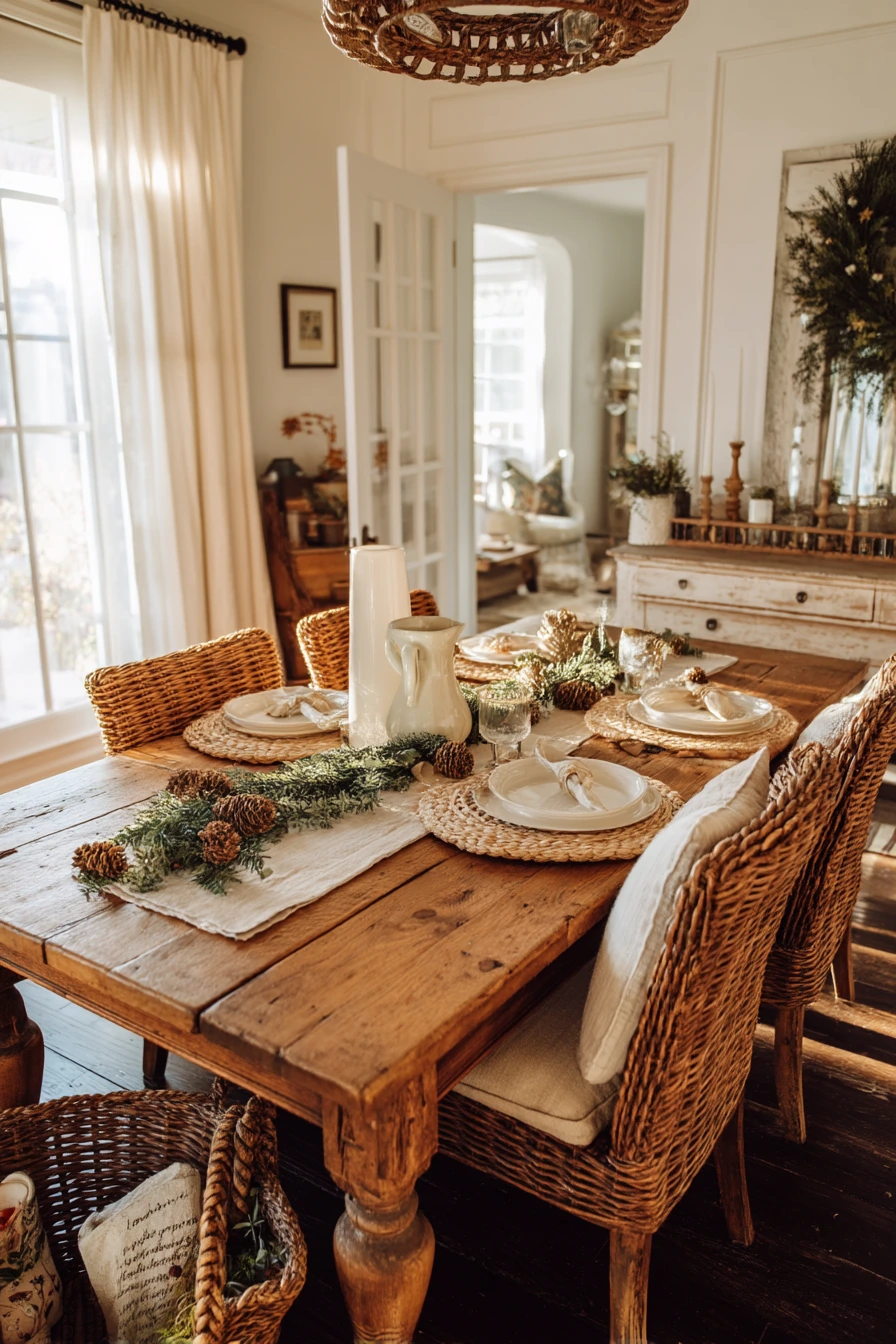
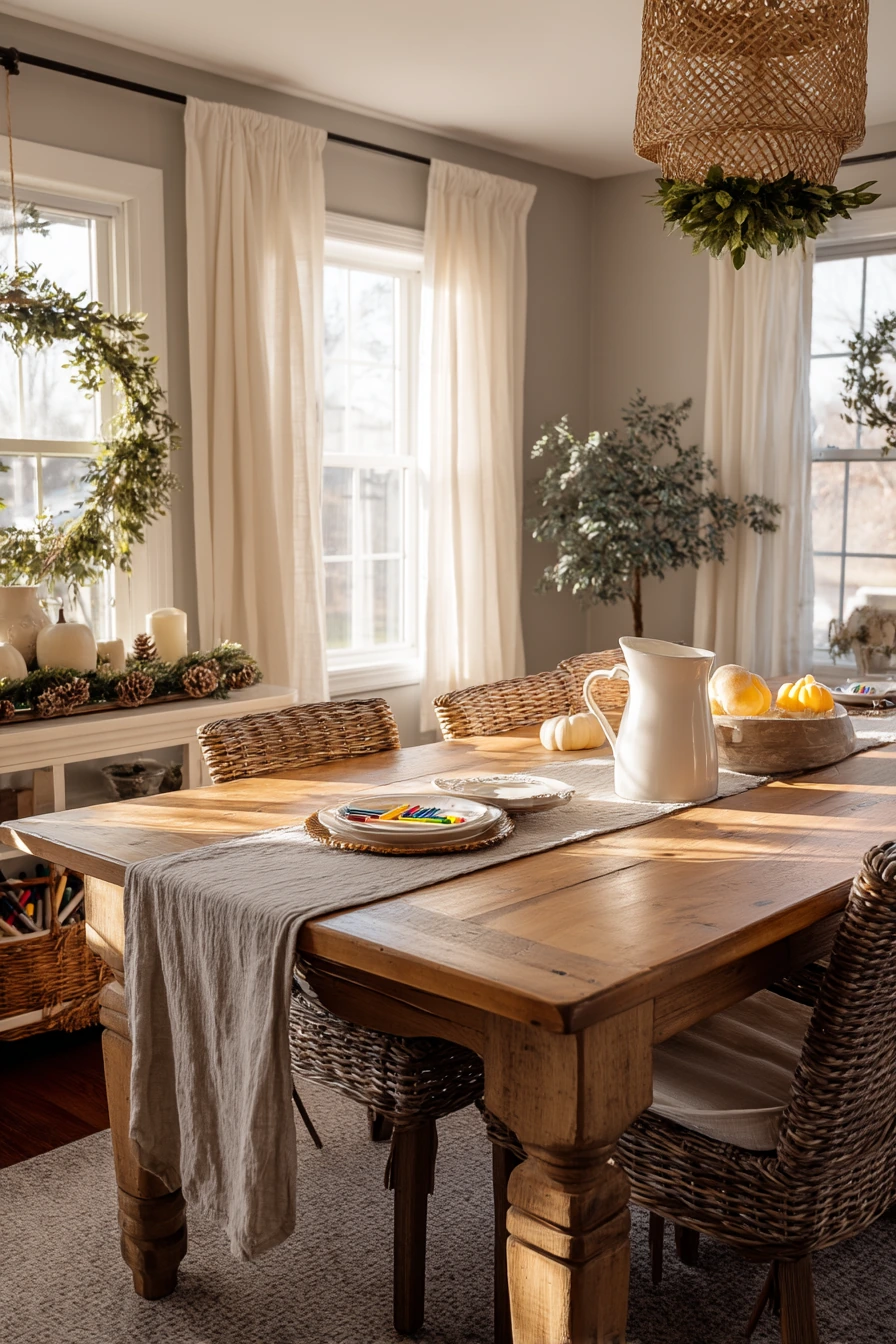
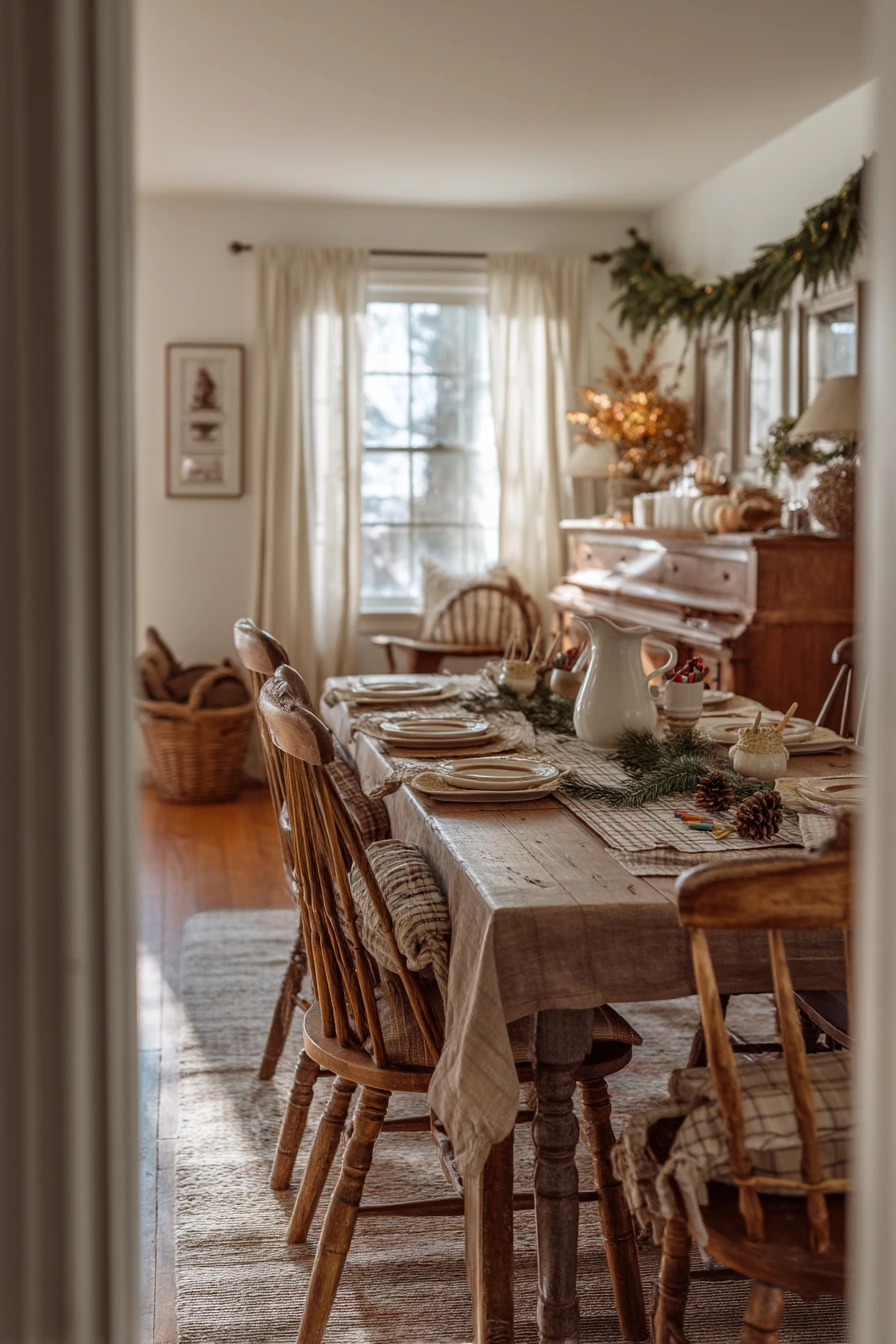
Between fall and holiday decor, the dining room can feel in-between too. The goal is to keep it warm and festive without going full holiday. A farmhouse table gives you a strong base. Add a cinnamon-colored runner for a fall tone that still works into winter.
Style a sideboard with a soft garland, ceramic pitchers, and a basket of pinecones. This mix feels seasonal but not too specific. Keep the garland simple and not overly decorated so it can stay up longer. If you have sheer curtains, the softened daylight keeps everything mellow and homey.
Make room for family life. A kid toy basket in the corner helps keep the dining area usable. Crayons left near one plate can look fine if you place them in a small cup. Water rings on the table happen, so use a large tray or a clear table protector if you want to save the finish. Chair cushions slightly uneven are normal, but you can straighten them before guests arrive. This is a good season to focus on comfort, not perfection.
- Use a cinnamon runner that works for both fall and early holiday days.
- Add a simple garland to a sideboard for a soft seasonal layer.
- Group ceramic pitchers together to create height and shape.
- Place pinecones in a basket for texture and easy storage later.
- Contain kid items with a toy basket and a small cup for crayons.
Pro Design Tip: Keep your color palette to three tones (wood, cream, cinnamon) so the room can shift into holiday decor with one extra accent later.
Budget Considerations: DIY garland from greenery stems and twine costs less than pre-made pieces; add pinecones from your yard for free texture.
7. Spring Evening Dining Room Ideas With Indoor-Outdoor Charm
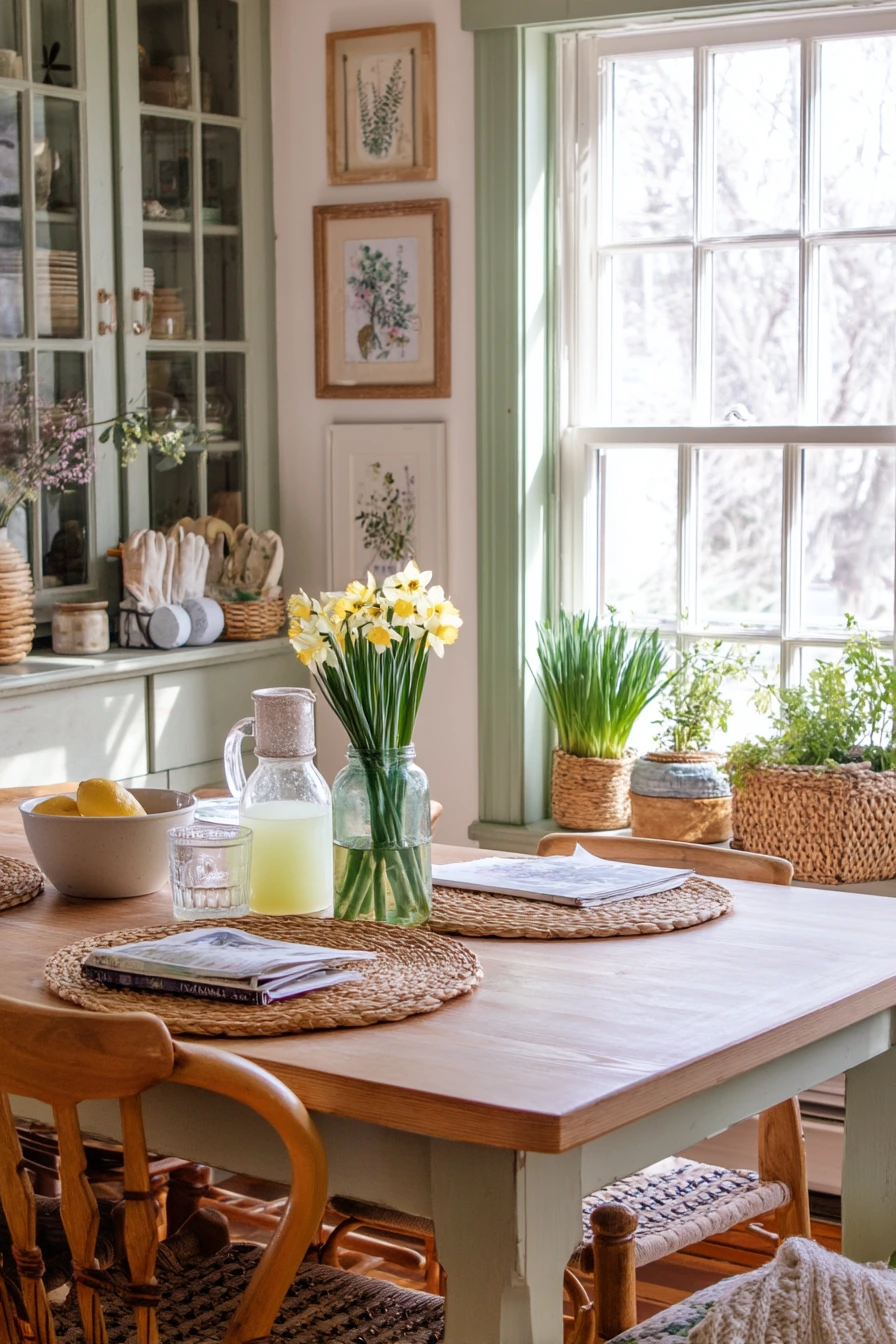
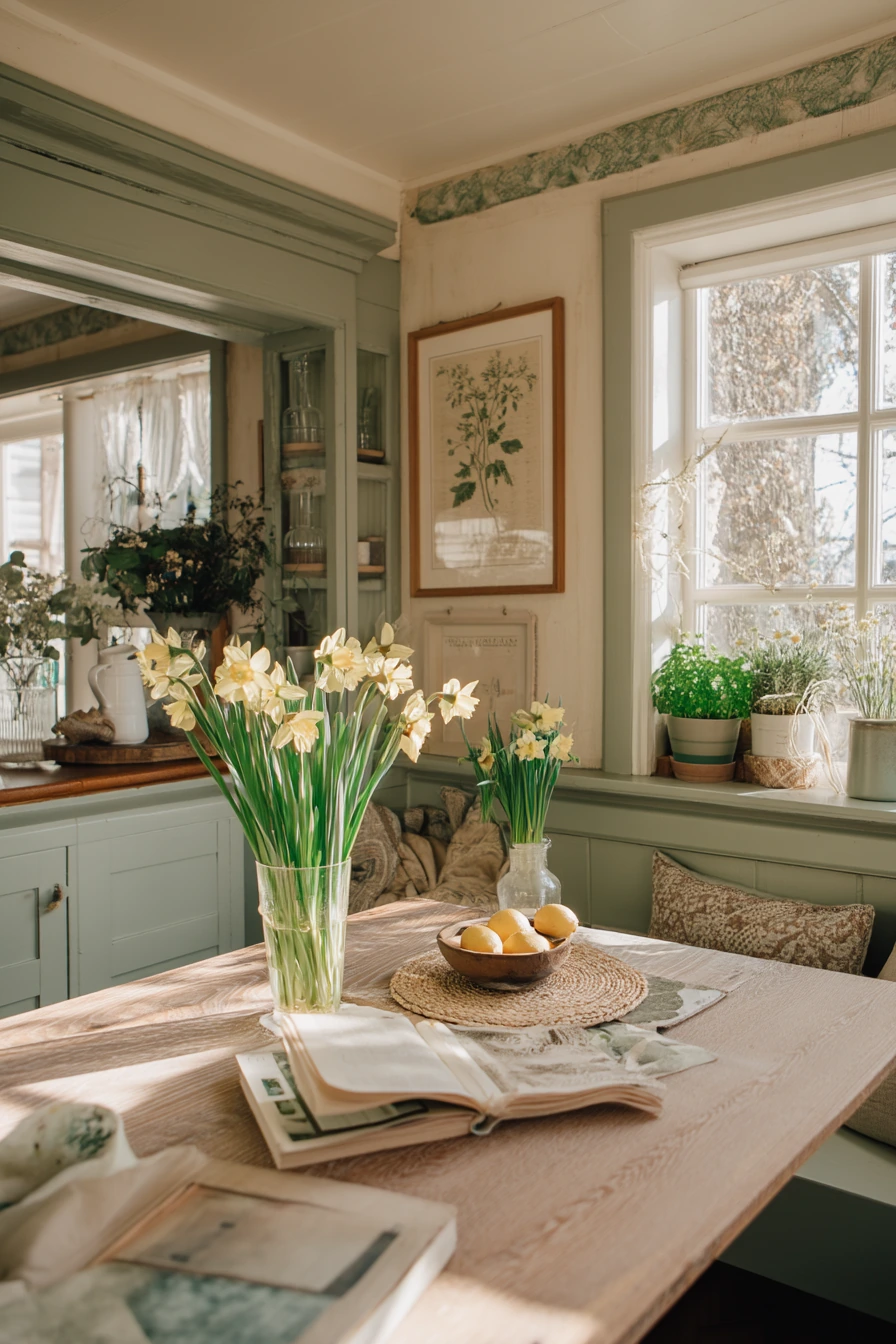
Spring evening dining room ideas feel best when they connect to the yard, patio, or back door. A light wood table keeps the room bright even as the sun goes down. Add woven placemats for texture and an easy, natural base for plates.
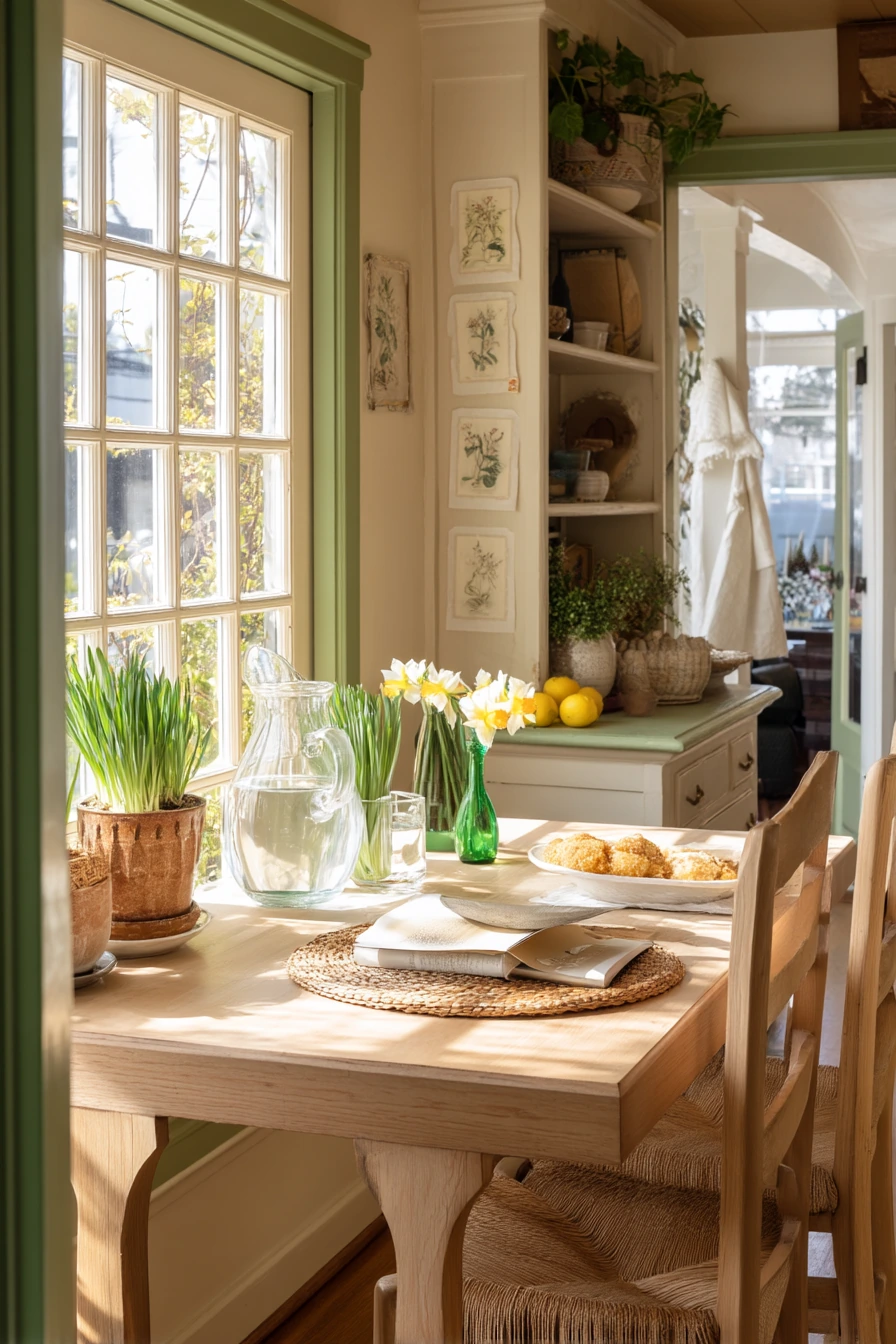
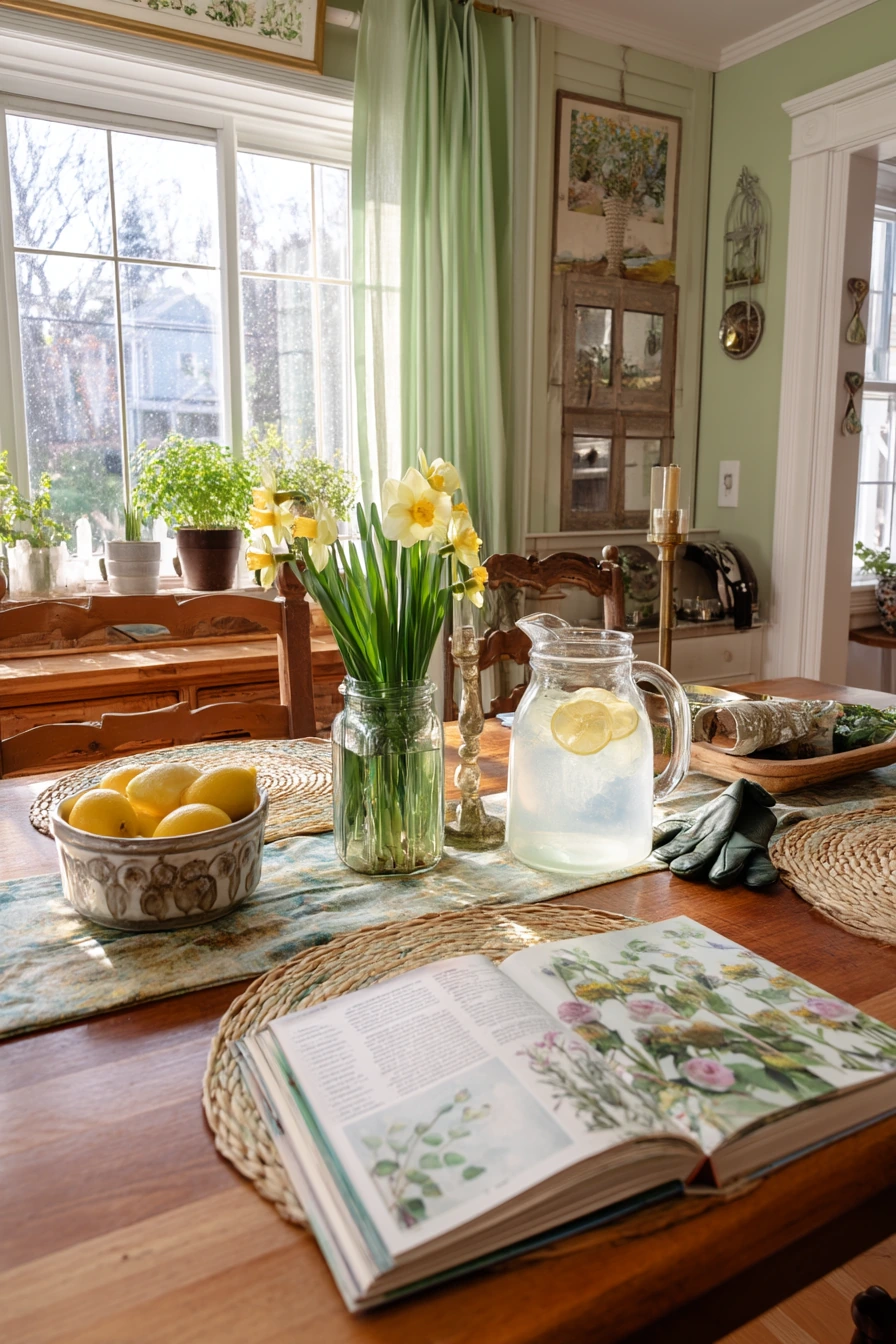
Bring in gentle spring details: botanical prints on the wall, potted herbs on the sill, and daffodils in mismatched bottles. This mix feels casual and personal. Soft green painted trim, if you have it, is a great background color for spring. If not, add green through napkins, a small bowl, or herb pots. A glass pitcher with lemon slices works for dinner and looks good on the table.
For a lived-in feel, include one practical item that fits the story. Gardening gloves left near the back door make sense in spring. An open cookbook on a side cabinet adds warmth and hints at a real meal. Keep the rest tidy, especially counters and floors, so these small touches stand out. Sunset light adds a dewy, floral mood, so avoid harsh overhead bulbs and use lamps instead.
- Use woven placemats to add texture without heavy color.
- Style daffodils in mismatched bottles for a simple spring centerpiece.
- Keep herbs on the sill to add green and a useful cooking element.
- Add a lemon-slice pitcher for an easy spring-and-summer crossover.
- Include one real-life prop, like gardening gloves, then keep surfaces clean.
Pro Design Tip: Group small vases on a tray so they read as one centerpiece and feel less cluttered.
Budget Considerations: Use recycled bottles as vases and print botanical art at home for low-cost wall decor.
8. Autumn Breakfast Nook Ideas With Banquette Seating and Cozy Textures
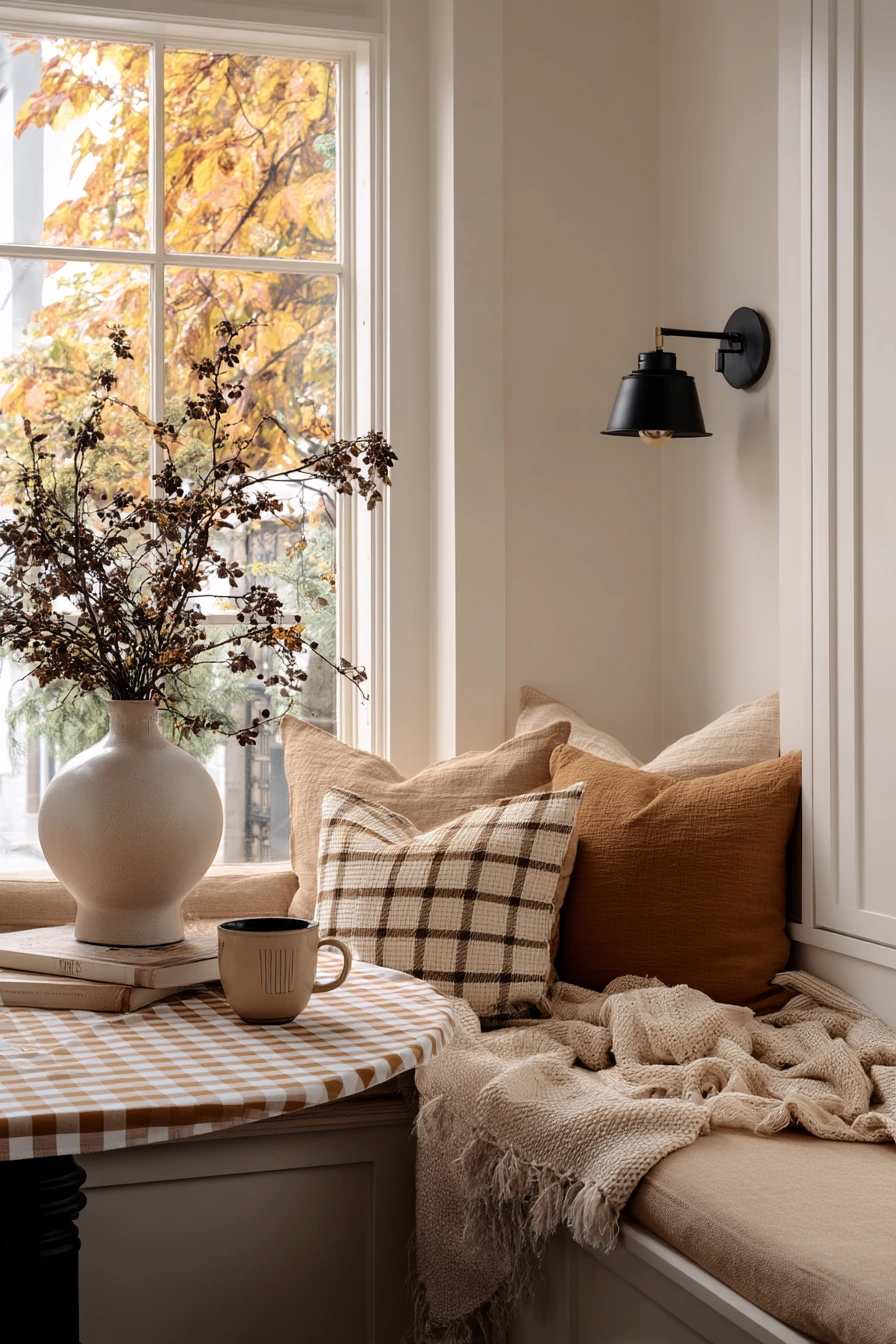
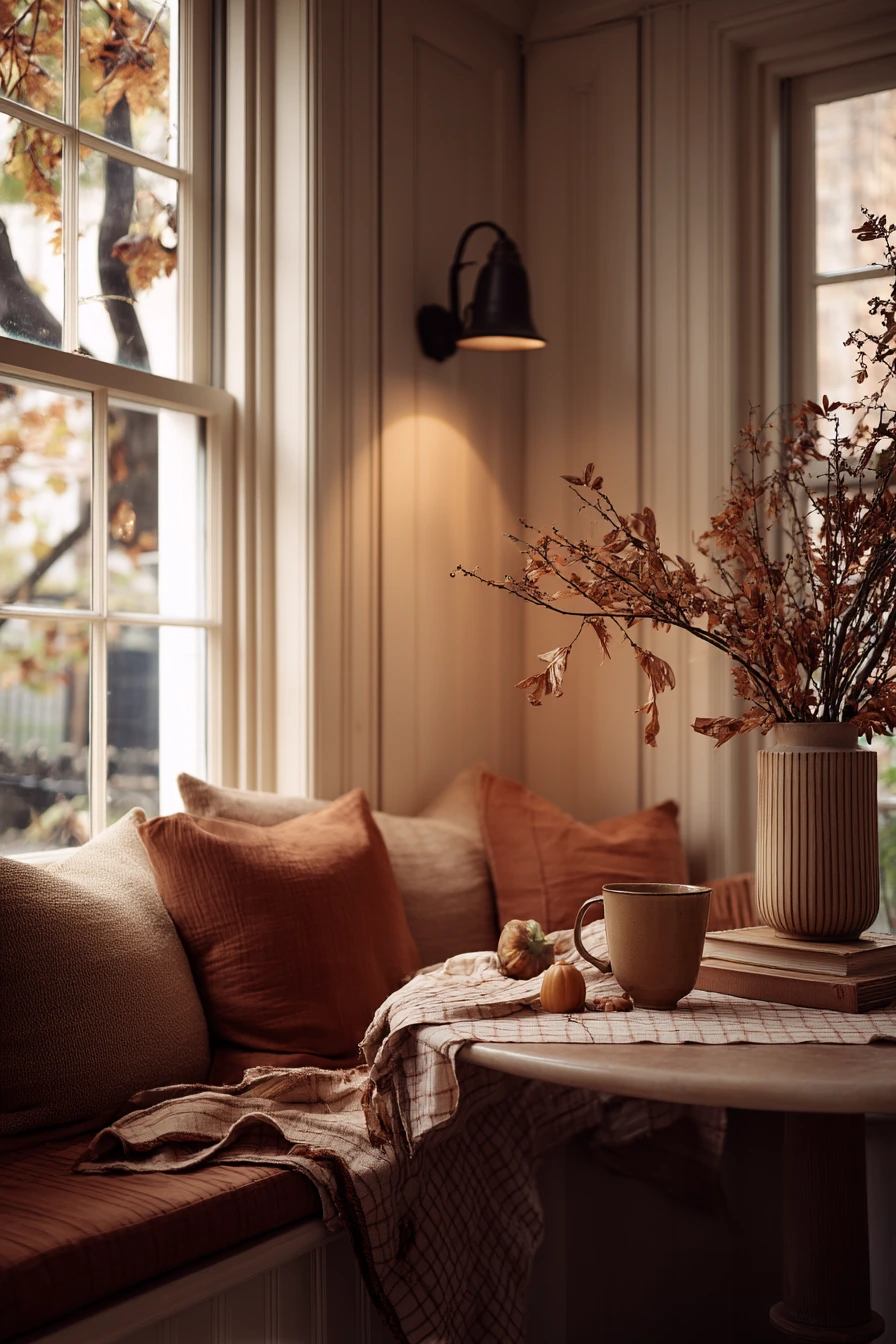
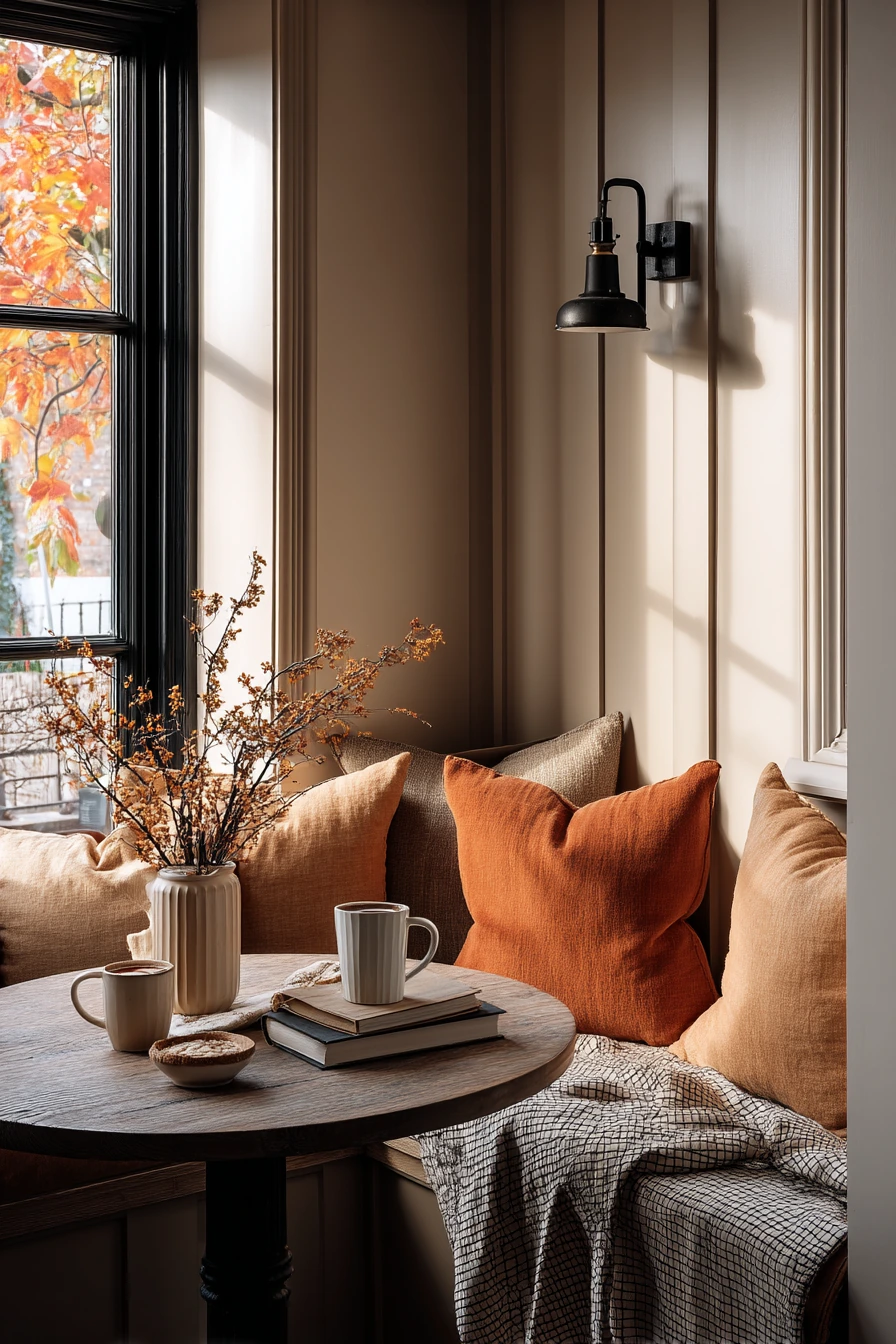
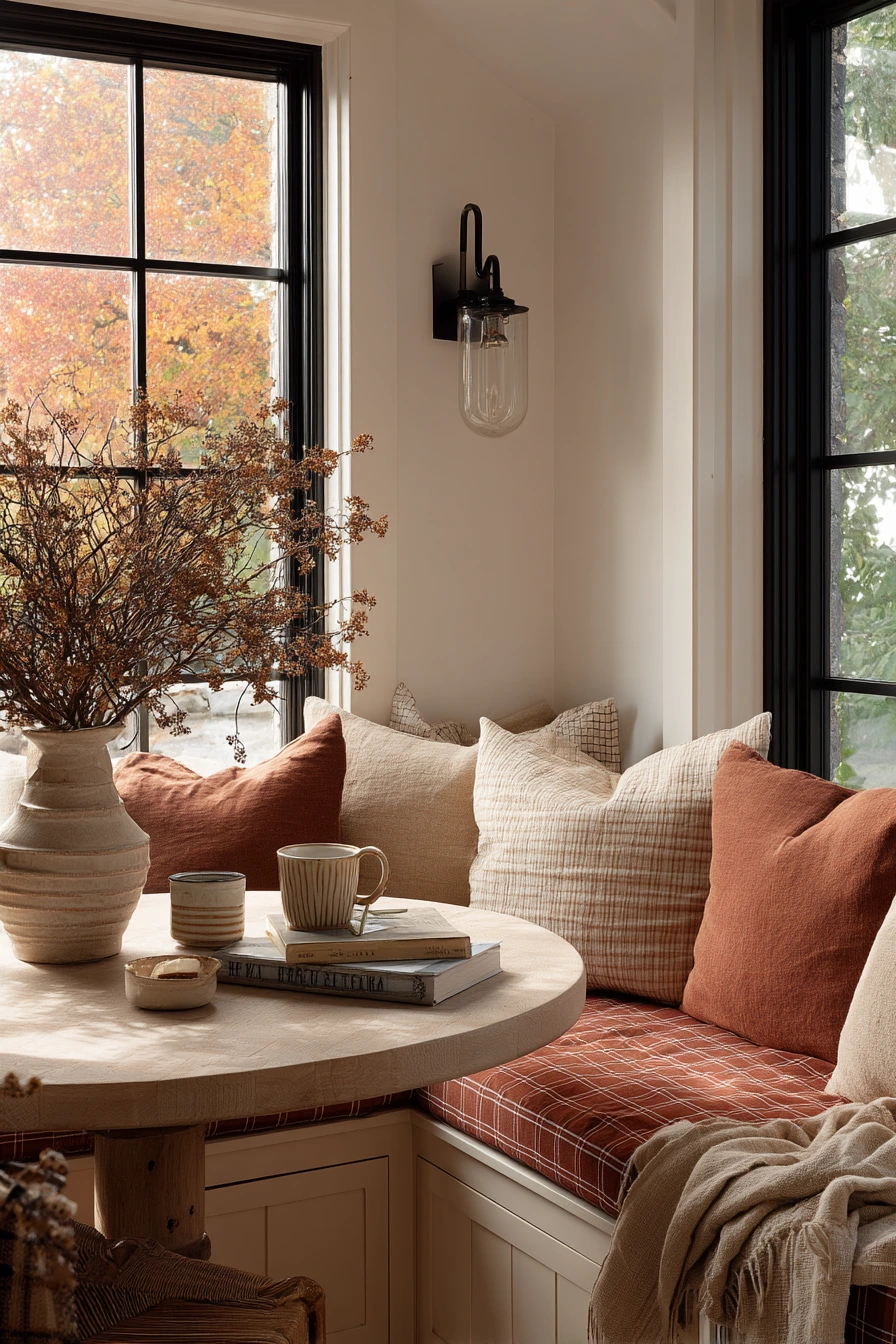
An autumn breakfast nook should feel snug and simple for daily routines. A built-in banquette helps the space feel like a small corner café. Use cushions in rust and oat tones to bring in fall color without making it dark. A small round table keeps traffic flow easy, especially in a townhouse layout.
For the table, add a checked tablecloth. It gives instant autumn style and hides crumbs better than bare wood. A fluted vase with branches adds height without taking up too much space. If you have a matte black sconce, turn it on in the morning for a gentle lamp glow that feels cozy even on cloudy days.
Make it look like a real morning. A steaming mug, a slightly wrinkled throw, and stacked books on the bench end help the nook feel used and loved. If fallen leaves are visible outside the window, let them be part of the look. Keep the rest simple: one small bowl for keys or mail, and a clear seat so people can sit down fast. This kind of setup feels nostalgic and warm without extra clutter.
- Choose rust and oat cushions for a soft fall color story.
- Use a checked tablecloth for pattern and easy cleanup.
- Style branches in a fluted vase for simple seasonal height.
- Turn on a black sconce for a cozy morning glow.
- Add one throw and a mug, then keep the table mostly clear.
Pro Design Tip: Use one pattern only (like checks) and keep the rest solid so the small nook does not feel busy.
Budget Considerations: Tablecloths are an affordable seasonal swap; buy one size larger and clip it for a custom fit.
9. Elegant Summer Dining Room Ideas for Friends With Wildflowers and Linen
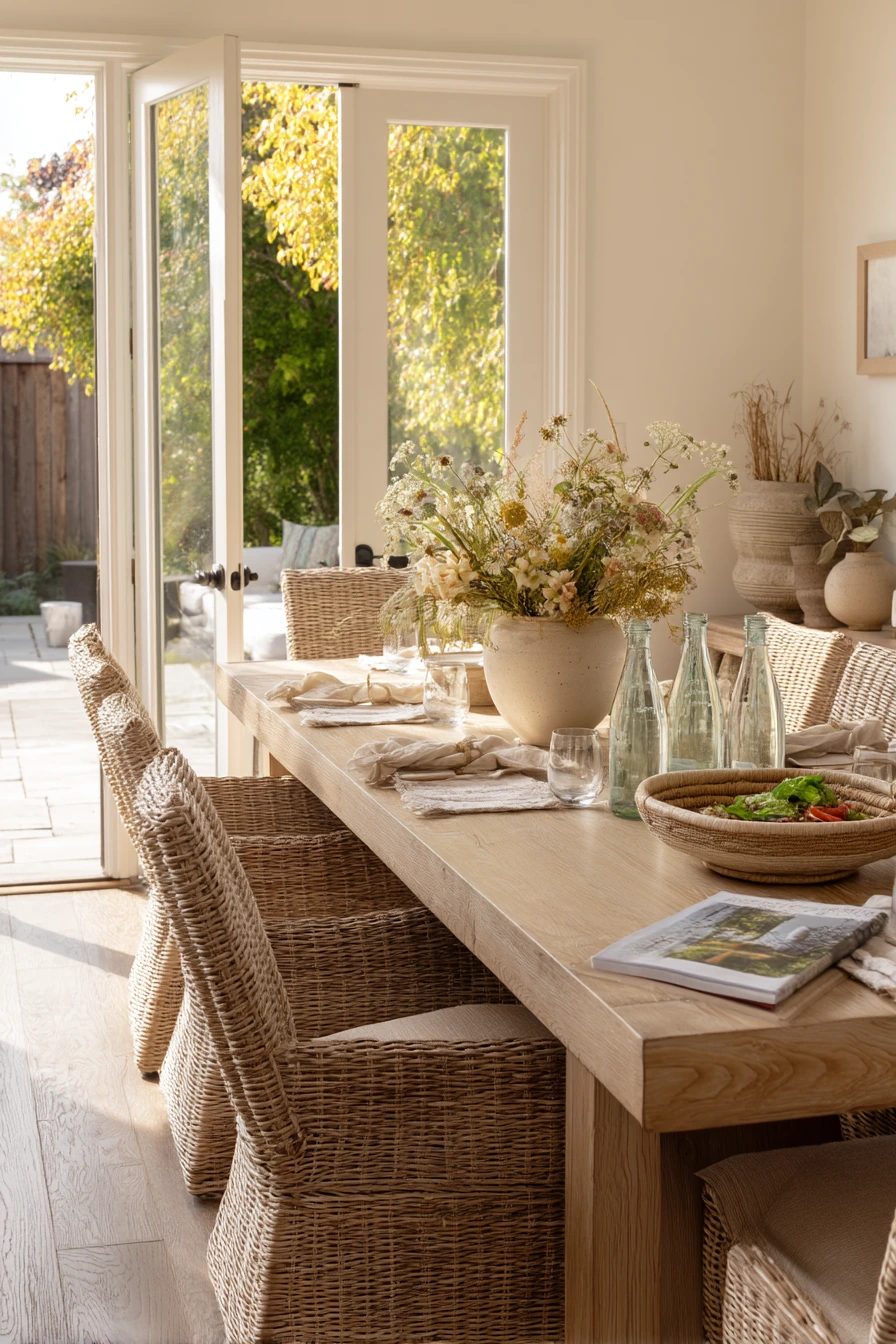
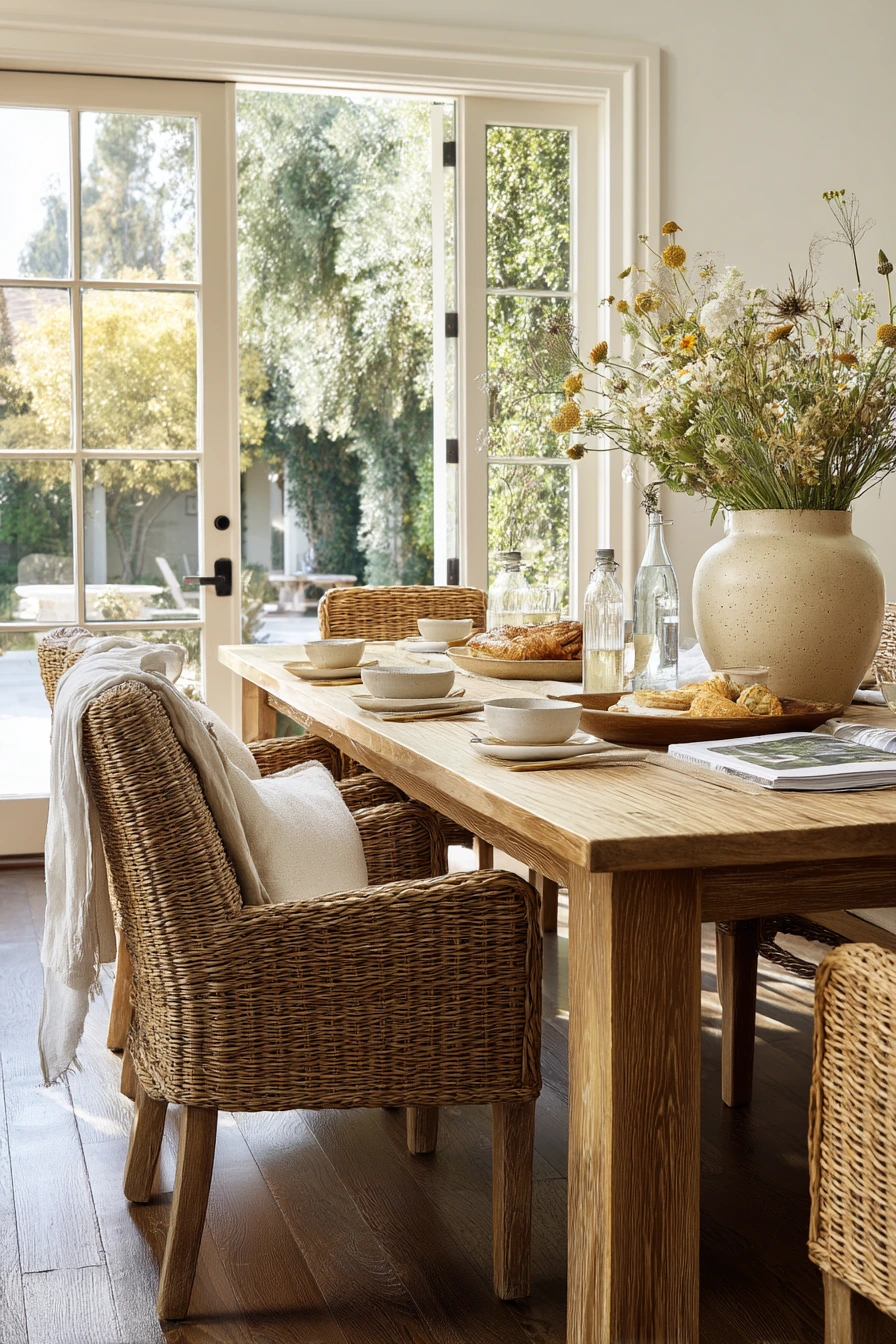
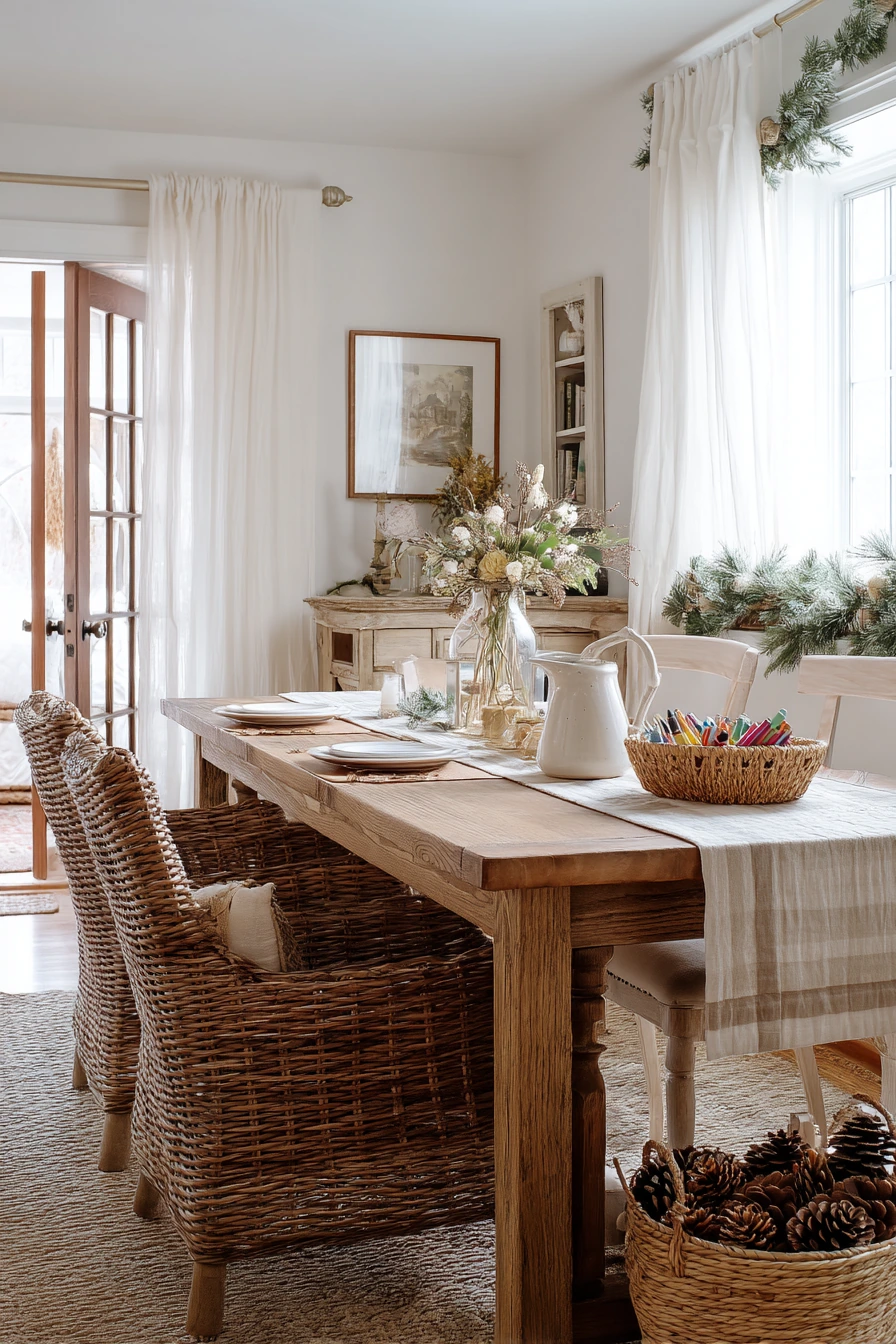
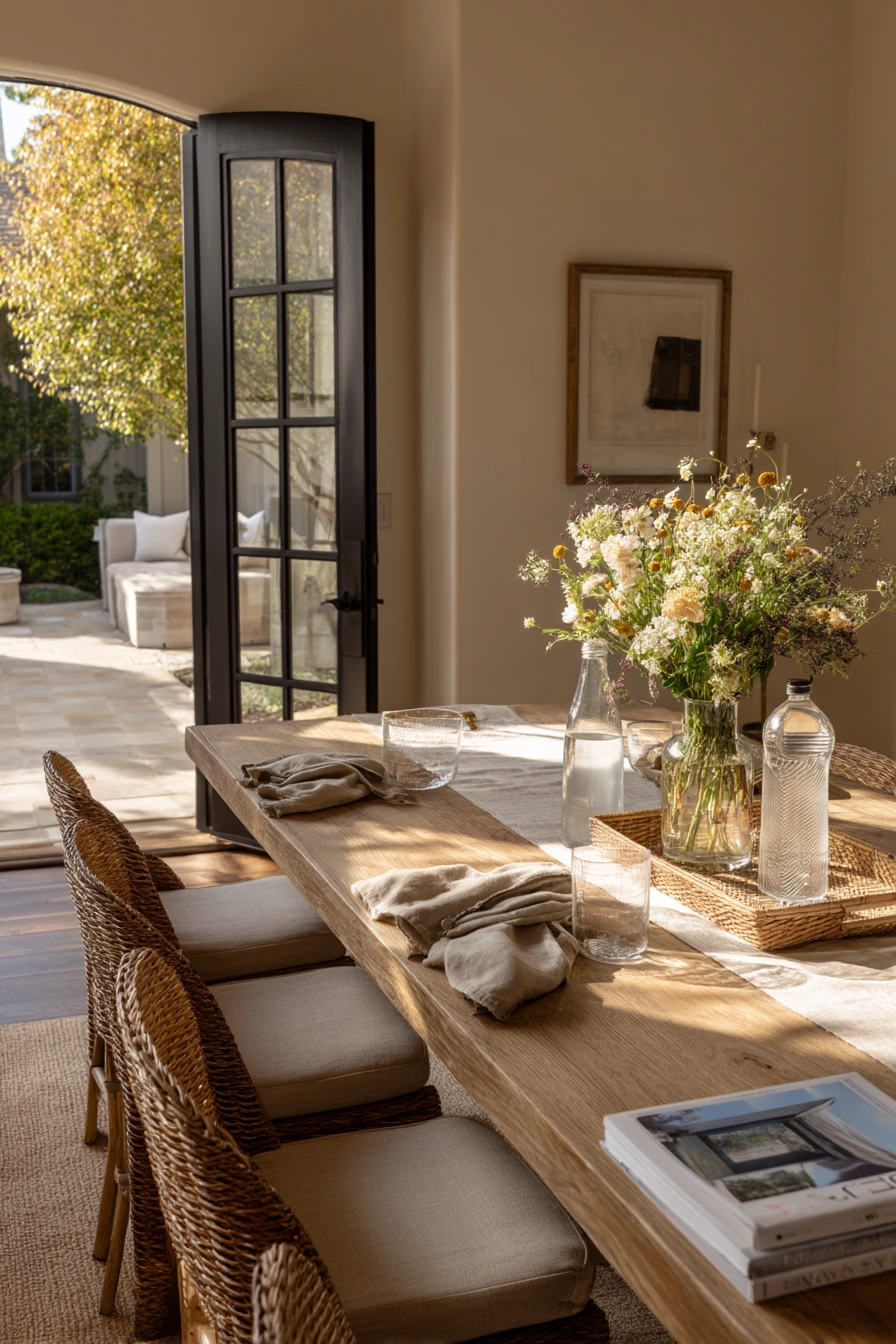
An elegant summer dining room can still feel believable and relaxed. Start with a long oak table and woven chairs for a light, natural look. Breezy linen napkins make the table feel special without being formal. Choose a low wildflower arrangement so guests can talk across the table.
Let light do the work. Oversized glass doors bring in that golden, honeyed evening light that makes the whole room feel warm. Keep decor simple with neutral pottery and clear glassware. Add a chilled water bottle on a side tray so the table stays uncluttered and you have an easy self-serve drink setup.
For a lived-in touch, style the room as if people are about to arrive. An open magazine on the console feels casual and real. One chair turned slightly off-center makes the space feel in use, not staged. Keep pathways open so guests can move around the table. If you want a little extra summer color, add it through fruit or a few colored glasses, not a full table of bright items.
- Use linen napkins for an easy upgrade that still feels casual.
- Keep the centerpiece low with wildflowers in a simple vessel.
- Style a side tray with a chilled water bottle and extra glasses.
- Stick to neutral pottery so the wood and light stay the focus.
- Leave one chair slightly angled to make the room feel welcoming.
Pro Design Tip: Pick one “soft” texture (linen) and one “rough” texture (woven chairs) to create contrast that reads as elevated.
Budget Considerations: Grocery store wildflowers can look high-end when you split them into small bunches and use a low bowl you already own.

10. All-Season Dining Room Ideas With Swappable Accents and Open Shelving
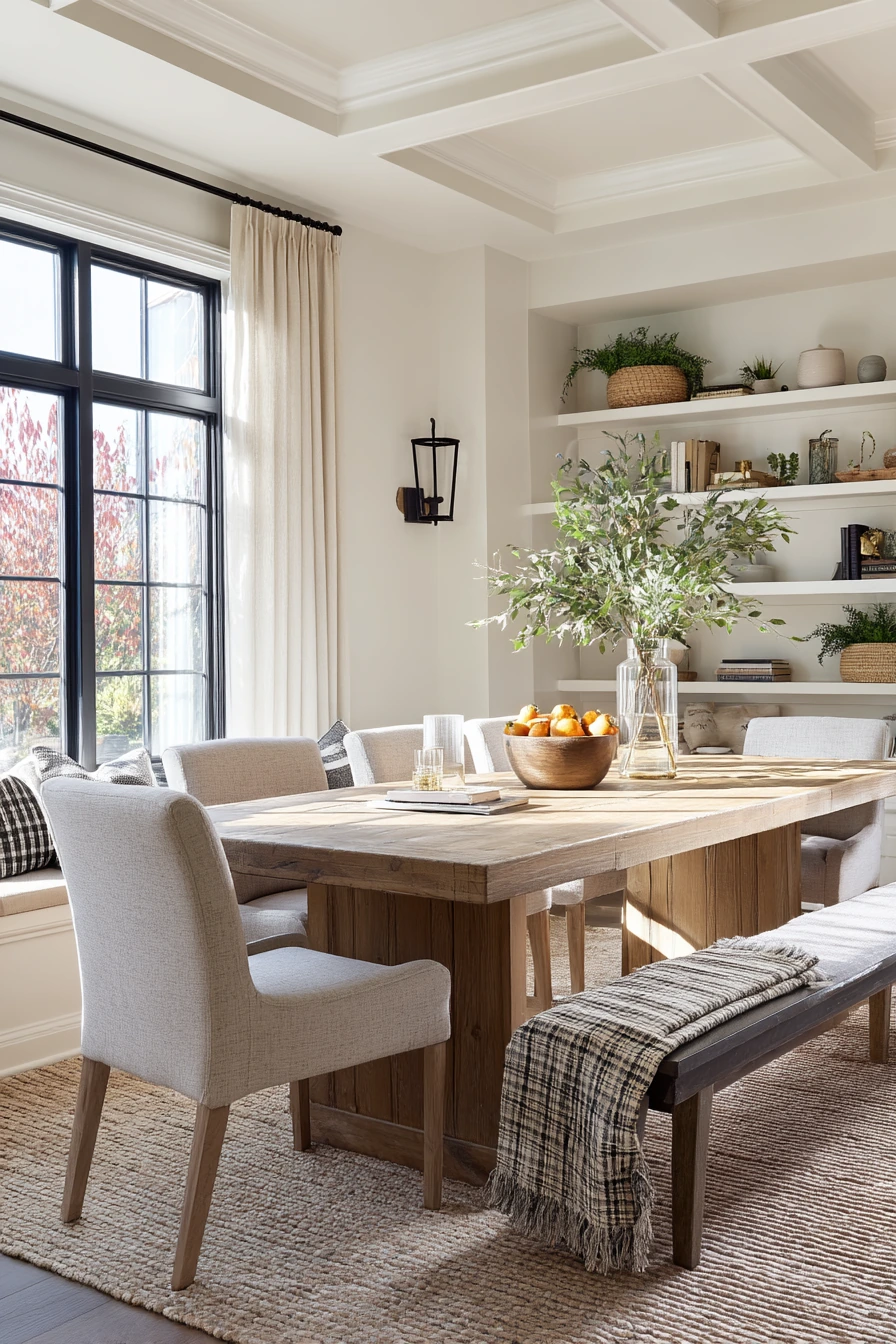
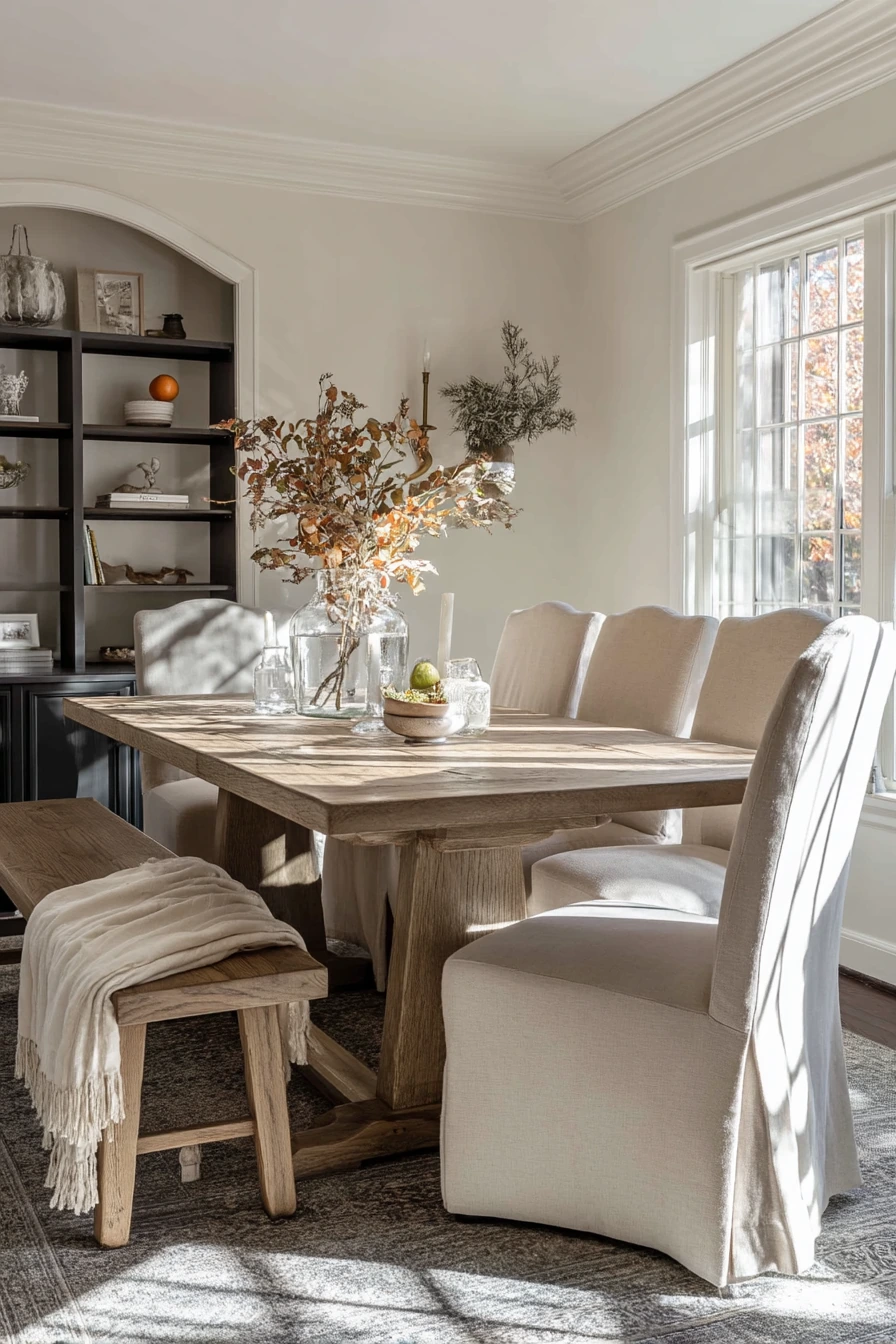
If you want one setup that works year-round, focus on a timeless base and small swappable accents. A wood table and neutral upholstered chairs fit every season. Keep the main pieces simple so you can change the mood with textiles, stems, and a few objects.
Open shelving is helpful when you treat it like a seasonal display. Store everyday dishes on the lower shelves and keep the top shelf for items you can swap, like napkins, runners, and a few vases. Rotate subtle accents: blossoms in spring, citrus in summer, dried leaves in fall, and evergreen stems in winter. A bench with a casually tossed throw adds comfort and makes the room feel real.
Keep it grounded with everyday details. A small stack of catalogs, a half-full water glass, and plant shadows on the wall make the room look lived-in, not perfect. To avoid clutter, use one tray to hold the small items and clear it when you need the table for a big meal. This approach creates an adaptable, refined dining room that feels calm in photos and easy in real life.
- Choose a neutral chair fabric that works in every season.
- Use one set of core linens, then add one seasonal accent color.
- Rotate stems: blossoms, citrus branches, dried leaves, evergreen clippings.
- Keep open shelving organized with a “display” zone and a “daily use” zone.
- Use a tray to manage small items like catalogs and glasses.
Pro Design Tip: Create a small “seasonal kit” box with one runner, one set of napkins, and one vase so you can restyle in 10 minutes.
Budget Considerations: Buying fewer, better basics saves money over time; thrift extra vases and rotate what you already own instead of buying new decor each season.

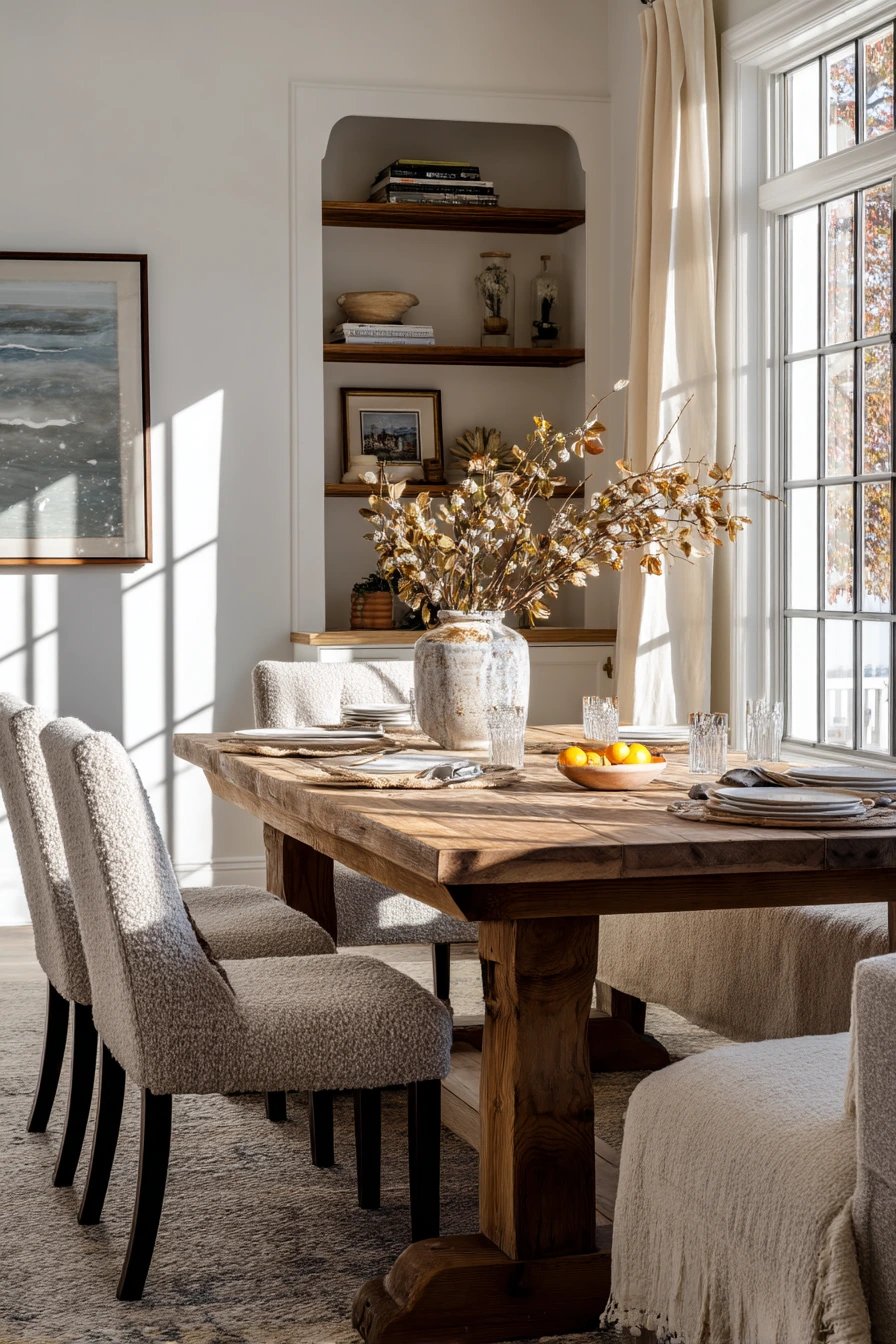
Seasonal dining room ideas work best when you start with a simple base and change just a few layers. Runners, cushions, stems, and lighting can shift the whole feel without a big budget.
Keep your dining space practical by allowing a little real life to show, then containing clutter with trays and baskets. With these small swaps, your room can look good in photos and still work for everyday meals.
FAQ
1. How can I easily transition my dining room decor between seasons without buying new furniture?
Focus on simple, swappable textiles and nature-inspired centerpieces. Changing out your table runner, napkins, and chair cushions or seat pads takes very little effort and instantly shifts the room’s mood. You can also rotate seasonal stems—such as tulips in spring, lemons in summer, dried grasses in autumn, and evergreen clippings in winter—using the same basic vases.
2. What are the best low-cost ways to style a dining table for a Pinterest-ready look?
Use everyday items you already own, like a ceramic pitcher, clear glassware, or a stack of design books, paired with low-cost natural elements like grocery store wildflowers, seasonal fruit, or branches foraged from your yard. Keeping centerpieces low and loose also ensures the table feels inviting rather than overly staged.
3. How do I balance a lived-in family dining room with a clean, photogenic setup?
Allow small signs of real life—such as an open book, a half-filled water glass, or a child’s coloring book—to make the space feel human and authentic. The trick is containment: use small trays, bowls, or a woven toy basket nearby to corral everyday clutter so the rest of the room stays tidy and calm.
4. What color palettes work best for all-season dining rooms?
Stick to a neutral, timeless base of natural wood tones, warm whites, cream, and soft beige or gray for your main furniture and linens. This allows you to introduce one accent color per season (like sage green for spring, warm terracotta for fall, or rich brass and evergreen for winter) without clashing or requiring a full room makeover.
5. How can I make a tiny apartment dining nook feel seasonal and cozy?
Because space is limited in small nooks, rely on items that don’t take up floor or tabletop space. Lean framed art on a wall shelf, swap out small throw pillows or bench cushions, and place a slim vase with seasonal branches on the table to bring in character while keeping walkways open.