
An afrohemian decor living room mixes African heritage with relaxed boho comfort. It uses warm earth tones, natural materials, and meaningful art to make a space feel lived-in and calm.
In this guide, you will see 10 styled looks based on popular Pinterest image themes. Each section gives simple ways to copy the mood with color, textiles, wood, baskets, pottery, and plants.
You will also get quick “how to style it” steps, a pro design tip, and a budget note so you can plan your room without guessing.
Use these ideas to refresh one corner or build a full room that feels soulful, grounded, and easy to keep tidy.
1. Warm Terracotta Afrohemian Decor Living Room
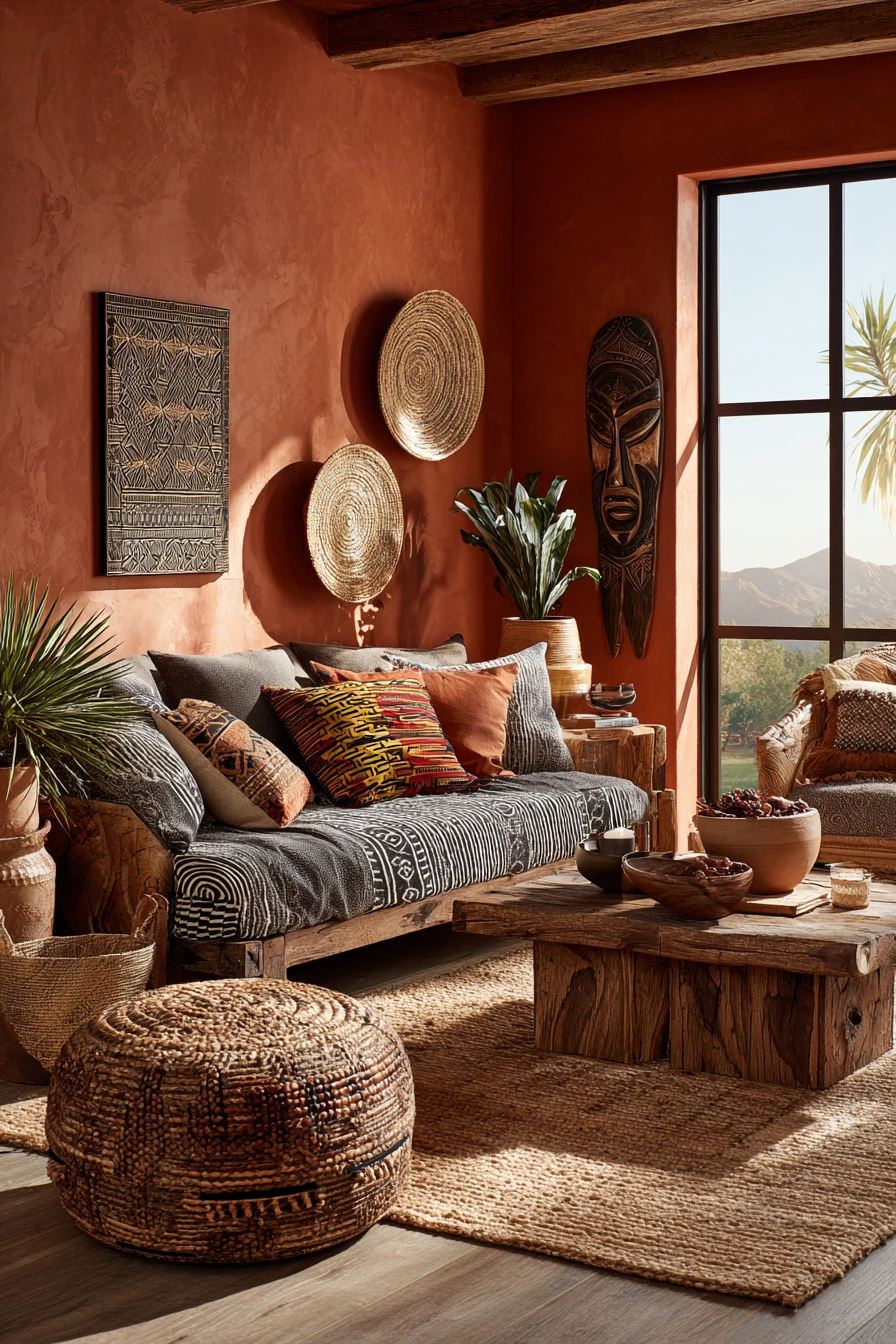

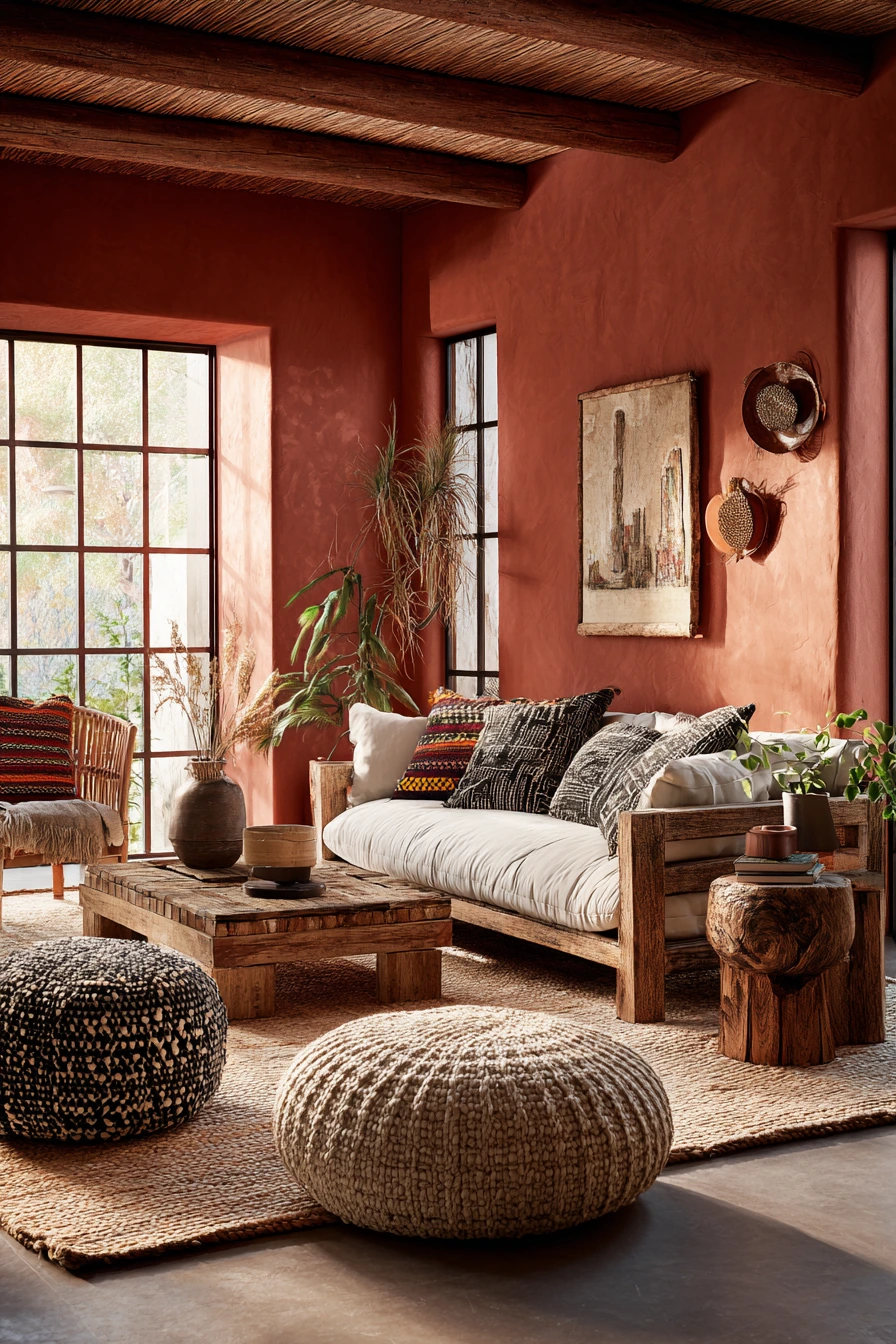
This warm afrohemian decor living room starts with terracotta walls and sunlight. The color makes wood tones look richer and helps patterned textiles stand out without feeling busy. Keep the big pieces simple, then add detail in layers.
Choose a low sofa in a neutral fabric, then style it with mud-cloth and kente-inspired cushions. Add woven poufs and carved wooden stools so seating feels relaxed and flexible. A jute rug grounds the room and keeps the look natural.
For the walls, mix handcrafted art, masks, and pottery in a small gallery, not all over. Group items by material or color so they feel collected. Leave breathing room near windows so the light highlights texture.
- Paint one terracotta accent wall if you do not want to color the whole room.
- Use 2 to 3 pillow patterns, then repeat one color across all textiles.
- Place a woven pouf near the sofa to use as a footrest or extra seat.
- Style a wooden stool with a small tray for candles or a ceramic vessel.
- Layer a flat jute rug with a smaller patterned rug to add depth.
Pro Design Tip: Keep the largest shapes quiet (sofa, rug, coffee table) and put the bold pattern on removable pieces like pillows and throws for an easy update.
Budget Considerations: Try peel-and-stick paint samples for a terracotta test area, and shop thrift stores for wooden stools you can sand and oil at home.
2. Earth-Toned Afrohemian Living Room With Clay and Sand Hues
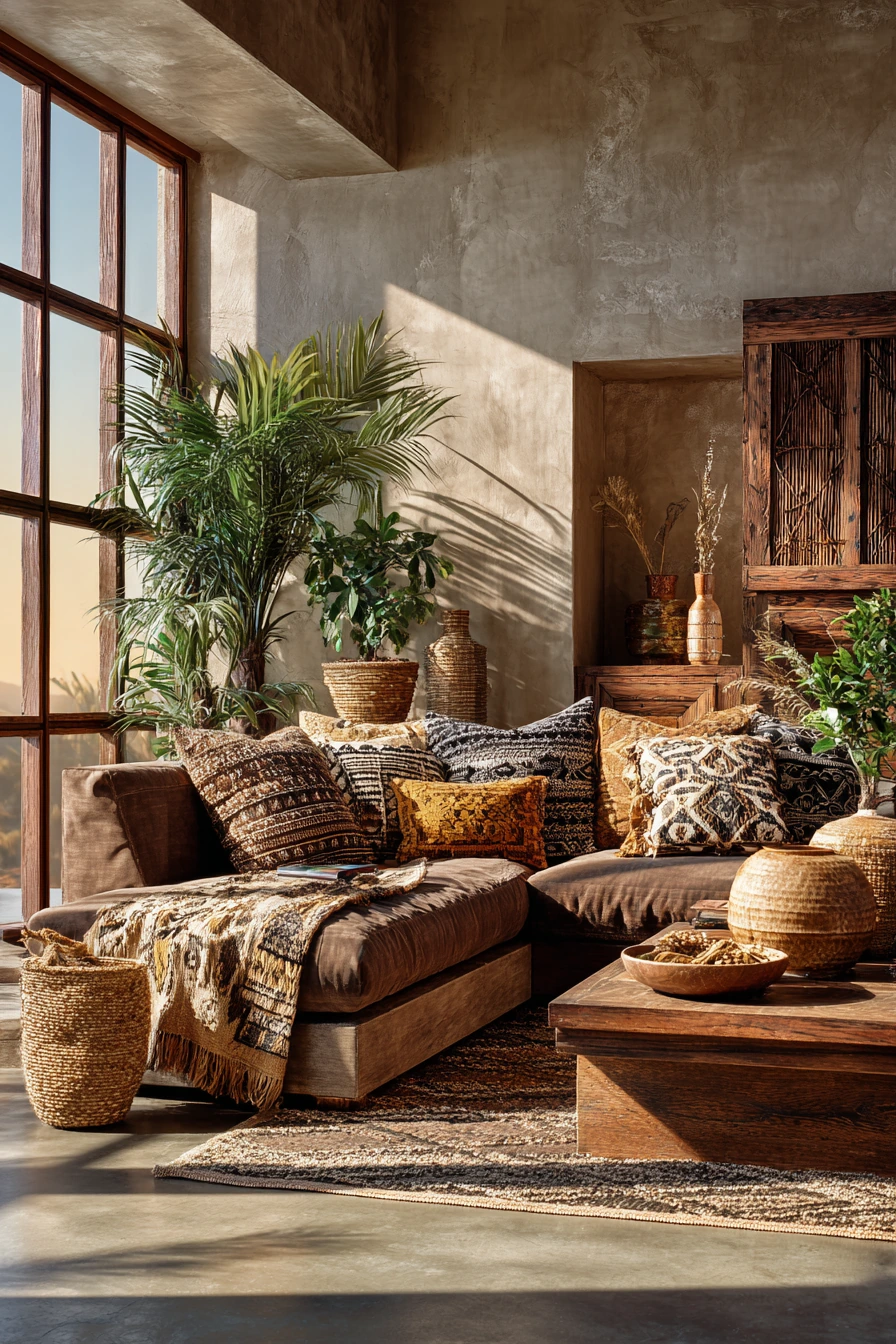
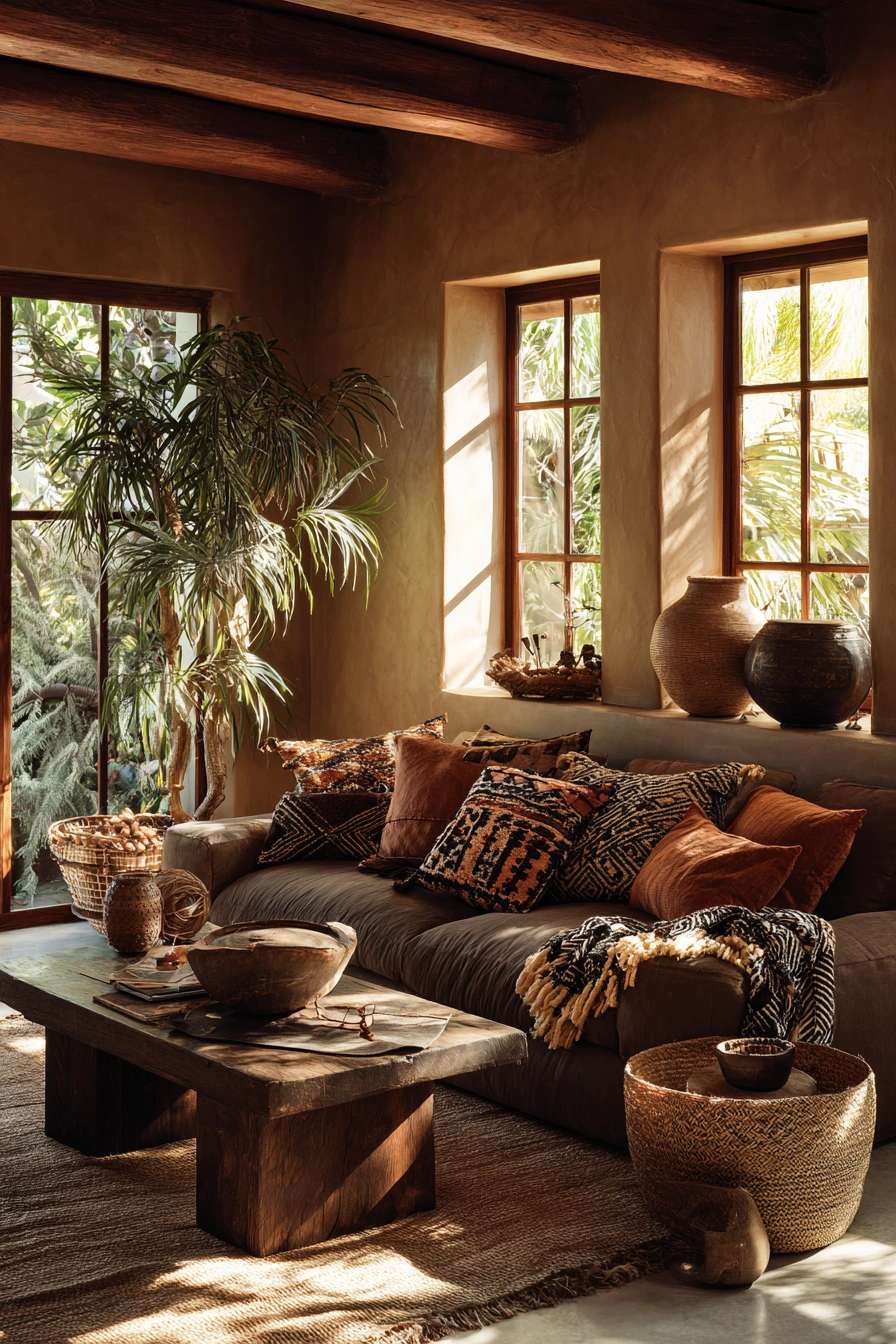
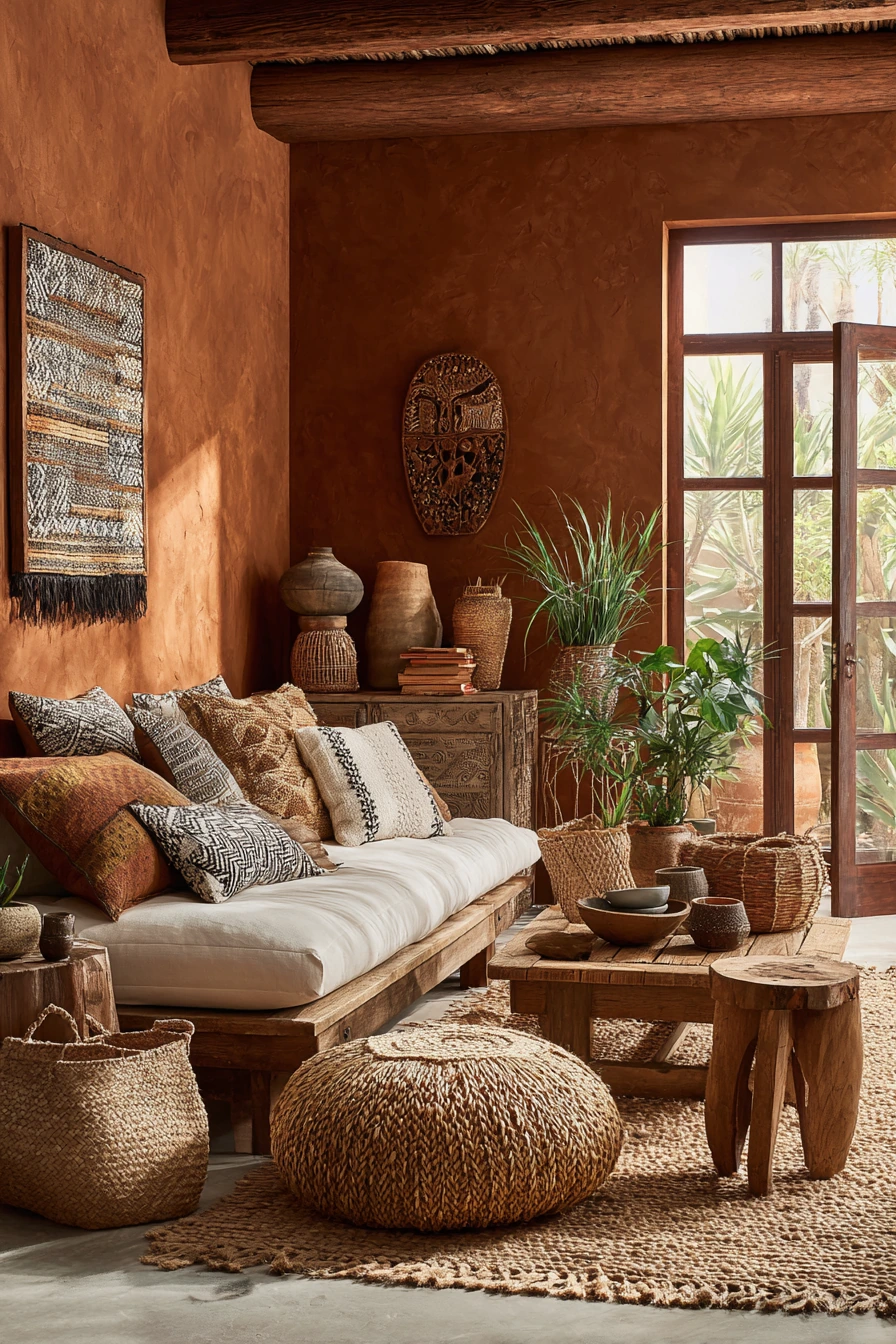
An earth-toned afrohemian living room feels calm because the palette stays close to nature. Think clay, sand, and deep brown, with a soft fabric sofa as the main anchor. The goal is a grounded look that still feels artistic.
Start with a sofa in beige, camel, or warm gray. Layer patterned cushions and a throw that includes small tribal-style or geometric motifs. Add natural wood furniture with simple lines, then bring in woven baskets and ceramic vessels for handmade character.
Plants are key here because they soften all the brown tones. Place a tall plant near the window and a smaller one on a side table. Let sunlight create gentle shadows on textured walls, baskets, and pottery so the room looks rich without extra clutter.
- Pick one “deep” color (espresso or chocolate) and repeat it in 2 to 3 spots.
- Use baskets for storage so the room stays clean and cozy.
- Mix matte ceramics with one glossy piece for contrast.
- Choose wood tones that are close, not identical, to avoid a flat look.
- Keep window treatments light so natural lighting stays strong.
Pro Design Tip: Build a tight color story first, then add pattern last; this helps the textiles look intentional instead of random.
Budget Considerations: Real ceramic can be pricey; use one handmade statement vase and fill the rest with affordable stoneware in similar tones.
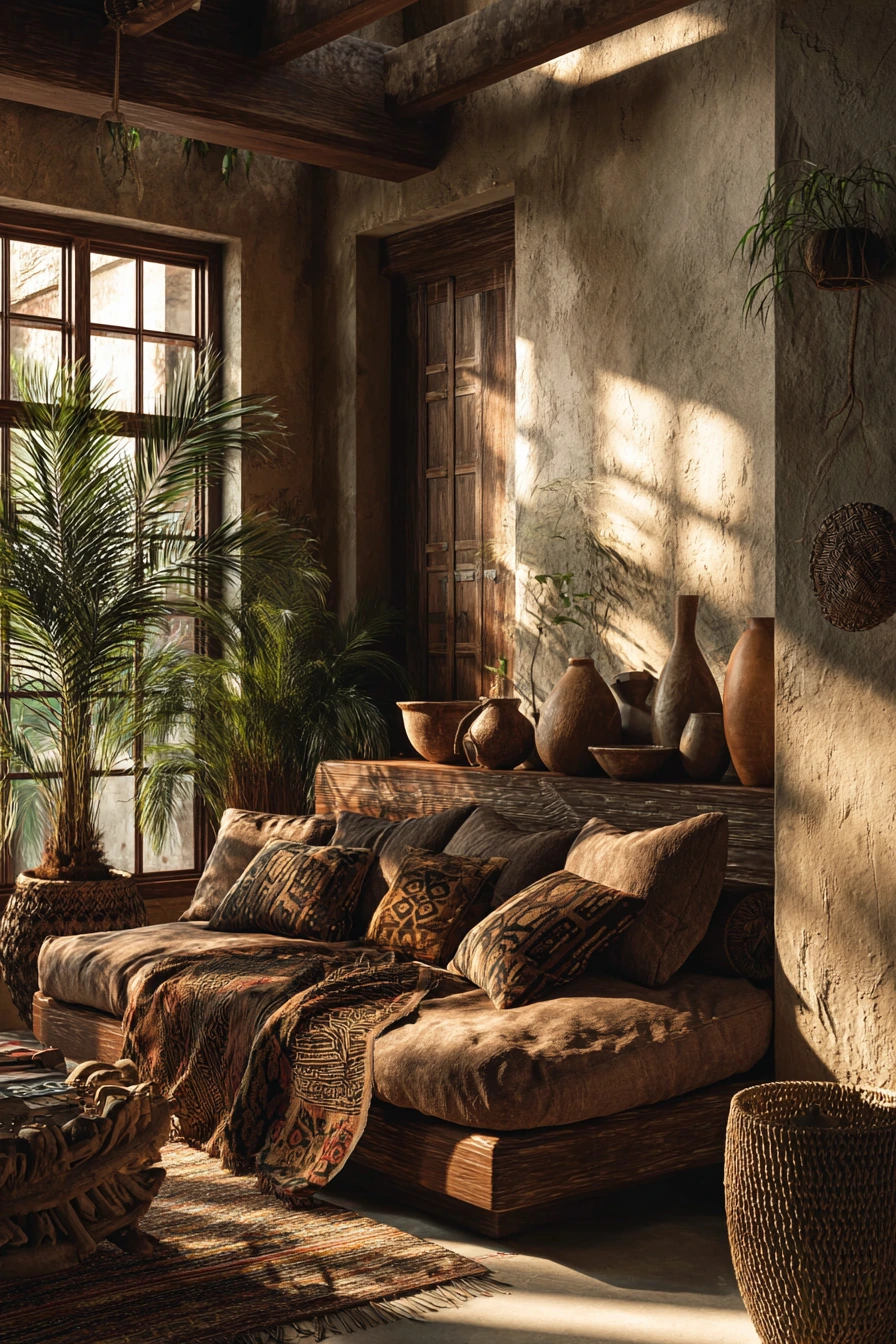
3. Minimalist Afrohemian Decor Living Room With Cultural Texture

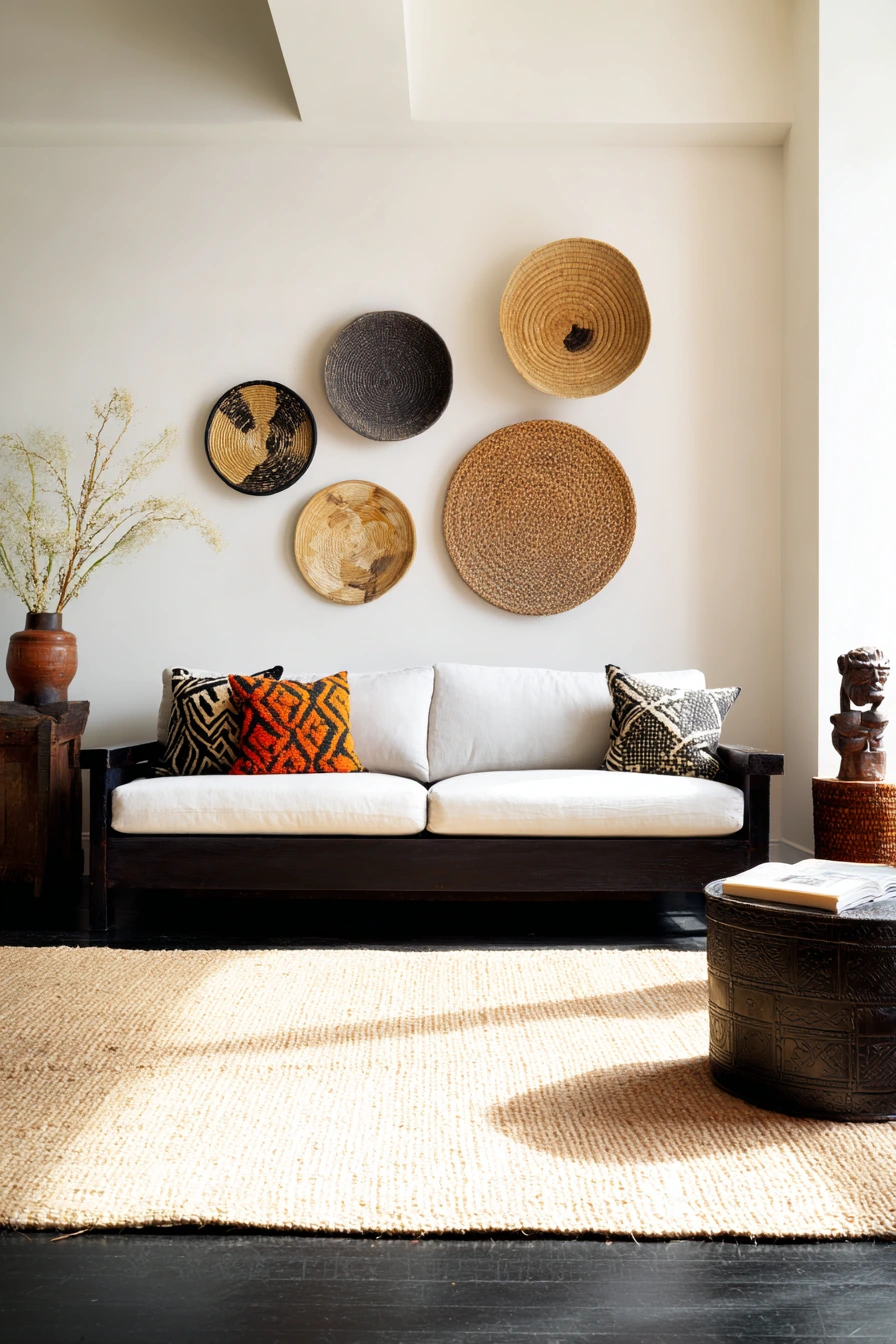
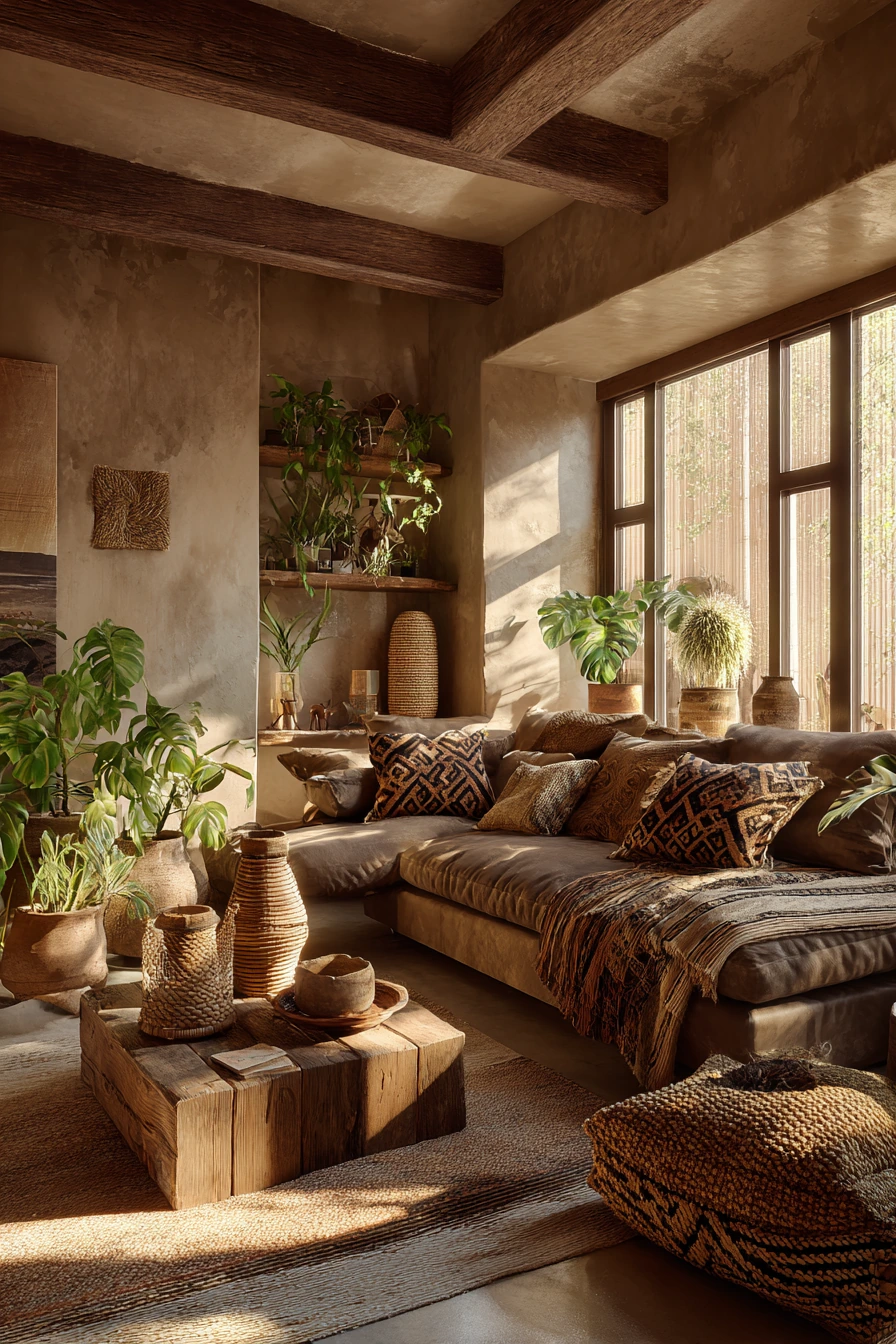
A minimalist afrohemian decor living room keeps the layout clean but adds cultural texture for warmth. This style works well if you like open space and easy cleaning, but still want the room to feel personal and expressive.
Use neutral walls and a simple sofa, then add dark wood furniture to create contrast. Instead of many small objects, choose a few bold patterned pillows and one strong wall piece like a handwoven hanging. Sculptural decor, such as a carved figure or a clay form, can act like art.
Pick natural fiber rugs for warmth without visual noise. Keep surfaces mostly clear and store extras in closed baskets or a cabinet. Let bright sunlight do the work by highlighting texture in the rug, wood grain, and woven pieces.
- Limit pillows to 2 to 4 and keep the rest of the sofa plain.
- Choose one large wall hanging instead of many small frames.
- Use a low, simple coffee table in dark wood to ground the space.
- Add one sculptural object per surface, not a collection.
- Keep cords hidden so the room stays calm and clean.
Pro Design Tip: Use scale to make minimal styling feel finished: one oversized textile or artwork will look richer than five small items.
Budget Considerations: DIY a woven-look wall piece with a simple dowel and textured fabric strips, or buy a smaller handmade piece and hang it with wide spacing.

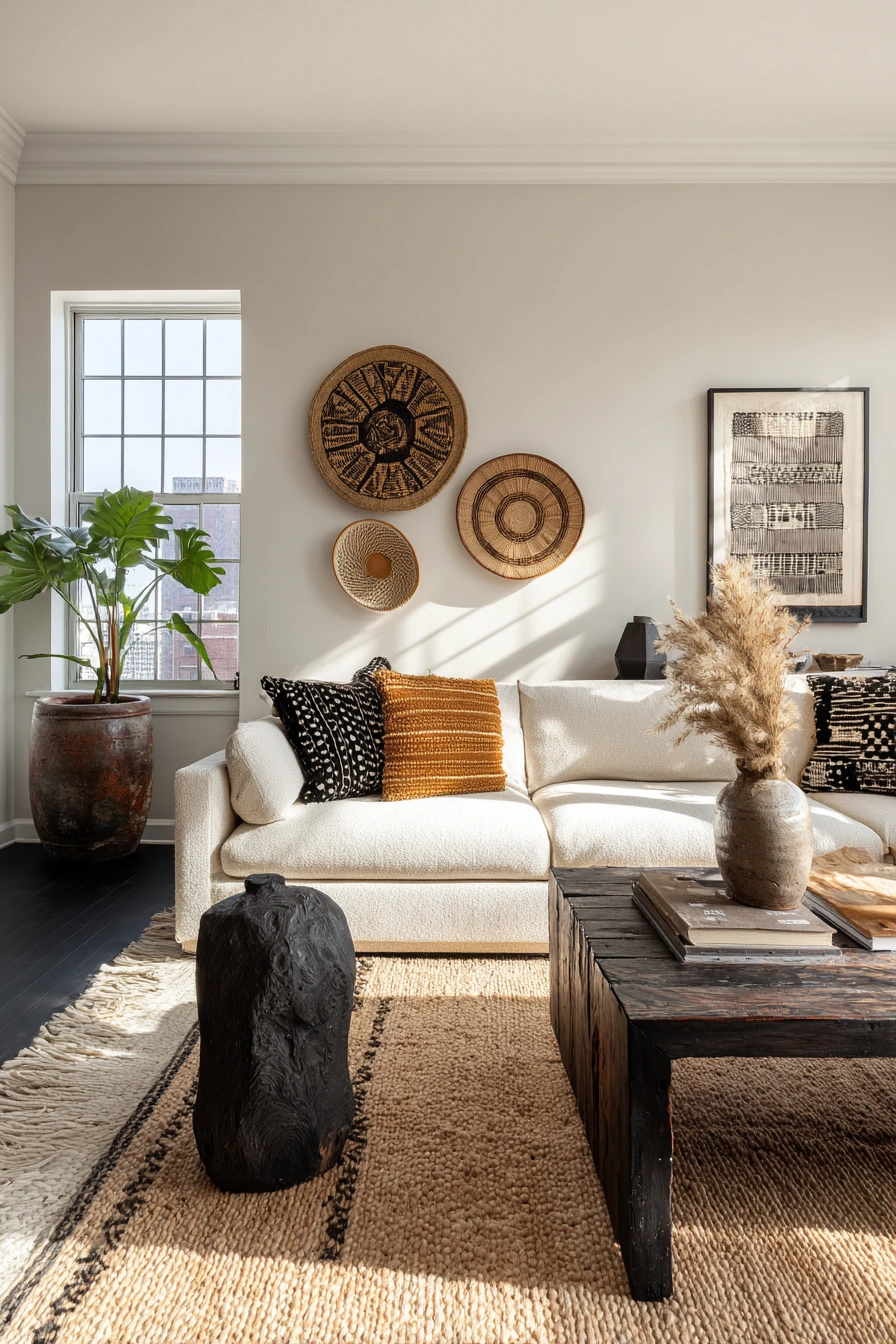
4. Afrohemian Living Room With Natural Texture and Layered Textiles

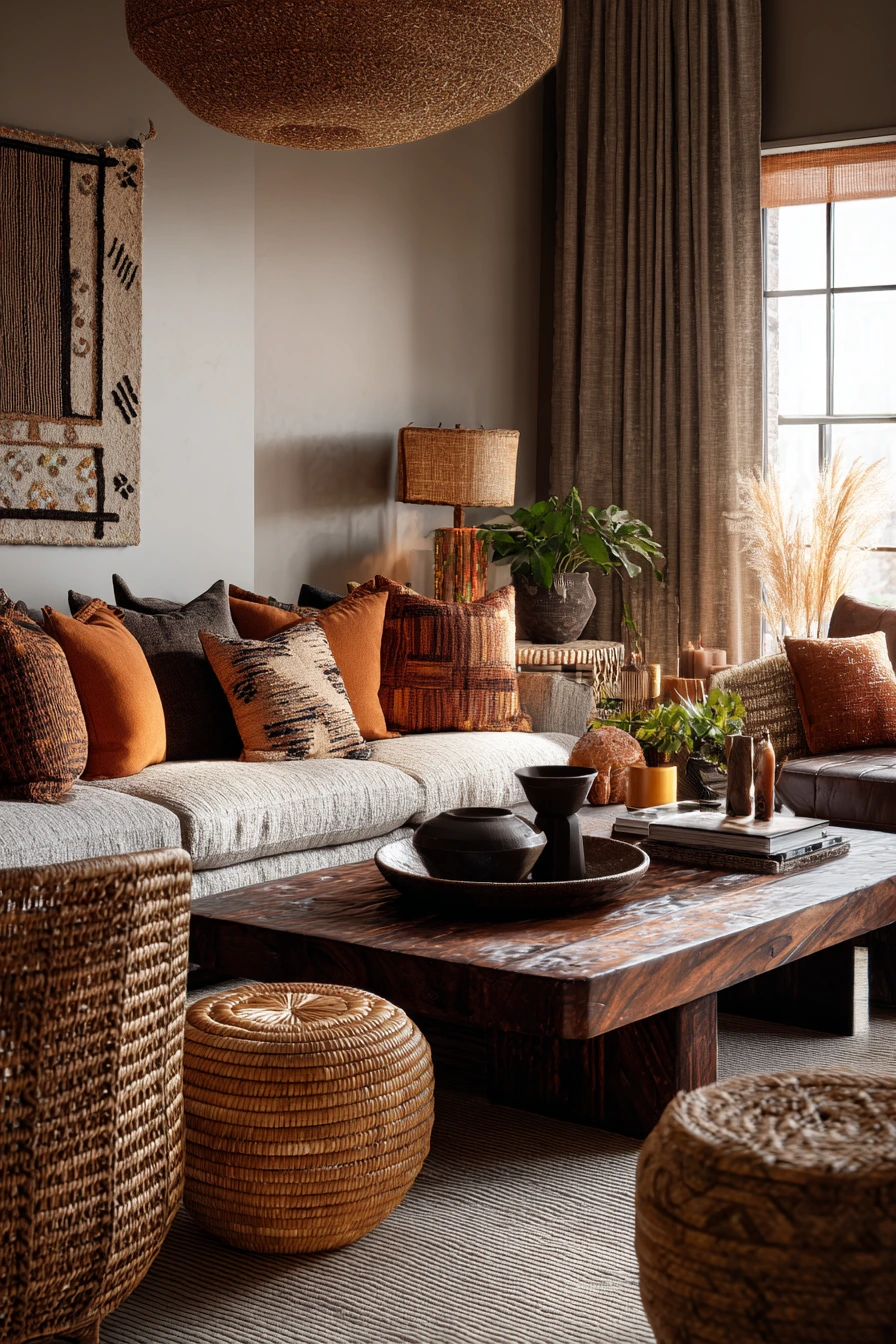
This afrohemian living room is all about touchable texture. Woven seating, wooden coffee tables, and layered textiles inspired by African craftsmanship create depth you can see and feel. Warm browns, muted oranges, and soft neutrals keep it cozy.
Start with a neutral base, then add tribal patterns through pillows, throws, and a second rug. Choose furniture with visible grain and simple shapes so the textiles stay in focus. Handmade decor like baskets, pottery, and carved pieces adds story without needing bright color.
Use sunlight to highlight material contrast. Place woven seating near the window, and keep reflective items minimal so the room stays soft. Balance rough textures (jute, raw wood) with one smoother element (linen sofa, cotton throw) so it does not feel scratchy.
- Layer rugs: a large natural fiber rug under a smaller patterned one.
- Mix weave sizes, like tight basket weave with chunky knit or boucle.
- Use a wooden tray on the coffee table to group small items.
- Add one muted orange accent in pillows or art to warm the palette.
- Choose closed storage baskets to reduce visual mess.
Pro Design Tip: Repeat the same texture at least three times (for example, woven pieces) to make the room feel tied together.
Budget Considerations: Woven chairs can cost a lot; try one woven accent chair and use poufs or stools for the rest of the extra seating.


5. Cozy Afrohemian Living Room Corner Styling
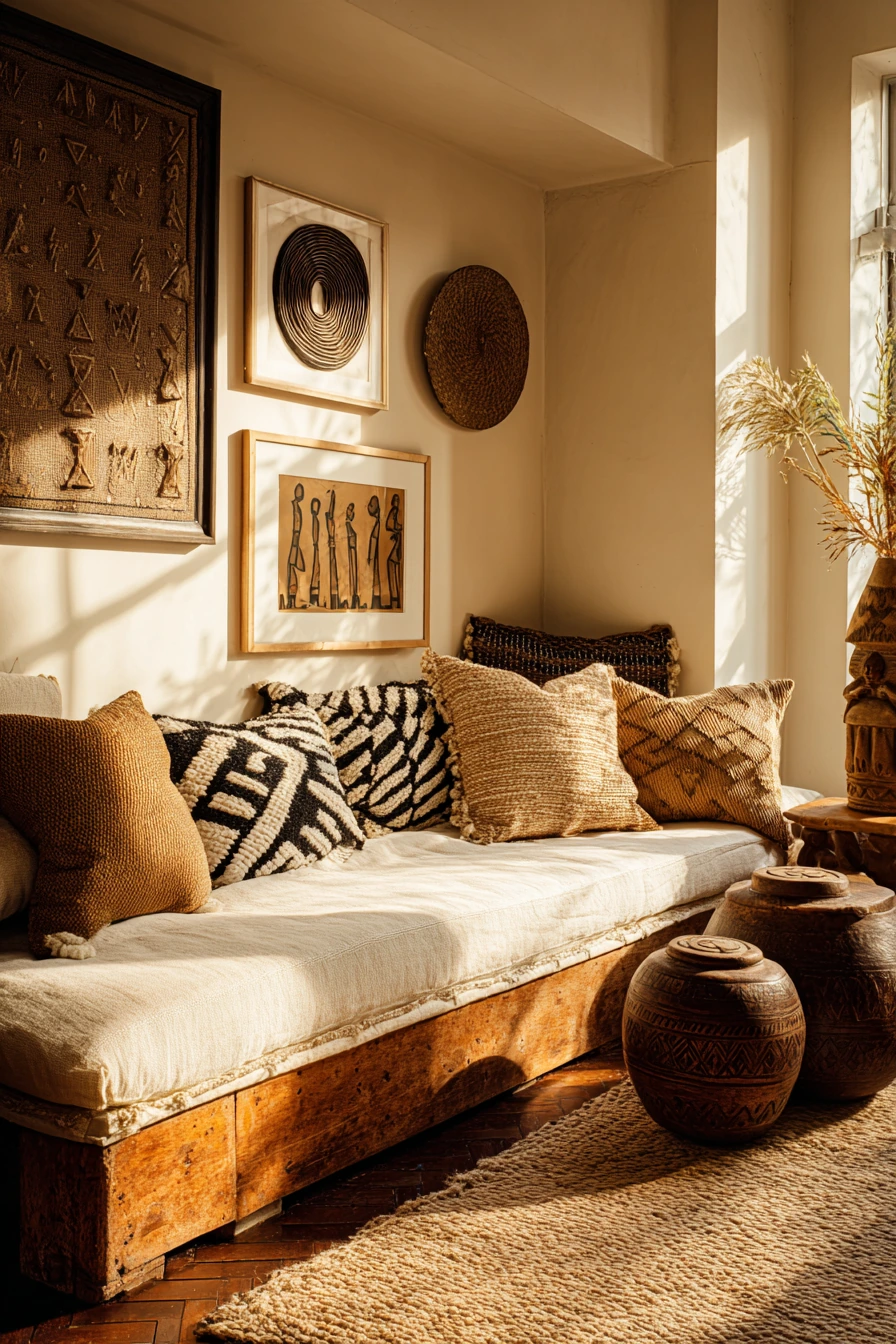
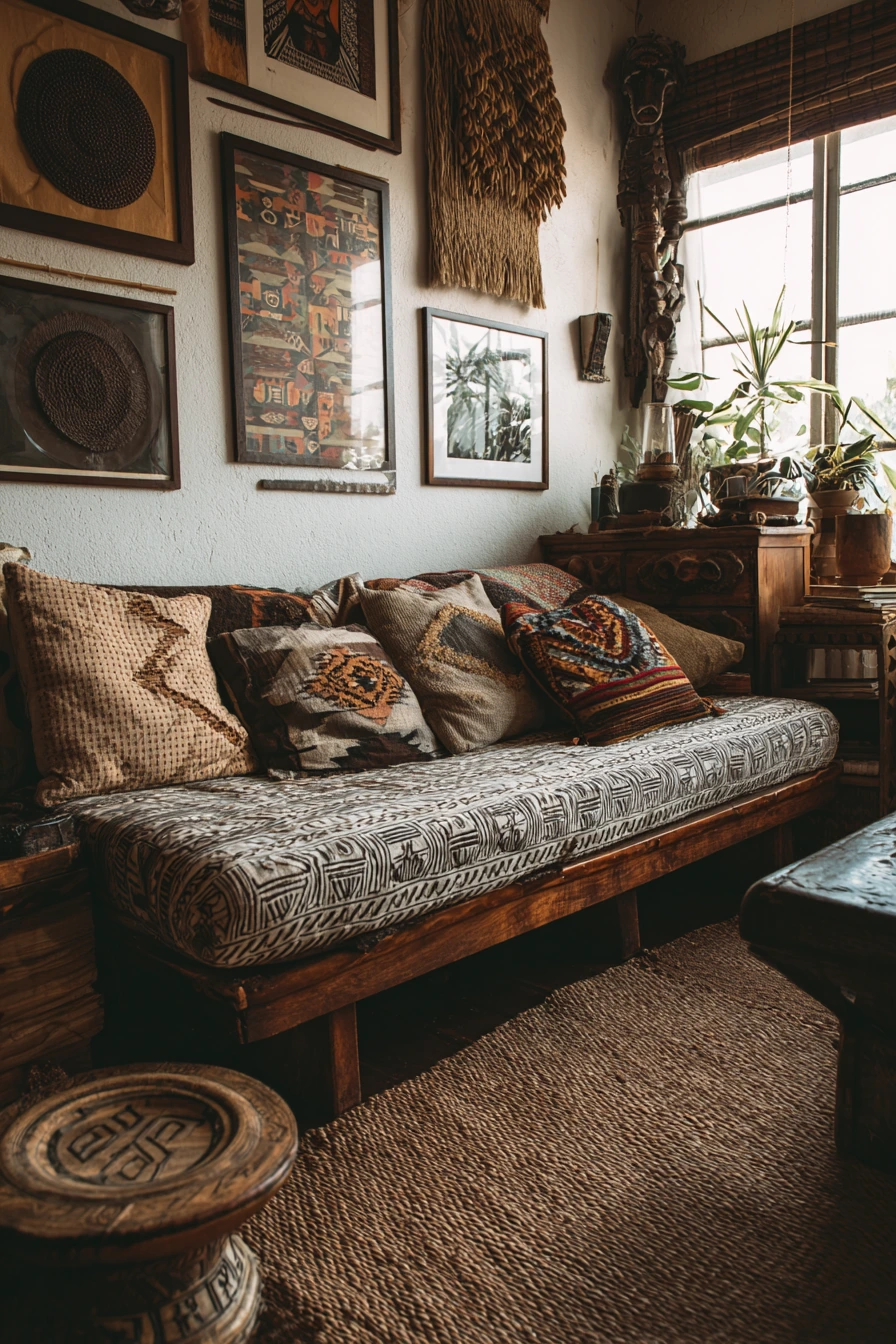
A cozy afrohemian living room corner is a smart way to try the style without changing the whole room. With a low sofa, patterned cushions, and carved wood accents, you can build a warm spot for reading, tea, or quiet time.
Start with a small seating piece and a woven rug to define the corner. Add cushions with African-inspired patterns, then bring in one or two carved wooden accents like a side table or stool. Keep the color palette warm and natural so the corner blends with the rest of the home.
Wall decor matters in a small space. Use framed African art and one textured hanging to add height. Place a lamp or rely on soft window light to make the fabrics look inviting. Add a small basket for throws so the corner stays neat.
- Use a corner rug that is at least as wide as the sofa for a grounded look.
- Mix one bold pillow with two quieter pillows to avoid overload.
- Hang art at eye level when seated, not standing.
- Add a small tray on a stool for a book and cup.
- Keep one open spot on the wall so it does not feel crowded.
Pro Design Tip: In a corner vignette, vary height on purpose: low sofa, mid stool, taller art or plant to create a strong shape.
Budget Considerations: Print affordable African art downloads and use thrifted frames; spend more on one textured wall hanging for a handmade focal point.
6. Bold Pattern Afrohemian Decor Living Room With Rich Textures
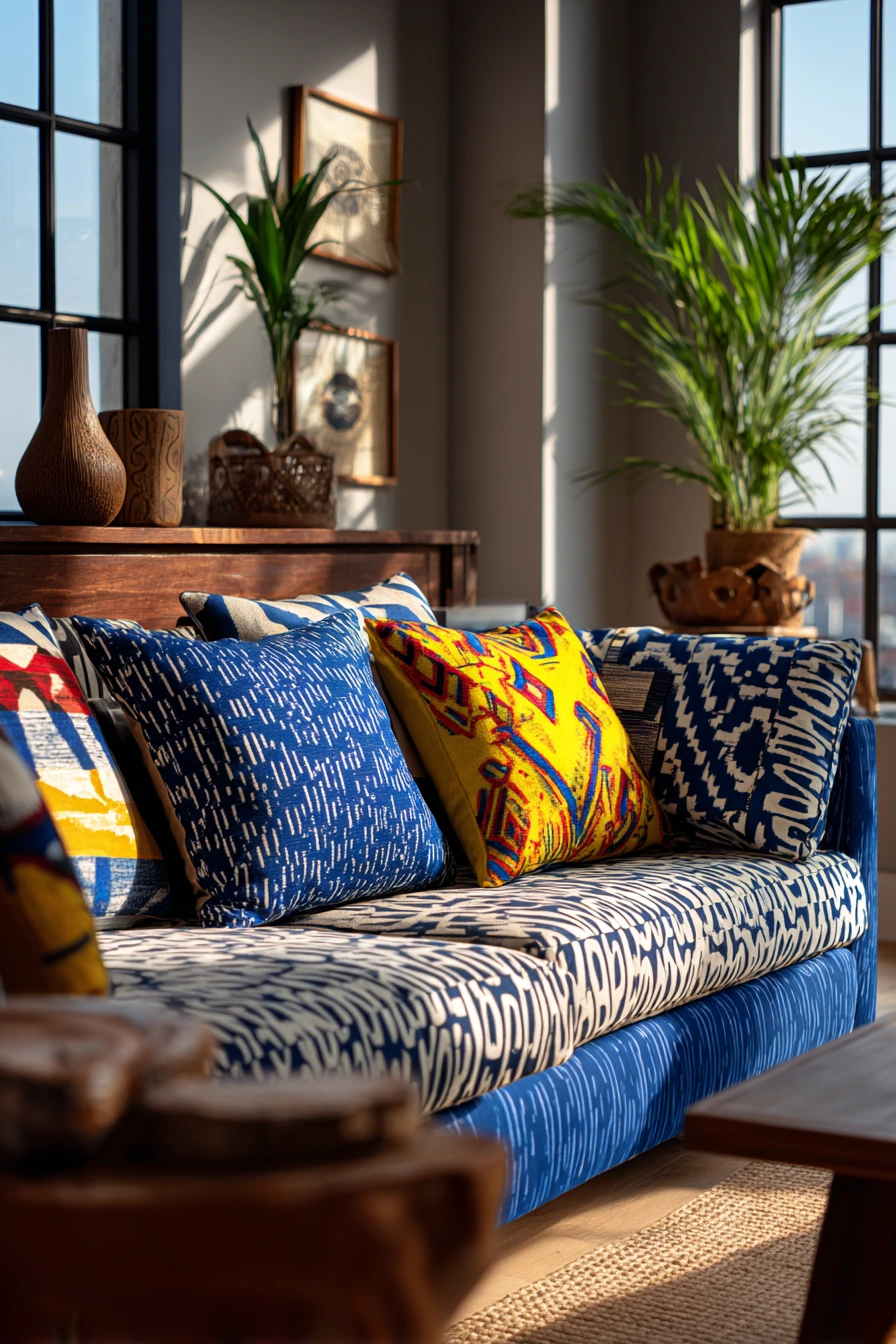

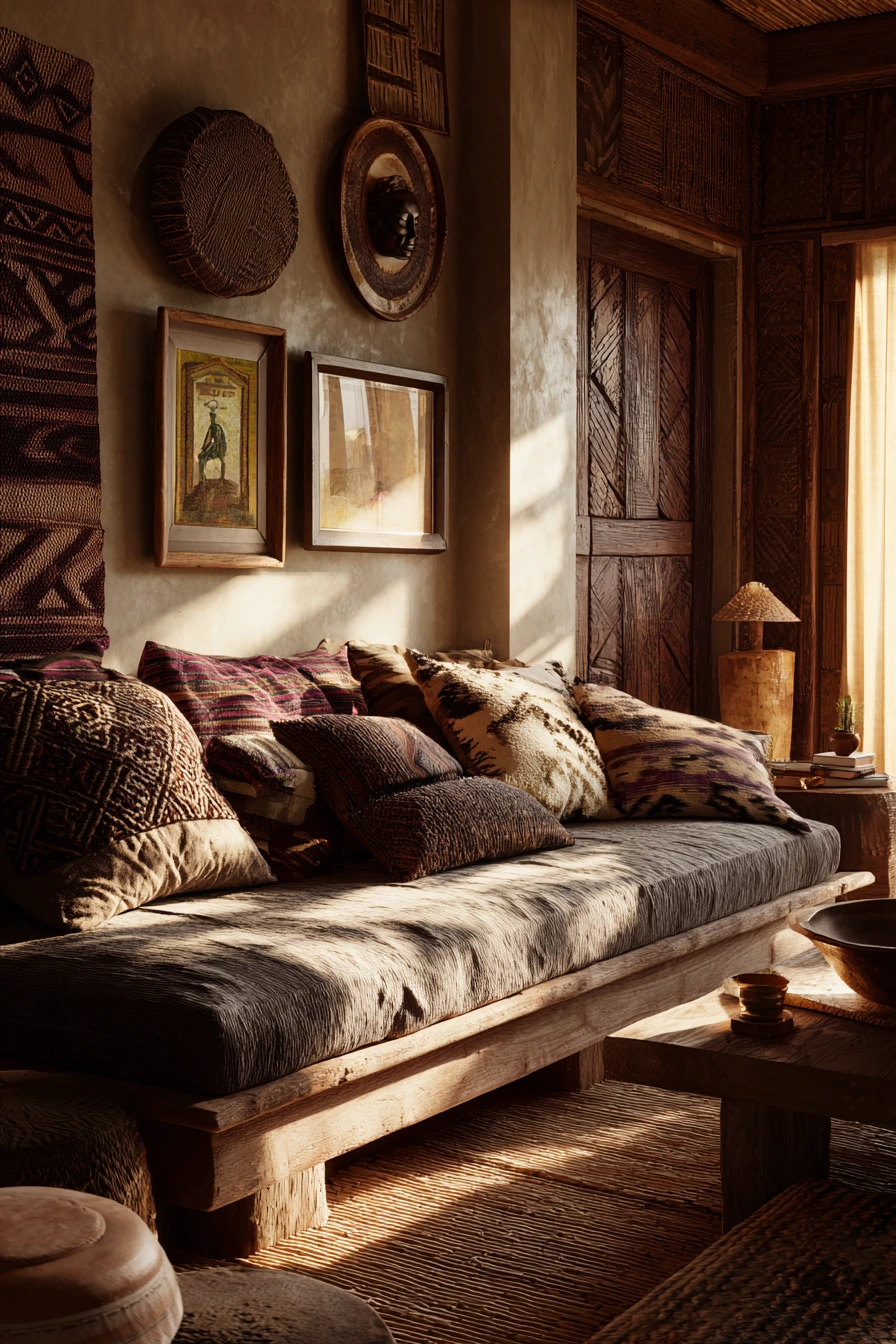
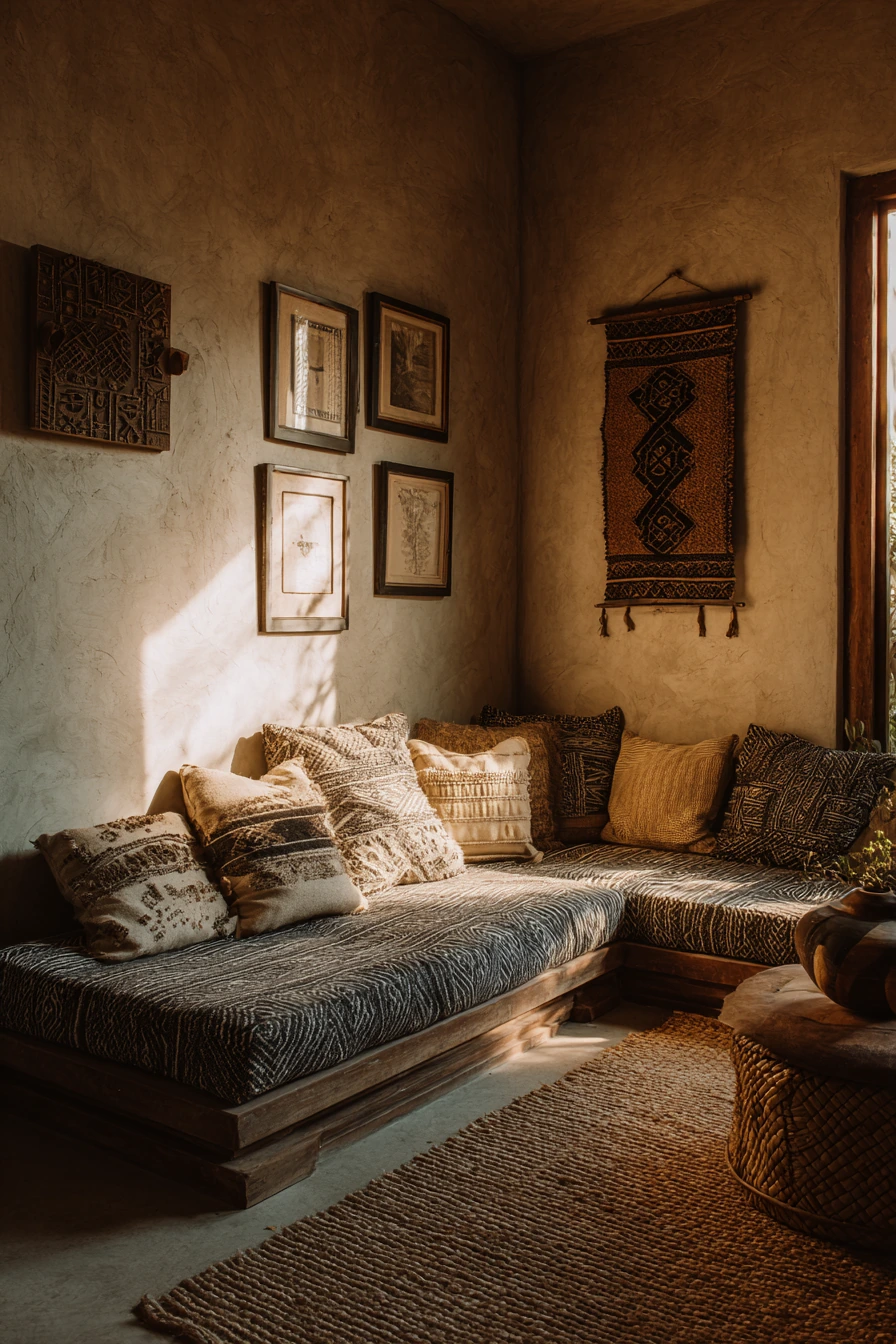
A bold pattern afrohemian decor living room uses expressive prints but still feels balanced. The key is pairing vibrant geometric cushions with a neutral base. This lets the patterns shine without taking over the whole space.
Choose a sofa in cream, tan, or warm gray. Then add pillows in strong colors pulled from African textiles, like rust, black, ochre, and deep green. Keep the coffee table and side pieces in wood to add warmth and to break up the color blocks.
Handmade decor brings depth. Use a few pottery pieces, a carved object, and one large wall art moment. Let natural sunlight brighten the room and show the pattern detail. If the room starts to feel loud, remove one pattern and replace it with a solid texture like linen or wool.
- Use one “hero” pattern and support it with smaller, simpler prints.
- Repeat one bold color in two places, like pillows and a throw.
- Keep rugs more neutral when pillows are very bright.
- Use black accents in small doses to sharpen the look.
- Group handmade decor in sets of three for a clean display.
Pro Design Tip: Balance pattern scale: mix one large print, one medium, and one small so the eye can rest.
Budget Considerations: Swap pillow covers instead of buying new inserts, and look for remnant fabric to DIY covers with simple envelope seams.
7. Neutral Afrohemian Living Room in Beige and Sand Tones
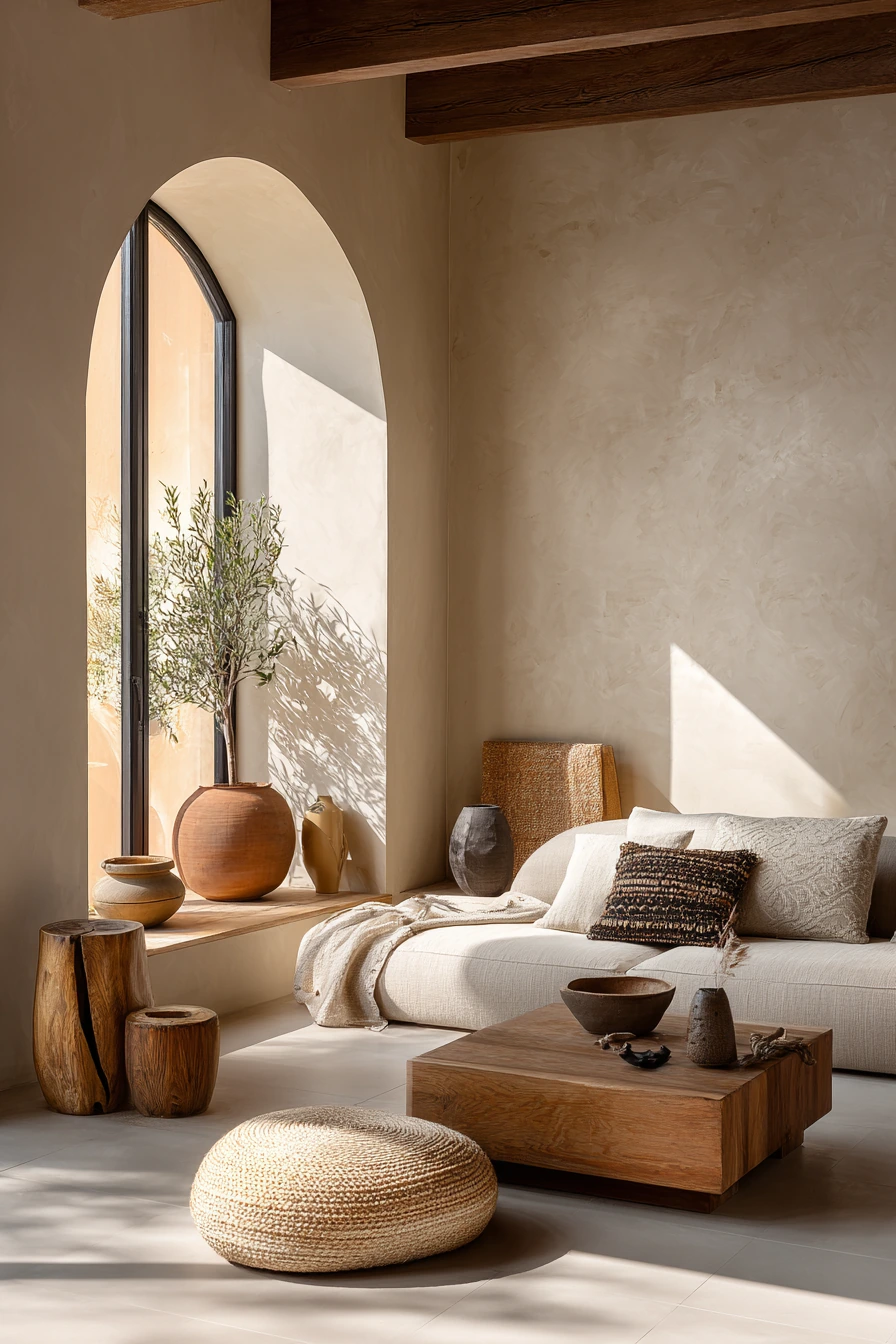
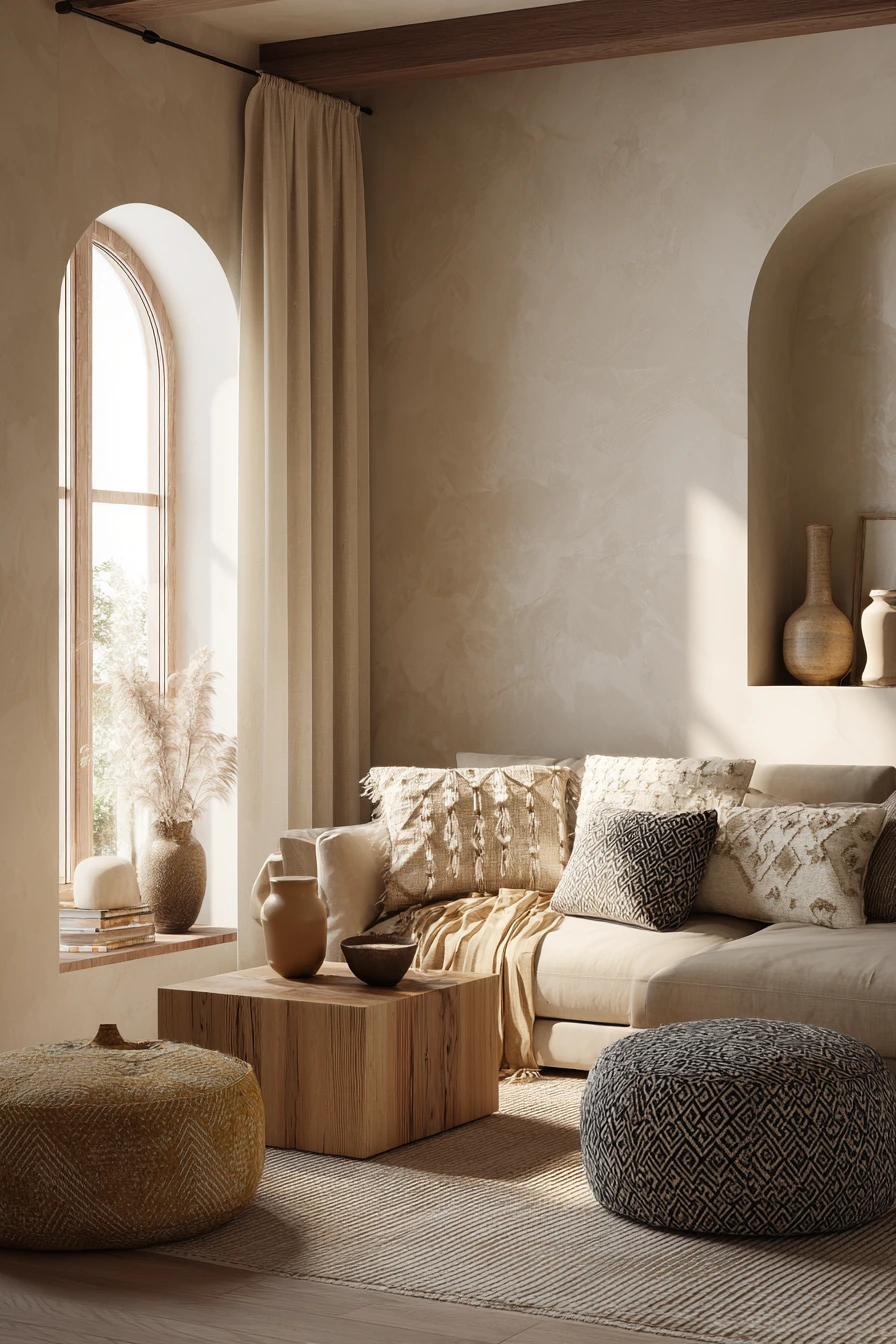
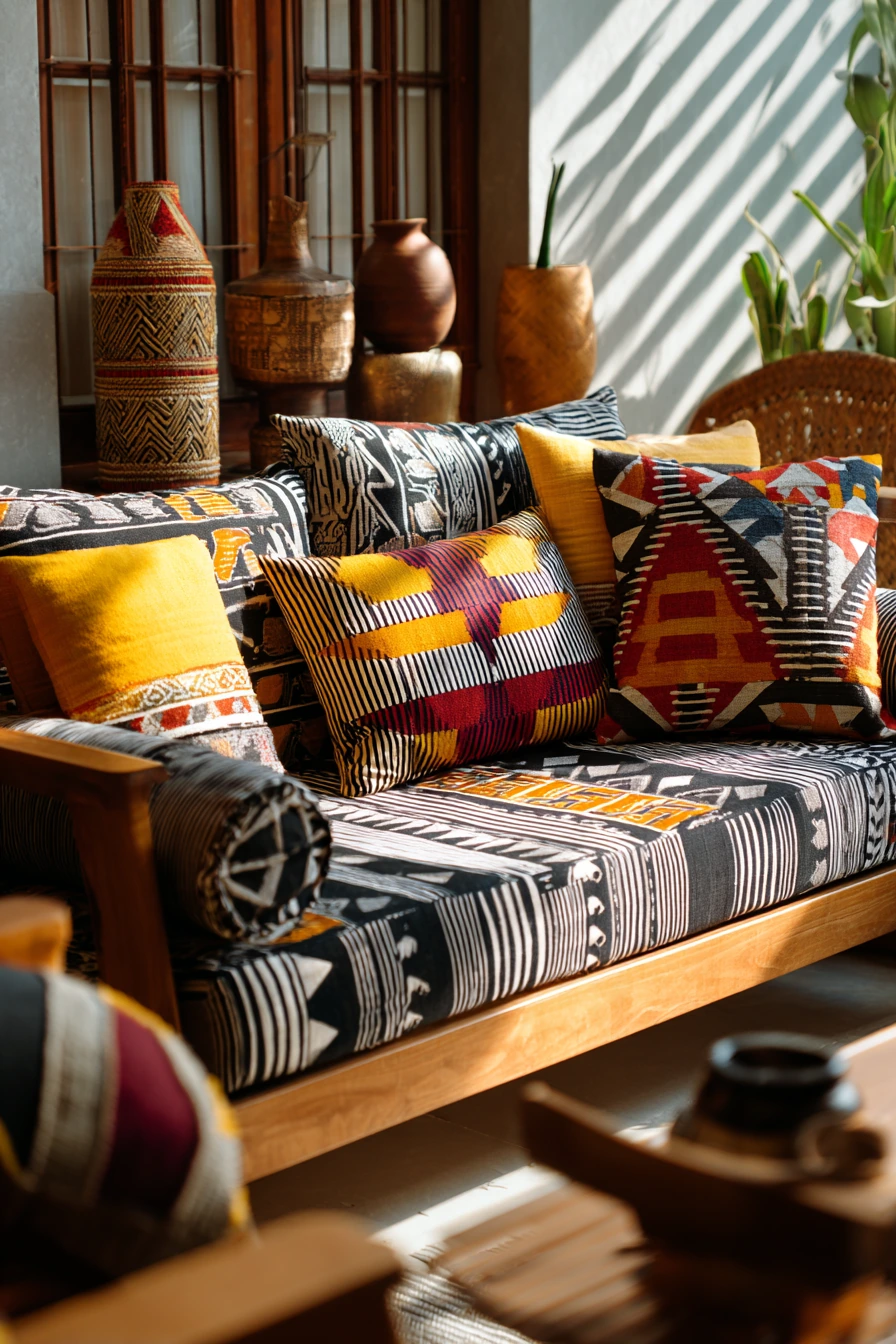
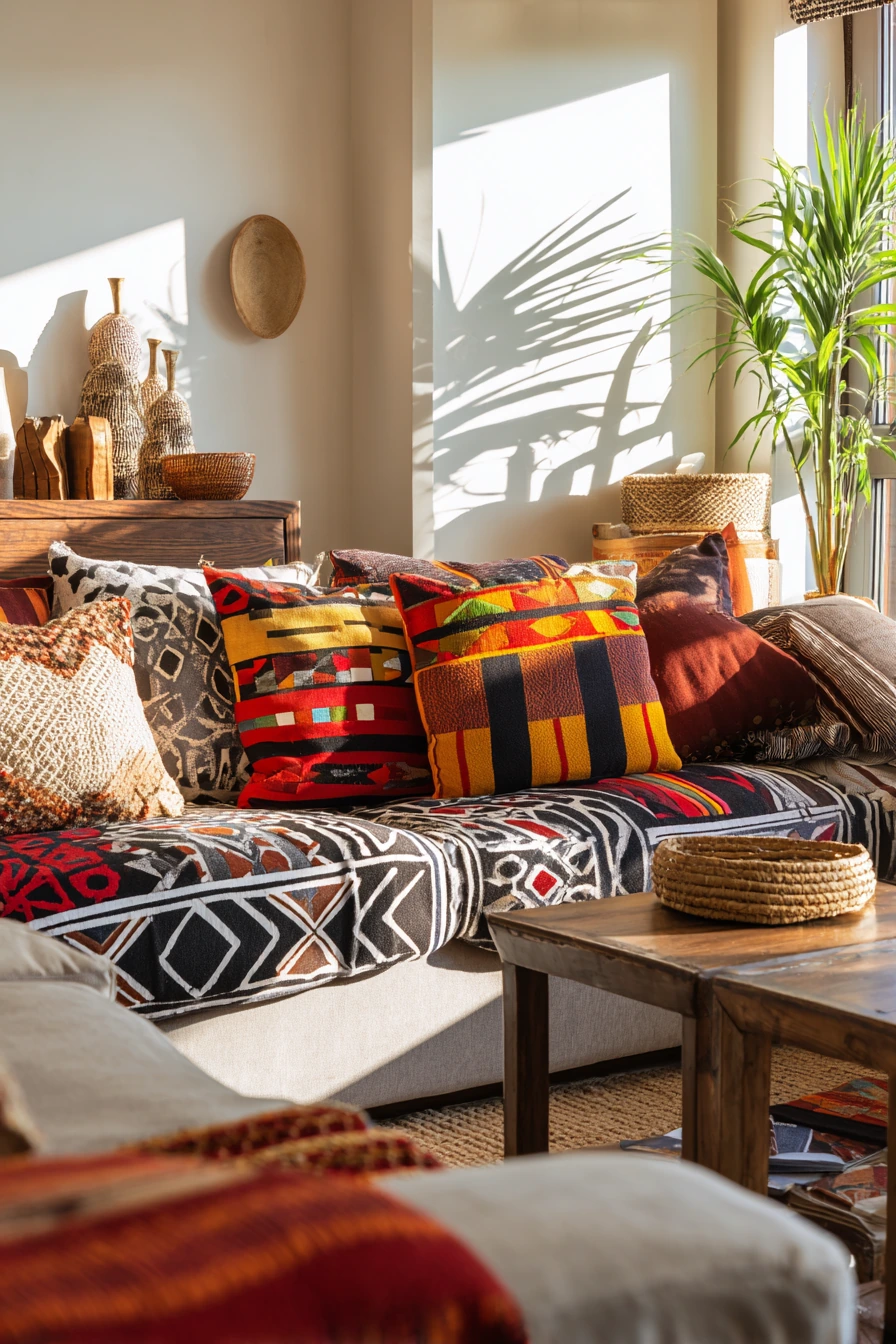
A neutral afrohemian living room in beige and sand tones is calm and easy to live with. This look uses subtle African-inspired patterns and natural materials, so the texture does the talking. It is a great fit for small spaces and open floor plans.
Start with sand-toned walls or a warm off-white. Add soft seating and wooden furniture with rounded edges for a gentle feel. Bring in ceramic accents in cream or light clay, and choose pillows with quiet patterns like small stripes, simple geometrics, or tone-on-tone motifs.
Keep decor minimal, but not empty. A woven basket, a textured throw, and one wall piece can be enough. Let sunlight fill the room and highlight the rug and ceramics. If the room feels flat, add contrast with a darker wood frame or a deep brown vase.
- Use three neutrals: cream, beige, and warm brown for a layered look.
- Choose one textured fabric like bouclé, linen, or cotton slub.
- Pick matte ceramics to keep the room soft and calm.
- Add one dark wood accent to keep the palette from washing out.
- Use baskets to hide small items like remotes and chargers.
Pro Design Tip: In a neutral room, lighting matters more; use warm bulbs and a shade made from linen or woven material to keep the glow soft.
Budget Considerations: Neutral updates can be low cost: change pillow covers, add a woven throw, and thrift a ceramic vase in a similar tone.
8. Greenery-Filled Afrohemian Living Room With Plants and Woven Decor
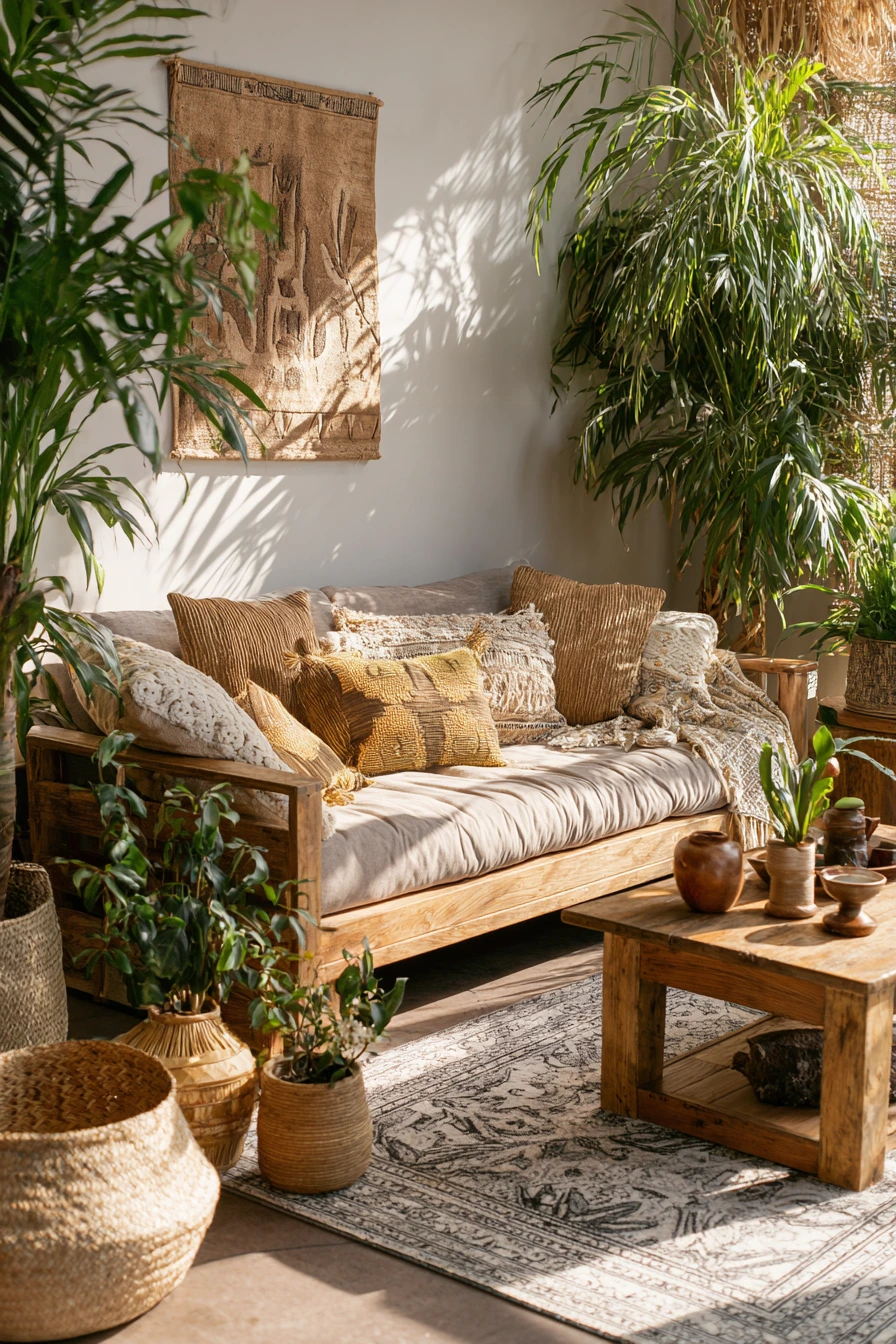
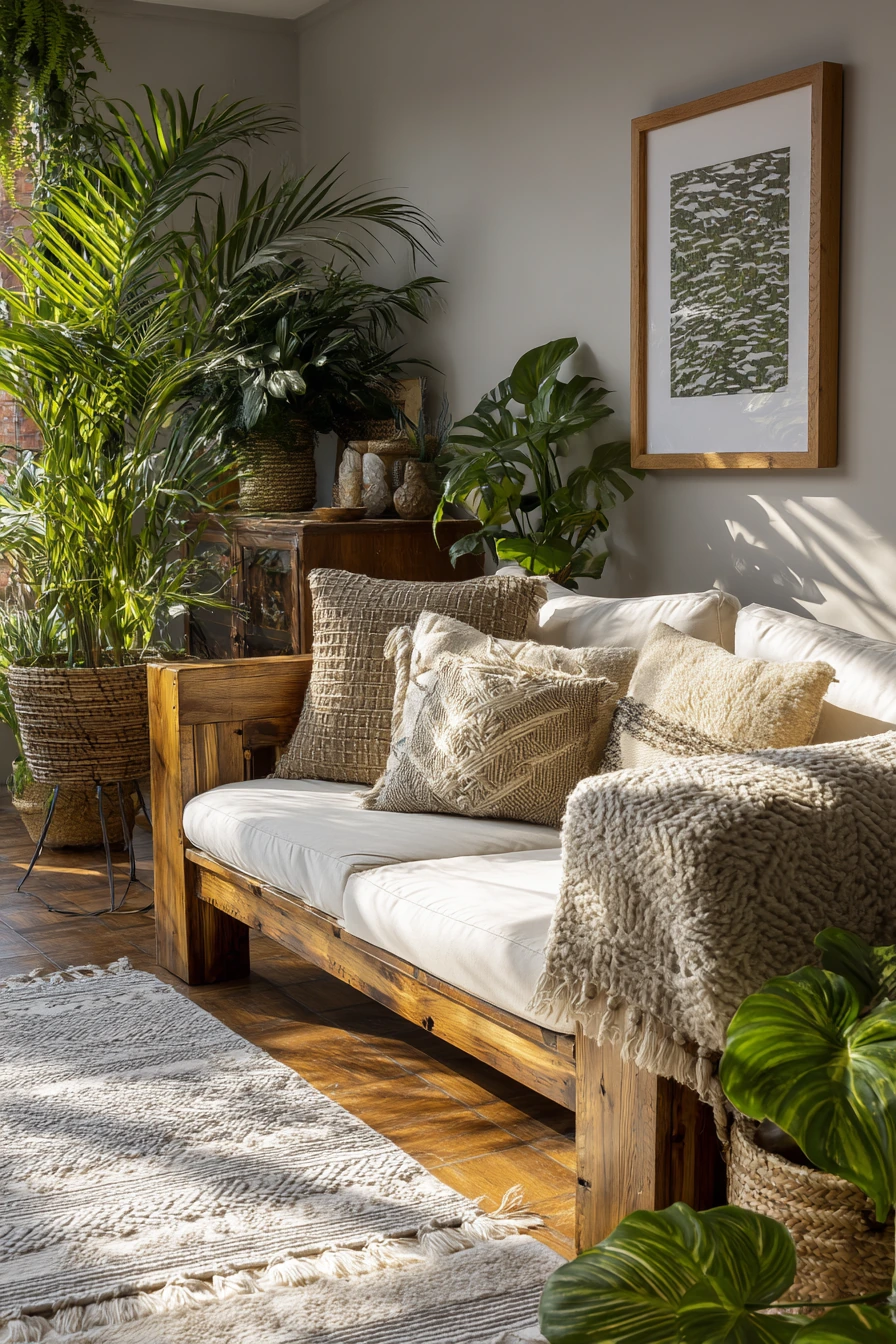
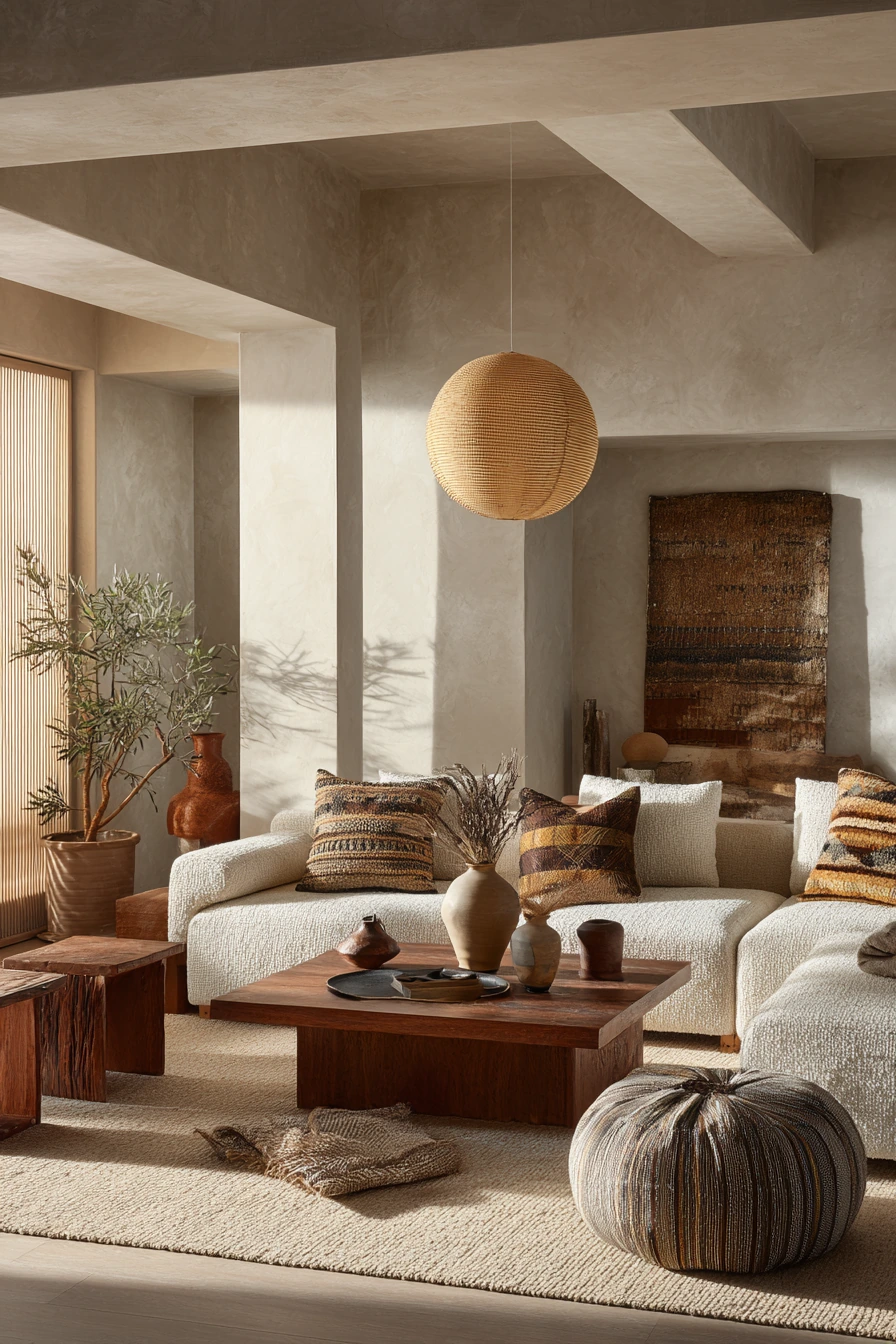
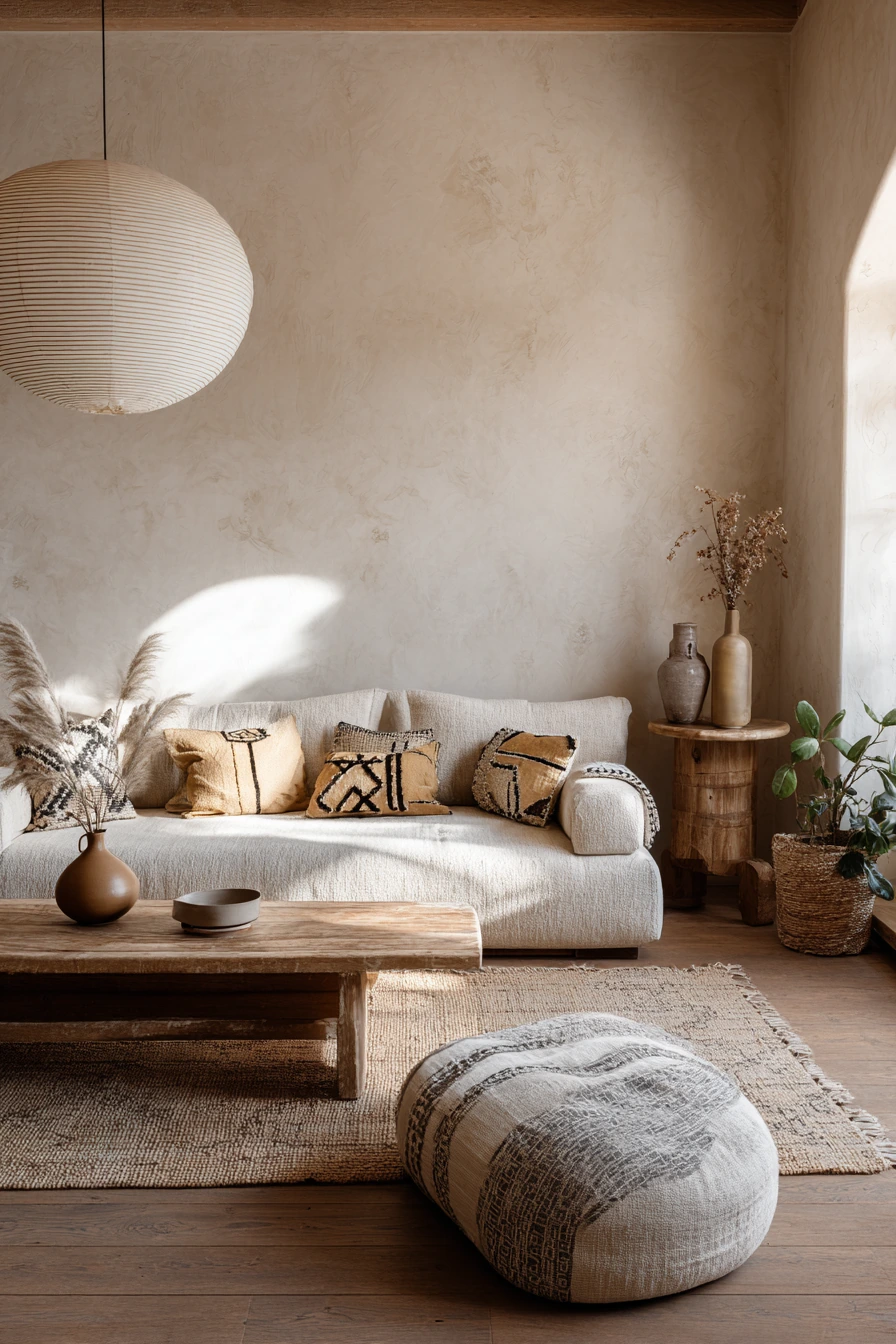
An afrohemian living room with lush greenery feels fresh and relaxed. Plants soften wood furniture and woven decor, and they add life to earthy cushions and layered rugs. This style works best when you keep planters and textiles in a tight color range.
Start with natural wood furniture and a sofa in a neutral tone. Add earthy cushions and throws, then place African-inspired art and pottery where they can be seen from the main seat. Use layered rugs to define zones, especially if the room is open to dining or a hallway.
Bring in plants at different heights: one tall floor plant, a medium plant on a stand, and a small one on a table. Keep the sunlight strong by using light curtains or none at all. If you have low light, choose tough plants and use a woven basket cover to make basic nursery pots look styled.
- Use planters in clay, woven baskets, or matte ceramics for a natural look.
- Group plants in odd numbers for a simple, full display.
- Keep one shelf or surface plant-free so the room feels balanced.
- Match green tones with a small accent color like rust or ochre.
- Dust leaves often so the room looks clean and bright.
Pro Design Tip: Treat plants like decor: repeat the same planter material (like woven baskets) across the room to make the greenery look planned.
Budget Considerations: Propagate easy plants from cuttings and use inexpensive nursery pots inside thrifted baskets to save money on large planters.
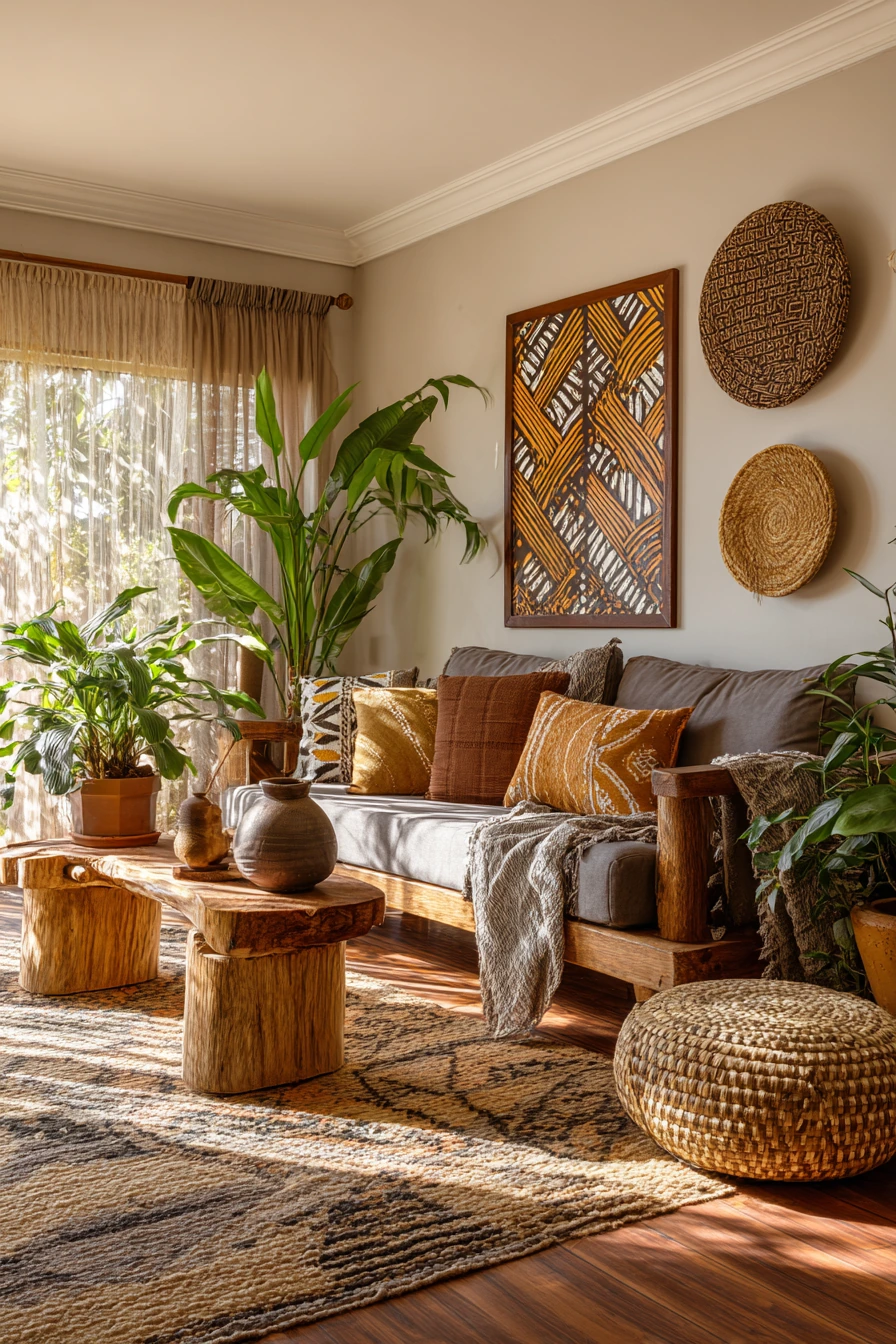
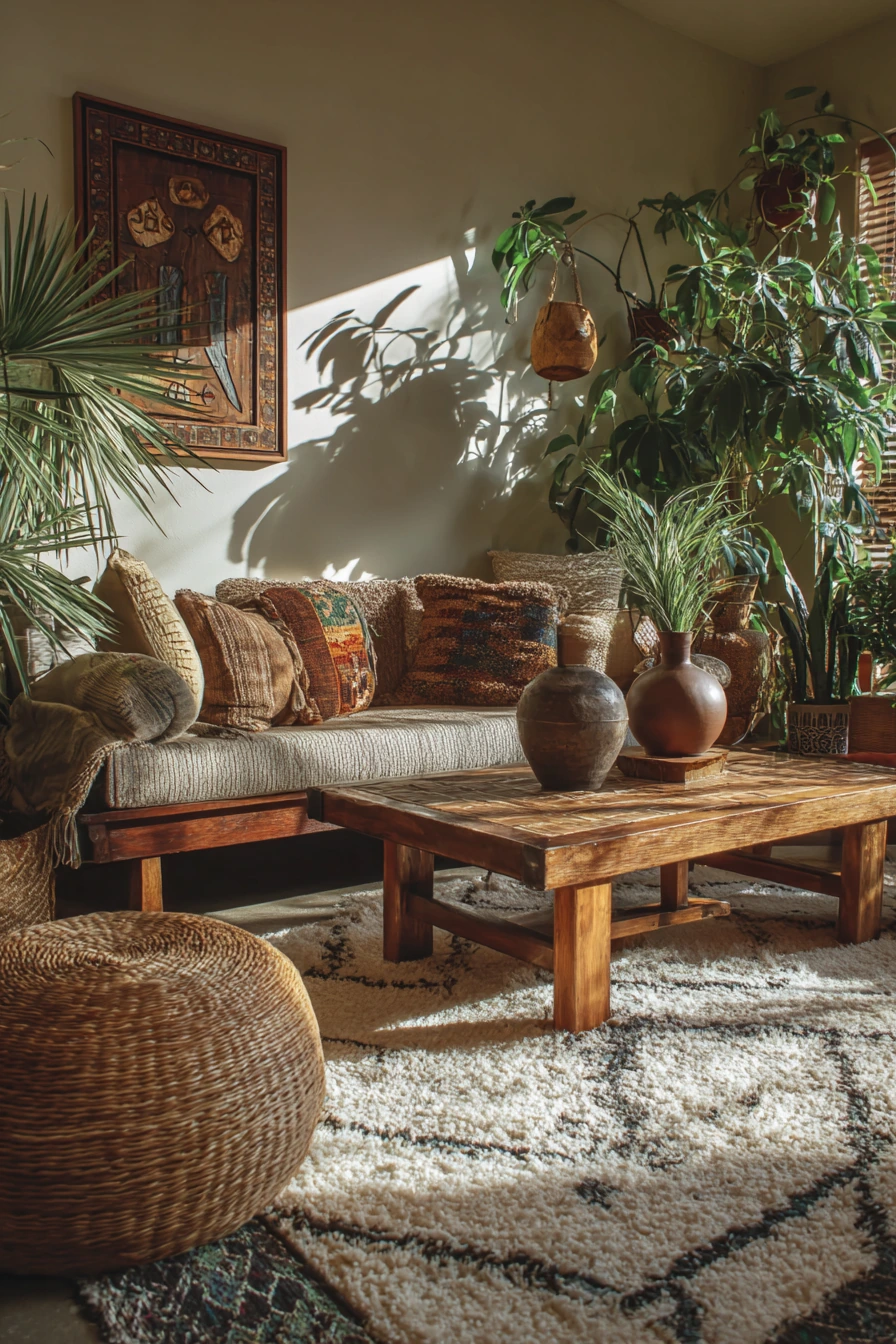
9. Rustic Afrohemian Living Room With Raw Wood and Tribal Patterns

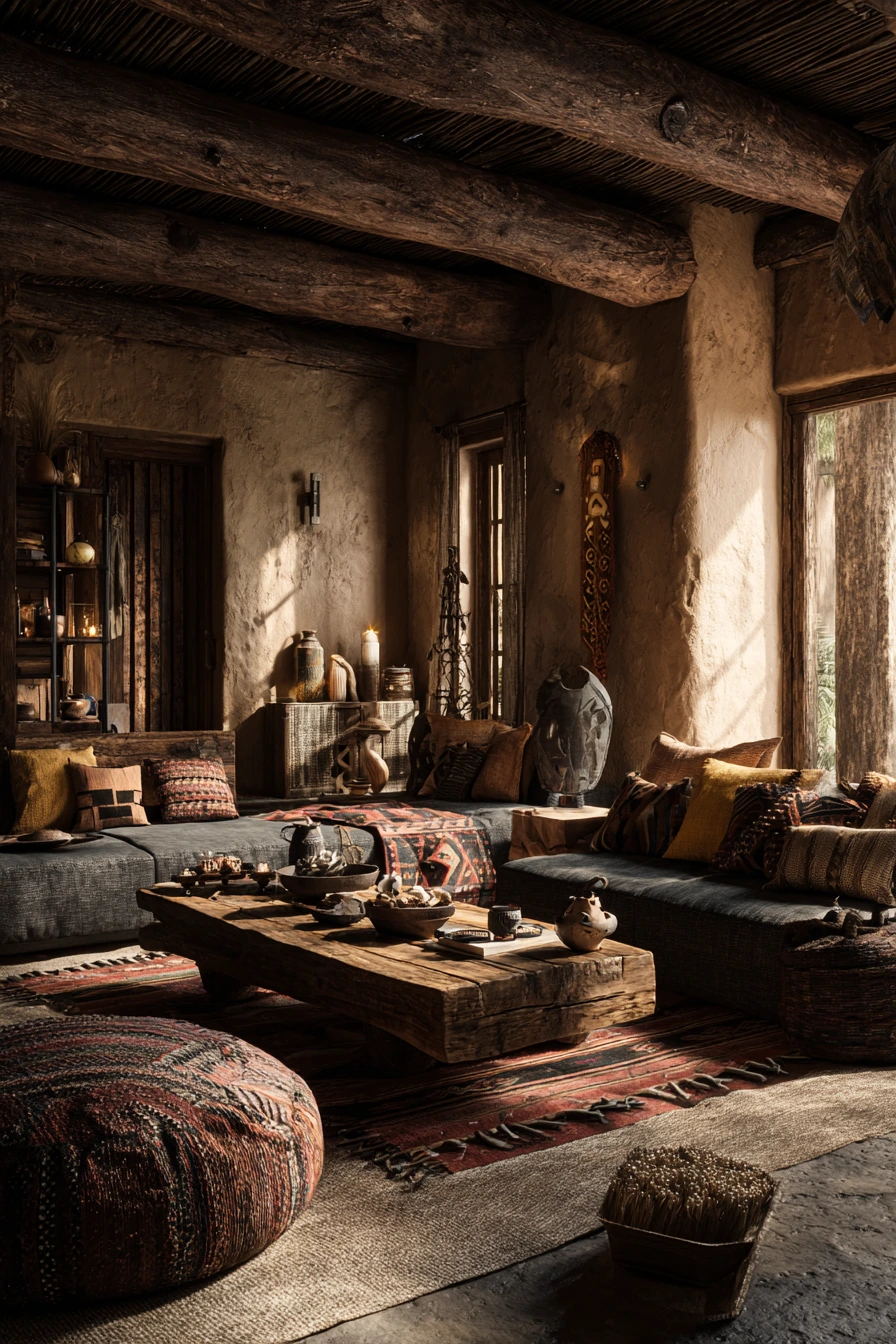
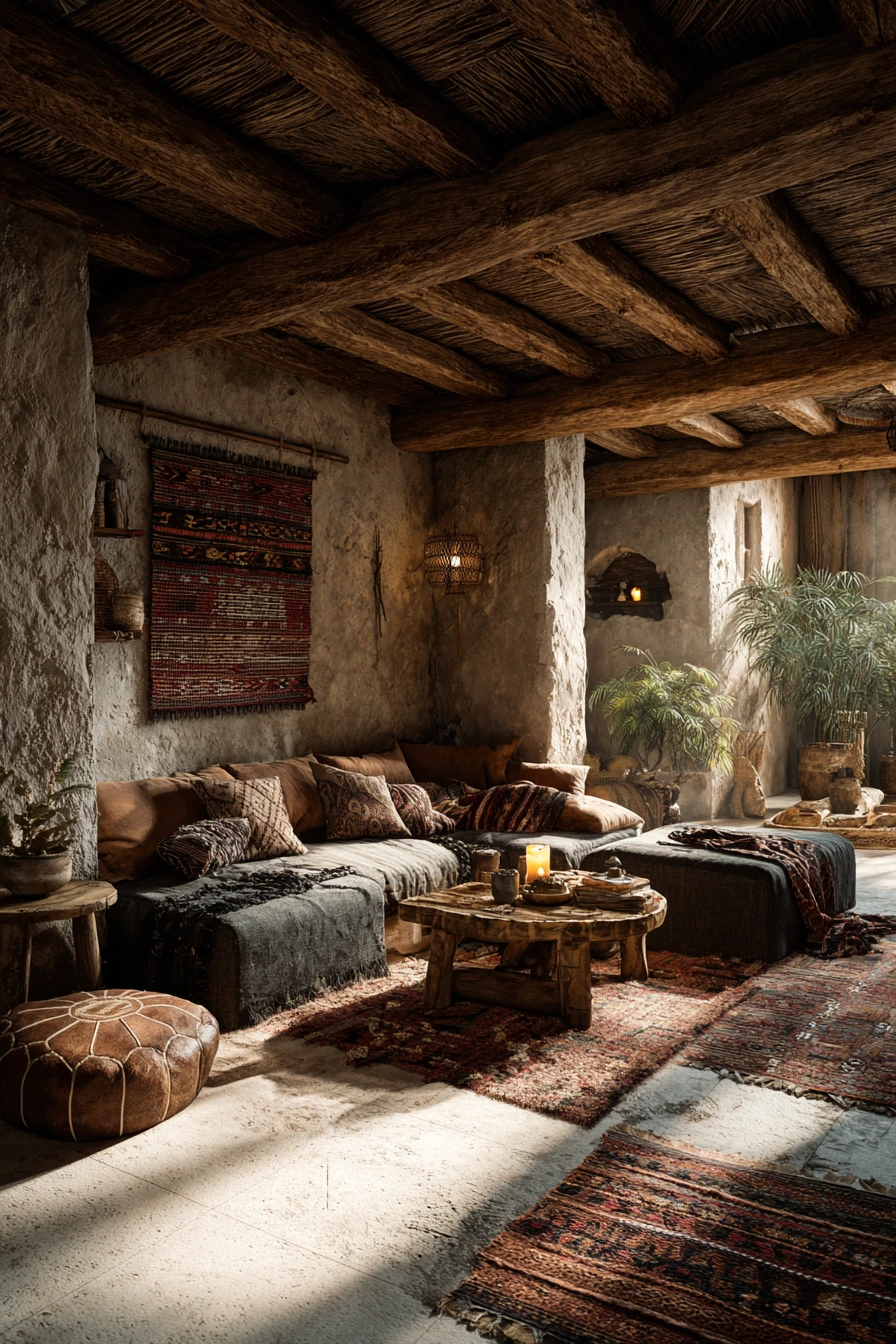
A rustic afrohemian living room celebrates raw materials and natural imperfections. Wooden beams, textured walls, and handcrafted furniture create a lived-in feel. Earthy textiles and tribal patterns bring cultural warmth and keep the space from feeling too bare.
Start by leaning into what the room already has. If you have beams or older wood, keep the finish natural. Add a sturdy wood coffee table and simple seating, then bring in pattern through pillows, throws, and a rug with a tribal-inspired motif. Choose warm tones like rust, brown, and muted orange to match the rustic base.
Decor should look collected, not staged. Use pottery, baskets, and a few carved objects. Let sunlight filter in softly to highlight wall texture and wood grain. If the room feels heavy, lighten it with a cream throw, a lighter rug layer, or a pale ceramic vase.
- Mix rough wood with soft textiles so the room stays comfortable.
- Use one large patterned rug instead of many small patterns.
- Pick hardware and accents in black or aged brass for a rustic finish.
- Display pottery in a cluster on one shelf for a clean look.
- Use a bench or trunk for storage and extra seating.
Pro Design Tip: Keep rustic rooms from feeling dark by using contrast on purpose: pair deep wood tones with light textiles and lighter art backgrounds.
Budget Considerations: Reclaimed wood can vary in price; check local salvage yards, or use wood-look pieces and add real texture with baskets and textiles.

10. Elegant Afrohemian Decor Living Room With Curated Art
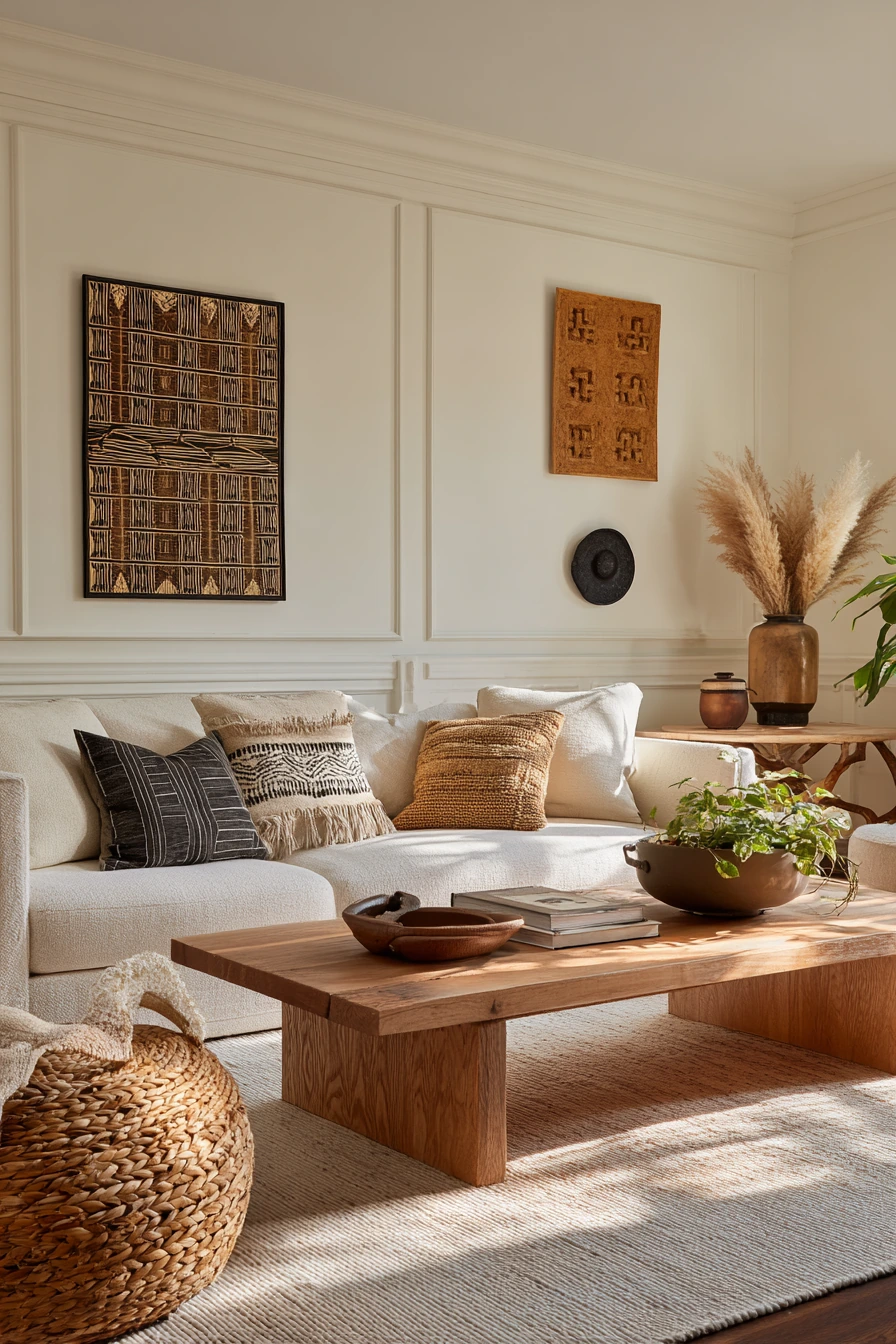

An elegant afrohemian decor living room blends refined styling with cultural warmth. The palette stays mostly neutral, but the room still feels soulful because the art and textiles have meaning. Think curated African art, high-quality fabrics, and a few woven accents.
Start with neutral walls and choose fewer, better items. A well-made sofa, a solid wood coffee table, and a clean rug set the base. Then add depth with textiles like linen, wool, or cotton in warm neutrals. Use woven baskets or a textured stool to keep the room from feeling too formal.
Curate the wall art like a small gallery. Pick pieces that share a tone, frame style, or subject so they feel connected. Keep surfaces simple with one pottery piece and one stack of books. Natural sunlight should stay part of the plan, since it makes the textures look soft and expensive.
- Use a limited palette: cream, tan, warm brown, and black accents.
- Choose one statement textile, like a patterned throw, not many.
- Frame art in matching wood tones for a polished look.
- Keep decor groups small and spaced out for a clean finish.
- Add one woven element to soften the refined pieces.
Pro Design Tip: To make the room feel elevated, repeat materials: match wood tones across frames and furniture, and keep metal finishes consistent.
Budget Considerations: Spend on one hero art piece or textile, then use affordable neutral basics for the rest so the room still looks curated.
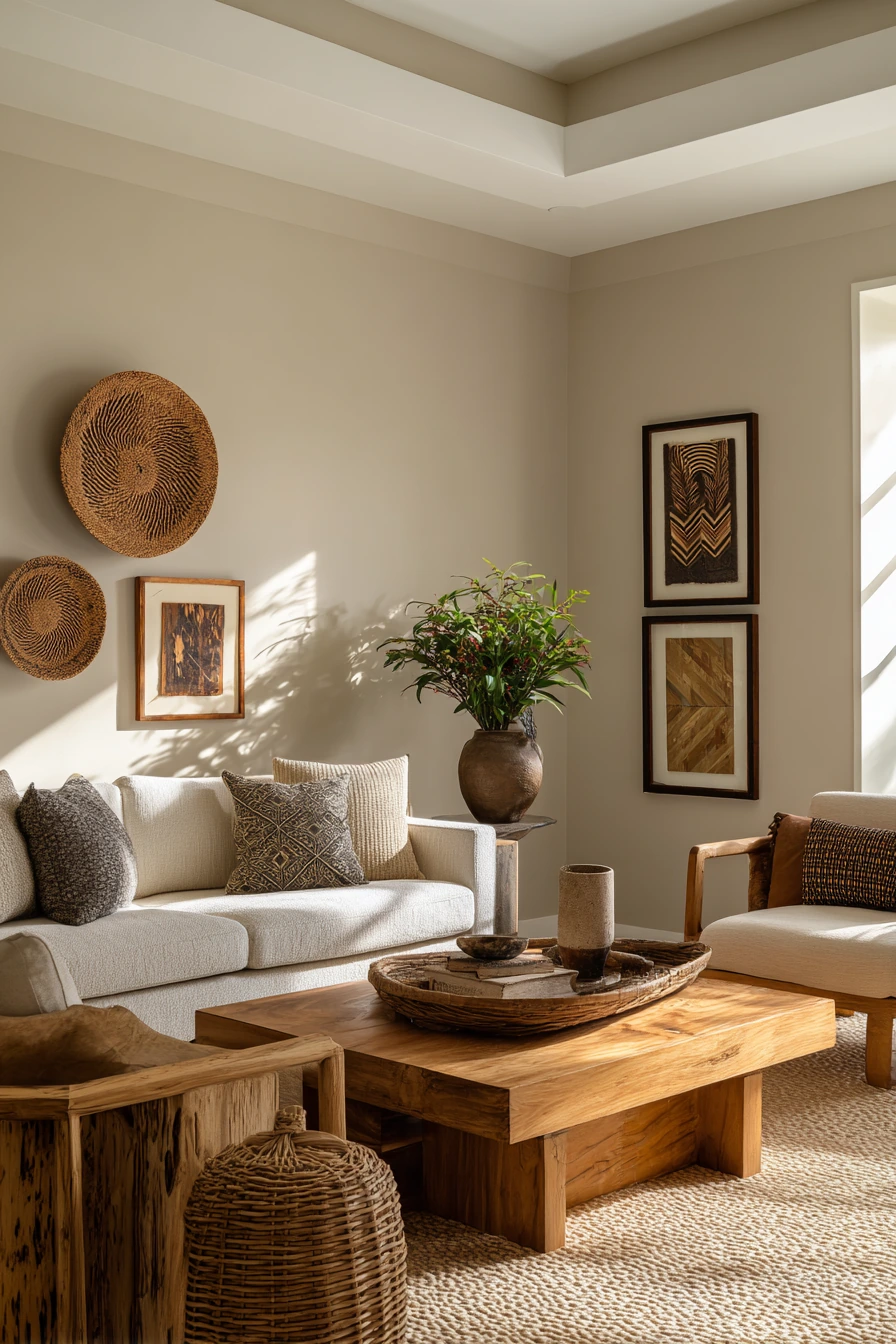
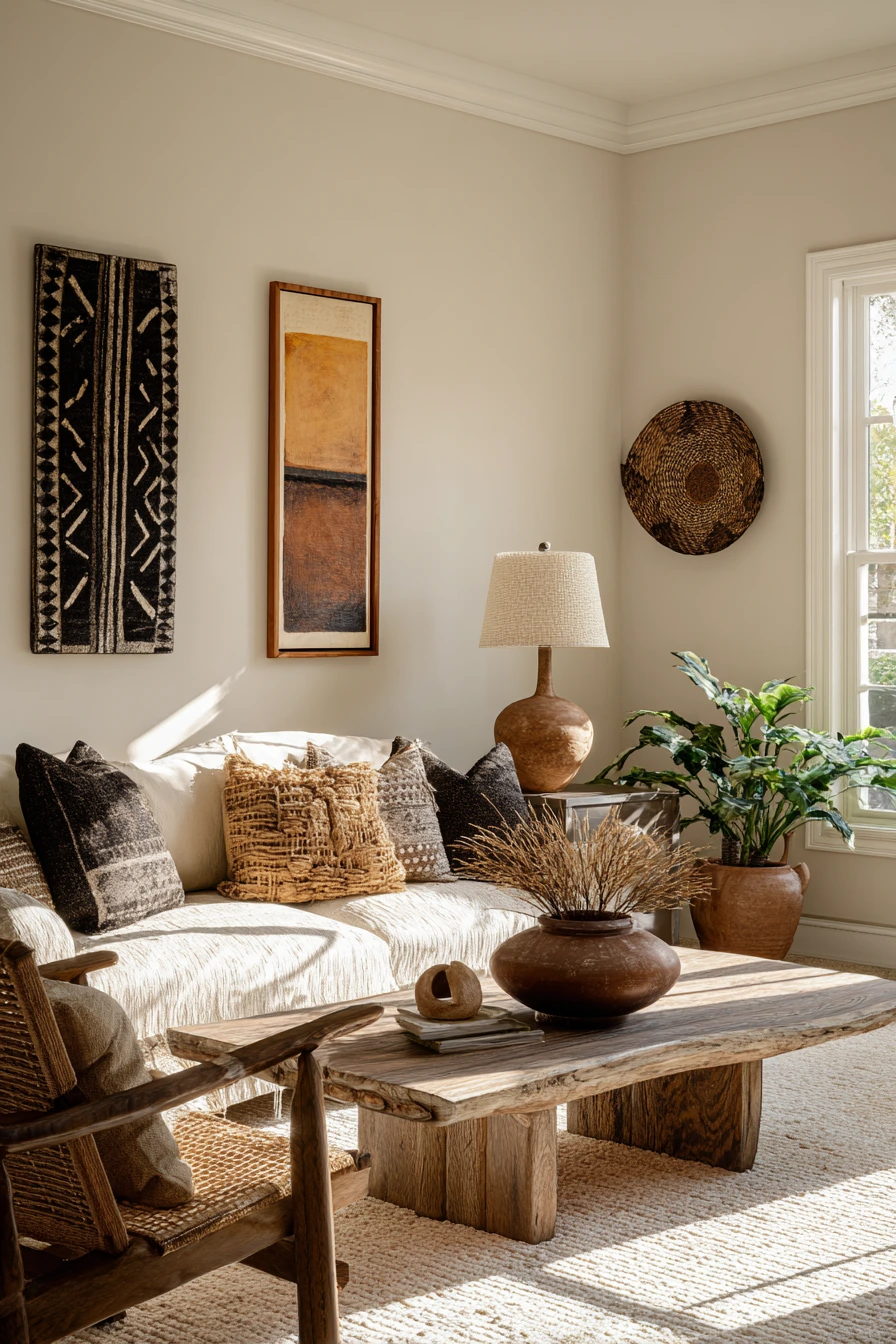
Afrohemian decor is easiest when you start with warm earth tones, natural wood, and layered textiles. Add cultural art and handmade pieces with care, and let sunlight highlight the textures.
If you are coming from Pinterest, pick one look from this list and copy it in a small zone first. Then expand the same colors and materials across the room.
FAQ
What is afrohemian decor in a living room? It is a mix of African-inspired patterns, art, and craftsmanship with boho comfort like layered rugs, relaxed seating, and natural materials.
How do I start an afrohemian living room on a budget? Start with pillow covers, a woven basket, and one piece of wall art. Use thrifted wood pieces and add texture with an affordable jute rug.
What colors work best for an Afro-bohemian decor living room? Terracotta, clay, sand, warm browns, cream, black accents, and small touches of ochre or deep green work well.
How many patterns should I use? Use 2 to 3 patterns and repeat one color across them. Balance bold prints with solids and textured neutrals.
What kind of rugs fit this style? Natural fiber rugs like jute or sisal, plus a smaller patterned rug layered on top, give warmth and depth.
What wall decor looks right in Afro-Bohemian style? Handwoven hangings, masks, framed African art, and pottery wall pieces work well. Keep spacing so it feels curated.
How do I keep the room from looking cluttered? Use baskets for storage, keep surfaces mostly clear, and group decor in small sets. Choose a few meaningful items instead of many small ones.