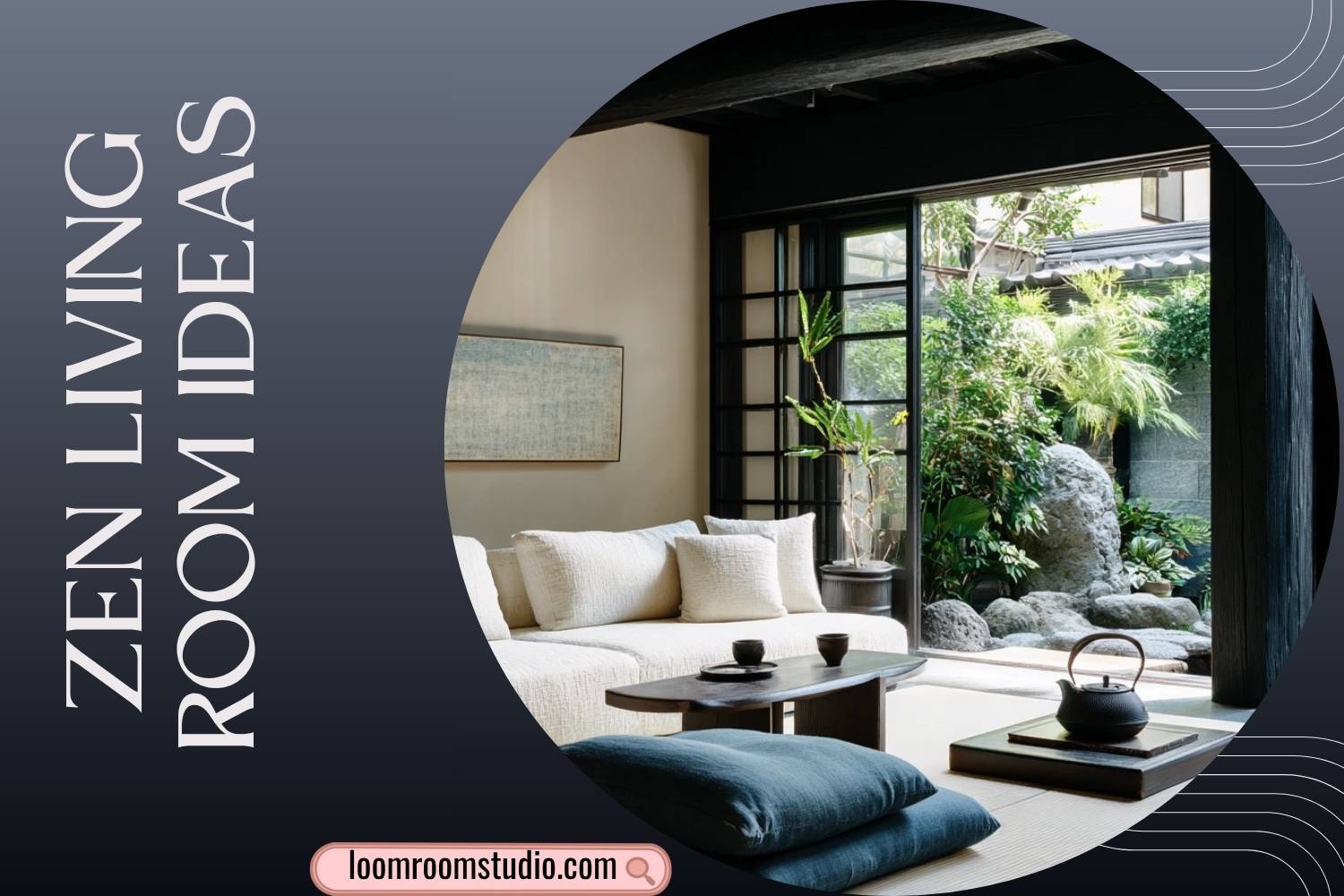

Zen living room ideas help you make a space that feels calm, clear, and easy to live in. You do not need a big house or a full remodel to get that quiet look.
In this guide, you will see 10 styles inspired by real materials like cedar wood, tatami tiles, shoji screens, lime-wash walls, and warm oak. Each idea includes simple steps so you can style the look in your own room.
You will also learn how to use light, texture, and fewer items to make the room feel more peaceful. These tips work for small apartments, family homes, and open-plan spaces.
Save the looks you like, then use the checklists to shop your home first and buy only what you need.
1. Minimalist Zen Living Room With Bamboo Forest Views

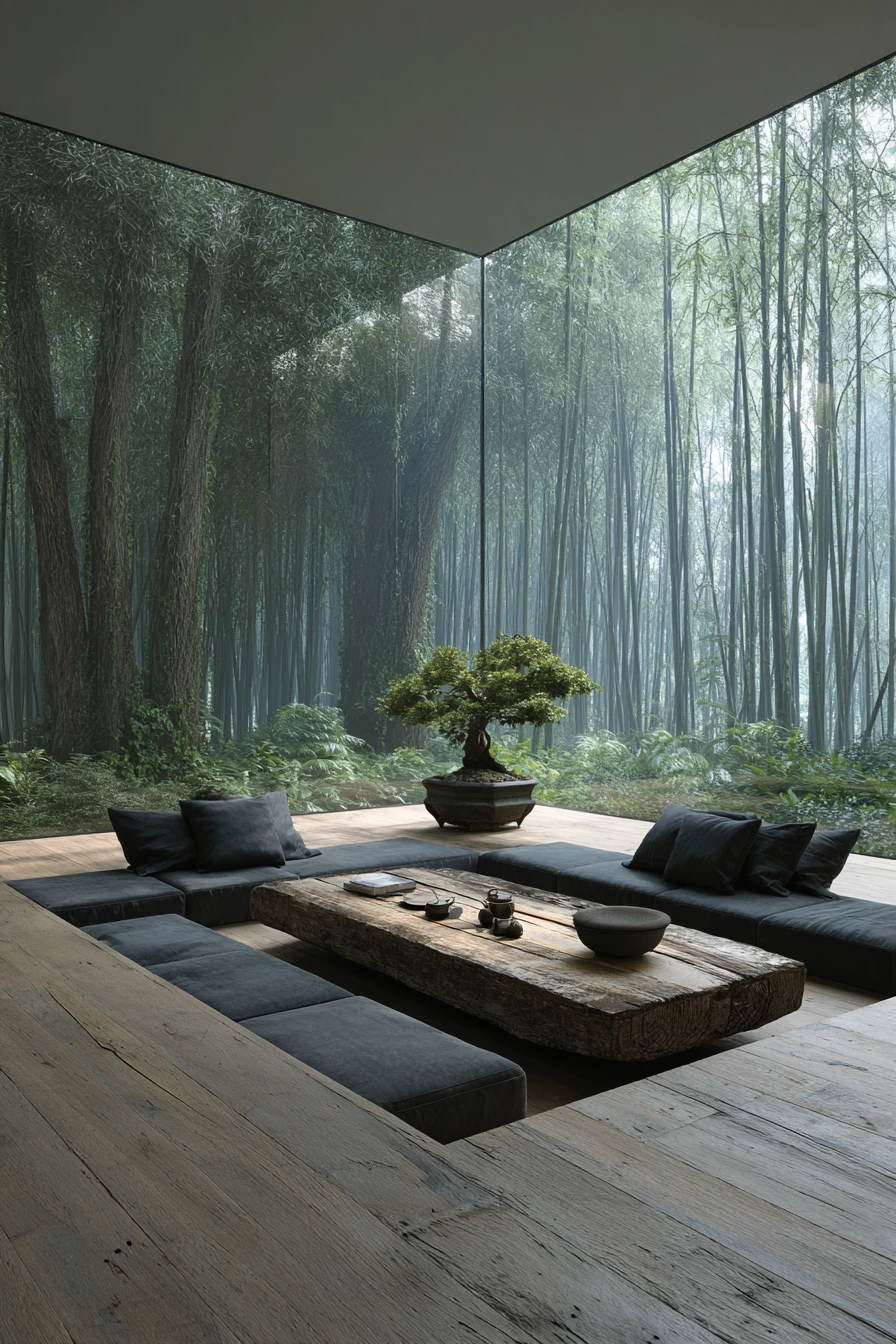
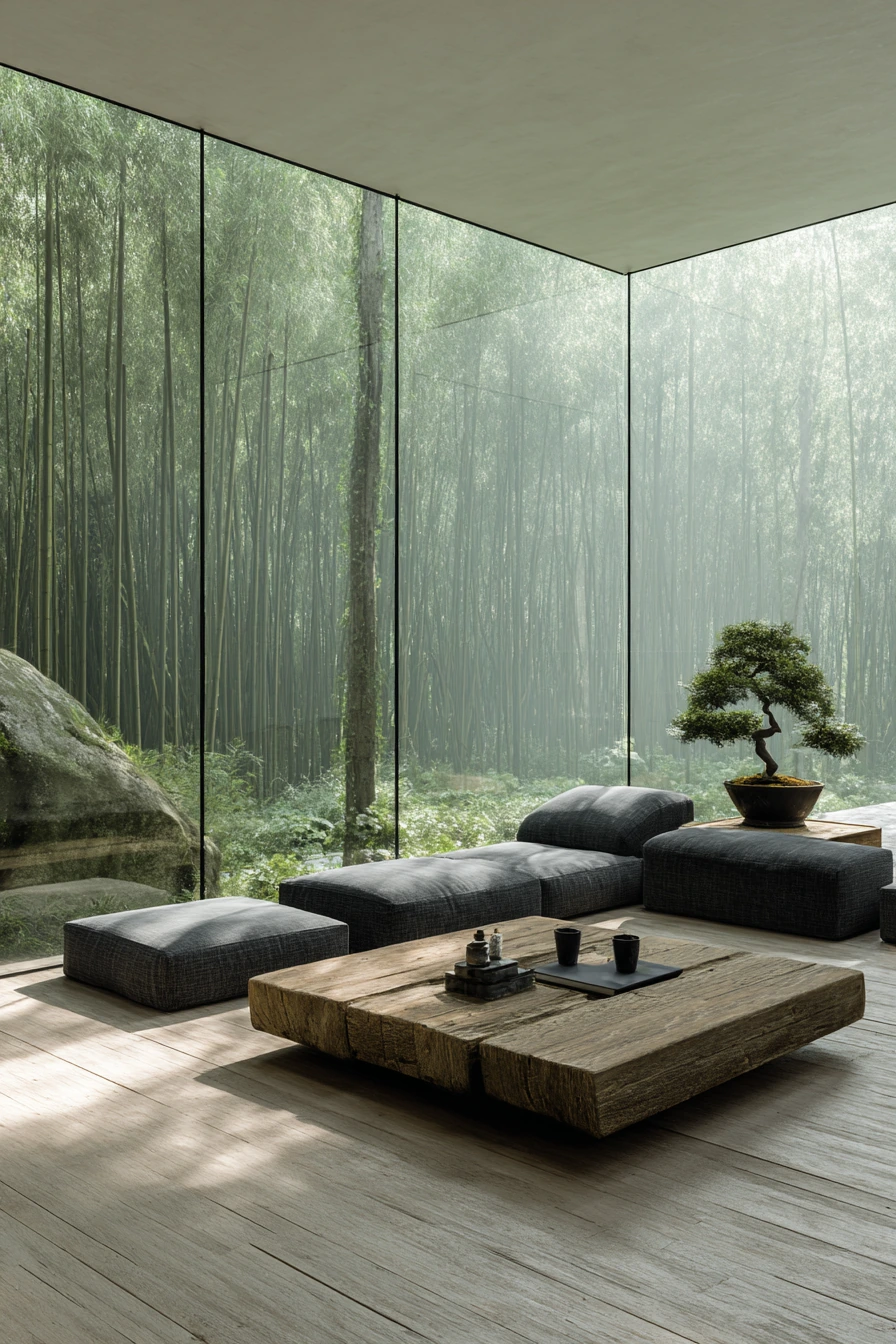
This minimalist Zen living room is built around the view. Floor-to-ceiling glass walls face a misty bamboo forest, so the outdoors becomes the main decor. Inside, keep the palette quiet with charcoal-grey wool seating, a low reclaimed oak coffee table, and wide-plank light cedar wood floors.
To style this look, start with one main seating zone, like a sunken conversation pit or a low sectional that sits close to the floor. Choose one strong natural element, such as a bonsai tree on a stone plinth, and let it be the focus. The soft green-tinted light from trees looks best when surfaces are matte, not shiny.
Keep accessories limited and grounded. A single ceramic tray for tea, a linen throw, and one book stack is enough. If your room does not have glass walls, copy the feeling with sheer panels, light-filtering shades, and a tall bamboo plant near the window to soften the view.
- Pick a low, deep sofa in charcoal or warm grey to anchor the space.
- Use a simple reclaimed oak table with rounded edges for a softer look.
- Choose light cedar or light oak tones for floors and large pieces.
- Add one bonsai or sculptural plant on a stone or concrete stand.
- Use warm, dimmable lamps to balance cool green daylight.
Pro Design Tip: Match the height of the coffee table to the seat height so the room feels calm and intentional, especially with low seating.
Budget Considerations: Full glass walls are costly; use large mirrors, sheer curtains, and a few bamboo stems in tall planters to mimic the open, forest-facing effect.
2. Wabi-Sabi Zen Living Room With Lime-Wash Walls
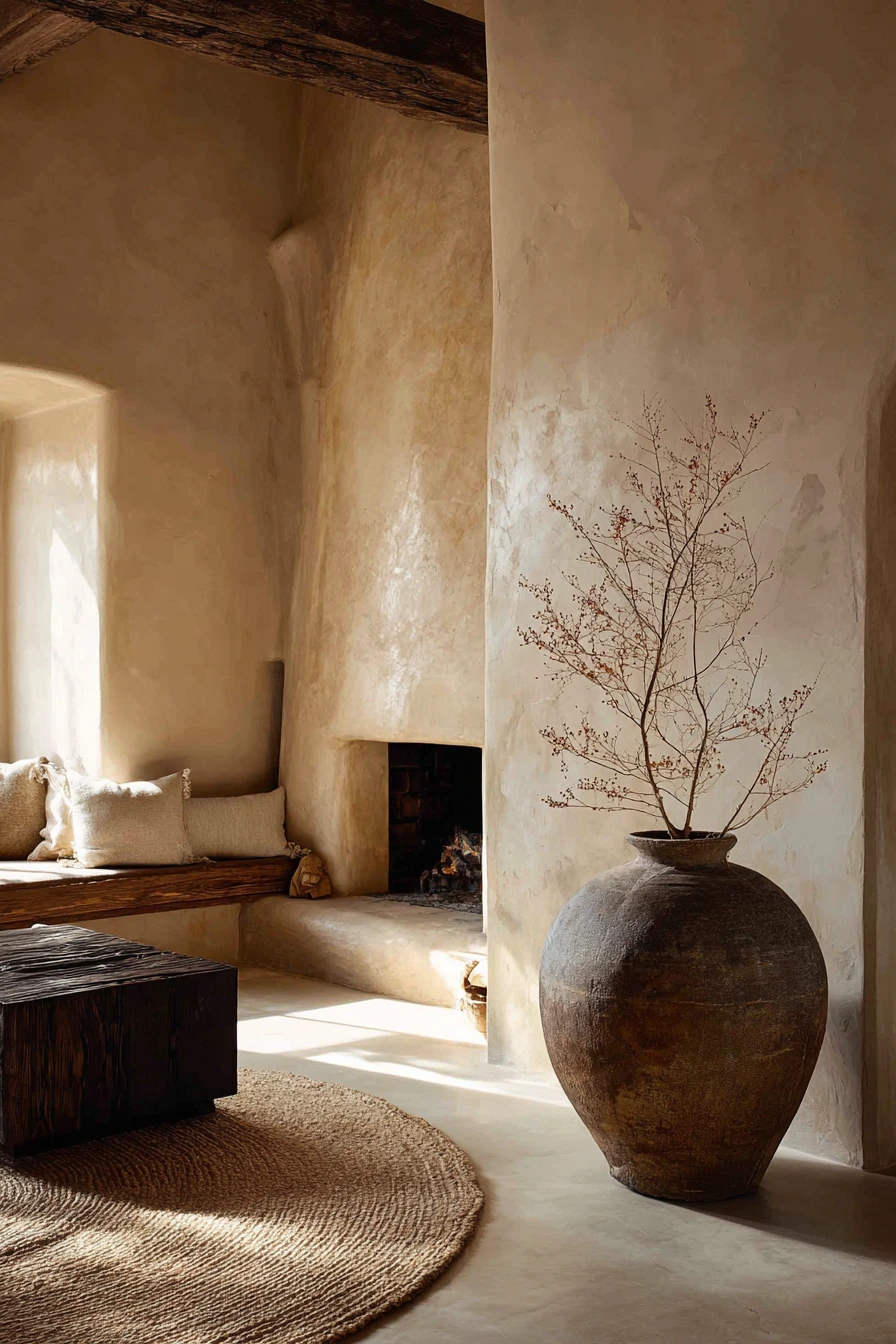
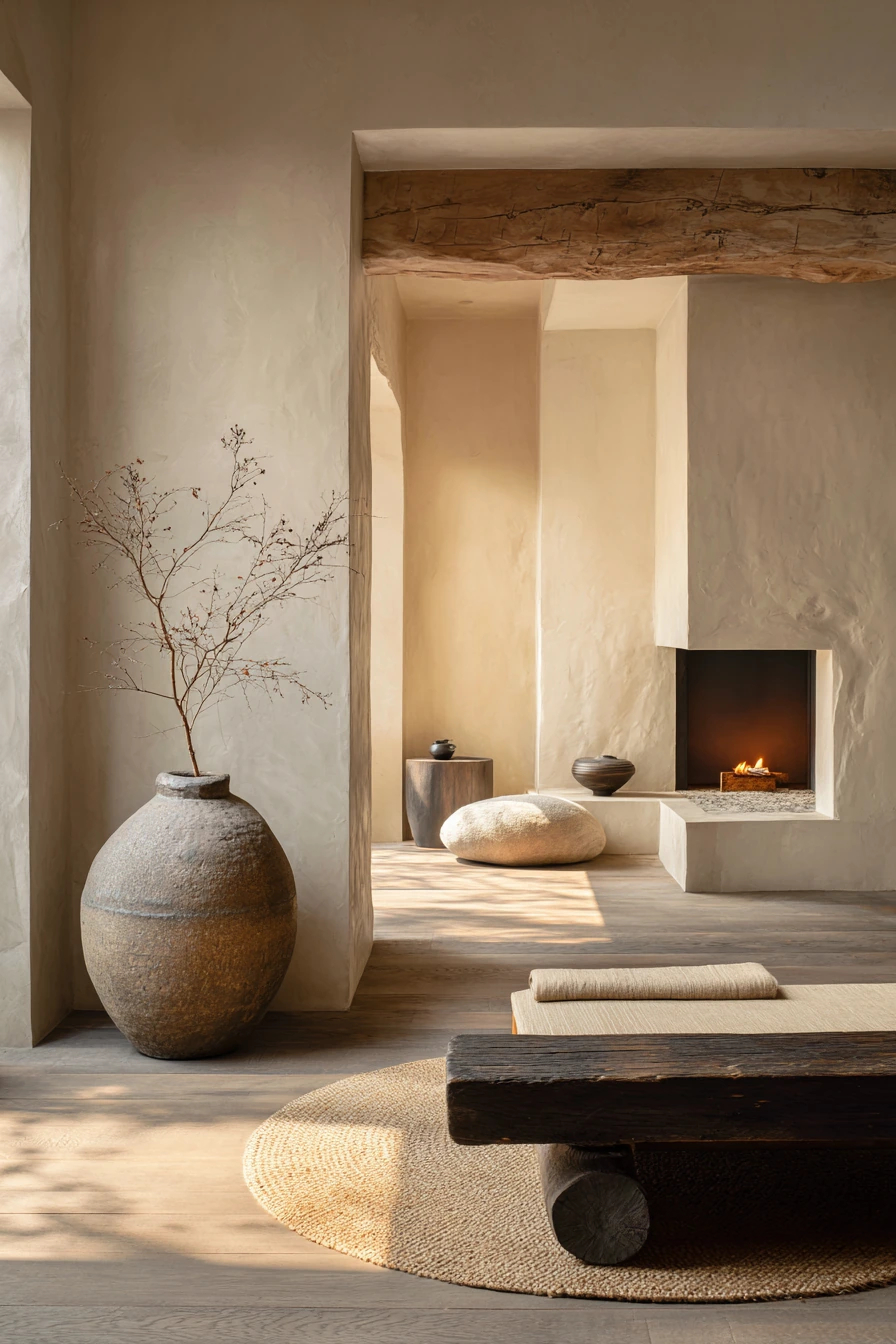
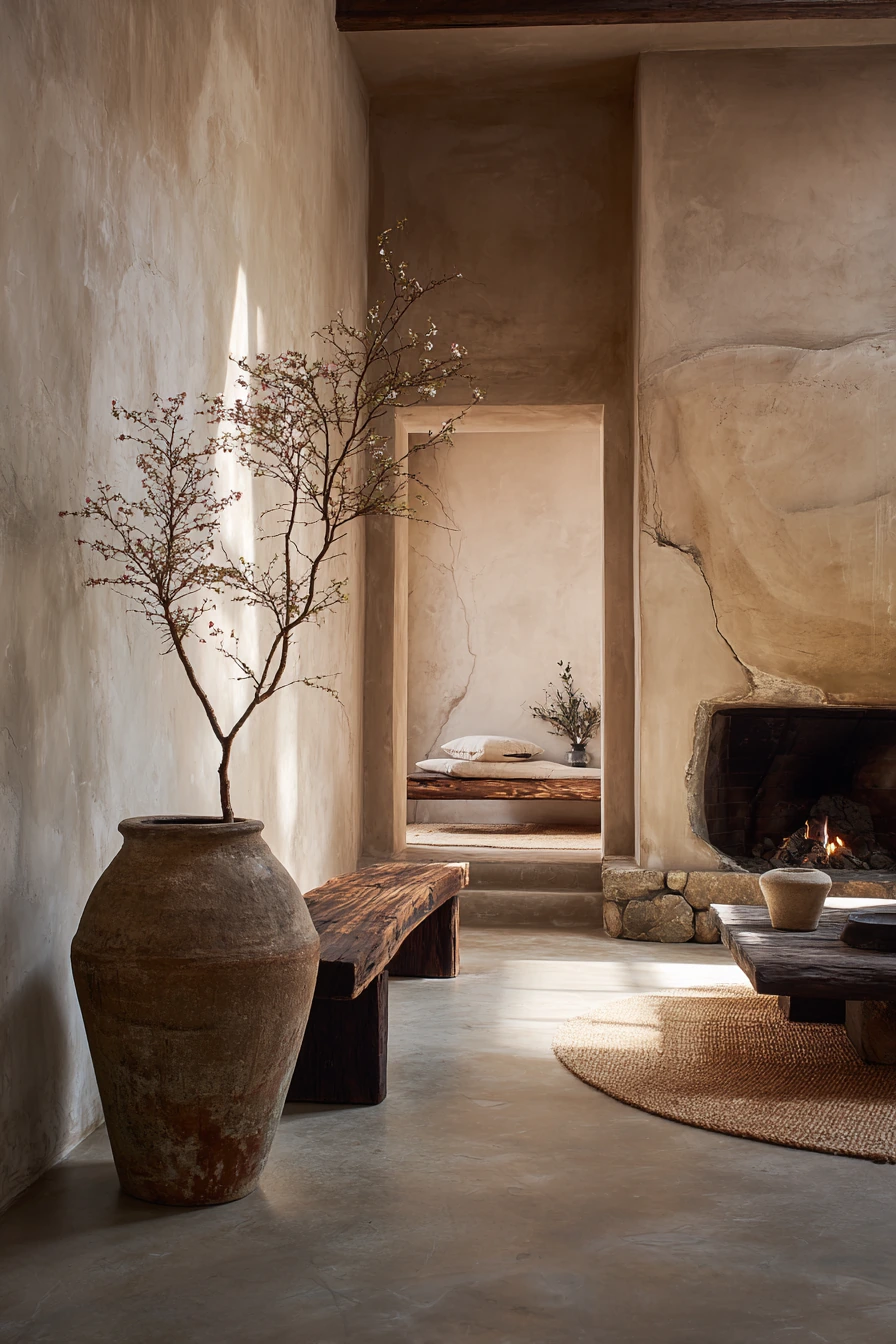
This wabi-sabi Zen living room celebrates natural imperfections. Textured lime-wash walls in a warm oatmeal tone make the space feel soft and lived-in. Furnishings stay sparse with a hand-carved dark walnut bench, a round sisal rug, and a weathered clay vessel holding a dried lotus branch.
To style it, focus on texture more than color. Let plaster, wood grain, and woven fibers do the work. A minimalist stone fireplace with a gentle glow adds warmth without adding clutter. Keep the room airy by leaving negative space around each item, so every object feels chosen.
Use a small grouping of earthy tones: oatmeal, walnut, clay, and a hint of soot or charcoal. Skip glossy frames and bright metals. If you want wall art, choose one handmade piece with rough edges. Diffused afternoon light looks best with linen curtains or a light shade that softens shadows.
- Choose lime-wash or mineral paint for a chalky, uneven finish.
- Use a simple bench instead of bulky chairs to keep the room open.
- Layer a sisal rug with a small wool mat for comfort underfoot.
- Style one large vessel with dried branches, not a full bouquet.
- Keep the mantel clear, or place one stone or bowl only.
Pro Design Tip: Use one “hero” texture per wall, like lime-wash or plaster, then keep furniture shapes simple so the room does not look busy.
Budget Considerations: Lime-wash can be DIY with the right paint; if you rent, try peel-and-stick lime-wash wallpaper and thrifted pottery for the same wabi-sabi mood.

3. Kyoto Machiya Zen Living Room With Tatami and Shou Sugi Ban


This contemporary Kyoto machiya living room mixes calm cream tatami mat flooring with bold black charred wood accents (Shou Sugi Ban). The contrast feels clean and strong without feeling harsh. A low cream fabric sofa faces open sliding glass doors, where a Zen rock garden becomes part of the room.
To style this idea, keep furniture low and lines simple. Add silk floor cushions in muted indigo beside a low tea table, then set a cast iron teapot as a quiet focal point. The goal is a clear flow from inside to outside, so avoid tall bookcases or busy gallery walls near the doors.
Work with a tight color mix: cream, black, and indigo. Add warmth through natural fibers, like linen, cotton, and woven grass. If you do not have tatami, use tatami-style mats or a flat weave rug in a similar tone. For the “garden” feeling, place a tray garden on a console or use raked sand art on the terrace.
- Use a low sofa and a low tea table to keep sightlines open.
- Add indigo cushions for a small, controlled color hit.
- Choose black wood accents in a matte finish for a grounded look.
- Bring in stone elements, like a small rock tray or pebble bowl.
- Use sliding panels or simple curtains to echo shoji lines.
Pro Design Tip: Repeat the same straight line spacing on furniture and panels to mimic machiya rhythm and make the room feel ordered.
Budget Considerations: Real tatami and Shou Sugi Ban can be pricey; use tatami-style rugs and stained wood slats to get the same contrast for less.


4. Japandi Zen Living Room by the Sea


This Japandi Zen living room blends Scandinavian ease with Japanese simplicity. Light ash wood furniture and white linen curtains create a bright, airy base. A sand-colored rug anchors the seating, while the ocean view beyond the balcony adds calm blue tones.
To style it, keep the room light but not stark. Use soft blues, warm whites, and pale wood. Add one natural “sound” element, like a small river-stone water feature trickling in a corner, to make the space feel restful. Keep shapes smooth and simple, with rounded edges and clean legs.
Balance cozy and minimal. Choose one comfortable sofa with washable linen-like covers, then add one or two slim side tables. Keep decor low and practical: a ceramic bowl for keys, a woven basket for throws, and one piece of driftwood or a pale stone on a shelf. Use layered lighting so evenings feel warm, even with cool sea light.
- Choose ash or oak furniture with simple silhouettes and visible grain.
- Use white linen curtains to soften light and add movement.
- Add a sand or oatmeal rug to warm up cool blues.
- Style a corner with smooth stones and a small tabletop fountain.
- Keep shelves spare, with one to three objects per surface.
Pro Design Tip: Mix one warm wood tone with one cool fabric tone so the room feels balanced, not cold or yellow.
Budget Considerations: A water feature can be a small recirculating tabletop fountain; for a similar feel, use a bowl of river stones and a candle for soft sound-free calm.


5. Mountain View Zen Living Room With Warm Wood Slats


This high-altitude Zen living room uses contrast to feel cozy. Massive windows frame snow-capped mountain peaks, bringing in cold blue light. Inside, the room turns warm with a thick cream shag rug, a heavy timber coffee table, and walls lined with vertical light-oak slats that cast soft shadow patterns.
To style it, start by building warmth at floor level. Use plush texture underfoot and a low, solid table that feels steady. Then add a small meditation altar in a clean nook with an incense burner and one meaningful object, like a stone or simple candle. Keep the altar tidy so it reads as calm, not clutter.
For color, stay close to nature: cream, light oak, and a small amount of black or charcoal for contrast. Use layered lighting so the space looks inviting after sunset, when the view goes dark. If you do not have wood slat walls, add a slat room divider, a wood panel behind the sofa, or even framed vertical wood trim to suggest the same rhythm.
- Use a cream rug with deep pile to soften hard floors and add warmth.
- Pick a heavy timber coffee table with simple legs and no shine.
- Add vertical oak slats on one wall to create gentle light-and-shadow.
- Create a small altar with a tray, incense, and one object only.
- Use warm bulbs and dimmers to offset cool window light.
Pro Design Tip: Place the slat feature wall where natural light hits it at an angle, so the shadows become a quiet design detail.
Budget Considerations: Full slat walls cost more; try peel-and-stick wood slat panels or a single slat headboard-style panel behind the sofa.


6. Botanical Zen Living Room With Indoor Koi Pond
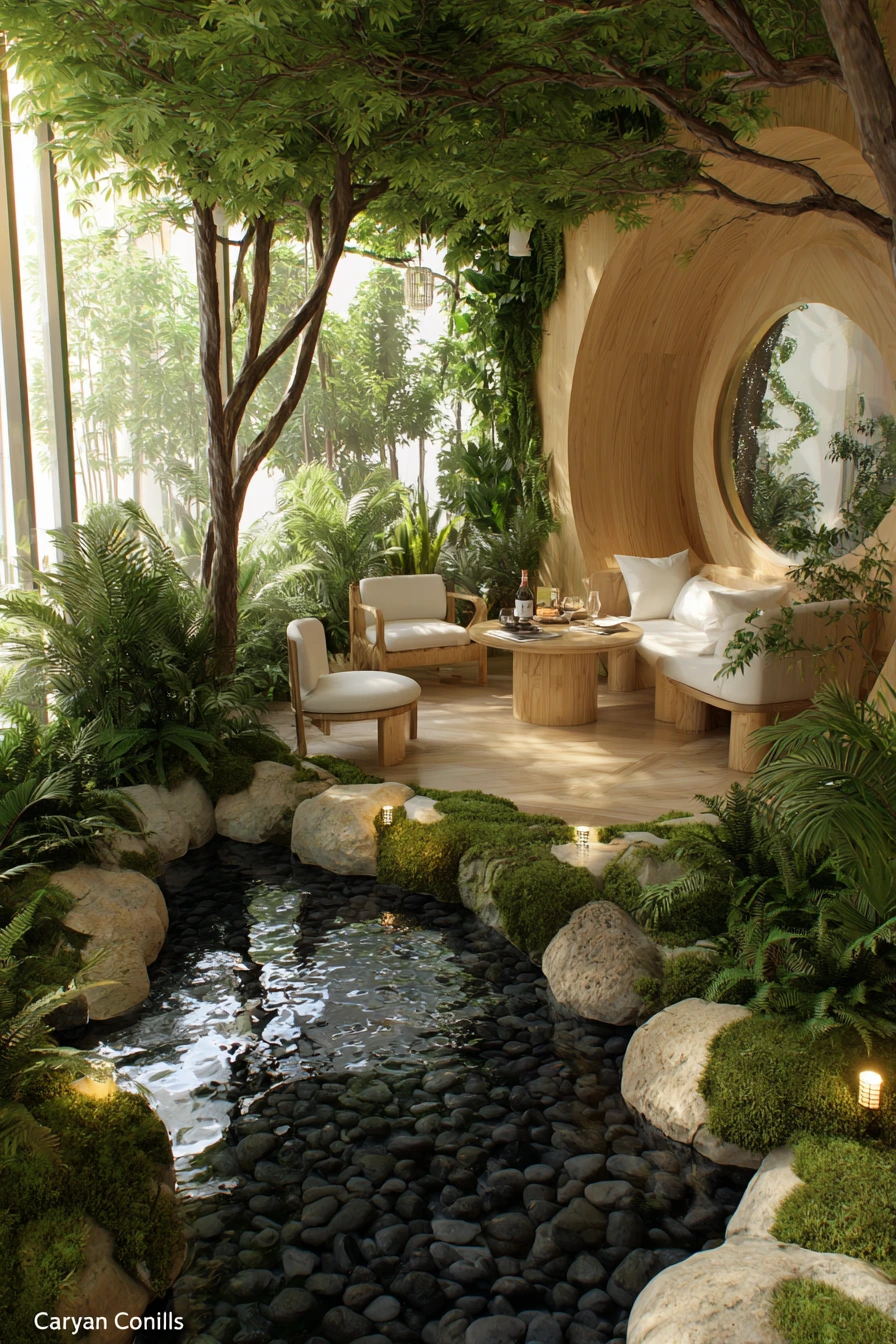
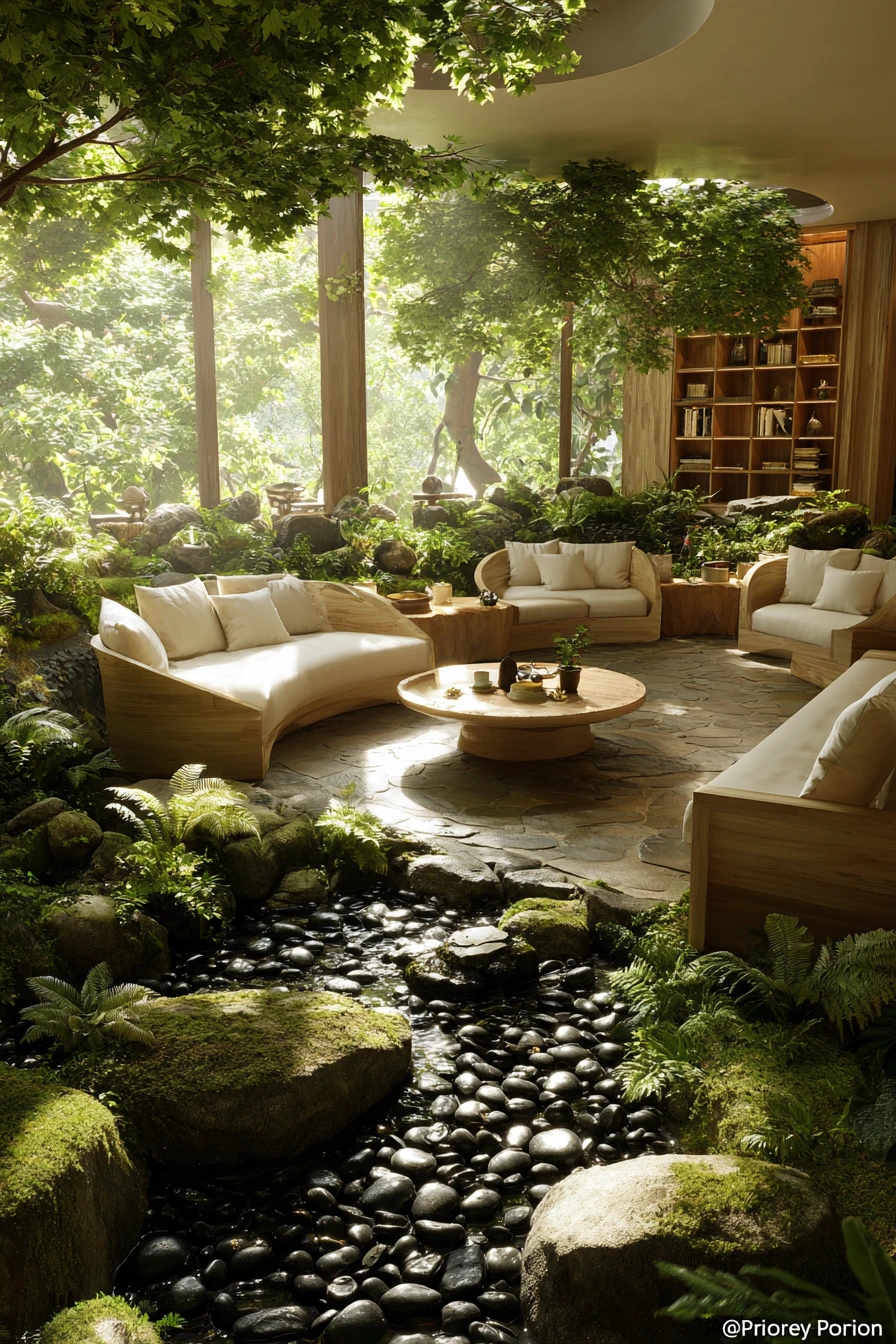
This botanical Zen living room puts nature at the center. A small indoor koi pond with smooth black pebbles sits flush with the floor, surrounded by mossy stones and ferns. Light blonde wood furniture and white cotton upholstery keep the room bright and fresh, while circular moon windows frame a manicured Japanese garden view.
To style it, build layers of green without making the room messy. Choose a few plant types and repeat them, like ferns, moss, and a small indoor maple tree. Keep pots and planters simple in stone, black, or pale clay. Golden hour sunlight through leaves will already add drama, so avoid busy patterns on pillows and rugs.
If a pond is not possible, use the same idea with a shallow pebble tray, a water bowl, or a small aquarium placed low and safely away from walkways. Add humidity-friendly materials, like teak accents and washable cotton covers. Keep cleaning tools hidden in a lidded basket so the space stays calm and functional.
- Use black pebbles and smooth stones to create a clean pond edge.
- Choose light wood and white upholstery to balance deep greens.
- Repeat two to three plant varieties instead of mixing many types.
- Add a moon-shaped mirror or round window-style frame as a focal point.
- Keep textiles simple: cotton, linen, and flat weaves that dry fast.
Pro Design Tip: Plan your plant heights like a landscape, with one tall “tree,” medium plants, and low moss so the room feels designed, not random.
Budget Considerations: An in-floor koi pond is high cost; a low-profile aquarium or a pebble-and-water bowl vignette gives a similar nature-first feeling for less.


7. Earthy Zen Living Room With Rammed Earth Walls


This grounding Zen living room uses raw, earthy materials to create calm. Rammed earth walls in layered terracotta and sand tones add depth without any art. A heavy low stone table sits on a woven hemp carpet, with simple wooden stools and a built-in daybed finished with linen bolsters.
To style it, keep the room almost empty. Let texture be the decoration. Choose one handmade ceramic bowl as the only display piece, then keep everything else tucked away. The lighting is key here, too. A high skylight or a focused ceiling light should wash over the wall so you can see the natural layers.
Stick to a warm, clay-based palette. Avoid bright white, glossy black, and shiny metals that fight the natural mood. If you want softness, add one wool throw in a sandy tone. For scent, use unscented candles or a gentle incense, but keep it minimal so the room stays easy to breathe in.
- Use warm earth tones: terracotta, sand, camel, and clay.
- Pick a low stone or concrete table with a simple block shape.
- Add a hemp or jute carpet for a rough, natural base layer.
- Choose linen bolsters and covers for the daybed or bench seating.
- Keep decor to one handmade piece to avoid visual noise.
Pro Design Tip: Use directional lighting aimed at textured walls to create soft shadow bands that add depth without adding objects.
Budget Considerations: Rammed earth walls are a major build; use clay paint, textured plaster, or lime plaster panels to get a similar layered look.


8. Symmetrical Zen Living Room With Tatami Grid and Round Window


This sophisticated Zen living room is all about balance. Square tatami tiles form a clear grid on the floor, matched with a rectangular low table and square wall niches that hold ancient pottery. A large circular window becomes the focal point, framing a pruned pine tree outside like living art.
To style this look, start with symmetry. Place seating in pairs or keep the main sofa centered to the table. Use matching cushions and keep their placement consistent. Choose a slate grey, soft beige, and matte black palette so the lines feel crisp but not cold.
Keep your display items curated. In the wall niches, use pottery that is similar in size, with enough empty space around each piece. If you do not have built-in niches, use a modular shelving unit with square cubbies and remove the back panels for an airy look. Bright, even lighting works best, so add a ceiling fixture plus wall washing lights to avoid harsh shadows.
- Use a tatami grid or square-pattern rug to set the room’s geometry.
- Center the low table and align furniture edges to the grid lines.
- Choose matte black accents in small doses for clear contrast.
- Display pottery in a few niches and leave the rest empty.
- Add one circular element, like a round mirror, to echo the window.
Pro Design Tip: Measure and align everything to one “center line” in the room so the symmetry feels calm instead of forced.
Budget Considerations: Custom round windows and niches are expensive; use a large round mirror and cube shelves to copy the same focal-point effect.


9. Tea Ceremony Zen Living Room With Shoji Screens
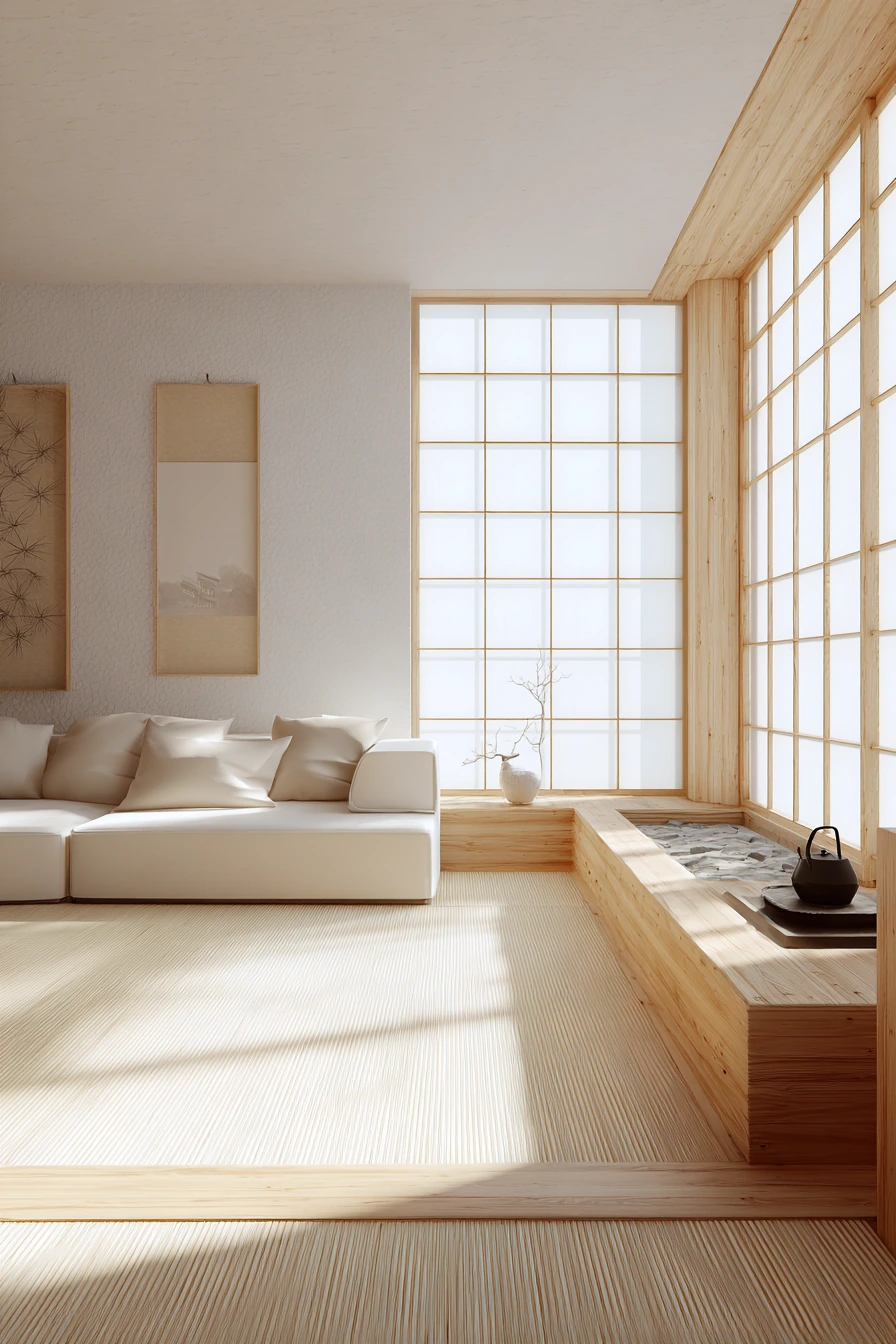

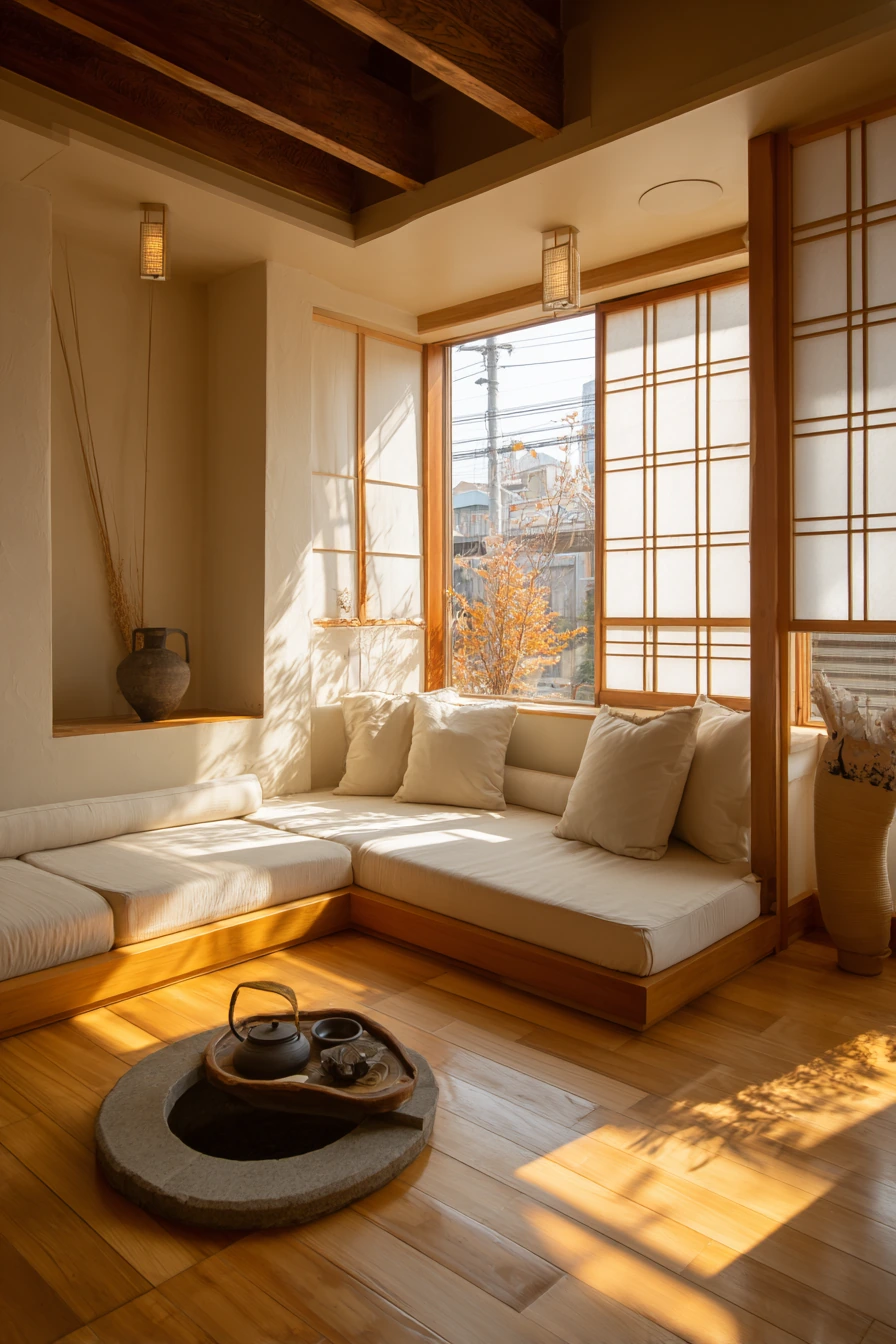
This bright Zen living room is designed for tea and quiet time. Light bamboo planks on the floor keep the room warm and clean. An off-white low modular sofa sits near the window, and a dedicated tea corner features a raised wooden platform with a sunken hearth for a simple tea setup.
To style it, think of the tea corner as a small ritual zone. Keep tools in a tray, and store extra items in a closed cabinet so the space stays clear. Shoji screens filter the light into a soft white glow that removes harsh shadows and makes the room feel gentle. If you do not have shoji panels, use rice paper-style shades or light-filtering roller blinds.
Choose a calm palette: off-white, pale wood, and a touch of black from a teapot or kettle. Add comfort with a small floor cushion and a washable mat under the tea area. Keep sound low by using felt pads under trays and choosing soft-close storage. The goal is a room that supports slow moments, not a room full of decor.
- Use bamboo or light wood flooring to keep the room bright.
- Set up a tea tray with only the daily tools you use.
- Add shoji-style screens or light-filtering shades for soft light.
- Use modular seating so you can open space for floor sitting.
- Keep storage closed so the tea corner stays calm and clean.
Pro Design Tip: Give the tea corner its own small light source, like a paper lantern lamp, so it feels like a separate, restful zone at night.
Budget Considerations: A sunken hearth is a build project; use a low platform, a heat-safe tray, and an electric kettle to create a similar tea-focused setup.
10. Urban Zen Living Room With Concrete, Wool, and Terrace Garden

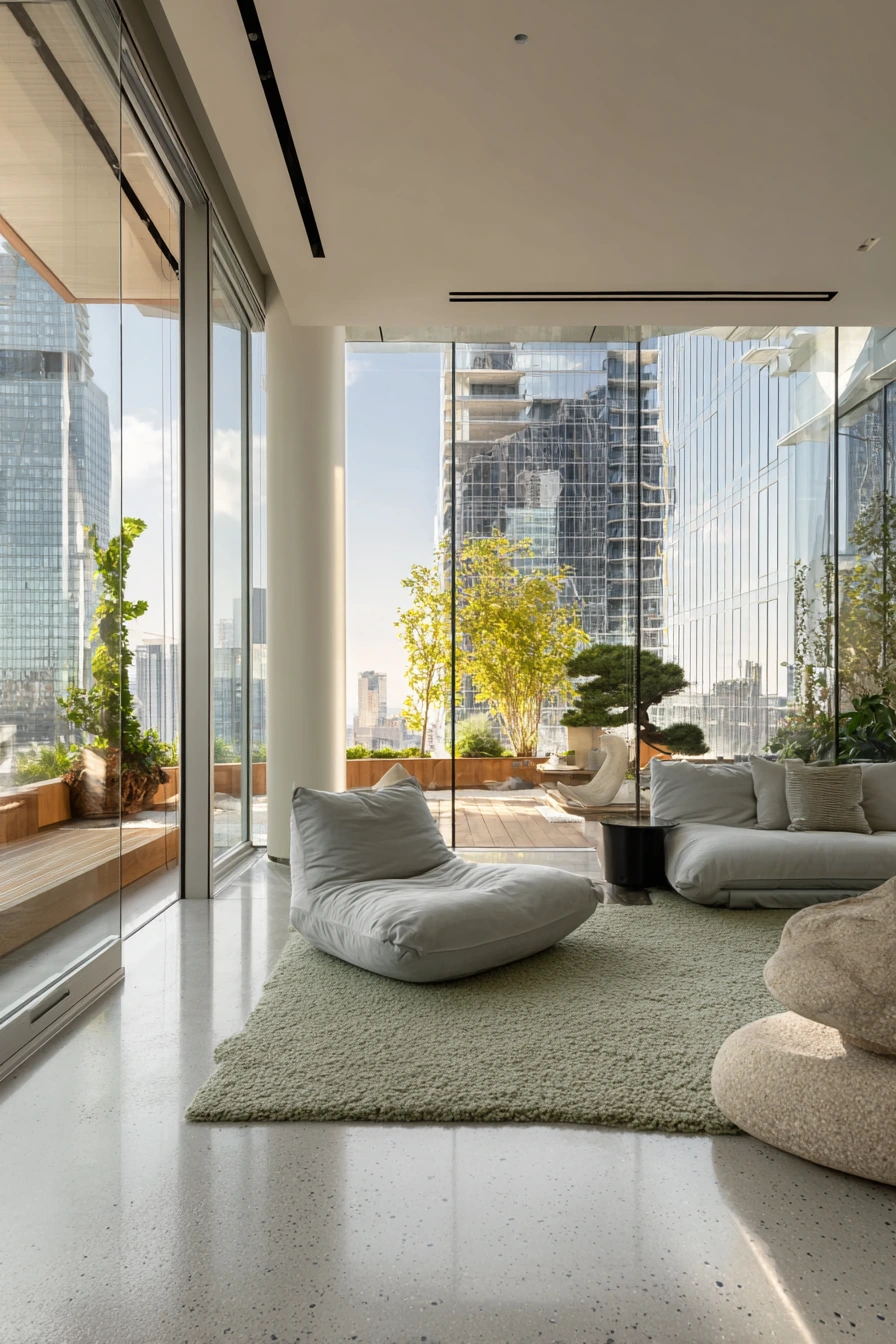
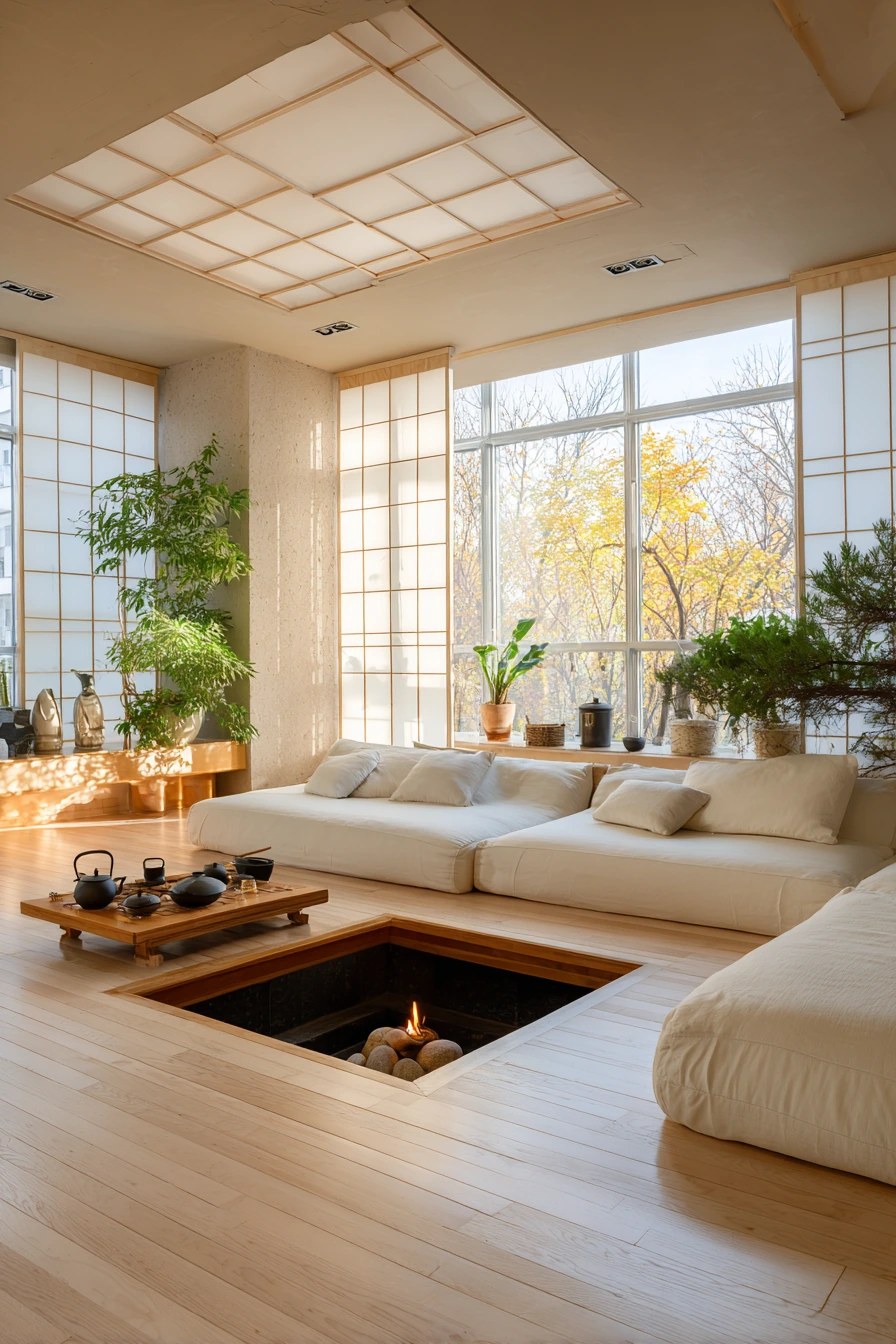
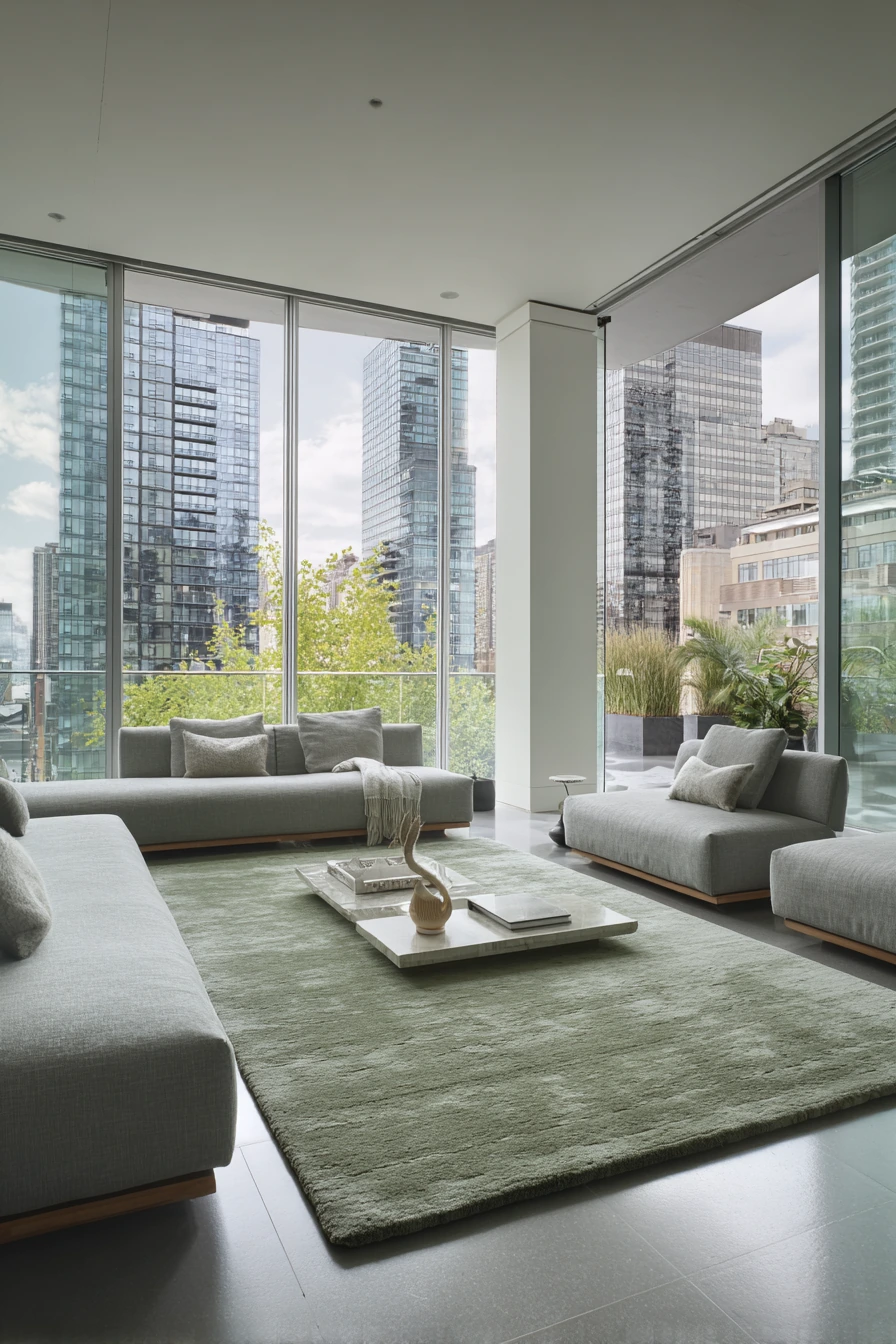
This modern urban Zen living room brings calm into a high-rise. Polished concrete floors keep the look clean, while a hand-tufted wool rug in sage green softens the space. Minimalist light grey furniture is arranged to face glass walls and a quiet terrace garden with a raked sand feature.
To style it, start by reducing visual noise. Choose furniture with slim arms and hidden storage, and keep surfaces clear. Use a cool grey and warm wood mix, then add sage green as the one “nature” color. The terrace view should feel like an extension of the room, so repeat materials outside, like pale gravel, simple planters, and one small tree or bamboo screen.
Sound control matters in city spaces. Add heavy curtains that can pull back fully in the day, and use soft textures like wool and felt to cut echo from concrete. Keep art minimal, and if you add it, pick one large piece with calm tones. For lighting, use a mix of overhead, a floor lamp, and hidden strip lighting behind a console to keep evenings gentle.
- Use a large wool rug to warm up concrete and reduce echo.
- Pick one accent color like sage green and repeat it twice.
- Arrange seating to face the terrace garden, not the TV first.
- Create a small raked sand tray outside or on a console indoors.
- Use closed storage to keep daily items out of sight.
Pro Design Tip: Match the indoor rug tone to the outdoor planting color so the eye moves smoothly from living room to terrace.
Budget Considerations: Concrete floors and custom glass are expensive; use concrete-look vinyl and focus spending on a good wool rug and simple greenery.

Zen living room ideas work best when you choose fewer items, better materials, and calmer light. Start with one style that fits your home, then copy the core parts: a simple layout, natural textures, and a clear focal point.
Before you buy, remove extra decor, hide cables, and set up one quiet corner for tea, reading, or meditation. Small changes can make the whole room feel more peaceful.
FAQ
1. What colors make a living room feel Zen? Soft neutrals like cream, oatmeal, beige, warm grey, and light wood tones work well. Add one muted accent like sage green or indigo.
2. How do I make my living room feel Zen with kids? Use closed storage, baskets with lids, and a simple daily reset. Keep decor higher up and choose washable covers and rugs.
3. What is the difference between Zen and Japandi? Zen style leans more minimal and calm, often with natural materials and simple forms. Japandi blends Japanese simplicity with Scandinavian comfort and light woods.
4. Can I create a Zen living room in a small apartment? Yes. Use low furniture, light-filtering curtains, and a tight color palette. Keep surfaces clear and use one plant or one piece of pottery as your focal point.
5. What lighting is best for a Zen space? Soft, warm, dimmable lighting works best at night. In the day, use sheers or shoji-style shades to reduce harsh glare.
6. What decor items fit Zen living rooms? A bonsai, a ceramic bowl, a stone tray, a linen throw, and one simple piece of art are enough. Choose items with natural texture and meaning.
7. How can I get a wabi-sabi look without remodeling? Add lime-wash style paint or wallpaper, choose imperfect handmade pottery, and use wood with visible grain. Leave more empty space so textures stand out.