A wabi sabi couch is all about comfort, natural materials, and a lived-in look. Instead of sharp lines and perfect pillows, it focuses on soft linen or cotton, gentle wrinkles, and small signs of use.
In this post, you will learn how to choose the right low couch, pick calm colors like beige, taupe, and warm greige, and mix in wood, stone, and clay details. Each section matches a room style you may have saved on Pinterest.
You will also get simple styling steps you can do at home. These ideas help you build a quiet, grounded space with textured walls, warm sunlight, and handcrafted decor.
If you want a room that feels peaceful and real, these wabi sabi couch tips will help you get there without overthinking it.
1. Low Linen Wabi Sabi Couch in Soft Beige

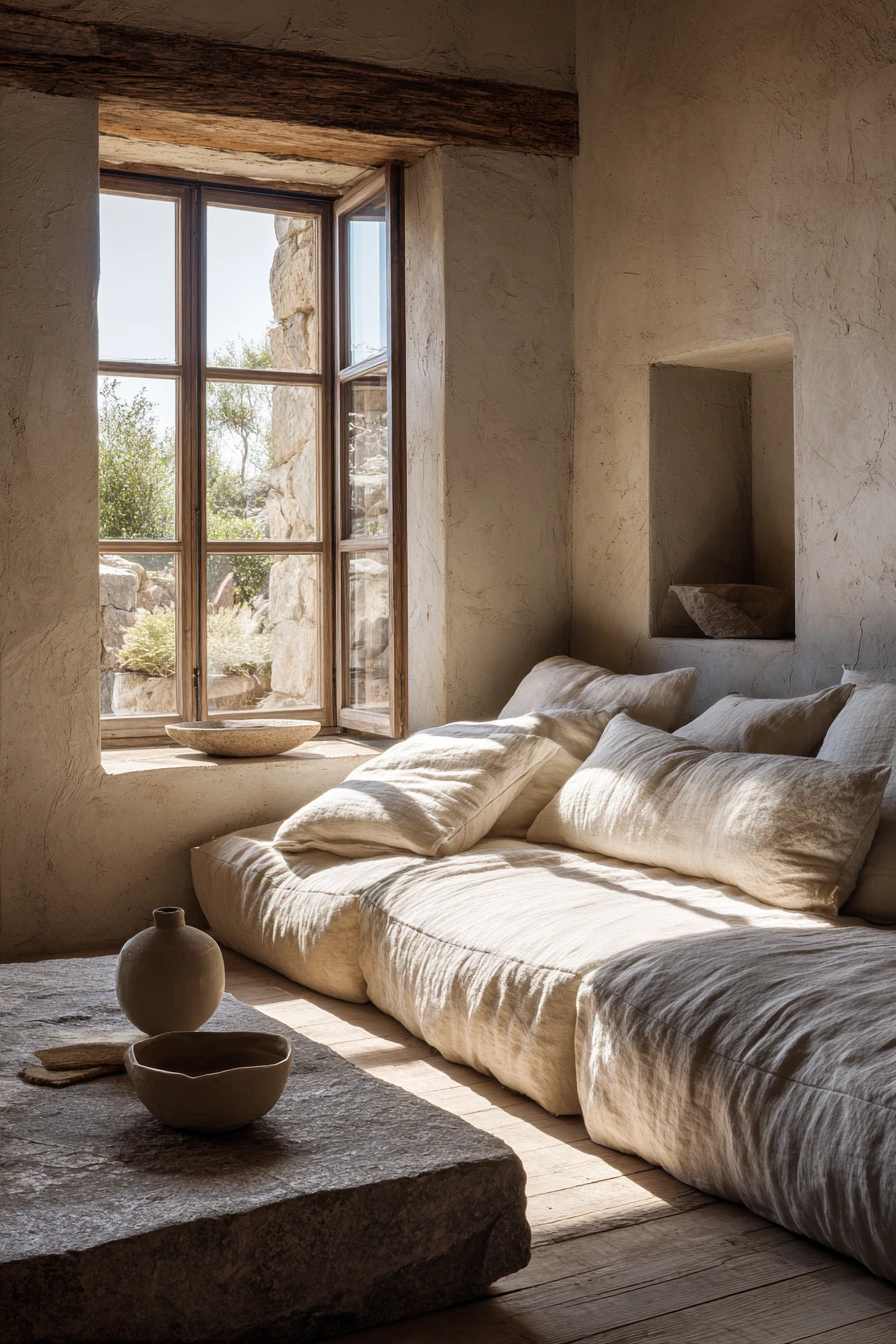
This calm living room look starts with a low linen couch in soft beige. The key detail is the fabric texture. Linen shows small slubs and natural weave, and that is a good thing here. Let the cushions stay gently wrinkled and a little uneven so the couch feels lived-in, not staged.
To match the couch, keep the room grounded with rough plaster walls and natural wood flooring. A simple stone coffee table adds weight and balance. Choose a few ceramic pieces that look handmade, like a small bowl or a vase with an imperfect rim. Warm natural sunlight and shadows will do the rest, so avoid heavy curtains that block the light.
Style it with fewer items, but make each one count. A wabi sabi couch looks best when the area around it stays open. Give the couch breathing room so the texture and soft beige tone can stand out. If you need more comfort, add one linen throw in a similar shade rather than a bright pattern.
- Pick linen or linen-blend upholstery with visible weave.
- Choose a low seat height for a grounded, relaxed feel.
- Add a stone or travertine-style coffee table with a simple shape.
- Use one or two matte ceramic objects, not a full shelf of decor.
- Keep the palette to beige, cream, and warm wood tones.
Pro Design Tip: Use “same-color layering” by mixing three beige tones (couch, throw, and rug) so the room feels calm but not flat.
Budget Considerations: Real stone tables can be costly; try a stone-look side table or a secondhand coffee table with a limewash or textured paint finish.
2. Earthy Wabi Sabi Couch in Taupe and Warm Greige
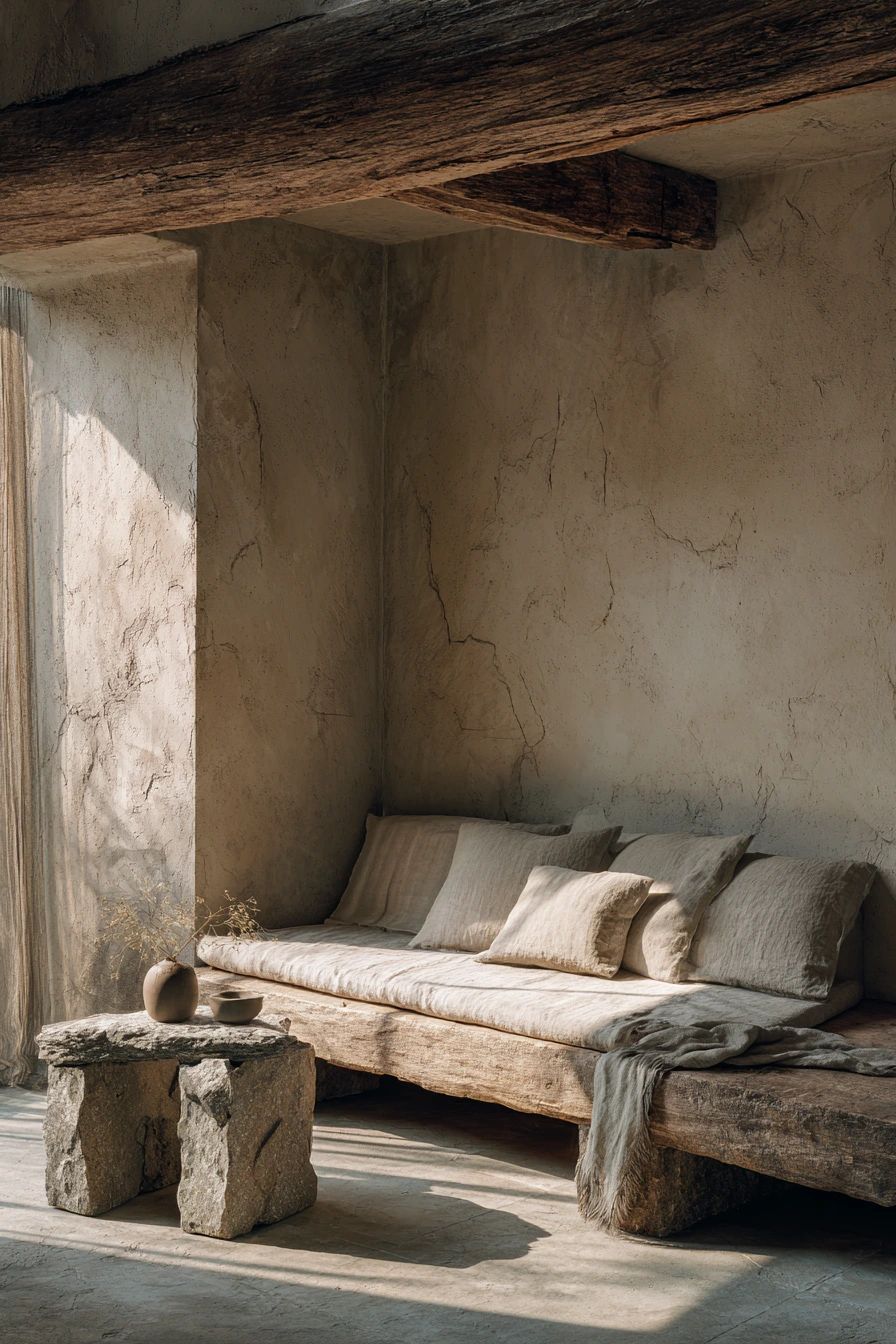
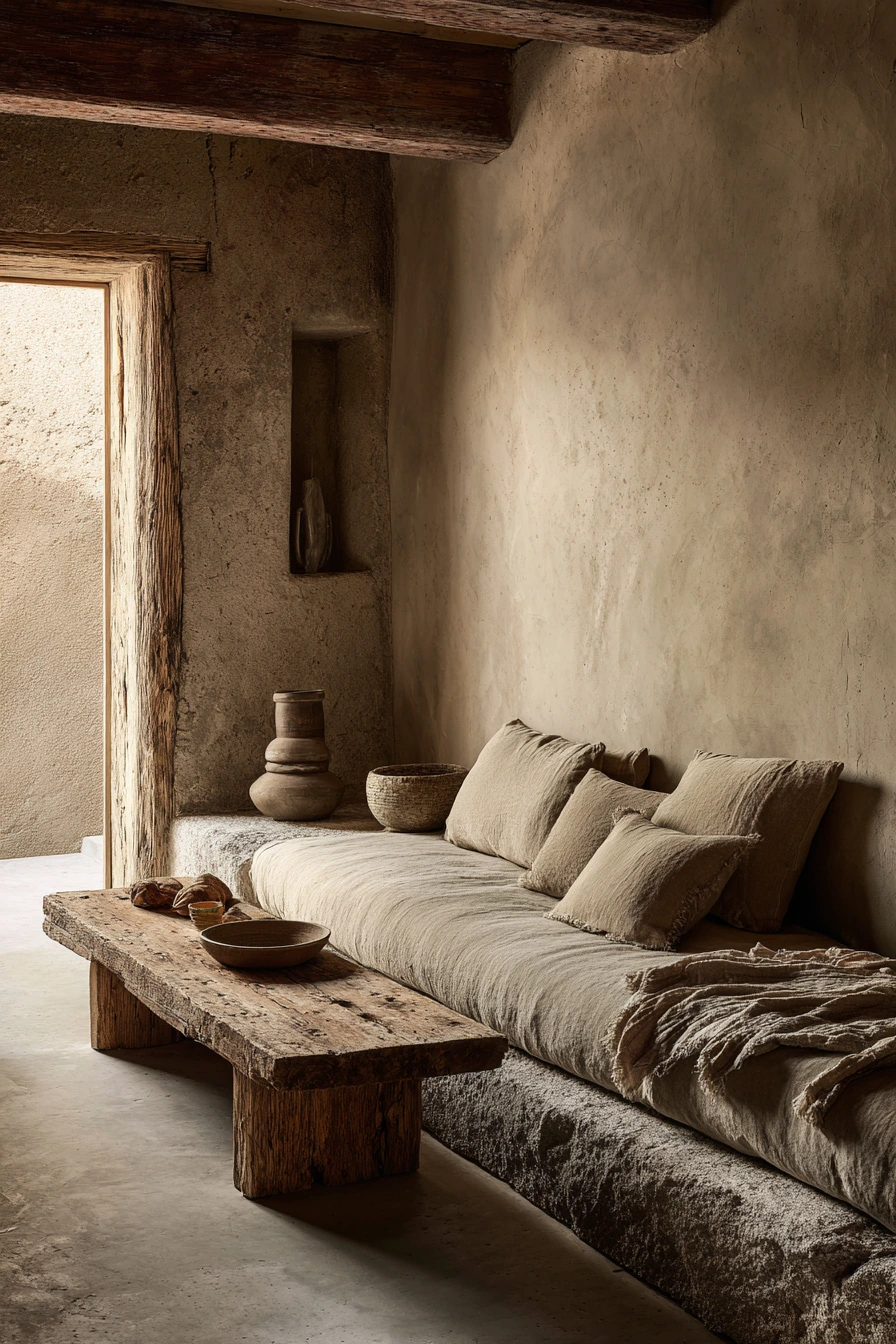
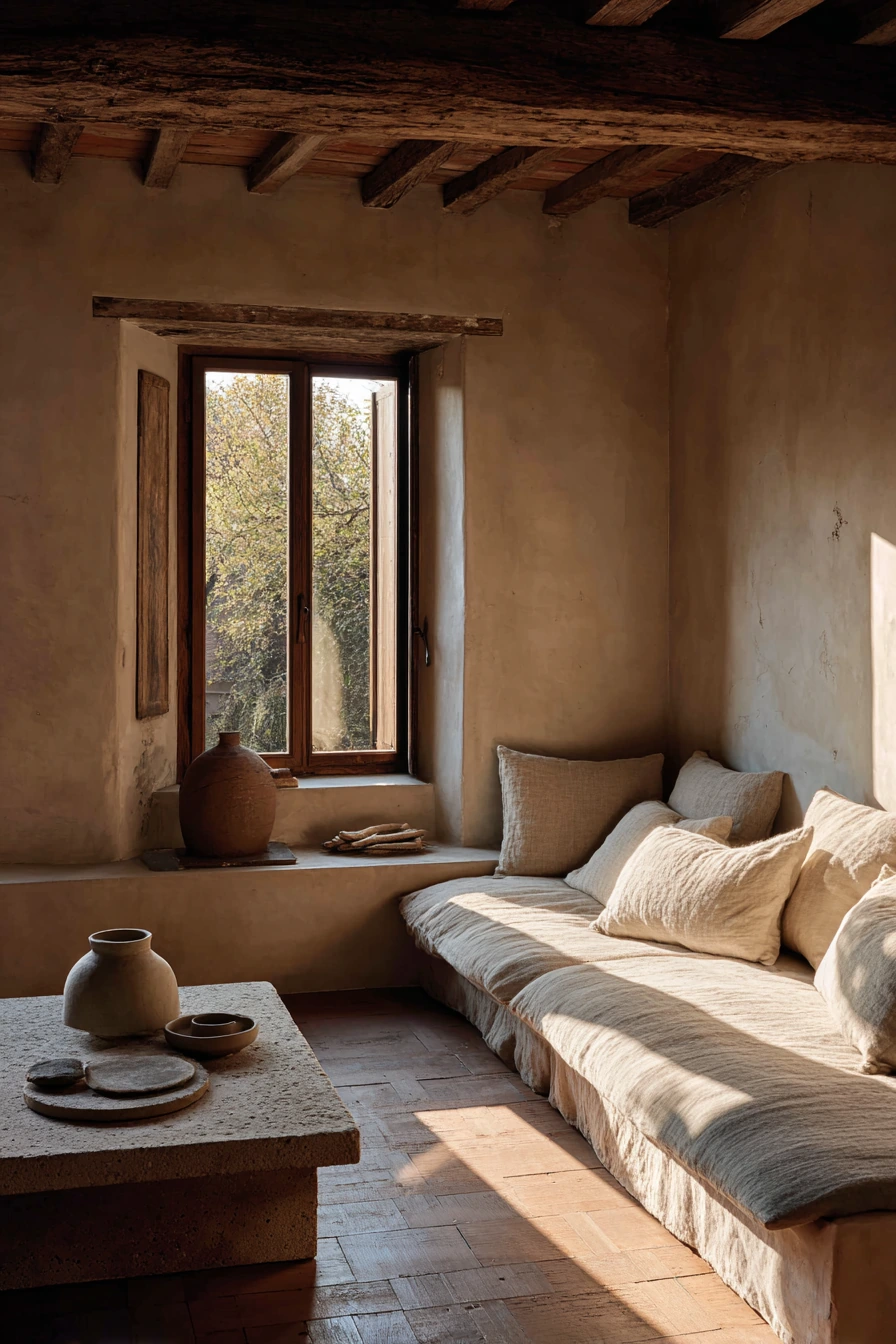
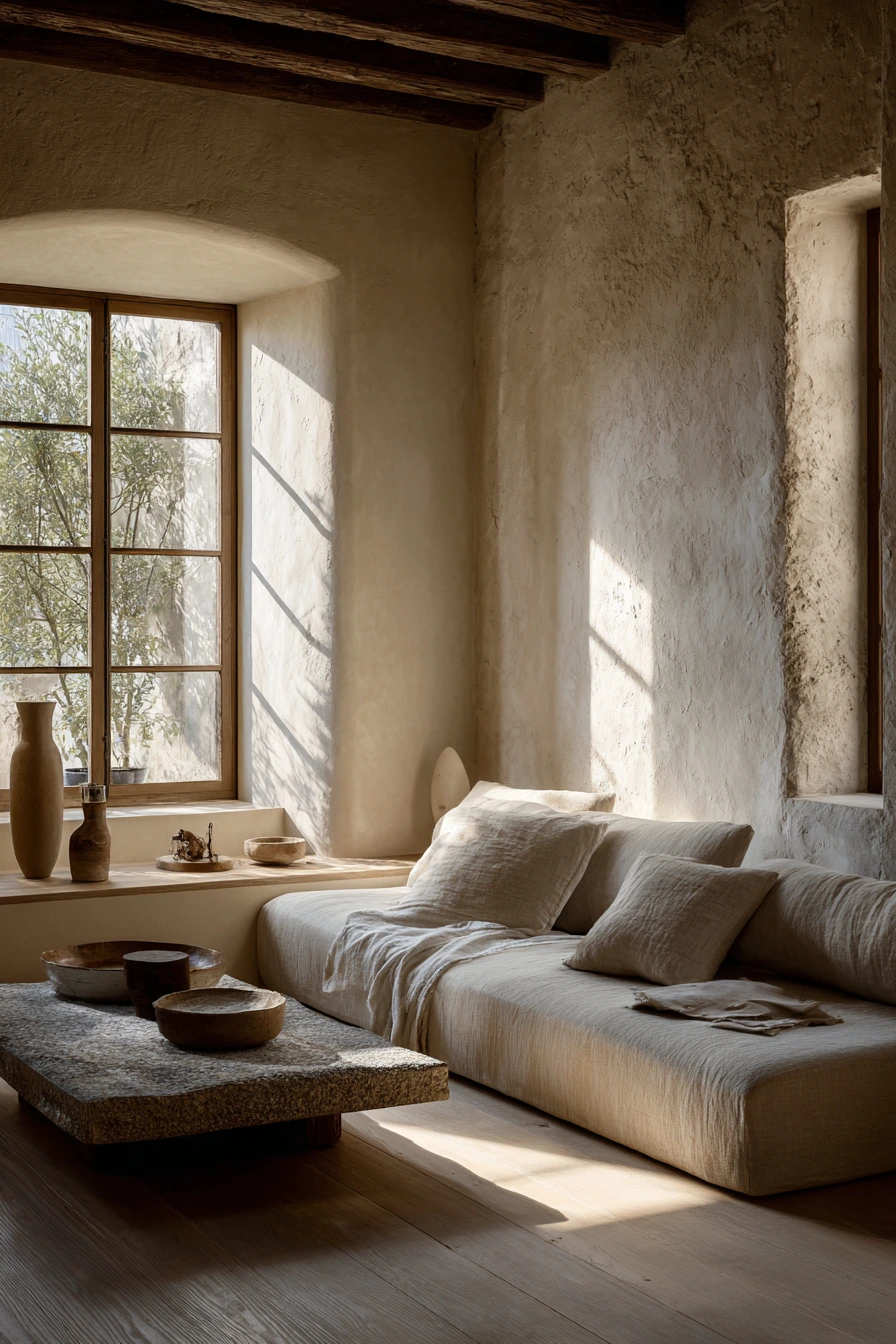
This earthy wabi sabi interior uses a deep, low-profile couch in natural cotton or linen. The fabric should have an uneven texture, not a smooth, shiny finish. Colors like clay beige, soft taupe, and warm greige help the space feel slow and steady.
Balance the couch with raw wood and stone. A simple wood bench with visible grain and wear adds a casual, honest layer. A stone side table keeps things sturdy and calm. For walls, a limewash look with subtle cracks or movement fits the wabi sabi mood and makes the room feel softer than plain paint.
When styling, keep the shapes simple. Use one long lumbar pillow in a slightly darker greige to add depth without making the couch look “decorated.” Let sunlight come in gently. If your room gets harsh light, use a light linen curtain to soften contrast and keep the mood serene.
- Choose cotton or linen upholstery with a matte, uneven texture.
- Use a bench instead of a second bulky chair to keep the room open.
- Mix taupe and greige in small items like pillows or a throw.
- Add one stone side table for a cool, natural contrast.
- Try a limewash-style paint to create soft wall texture.
Pro Design Tip: Repeat the same wood tone at least twice (bench and frame, or bench and shelf) so the room feels connected.
Budget Considerations: Limewash paint and plaster work can add up; for a lower cost, use a mineral paint or a limewash-look technique on one accent wall.

3. Minimalist Wabi Sabi Couch in Muted Sand Tones
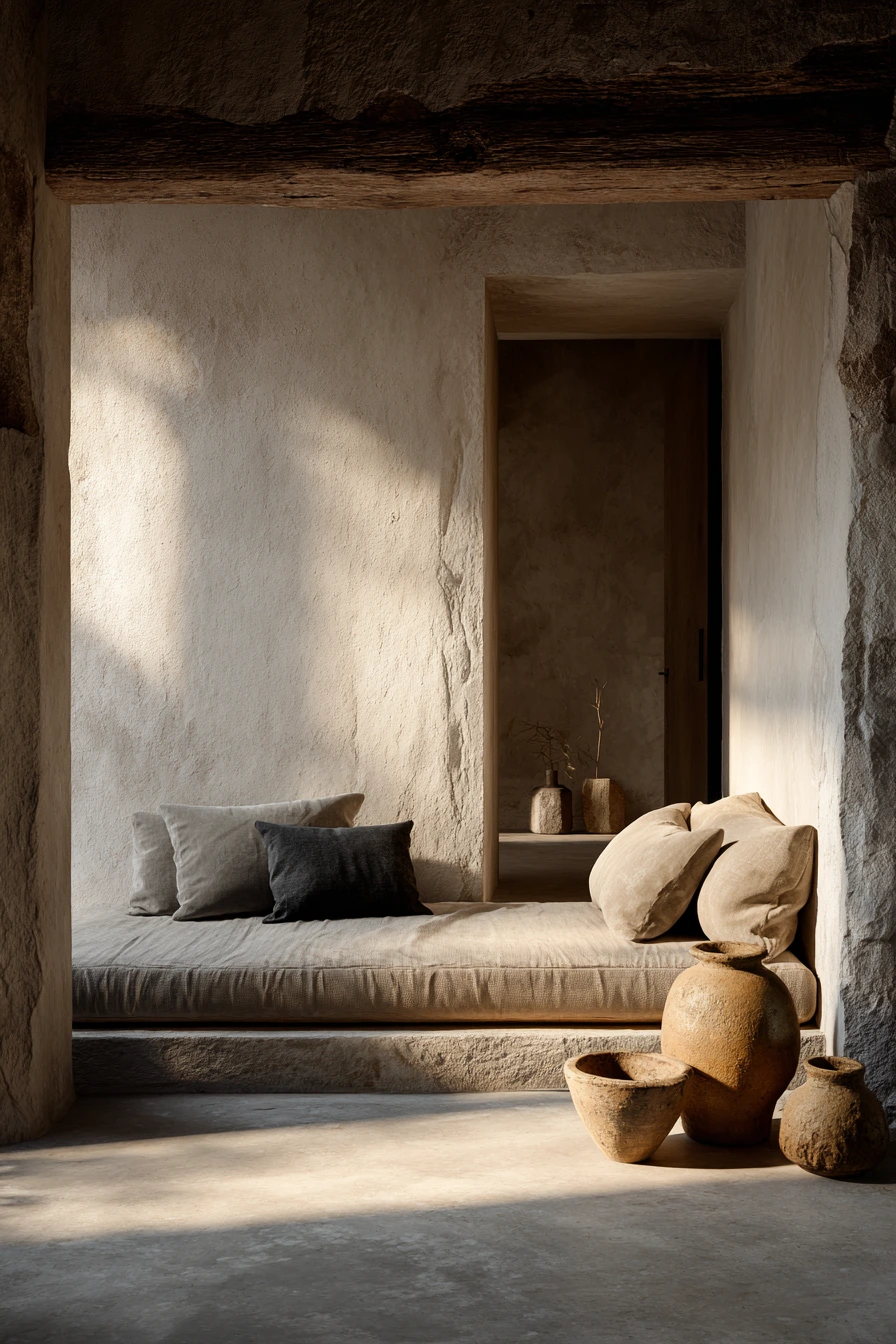

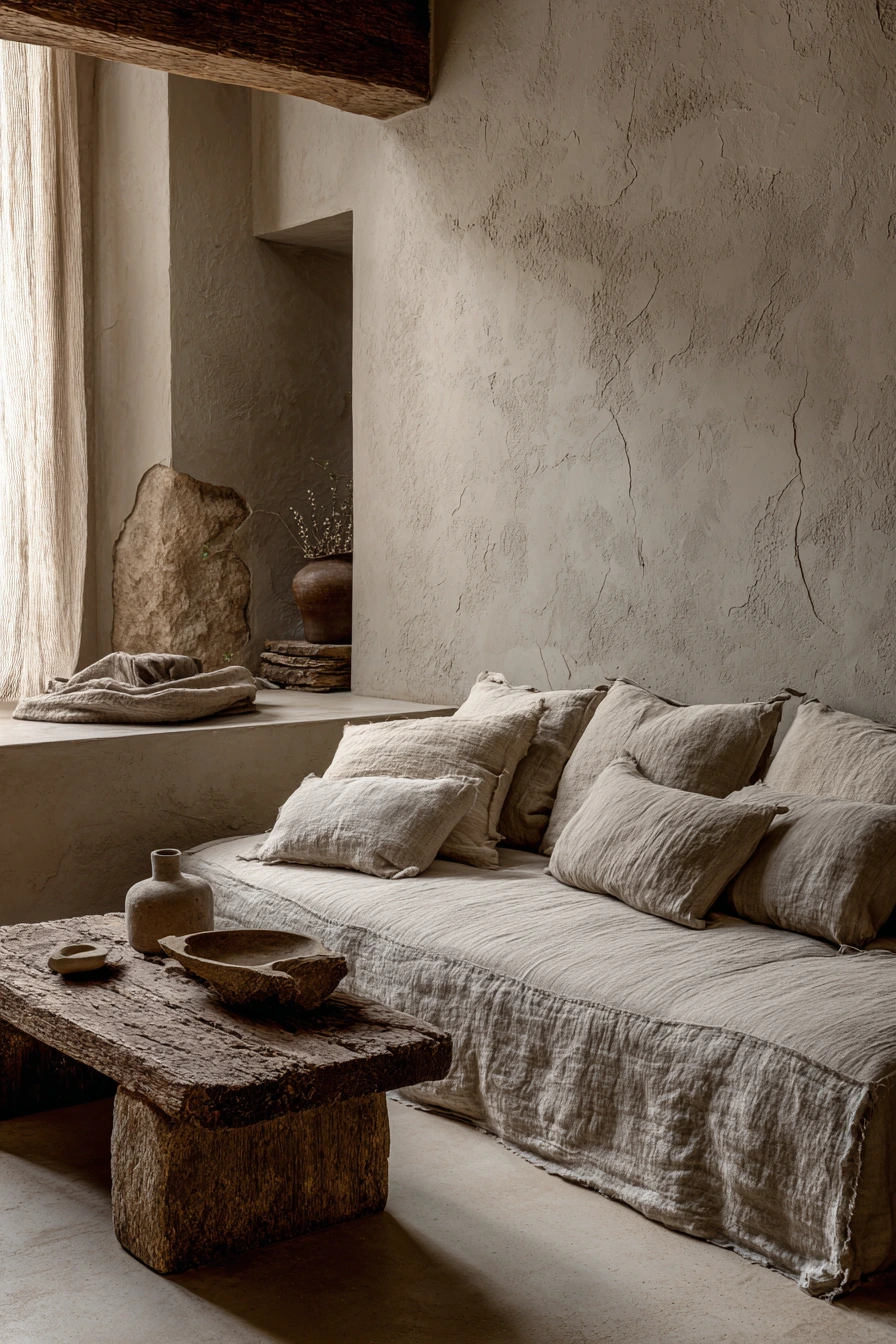
A minimalist wabi sabi living space works best with a simple low couch in muted sand tones. Look for relaxed cushions, imperfect seams, and a soft, worn-in feel. This type of couch does not need bold piping or sharp edges. The goal is quiet comfort.
Because the room is intentionally sparse, every material matters. Rough wooden floors bring warmth, while natural plaster walls add gentle texture and soft shadows. Keep decor limited to a few clay pottery pieces and one sculptural object. Think of items you might actually use, like a bowl for keys or a small vase for a single branch.
To style the couch, focus on proportion. A low couch looks best with a low table or no table at all. If you want a table, choose a simple stone or wood block shape. Keep textiles natural: one linen throw, one flatweave rug, and no extra patterns. Let sunlight from a wide opening create the peaceful, meditative mood.
- Pick a couch with a low profile and soft seat lines.
- Use sand, oat, and muted beige as your main color set.
- Limit decor to pottery and one sculptural piece.
- Choose a low, simple table that matches the couch height.
- Use plain linen and flatweave textures instead of prints.
Pro Design Tip: Leave one side of the couch “empty” with no pillow so the space feels intentional and calm.
Budget Considerations: Sculptural decor can be expensive; look for handmade-style pieces at local markets or thrift stores, and keep the quantity low.


4. Japanese-Inspired Wabi Sabi Couch with Shoji Light

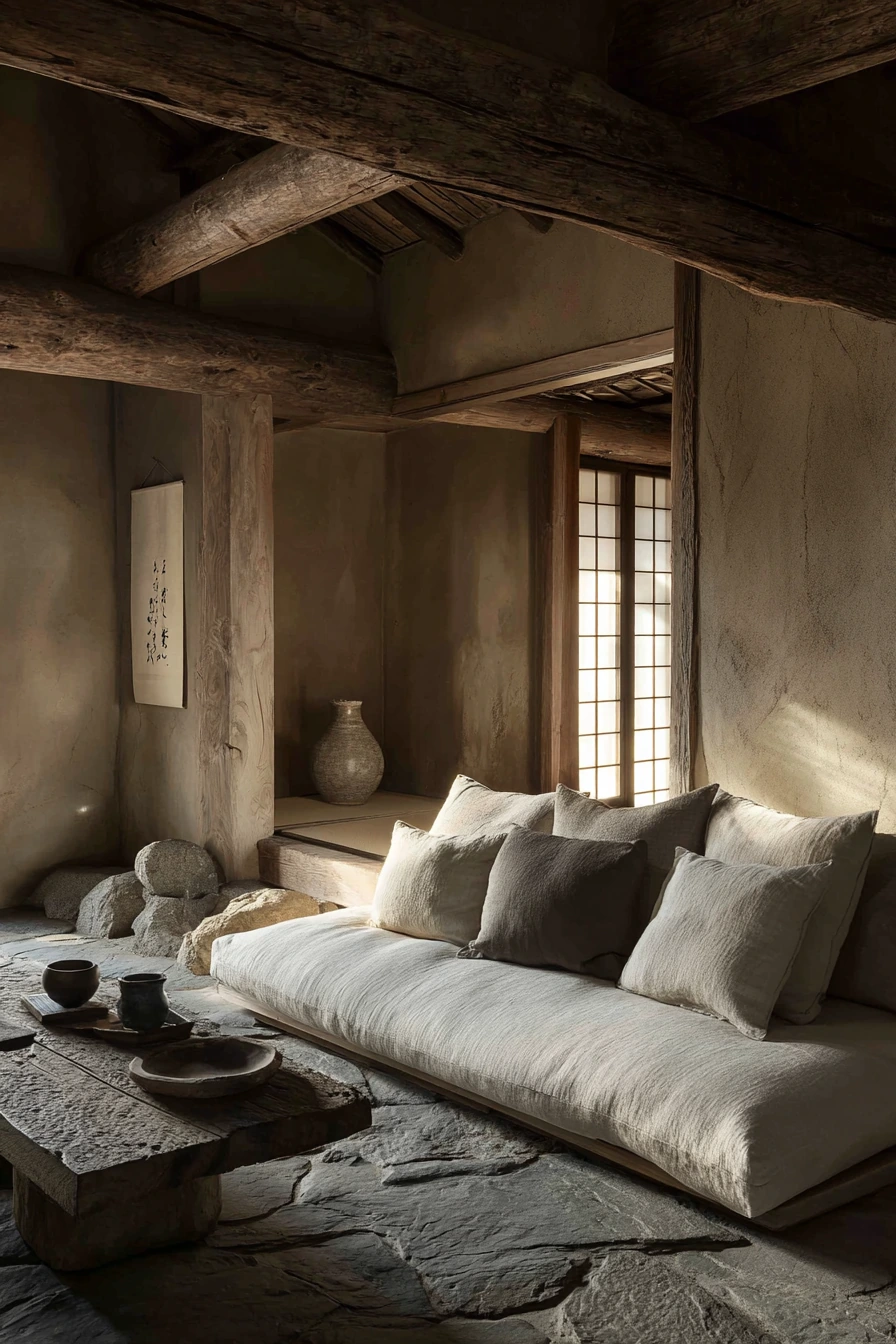
This Japanese-inspired wabi sabi living room centers on a low linen couch placed close to the floor. The couch should have neutral cushions with soft creases, not stiff shapes. This style pairs well with calm, balanced rooms where each item has a purpose.
Natural materials should lead the design. Wooden beams, stone flooring, and handmade ceramics create a steady, grounded base. Walls in soft earthy tones, with small imperfections, keep the space from feeling too polished. Shoji-style openings or light-filtering panels help diffuse daylight so the room feels gentle and even.
For styling, keep the couch area simple and low. Use a floor-level side tray instead of a tall end table. Add one textured cushion, like nubby linen, to bring depth without adding clutter. A single ceramic vase or tea bowl on a low surface adds a quiet focal point. If you want warmth, choose a natural fiber rug with a tight weave and a soft, faded tone.
- Choose a low couch that sits close to the floor.
- Use neutral cushions with soft folds, not crisp corners.
- Add handmade ceramics in small groups of one to three.
- Use light-filtering panels or linen curtains to soften daylight.
- Keep furniture low to match the couch and support a calm layout.
Pro Design Tip: Keep clear sight lines by using fewer tall items so the room feels open and contemplative.
Budget Considerations: Shoji screens can be pricey; use simple wood frames with rice-paper style panels, or hang light linen curtains to get a similar diffused glow.


5. Warm Neutral Wabi Sabi Couch with Raw Wood and Linen
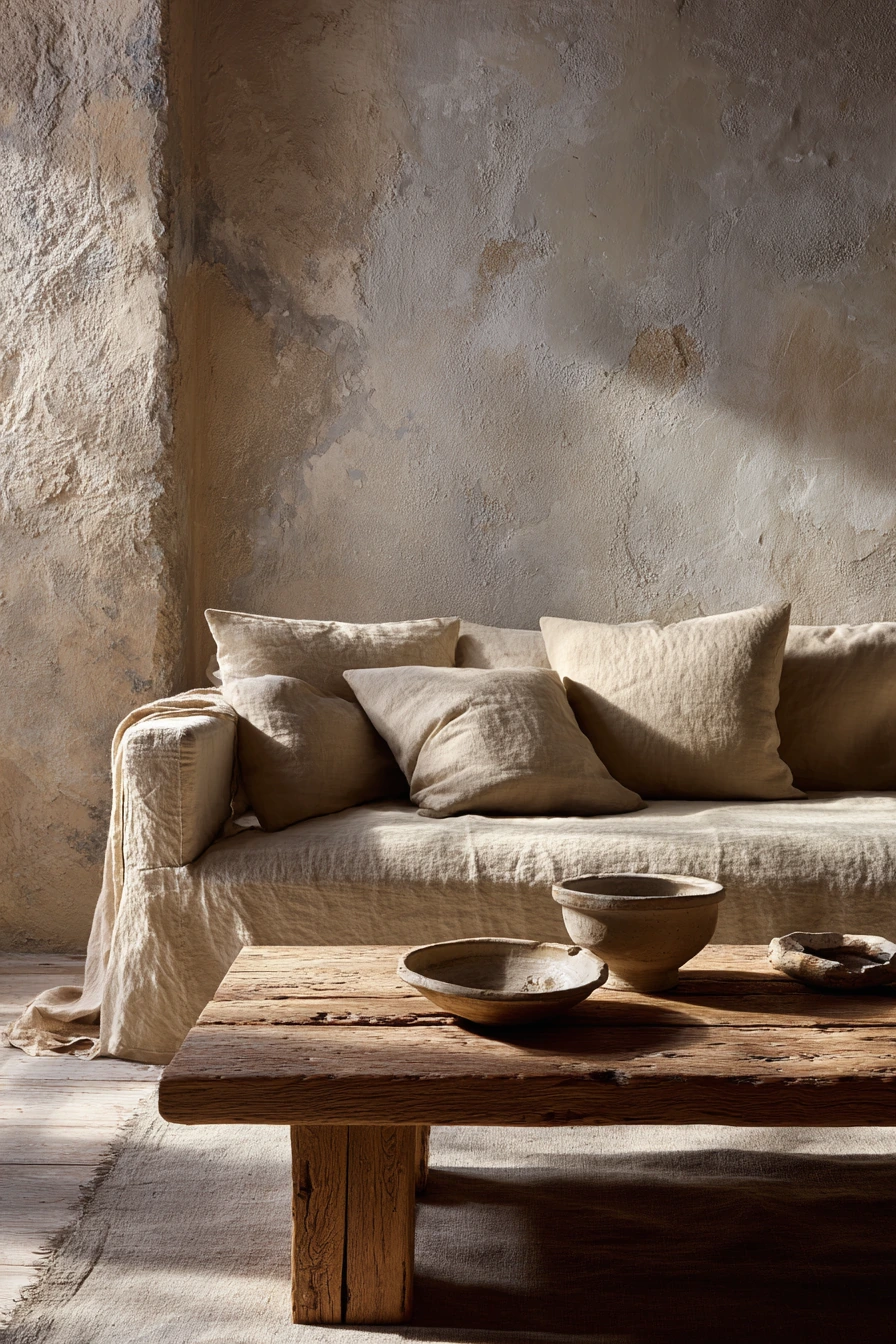
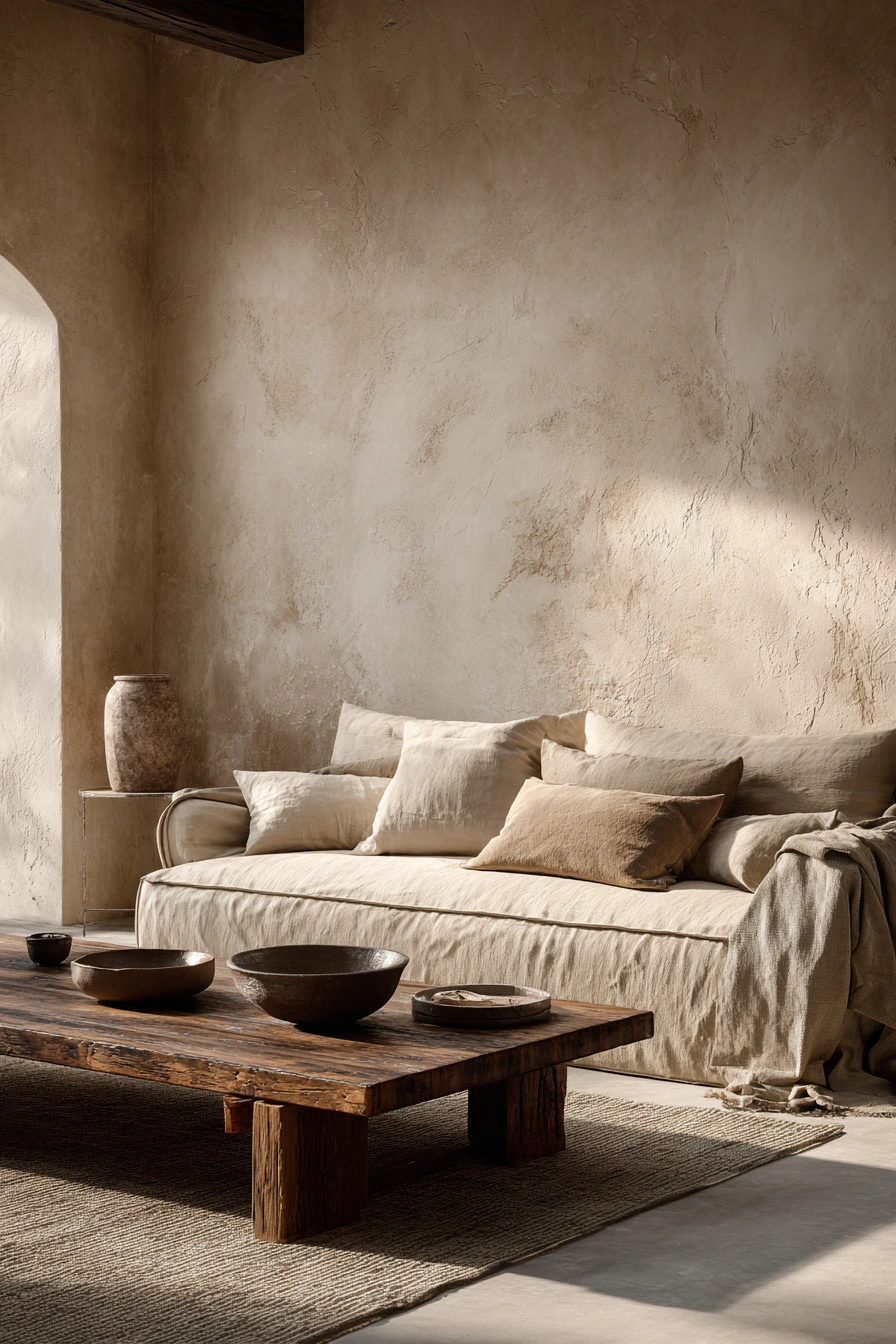
A warm neutral wabi sabi living room often starts with a soft beige couch with relaxed upholstery and an organic shape. The couch should look comfortable, not stiff. Slightly uneven cushions and a natural drape in the fabric make it feel real and inviting.
Pair the couch with a raw wood coffee table, uneven ceramic bowls, and textured linen textiles. These pieces bring in touchable surfaces and small imperfections that feel human. Walls finished in warm lime plaster, with visible variation, add depth without needing bold paint colors. If your floor shows natural wear, treat it as a feature. Small marks and color shifts support the wabi sabi look.
For styling, think in layers. Add a linen throw that matches the couch but is not the exact same shade. Use one ceramic bowl for everyday items like coasters. Keep the coffee table clear enough to use, with space for a book and a cup. Let sunlight stream in softly. Avoid high-contrast decor that fights the calm mood.
- Choose a beige couch with relaxed, slightly loose upholstery.
- Use a raw or lightly finished wood coffee table for warmth.
- Add uneven ceramic bowls for a handmade touch.
- Layer linen textiles in close tones for softness.
- Use warm plaster or limewash colors to add wall depth.
Pro Design Tip: Mix one “rough” surface (raw wood) with one “soft” surface (linen) near the couch so the room feels balanced.
Budget Considerations: Solid wood tables can cost more; consider a secondhand table and lightly sand it, then seal it with a matte finish for a raw look.


6. Rustic Wabi Sabi Couch with Worn Linen and Reclaimed Wood
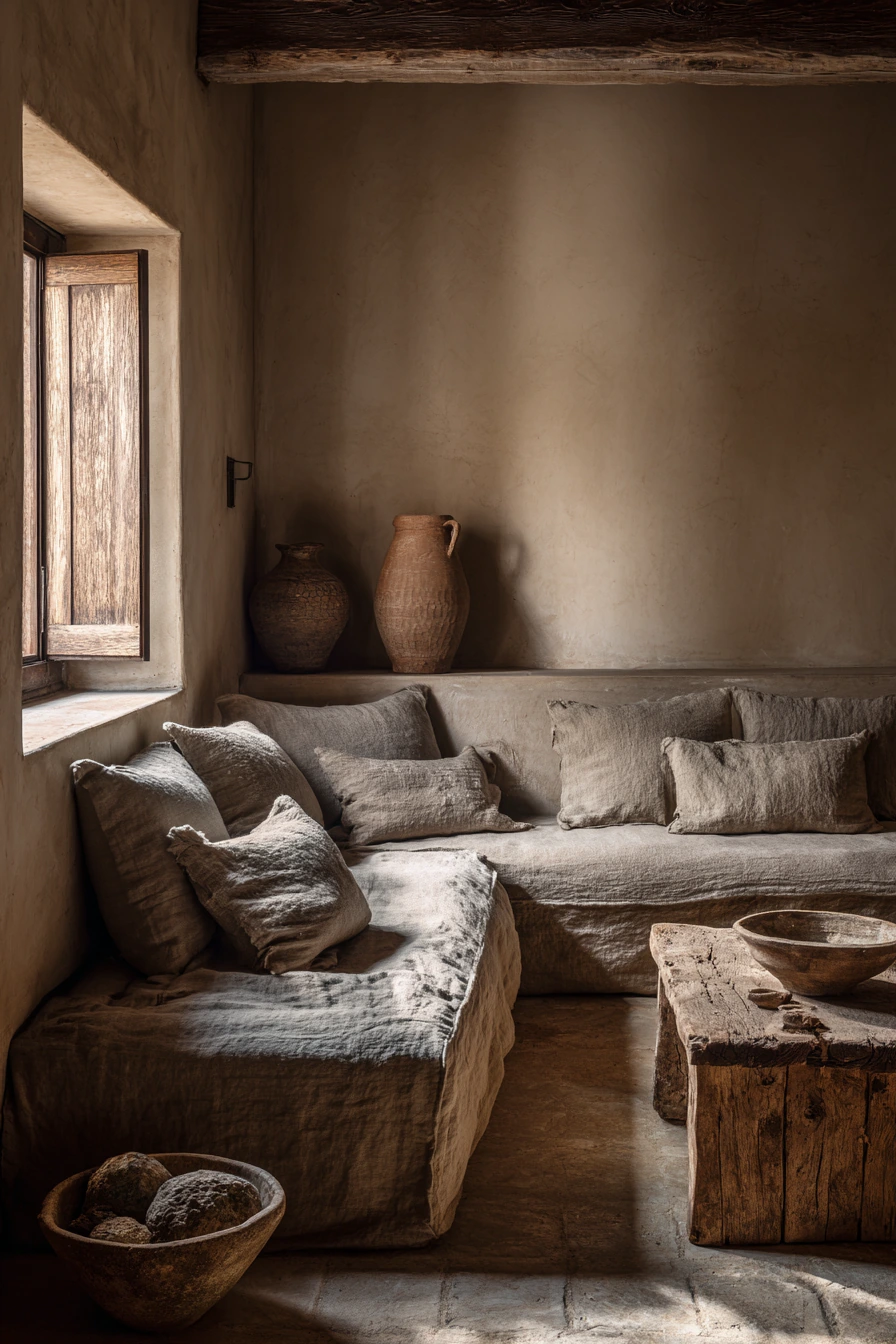
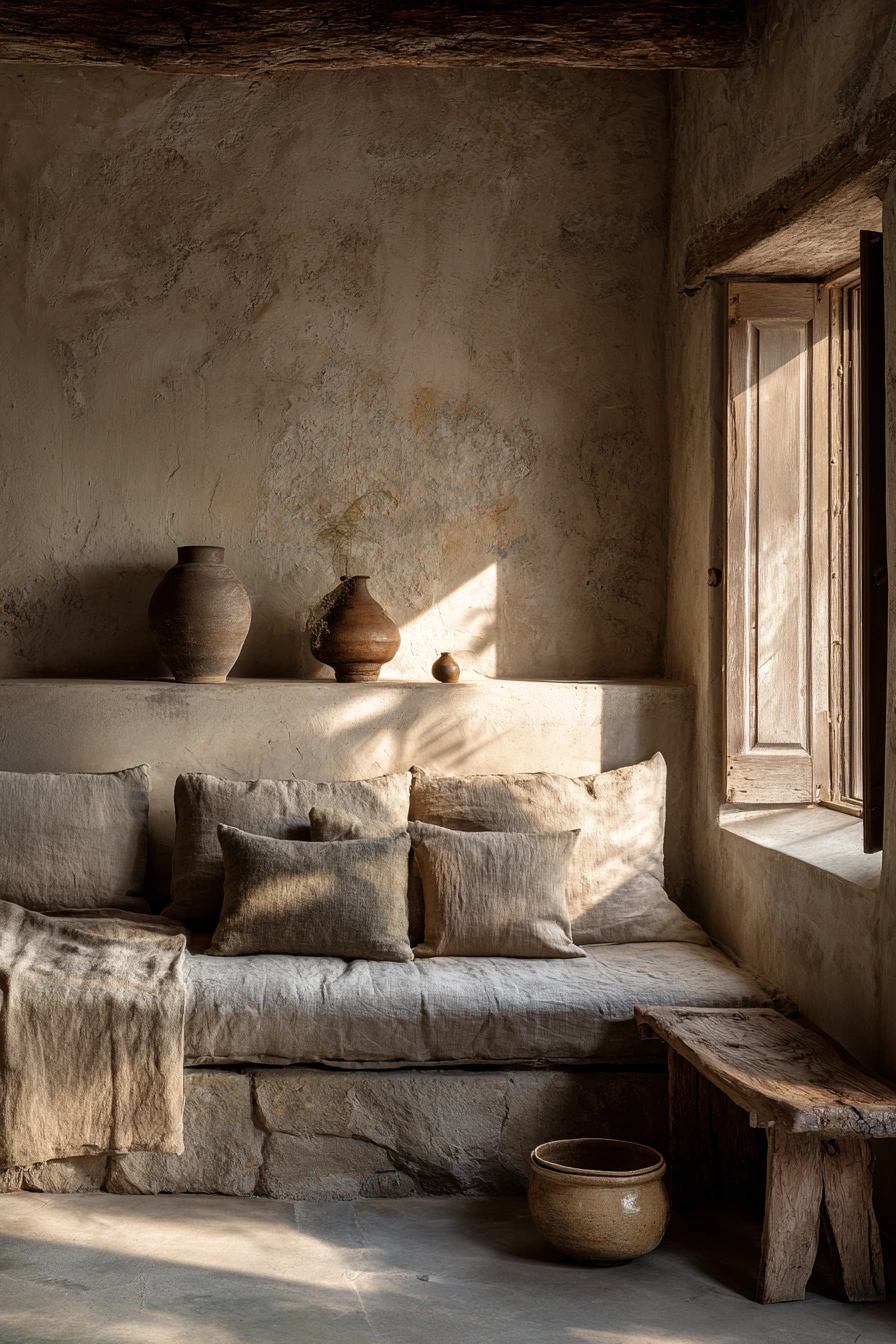
This rustic wabi sabi interior highlights a worn linen couch in muted earth tones. The cushions may sag a little, and that is part of the charm. A couch like this should feel like it has been used and loved, not kept perfect for guests.
Surround the couch with reclaimed wood furniture, stone decor, and handmade pottery. These items bring a timeless feeling and a sense of history. Walls with subtle aging and texture make the space feel grounded. Natural light from a simple window adds soft shadows that show the materials clearly, especially the linen weave and the wood grain.
To style the couch, choose comfort first. Add one heavy linen throw and a cushion in a slightly darker earth tone like mushroom or clay. Use a side table with visible wear rather than a glossy finish. Keep decor practical: a crock for branches, a bowl for matches, a stack of books you actually read. The goal is a deeply human room that is calm and functional.
- Pick a linen couch in earth tones like clay, brown, or muted olive.
- Use reclaimed wood pieces with visible knots and marks.
- Add stone accents like a small bowl, tray, or lamp base.
- Keep pottery handmade-looking and matte, not shiny.
- Use soft window light and avoid harsh overhead lighting when possible.
Pro Design Tip: Use one antique or vintage piece near the couch to add depth, like an old stool, a worn bench, or a timeworn pottery jar.
Budget Considerations: Reclaimed wood can vary in price; if you are on a budget, shop salvage yards, Facebook Marketplace, or use a pine piece and stain it to a softer, aged tone.


7. Light and Airy Wabi Sabi Couch in Off-White Linen

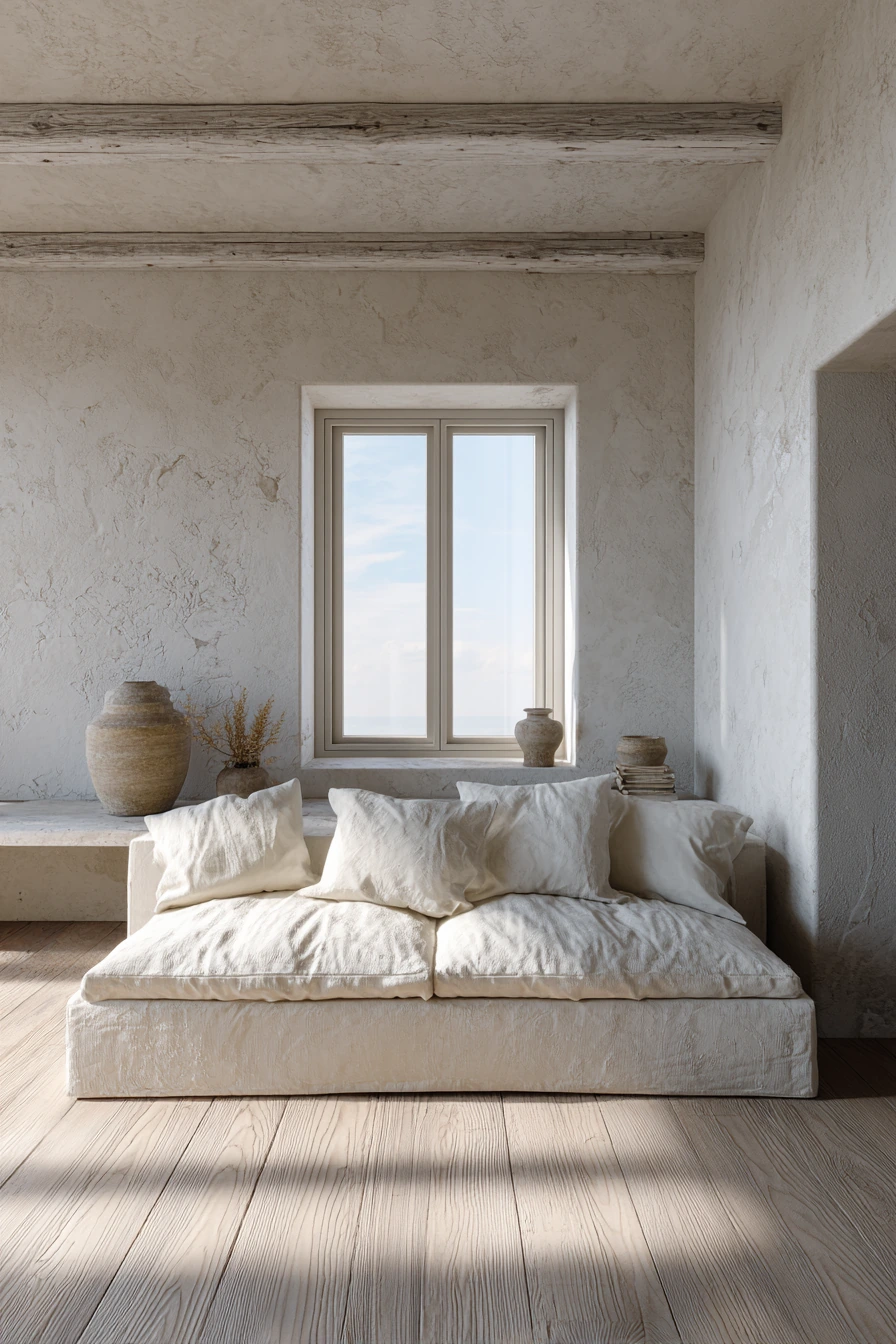
A light and airy wabi sabi living room can still feel warm if you choose the right textures. An off-white linen couch works well because it looks soft, relaxed, and naturally aged. Linen also handles wrinkles in a way that looks intentional, which is perfect for this style.
Keep the room bright with pale wood flooring, minimal decor, and handcrafted ceramic accents. Walls with soft texture and subtle tonal variation add interest without needing bold art. Large openings that let sunlight flow freely help create a tranquil, open feeling. In this setting, the couch becomes the main comfort zone, so give it space and keep the layout simple.
To style an off-white couch without making it feel cold, add warm neutrals. Use a sand-colored throw, a light oat pillow, and a natural fiber rug. Choose ceramics in creamy whites or light gray. If you need contrast, bring it in through wood tones, not black. A small branch in a vase or a single framed sketch can be enough.
- Choose an off-white linen couch with a relaxed slipcover look.
- Use pale woods to keep the room light but still natural.
- Add one warm neutral throw to avoid a stark white feel.
- Keep decor minimal and handcrafted for an honest look.
- Use a natural fiber rug to add softness underfoot.
Pro Design Tip: Pick whites with a warm undertone (cream, ivory) so the couch looks soft in sunlight and not harsh.
Budget Considerations: Off-white linen can show stains; if you have kids or pets, consider washable slipcovers or a performance linen blend that still looks matte and natural.

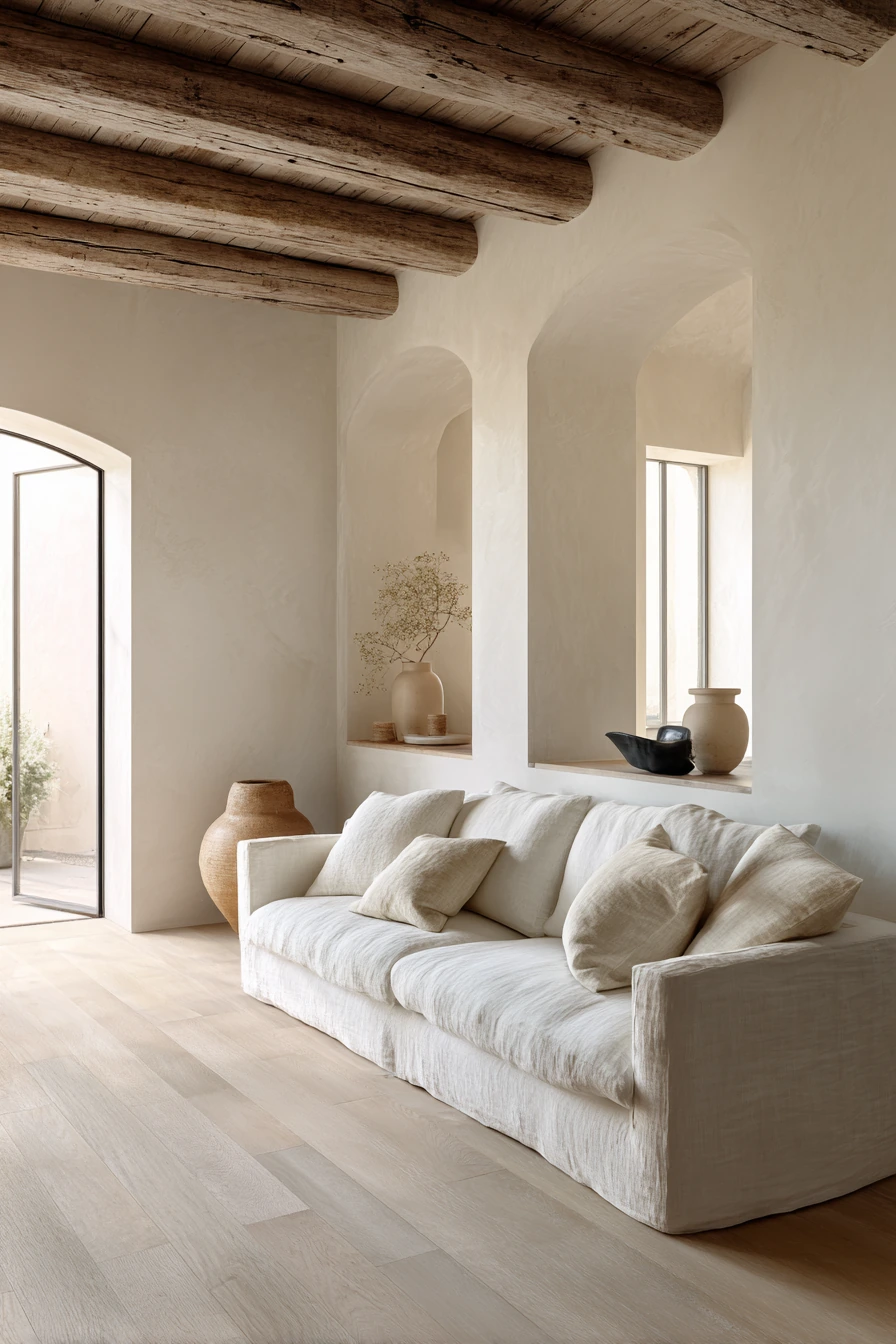
8. Contemporary Wabi Sabi Couch with Modern Lines and Raw Materials


A contemporary wabi sabi living area blends modern simplicity with organic imperfection. The couch is often low and wide, with clean lines, but the fabric should stay textured and relaxed. Think neutral upholstery with cushions that look soft, not overstuffed.
The contrast is what makes this look work. Clean architecture and simple shapes sit next to raw stone, warm wood, and clay. Keep decor minimal and intentional. Instead of many small items, choose one larger piece, like a stone bowl or a clay vessel, and let it stand alone. Natural daylight should highlight surface texture and quiet shadows, so avoid shiny finishes that reflect too much.
To style a modern wabi sabi couch, focus on balance. Use one structured element, like a straight-edged table, and one organic element, like a rough ceramic lamp or a wood stool with visible grain. Add a soft rug in a greige tone to anchor the seating area. If you want art, choose something simple, like a monochrome print or a textured wall hanging in natural fibers.
- Choose a low, wide couch with simple shapes and textured fabric.
- Mix clean lines with raw materials like stone and unfinished wood.
- Keep decor minimal, with fewer but larger objects.
- Use a calm neutral palette: greige, taupe, sand, and clay.
- Add one tactile element like a nubby pillow or woven rug.
Pro Design Tip: Use a “one hard, one soft” rule near the couch, like a stone table paired with a thick linen throw, to keep the modern look from feeling cold.
Budget Considerations: Designer stone and wood pieces can be expensive; look for concrete-look tables, textured ceramic dupes, and secondhand wood stools to get the same grounded mix.

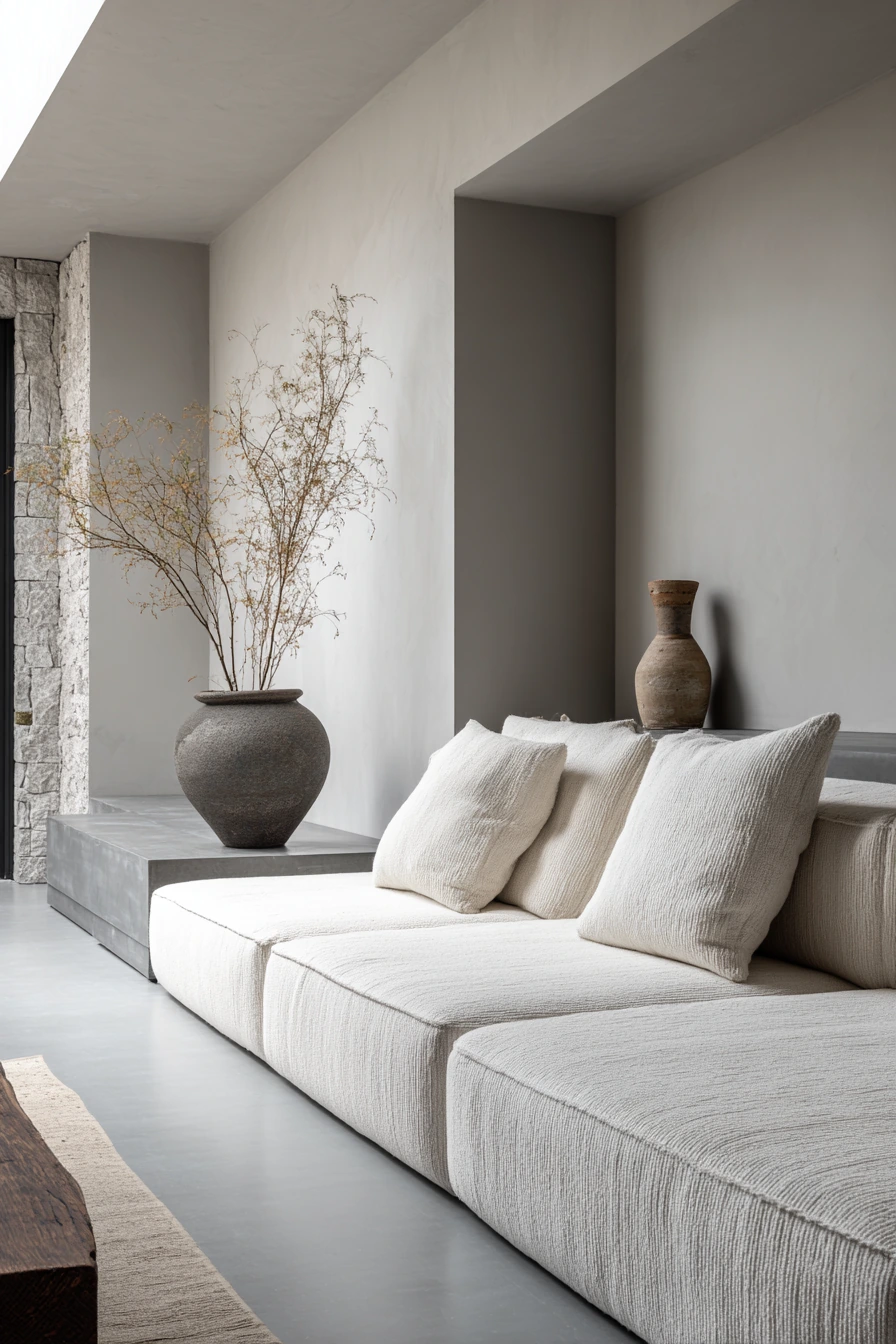
9. Cozy Corner Wabi Sabi Couch Styling
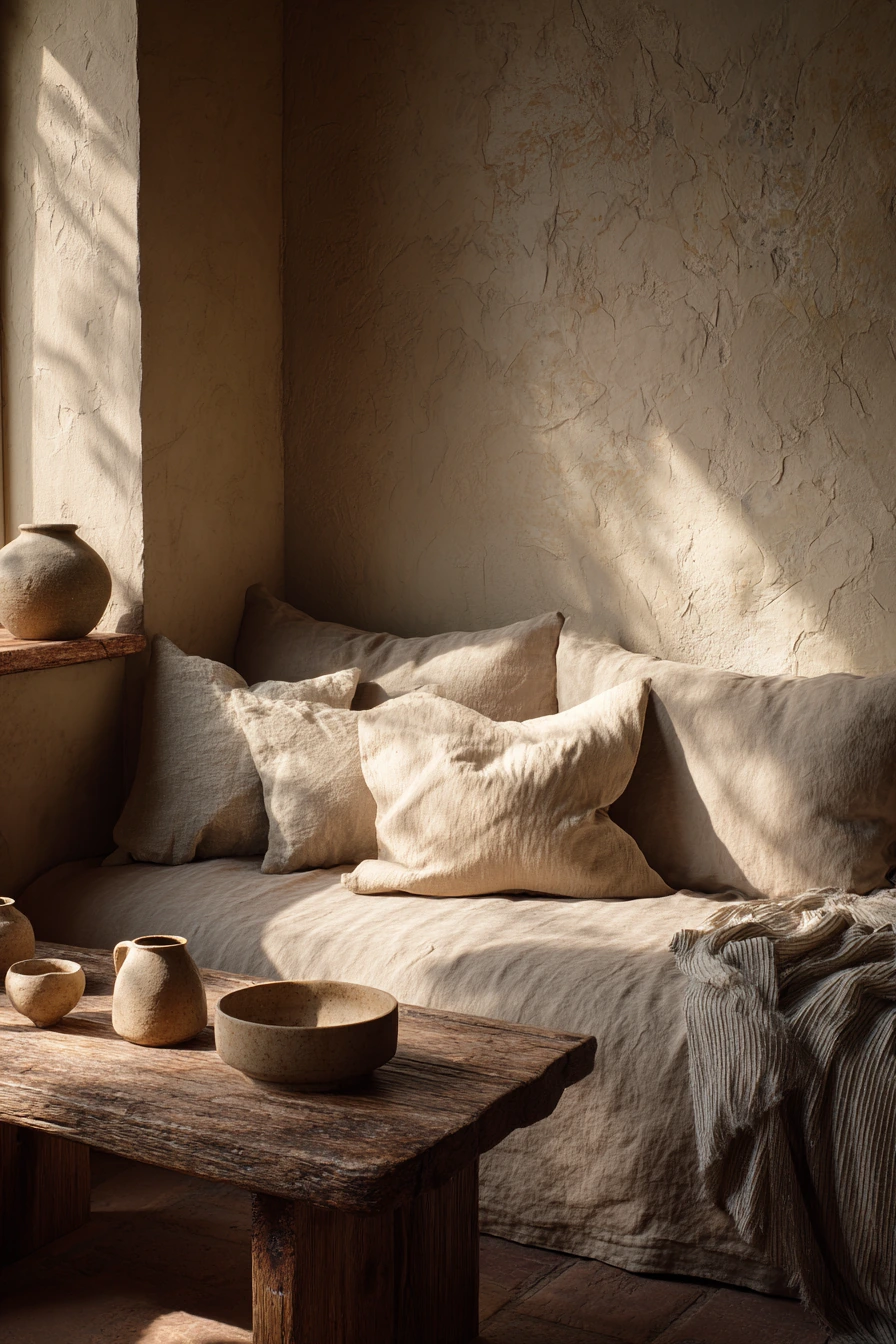

A cozy wabi sabi seating area is perfect for a calm corner. The couch should look soft and imperfect, with subtle wrinkles and natural wear. This style is not about matching sets. It is about comfort, quiet, and small details that feel personal.
Build the corner with a rough wood side table, a linen throw, and a few handmade ceramics. An uneven, warm wall texture helps the space feel tucked in and intimate. Gentle sunlight makes a big difference here. If the corner is darker, add one warm lamp with a natural shade like linen or paper to keep the mood soft.
For styling, think “useful and simple.” Keep one spot for a cup or a book. Add a small tray to gather items so the space does not look messy. Choose a throw that looks slightly crumpled, not folded into a perfect square. If you want one pillow, pick a muted tone like warm gray, sand, or clay. This keeps the corner cozy without feeling busy.
- Place the couch close to a wall to create a protected corner feel.
- Add a rough wood side table with a simple shape.
- Use a linen throw and let it drape naturally.
- Keep ceramics small and handmade-looking for quiet detail.
- Use warm, soft lighting if sunlight is limited in that corner.
Pro Design Tip: Anchor the corner with a small rug so the seating zone feels defined, even if the rest of the room is open.
Budget Considerations: If you cannot buy a new side table, use a sturdy stool or a stacked wood crate, then sand rough edges for a safer, softer finish.

10. Serene Wabi Sabi Couch with Stone Table and Calm Textures + FAQ

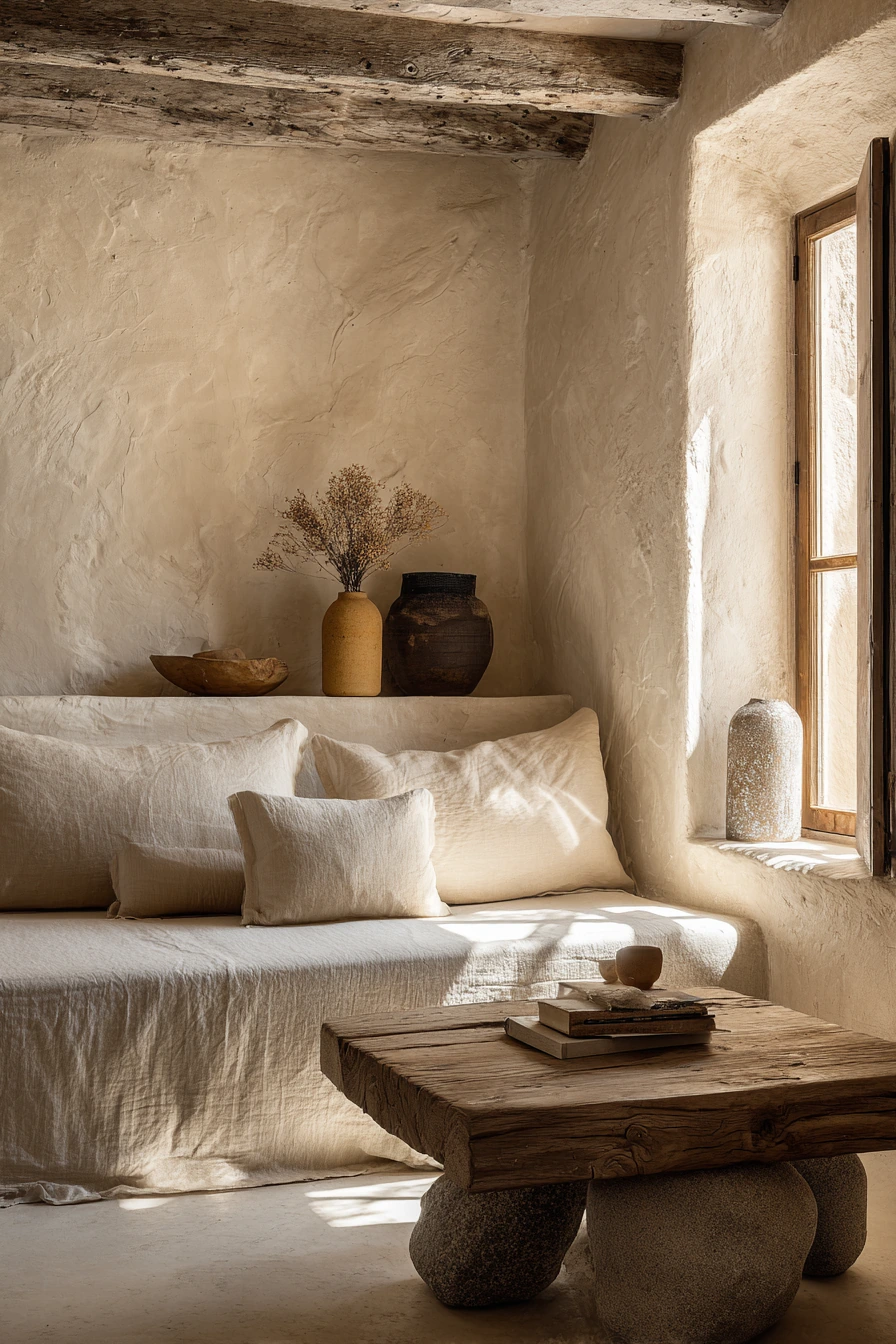
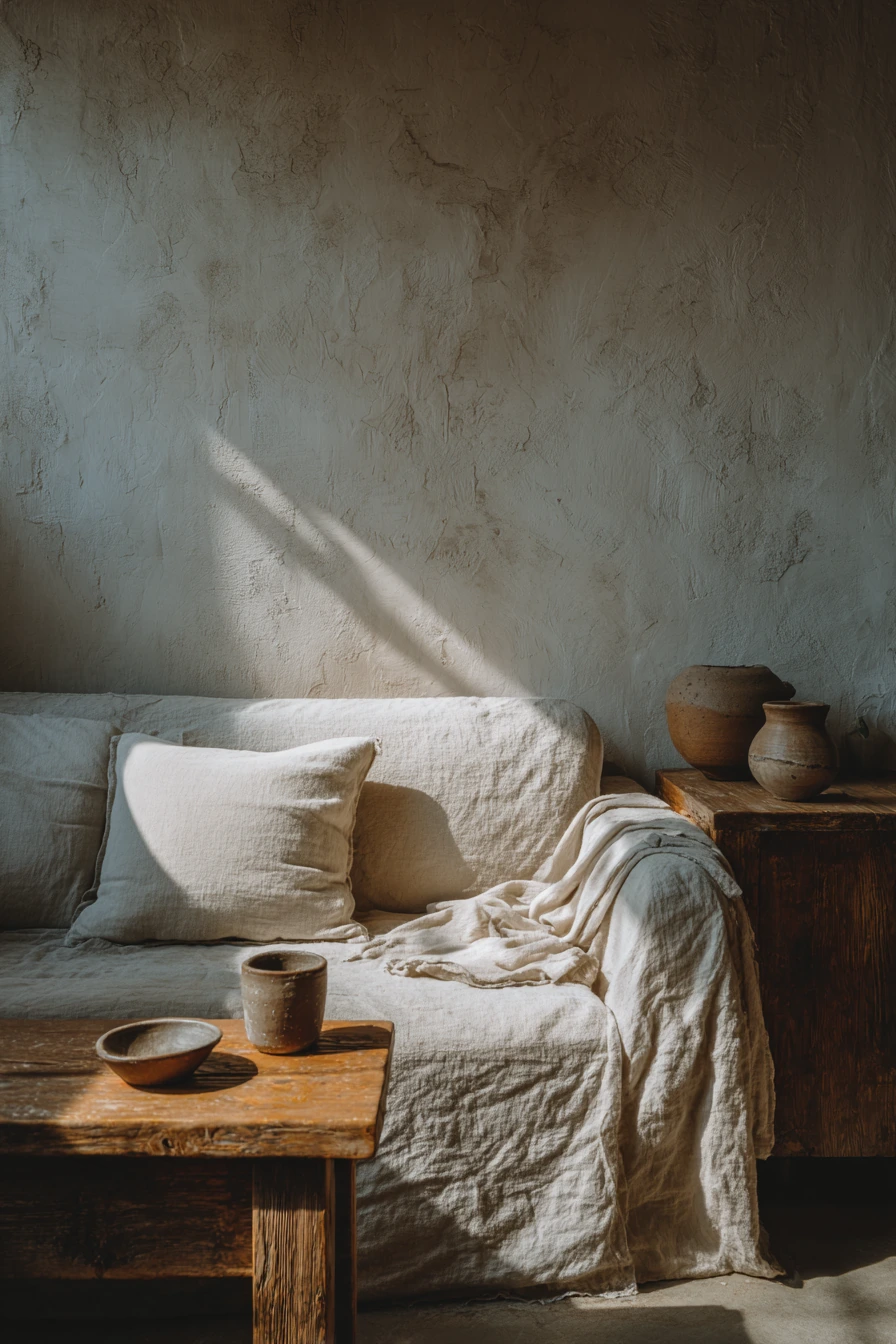
A serene wabi sabi living room focuses on quiet comfort rather than perfection. A neutral linen couch that sits low works well because it feels grounded and easy to live with. Pair it with a stone table and minimal handcrafted decor so the textures lead the design. Wood grain, plaster walls, and soft fabrics should be the main “pattern” in the room.
To get this calm look, avoid clutter and strong contrast. Choose a few items with meaning, like a handmade bowl, a small vase, or a wooden tray. Let sunlight fall across the couch and walls so you can see the gentle imperfections. Keep pillows simple and not too many. Two is often enough for a relaxed, thoughtful feel.
If you are building this look from scratch, start with the couch and one strong natural piece, like the stone table. Then add texture slowly: a linen throw, a woven rug, and one ceramic accent. Below are common questions people have when shopping for and styling a wabi sabi couch.
- What makes a couch wabi sabi? It has natural materials, soft lines, and a lived-in look, like linen texture, gentle wrinkles, and simple shapes.
- Is a slipcovered couch good for wabi sabi style? Yes. Slipcovers in linen or cotton look relaxed and are easy to wash, which supports the practical side of the style.
- What colors work best? Beige, sand, taupe, warm greige, clay, and soft off-white. These shades keep the room calm and let textures show.
- Do I need plaster walls to get the look? No. You can use limewash-style paint, mineral paint, or even a matte warm neutral wall color to get a softer feel.
- How many pillows should I use? Keep it simple. Two pillows and one throw is often enough to look relaxed without feeling styled.
- What coffee table pairs well with a wabi sabi couch? Stone, raw wood, or a simple matte table with natural texture works best. Avoid glossy finishes.
Pro Design Tip: Use one “quiet focal point,” like a stone table or a single ceramic piece, and keep everything else supportive and simple.
Budget Considerations: Stone tables can be expensive; try a concrete-look table, a thrifted wood table with a matte finish, or a small stone side table instead of a full coffee table.

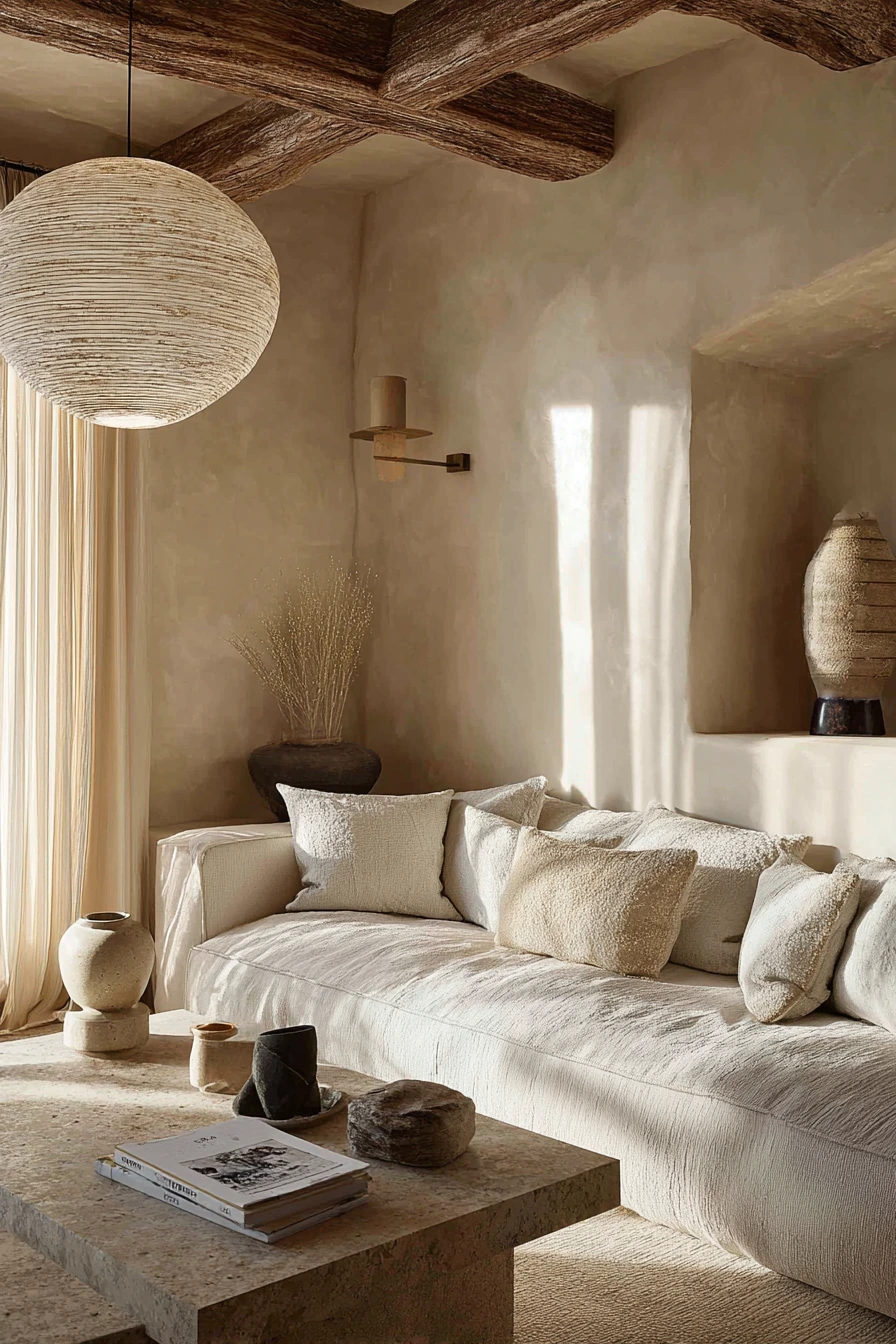
A wabi sabi couch helps you create a home that feels calm, natural, and easy to live in. Focus on low seating, textured linen or cotton, and warm neutral colors.
Use wood, stone, clay, and soft plaster-like wall finishes to support the look. Keep decor simple, choose a few handcrafted pieces, and let sunlight show the texture.
Start small with one couch, one table, and one ceramic accent. As the room slowly comes together, it will feel more personal and more peaceful.
Frequently Asked Questions
What makes a couch wabi sabi?
It features natural materials, soft lines, and a lived-in look, such as linen texture, gentle wrinkles, and simple organic shapes that embrace imperfection.
Is a slipcovered couch good for wabi sabi style?
Yes. Slipcovers in linen or cotton look naturally relaxed and are easy to wash, which supports both the aesthetic and practical side of the style.
What colors work best for a wabi sabi living room?
Beige, sand, taupe, warm greige, clay, and soft off-white. These grounded shades keep the room calm and allow natural textures to take center stage.
Do I need plaster walls to get the look?
No. You can use limewash-style paint, mineral paint, or a flat matte warm neutral wall color to achieve a softer, more textured feel without major construction.
How many pillows should I use on a wabi sabi couch?
Keep it simple and uncluttered. Two pillows and one linen throw are usually enough to look relaxed and inviting without feeling overly styled.