A moody cottage kitchen uses deep colors, worn wood, and soft natural light to make a room feel calm and lived-in. It is not about making a kitchen gloomy. It is about adding contrast, texture, and a few old pieces that feel honest.
In this guide, you will see 10 moody cottage kitchen looks, from dark sage cabinets and oak tables to forest green walls, copper pots, and stone hearths. Each section includes simple styling steps you can copy in your own home.
You will also get practical tips for lighting, hardware, and materials like slate tile, soapstone sinks, leaded glass, and marble. These details help the kitchen feel cozy even when the light outside is rainy or cloudy.
If you found this post from Pinterest, use it like a checklist. Pick one look that fits your space, then add just a few changes first, like paint, textiles, and a small group of vintage items.
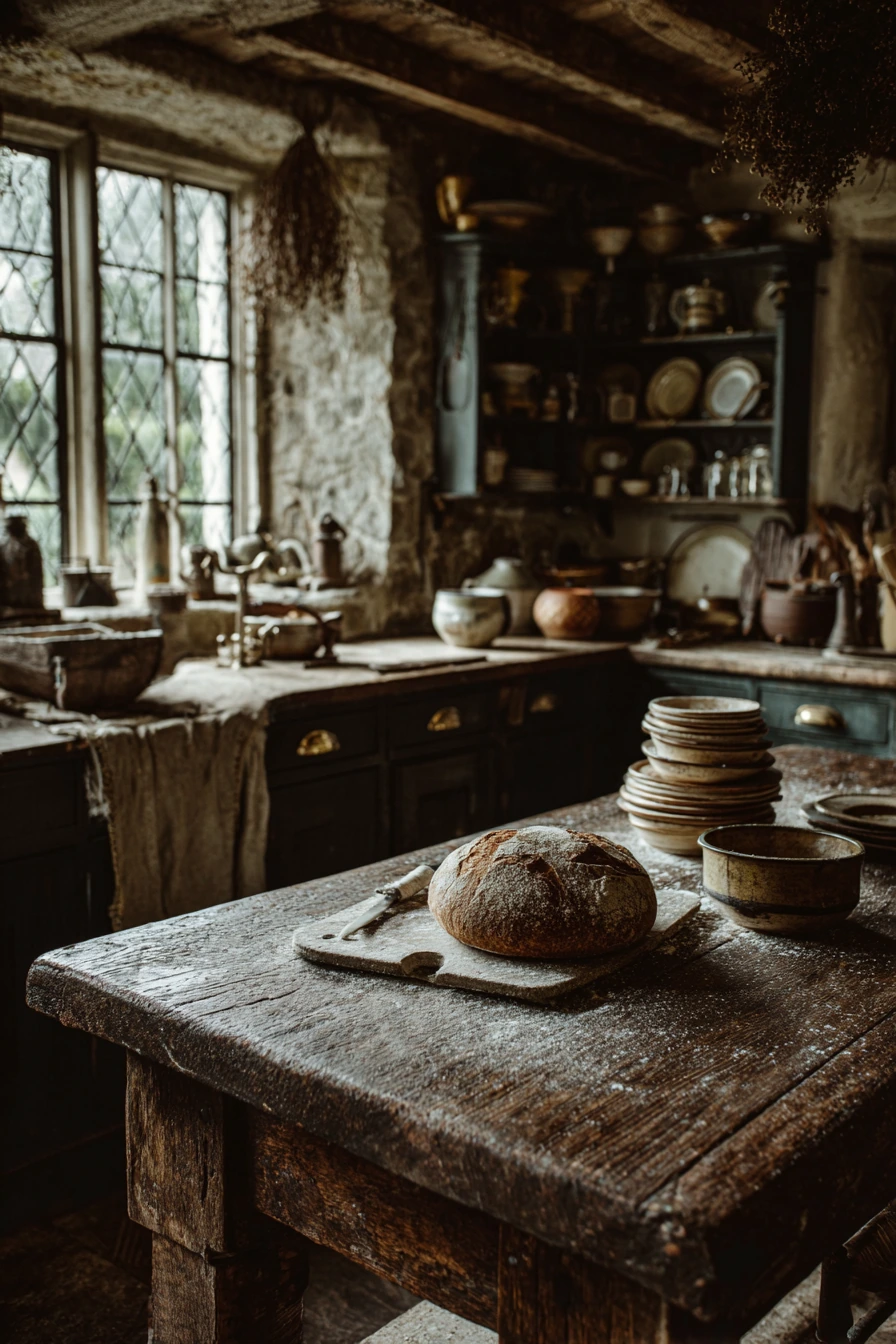
1. Moody Cottage Kitchen With Dark Sage Cabinets and an Oak Table

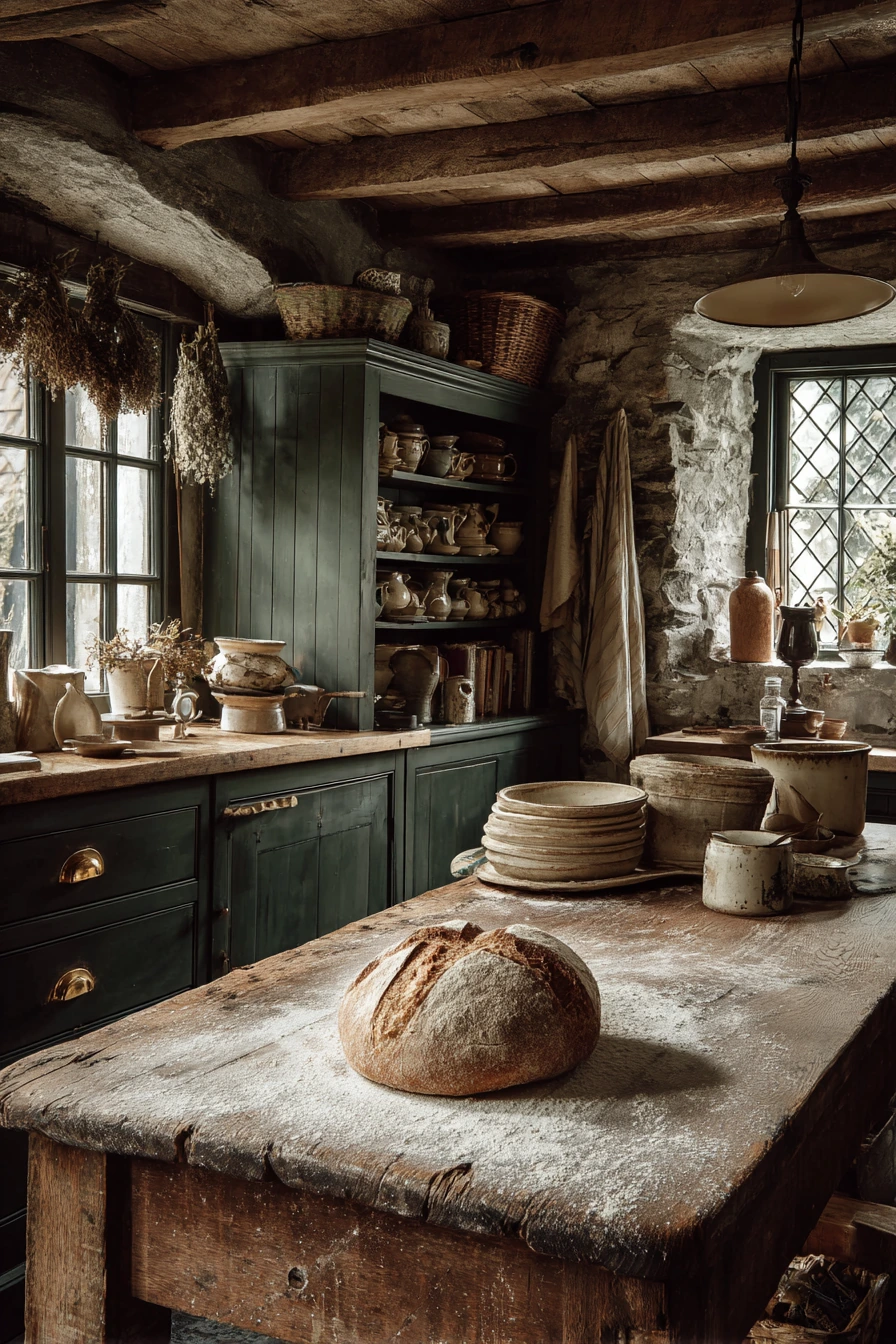
This moody cottage kitchen starts with a heavy oak table that looks flour-dusted and well used. Dark sage wooden cabinets and antique brass latches add a quiet, old-world feel. On a rainy afternoon, the shadows make the room look deeper and more layered, which is the goal with this style.
To style the table, keep it simple and useful. A stack of vintage ceramic bowls near a leaded glass window looks natural, not staged. Add a marble slab with one crusty sourdough loaf, then stop. Too many props can make a rustic kitchen feel busy instead of calm.
Use texture to carry the mood. Hang dried herbs from exposed ceiling beams, and choose heavy linen for the window. Cool light through the glass will highlight stone walls, wood grain, and small dust motes, which makes the room feel real and warm without adding bright colors.
- Pick a muted green paint with grey undertones for cabinets.
- Use antique brass knobs or latches to soften dark wood.
- Add one linen curtain panel instead of full drapes for an easy look.
- Keep counter styling in groups of three: bowls, board, loaf.
- Mix stone, wood, and ceramic so the room does not feel flat.
Pro Design Tip: Use a matte or eggshell finish on dark sage cabinets; it hides glare and makes the color look richer in low light.
Budget Considerations: If a solid oak table is out of reach, look for a used pine table and stain it darker, then add a stone or marble board as a focal point.
2. Moody Cottage Kitchen at Twilight With Forest Green Walls and Copper Pots
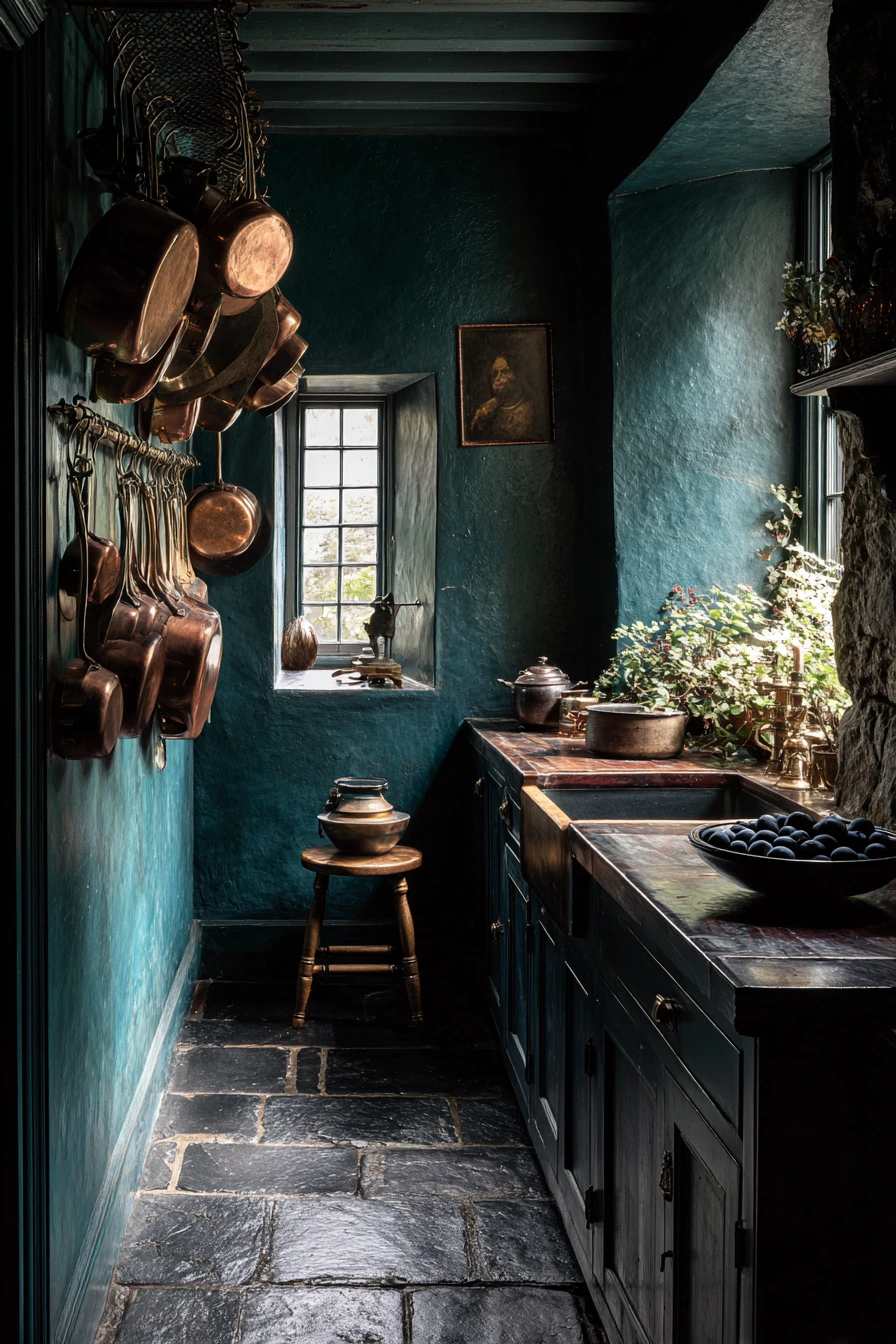

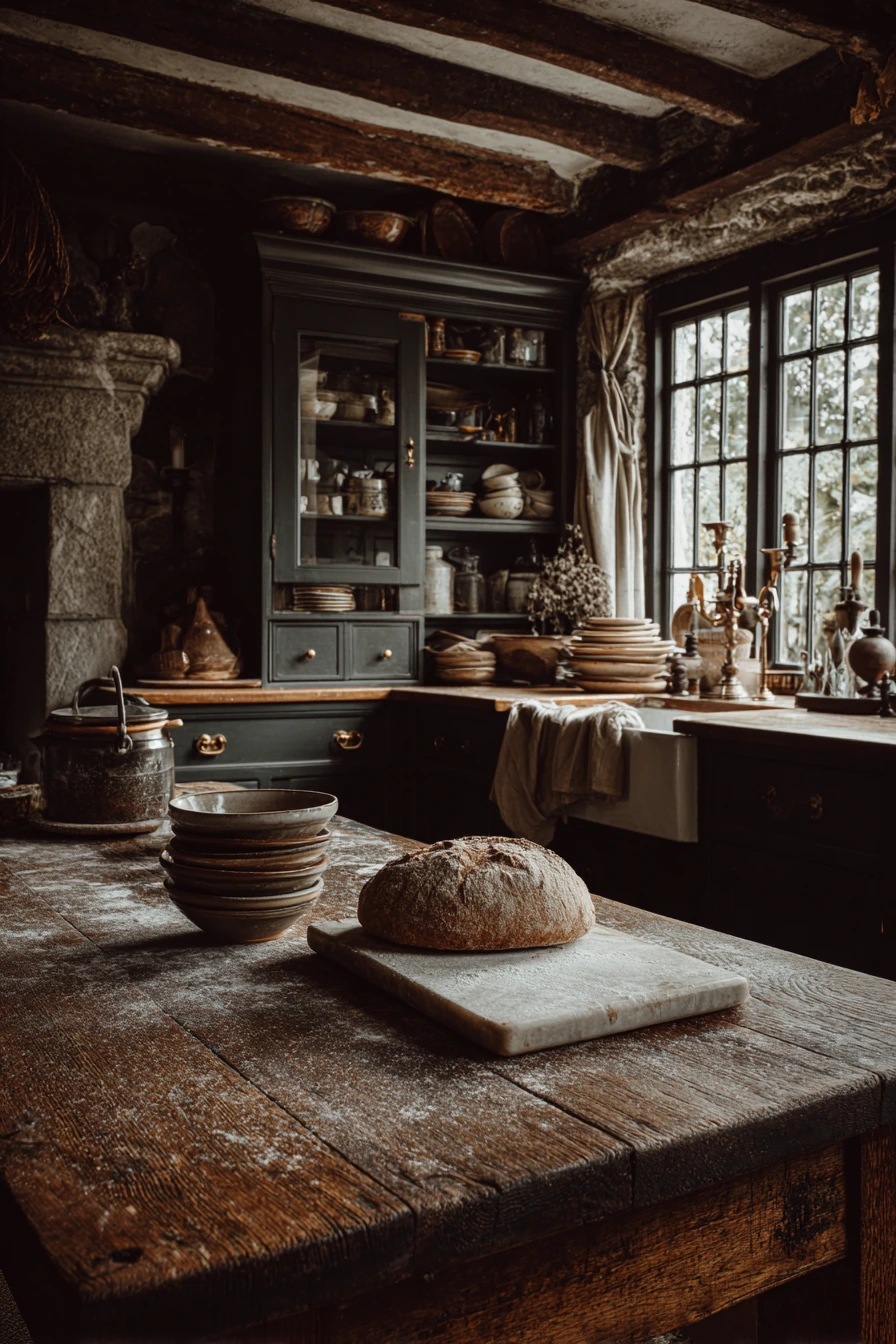
This moody cottage kitchen look is built for evening light. Deep forest green walls and dark mahogany countertops read as warm and steady, even when the window light turns blue at twilight. The contrast makes the room feel quiet and tucked away.
Copper is the main accent here. Polished copper pots and pans on a wrought-iron rack catch small bits of light and keep the space from looking too dark. If your kitchen is small, limit copper to one area so it feels collected, not crowded.
To keep it cottage, add living and worn elements. Ivy spilling over a farmhouse sink made of weathered soapstone adds softness. Uneven dark slate tiles help the room feel older. Style the counter with a bowl of dark plums, a vintage kettle, and one rustic wooden stool tucked in tight.
- Paint walls a deep green that still looks good in low light.
- Choose iron or black hardware to match a pot rack.
- Use one bowl of dark fruit for color that stays moody.
- Add a plant that trails, like ivy, for gentle movement.
- Layer lighting: one warm bulb, plus window light when you have it.
Pro Design Tip: Hang copper pieces at different heights so the rack looks balanced, then keep the rest of the wall simple to avoid visual clutter.
Budget Considerations: Real slate and soapstone can be pricey; try slate-look porcelain tile and a composite sink in a dark, worn finish.


3. Moody Cottage Kitchen With a Stone Hearth and Butcher Block Island

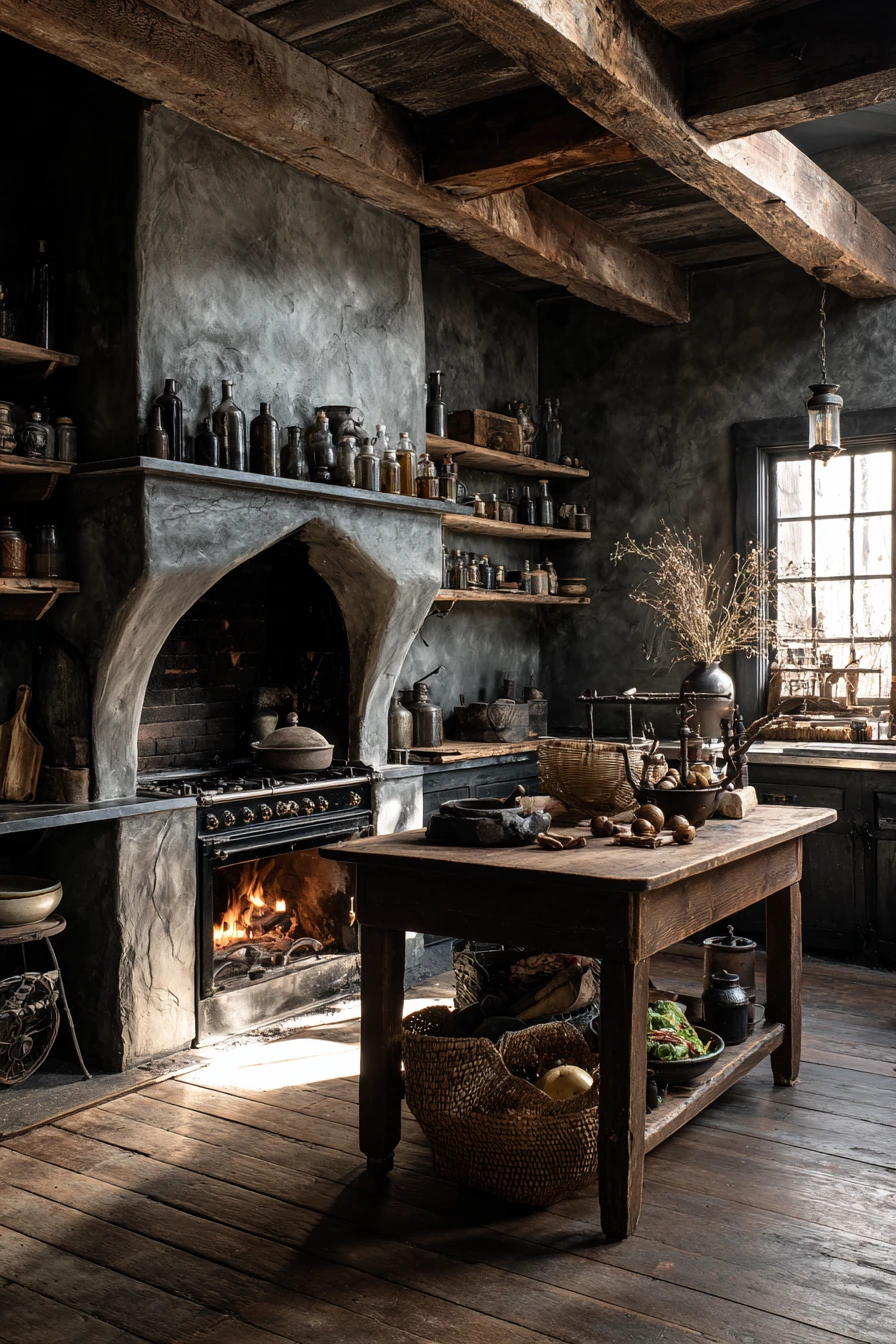
A large soot-stained stone hearth gives this moody cottage kitchen a strong center. Dark plaster walls catch the low-angle winter sun and show off texture instead of shine. It feels cozy, but still a little serious, which is part of the charm.
Make the island look like a working surface, not a display. An antique butcher block island can hold iron-wrought tools, a basket of root vegetables, and a few worn boards. The mix of wood, iron, and produce creates the cottage look without needing bright decor.
Open wooden shelving keeps the room from feeling closed in. Use mismatched dark stoneware, tinted glass bottles, and tarnished silver spoons. Leave some empty space on shelves so each piece stands out. Wide-plank timber floors and long shadows do the rest.
- Let one big feature lead the room, like a hearth or hood.
- Use dark plaster or limewash to add depth on the walls.
- Choose open shelves for everyday items, not perfect sets.
- Add root vegetables in a basket for natural color and texture.
- Keep metals aged: iron, pewter, or brushed nickel.
Pro Design Tip: Balance heavy stone with warm wood tones; if everything is dark and cool, the room can feel hard instead of cozy.
Budget Considerations: If you cannot add a real hearth, create the look with a reclaimed mantel, a dark tile surround, and a simple wood stove-style range.


4. Moody Cottage Kitchen Herbalist Style With Dark Cabinets and Hanging Herbs
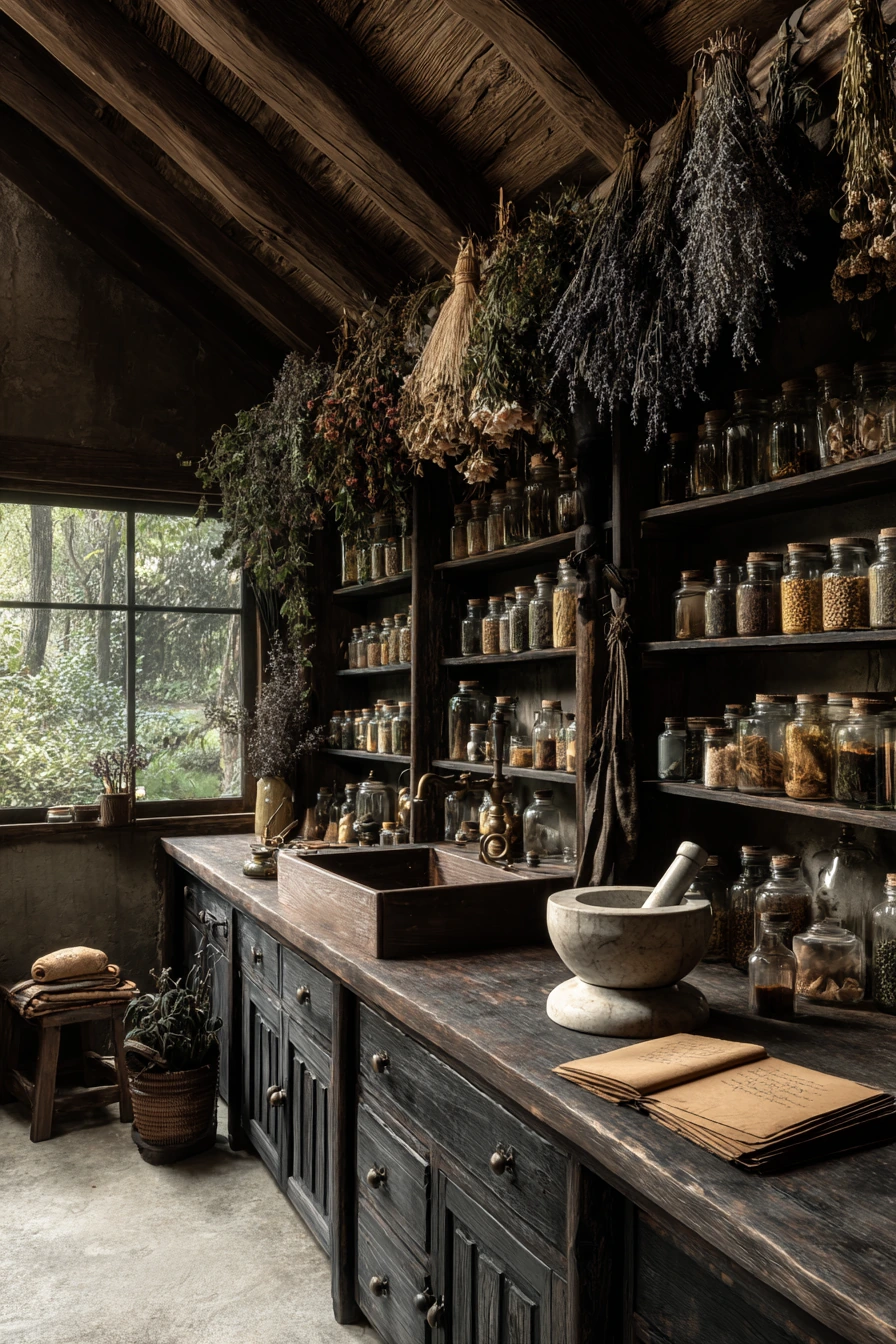

This moody cottage kitchen feels like an herbalist’s workshop because storage is on display. Tall dark wood cabinets filled with jars of dried botanicals and amber glass vials create a layered wall of color. The mood comes from repetition and shadow, not from lots of decor.
Keep the sink area simple and practical. A heavy porcelain sink under a window facing a misty forest look works well with muted, diffused daylight. Lime-washed walls soften the darkness so the space does not feel cramped, especially in a smaller kitchen.
Style the counters with items that look used. A mortar and pestle, a wooden tray, and an open handwritten leather journal create a quiet story. Hang bundles of lavender and eucalyptus from low rafters, but limit it to one or two lines so it looks tidy, not messy.
- Store dried herbs in matching jars for calm, not chaos.
- Use amber bottles to add color without brightness.
- Hang herbs in small bundles so they dry evenly and look neat.
- Choose warm wood tools to soften dark cabinetry.
- Keep one clear counter zone for real cooking tasks.
Pro Design Tip: Use the same label style on every jar; it makes open storage look intentional and more high-end.
Budget Considerations: Collect jars slowly from thrift stores and reuse food jars; swap lids for black or brass-toned ones to unify the look.


5. Victorian Moody Cottage Kitchen With Charcoal Cabinets and Marble Backsplash
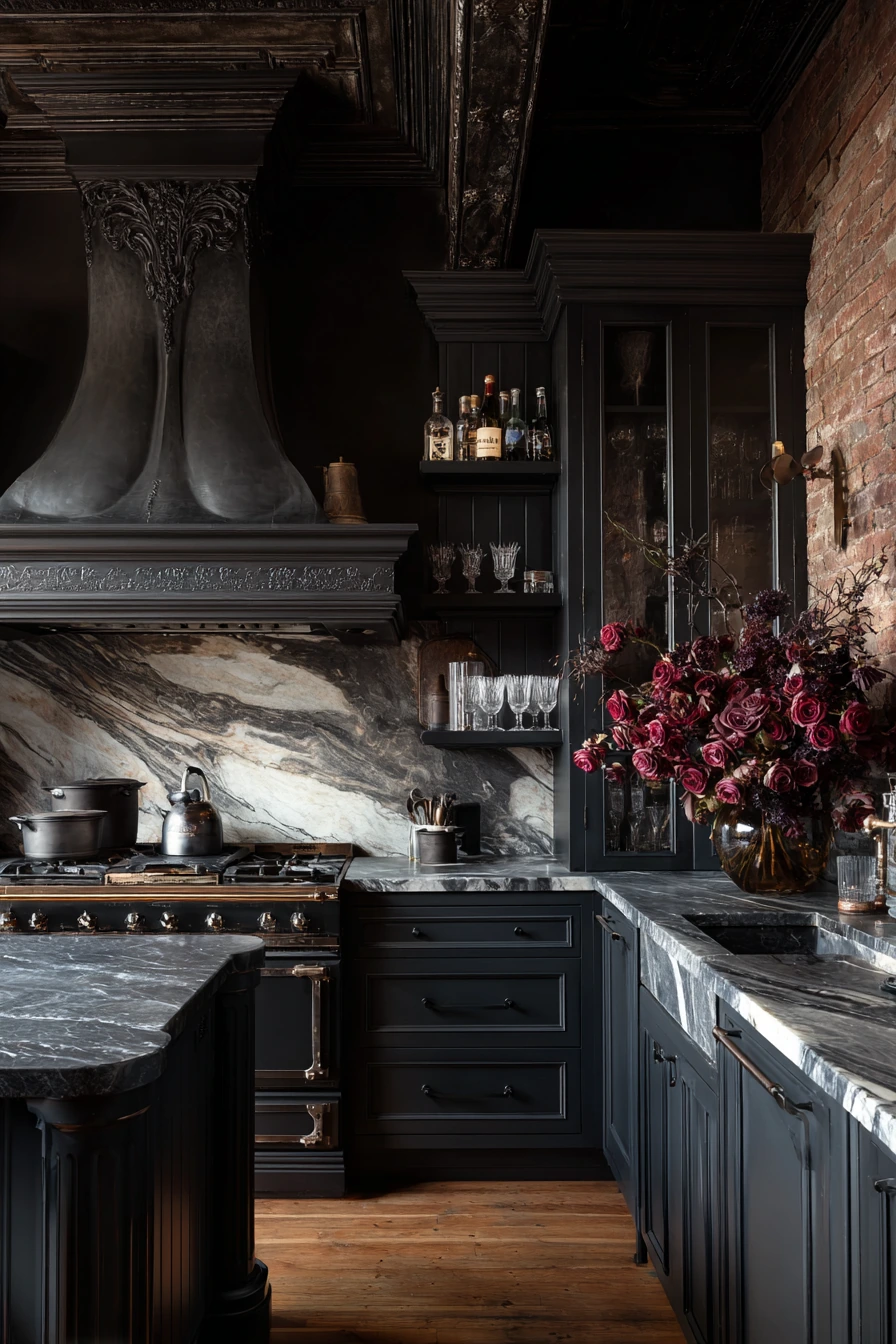

This moody cottage kitchen has a Victorian influence with matte charcoal black cabinetry and a white marble backsplash with deep grey veining. The high contrast looks crisp, but the dark finish keeps it intimate. An ornate dark-timbered ceiling can lower the visual height and make the room feel cozy.
A blackened iron stove in a brick alcove becomes the main statement. Keep nearby styling minimal so the stove reads as the hero. Open shelves with crystal glassware add sharp points of light, which is helpful when most surfaces are dark.
For a softer touch, use a small round table with a vase of deep-red roses that are slightly past their peak. It adds color without looking bright or modern. Repeat the rose tone in a tea towel or an old book cover so the room feels tied together.
- Choose a true matte black or charcoal paint for cabinets.
- Use veined stone or stone-look tile to keep movement on the wall.
- Add one brick feature, like an alcove, for warmth.
- Display clear glass to bounce light in a dark room.
- Limit accent colors to one deep shade, like burgundy.
Pro Design Tip: Pair black cabinets with warm bulbs in the 2700K range; it keeps the room from looking cold against white marble.
Budget Considerations: Real marble can stain; choose a marble-look porcelain backsplash and save money for good cabinet hardware.


6. Moody Cottage Kitchen With Foraged Finds and Dark Stone Walls
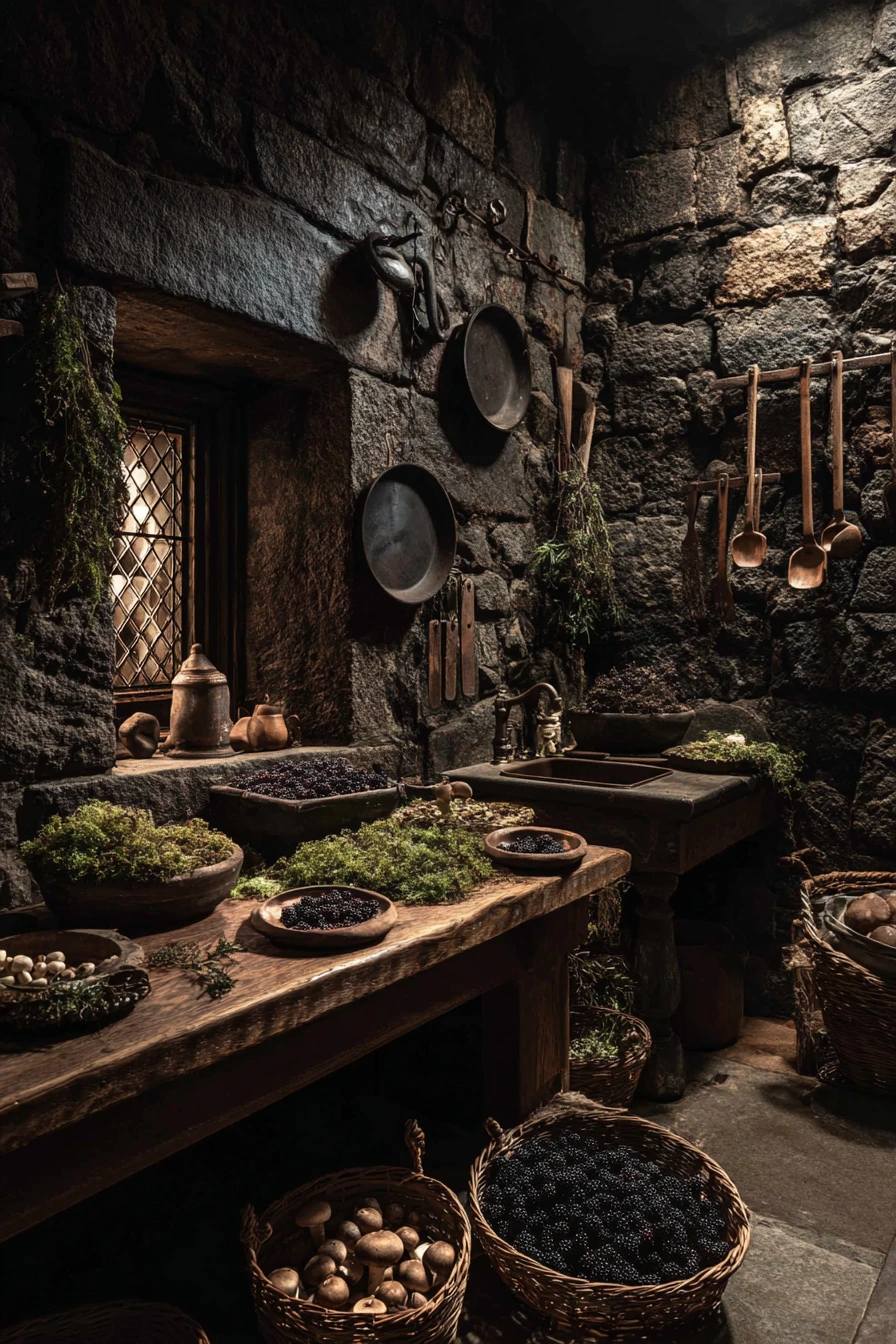

This low-lit cottage kitchen look is earthy and grounded. Dark stone walls feel damp and old, which makes a strong backdrop for a wooden table covered with wild mushrooms, moss, and baskets of blackberries. The color palette stays tight: deep brown, charcoal, and near-black purple.
Directional light matters here. A small high window that lights only the center of the room creates drama without adding extra lamps. Keep the corners darker and let the table be the bright spot. If you have a modern kitchen, you can copy this effect with one focused pendant and dimmer lighting.
Add old tools that look useful. An old-fashioned hand pump at a deep stone sink fits the mood. Wooden spoons and cast-iron skillets on the wall add shape and shadow. Arrange them in a simple grid so the display feels neat, not like clutter.
- Use baskets and wood trays to hold foraged items.
- Keep produce colors dark: blackberries, plums, purple onions.
- Hang cast iron on a simple rail for easy access and style.
- Add one strong light source and keep the rest soft.
- Use a rough linen towel to break up hard stone surfaces.
Pro Design Tip: Group wall tools by material and size; it makes the shadows look intentional and helps the space feel organized.
Budget Considerations: If you cannot do stone walls, use a limewash paint in a charcoal tone and add stone boards or dark ceramic pieces for texture.


7. Moody Cottage Kitchen With Midnight Blue Cabinets and Aged Subway Tile
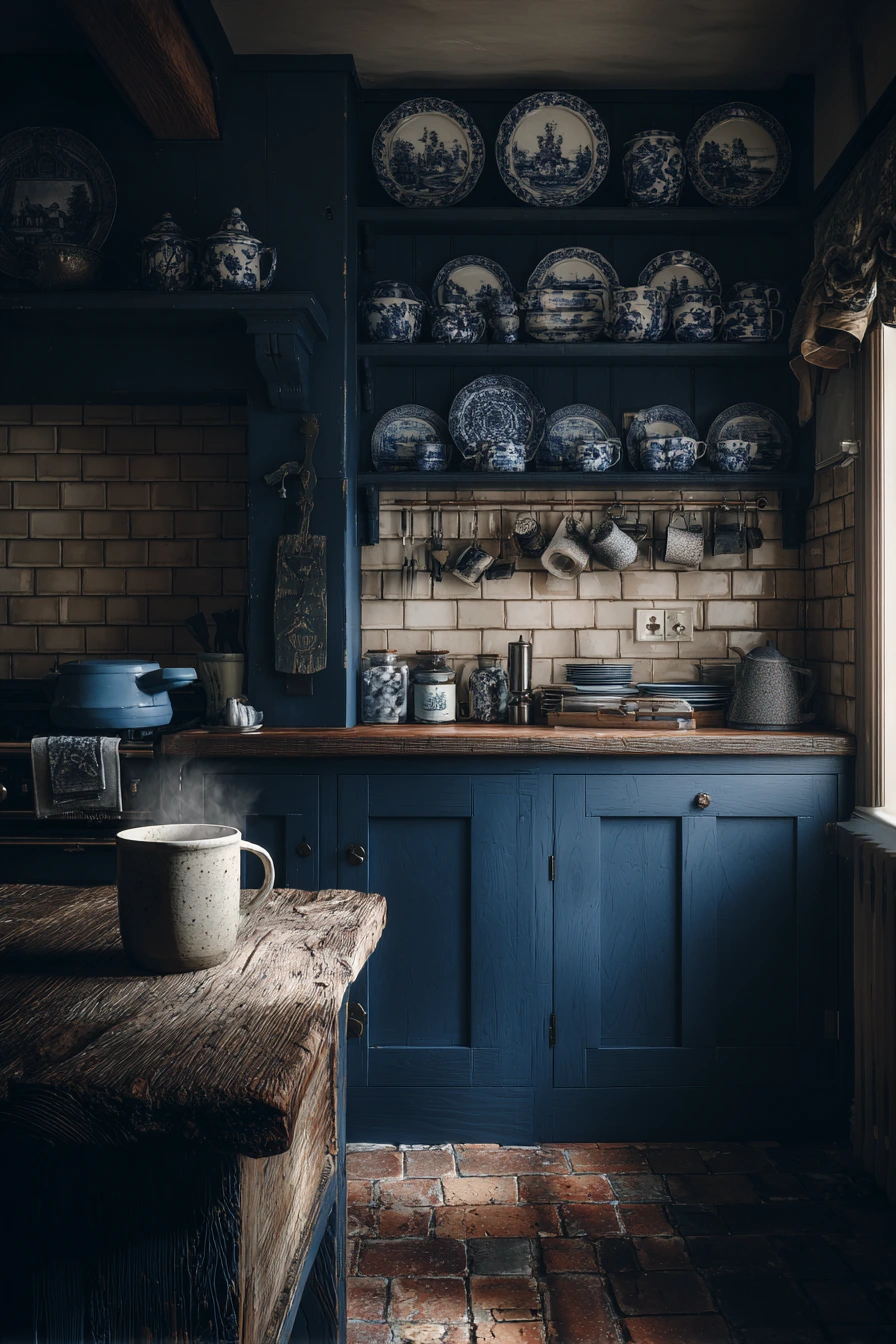

Midnight blue cabinets give this moody cottage kitchen a deep base color without going full black. Cream subway tiles that are aged and cracked add contrast and a sense of time. The mix feels calm, especially under cloudy morning light.
To style it, focus on one collection. Blue willow pattern china on dark wood racks looks classic and fits the color story. On the island, place a ceramic mug with visible steam, a small plate, and a wooden spoon. These small details make the scene feel lived in.
The floor matters because it adds warmth. A patchwork of terracotta tiles, even chipped ones, helps balance the cool blue cabinetry. Keep textiles simple, like a worn runner in muted tones, so the tile and cabinets stay the focus.
- Choose a desaturated navy for cabinets for a softer look.
- Use warm cream tile to prevent the room from feeling icy.
- Display one matching china pattern to reduce visual noise.
- Add terracotta or warm wood to balance the cool palette.
- Style the island with one mug, one board, one small bowl.
Pro Design Tip: Use grout that is slightly darker than the tile; it highlights age and hides daily mess in a cottage kitchen.
Budget Considerations: If replacing tile is not possible, use a tile paint kit in a warm cream tone, then add character with vintage racks and dishware.
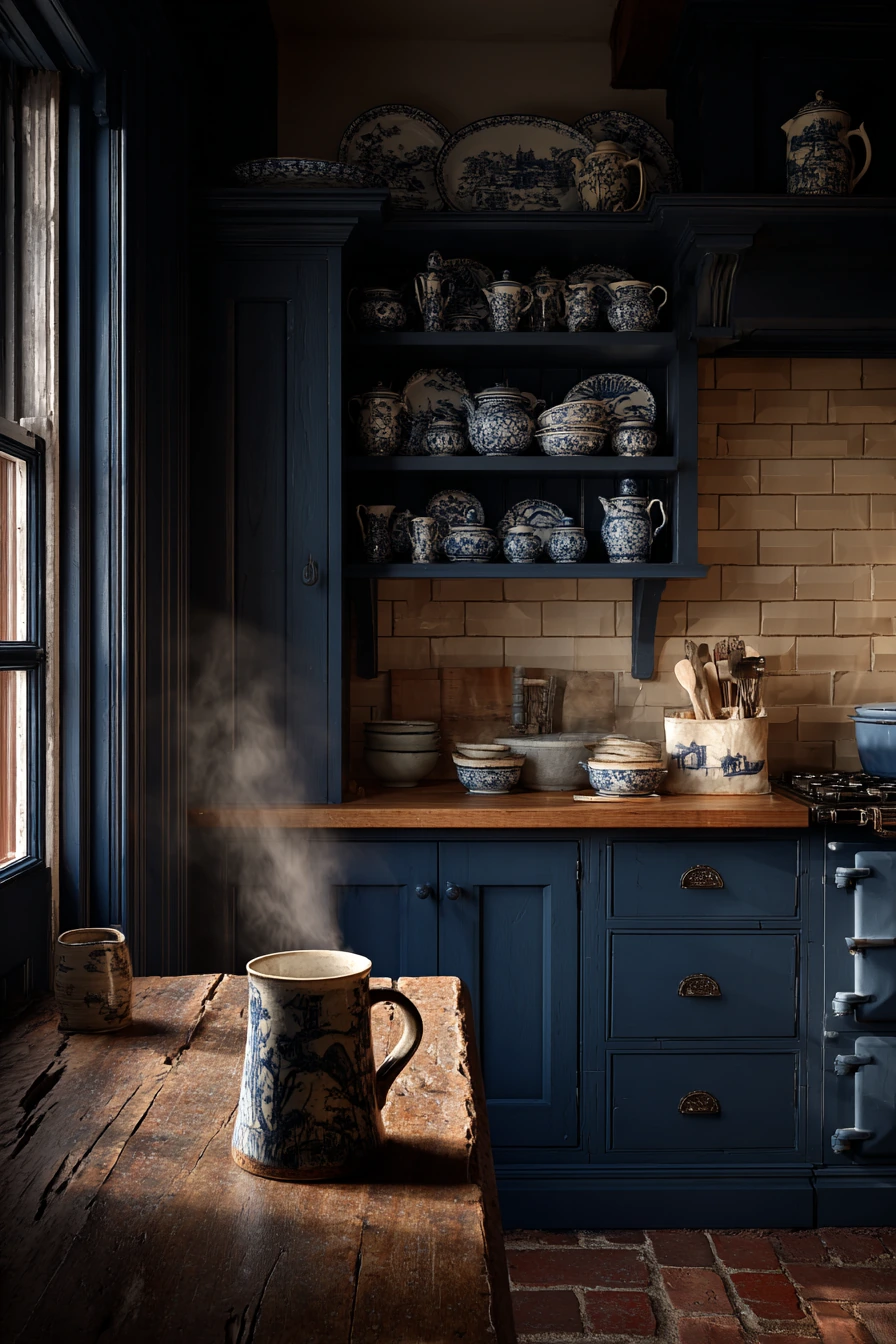

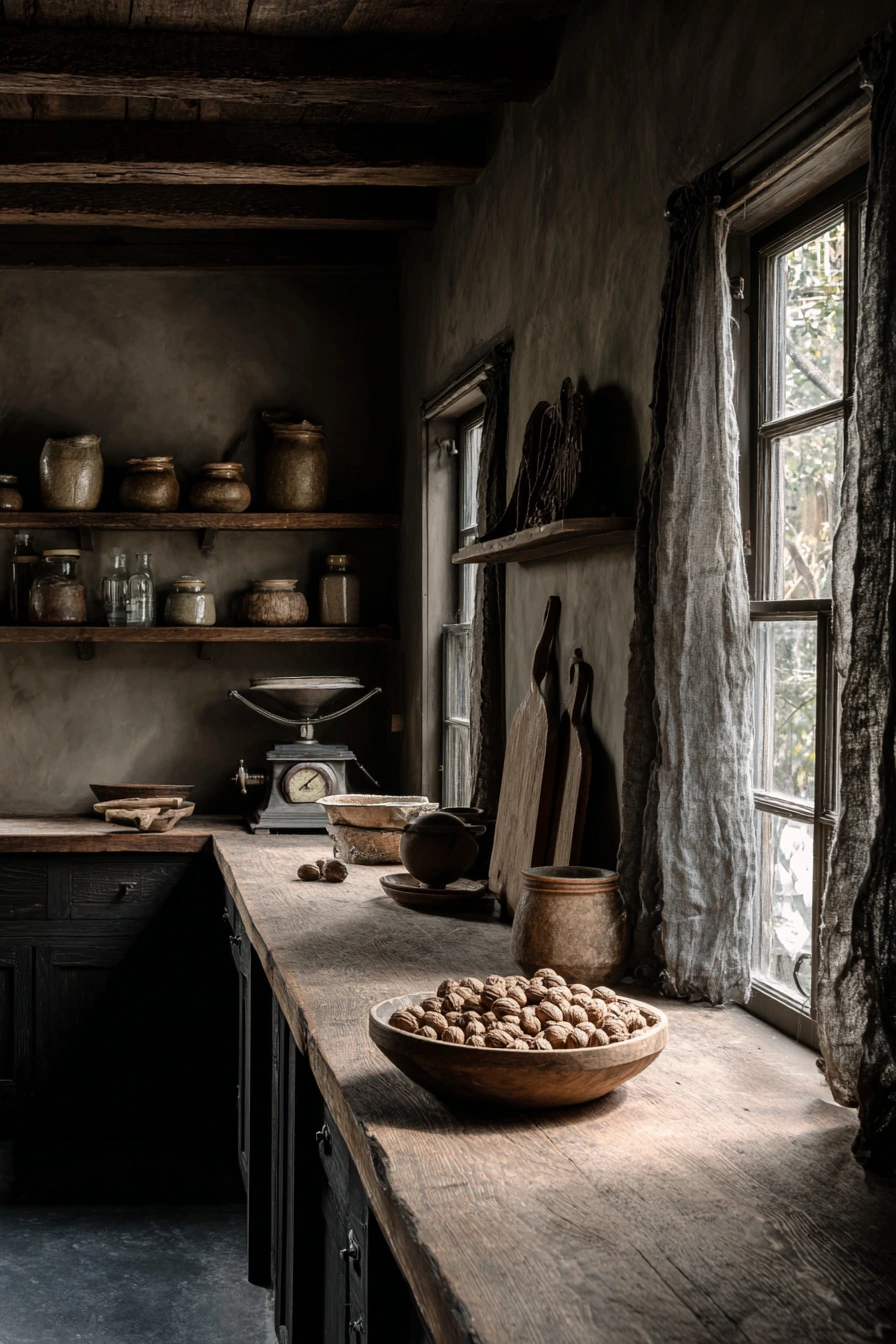
8. Minimalist Moody Cottage Kitchen With Dark Taupe Walls and Linen Curtains


This minimalist moody cottage kitchen is quiet and simple. Dark taupe walls make a soft backdrop, and sheer charcoal linen over the windows diffuses daylight. The goal is a painterly look, where light falls gently on ceramic jars and cutting boards.
Keep the workspace long and narrow. A simple wooden table can serve as a main prep zone, with one wooden bowl of walnuts and an antique scale. This style works best when you edit hard. Put away small appliances and keep only a few daily tools out.
Cabinets in dark-stained pine with no handles keep the lines clean. If you need function, add touch-latch hardware inside. Use matching storage, like ceramic canisters, to avoid a mixed look. The result is moody, but not heavy.
- Pick one wall color in the brown-grey family for softness.
- Use wrinkled linen to add texture without patterns.
- Limit counter items to a few wood and ceramic pieces.
- Store small tools in drawers to keep surfaces calm.
- Add one antique item, like a scale, for age and interest.
Pro Design Tip: Repeat the same wood tone across table, boards, and shelves so the room feels intentional even with very little decor.
Budget Considerations: Linen curtains can be costly; use cotton gauze panels in charcoal and let them hang slightly long for a relaxed look.

9. Autumn Moody Cottage Kitchen With Brick, Dark Wood, and Copper Sink


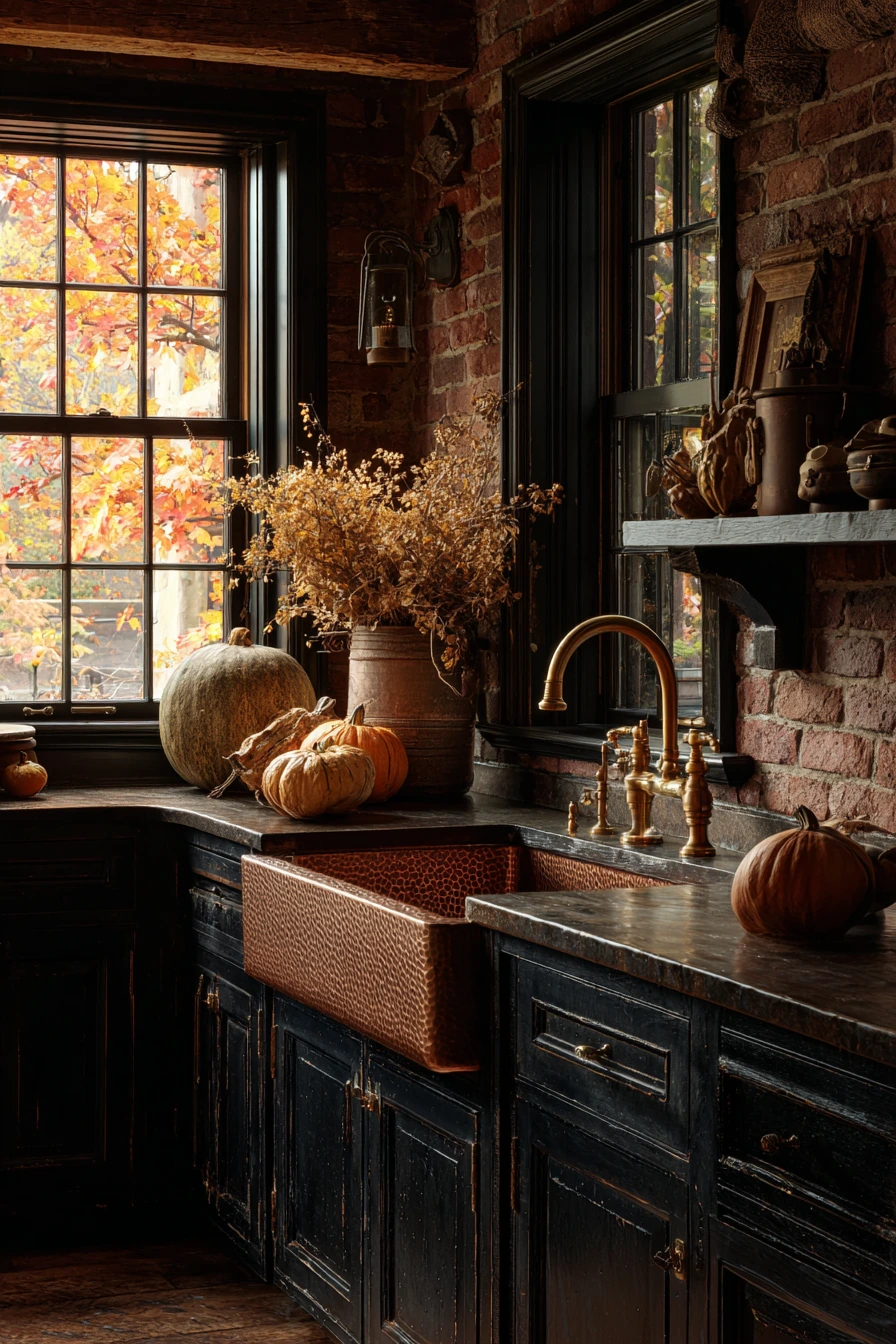
This moody cottage kitchen captures the shift from afternoon to evening in autumn. Exposed red brick and dark wood look rich when the window light turns gold. Dark orange leaves outside the glass add seasonal color without needing bright decorations indoors.
Anchor the room with one standout fixture, like a large copper farmhouse sink. Pair it with a heavy dark-stained island so the copper does not feel too shiny. Keep the island styling low: a cutting board, a small crock, and a folded towel in a warm brown or rust tone.
Use simple harvest details in the corners. Dried corn husks, small pumpkins, and a few branches can fill empty nooks. The key is to tuck them in, not spread them everywhere. This keeps the kitchen feeling calm and usable, not like a set.
- Let brick show if you have it, or add a brick slip backsplash.
- Use copper in one place so it reads as special.
- Choose warm neutrals for towels and runners in fall.
- Add pumpkins in small sizes for a subtle look.
- Use dimmable lights to match the fading outdoor light.
Pro Design Tip: Mix finishes on purpose: copper with aged brass or iron looks more cottage than chrome with copper.
Budget Considerations: A real copper sink is expensive; consider a copper-tone sink grid or a warm metal faucet to get a similar effect.

10. Narrow Moody Cottage Kitchen Artist Retreat With Teal Walls and Sketches
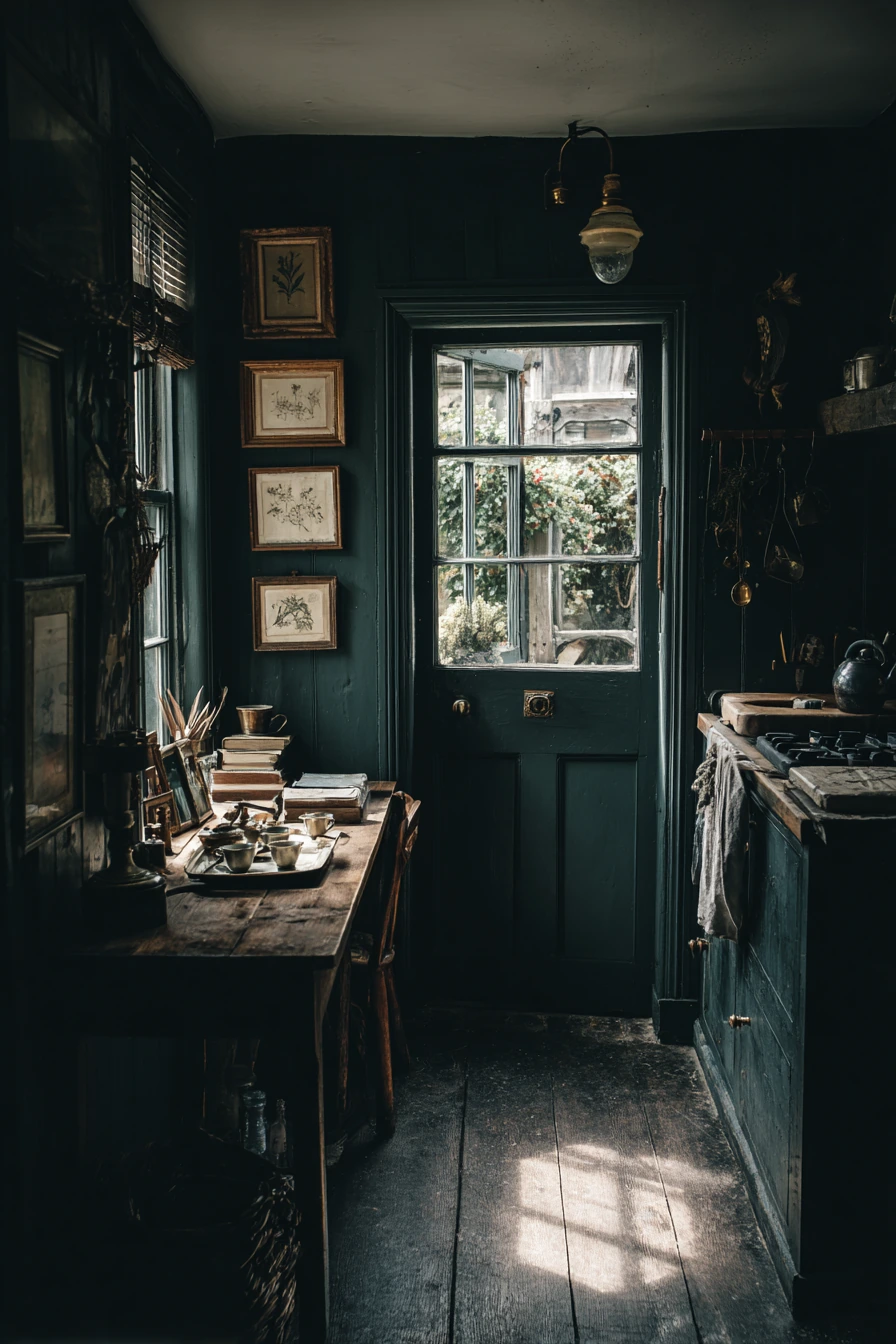
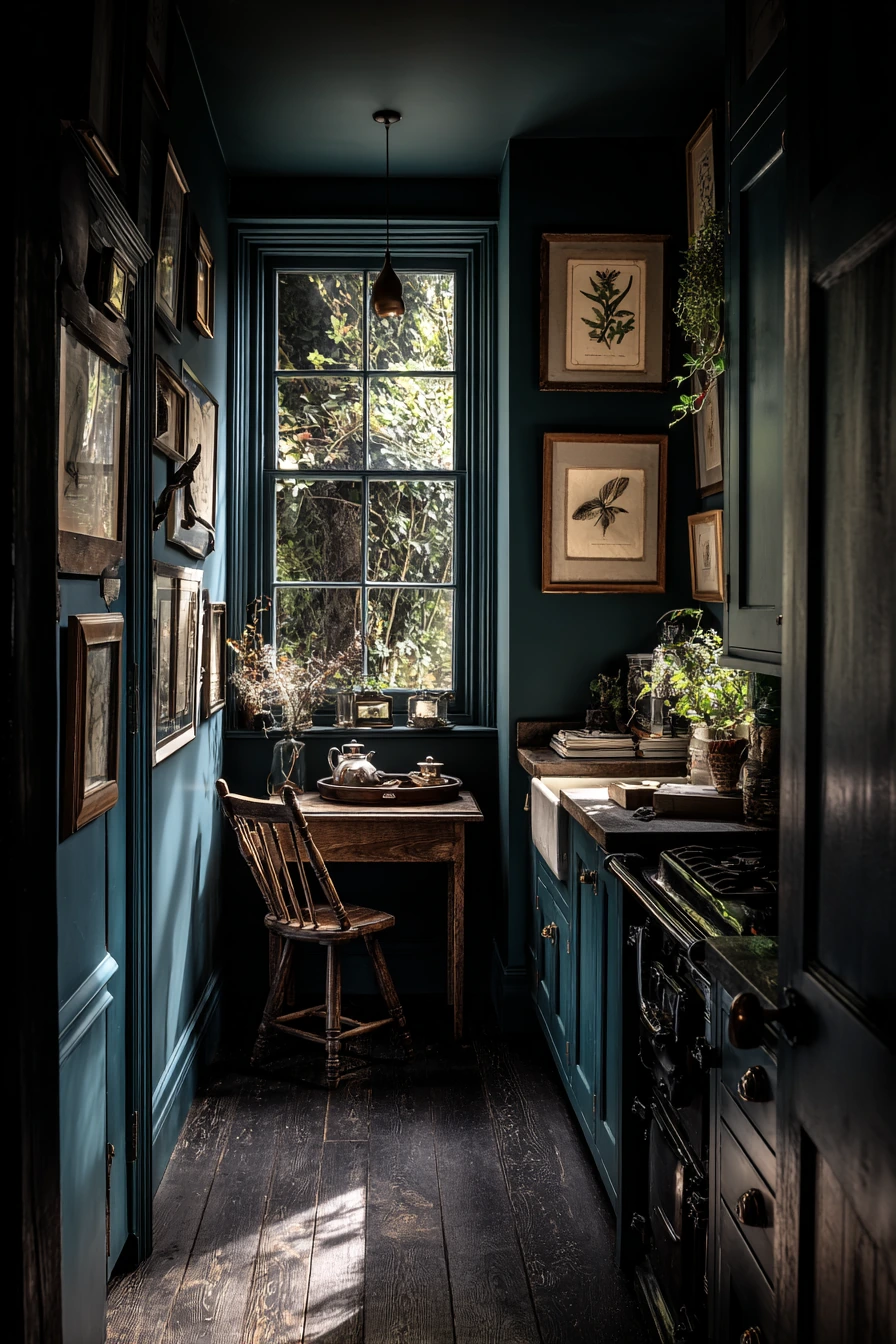
A narrow moody cottage kitchen can still feel special when you lean into detail. Dark teal walls set a deep tone, and small framed botanical sketches add an artist retreat feeling. With weak, silvery natural light, the room looks quiet and focused.
Use a small table instead of trying to force in a big island. Push it against the wall and style it with a tray of tea and a short stack of old books. Keep the rest of the surface clear so you still have prep space. Iron hardware and a tiny wood-burning stove add weight and texture without adding clutter.
Make the window view part of the mood. A dark, overgrown garden outside works well with this palette. Inside, repeat natural shapes with a simple vase of branches or a bowl of herbs. Keep floorboards mostly bare so the long shadows can show.
- Choose teal with grey undertones for a softer dark wall color.
- Hang art in a tight grid to keep narrow walls tidy.
- Use a wall-mounted rail for tools to save counter space.
- Add one tray for daily items so they look organized.
- Pick one metal finish, like iron, for a consistent mood.
Pro Design Tip: In a narrow kitchen, paint the trim the same color as the walls; it reduces contrast and makes the space feel wider.
Budget Considerations: Botanical prints can be inexpensive; use public domain images, print them at home, and frame them in thrifted frames painted black.


A moody cottage kitchen works when you focus on contrast, texture, and a few strong materials like wood, stone, and aged metal.
Start small by changing paint, swapping hardware, and editing what stays on the counters. Then add one focal point, like a table, a sink, or open shelves with a simple collection.
Use the tips in each section to match the mood to your own light and layout, whether your kitchen is large, narrow, modern, or truly old.
FAQ
1. What colors work best for a moody cottage kitchen? Deep sage, forest green, charcoal, midnight blue, and dark taupe are reliable choices. Pair them with warm neutrals like cream, aged white, and natural wood.
2. How do I keep a dark kitchen from feeling too gloomy? Add a few light-reflecting surfaces like clear glass, copper, or a pale backsplash. Use layered lighting and keep one area, like the sink or table, a bit brighter.
3. What countertop materials fit this style? Dark-stained wood, soapstone, honed granite, and butcher block work well. If you like a sharper contrast, use marble or a marble-look surface with grey veining.
4. Can I do this look in a small or narrow kitchen? Yes. Use one dark wall color, keep counters clear, and choose wall-mounted storage. Matching wall and trim color can also make tight spaces feel smoother.
5. What decor should I display on open shelves? Choose a small collection, like stoneware, blue willow china, or amber bottles. Repeat shapes and colors, and leave some empty space so shelves do not look messy.
6. What is the easiest budget update for a moody cottage kitchen? Paint and hardware. A deep cabinet color plus aged brass or iron pulls can change the whole mood without remodeling.