
Mudroom organization ideas can turn a daily pile of shoes, coats, and backpacks into a simple system that works. A good mudroom is not just pretty. It is a hardworking drop zone that saves time every morning.
In this post, you will see practical layouts for family cubbies, small back-door nooks, rustic lockers, minimalist cabinets, and pet-friendly zones. Each section includes easy styling moves, plus storage choices that fit real life, like boot trays, labeled baskets, and bench seating.
You will also get simple steps to set up hooks, bins, and shelves so things land in the right place. These ideas are designed to help you keep clutter believable and contained, even on busy days.
Use this guide to pick one setup that matches your space, then copy the parts that solve your biggest pain point, like wet weather gear, mail piles, or dog supplies.
1. Family Drop Zone With Built-In Cubbies and Labeled Baskets
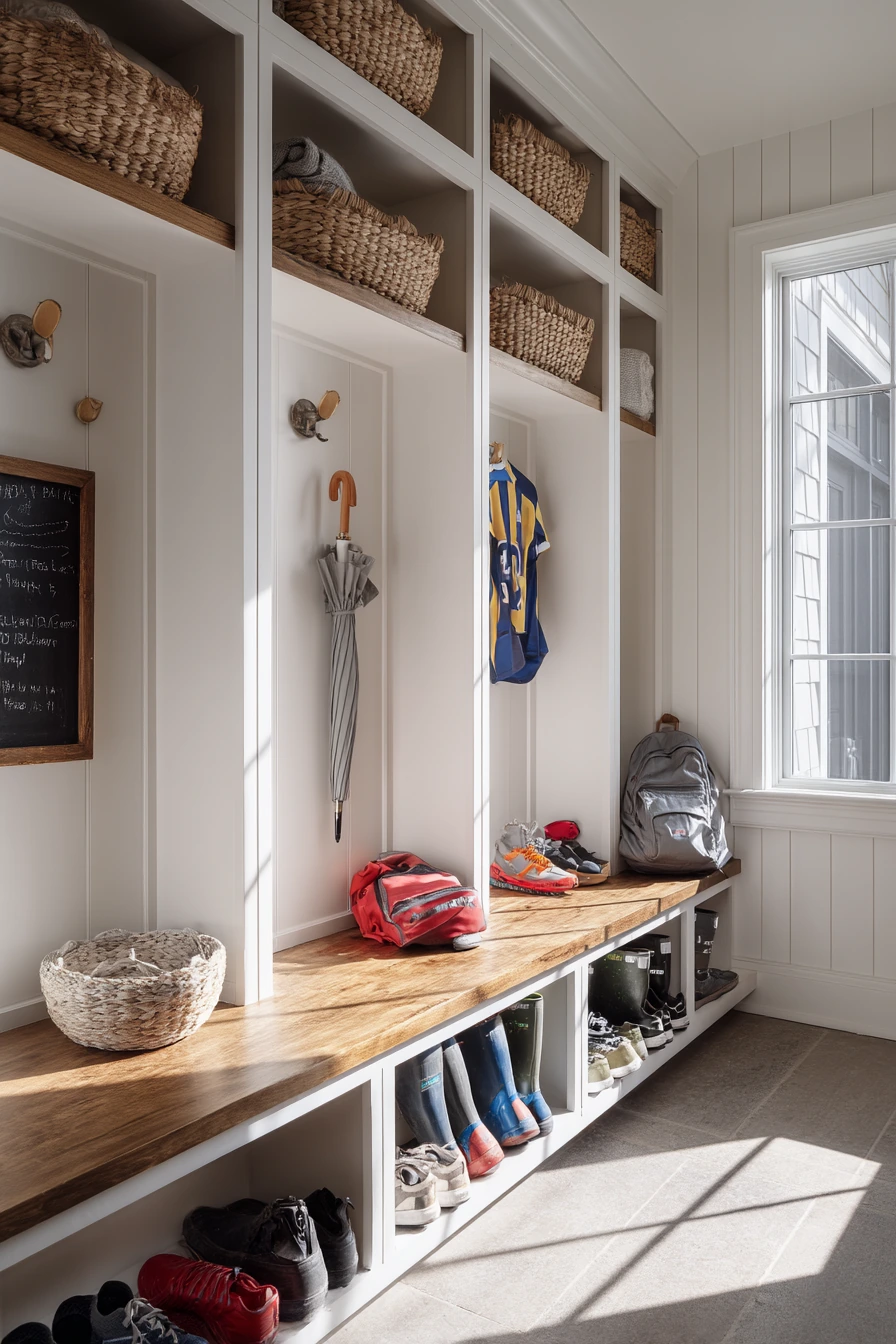
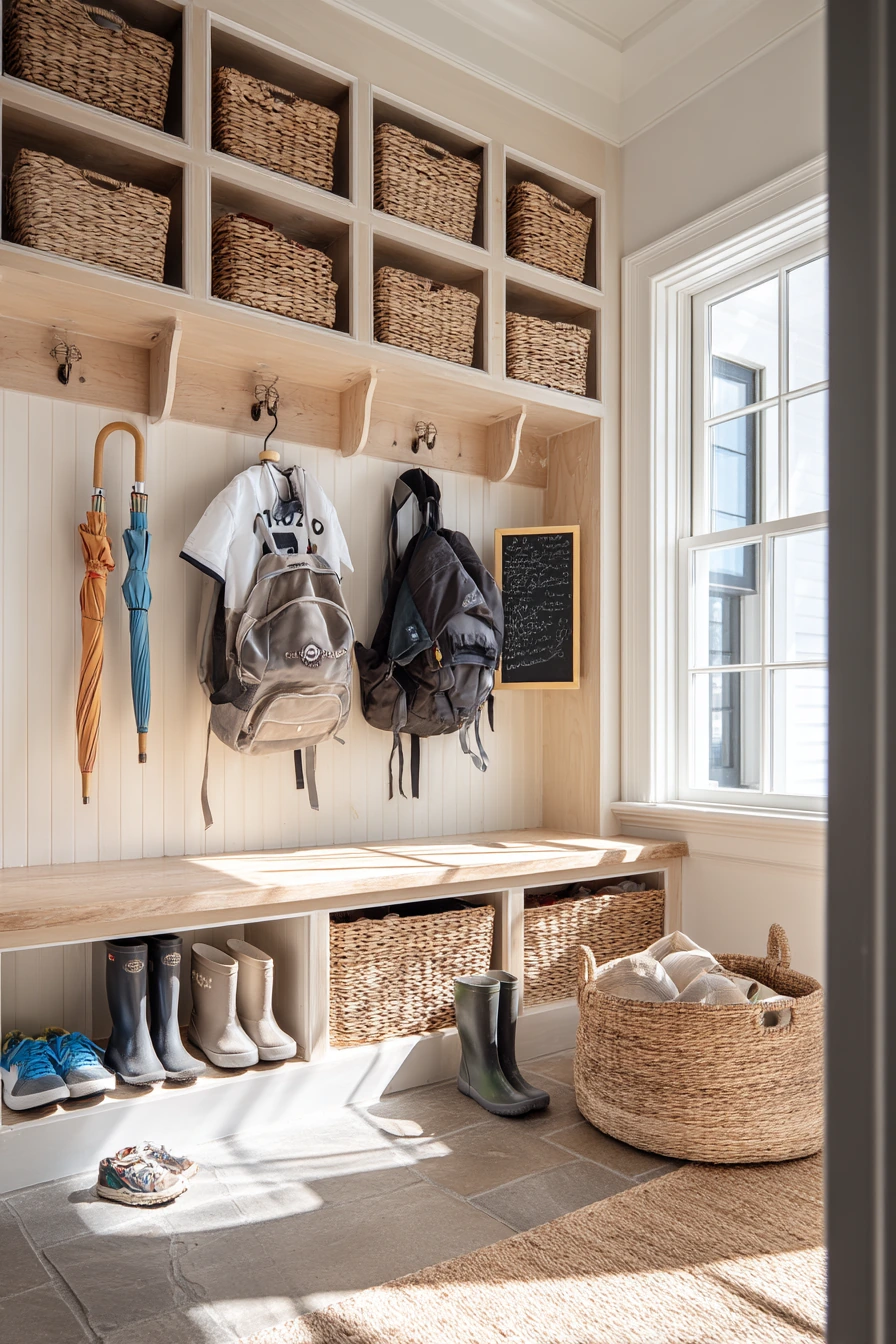
A family mudroom works best when every person has a clear spot. Built-in oak cubbies with labeled baskets keep small items from drifting. Shaker hooks handle coats and backpacks, while a slim bench with hidden shoe drawers keeps the floor open. Leave a little room for real life, like kids’ backpacks half-zipped, a rolled-up soccer jersey, and one stray sneaker that always shows up.
Start by setting the “landing order” from top to bottom. Hooks are for grab-and-go items. Cubbies are for bags and sports gear. Drawers are for shoes and boot socks. If rain boots line up in rows, add a boot tray or a low lip shelf so drips do not reach the beadboard walls. For reminders, a small chalkboard list near the doorway helps with permission slips and practice times.
To style it without making it fussy, keep a tight color group. Warm wood, woven baskets, and simple labels look calm in soft morning window light. Add one crock for a damp umbrella and one catchall for pocket items. If you want a tidy look at a glance, choose matching baskets, then label by person, not by item.
- Assign one cubby and one basket per family member.
- Use two hooks per person: one for coats, one for bags.
- Add hidden shoe drawers for pairs you do not want on display.
- Place a boot tray under the rain boots to protect floors.
- Hang a chalkboard or clip board list at eye level by the door.
Pro Design Tip: Size the bench so it has a clear sitting zone, then keep the storage under it closed so the wall of cubbies stays the star.
Budget Considerations: Built-ins cost more; get a similar look with ready-made cubbies, matching bins, and simple stick-on labels.


2. Small Back-Door Mudroom Nook With Peg Rail and Floating Shelf

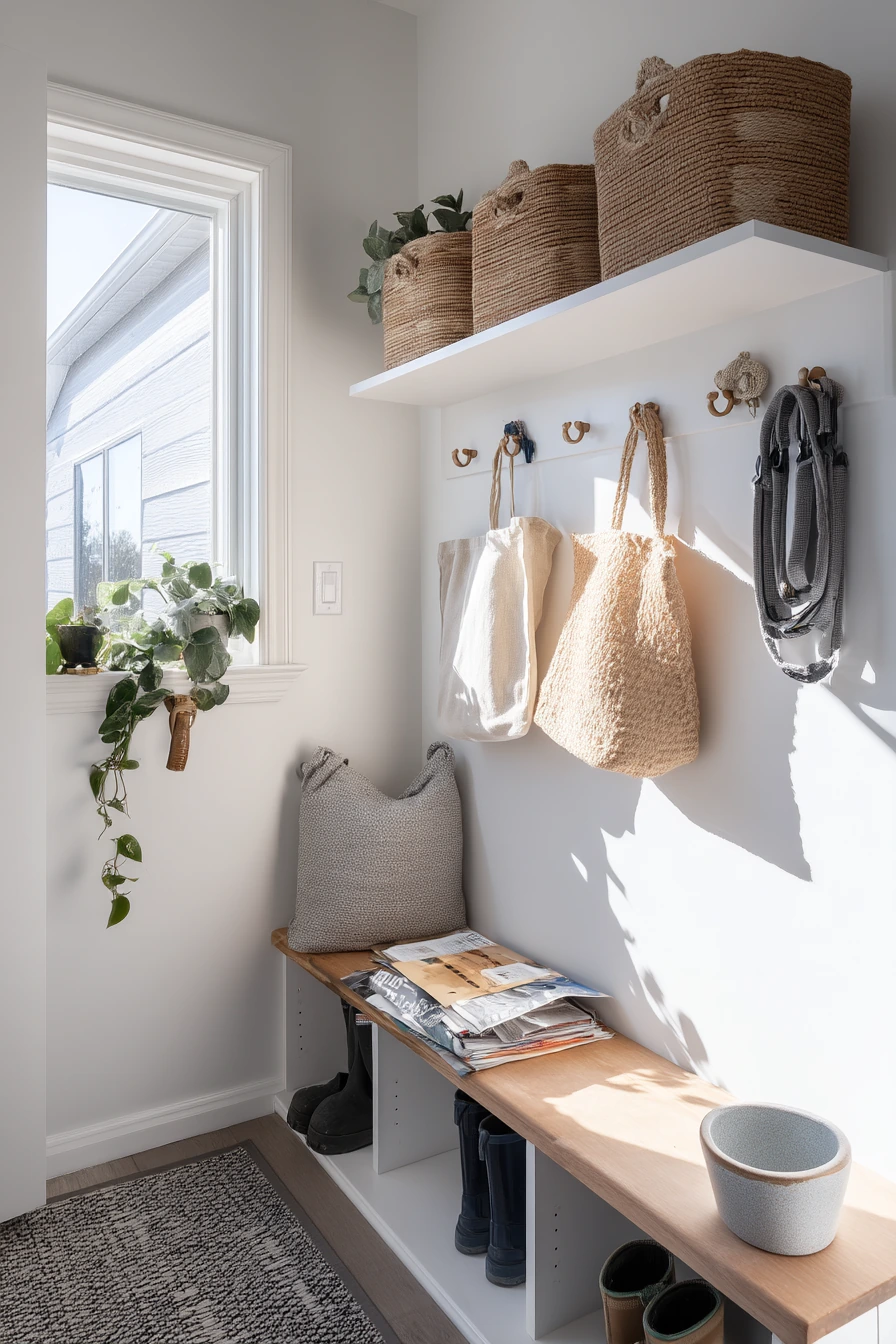
A compact back-door nook can still act like a mudroom if you build storage in layers. A wall-mounted peg rail gives you flexible hooks for jackets, a dog leash, and reusable grocery bags. Above it, a floating shelf with woven bins keeps clutter up and out of the way. Below, a narrow bench with open shoe slots makes it easy to slide pairs in and out.
To keep this type of space feeling crisp and airy, set a “one surface rule.” The bench gets one folded canvas tote and nothing else. Mail goes into a wall pocket or one small tray, not a stack. Add a ceramic bowl for keys so they do not wander. If you have a plant nearby, let it cast gentle shadows and soften the corner without taking up floor space.
For a quietly lived-in look, plan for small messes. A muddy paw print near the mat is normal, so choose a darker, washable doormat that hides marks. Keep a small lidded bin for dog waste bags and wipes. When everything has a home, you can reset the nook in one minute.
- Install a peg rail at adult shoulder height for easy reach.
- Use woven bins on the shelf to hide extras like hats and gloves.
- Pick a bench that is shallow so the walkway stays clear.
- Add a key bowl and a single mail tray to stop pile-ups.
- Use a washable mat that can handle muddy paws and wet shoes.
Pro Design Tip: Mix open and closed storage so the nook looks calm even when you are using it every day.
Budget Considerations: Floating shelves and peg rails are low-cost; you can use basic brackets and stain a pine board to mimic higher-end wood.

3. Rustic Farmhouse Mudroom Lockers With Deep Boot Drawers
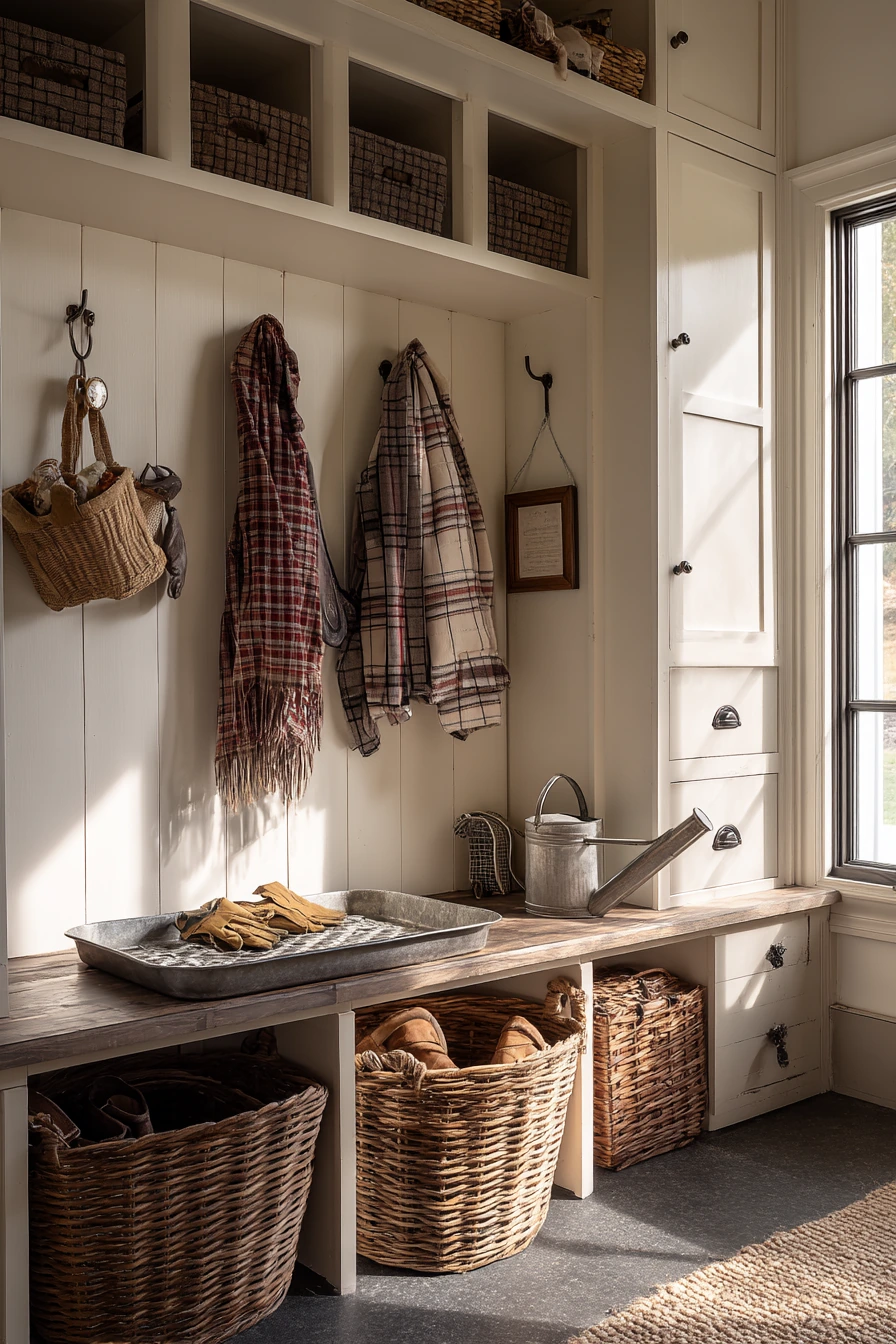
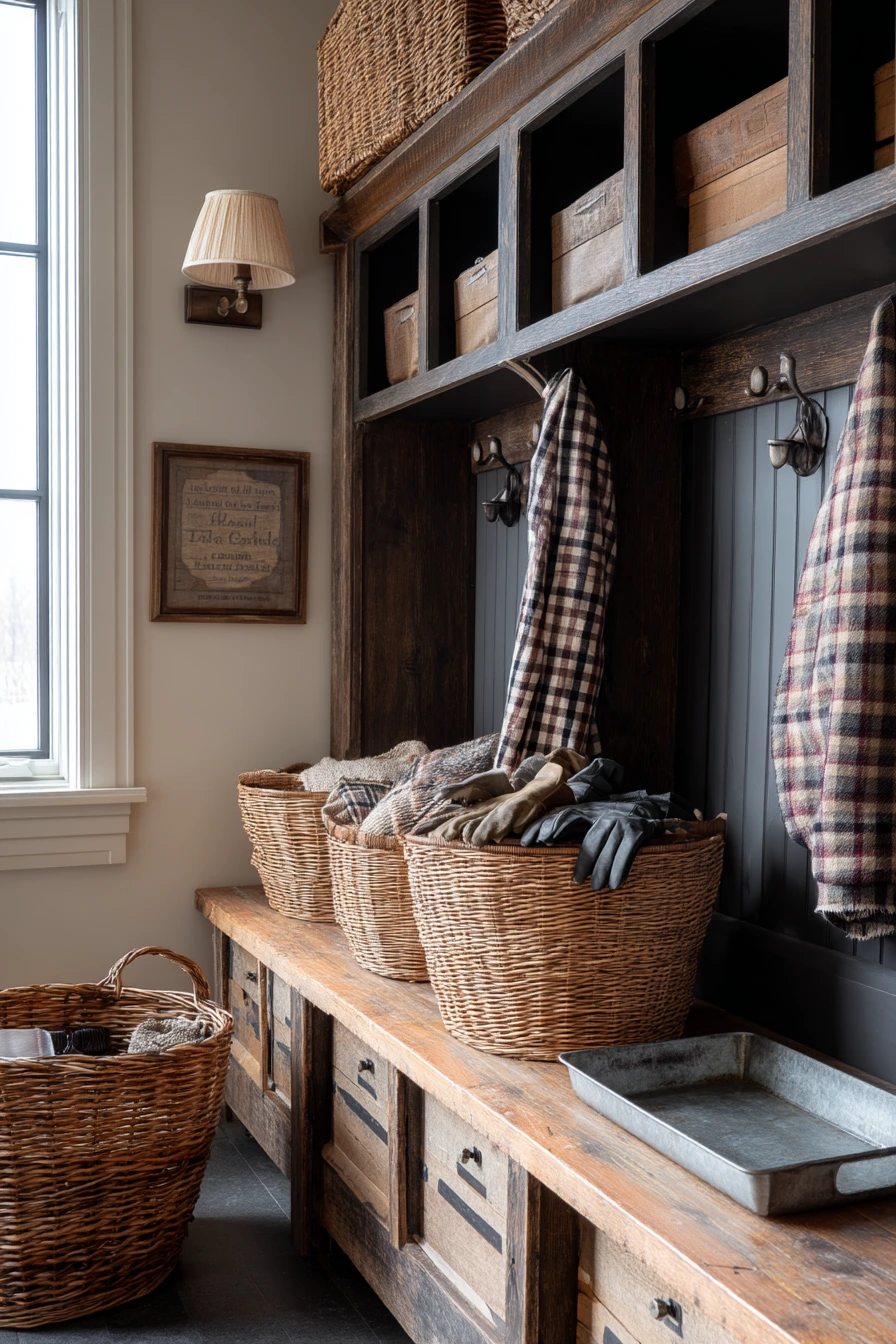
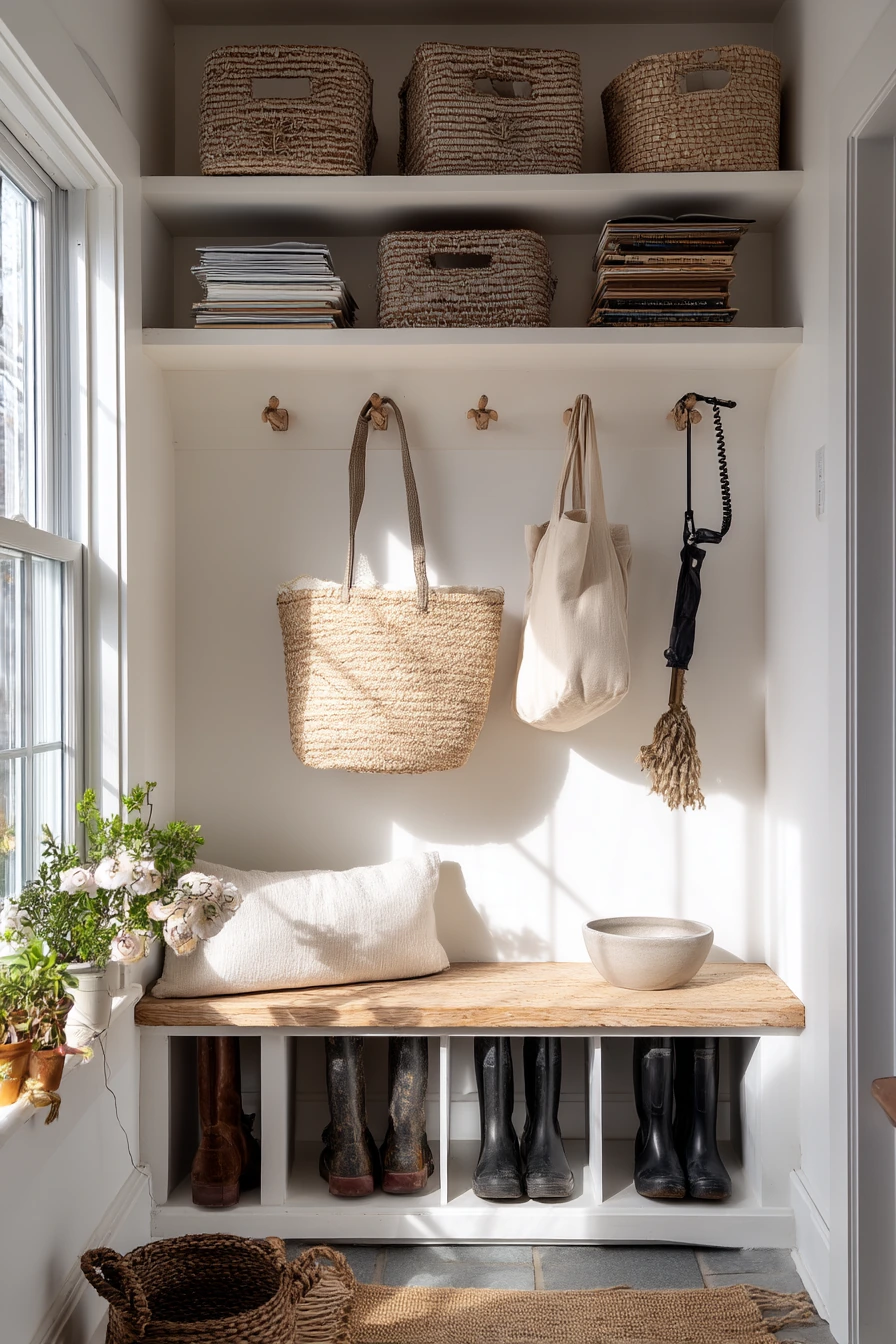
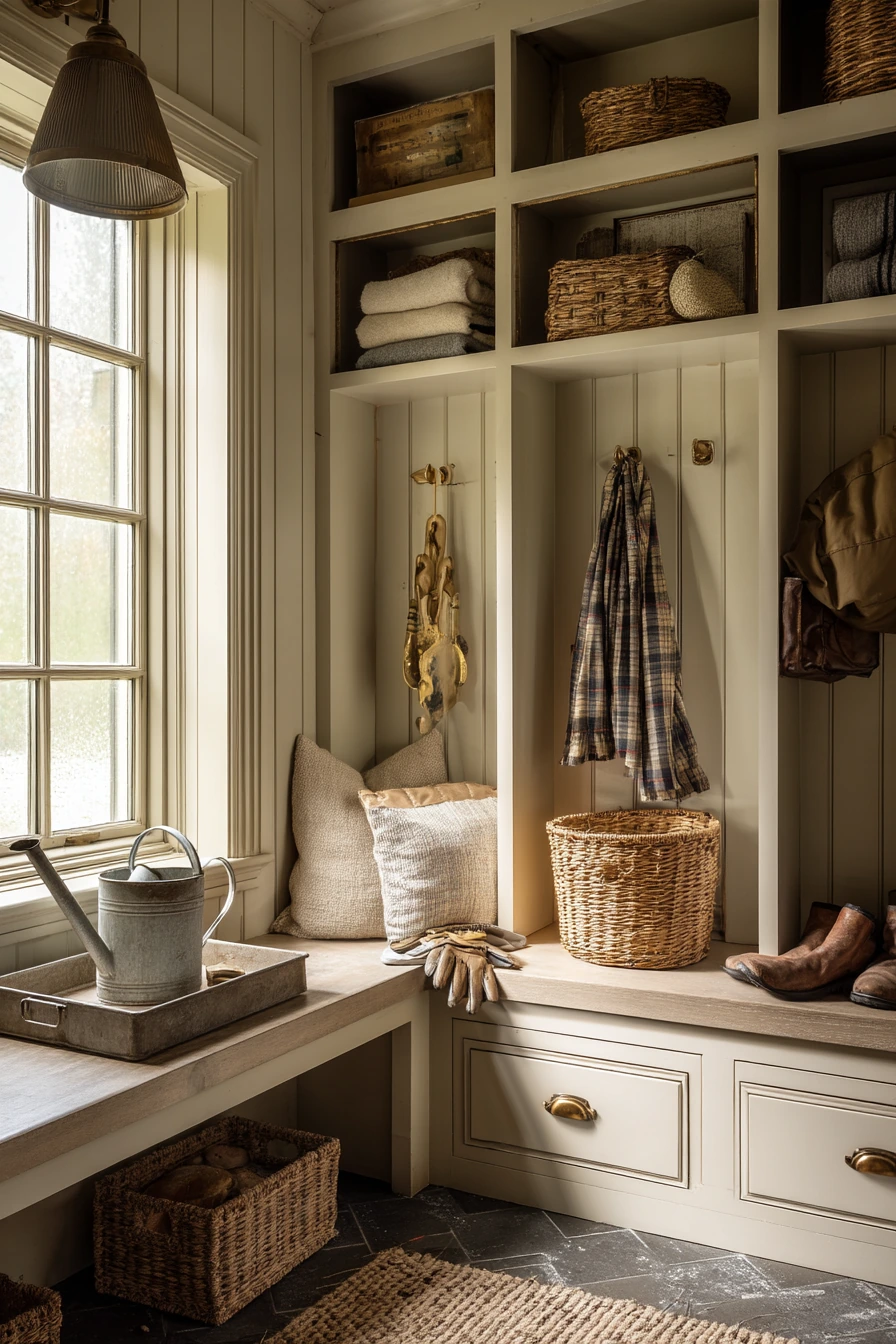
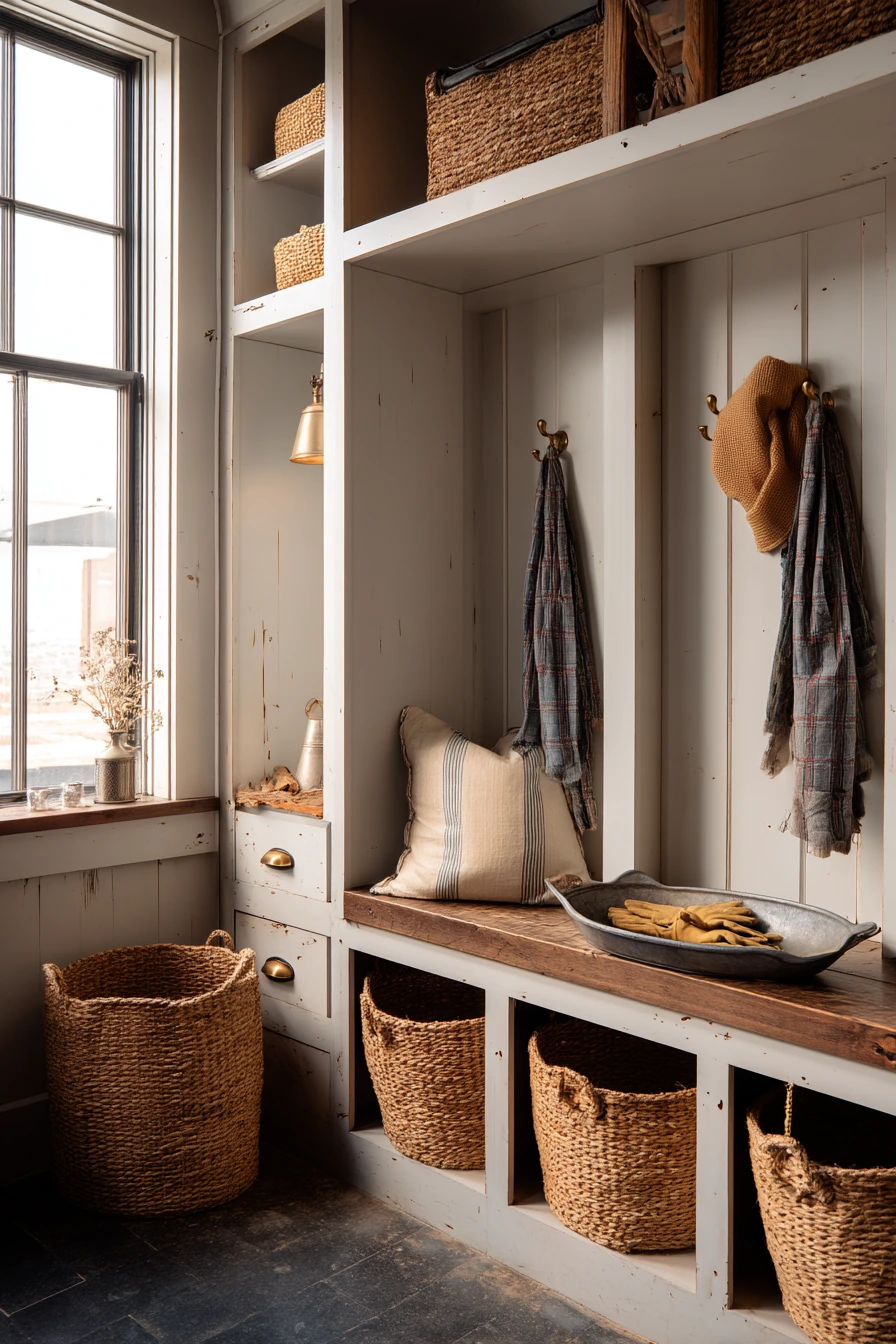
A rustic farmhouse mudroom feels grounded when it uses strong, simple pieces. Painted wood lockers create personal zones, while antique brass hooks add warmth. Deep lower drawers for boots are useful in muddy seasons because they keep heavy shoes out of sight and off the floor. Add wicker laundry baskets for scarves, hats, and gloves so you can carry items to the laundry in one trip.
Make the bench work harder by giving it a “dirty side” and a “clean side.” The dirty side holds work gloves tossed on the bench, a galvanized tray catching dirt, and an enamel watering can if you garden. The clean side holds a folded plaid scarf, spare socks, and a small brush for dried mud. This split keeps the space neat but not staged, even in late afternoon when kids come in and drop gear fast.
To style farmhouse storage without repeating the same look, vary texture instead of color. Use two basket sizes, one metal tray, and simple wood labels. Keep the palette warm: cream, soft gray, and aged brass. If you have lamps, a warm glow makes the lockers feel cozy at night and helps the space feel like part of the home, not a back hallway.
- Give each locker a hook, a shelf, and one basket for small items.
- Use deep drawers for boots to keep mud contained.
- Place a galvanized tray under the hooks to catch dirt and drips.
- Store laundry baskets low so kids can reach and use them.
- Add a small brush and towel for quick cleanups at the bench.
Pro Design Tip: Repeat one metal finish, like brass, across hooks and pulls so rustic pieces still look intentional.
Budget Considerations: Antique-style hooks can add up; buy a multipack of basic hooks and swap in a few brass statement hooks at eye level.
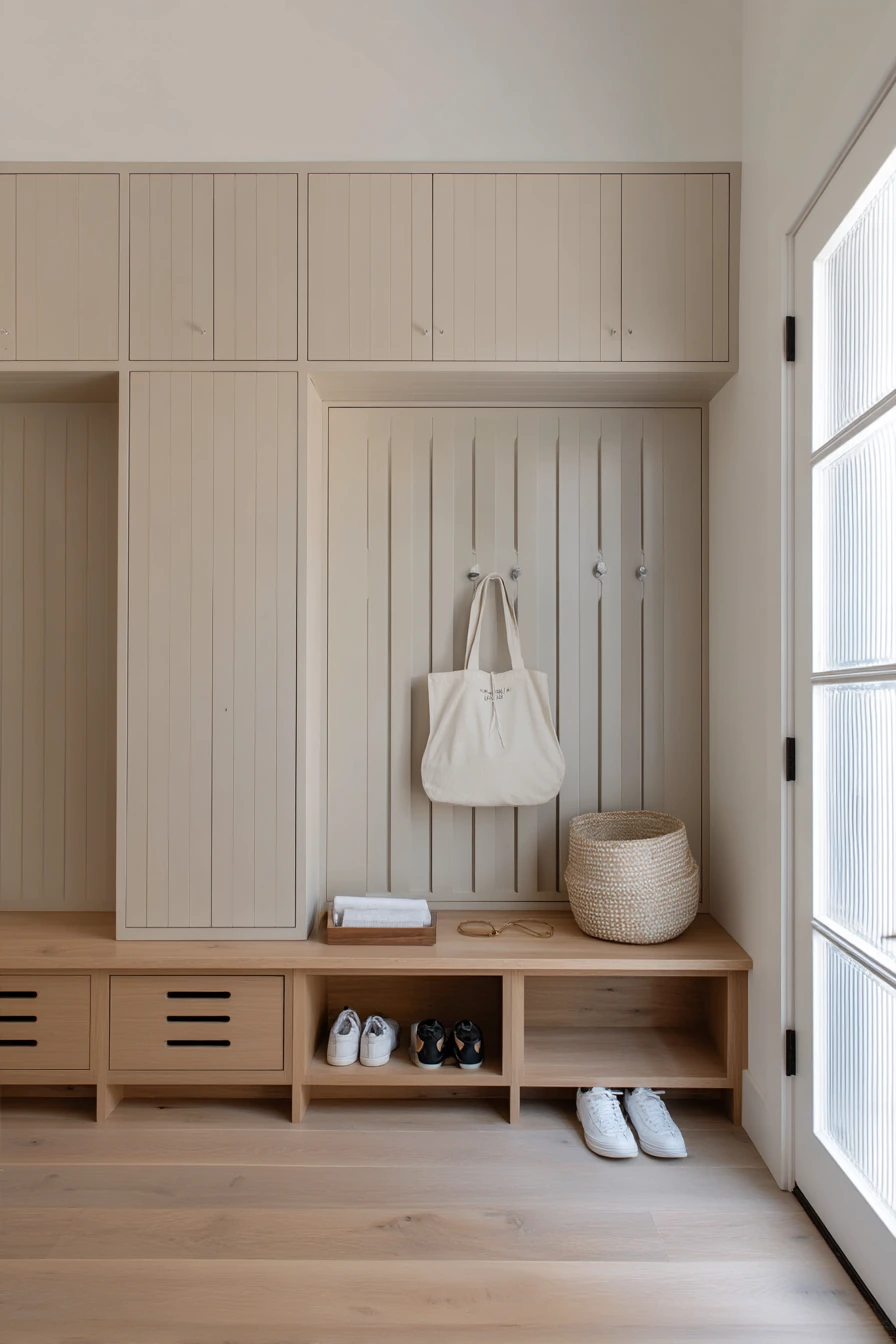
4. Minimalist Mudroom With Hidden Push-Latch Storage and Backpack Slots
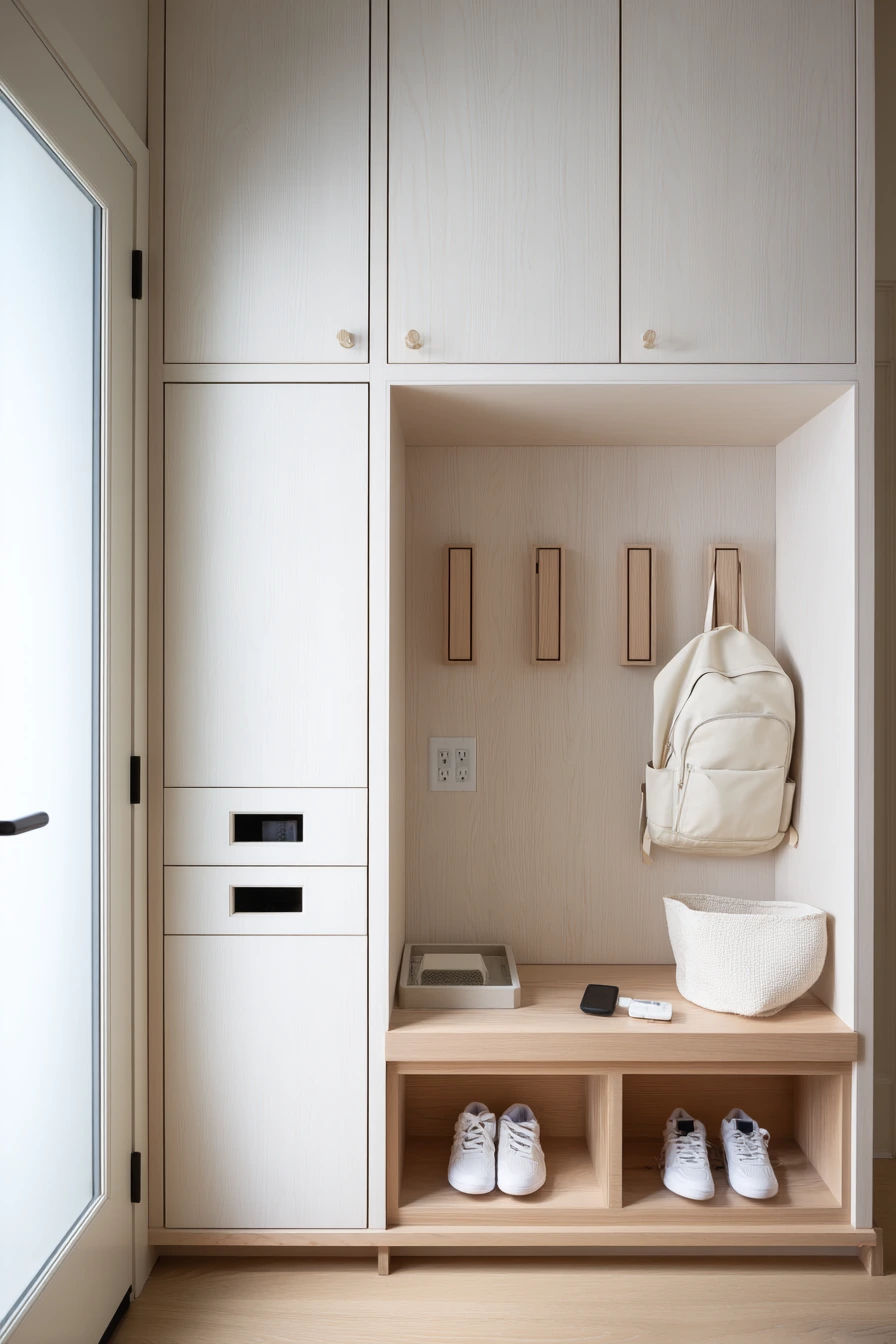

A serene minimalist mudroom is all about visual quiet. Flat-panel cabinetry and hidden push-latch storage keep lines clean. A pale wood bench gives warmth without adding clutter. Vertical slots for backpacks stop the “bag pile” problem and keep straps from tangling. Closed overhead cabinets are ideal for off-season items like extra hats and sports gear.
To make minimal storage work for a real home, build in small, honest details. A shallow tray for sunglasses keeps lenses from getting scratched. A charging cable peeking near an outlet is fine, but give it a clip so it stays in one spot. White sneakers tucked below look tidy if you limit the under-bench zone to a set number of pairs.
For styling, use the same rule you would use in a calm kitchen: fewer items, better containers. Choose one linen tote for errands, one tray, and one small bin for gloves. Let diffused daylight from a frosted glass door do the work. If you want a touch of softness, add a thin cushion on the bench in a muted fabric, then keep it washable.
- Use push-latch doors to avoid knobs and keep a clean look.
- Add vertical backpack slots so bags stand upright.
- Install an outlet or USB near the bench for charging needs.
- Limit the shoe zone to a fixed number of pairs per person.
- Use a shallow tray for sunglasses, keys, and small daily items.
Pro Design Tip: Plan one “drop shelf” inside a cabinet at hand height for wallets and keys so counters stay clear.
Budget Considerations: Custom cabinetry is expensive; mimic the look with IKEA-style units, flat fronts, and touch latches.

5. Pet-Friendly Mudroom With Pull-Out Dog Gear Bins and Washable Runner
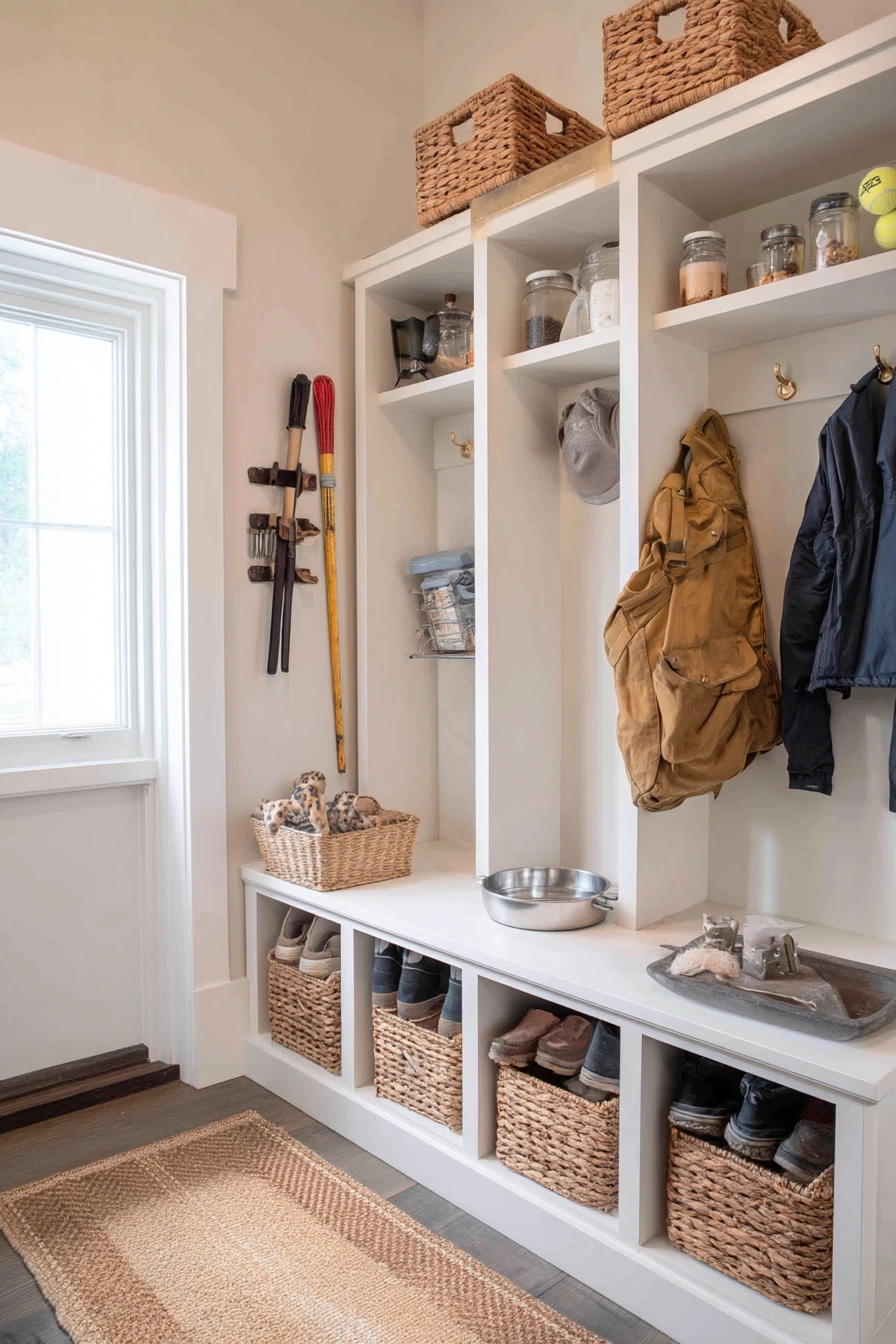

A pet-friendly mudroom needs storage that can handle dirt and fur. Lower pull-out bins for dog gear keep leashes, collars, and wipes easy to grab. A sturdy bench helps with putting on shoes and toweling off a wet dog. Choose a washable runner and a floor mat that can take muddy paws and water bowl splashes near the door.
Set up a simple pet station: one hook for a leash, one for a rain jacket, and one small shelf for labeled jars of treats. Keep a folded towel stack within reach so you can wipe paws fast. If a tennis ball rolls under the bench, it should not block anything, so leave the under-bench area open or use bins that slide out smoothly.
To style the space, keep labels clear and friendly. Use matching jars and a small tray for grooming tools. If you want it to feel cheerful, add one warm accent like a striped cushion or a soft wood tone. The goal is utility-driven, not perfect. When everything has a home, your entry flow stays open even on busy evenings.
- Add pull-out bins at floor level for dog gear and cleaning wipes.
- Use a washable runner to protect floors from paws and boots.
- Place a water bowl on a tray to catch splashes.
- Store towels in a low basket so anyone can grab one quickly.
- Hang leashes on sturdy hooks near the door for fast exits.
Pro Design Tip: Choose hardware and fabrics that can be wiped clean, then keep the dog station in one tight zone to stop spread-out clutter.
Budget Considerations: Pull-out systems cost more; try sturdy open bins with handles and a simple labeled basket setup instead.


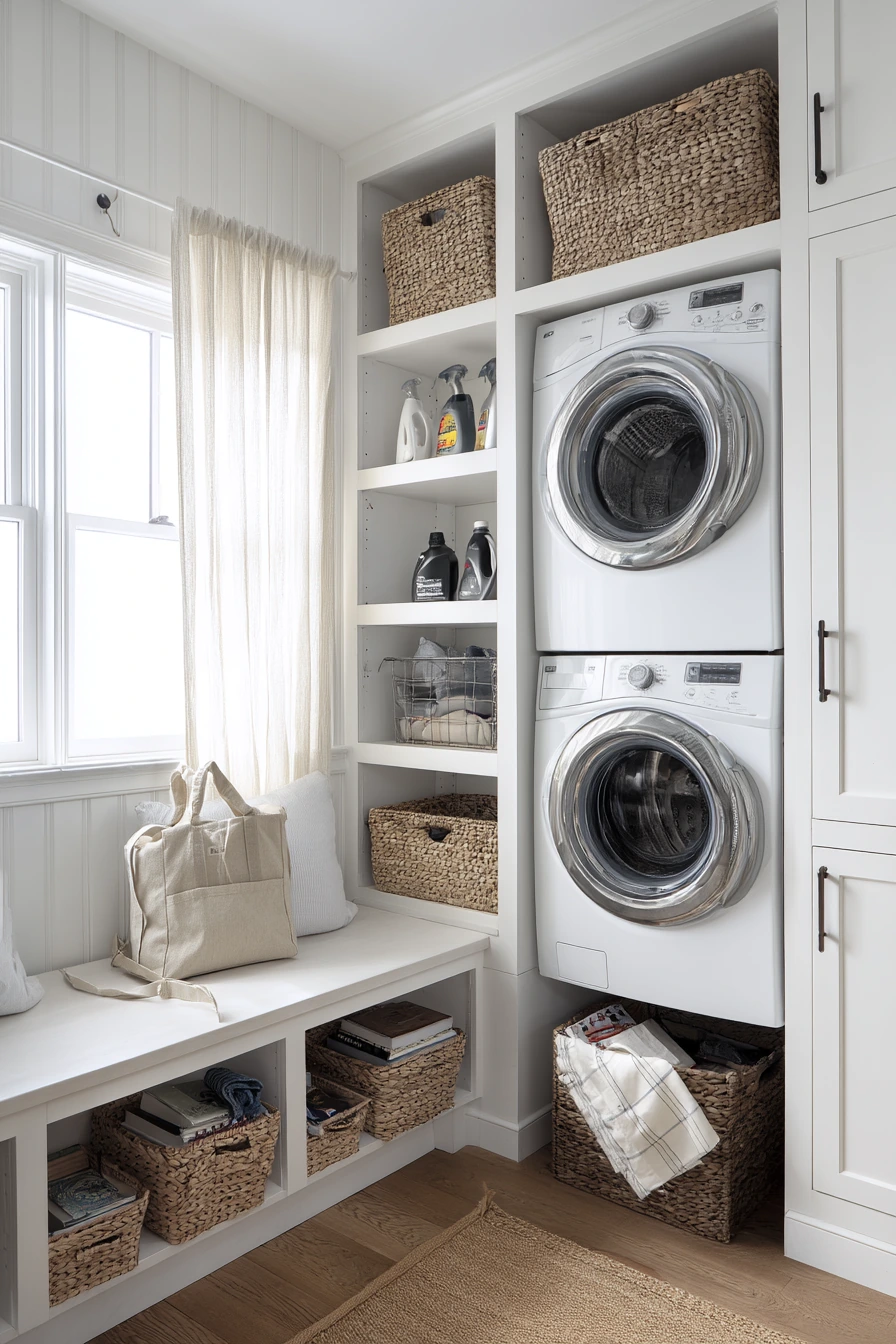
6. Mudroom and Laundry Combo With Baskets, Hooks, and a Pull-Out Hamper


A mudroom-laundry combo is a smart place to organize because dirty items can go straight to the wash. A stacked washer dryer frees up wall space for overhead cabinets and open shelving with baskets. Add a bench seat beside the machines so you can sort socks, sit to remove shoes, or set down a canvas tote full of library books.
Build clear zones. The hook area is for coats and bags. The bench is for changing shoes. The pull-out hamper is for wet socks and gym clothes. Use amber bottles for detergent so the shelf looks tidy, then keep only the products you use weekly. A half-folded towel on the bench is normal, so give towels a basket that is easy to toss into when you need a quick reset.
For styling, keep containers consistent. Choose two basket sizes and label them by function: “Cleaning,” “Extras,” “Kids,” or “Sports.” Use a small tray for stain spray and lint rollers. Bright natural window light makes the space feel clean, but make sure shelves are not overfilled so the area still looks calm and homey.
- Place hooks near the door so coats never reach the laundry shelf.
- Add a pull-out hamper for dirty socks and damp gear.
- Use labeled baskets on open shelves for daily categories.
- Keep a small stain kit on a tray for quick spot treatment.
- Reserve the bench for one active task: shoes, folding, or sorting.
Pro Design Tip: Use one continuous countertop over front-loading machines if possible, so you gain a real folding surface and reduce visual clutter.
Budget Considerations: If built-in cabinets are not possible, add a wire shelf system and matching baskets for a similar organized look.

7. Coastal Mudroom With Woven Baskets, Rope Hooks, and Under-Bench Cubbies
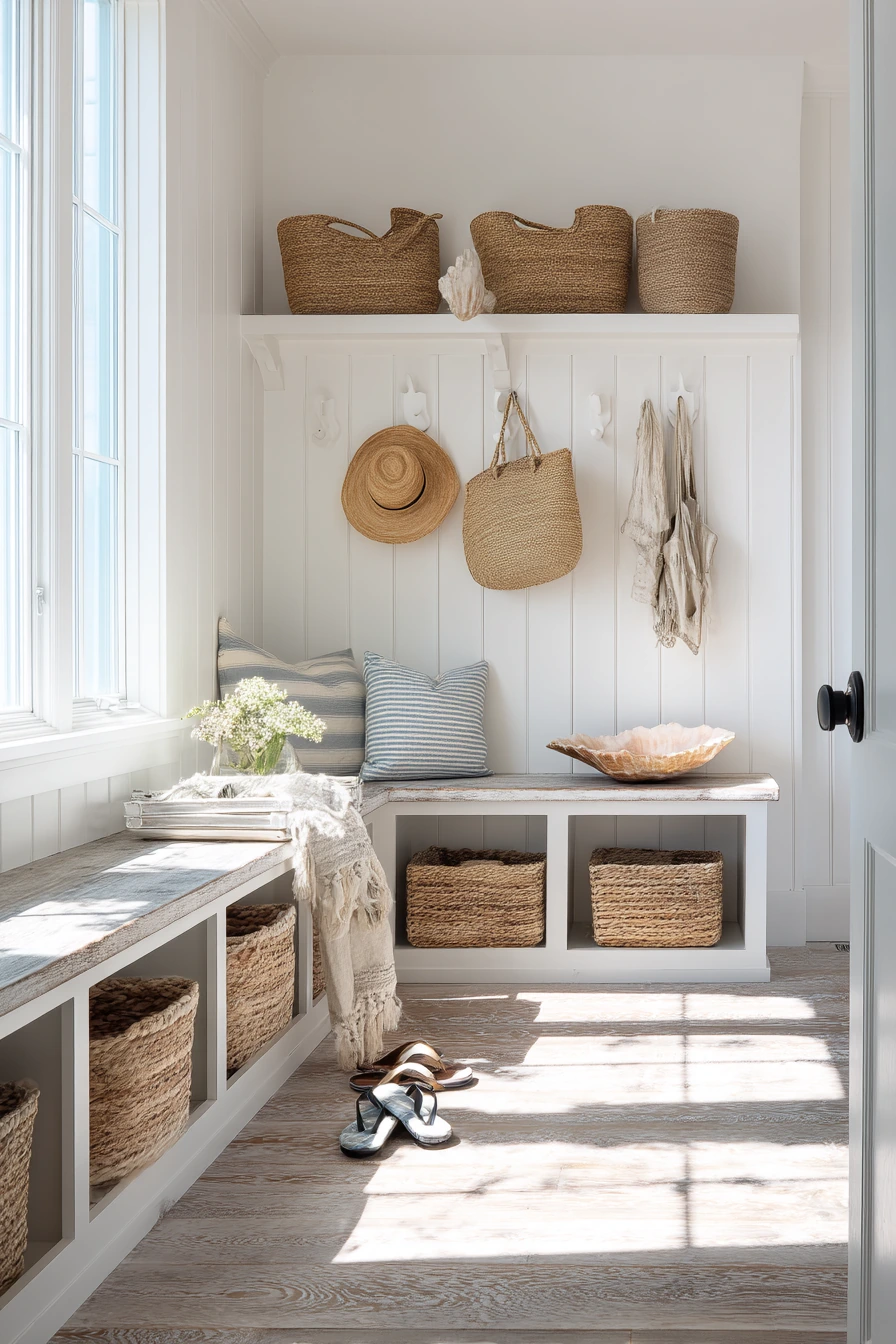
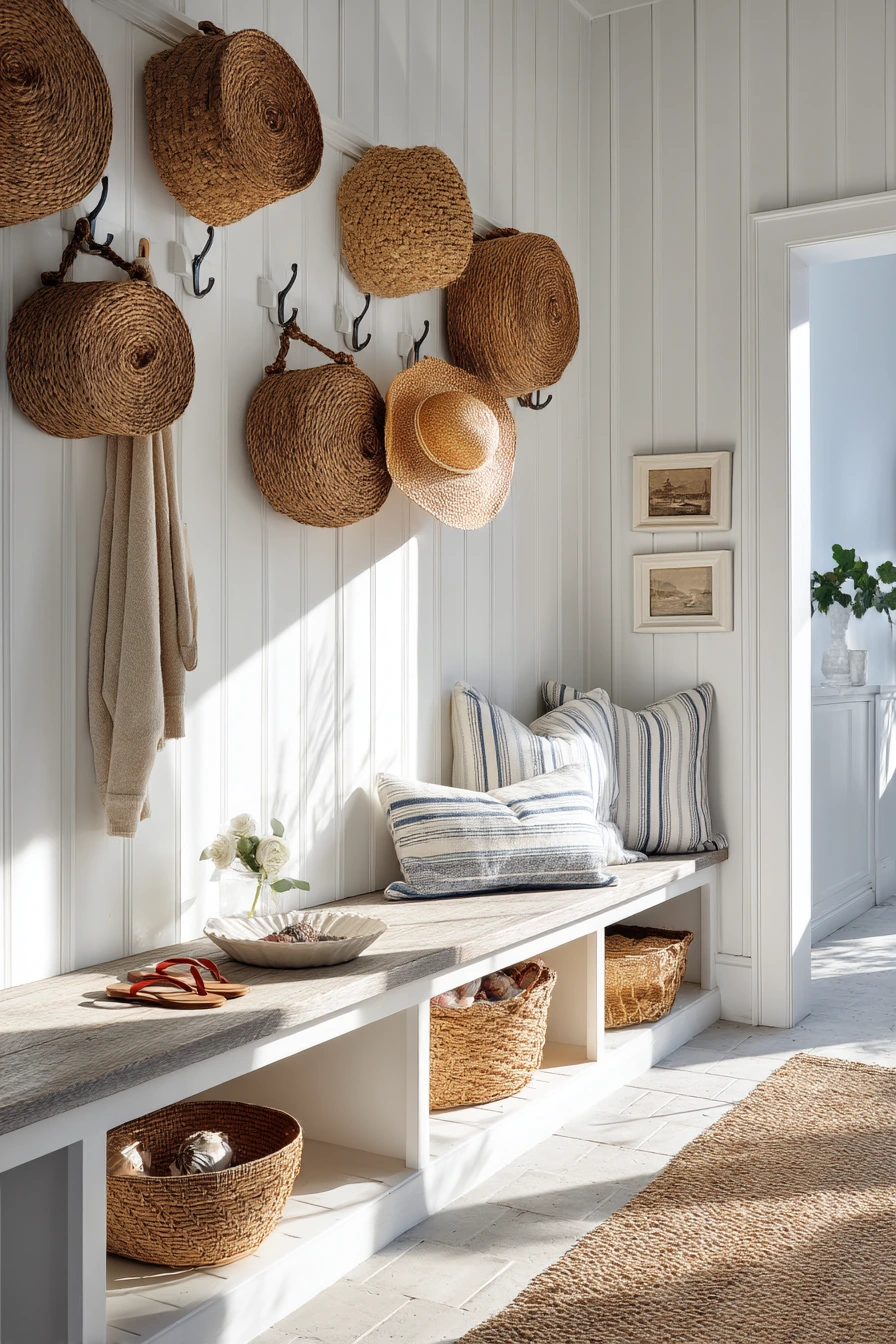
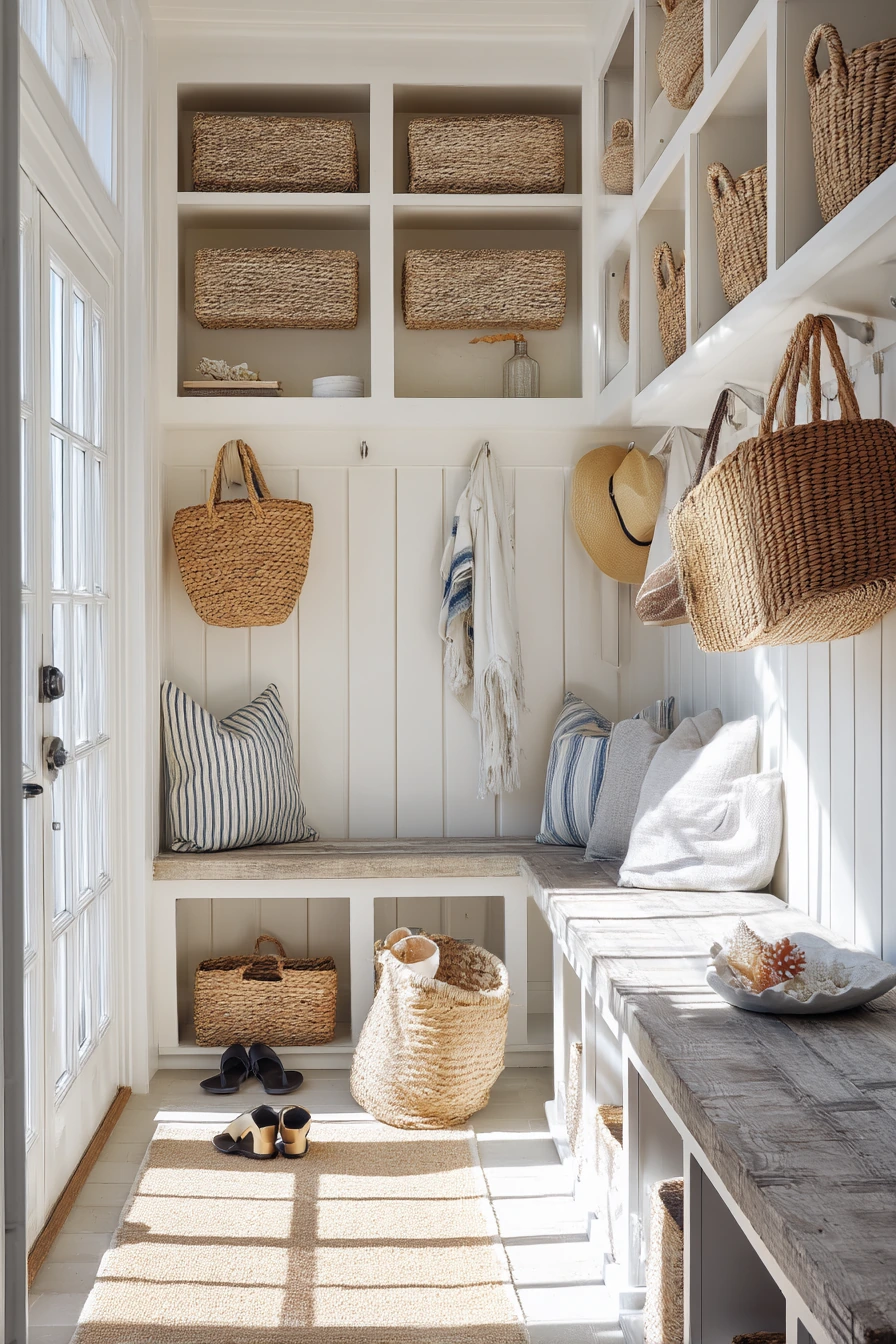
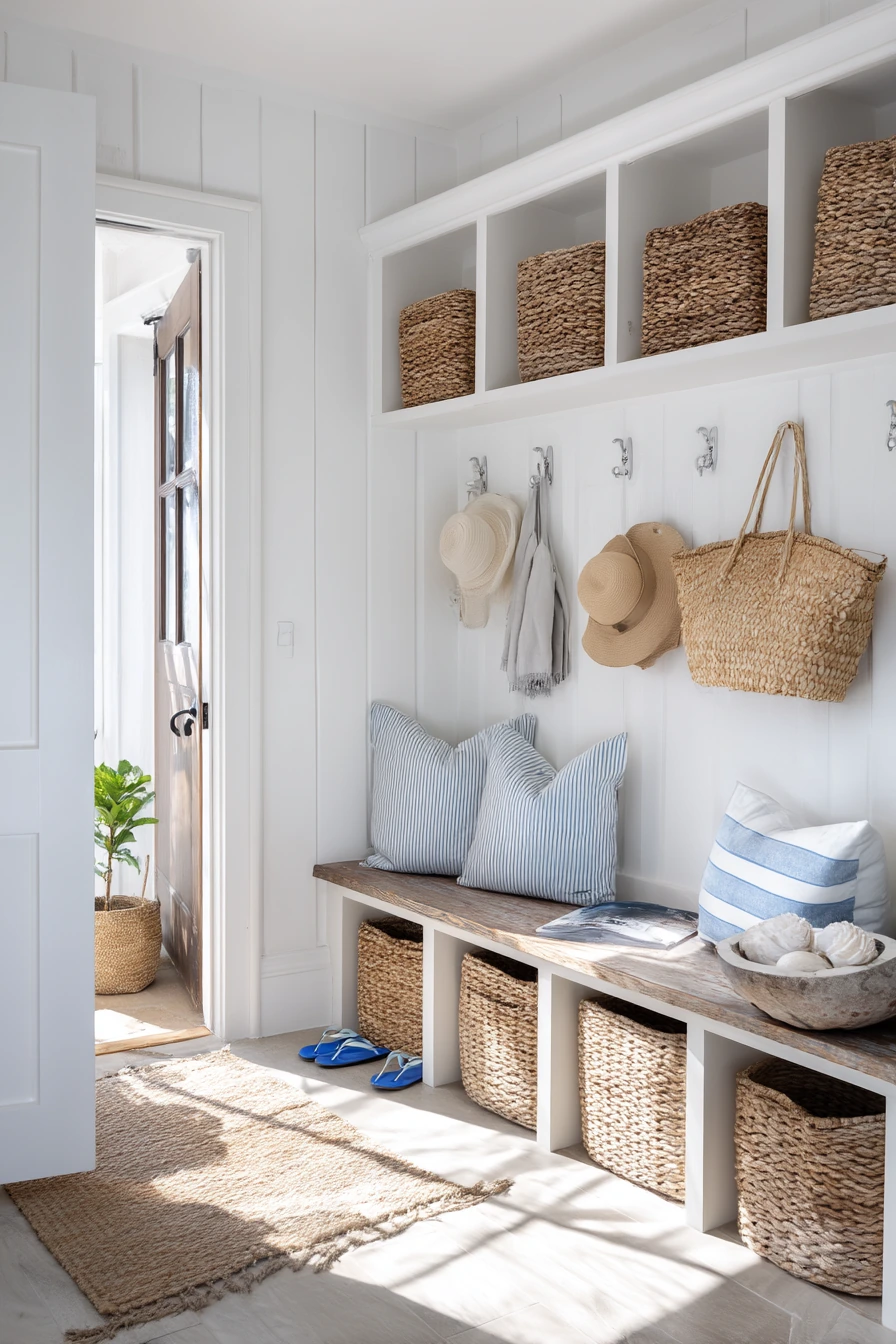
A breezy coastal mudroom stays relaxed while still being organized. White paneling and a weathered wood bench create a light base. A wall of woven baskets hides small items like sunscreen, hats, and gloves. Rope hooks add a casual touch and work well for beach bags and towels. Under-bench cubbies keep sandals and rain boots contained.
To make it work for families, keep the rules simple. Shoes go in cubbies, not in the walkway. A catchall dish holds a shell, keys, and tiny treasures kids bring in. Add striped cushions for comfort, but pick covers that can be washed. If kids’ flip-flops end up askew, the cubby system should still look fine because everything stays within the bench footprint.
Style this space with soft color and texture. Use baskets in two tones, like natural and whitewashed. Add one beach hat on a hook and one folded towel on the bench for a lived-in look. Morning light and plant shadows will make the area feel airy, so keep décor minimal and let the materials do the work.
- Use woven baskets up high for small items you want to hide.
- Install rope or simple hooks for towels, hats, and beach bags.
- Choose under-bench cubbies sized for sandals and rain boots.
- Keep one catchall dish for keys and pocket items.
- Use washable cushion covers for benches in high-traffic zones.
Pro Design Tip: Balance open cubbies with a few closed baskets so the space reads calm even when summer gear rotates in and out.
Budget Considerations: Coastal style is easy to DIY; use a basic bench and add affordable baskets, then paint paneling or use peel-and-stick wall panels.
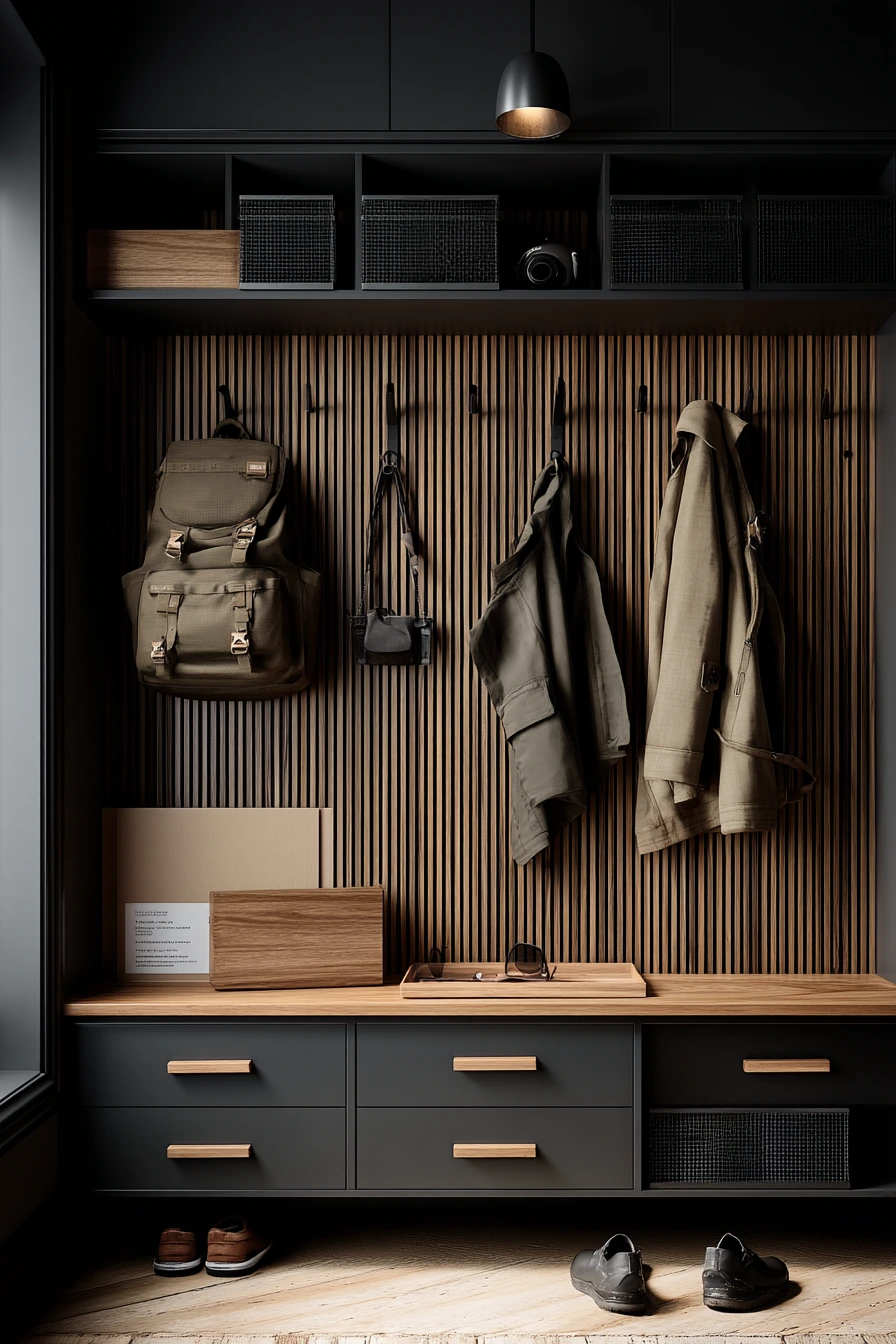
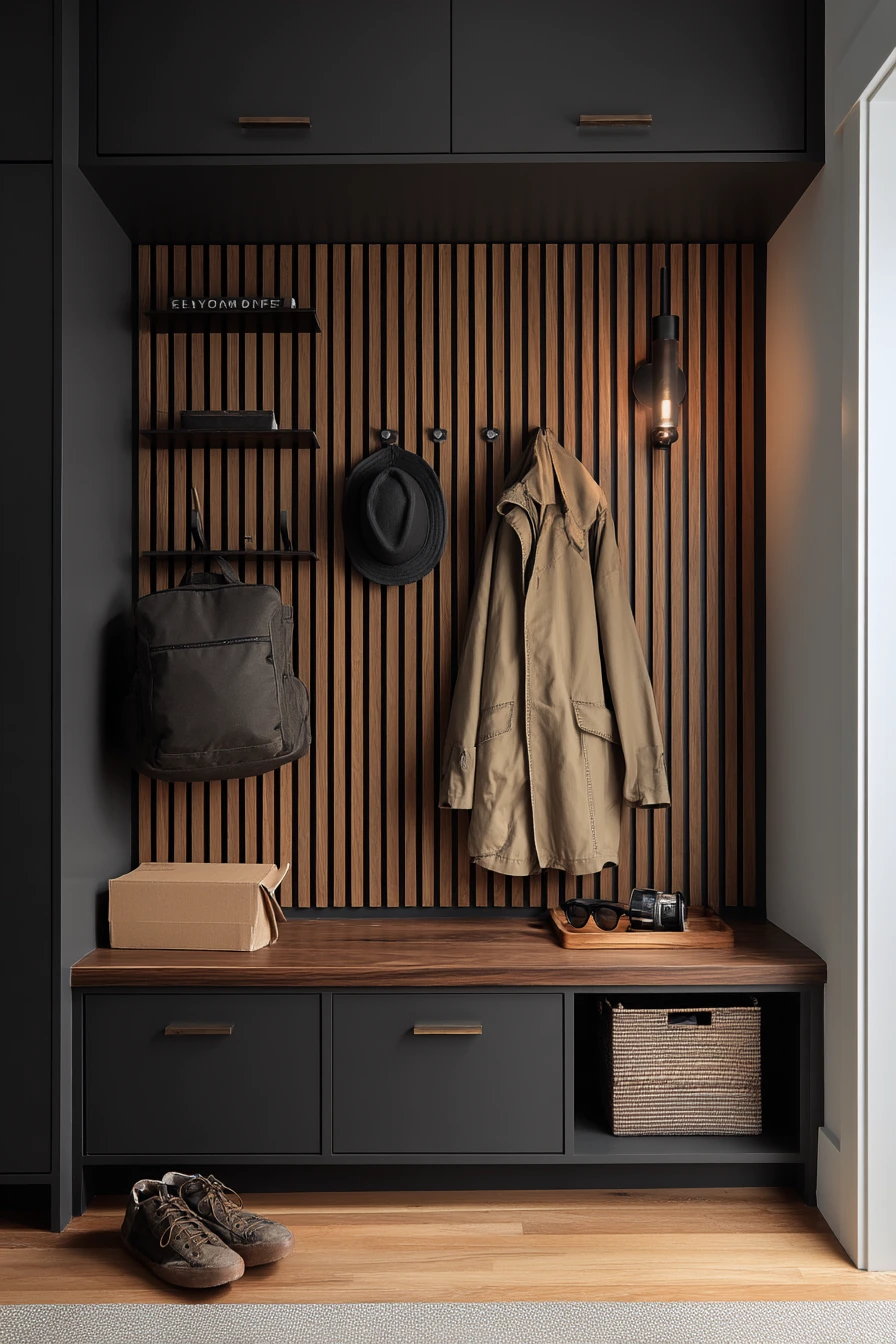
8. Modern Mudroom Feature Wall With Matte Black Cabinets and Walnut Bench
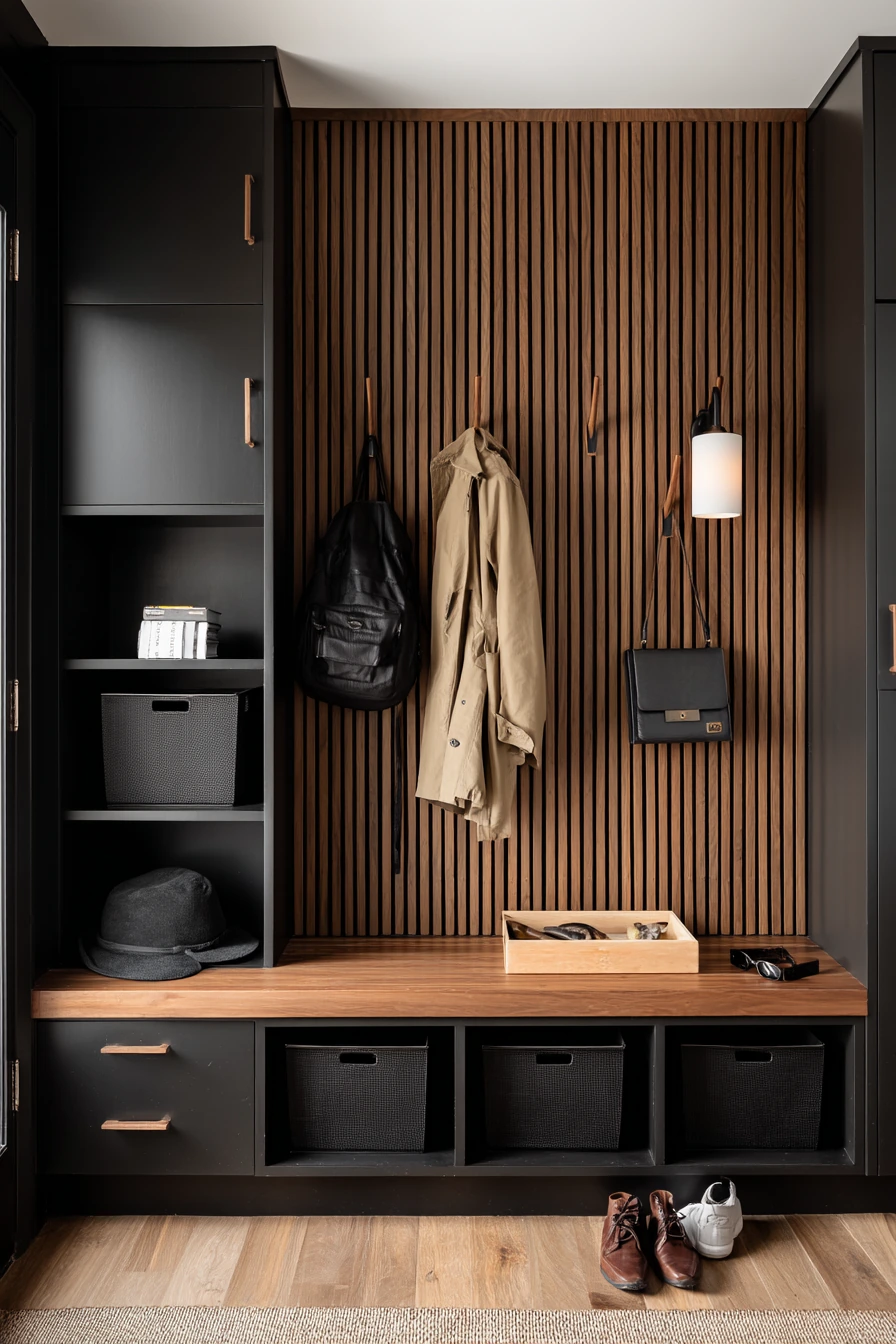

A modern mudroom feature wall creates a strong first impression while staying practical. Matte black cabinetry hides clutter, and a warm walnut bench keeps the look grounded. A vertical slat backdrop adds texture without needing extra décor. Open cubbies with labeled bins handle gloves, hats, and small gear, while concealed drawers keep the floor free.
To make this style work in daily life, focus on flow. Put sleek hooks at the most used height for a trench coat and a canvas backpack. Add a small sunglasses tray so lenses do not get scratched. Leave a clear spot on the floor for deliveries, like a courier package, so it does not block the entry. If one pair of shoes gets kicked off unevenly, a defined shoe zone nearby helps you reset fast.
For styling, keep the palette tight. Black, walnut, and a few neutral bins look tailored. Use labels that match the modern vibe, like simple black-and-white tags. Warm a moody wall with a soft sconce, and keep one plant or one framed print if you want a softer edge. Too many accents will fight the clean lines.
- Combine concealed drawers with a few open cubbies for quick access.
- Use labeled bins so small items do not scatter.
- Add a dedicated tray for sunglasses and keys.
- Create a drop zone for packages that stays out of the walkway.
- Keep one shoe area near the bench to stop random pairs on the floor.
Pro Design Tip: Use under-cabinet lighting or a warm sconce to soften matte black and highlight wood grain on the bench.
Budget Considerations: Slat walls and black cabinets can be pricey; try paint-grade MDF slats and affordable cabinet fronts, then upgrade pulls later.
9. Renter-Friendly Mudroom Corner With Freestanding Storage and Removable Hooks


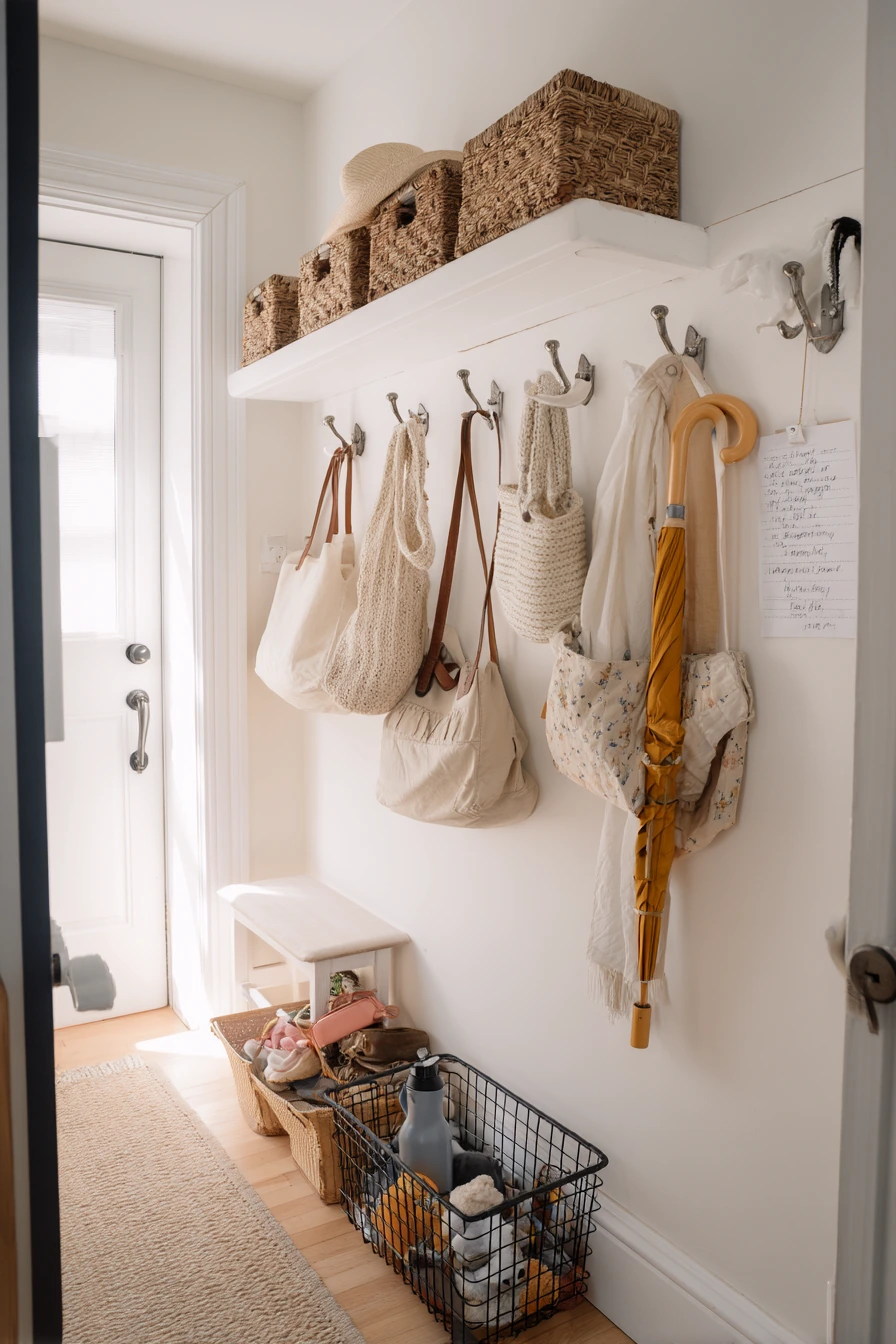
A renter-friendly mudroom can live in one entry corner. Use a freestanding bench for seating and a place to set bags. Removable wall hooks add hanging space without damage. Stacked crates work as shoe storage and can be reconfigured when your needs change. A slim rolling cart is useful for items that move in and out, like water bottles, hats, or kids’ sports gear.
For organization, think in small categories. A hanging fabric organizer can hold gloves, scarves, and dog items. Clip a paper grocery list to a rail so you always know what to buy. Keep a tote bag ready for errands and place a reusable water bottle in the same spot each day. Tuck a kids’ toy basket under the bench so toys stay contained but still easy to grab.
To style it, keep it bright and practical. Choose crates in one finish, like natural wood or white, so they look like a set. Use matching hooks and simple labels. If the corner gets messy, it should still feel approachable, not chaotic. A small mat and one wall print can make it feel finished without adding clutter.
- Use a freestanding bench with a shelf or space for bins underneath.
- Add removable hooks for coats, bags, and keys.
- Stack crates for shoes so you can adjust height and layout.
- Use a slim rolling cart for items that rotate each season.
- Keep a toy or grab-bag basket under the bench for quick cleanup.
Pro Design Tip: Group storage by task, like “leave the house” items near hooks and “come home” items near the shoe area, so the corner stays easy to use.
Budget Considerations: This setup can be very low-cost; thrift a bench, use crates, and choose command-style hooks instead of installing permanent systems.

10. Rainy-Season Mudroom Setup With Boot Tray, Umbrella Stand, and Layered Storage


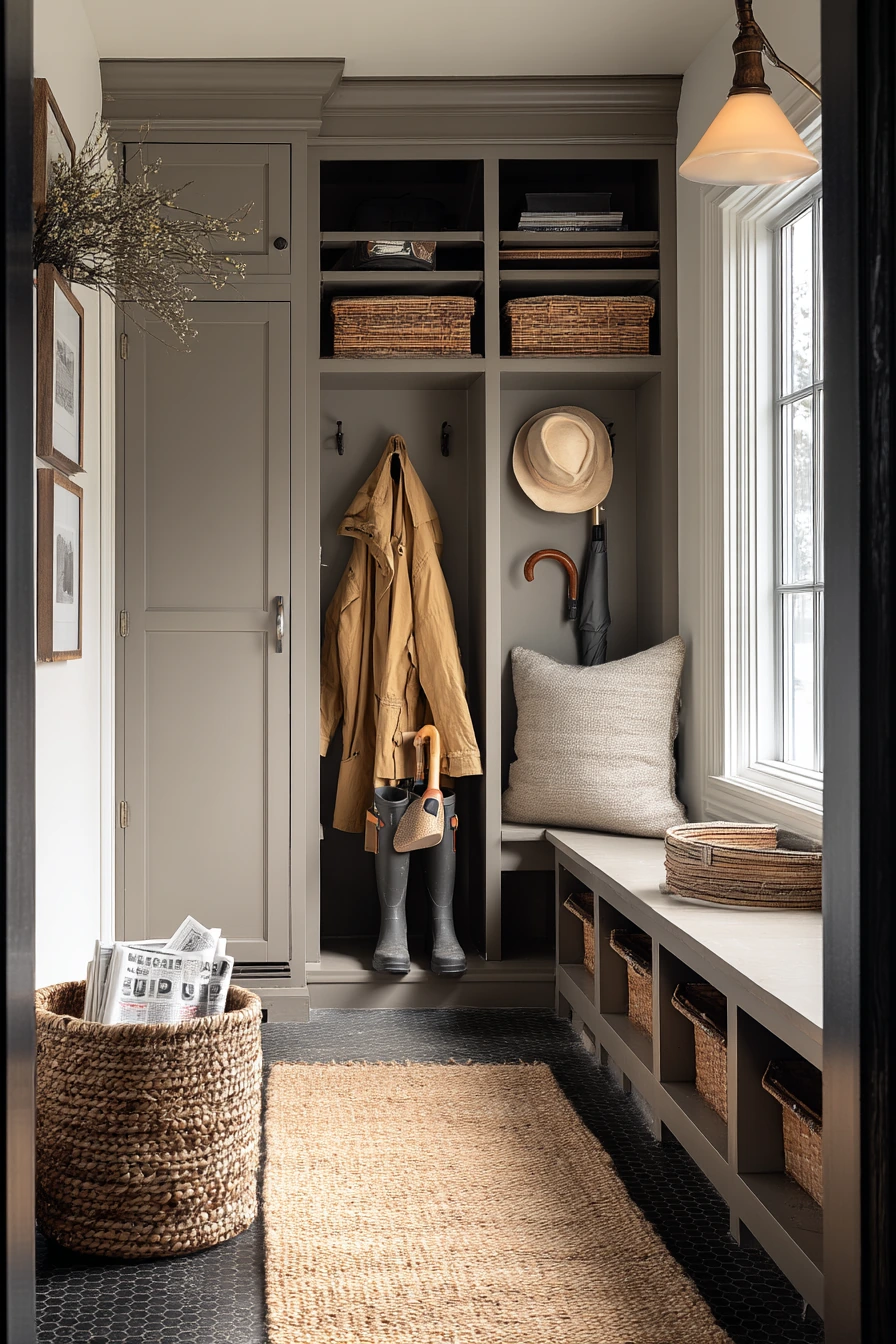
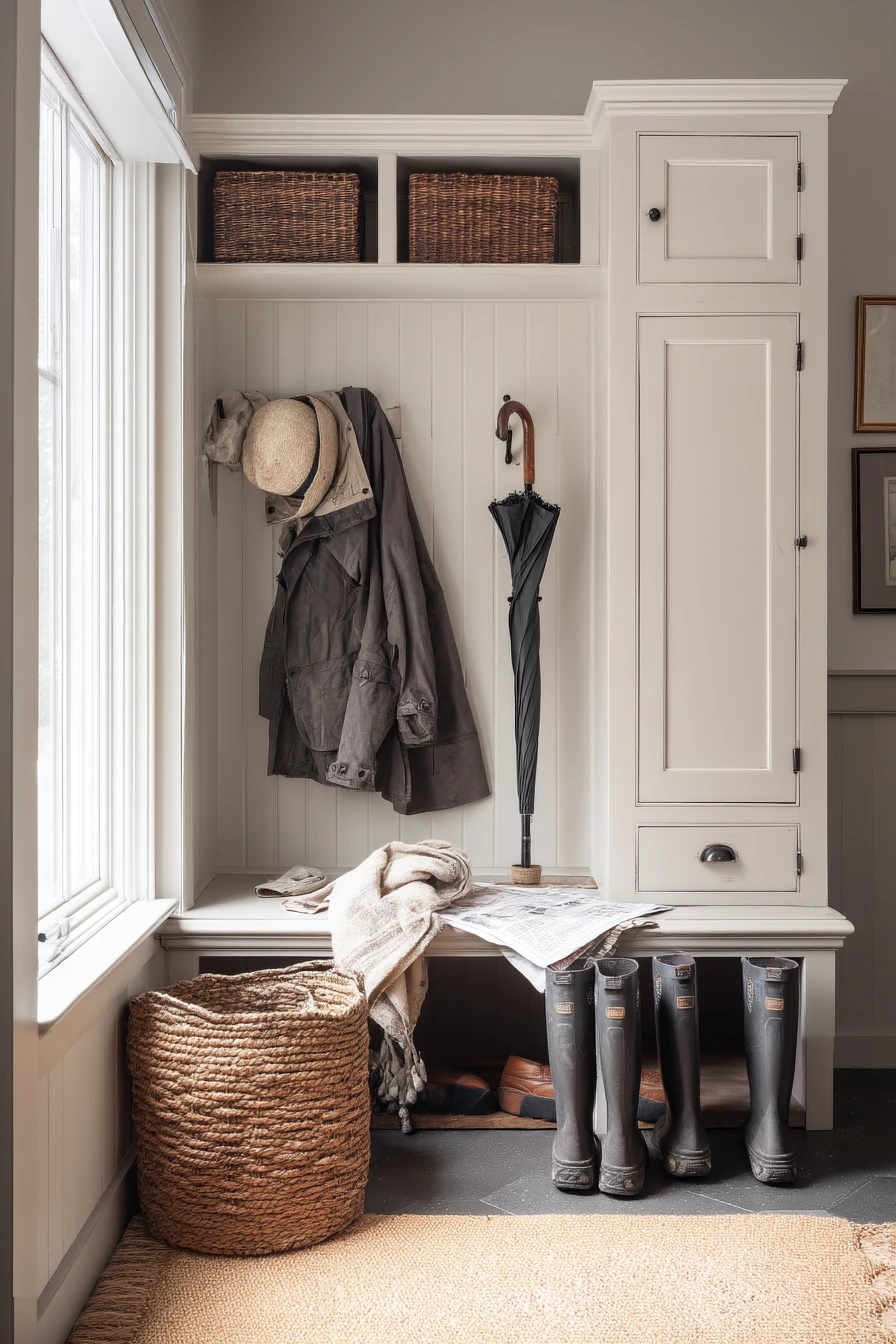
A rainy-season mudroom needs tools that manage wet gear fast. A tall cabinet for coats keeps damp layers off the wall. A boot tray with rubber wells contains water and grit. A bench with a lift-up seat is great for storing extra gloves, shoe covers, and cleaning cloths. Add an umbrella stand near the door so dripping umbrellas do not end up in a corner.
Set the space up for easy steps. Hang slickers and hats on hooks closest to the door. Place a woven basket for scarves where you can reach it without walking across the room. Keep a small towel near the bench for wiping a damp raincoat sleeve draped over the seat. If you get newspapers or deliveries, give them a dry spot, like a small shelf or tray, so paper does not sit on a puddle-specked mat.
For styling, choose earthy, cozy pieces that still look clean. A neutral mat hides water spots better than a white one. Warm lamp light helps the space feel inviting on gray days, but keep surfaces simple so you can wipe them down. The best rainy-day mudroom looks calm even when it is doing hard work.
- Use a boot tray with wells to contain water from wet shoes.
- Add a lift-top bench to store rain gear and cleaning cloths.
- Keep an umbrella stand by the door to prevent drips on the floor.
- Hang coats and slickers on hooks so they can air out.
- Set a dry tray for mail and papers away from the wet mat.
Pro Design Tip: Choose a water-resistant wall finish or wipeable paint behind hooks to protect the area from repeated wet coats.
Budget Considerations: If you cannot add a tall cabinet, use a garment rack plus a boot tray and a covered bench bin to get similar function for less.
The best mudroom organization ideas are the ones your household will actually use. Start with one problem, like shoes on the floor or bags on the counter, then add one simple storage layer to fix it.
Use hooks for daily items, bins for small stuff, and a bench to make the space comfortable. Keep cleaning supplies close if you deal with wet weather or pets.
Once the system is in place, a quick reset at the end of the day keeps your entry looking tidy and ready for tomorrow.
Here are the frequently asked questions regarding mudroom organization, compiled from the guide:
Frequently Asked Questions
1. How do I stop family members from dropping bags and coats on the floor?
Assign each person a dedicated spot with clear boundaries: two hooks (one for coats, one for bags), a specific cubby, and a labeled basket for smaller items like hats and gloves. When everything has a designated home right by the door, clutter is much easier to contain.
2. What is the best way to manage wet shoes and muddy boots without ruining the floors?
Use a heavy-duty boot tray with a raised lip or rubber wells right beneath your bench or coat hooks to contain water, salt, and dirt. Pairing this with a washable runner or a dark, textured doormat helps capture moisture before it reaches your main flooring.
3. How can I keep a small mudroom or entry nook from feeling overcrowded?
Mix open and closed storage so the space breathes. Use closed drawers or bins to hide messy items like loose cables, shoes, and small accessories, while keeping surface décor minimal. Sticking to a tight color palette also prevents small entryways from looking visually cluttered.
4. What are the best storage solutions for a pet-friendly mudroom?
Incorporate low pull-out bins or open baskets at floor level for leashes, toys, and grooming wipes. Keep a stack of old towels in an easily reachable basket near the bench for quick paw-wiping, and place water and food bowls on a protective tray to catch splashes.
5. How can I set up an organized mudroom if I am renting?
Opt for freestanding furniture pieces like a sturdy storage bench or modular wooden crates that can be reconfigured or moved. Use removable wall hooks (such as damage-free command hooks) to create hanging zones for coats and keys without altering permanent walls.
6. What is the most budget-friendly way to build a mudroom drop zone?
Instead of expensive custom built-ins, use ready-made modular cubbies, affordable pine boards with basic shelf brackets, and multi-packs of standard wall hooks. Add matching inexpensive bins and simple labels for a cohesive, custom-looking setup on a budget.