A shoe storage garage setup keeps your entry area cleaner and makes it easier to find the pair you need. When shoes land on the floor, they collect dust, road salt, and mud, then get tracked into the house. A simple storage plan helps you stop that cycle.
This guide shares shoe storage garage ideas based on real-life layouts, from custom wall shelving and matte gray cabinets to compact wall-mounted racks. You will see options for families, small garages, large collections, and even a garage entry bench zone.
Each section includes practical steps, small styling ideas, and notes on materials like polished concrete, epoxy floors, wood cabinetry, and metal shelving units. Use the ideas as a checklist so your garage stays neat without extra daily work.
Pick one style that fits your space, then copy the storage rules: sort by type, give pairs a “home,” and keep cleaning tools nearby. Even a basic system can look good and work hard.
1. Modern Shoe Storage Garage With Custom Wall Shelving
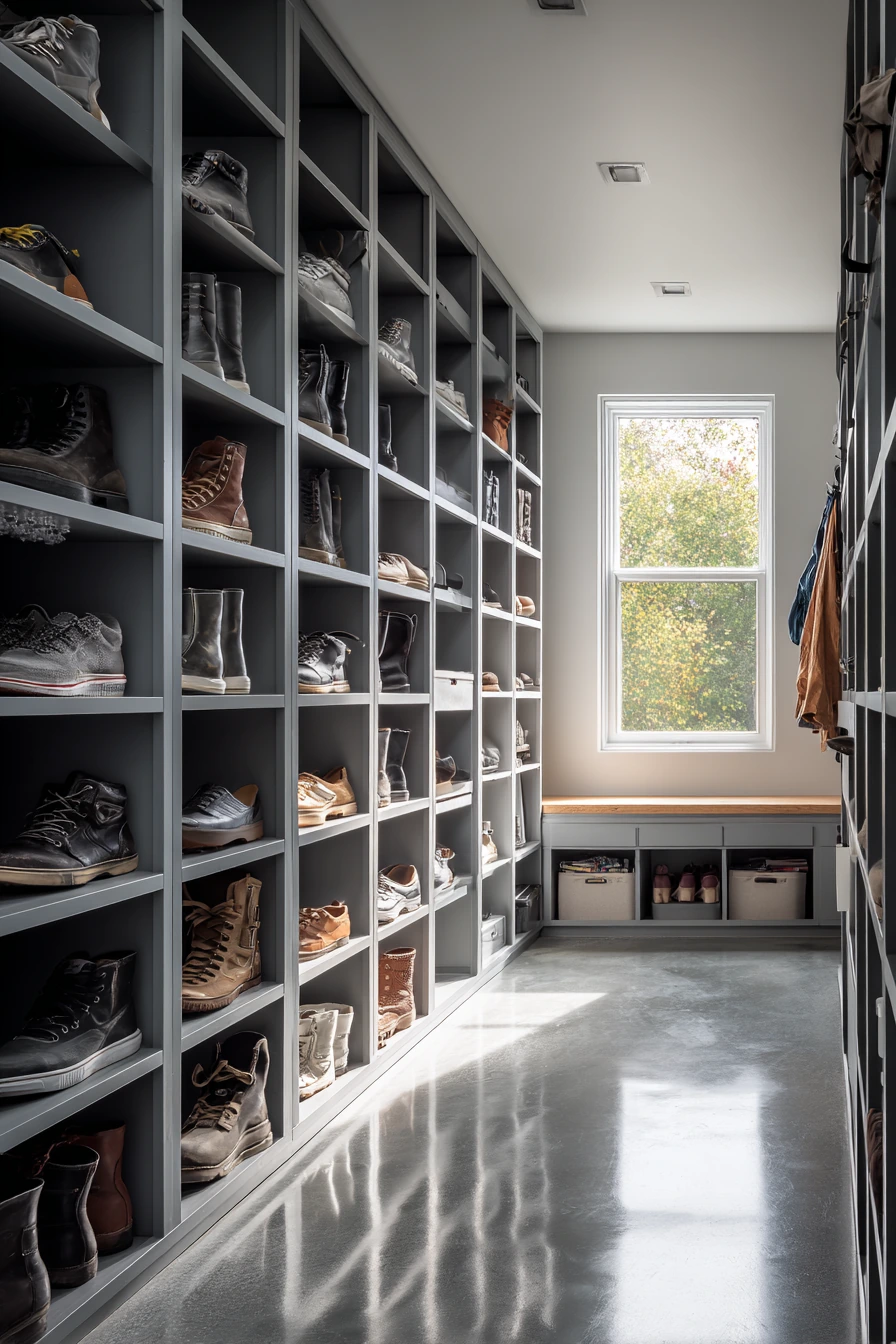
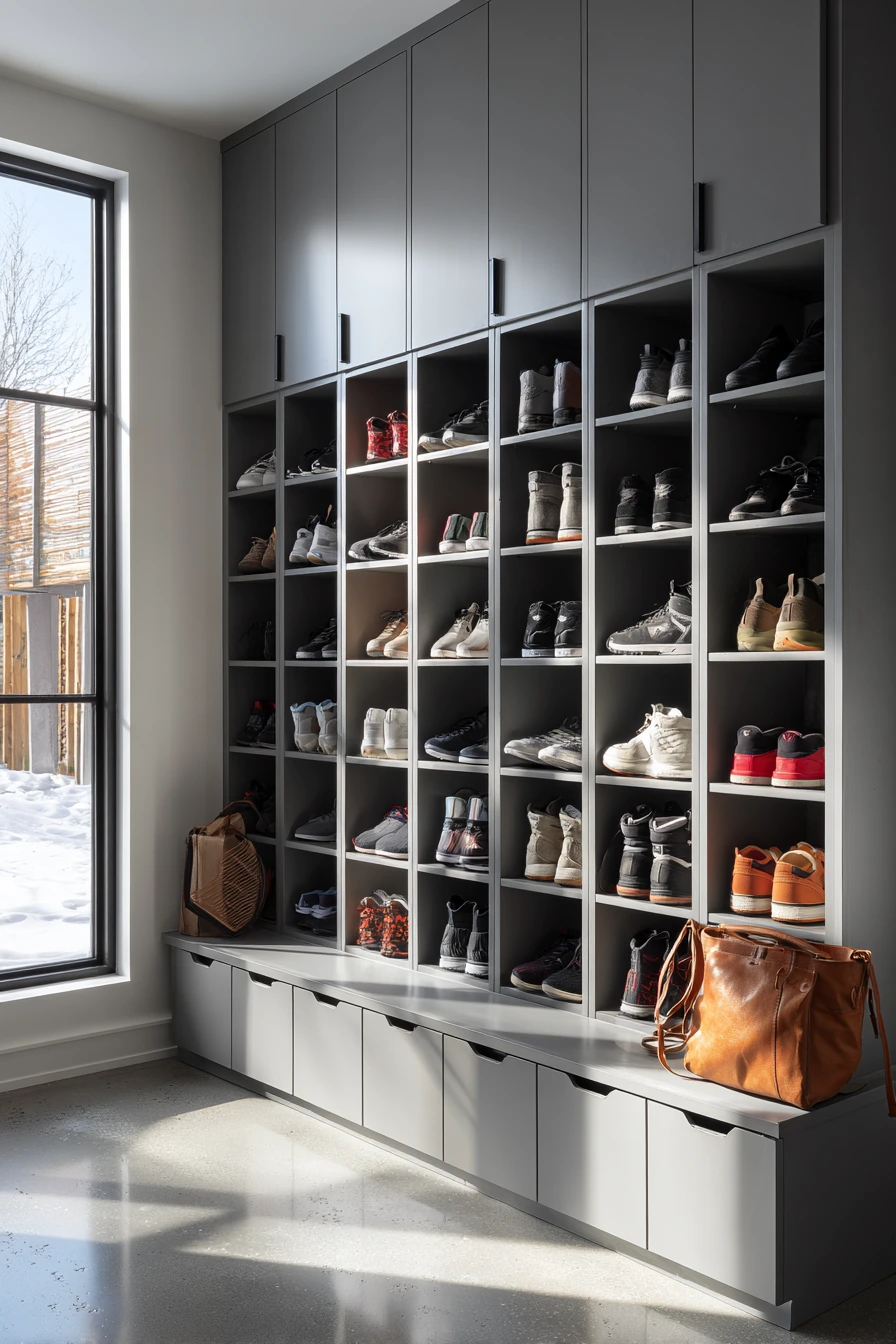
A modern shoe storage garage works best when storage is built around how you actually use shoes. Custom-built wall shelving lets you group sneakers, boots, and everyday pairs without stacking. Matte gray cabinets hide overflow and keep the wall looking calm, while open cubby-style racks keep daily shoes easy to grab.
Start by measuring one main wall and planning zones. Put the most-used pairs at hand level. Place tall boots in wider cubbies or a lower section so they do not bend. Add labeled compartments for sports shoes, work boots, and quick errands so everyone returns shoes to the right spot.
To style it, keep the look clean with matching labels and a simple color order, like light to dark across each shelf. If you have polished concrete flooring, add one low-profile boot tray near the bottom to catch water and grit. Leave a little empty space so the wall does not feel crowded, even when the shelves are full.
- Use open cubbies for daily shoes and closed cabinets for off-season pairs.
- Label by person or by use, such as gym, school, work, and yard.
- Add a small cleaning kit nearby: brush, wipes, and a microfiber cloth.
- Keep boots upright with boot shapers or rolled towels.
- Place a rubber mat under the lowest row to protect the floor.
Pro Design Tip: Match cabinet doors and shelf edge trim in the same matte finish so the wall reads as one built-in unit, not separate pieces.
Budget Considerations: Custom shelving costs more, so save money by building one feature wall and using ready-made cubbies for the rest.
2. Luxury Shoe Storage Garage With Lit Floor-to-Ceiling Cabinets

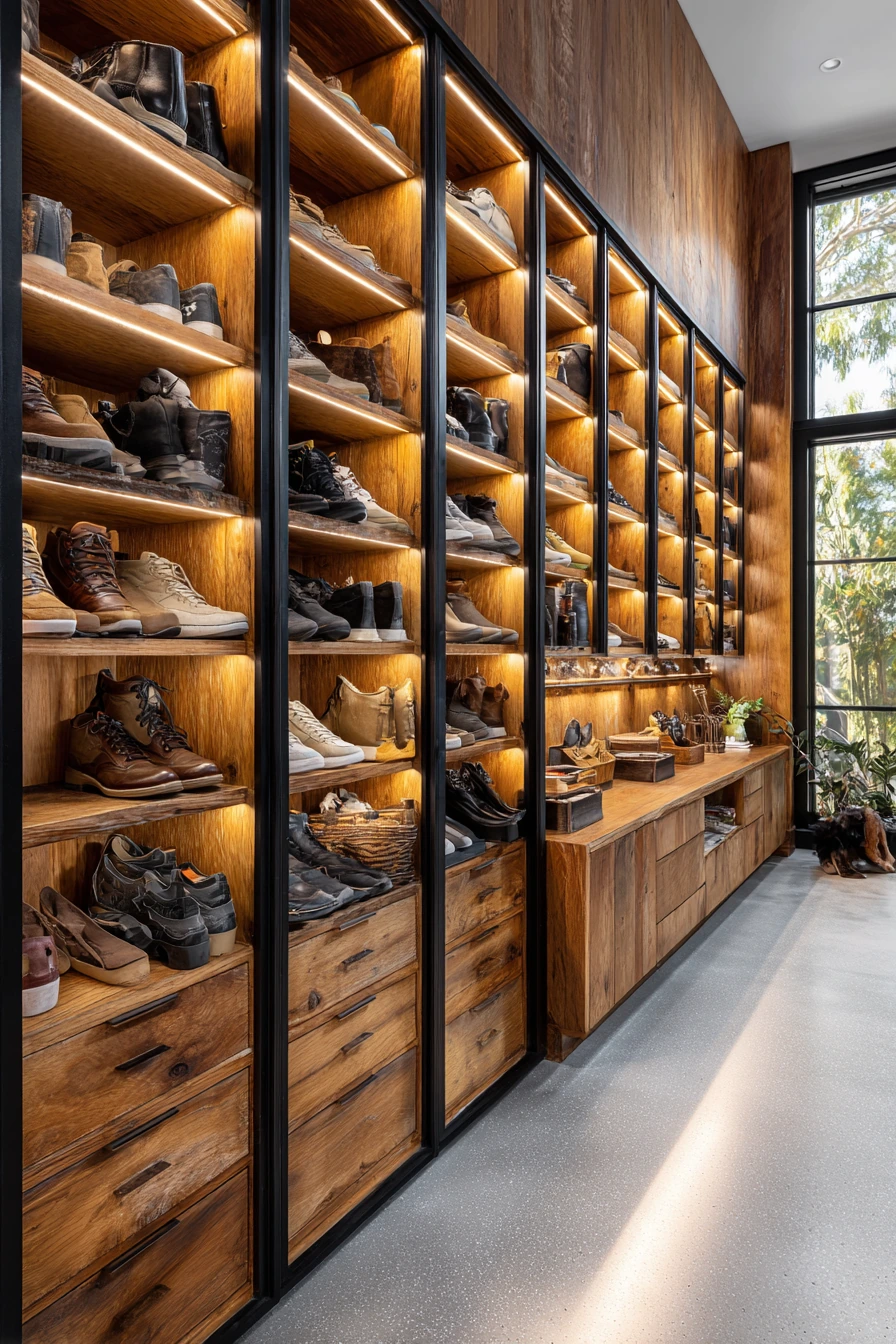
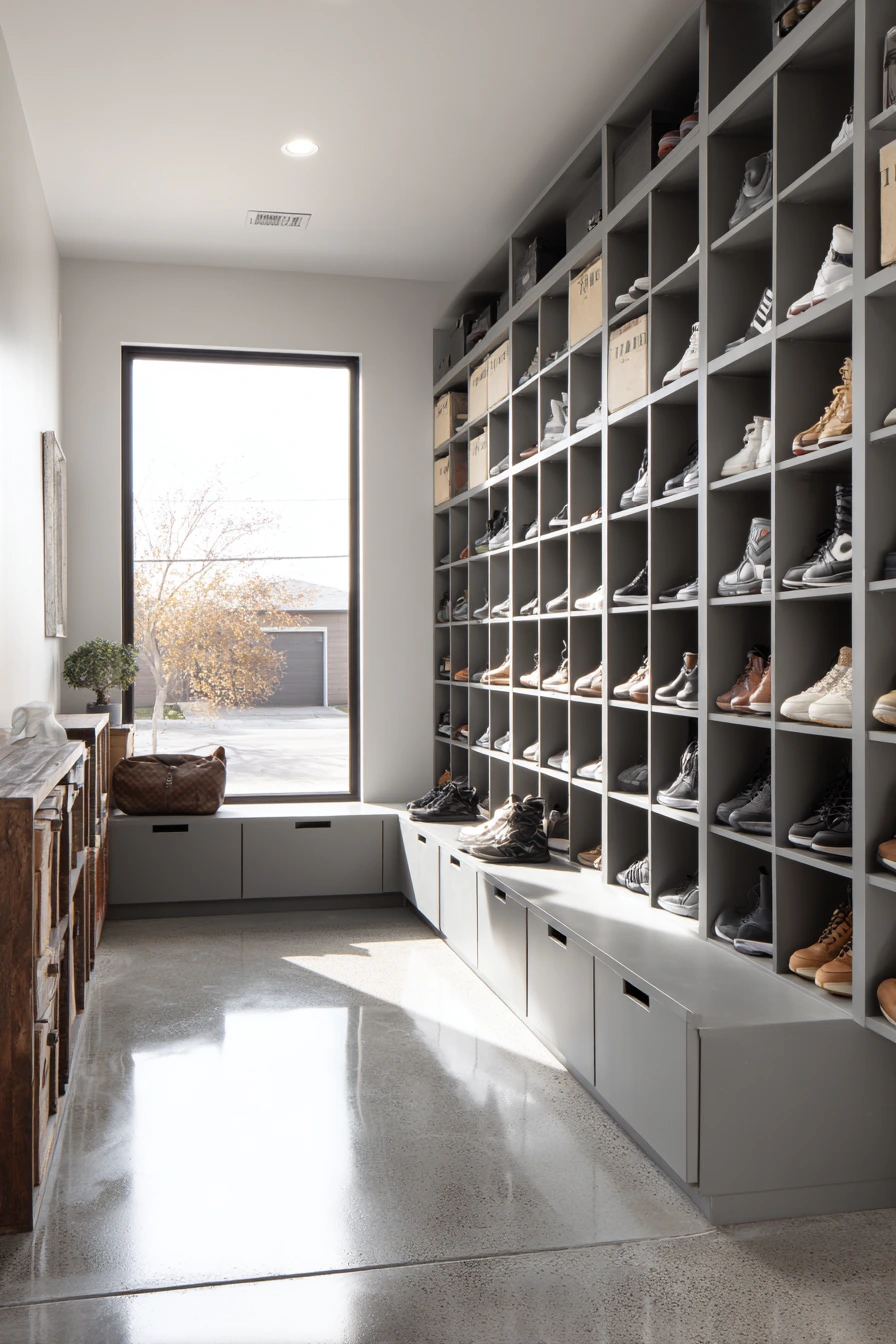
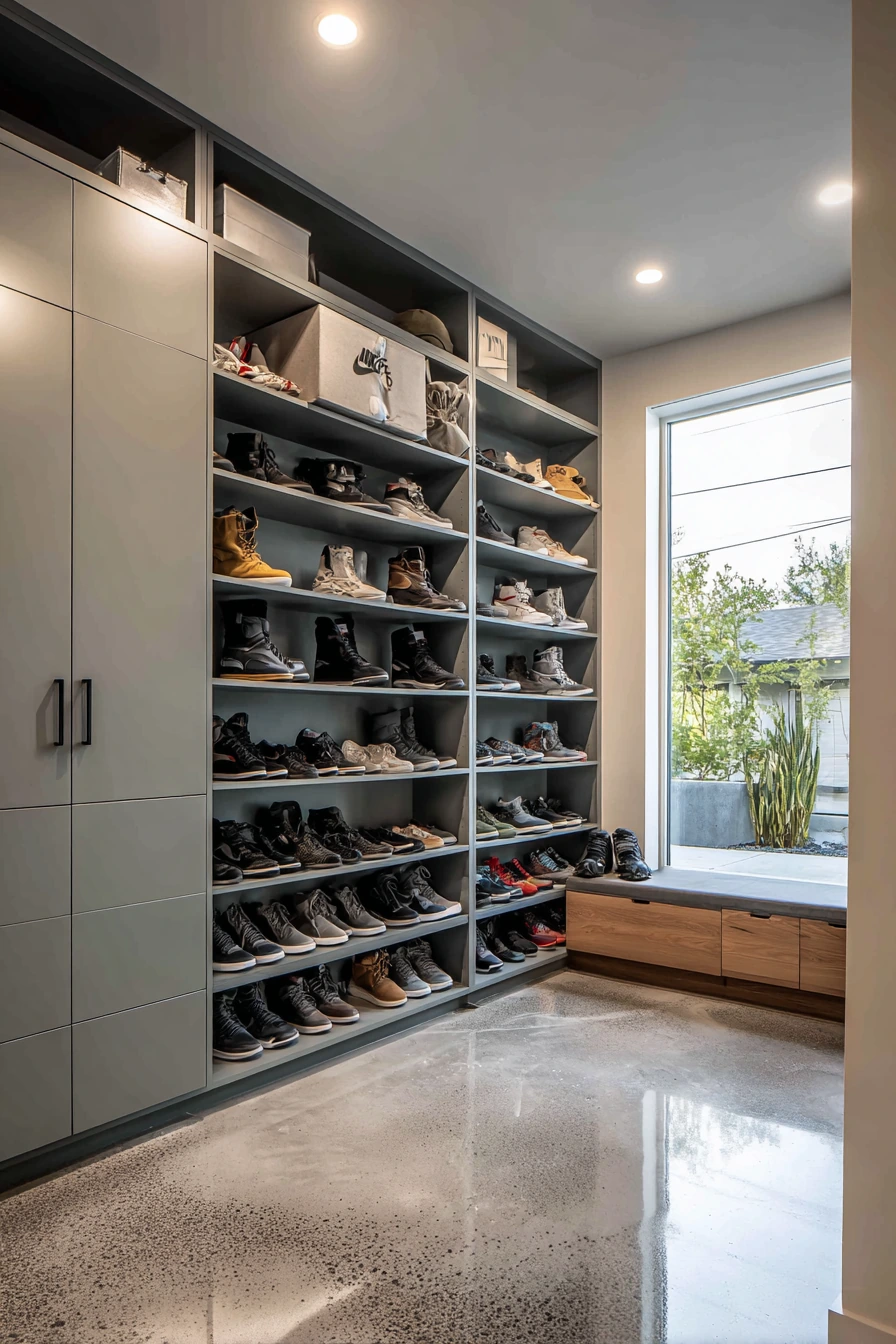
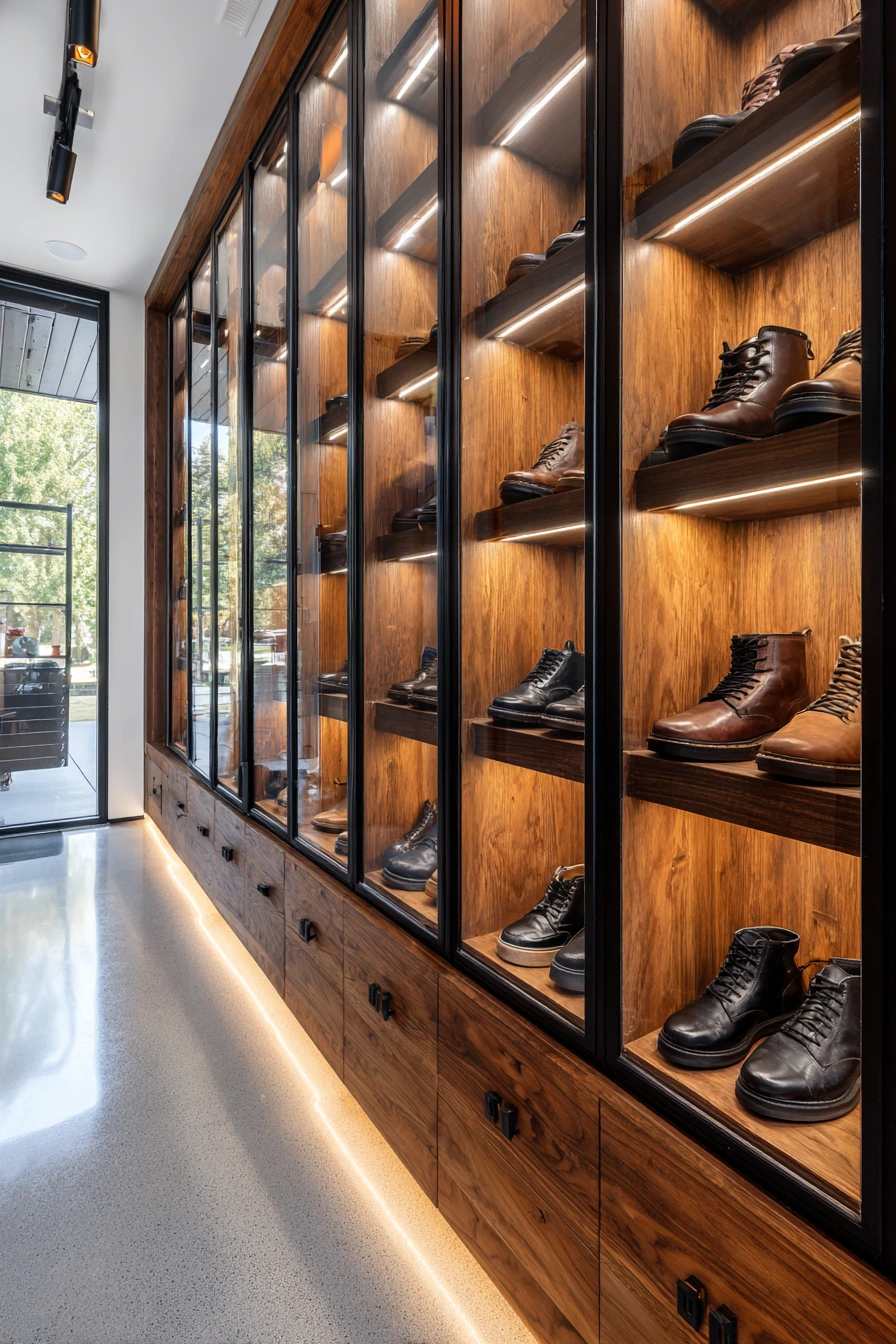
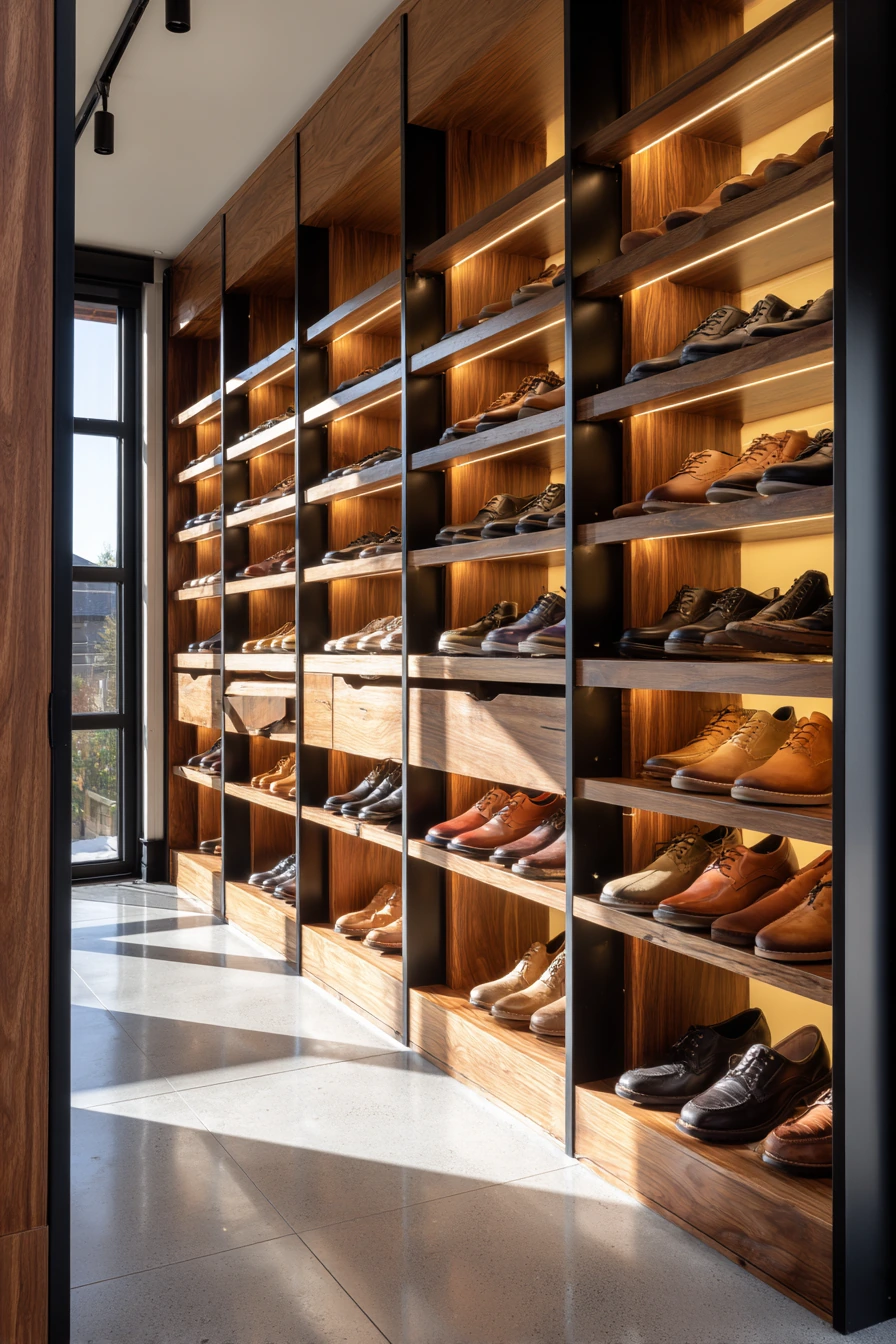
A luxury shoe storage garage feels like a showroom, but it can still be practical. Floor-to-ceiling cabinetry in warm wood tones adds a rich look, and black metal accents keep it modern. Individual compartments make every pair visible, so shoes do not get crushed or forgotten in piles.
Plan this setup like a closet system. Use consistent cubby sizes for sneakers and flats, and add a few taller bays for boots. Subtle lighting inside the compartments helps you find shoes fast, especially on dark winter mornings. Smooth epoxy flooring is easy to sweep and wipe, which matters in a garage where dust and grit show up daily.
To style it, keep one row for “display” pairs and the rest for everyday rotation. Use matching shoe boxes on the top row for seasonal items, and add a simple wood bench or slim cabinet pull in black to match the metal accents. If sunlight hits the cabinets, consider a matte or satin finish to reduce glare and fingerprints.
- Group compartments by category: sneakers, dress shoes, boots, and sandals.
- Use motion-sensor puck lights for easy on and off.
- Add ventilation gaps or slotted backing to help shoes dry out.
- Keep a small dehumidifier or moisture absorber in humid climates.
- Use a weekly reset: quick sweep, wipe handles, and put pairs back.
Pro Design Tip: Choose warm wood cabinetry with integrated toe-kick lighting so the wall looks taller and the floor stays softly lit.
Budget Considerations: Built-in cabinets and lighting add up; start with one tall cabinet bank and add more sections over time as your collection grows.
3. Minimalist Shoe Storage Garage With White Modular Shelving
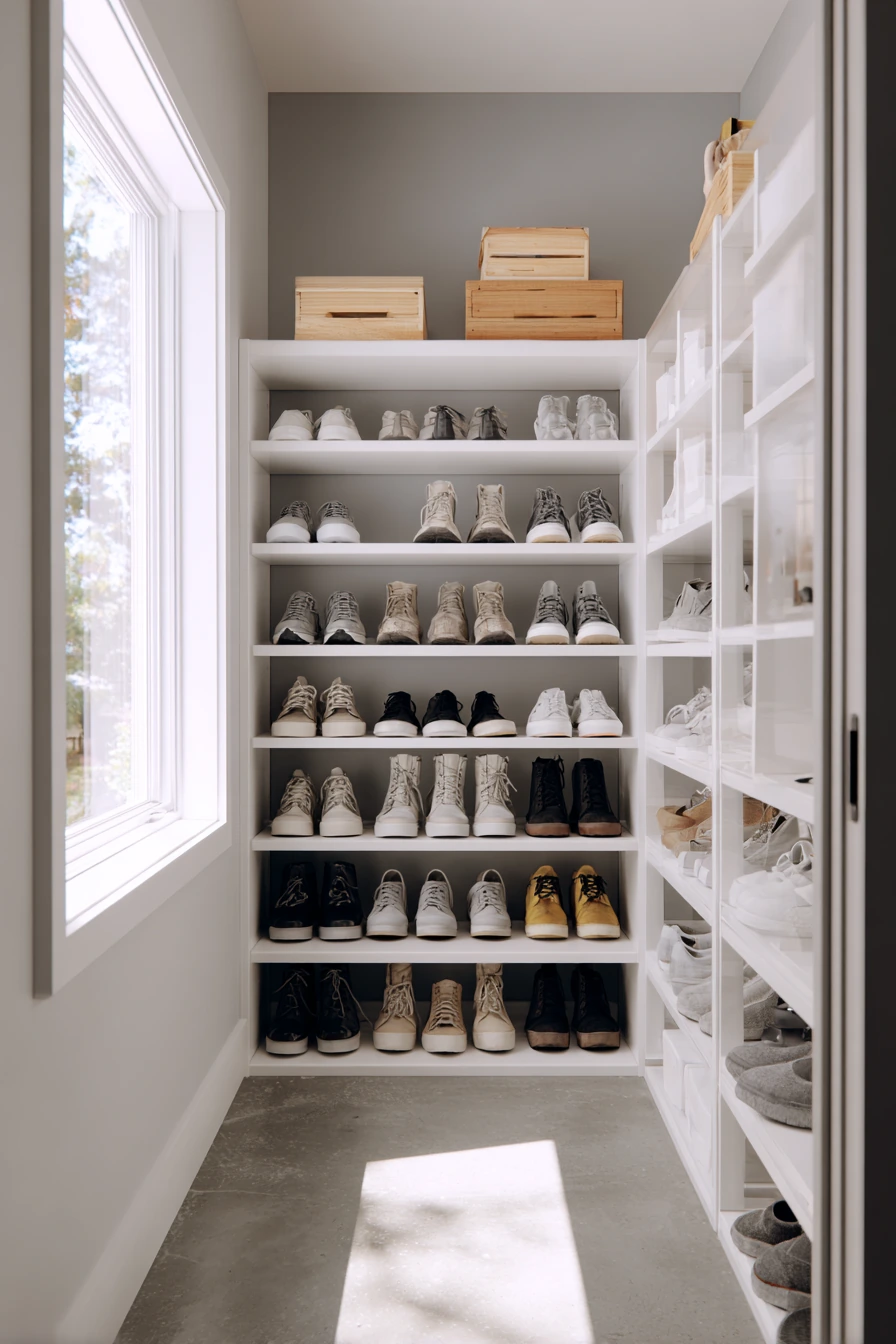
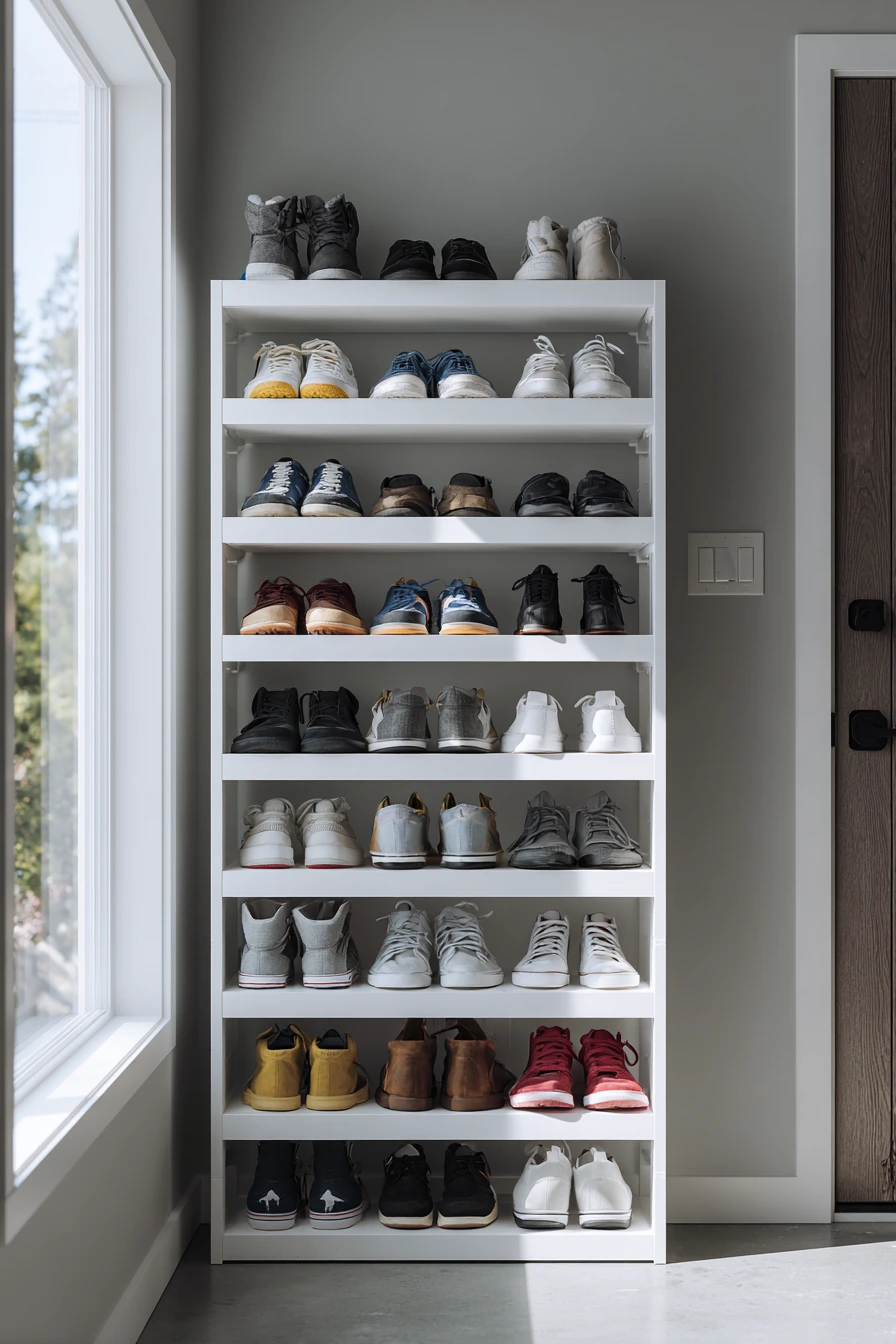
A minimalist shoe storage garage is about calm order and easy routines. White modular shelving keeps the space bright and makes it simple to reconfigure as needs change. Clean vertical storage uses wall height, which frees up the floor for bikes, bins, or a stroller.
To build this look, sort shoes by type first, then by color if you want a tidy visual. Keep the most-used pairs in the center rows and store seasonal shoes higher up. Light gray walls and concrete flooring create a neutral backdrop that helps the shelving look crisp, even in a busy garage.
For styling, keep only one or two accent items, like a small plant on a high shelf or a neutral basket for socks and shoe spray. Avoid lots of mixed containers. Use matching bins if you need them, and stick to one label style. If natural sunlight comes through a side window, place lighter shoes away from direct rays to reduce yellowing over time.
- Use adjustable shelves so you can change heights for boots or kids shoes.
- Store muddy pairs on the bottom row with a washable tray.
- Keep one “catch-all” bin for lost laces, insoles, and heel caps.
- Set a max number of pairs per person for the active shelf space.
- Use a simple color order to make the wall look less busy.
Pro Design Tip: Choose shelving with the same depth across the whole wall so the front edges line up and the storage looks intentional.
Budget Considerations: Modular units are often affordable; buy fewer sections first, then expand when you confirm the layout works for your routine.
4. Family-Friendly Shoe Storage Garage With Bins and Low Shelves
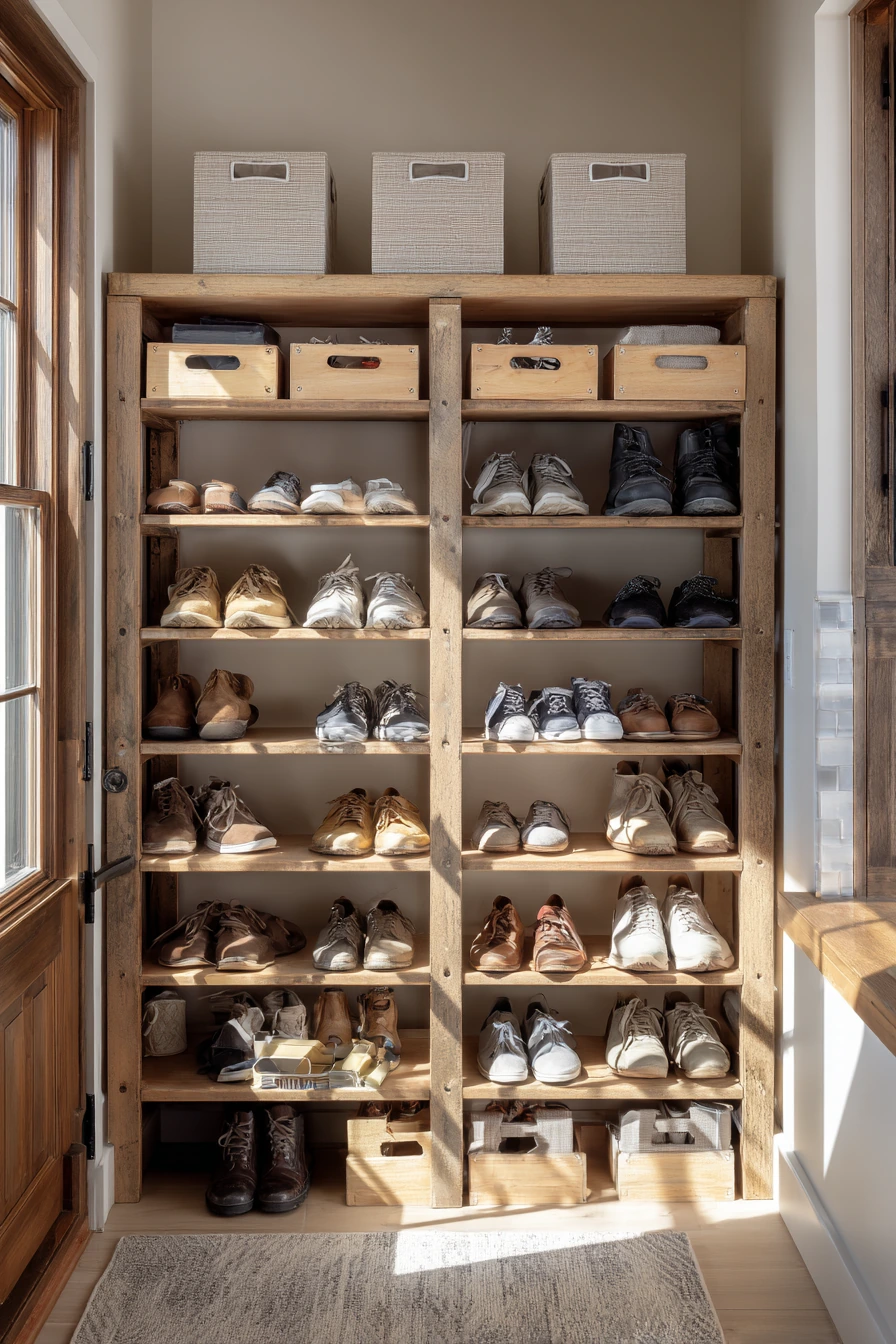
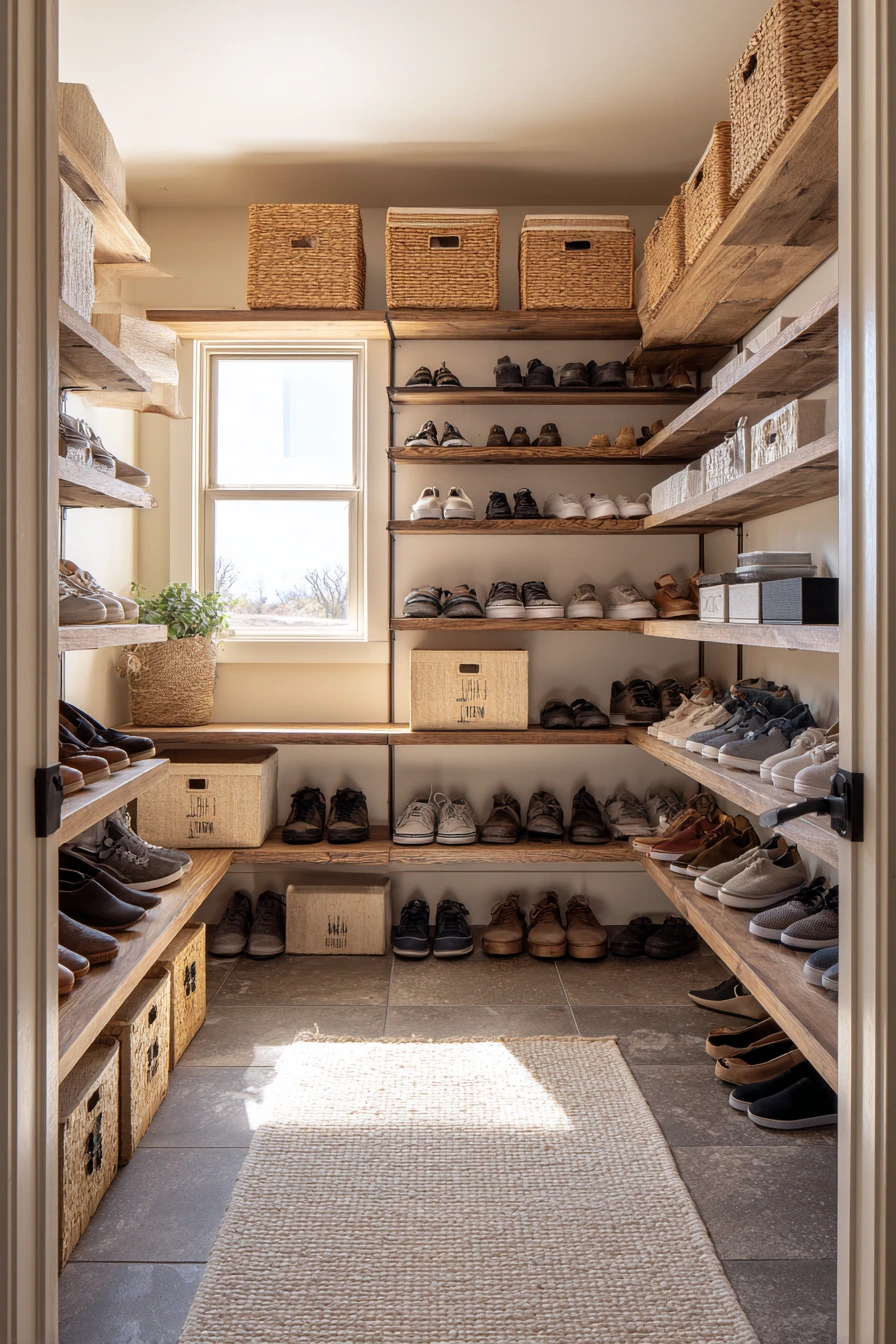
A family-friendly shoe storage garage needs to be tough, simple, and easy for kids to use. Sturdy wooden shelves hold weight without wobbling, and labeled bins give each person a clear spot. Open racks help shoes dry after rain, which helps with odor and keeps the area healthier.
Design the layout by height. Put kids shoes on lower shelves so they can put pairs away without help. Use higher storage for adult boots and less-used items. If you have several children, assign one bin per child and label it with a name or icon. Warm neutral tones and textured flooring make the garage feel less harsh, especially if this is the main entry.
To style it, keep the labels consistent and use two container types only, like one bin style plus one basket style. Add a small hook strip above the shelves for backpacks or dog leashes so the shoe area works as a mini mudroom. A small doormat at the garage door helps catch dirt before shoes even reach the shelves.
- Use a “today” rack for school shoes and sports sneakers.
- Keep a bin for wet items: gloves, hats, and damp socks.
- Add a boot tray and teach kids to place wet shoes there first.
- Use wipeable labels so you can update sizes and categories.
- Place a small step stool for younger kids if shelves are taller.
Pro Design Tip: Make the bottom shelf deeper than the rest so kids can slide shoes in without perfect alignment.
Budget Considerations: Basic wooden shelving and plastic bins are low cost; paint the shelves a warm neutral to get a built-in look without custom work.
5. Industrial Shoe Storage Garage With Metal Shelving and Concrete Walls
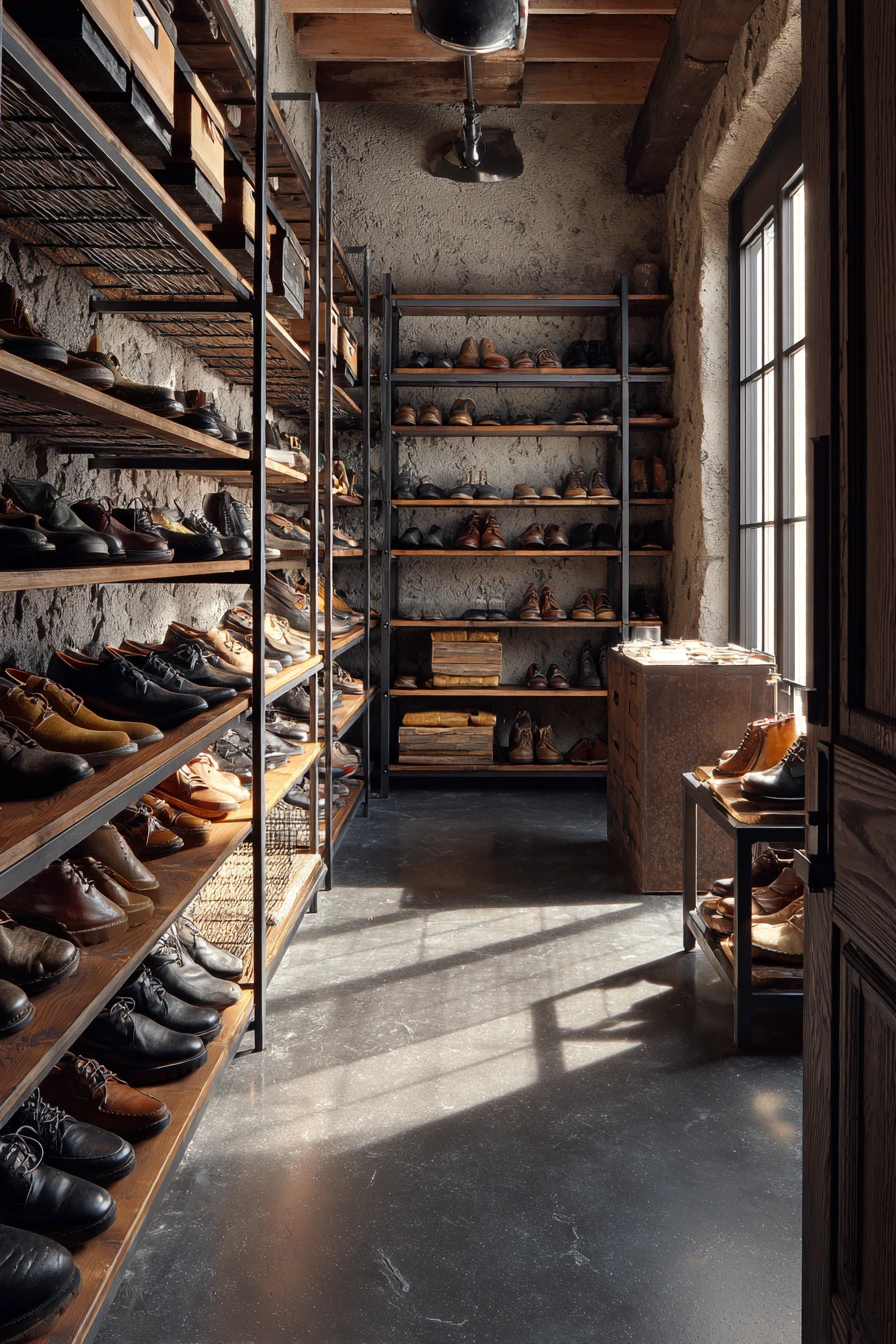
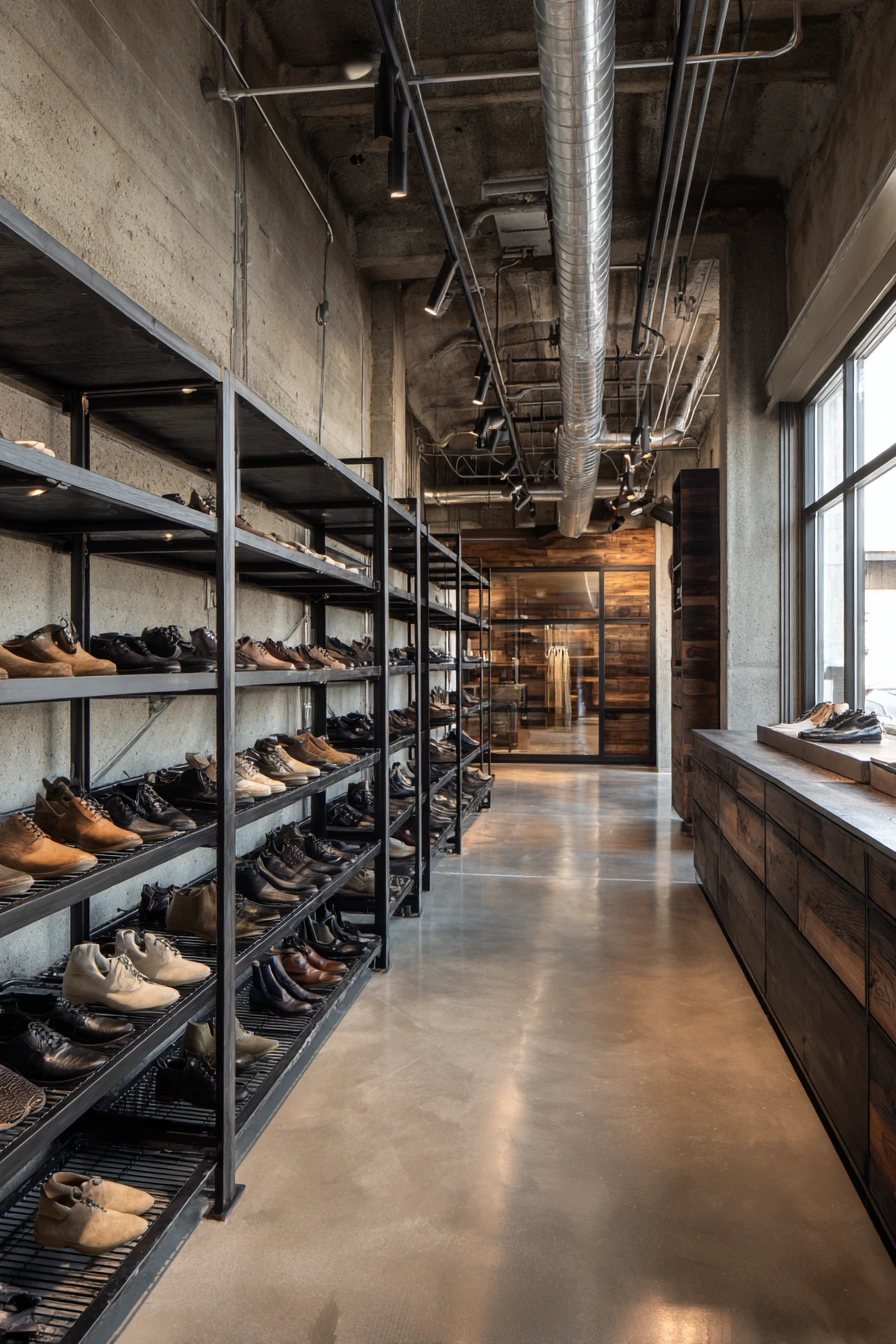
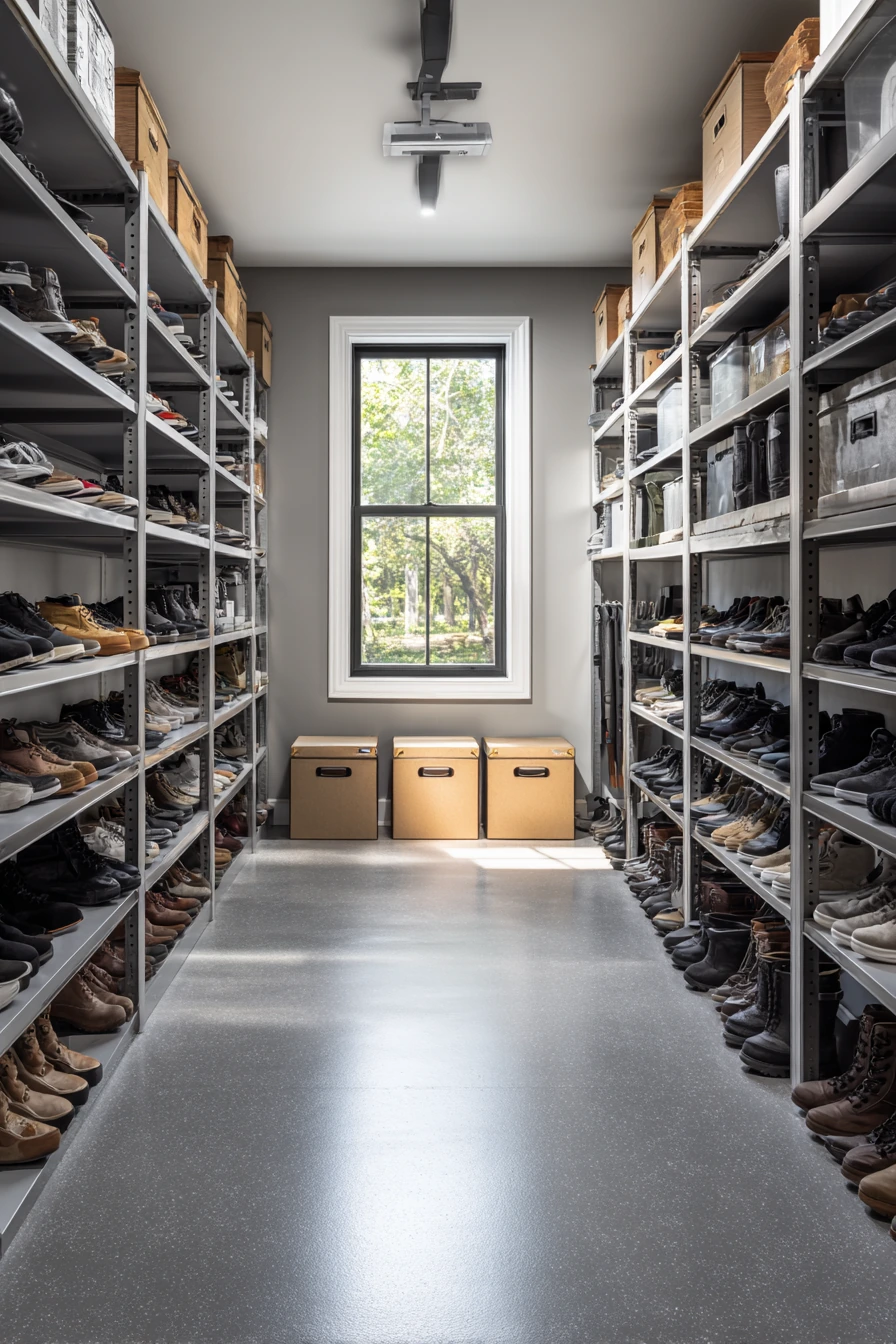
An industrial shoe storage garage leans into raw materials and open storage. Metal shelving units handle heavy use, and exposed concrete walls make scuffs less noticeable. Dark wood accents soften the look so it feels intentional, not unfinished.
To set it up, choose open racks with adjustable shelves. Keep the lowest level for the dirtiest shoes, like yard boots and work shoes. Put everyday sneakers at mid height for quick access. Polished concrete floors are easy to clean, but they show grit, so plan for a sweep zone with a small broom and dustpan nearby.
To style it, stick to a simple palette: black metal, dark wood, and neutral shoe trays. Use one row for best-looking pairs and store the rest by function. If you want it to feel less stark, add a narrow runner-style mat that can be shaken out. Natural daylight will highlight texture, so keep clutter off the floor and limit loose items on shelves.
- Use wire shelves for airflow so shoes dry faster.
- Add S-hooks to the shelf frame for shoe bags or small tools.
- Keep a silicone mat under the wet-shoe zone.
- Use wood shelf inserts if heels get stuck in wire gaps.
- Label shelves with small metal tags for a clean look.
Pro Design Tip: Combine black metal racks with one dark wood top shelf to create a “cap” that makes the storage wall feel finished.
Budget Considerations: Metal garage racks are widely available; add low-cost wood inserts or a stained plywood top to get the industrial look for less.
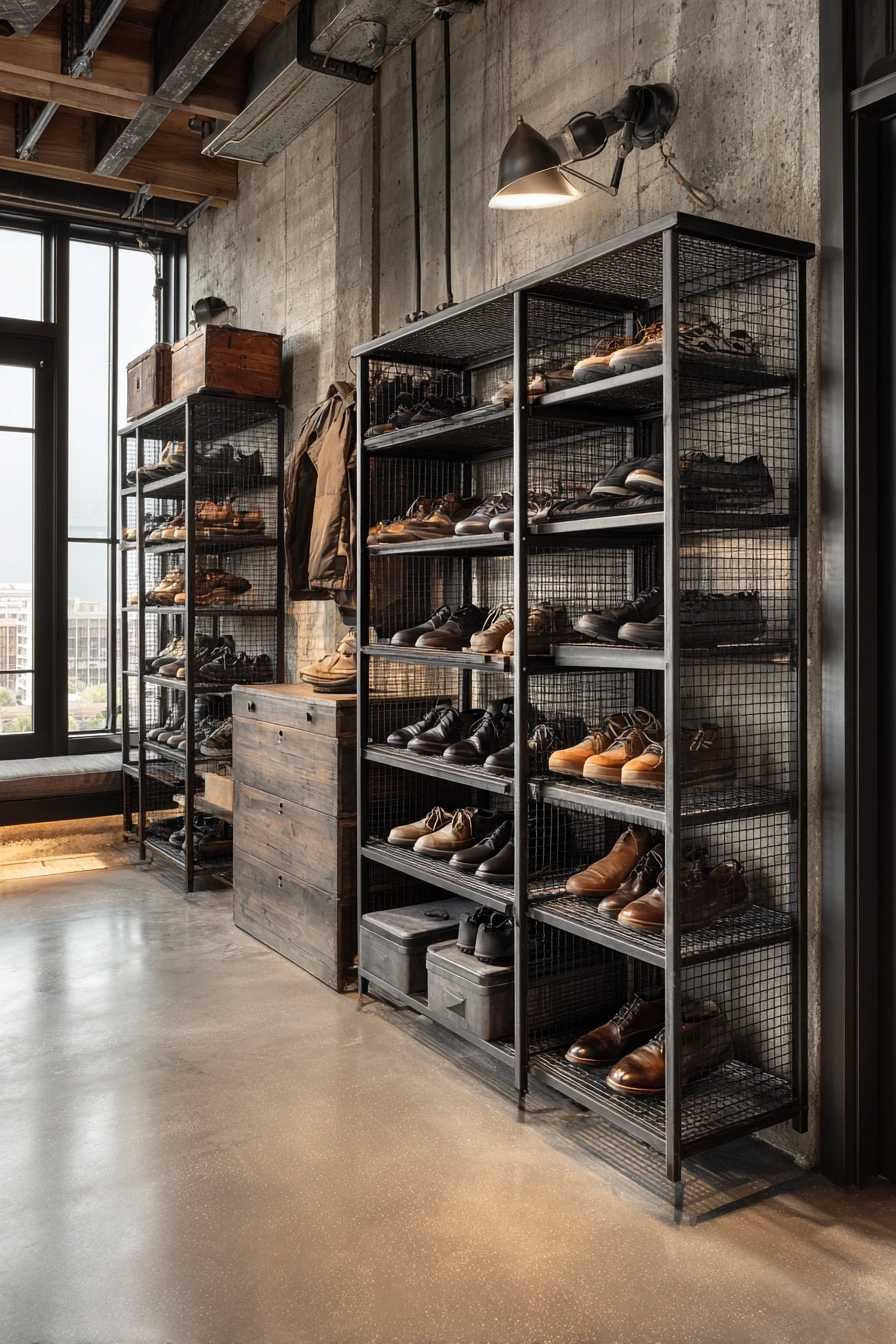

6. Compact Shoe Storage Garage With Vertical Wall Racks


A compact shoe storage garage is all about using vertical space and keeping walkways clear. Wall-mounted racks and slim cabinets store a surprising number of pairs without eating up parking space. Neutral tones and clean lines help the area feel larger, especially in narrow single-car garages.
Start by picking one wall near the door and keeping storage shallow. Slim cabinets can hold shoes sideways or in angled compartments. Vertical racks work well for sneakers and flats, and they keep pairs visible so you do not double buy items you already own. Add a small drip tray at the bottom so wet shoes do not mark the wall or floor.
To style it, keep the wall light, like white or pale gray, and use matching hang rails or rack finishes. If you want a more polished look, add a thin wood ledge as a top shelf for keys and sunglasses, but keep it minimal. Natural sunlight makes the space feel clean, so keep the rack layout symmetrical and avoid random gaps.
- Use slim, shallow storage to protect walking space.
- Keep daily shoes at eye level for fast grab and go.
- Add a small basket for shoe spray and odor absorbers.
- Use vertical dividers to prevent pairs from sliding together.
- Set a weekly rule to move outgrown or unused shoes to a donation bag.
Pro Design Tip: Mount racks in repeating rows with equal spacing so the wall looks organized even when shoes are not perfectly aligned.
Budget Considerations: Wall racks are usually cheaper than cabinets; start with racks and add one slim closed unit later to hide clutter.
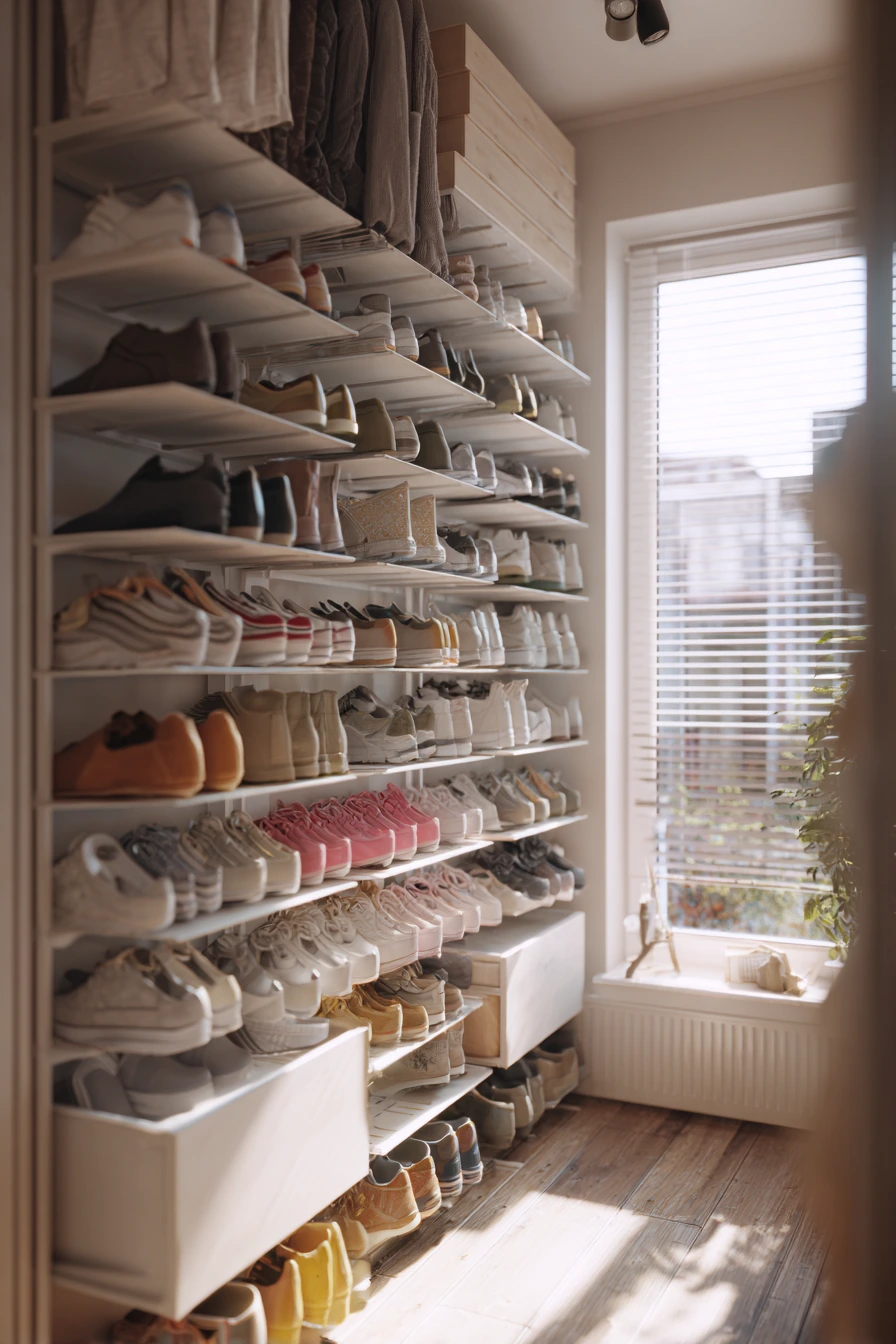
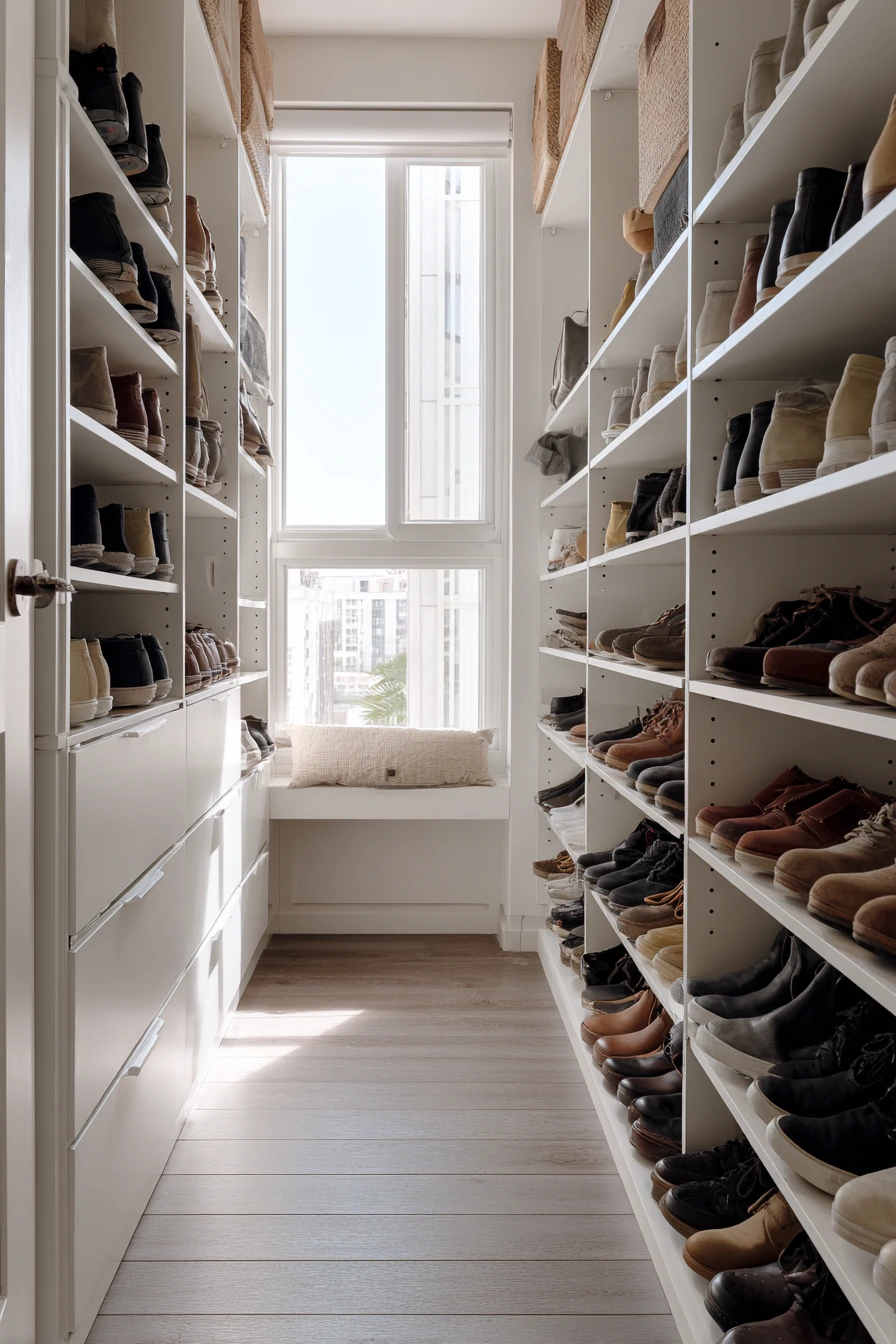
7. Warm Wood Shoe Storage Garage With Custom Timber Shelving
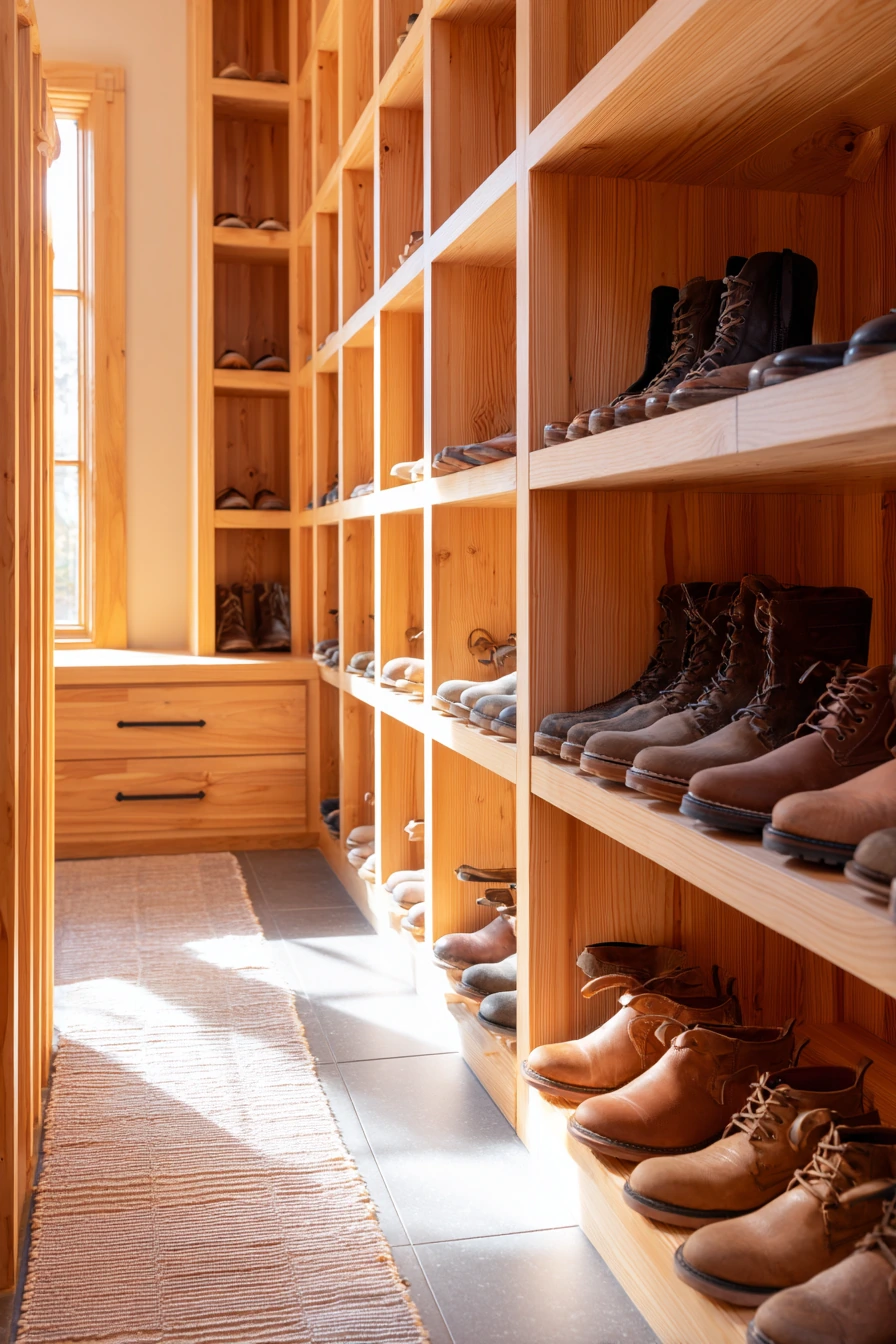
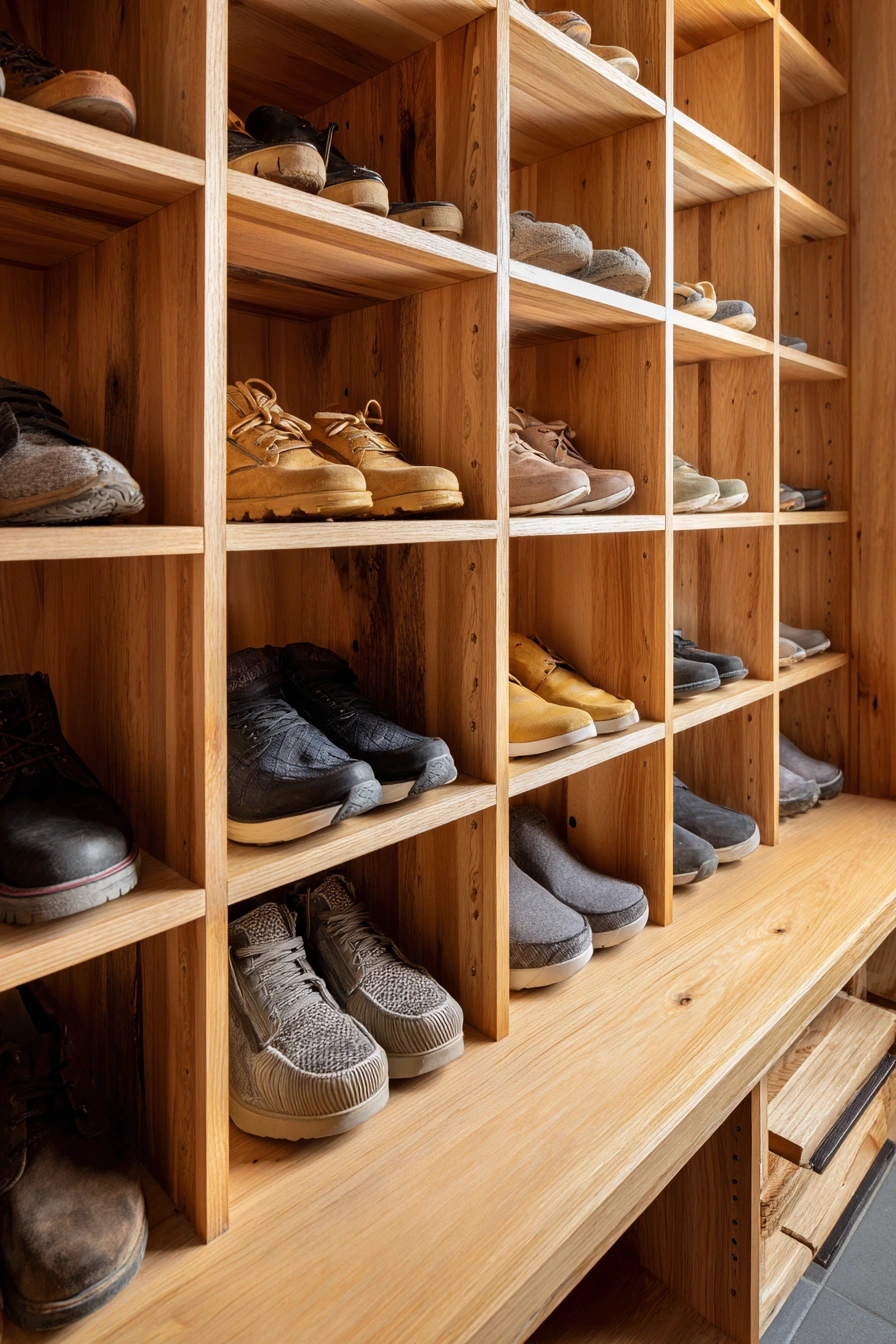
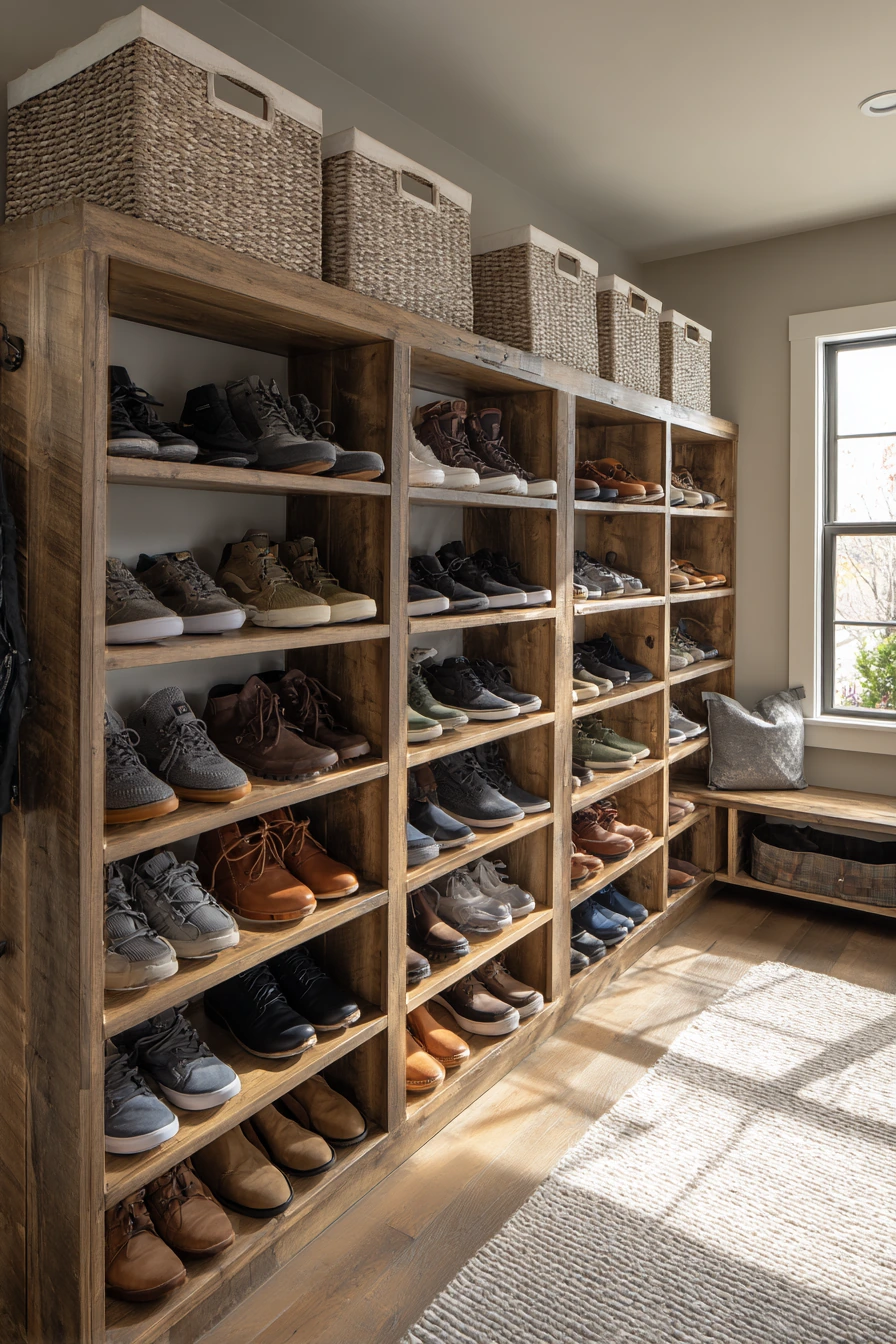
A warm wood shoe storage garage brings a cozy feel to a place that often looks cold. Custom timber shelving and built-in storage units add texture with visible wood grain. This style works well if the garage connects directly to the home and you want it to feel like part of your living space.
For function, design shelves with mixed heights. Use taller spaces for boots and shorter cubbies for sneakers. Add one closed cabinet or drawer for shoe care supplies, extra laces, and seasonal items. Sunlight will highlight wood tones, so choose a clear or light stain that matches the rest of your home trim.
To style it, keep the shoe wall simple and let the timber be the main feature. Use matching wooden hangers or hooks for hats and light jackets. Add a small neutral mat and a bench in the same wood tone to make it feel like a mini mudroom. If you have different shoe colors, group them by shade so the wood stays the focus.
- Seal wood shelves to resist scuffs and moisture.
- Add a boot tray to protect the lower shelf area.
- Use basket bins for gloves, scarves, and shoe cloths.
- Keep a cedar block or sachet in closed storage for freshness.
- Rotate pairs seasonally to reduce clutter on the main shelves.
Pro Design Tip: Use the same wood species for shelves and bench, then repeat it in small details like labels or hooks to make the area feel built-in.
Budget Considerations: Solid timber can be pricey; plywood with edge banding and a good stain can give a similar warm look for less.
8. Grid-Style Shoe Storage Garage Wall With Modular Units
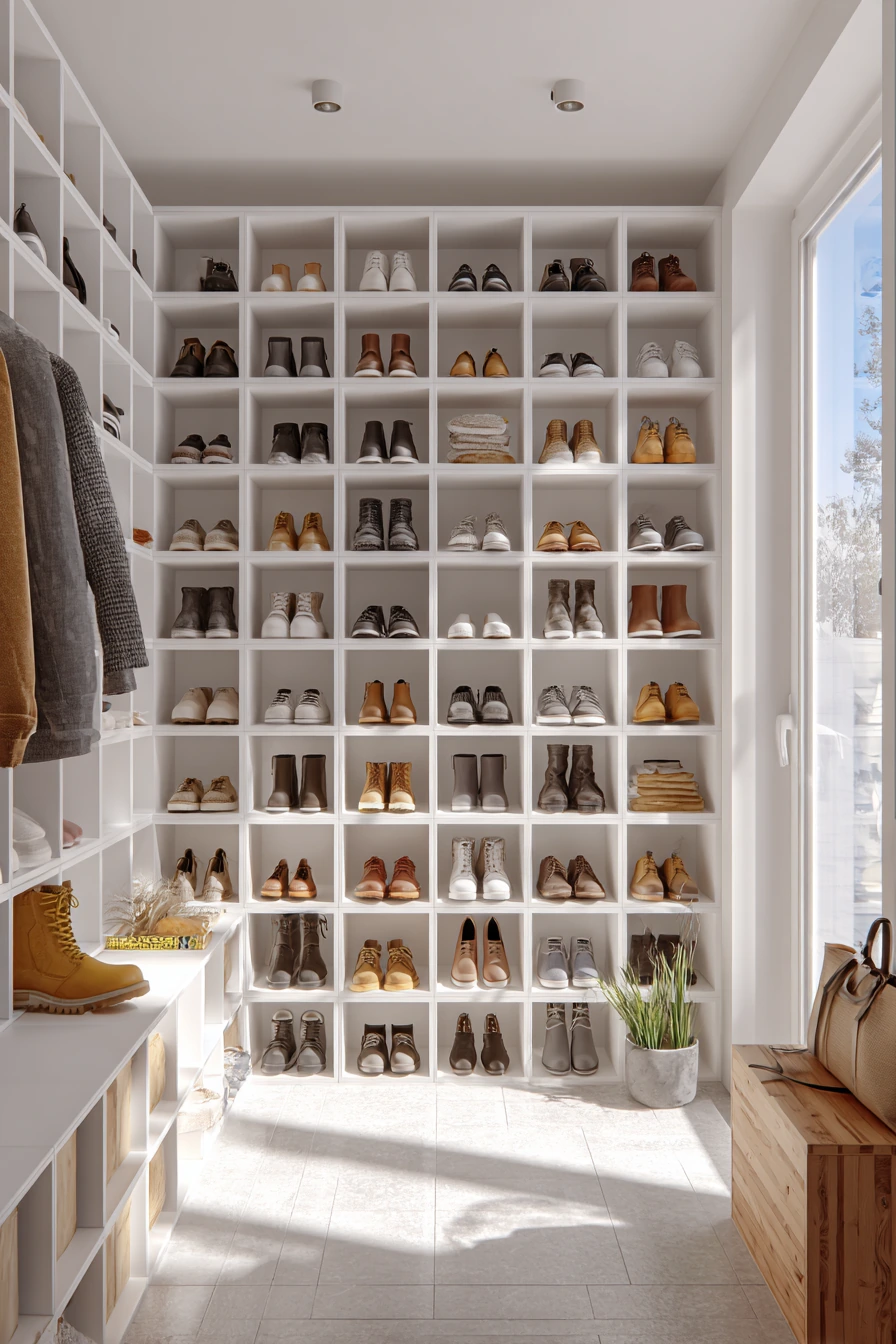
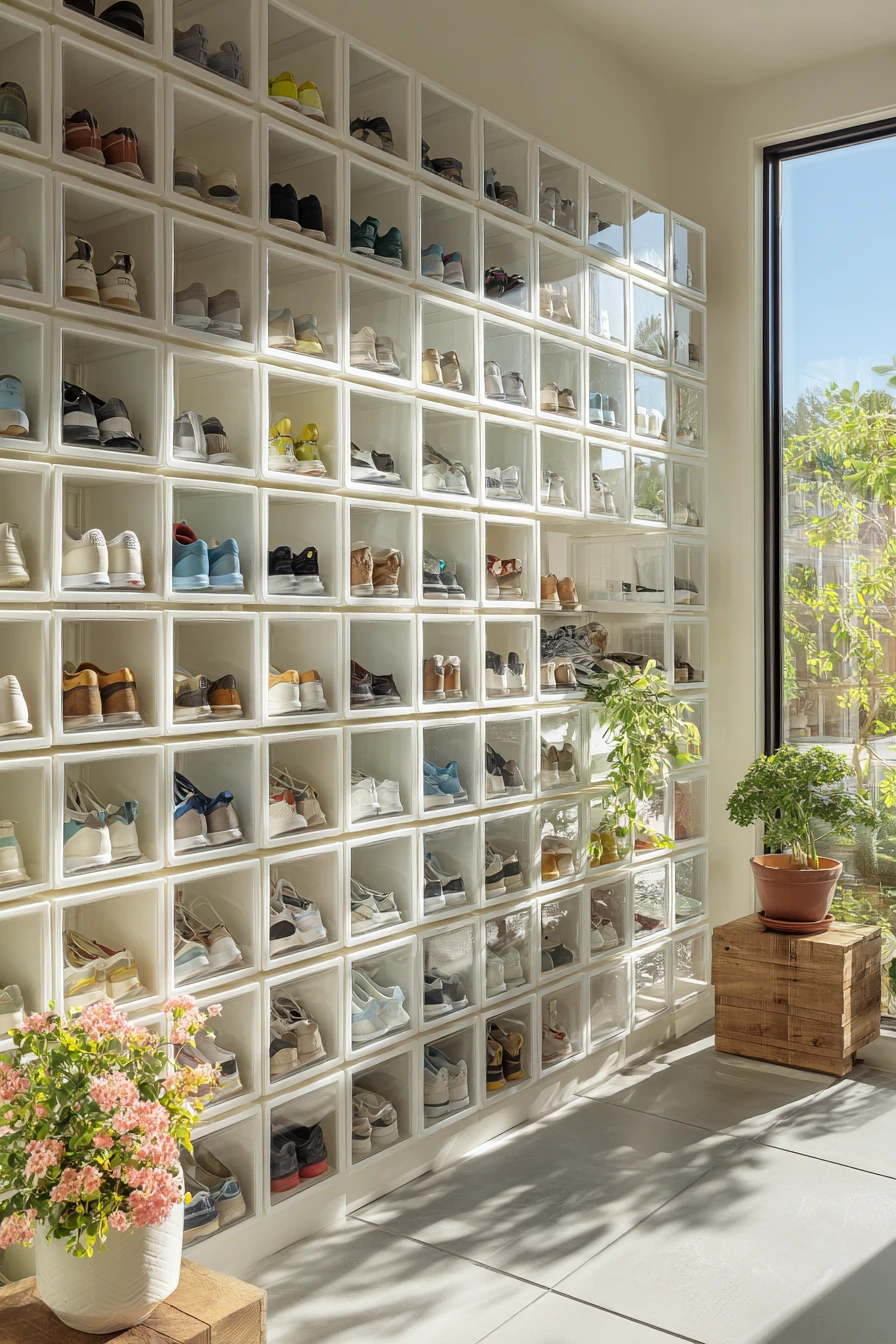
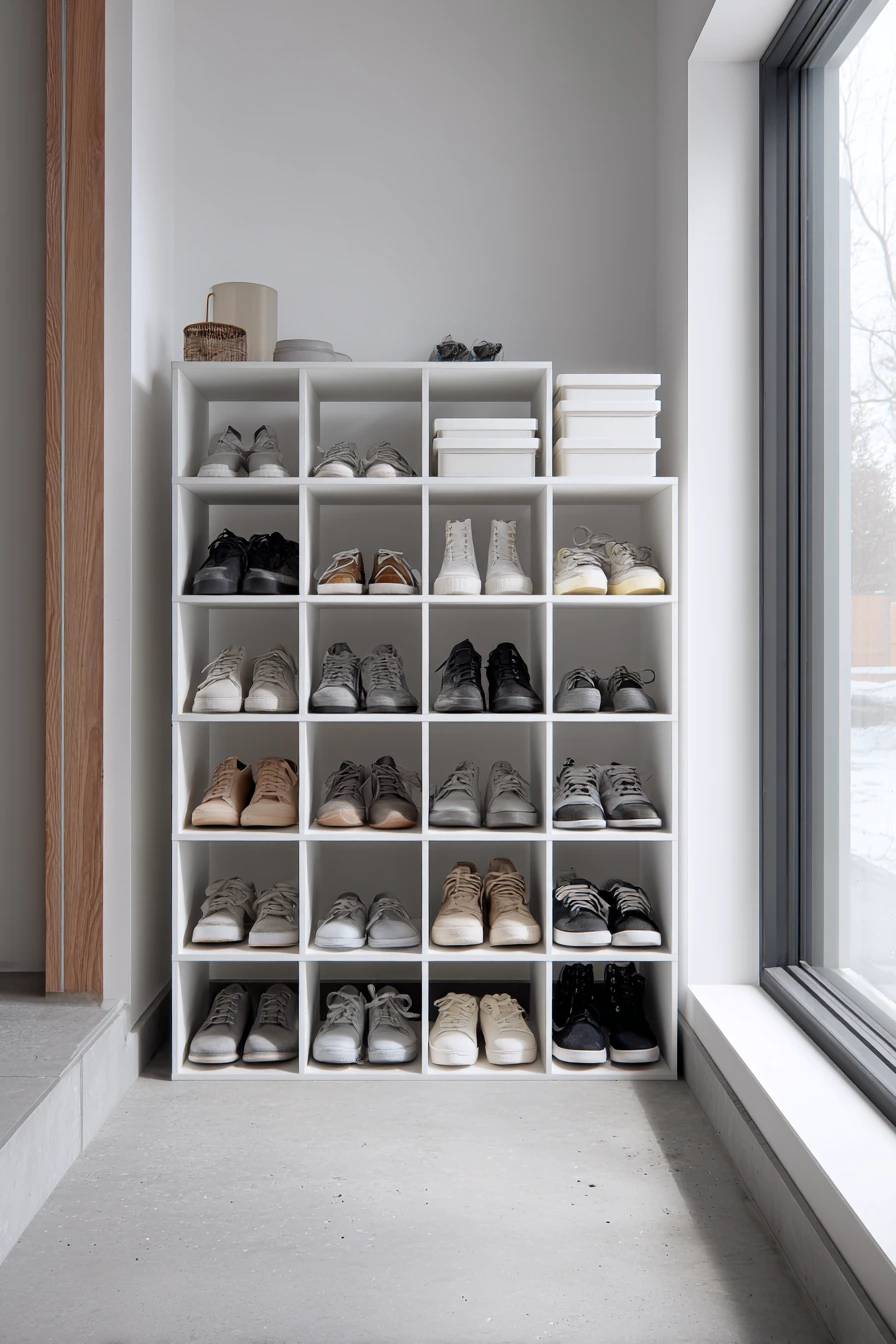
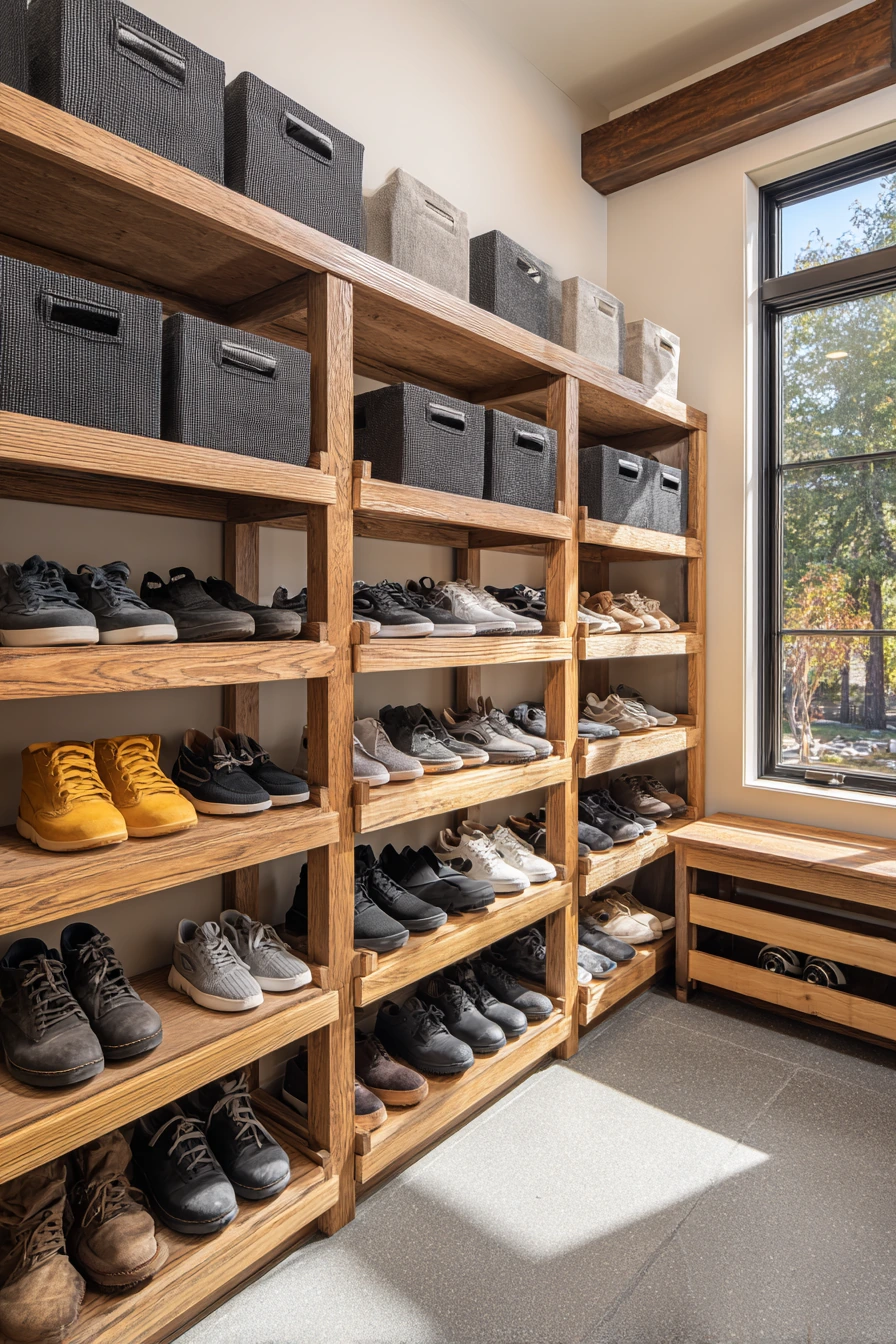
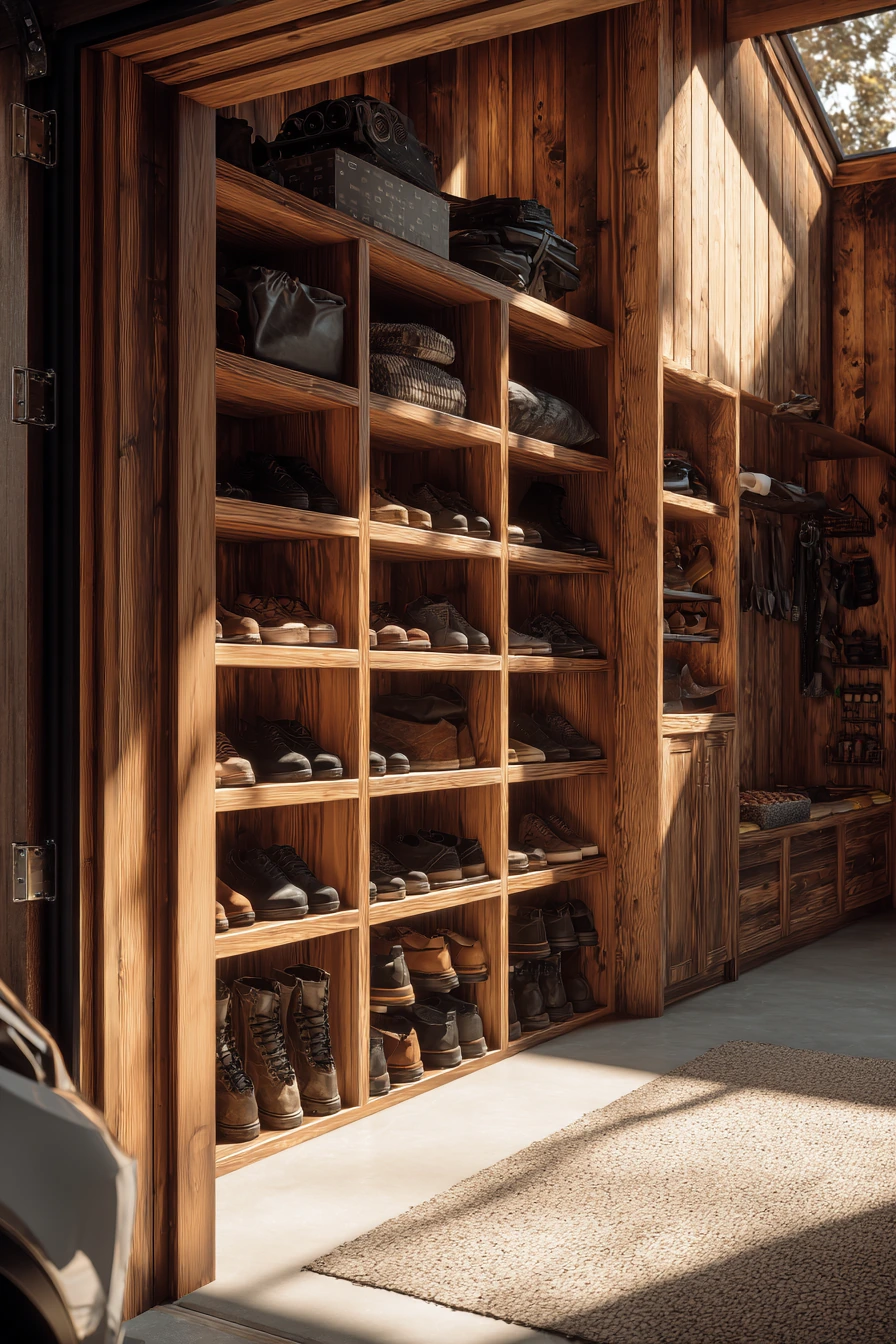
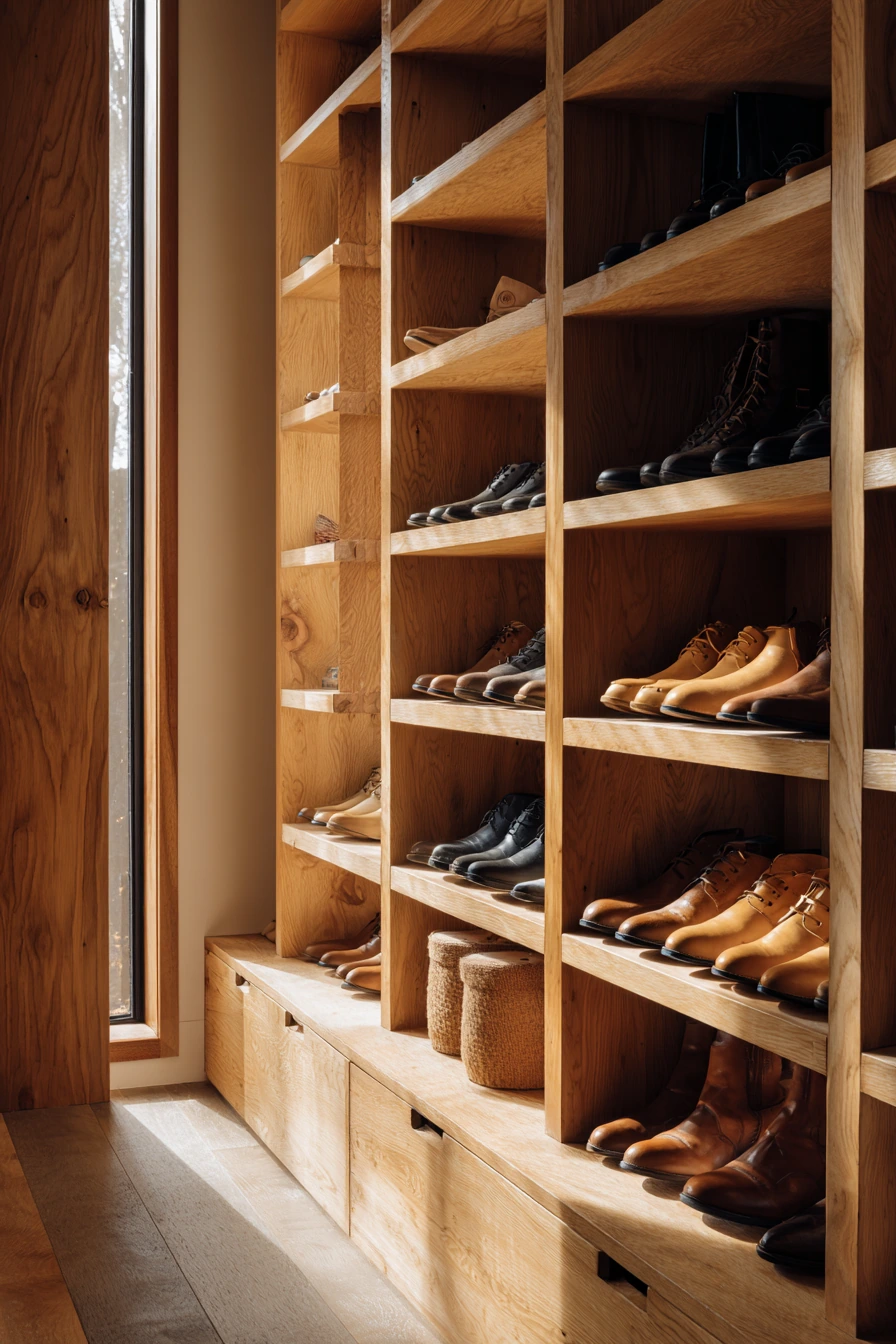
A grid-style shoe storage garage wall creates instant order. Each shoe has its own spot, which reduces piles and makes it easy to see what is available. Modular storage units are easy to expand, so this style works for growing households and changing routines.
To set it up, map the grid by shoe type. Keep standard cubbies for sneakers and flats, and add a section of wider openings for bulky shoes. Light-colored walls and flooring keep the space bright and help the grid look clean. If your garage gets dusty, choose smooth shelf surfaces that wipe down quickly.
To style it, repeat the same container style in a few cubbies, like matching baskets for flip-flops or gym items. Keep the rest open so the grid does not feel heavy. If you want a calmer look, arrange shoes toe-out in the same direction and keep color groups together. Natural sunlight makes the grid pop, so avoid overfilling and leave a few open cubes for visual breathing room.
- Assign one row per person to avoid mix-ups.
- Use a few baskets for small items, but keep most cubes open.
- Reserve a “return” cube for shoes that need cleaning or repair.
- Add felt pads under modular units if they sit on the floor.
- Use simple labels on the inside edge to keep the front clean.
Pro Design Tip: Keep the grid centered on the wall and align it with the door or window lines so it looks balanced in photos and in real life.
Budget Considerations: Modular cubes are often budget friendly; choose one sturdy set and expand with matching units as needed instead of buying everything at once.
9. Garage Entry Shoe Storage Zone With Bench, Racks, and Cabinets
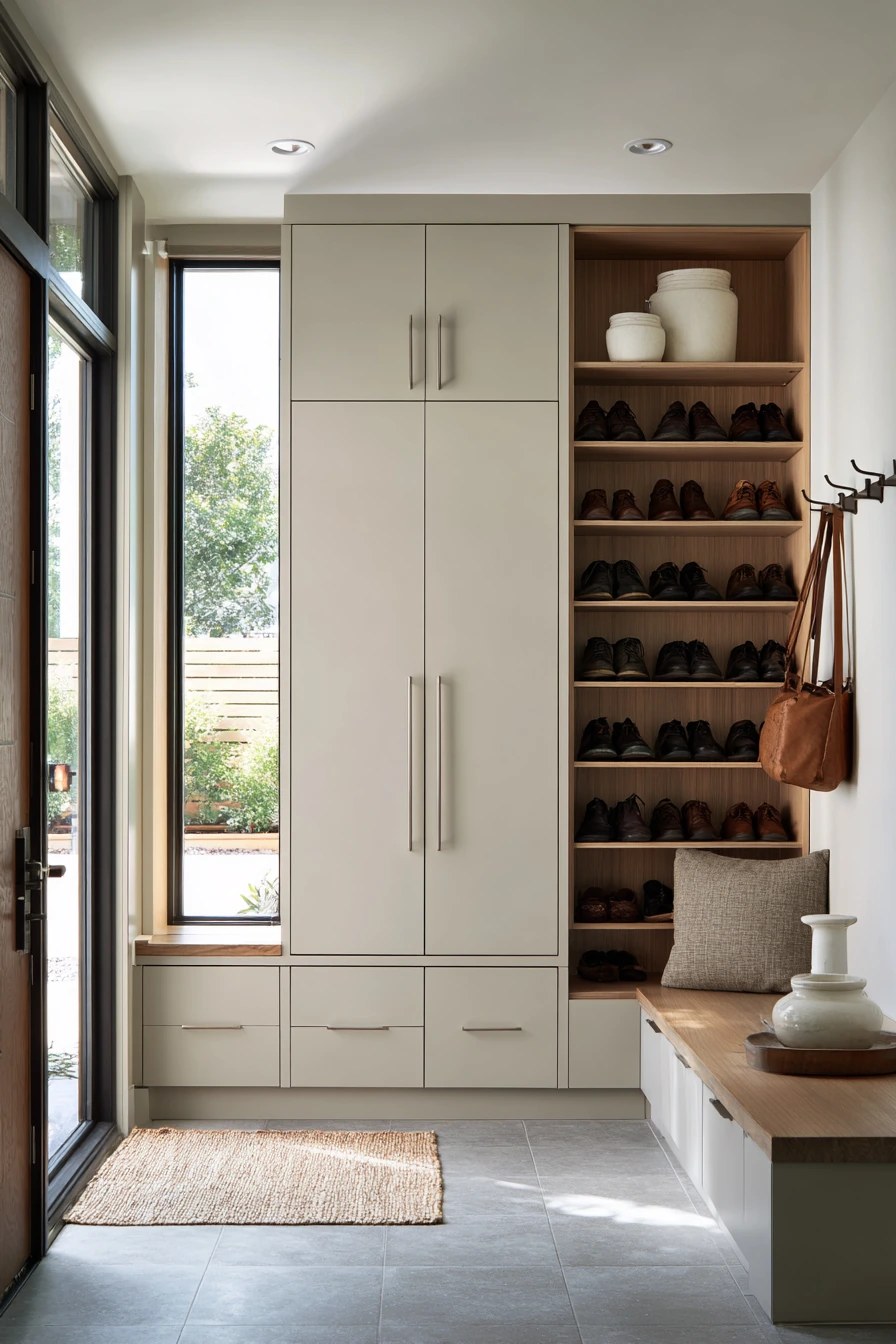
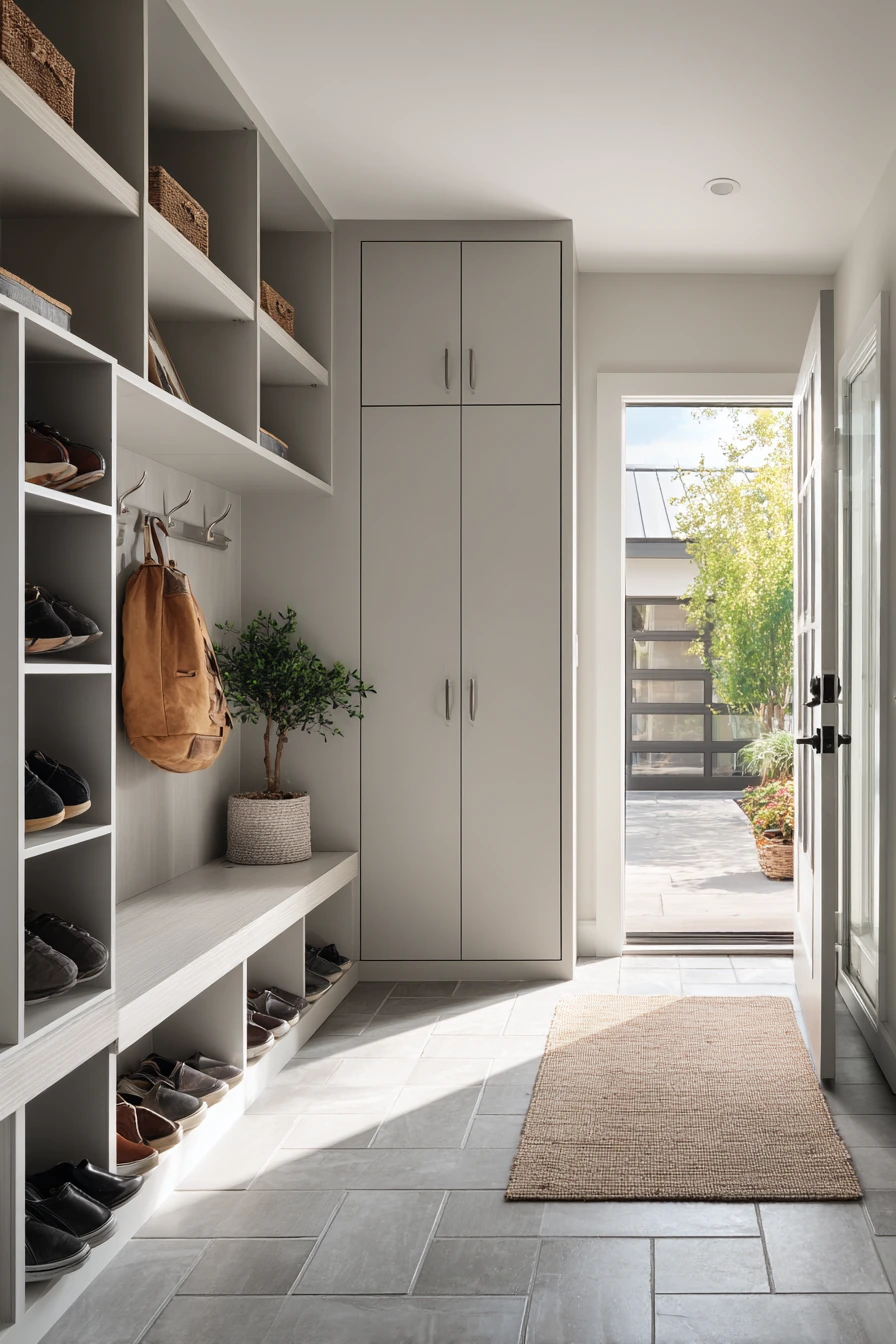
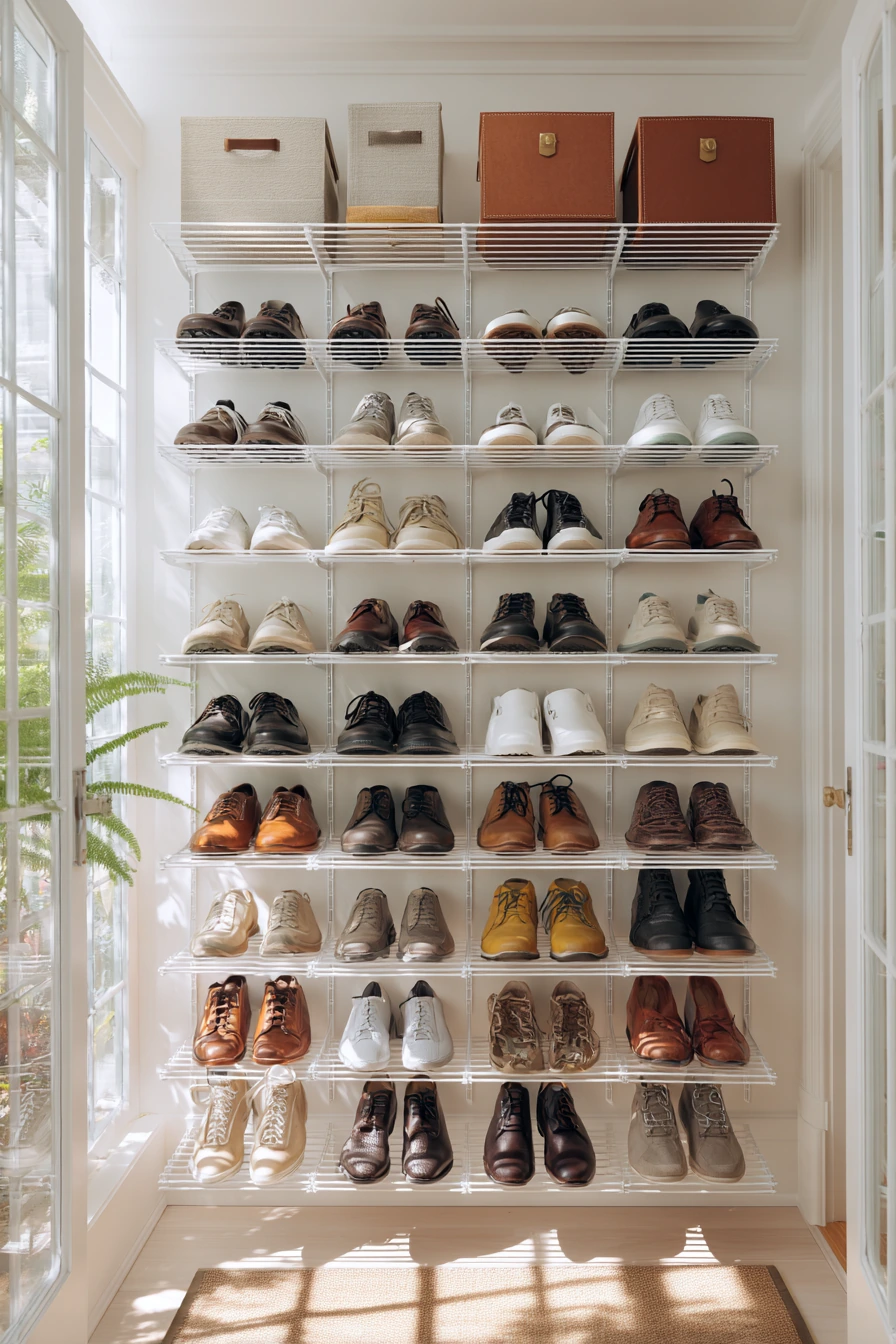
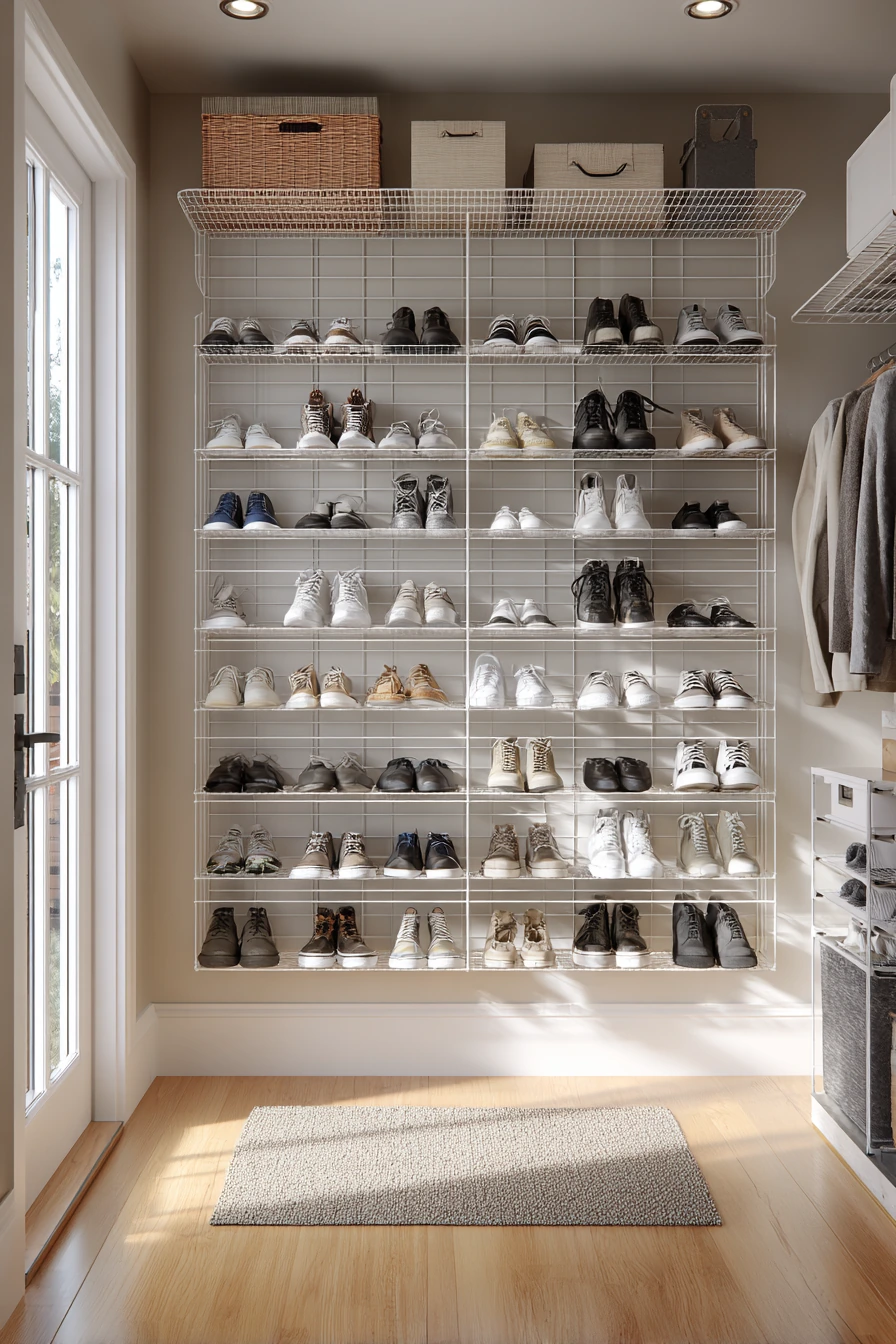
A garage entry shoe storage area works as a transition space between outdoors and your home. It is the spot where shoes come off, bags get dropped, and muddy items get contained. A mix of open shoe racks, closed cabinets, and a small bench makes the routine easy for every age.
Place the bench near the door so people naturally sit to remove shoes. Keep open racks for the most-used pairs, and use closed cabinets for backups and seasonal footwear. Neutral colors and smooth finishes keep the look modern, and they are easier to wipe down. If daylight enters from the garage door, choose cabinet fronts that do not show fingerprints easily.
To style it, add one simple wall hook rail above the bench for jackets and dog leashes. Keep a slim tray on the bench or cabinet top for keys and garage remotes. If you want it to feel more like an indoor mudroom, use a washable runner and matching baskets. This setup also helps Pinterest visitors: it photographs well because it has a clear “entry” story and a clean focal point.
- Use a bench with a lift top or shelf for extra storage.
- Keep a shoe brush and hand wipes in a small drawer or bin.
- Add a boot tray right inside the door for wet days.
- Use one closed cabinet for items you do not want on display.
- Set a rule: only current-season shoes stay in the entry zone.
Pro Design Tip: Choose a bench height around chair height and keep at least 36 inches of clear walking space so the area stays comfortable and safe.
Budget Considerations: You can build this zone with a basic bench and a simple rack; add closed cabinets later if you need a cleaner look.


10. High-Capacity Shoe Storage Garage for Large Collections


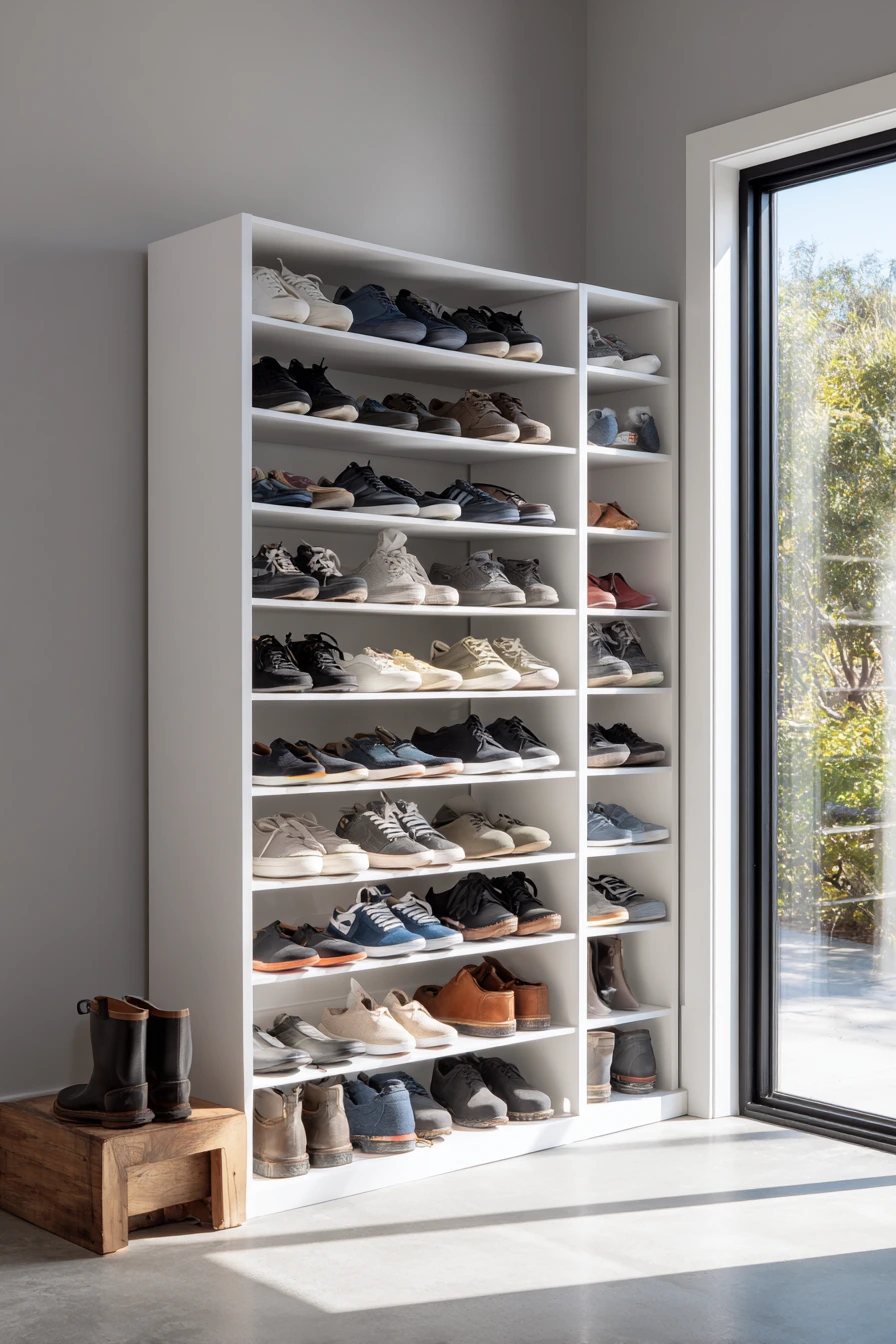
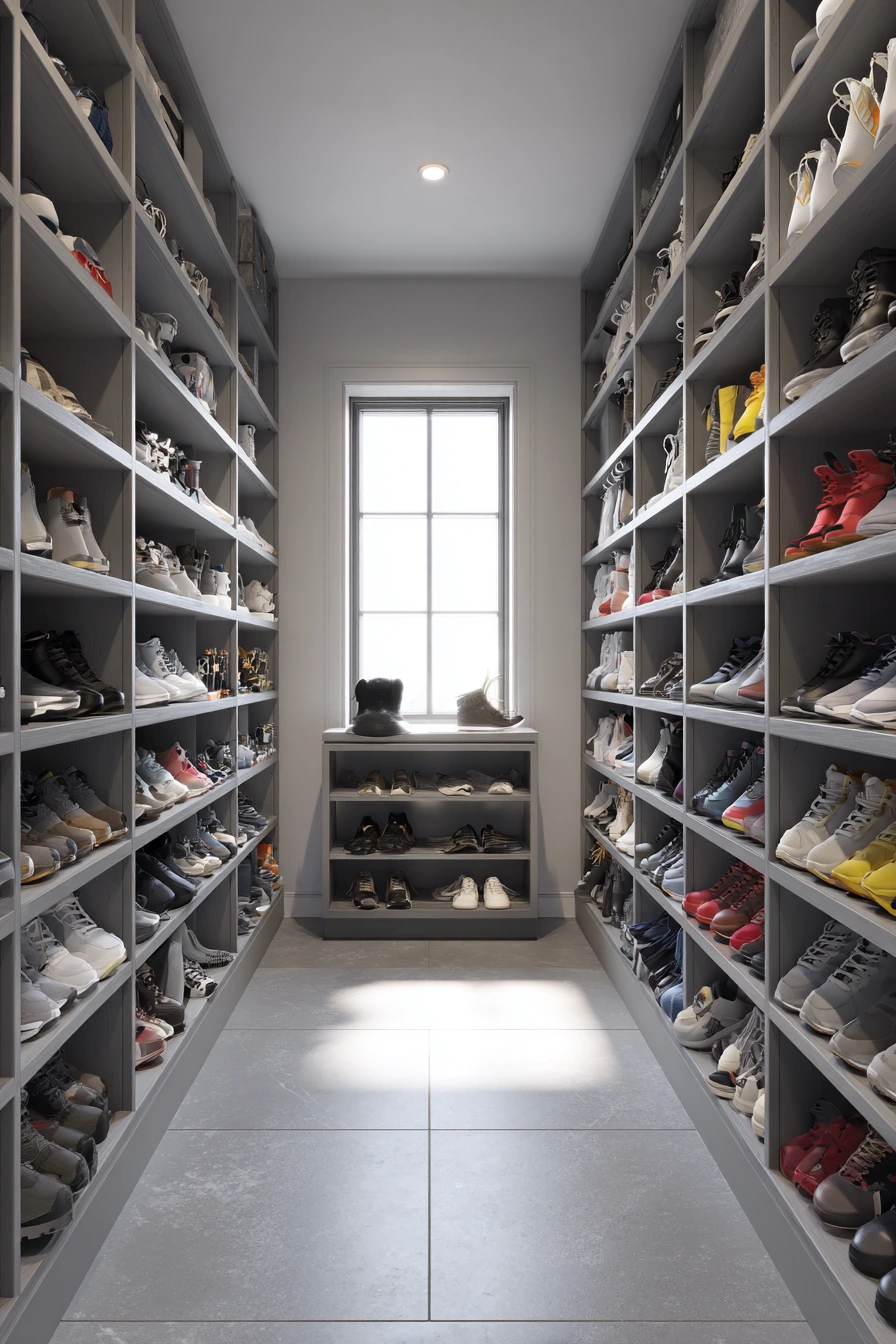
A high-capacity shoe storage garage is for households with many pairs, collectors, or families who want everything in one spot. Multi-level shelving creates a structured system, and consistent spacing makes it easier to keep order. When every shelf has a purpose, shoes do not end up in random stacks.
Start by counting pairs and deciding how many you want in this space. Create sections for daily rotation, special occasion shoes, sports pairs, and off-season storage. Light gray walls and durable flooring keep the room feeling modern and not too busy, even when shelves are full. Add a simple inventory rule: if a new pair comes in, an old pair gets donated or moved to long-term storage.
To style it, keep the shelves uniform and avoid mixing too many different organizers. Use matching clear boxes for rare or delicate shoes, and keep everyday items open for quick access. If sunlight hits the shelves, store leather and bright colors away from direct light. Add a small step stool if you use the top shelves often, and keep the floor clear so cleaning is fast.
- Use consistent shelf heights for a cleaner, more organized look.
- Store least-used shoes on the highest shelves.
- Add clear labels for categories to speed up daily routines.
- Use drop-front clear boxes for pairs you want protected and visible.
- Keep a donation bag nearby to prevent overflow.
Pro Design Tip: Design the shelves as repeating bays with the same widths so the wall looks intentional and stays easy to maintain as the collection changes.
Budget Considerations: High-capacity systems can be built in phases; start with heavy-duty garage shelving and upgrade to uniform boxes and labels over time.
A shoe storage garage does not need to be complicated. The best setup matches your daily routine, keeps dirty shoes contained, and makes it easy to put pairs back.
Choose one of the styles above, copy the layout ideas, and set simple rules for sorting and rotation. With a few shelves, labels, and a cleaning zone, your garage can stay organized and easy to use.
FAQ
What is the best shoe storage for a garage? Wall shelving or modular cubbies work well because they keep shoes off the floor and make pairs easy to see.
How do I keep garage-stored shoes from smelling? Let shoes dry before storing, use airflow-friendly racks, and add odor absorbers like charcoal bags or baking soda packs.
Should I use open racks or closed cabinets? Open racks are best for daily use and drying. Closed cabinets are better for hiding clutter and protecting special shoes from dust.
How many inches should shoe shelves be? Many sneakers fit on 8 to 10 inch tall shelves. Boots often need 14 to 18 inches, depending on height.
How do I organize shoes for a family? Assign each person a row or bin, keep kids storage low, and maintain one “today” rack for the most-used pairs.
What flooring is easiest for a shoe storage garage? Epoxy and sealed concrete are easy to sweep and wipe, and they handle wet shoes better than unfinished surfaces.