Looking for bathroom flooring ideas that look good and handle real life. The right floor can make a small bathroom feel bigger, safer, and easier to clean.
This guide breaks down 10 popular styles, from warm oak-look planks to checkerboard tile, pale stone, patterned cement, and marble mosaic. Each one includes simple styling ideas you can copy.
You will also get practical notes on comfort, water resistance, and what works in busy mornings or slow evening routines. If you came from Pinterest, these are the details that help you recreate the look in your own home.
Each section ends with one pro design tip and one budget note, so you can plan your remodel or quick refresh with fewer mistakes.
1. Warm Oak-Look Flooring for a Small Bathroom
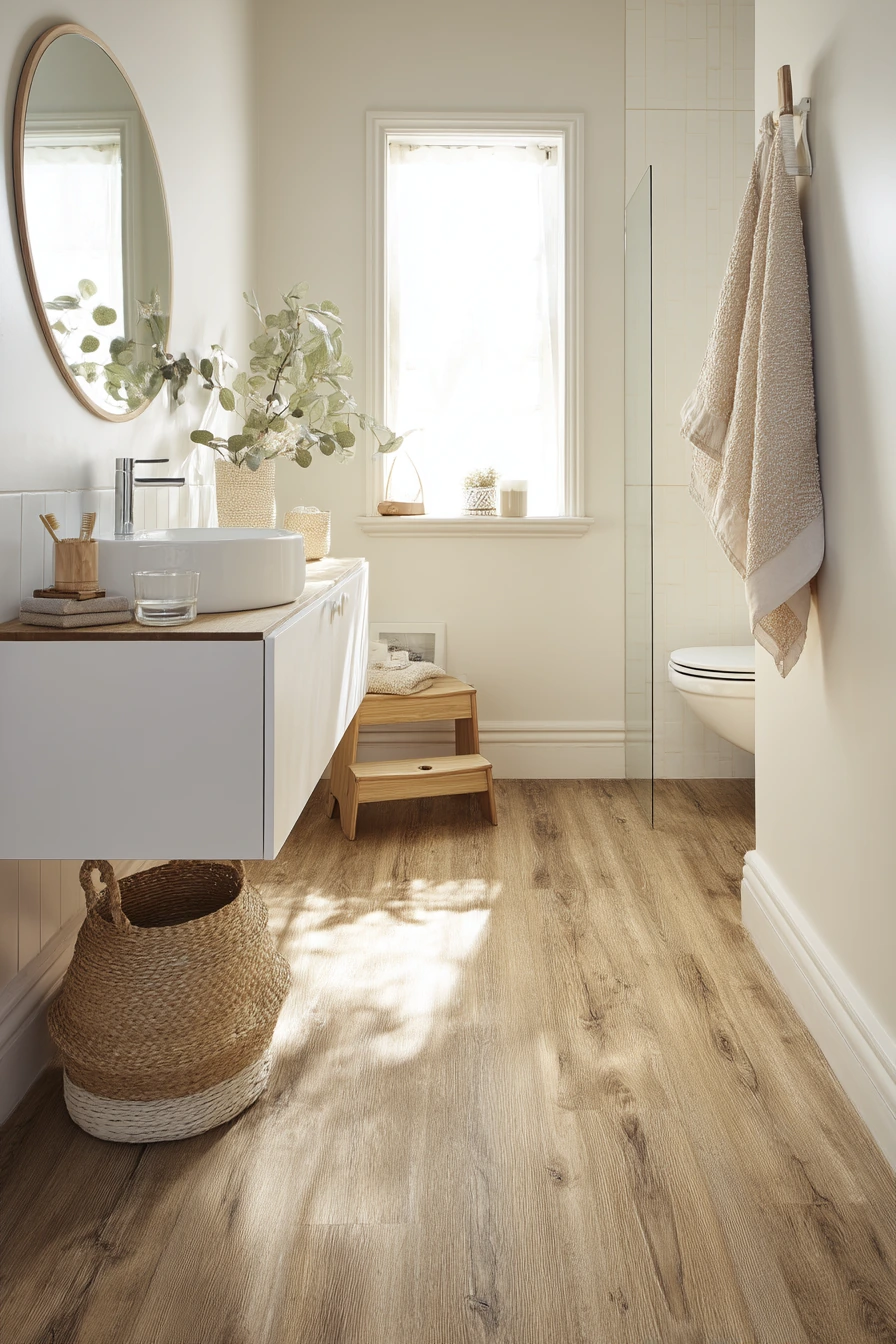
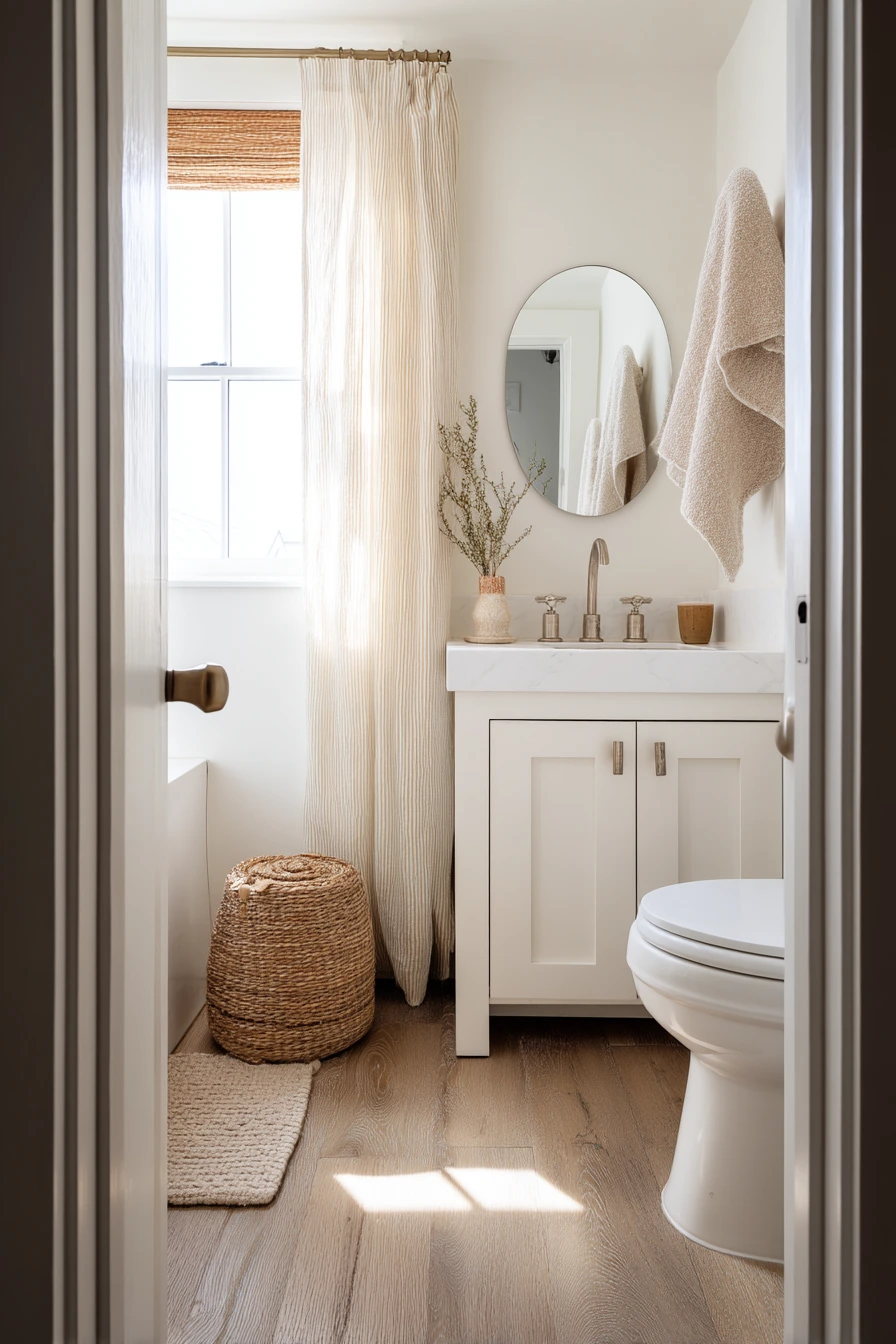
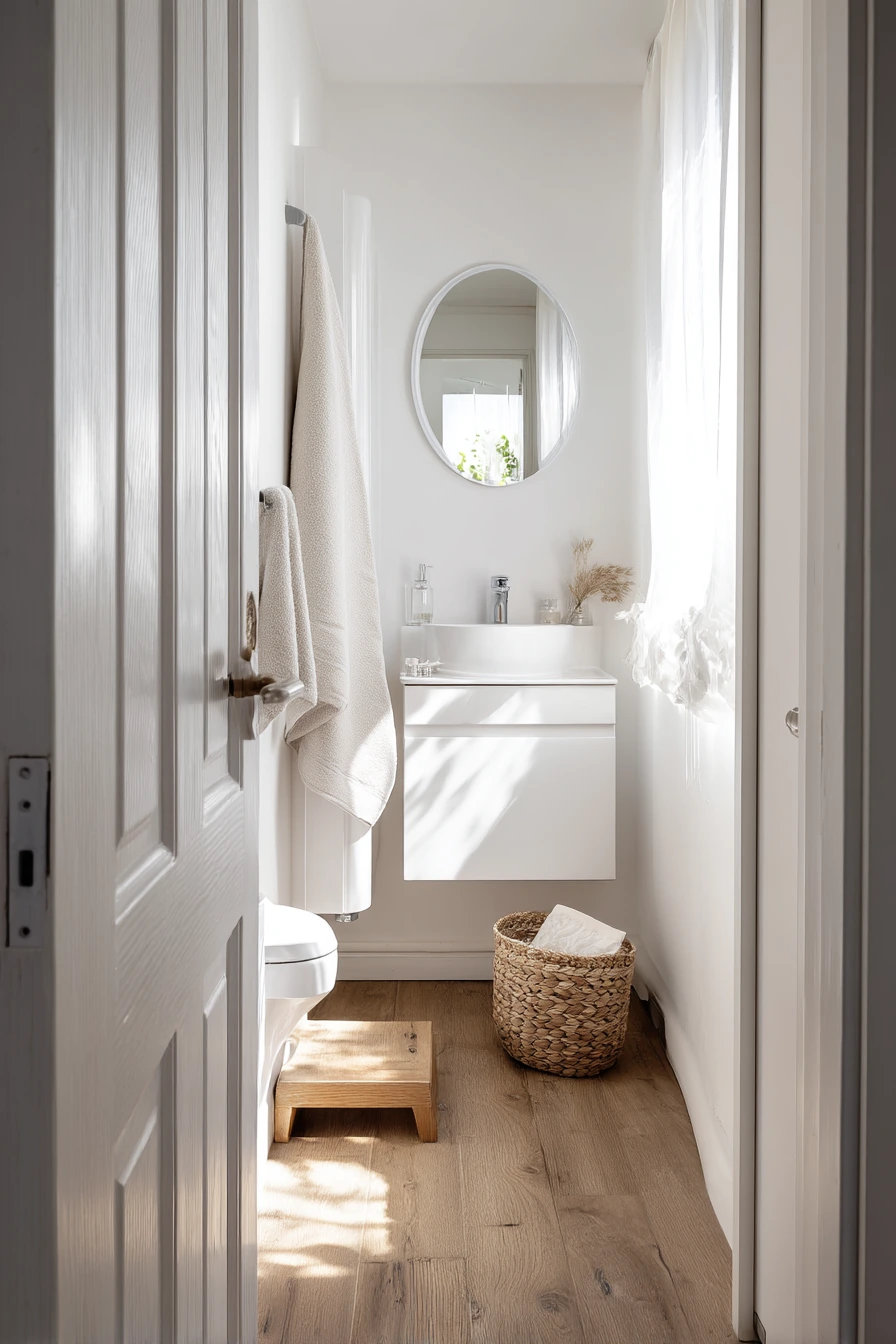
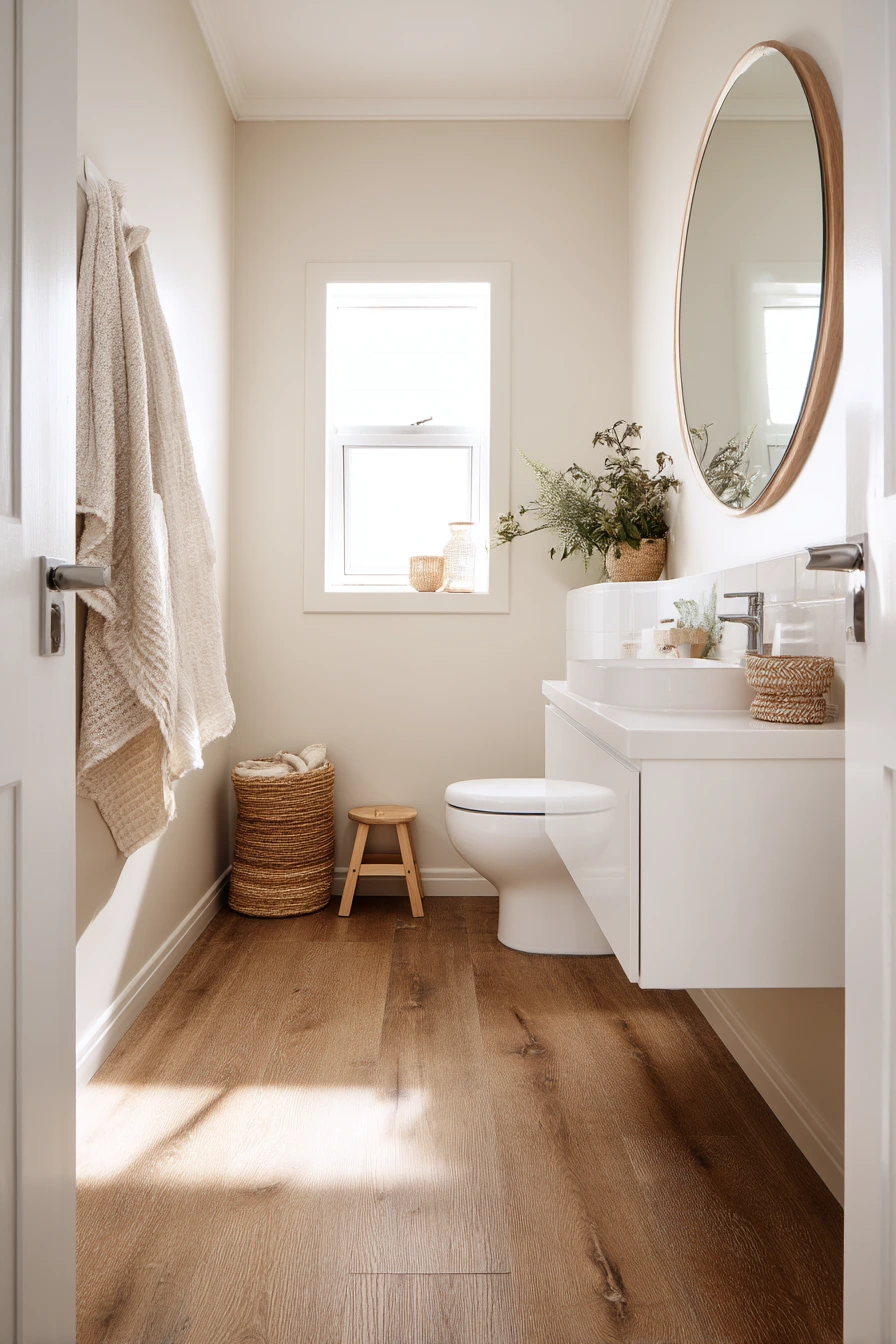
Warm oak-look flooring is a smart pick when you want a small bathroom to feel soft and welcoming. The wood tone adds warmth against a slim white vanity and a rounded mirror, and it still works with clean, simple colors. In a compact layout made for busy mornings, this flooring style helps the room feel less cold and more lived in.
To keep it realistic for daily use, choose a water-safe option like luxury vinyl plank (LVP) or porcelain planks that mimic oak grain. These handle splashes near the sink, kid step stools, and the occasional half-full water glass on the ledge. Add texture with soft linen hand towels and a woven basket with extra toilet paper, so the space feels airy and tactile instead of bare.
How to style it: keep the palette light and calm. White walls, a simple vanity, and a few practical items like a toothbrush cup make the floor the star. If you get soft window light, let it wash across the planks and add one plant nearby so faint plant shadows show up on the floor. That small detail makes the room look like a real home, not a showroom.
- Pick LVP with a textured finish for slip resistance.
- Run planks the long way to make a narrow room feel longer.
- Use a washable runner near the sink for drips.
- Match hardware to warm tones like brushed nickel or soft brass.
- Choose a basket with a liner so damp items do not touch the floor.
Pro Design Tip: If you want the wood look without swelling risks, choose rigid-core LVP and seal the edges with a bathroom-safe silicone at the tub and vanity line.
Budget Considerations: LVP usually costs less than tile that looks like wood. If your budget is tight, refresh the room with new towels, a round mirror, and a woven basket before changing the floor.
2. Ivory and Charcoal Checkerboard Bathroom Tile
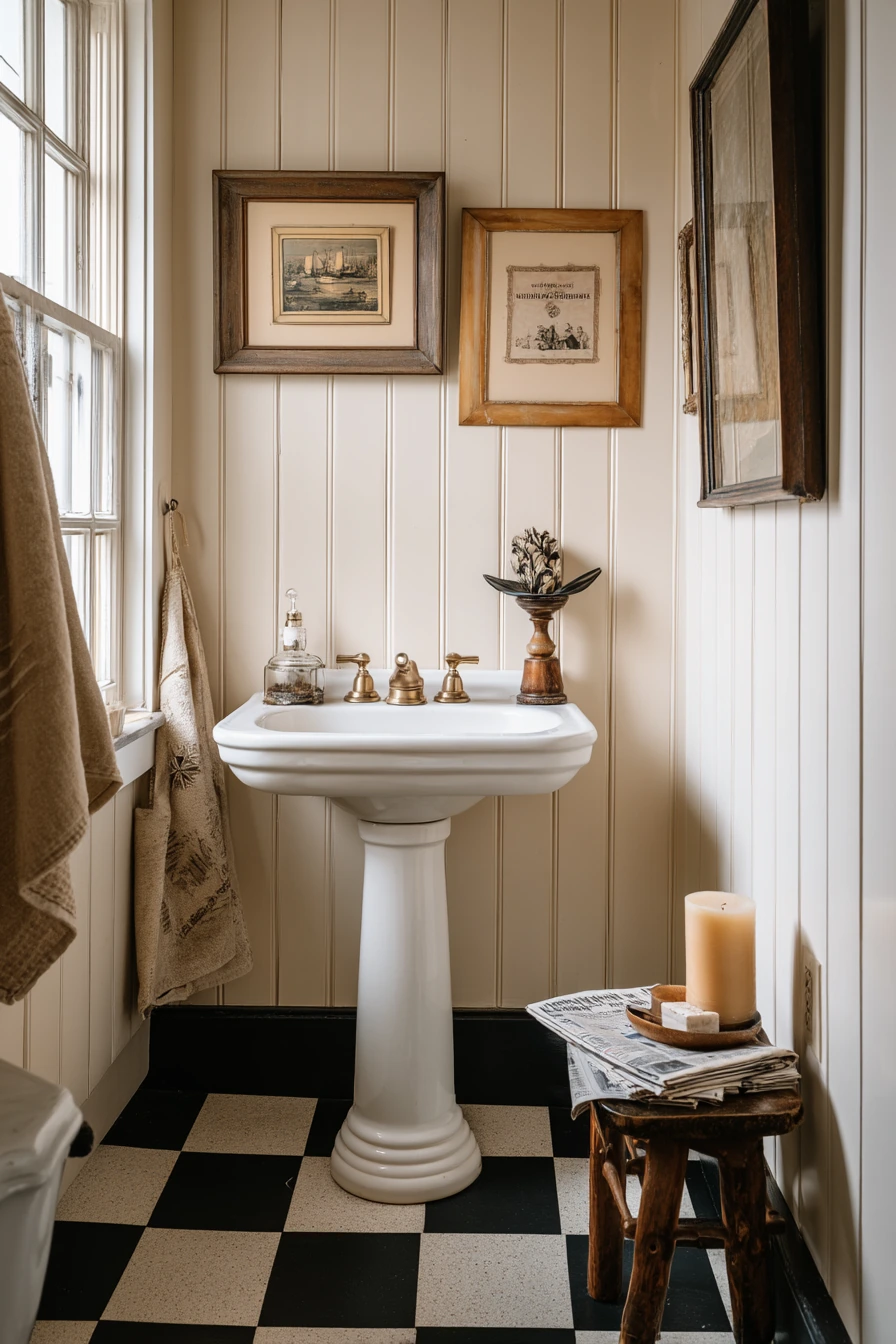
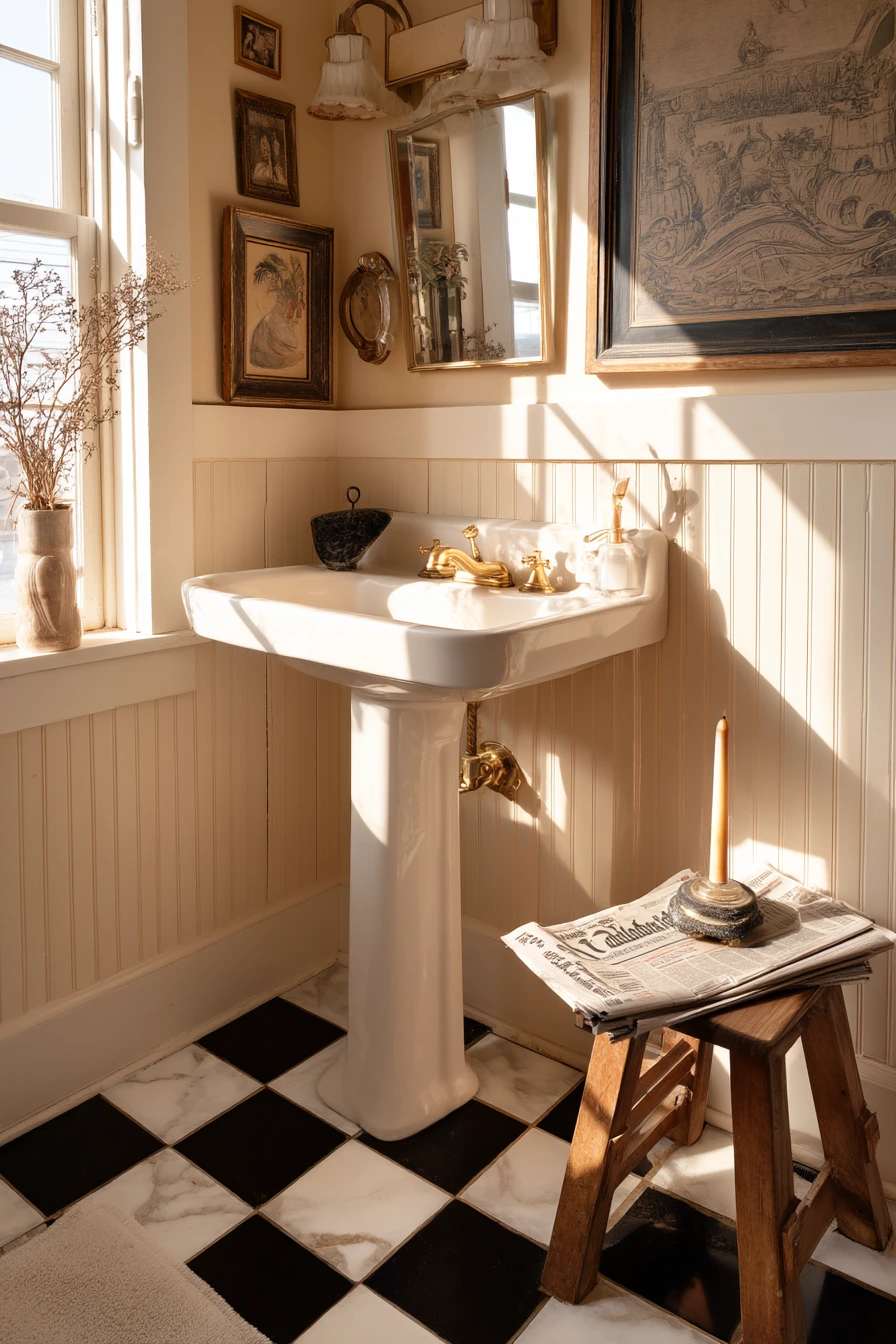
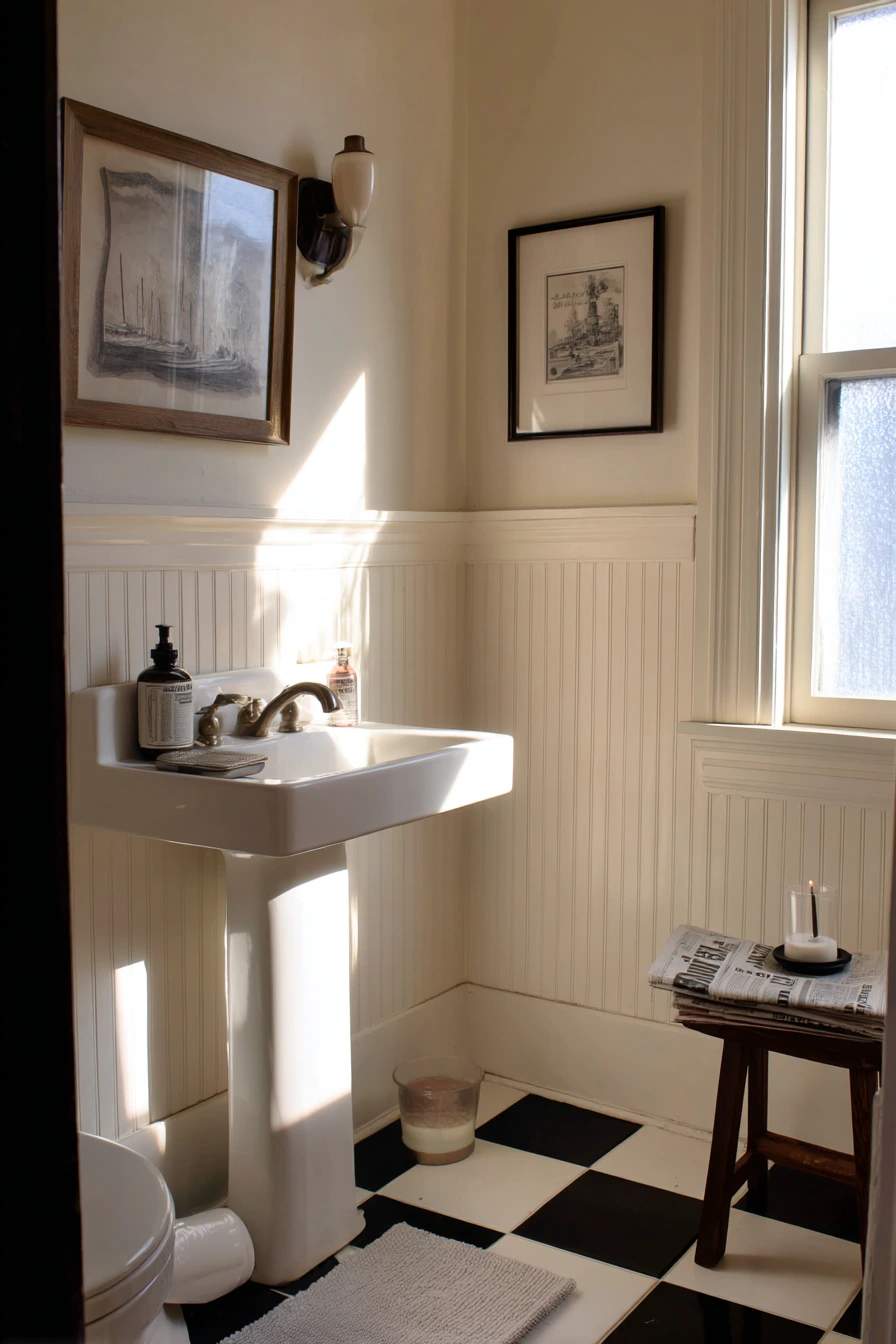
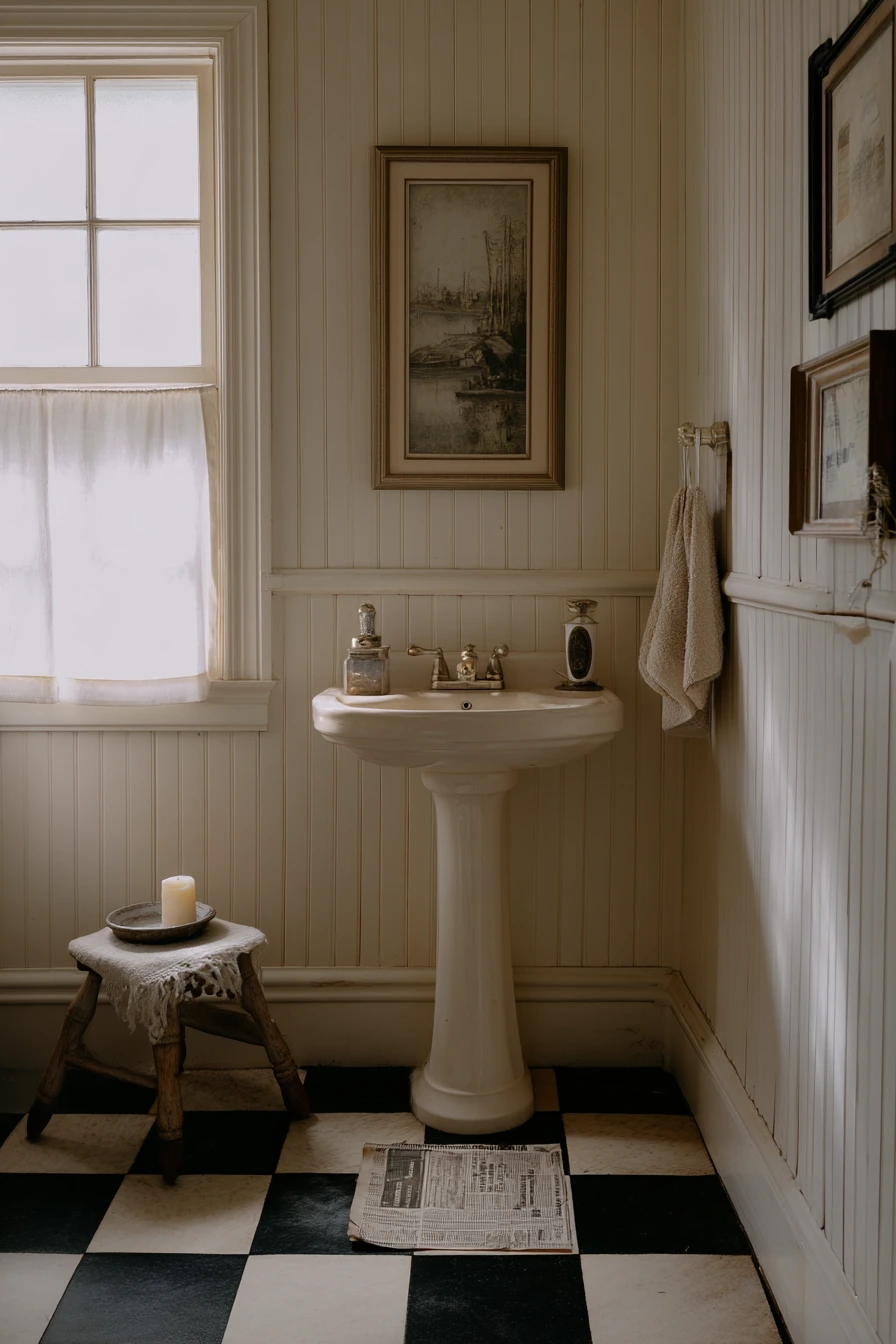
Checkerboard floor tiles in creamy ivory and charcoal bring instant character, especially in older homes. They pair well with a pedestal sink, beadboard walls, and a brass faucet. This look feels crisp and nostalgic, like a quiet morning ritual with a slightly damp bath mat and a candle burned halfway down.
The key is scale and contrast. In a small bathroom, smaller checker tiles can feel busy, so choose a medium size that reads clearly from the doorway. Keep the rest of the room simple: white beadboard, a clean pedestal sink, and a few collected items like framed thrifted art. A ceramic soap dish and a folded newspaper on a stool add a lived-in touch without clutter.
How to style it: repeat the warm metal tone in one or two places, like a brass mirror clip light or picture frames. Use soft textiles so the pattern does not feel harsh. A cotton bath mat in ivory, plus white towels with a thin charcoal stripe, ties it together. If the room gets gentle side window light, the checkerboard will look more relaxed and less stark.
- Choose a matte tile finish to reduce slipping and glare.
- Use charcoal grout on dark squares and light grout on ivory, if possible.
- Keep wall paint warm white so ivory tiles look intentional.
- Add one wood stool for warmth and a spot for daily items.
- Limit decor to a few pieces so the floor stays the focus.
Pro Design Tip: Lay out the checkerboard so a full square (not a tiny cut) hits the doorway sightline. It makes the pattern look planned and more expensive.
Budget Considerations: True encaustic tiles cost more; porcelain look-alikes are usually cheaper and easier to maintain. You can also get the vibe with peel-and-stick checker tiles for a rental-friendly update.
3. Pale Stone Bathroom Flooring with Black Fixtures
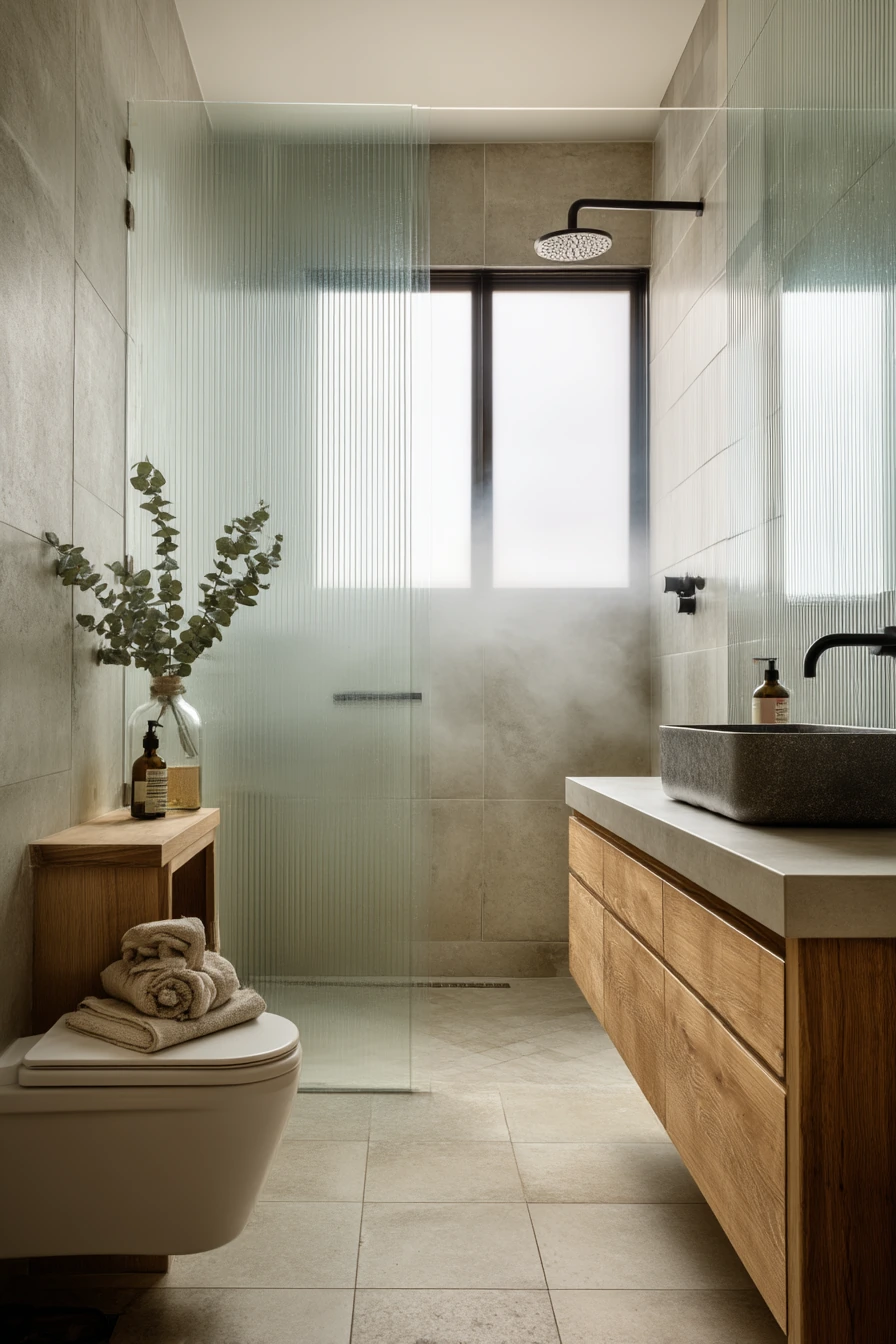
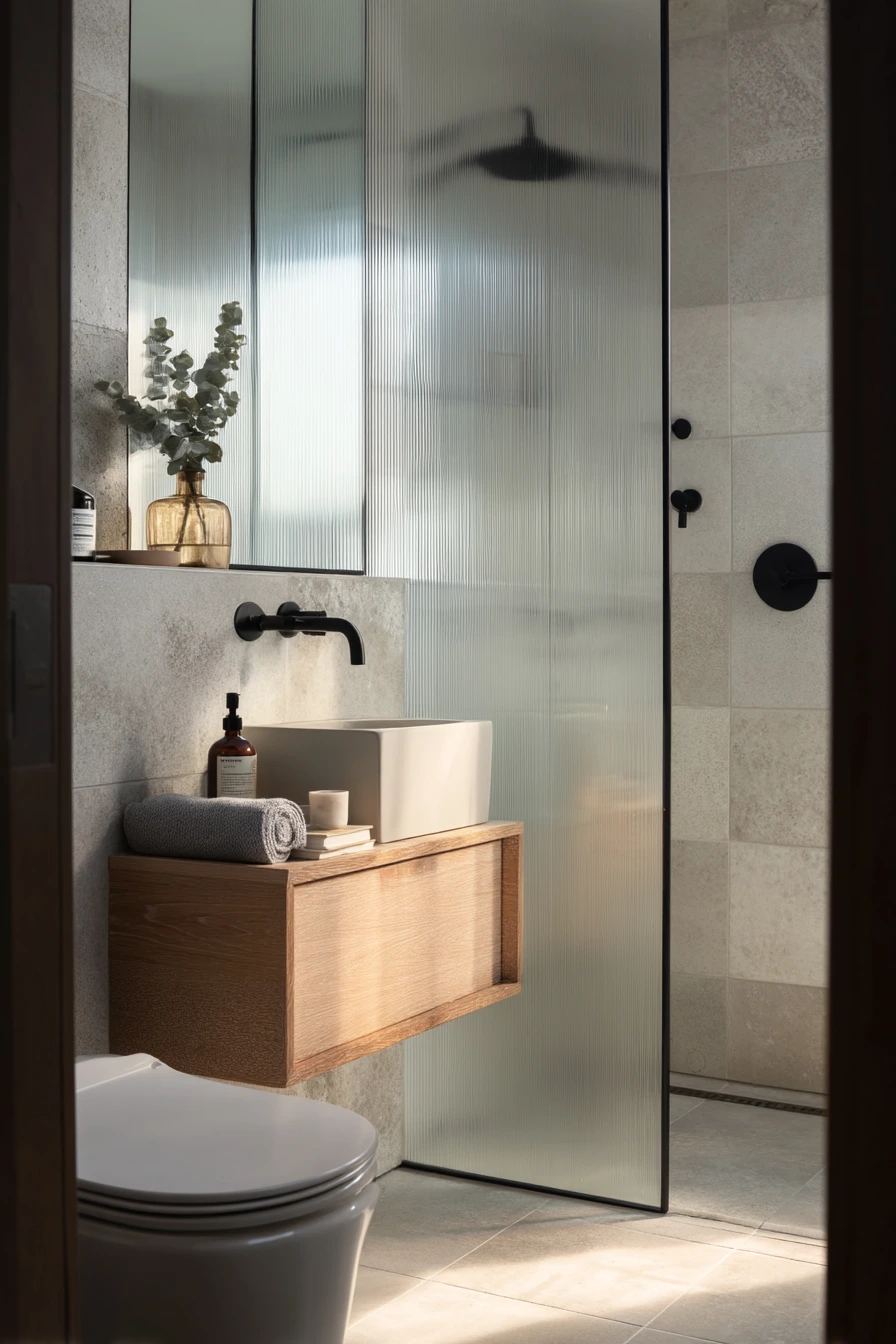
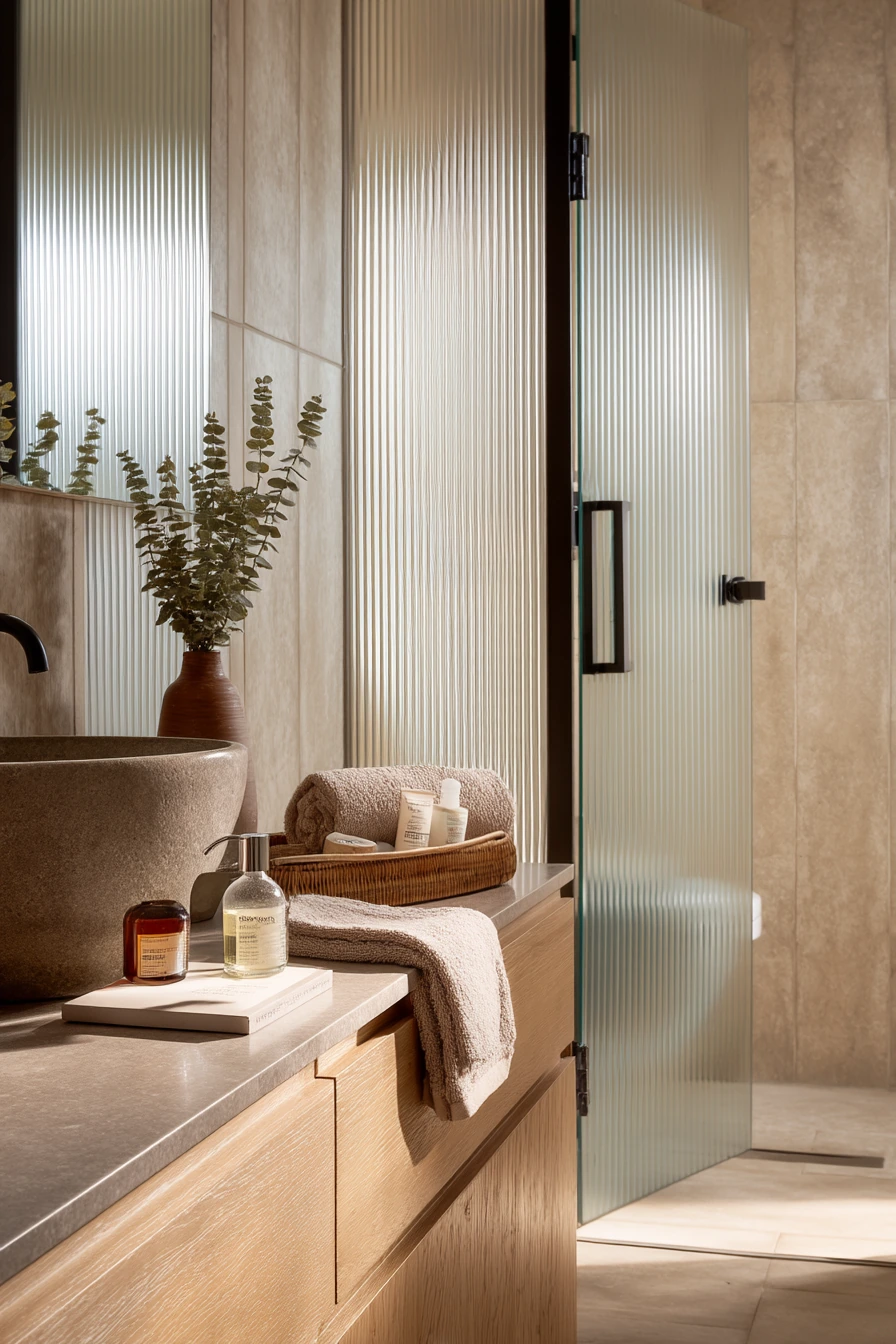
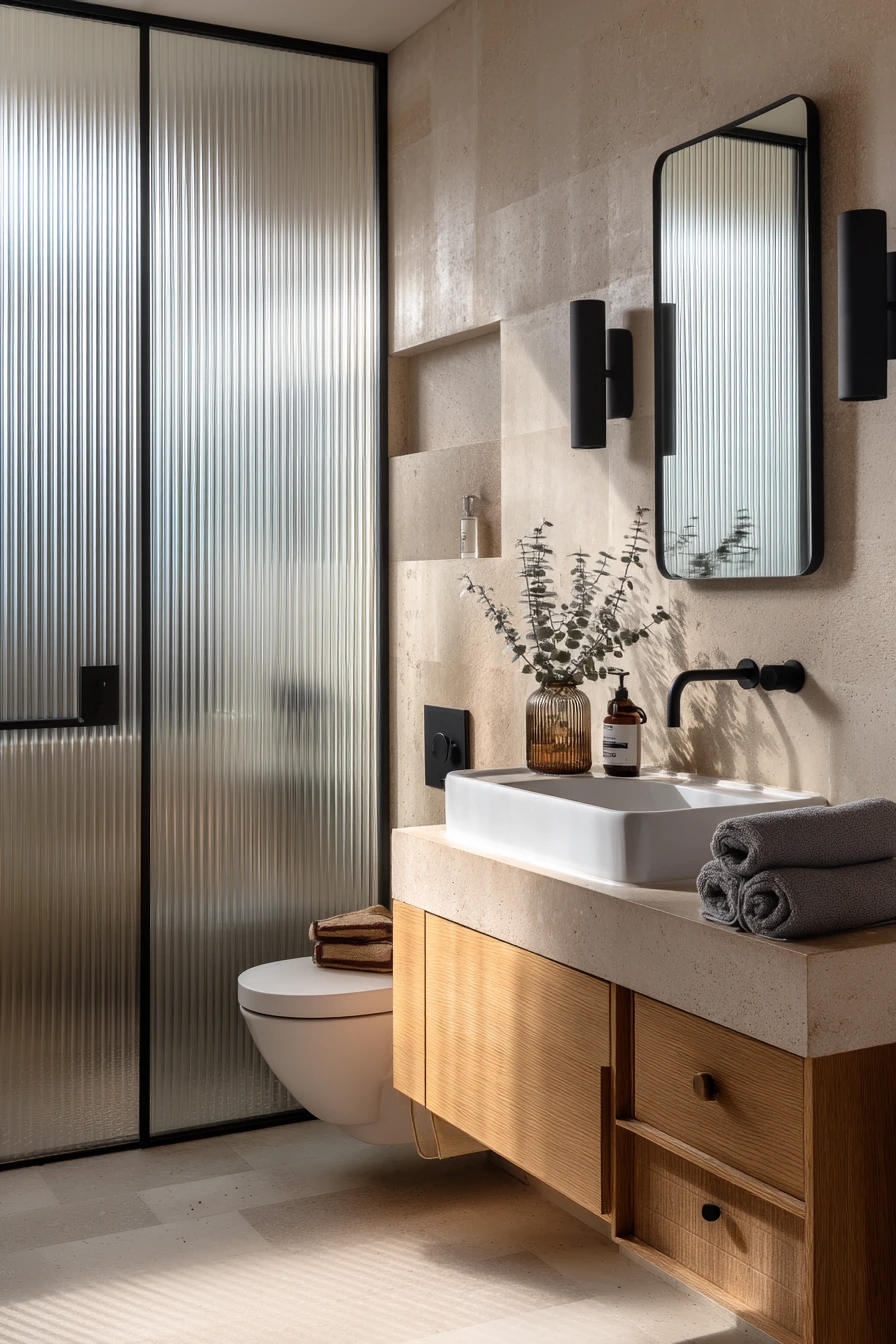
Pale stone flooring gives an apartment bathroom a calm, mineral look. It works well with a floating wood vanity, a ribbed glass shower screen, and matte black fixtures. The color is light enough to brighten the room, but it still hides everyday dust better than pure white tile.
For a serene, practical space, pick a stone-look porcelain tile with a soft, natural texture. Real stone can be beautiful, but it needs sealing and can stain from skincare spills. In a bathroom where a skincare bottle might be left open and steam haze is common, porcelain is often the easier choice. Add small life details like rolled towels and eucalyptus in a jar to keep the room from feeling too strict.
How to style it: mix smooth and ribbed surfaces. The ribbed glass shower screen adds privacy and a gentle pattern that does not fight the floor. Use black fixtures to outline the shapes, then soften them with wood tones and creamy towels. A small book on the toilet tank can feel cozy, but keep it minimal so it does not turn into clutter.
- Pick a tile with a slip rating made for wet areas.
- Use light grout that matches the tile for a seamless look.
- Install underfloor heat if the stone look feels too cold.
- Keep a tray near the sink for bottles to prevent stains.
- Add one green element like eucalyptus for a clean, fresh feel.
Pro Design Tip: Choose larger-format stone-look tiles and line them up with the vanity. Fewer grout lines makes the floor feel calmer and more refined.
Budget Considerations: Porcelain stone-look tile is often less than real limestone or travertine. If you want the style for less, use a stone-look vinyl tile in a powder room with light water exposure.
4. Patterned Cement Tile Flooring with Subway Walls
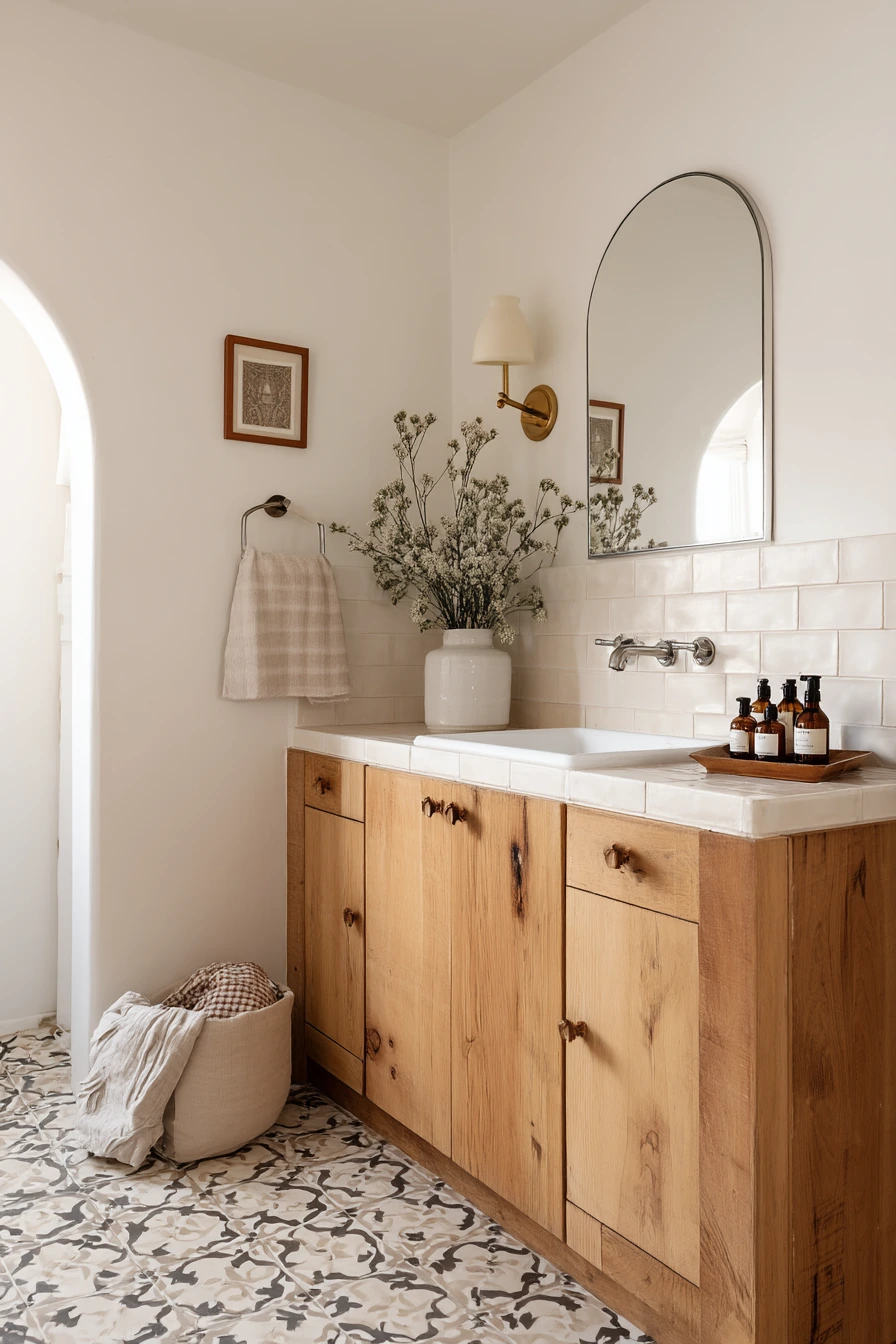
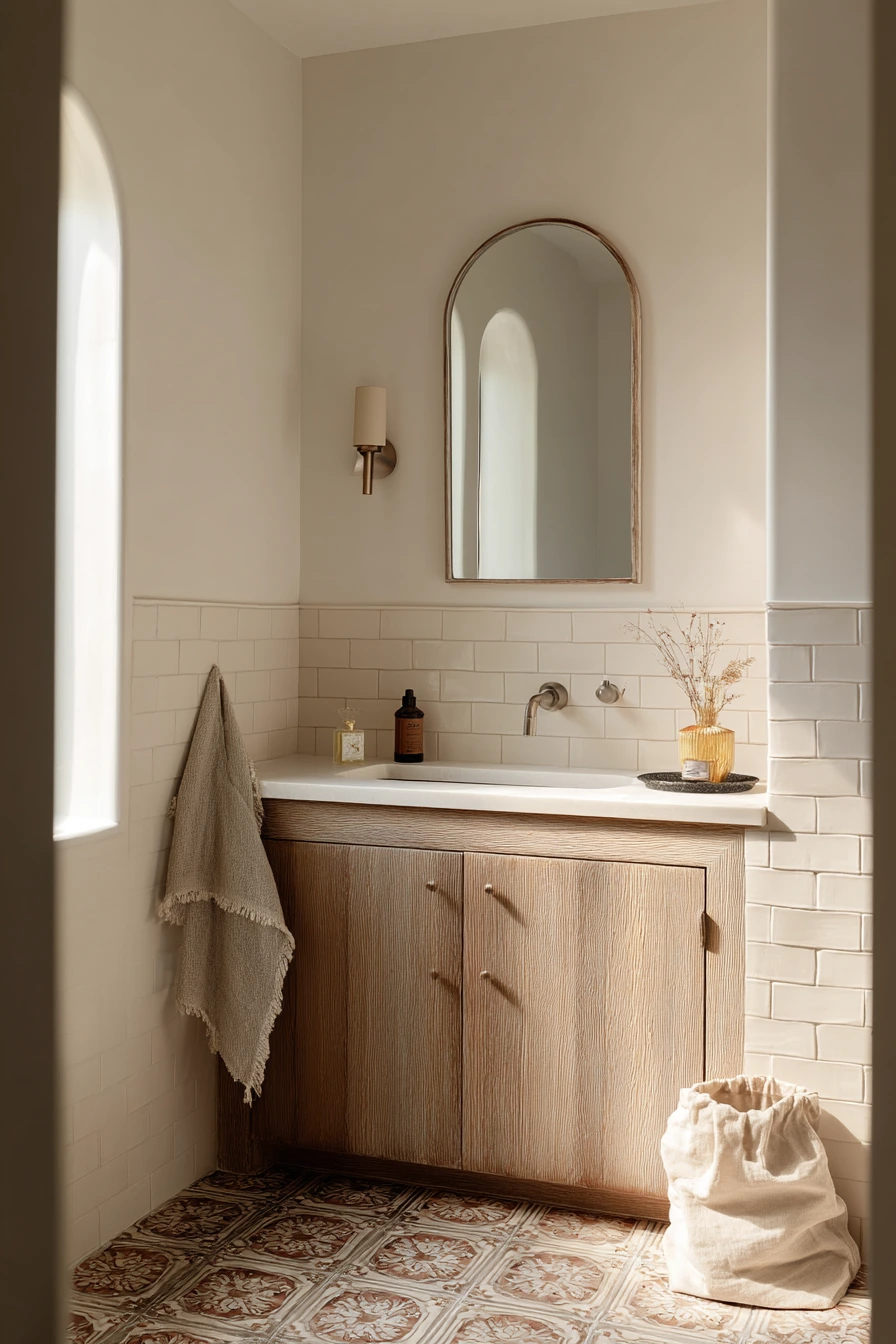
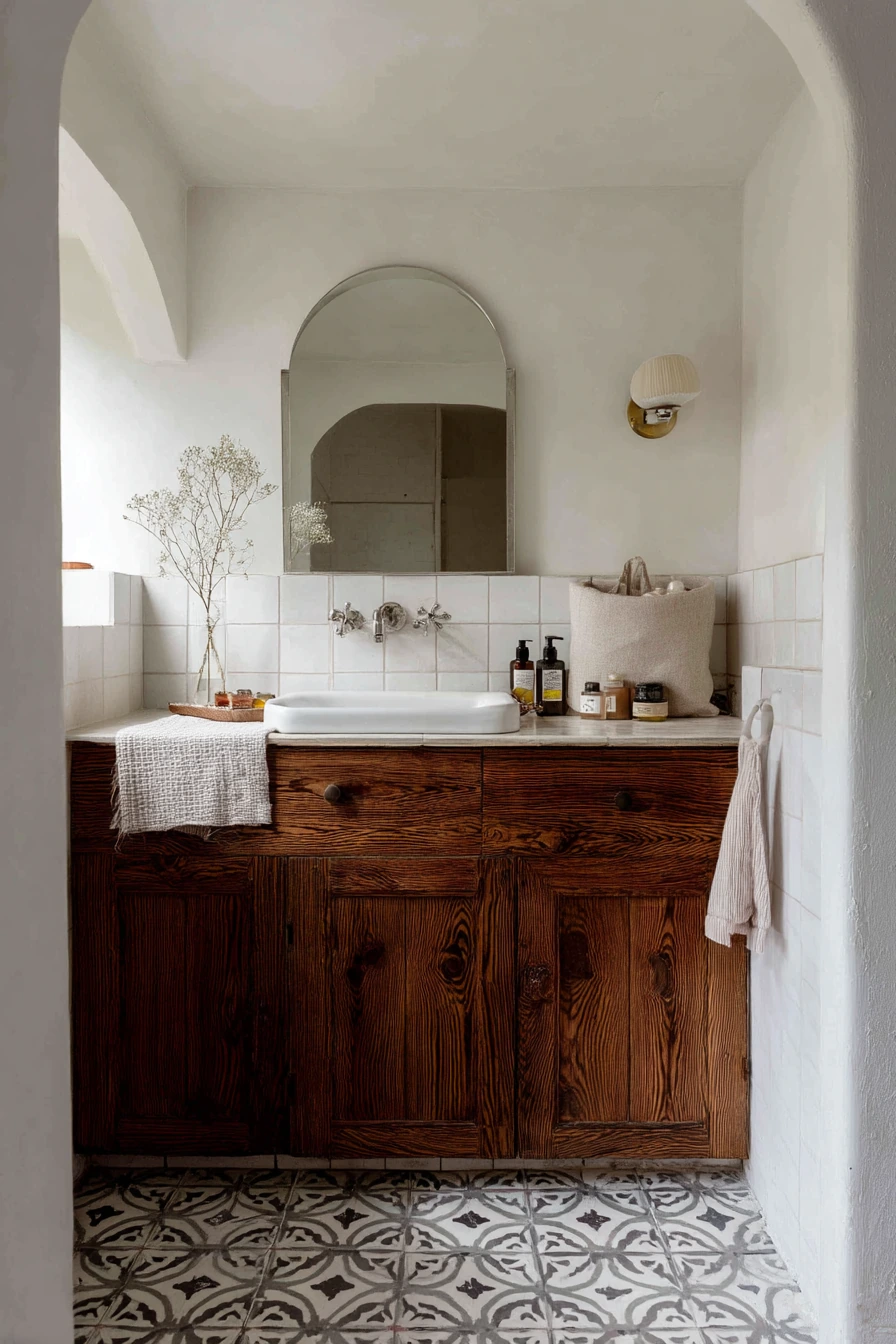
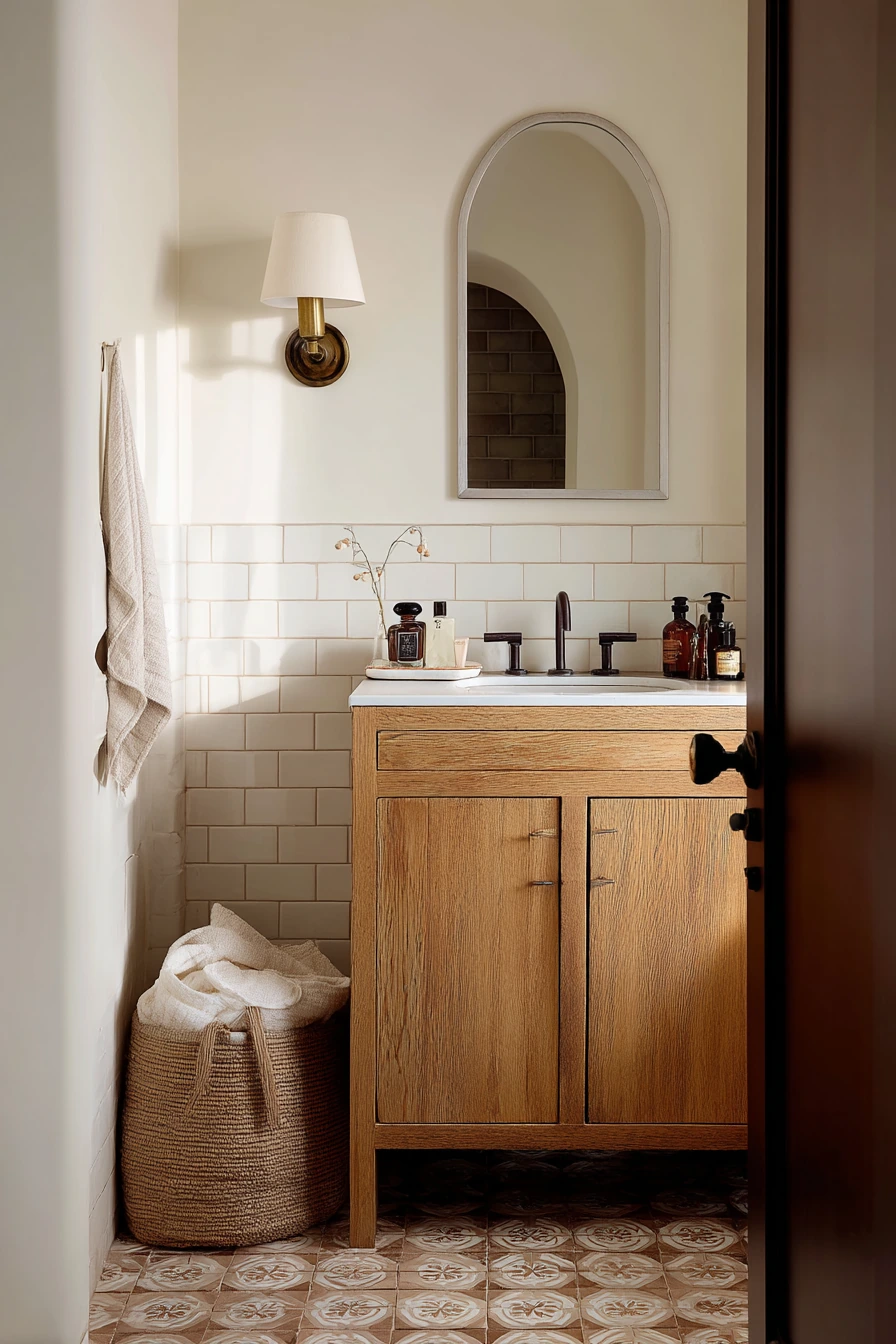
Patterned cement floor tiles bring energy to a bathroom with simple white subway walls. This mix works because the walls are clean and quiet, while the floor carries the color and pattern. The look also fits real life: a vintage wood cabinet for storage, an arched mirror, and small everyday items like a wrinkled hand towel or a charging cable peeking from the counter.
If you love the artsy feel but want easier care, consider cement-look porcelain. True cement tile can be porous and may need sealing to prevent stains. In a room with laundry piled in a soft canvas bag and perfume bottles on a tiny tray, spills happen. A sealed surface makes cleanup much faster, especially around the sink and shower area.
How to style it: pull one color from the floor pattern and repeat it in one place, like hand towels or a small bath mat. Keep the subway tile grout a soft gray so it does not look too harsh. Warm lighting matters here. A practical wall sconce plus muted daylight helps the pattern feel inviting instead of busy.
- Use plain white walls to balance a bold floor pattern.
- Choose a vanity or cabinet with closed storage to reduce visual noise.
- Keep countertop items on a tray so the space looks tidy fast.
- Add one arched mirror to echo curves in the pattern.
- Pick a low-profile mat so it does not fight the tile design.
Pro Design Tip: Before installation, dry-lay the tiles and mix from several boxes. It spreads out color variation so the floor looks even and intentional.
Budget Considerations: Handmade cement tiles can be pricey and require sealing. Porcelain patterned tiles are usually cheaper, need less upkeep, and still give the same bold look.
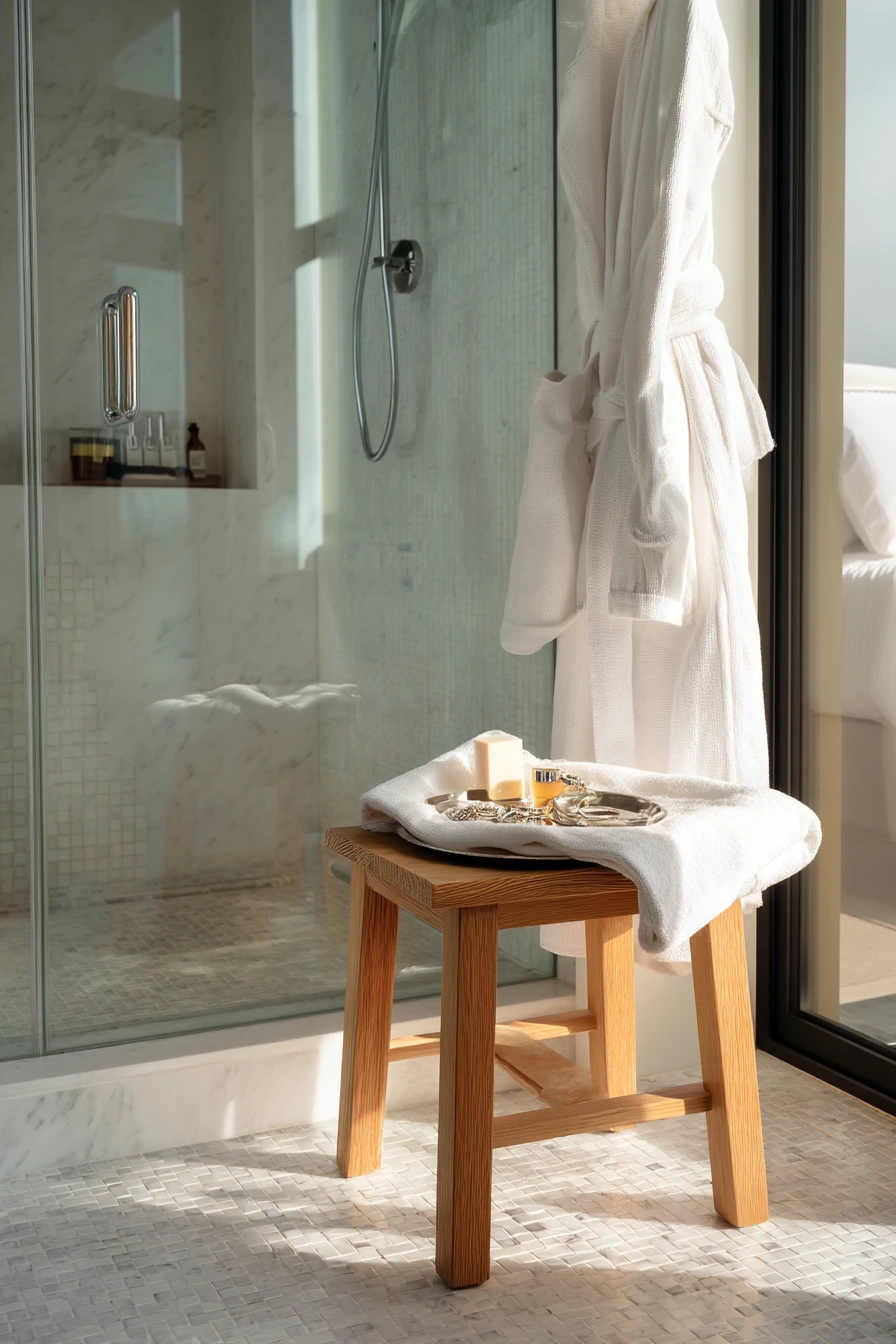
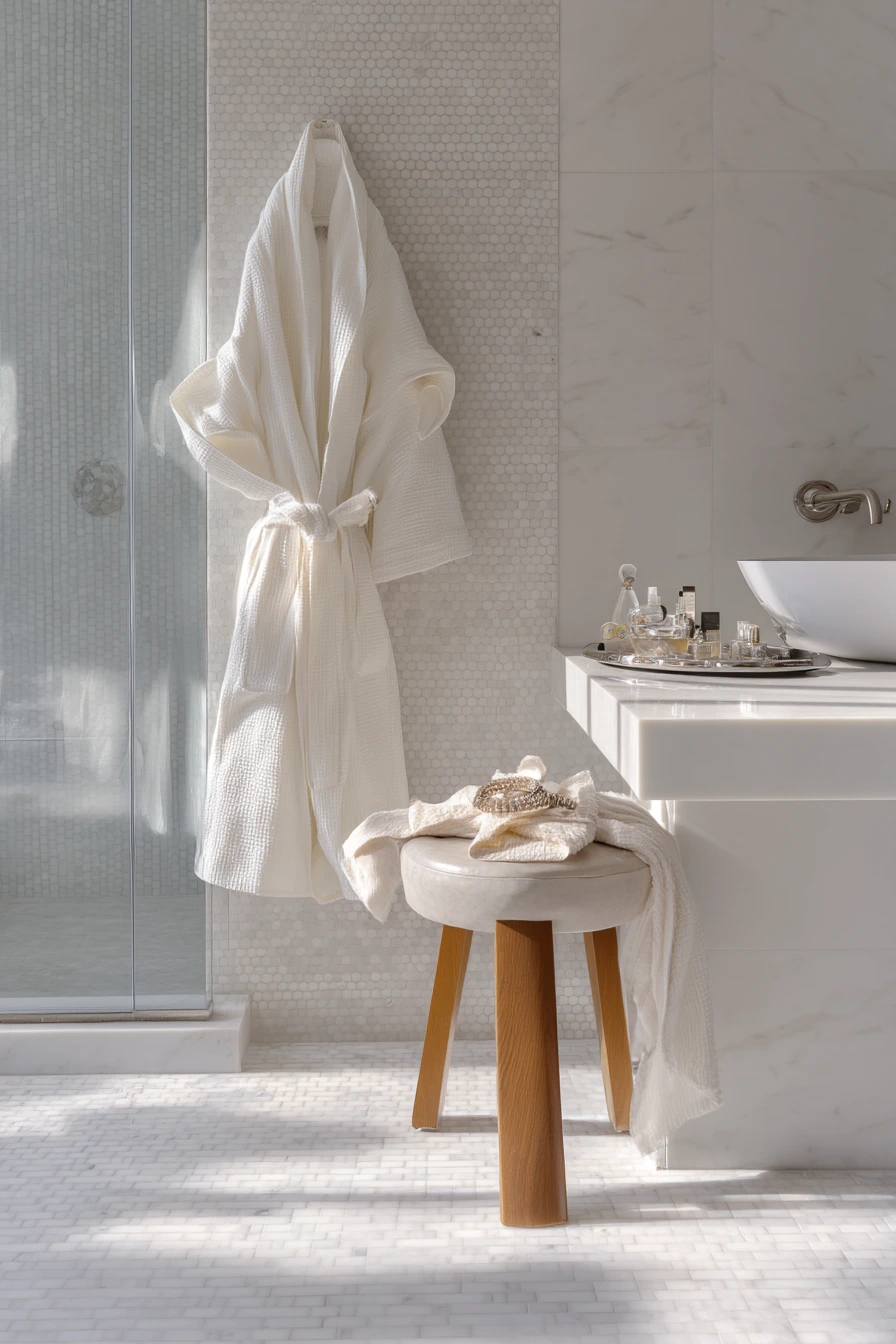
5. White Marble Mosaic Flooring for an Ensuite Bathroom
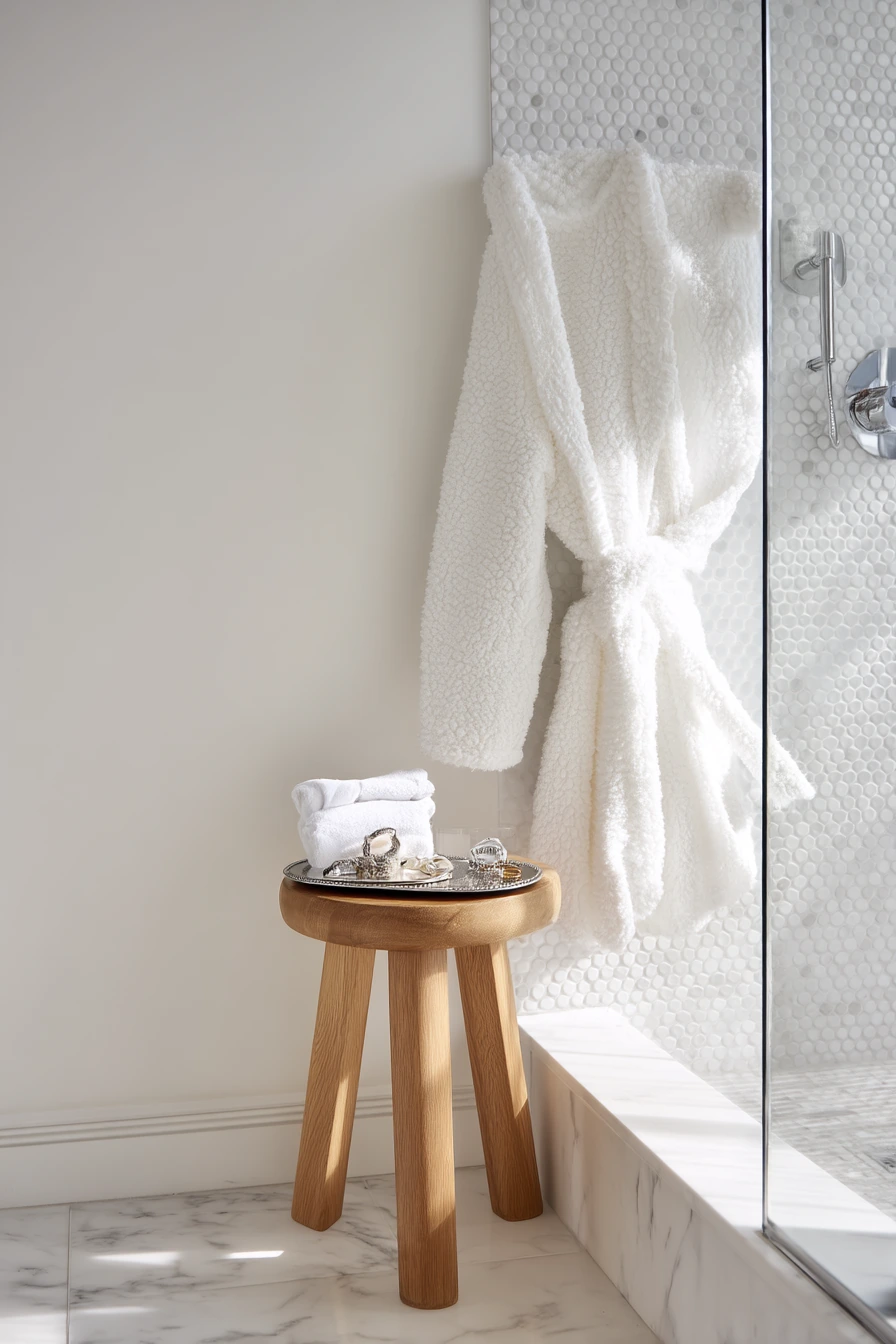
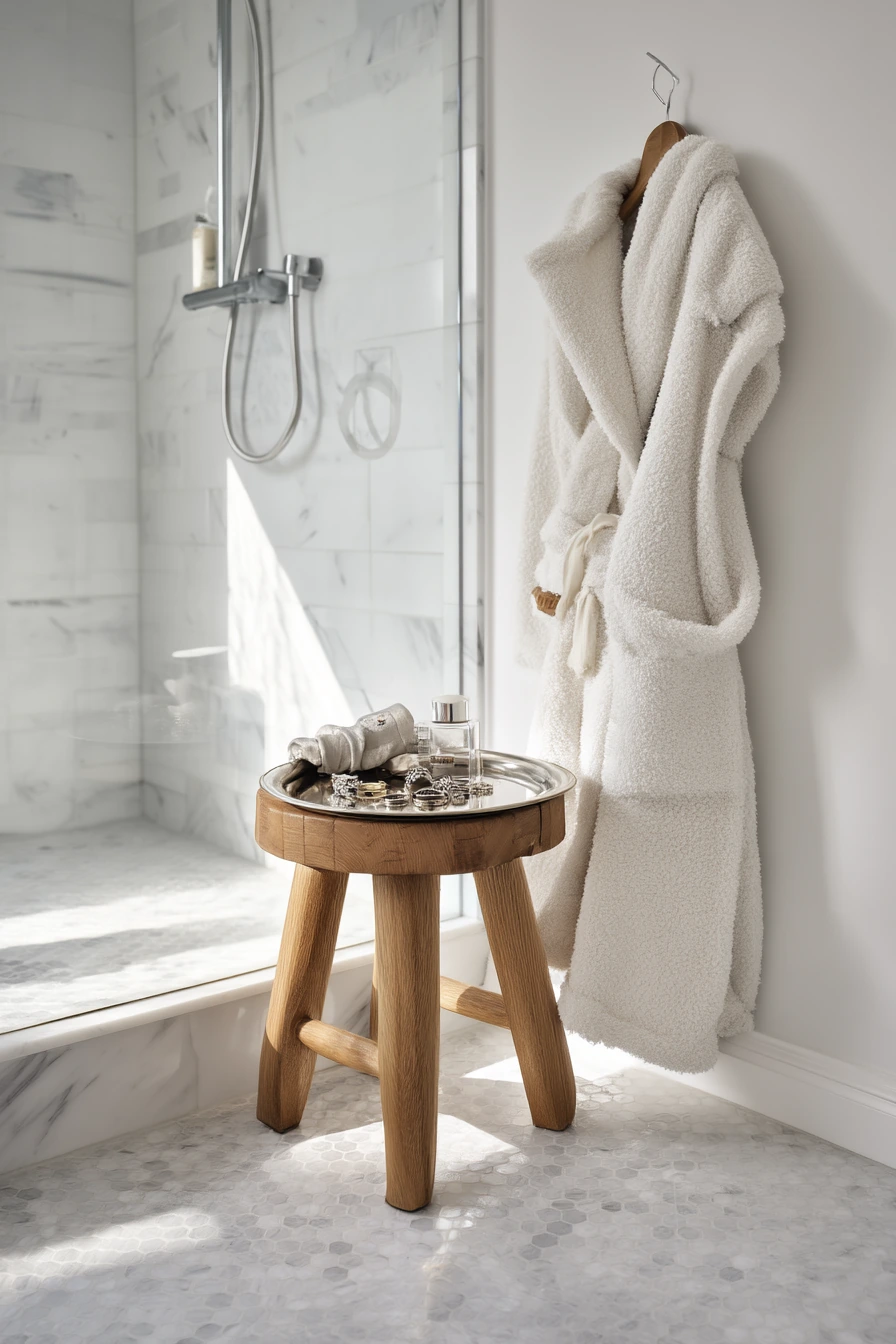
White marble mosaic flooring makes an ensuite feel clean and polished, even when it is clearly used. It looks great with a frameless glass shower, a slim oak stool, and soft reflections across the tile. Small routine items, like a used face cloth near the basin or a silver tray holding rings and a watch, fit this style because the floor already feels detailed.
Marble mosaic is popular because the many grout lines can add grip. That helps in a wet zone near the shower. The tradeoff is maintenance. Marble can etch from acidic cleaners, and light stone can show stains. Use a pH-neutral stone cleaner and wipe up makeup or hair dye quickly. A fluffy robe on a hook adds comfort, but keep it away from splashes so it stays fresh.
How to style it: warm up the cool marble with oak and soft whites. A small wood stool is useful for towels and keeps the room from feeling too glossy. Choose simple accessories in silver or brushed nickel, and add one textured element like a waffle towel. The goal is bright and calm, not crowded.
- Use a non-slip mosaic size, like small hex or basketweave.
- Seal marble and grout on the schedule your installer recommends.
- Choose a frameless shower for an open, airy look.
- Keep a small tray for jewelry so it does not end up on the counter.
- Use soft white towels to match the marble without feeling sterile.
Pro Design Tip: Ask for a grout color close to the marble tone. It keeps the mosaic looking seamless and reduces the “busy grid” effect.
Budget Considerations: Real marble mosaic is usually more expensive and needs sealing. For a similar look with less worry, choose a porcelain mosaic that mimics marble and costs less to maintain.
6. Terracotta Tile Flooring for a Cozy Cottage Bathroom


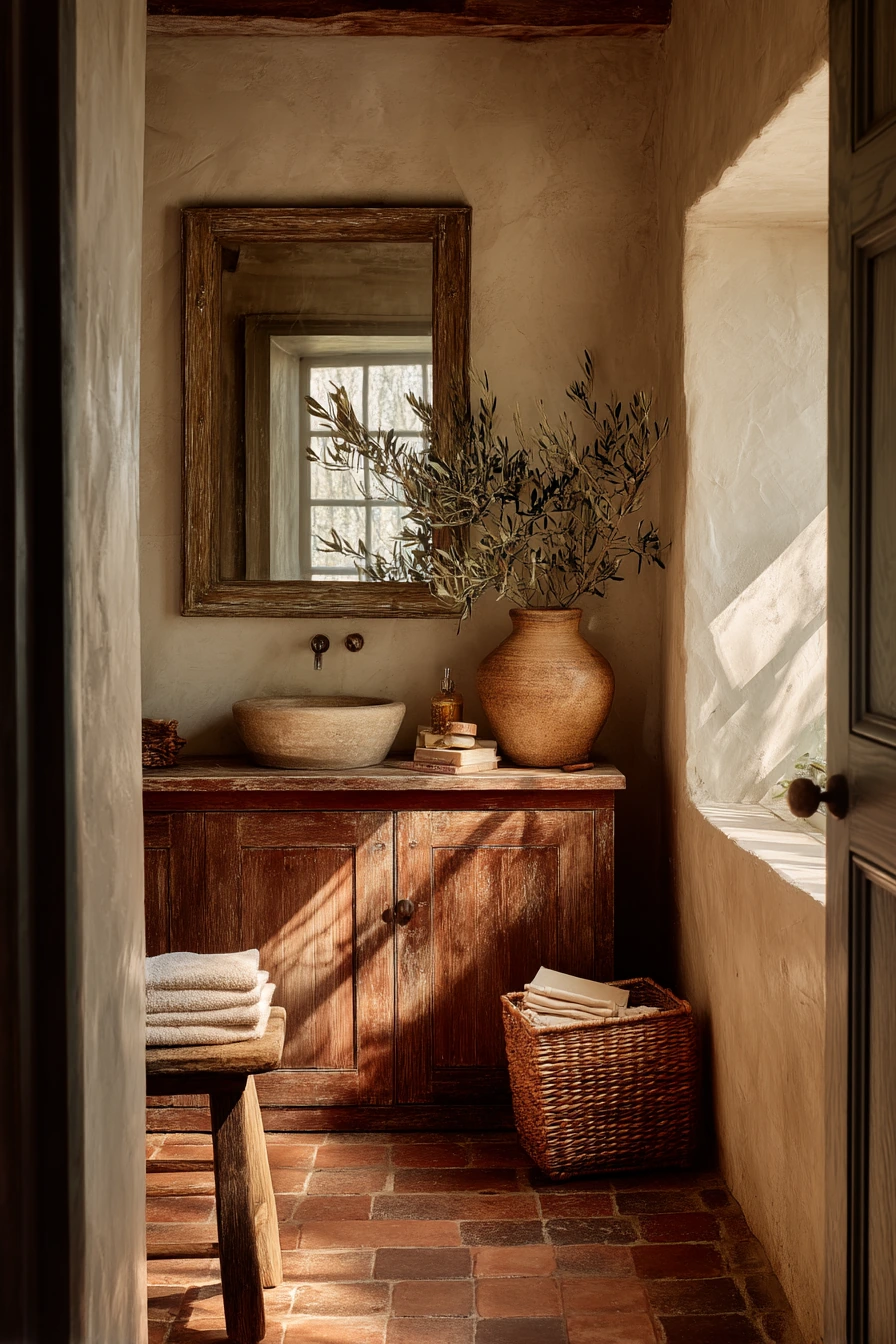
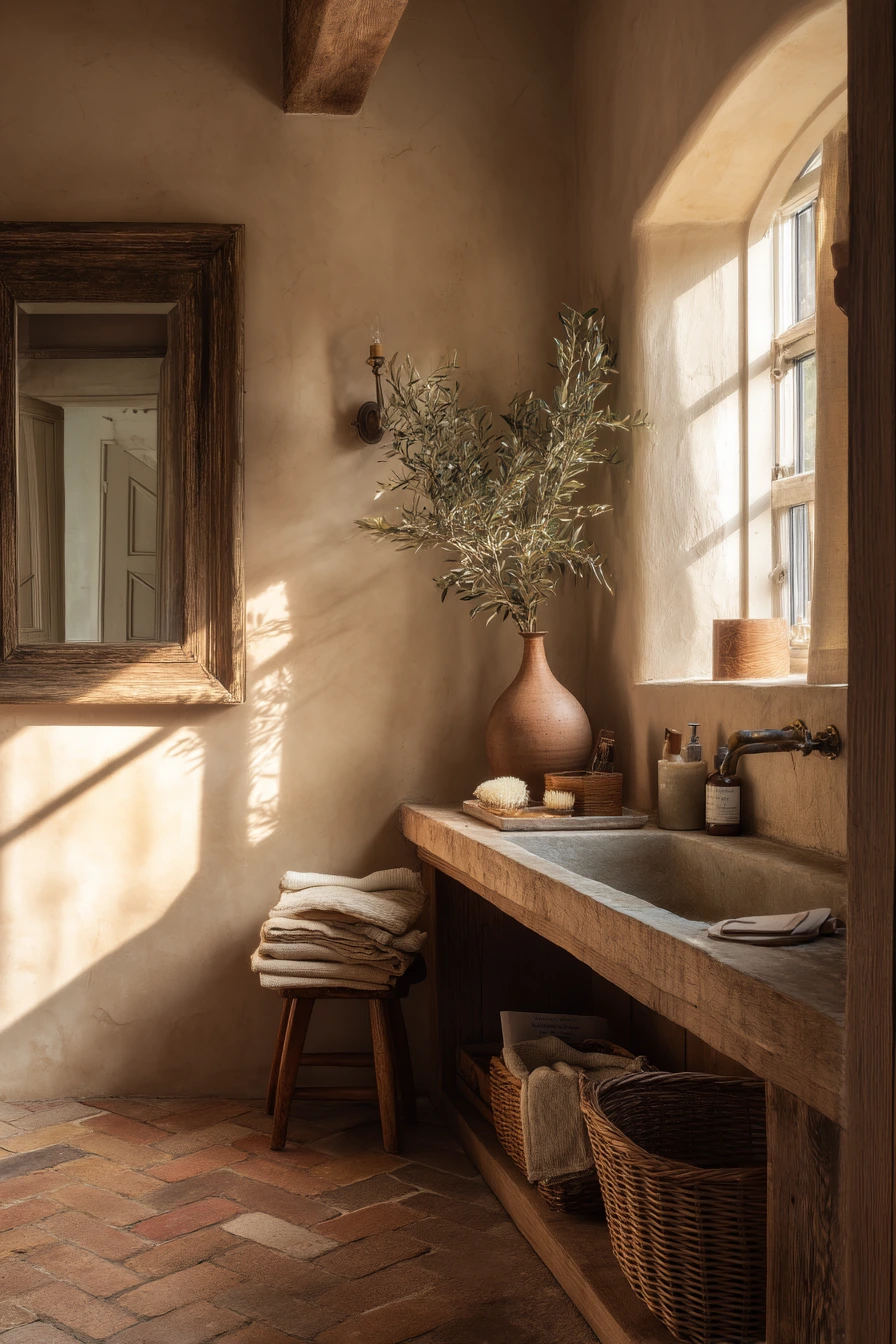
Terracotta floor tiles bring an earthy, sun-baked feel that works well in a cottage bathroom. They look natural with plaster walls, a weathered wood vanity, and an antique mirror. This kind of flooring adds warmth underfoot and makes the room feel relaxed, even with real-life details like bath toys in a wicker basket or a cracked-spine paperback on a stool.
Terracotta can be sealed to handle moisture, but it still needs some care. It may show water spots if it is not sealed well, and harsh cleaners can dull the finish. Use a gentle cleaner and keep a small mat near the tub or shower. The warm window light and shadow play is part of the charm, so let the floor show its color variation instead of trying to make everything match perfectly.
How to style it: lean into natural materials. Add a clay vase with olive branches, stack simple washcloths, and choose hardware in aged brass, black, or oil-rubbed bronze. Keep wall colors soft, like creamy white or light sand, so the terracotta reads rich, not orange. Texture is the secret here, so mix linen, wicker, and worn wood.
- Seal terracotta to reduce staining and make cleaning easier.
- Use a breathable rug so moisture does not get trapped.
- Pick warm lighting to enhance the tile color at night.
- Add closed storage for bath toys to keep the room calm.
- Use natural greenery like olive branches for an easy styling win.
Pro Design Tip: If you want a less rustic look, choose terracotta in a tighter color range and use a thinner grout line. It still feels warm but looks more tailored.
Budget Considerations: Real terracotta can be affordable, but sealing and labor add cost. If you need a cheaper option, terracotta-look porcelain gives the same warmth with less maintenance.
7. Concrete-Look Bathroom Flooring for a Modern Shared Space
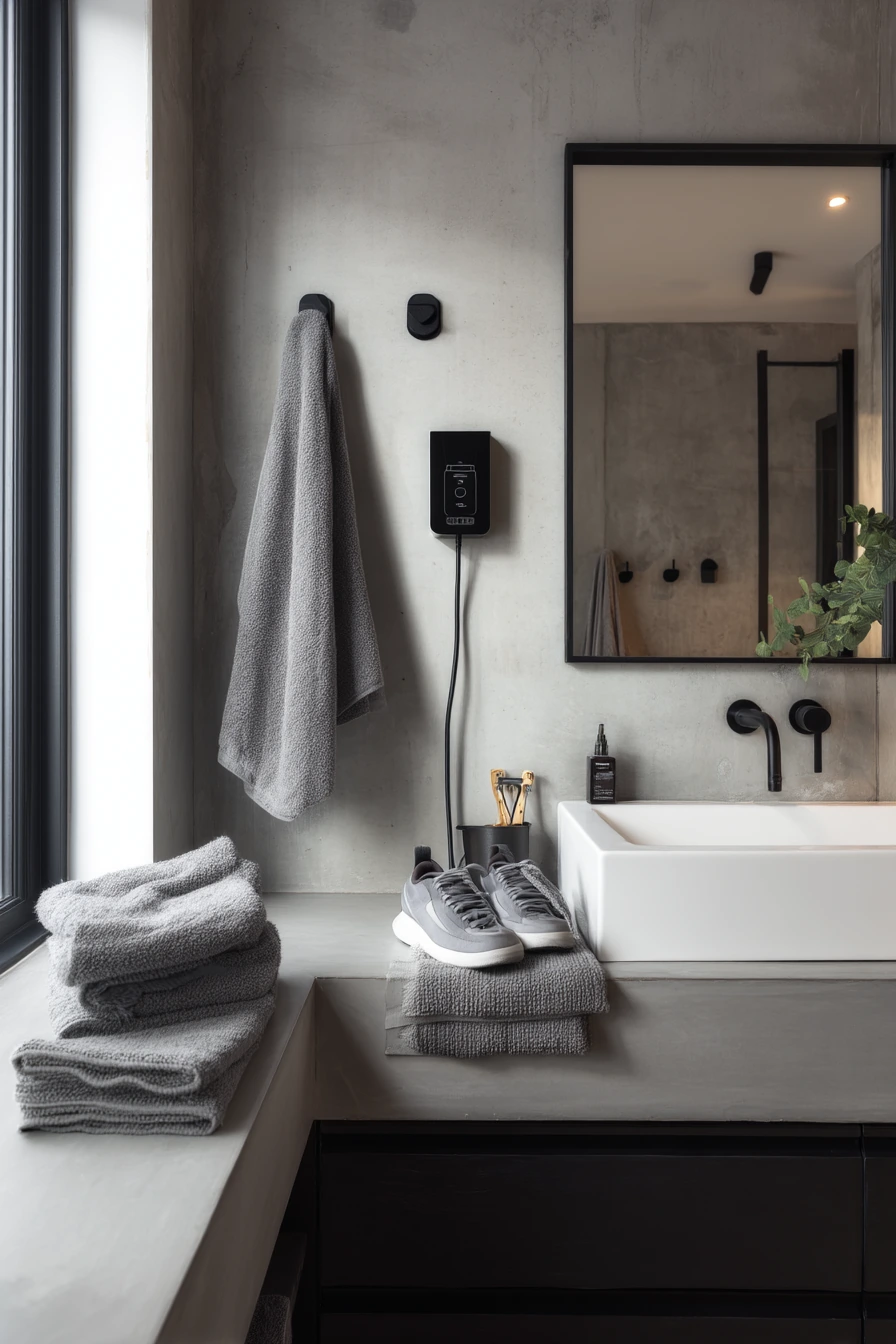
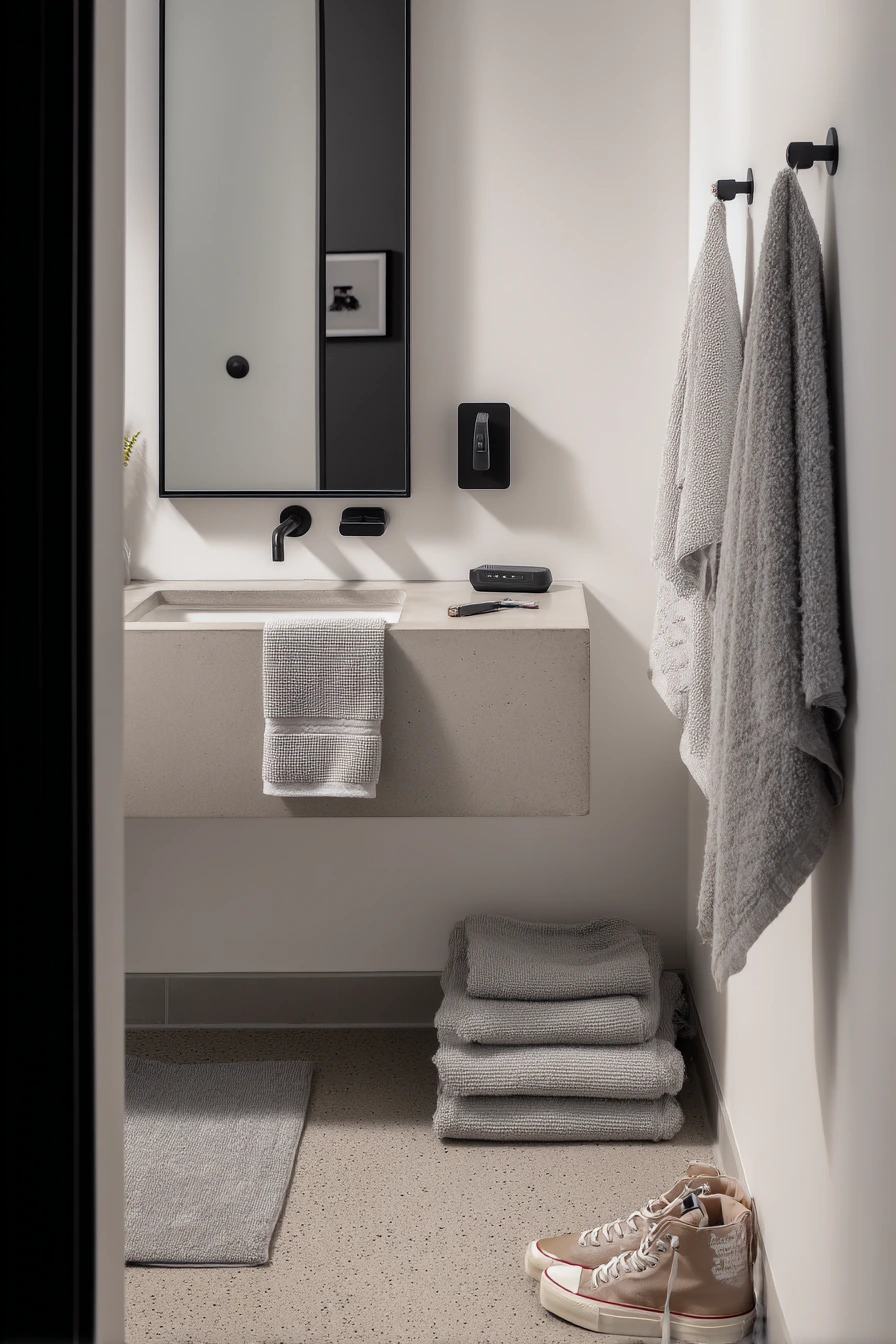
Concrete-look flooring fits a shared modern bathroom because it is simple, durable, and easy to clean. It pairs well with a wall-mounted vanity, an oversized mirror, and black towel hooks. The cool gray tone also hides daily mess better than bright white, which helps when the room gets used back to back in the morning.
For this style, you can use concrete-look porcelain tile or vinyl. Porcelain feels more solid and handles water well, while vinyl can be warmer underfoot and faster to install. Keep the space looking lived in but not messy. Small items like an electric toothbrush dock, a razor by the sink, and neatly folded gray towels look normal here, as long as you limit extras.
How to style it: focus on clean lines and repeat black accents. Add one soft element so the room does not feel cold, like a textured bath mat or a light wood accessory. If you have subdued daylight, use a warm white bulb so skin tones look natural in the mirror. This matters in a shared bathroom where people are getting ready quickly.
- Choose a matte finish for better slip resistance.
- Use a floating vanity to show more floor and make cleaning easier.
- Add a closed bin for grooming items to reduce counter clutter.
- Pick towels in one color family to keep the look calm.
- Use a simple runner if the floor feels hard underfoot.
Pro Design Tip: Use large-format tiles and align grout lines with the vanity edges. It makes the room look more precise and more expensive.
Budget Considerations: Concrete-look vinyl is often the lowest-cost way to get this style. If you can spend more, porcelain gives a more realistic texture and better long-term wear.
8. Muted Hex Tile Flooring for a Welcoming Guest Bathroom
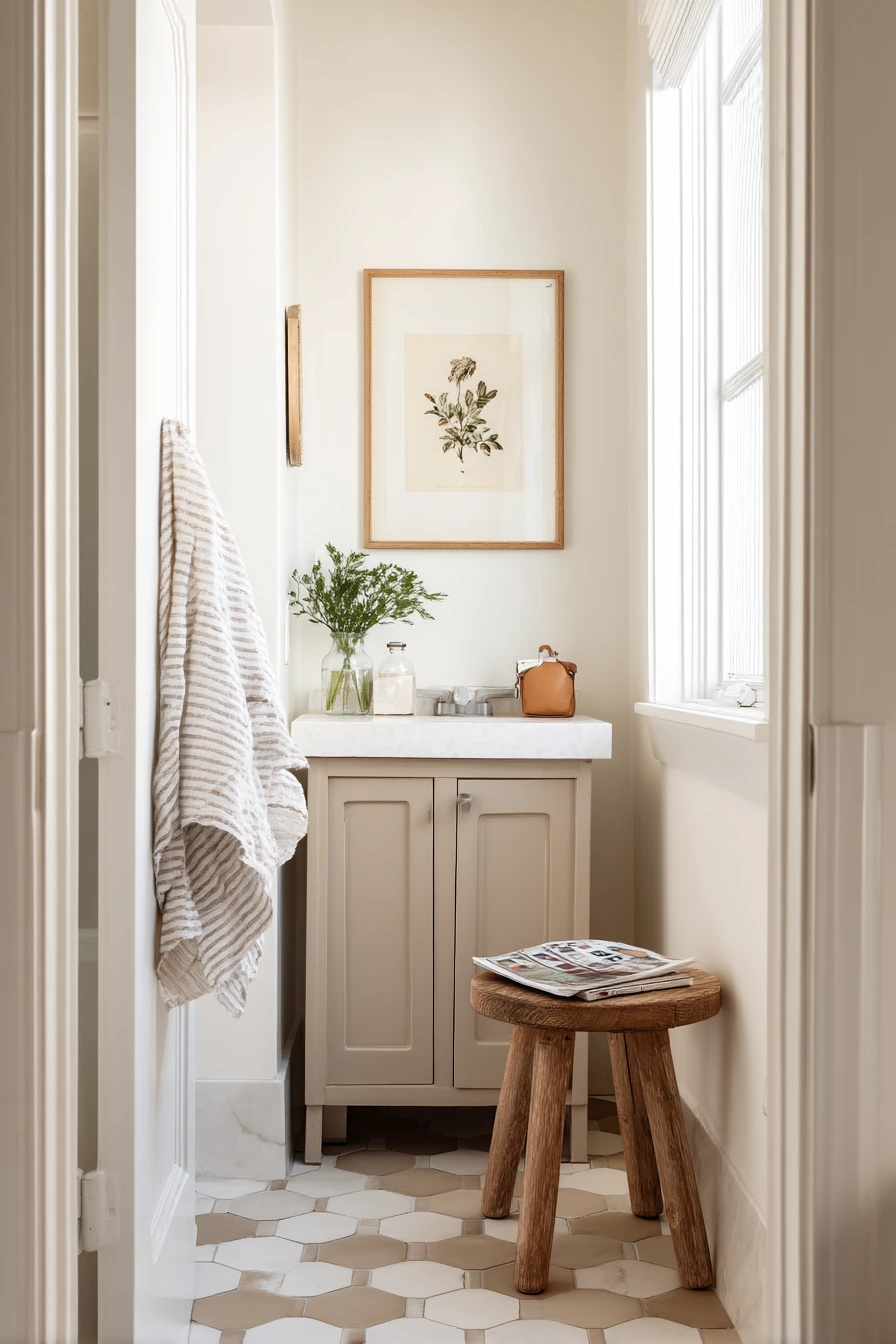
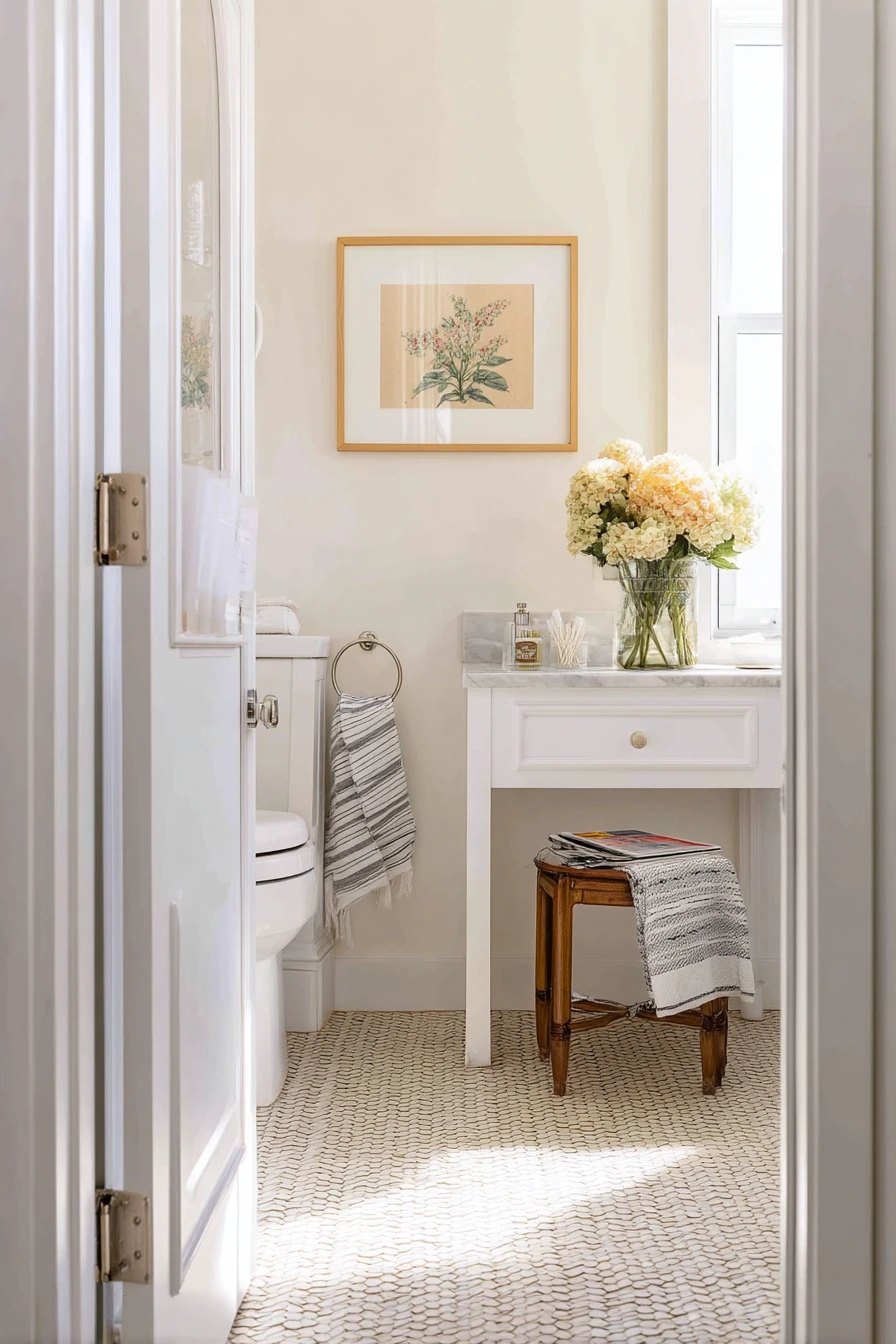
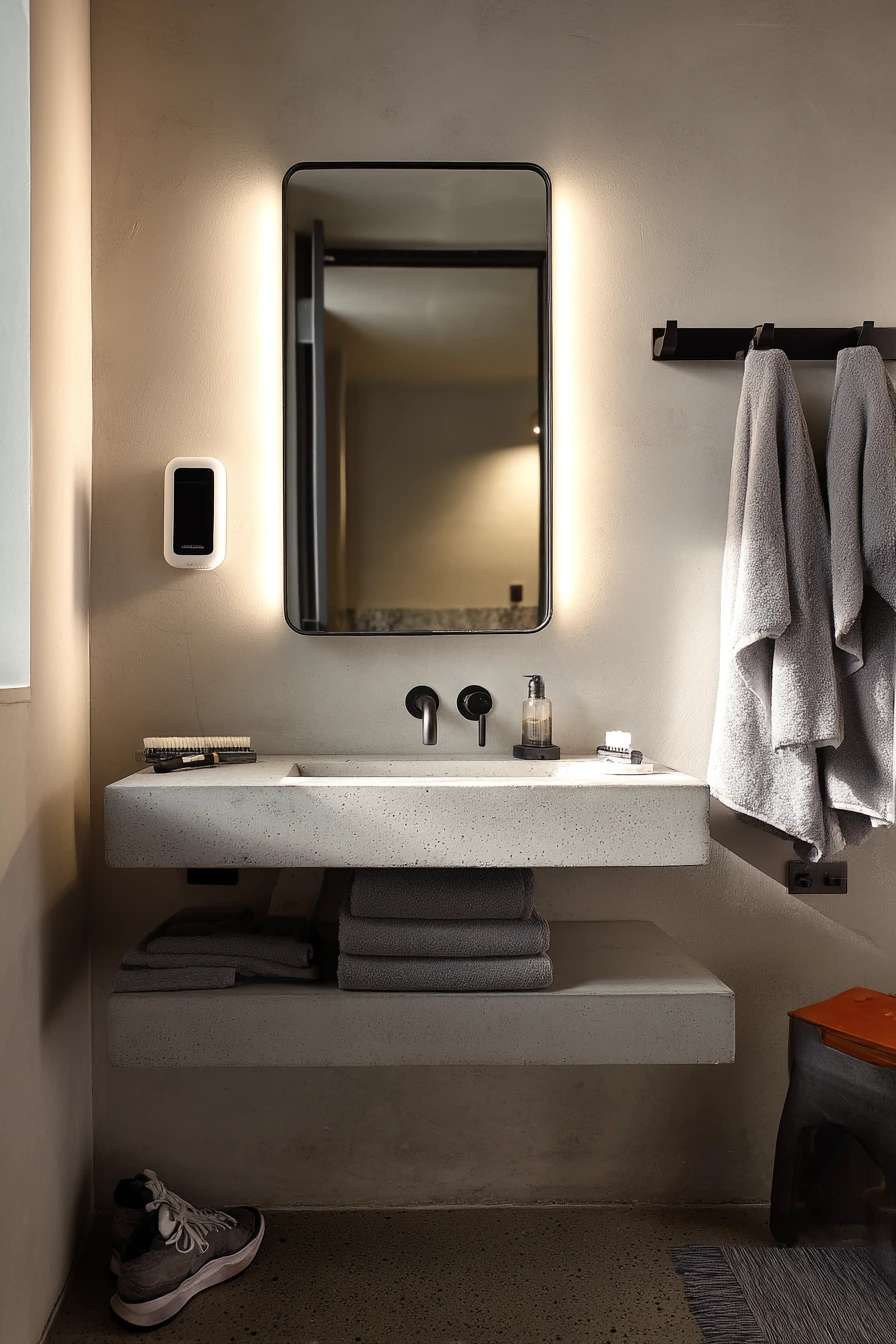
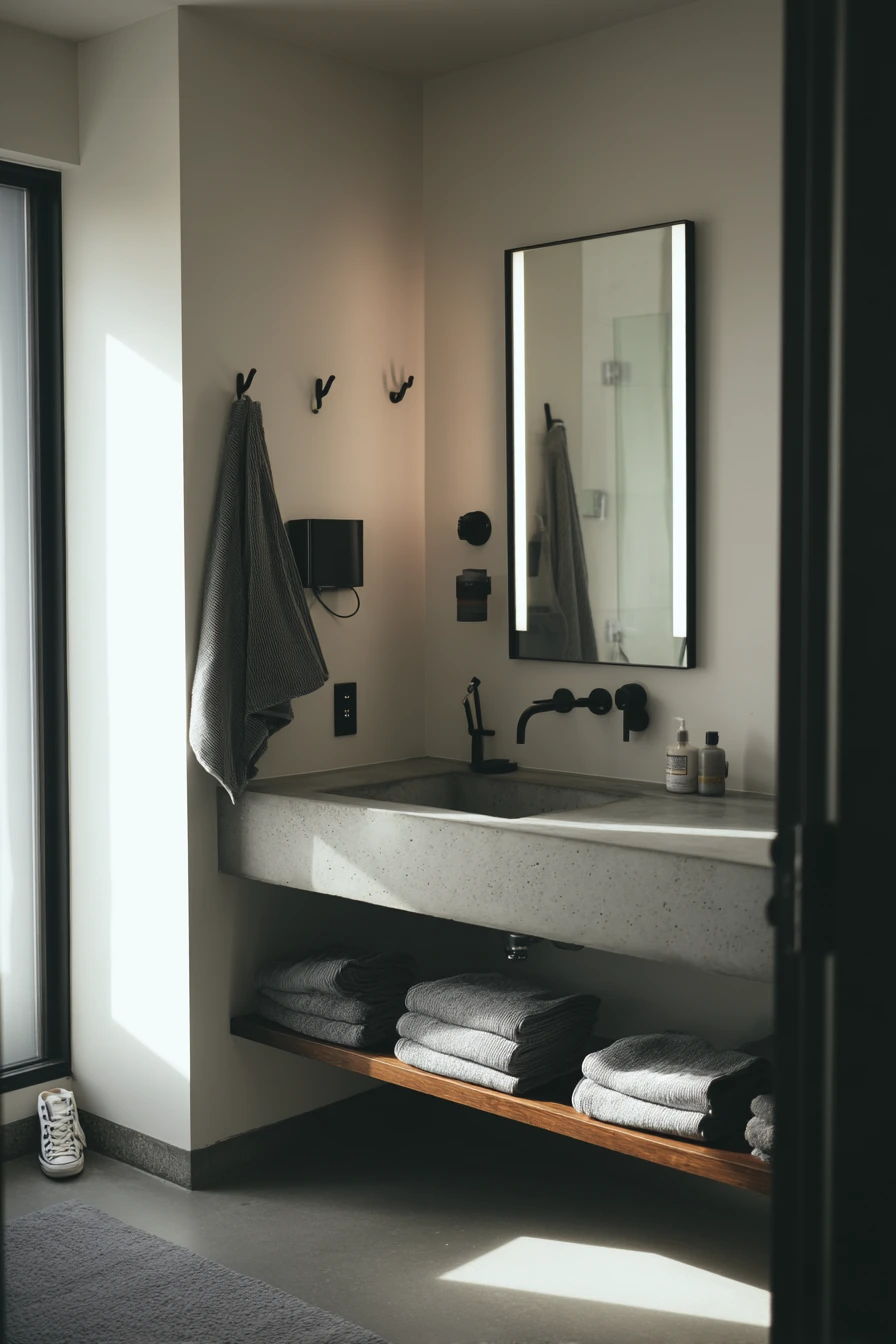
Small-scale hex tile in muted white and sand is a classic guest bathroom choice. It feels clean, but not too sharp, and it works with a narrow vanity and simple decor. The soft mix of tones helps the room look warm and welcoming, even when it is small and seen from the threshold.
This flooring is also practical. Hex tile has more grout lines, which can improve grip, but it also means more areas to keep clean. Choose a grout color close to the sand tone so it stays looking fresh between deep cleans. Add a striped hand towel, a framed botanical print, and a glass jar of cotton swabs to make guests feel at home. A travel toiletry bag left half open and a tiny stool with a magazine makes the space feel prepared, not staged.
How to style it: keep the palette soft. Use warm whites, sandy beige, and a touch of green from the botanical print. If you have gentle afternoon light, it will bring out the tile texture. Add one small scent item like a mild soap or a simple candle, and keep the counter mostly clear so the room feels easy to use.
- Pick a satin or matte tile finish to reduce slipping.
- Use sand-toned grout to hide everyday discoloration.
- Choose a narrow vanity with storage to keep extras out of sight.
- Add one framed print to give the room a finished look.
- Keep guest items in a tray or bag so they look tidy.
Pro Design Tip: Center the hex tile layout on the doorway so the pattern looks balanced when you first walk in.
Budget Considerations: Hex tile can cost more in labor because it takes longer to install. For a lower budget, use hex-look vinyl sheet flooring and spend on a good faucet and fresh towels.
9. Deep Slate Bathroom Flooring for a Moody, Elegant Look
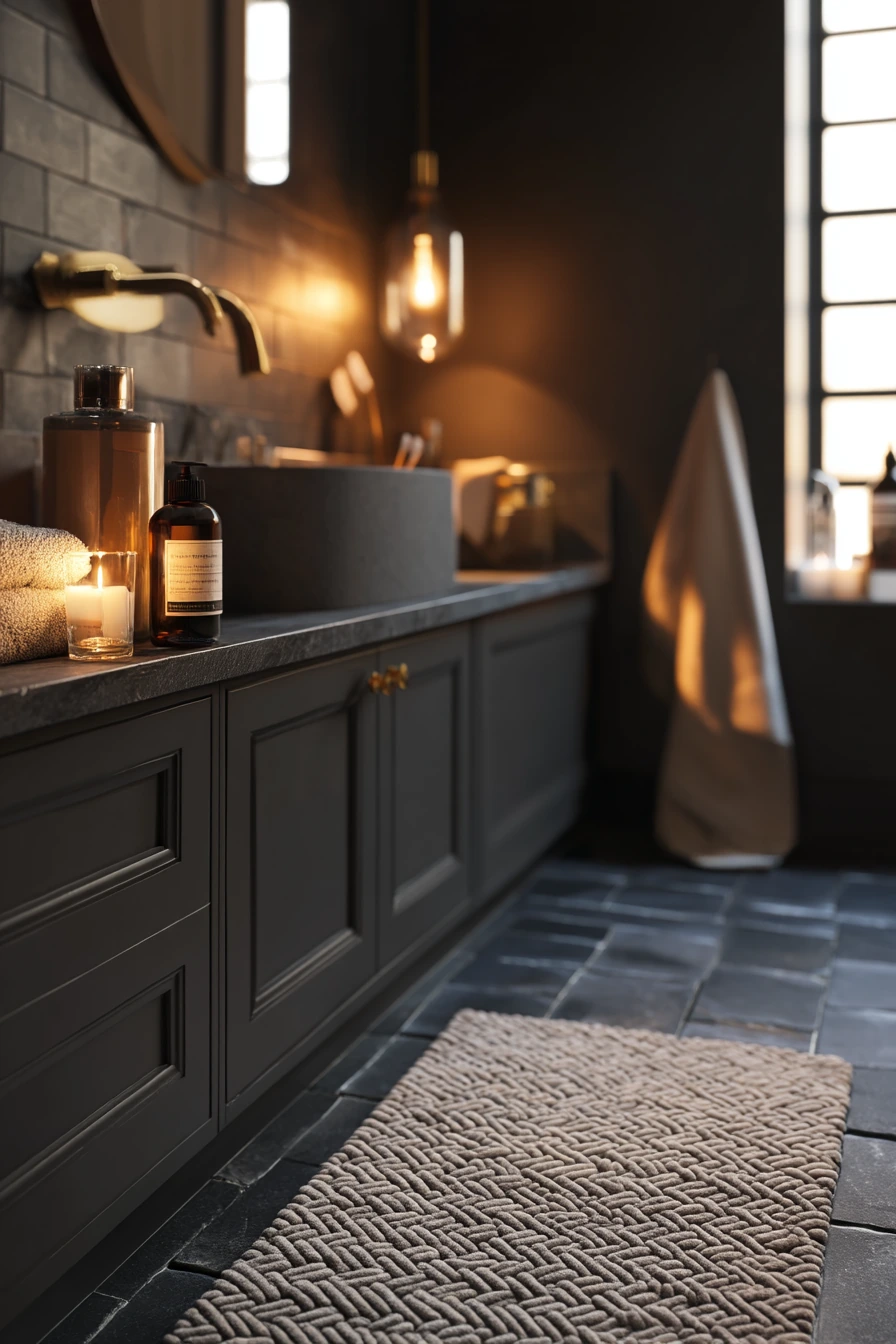
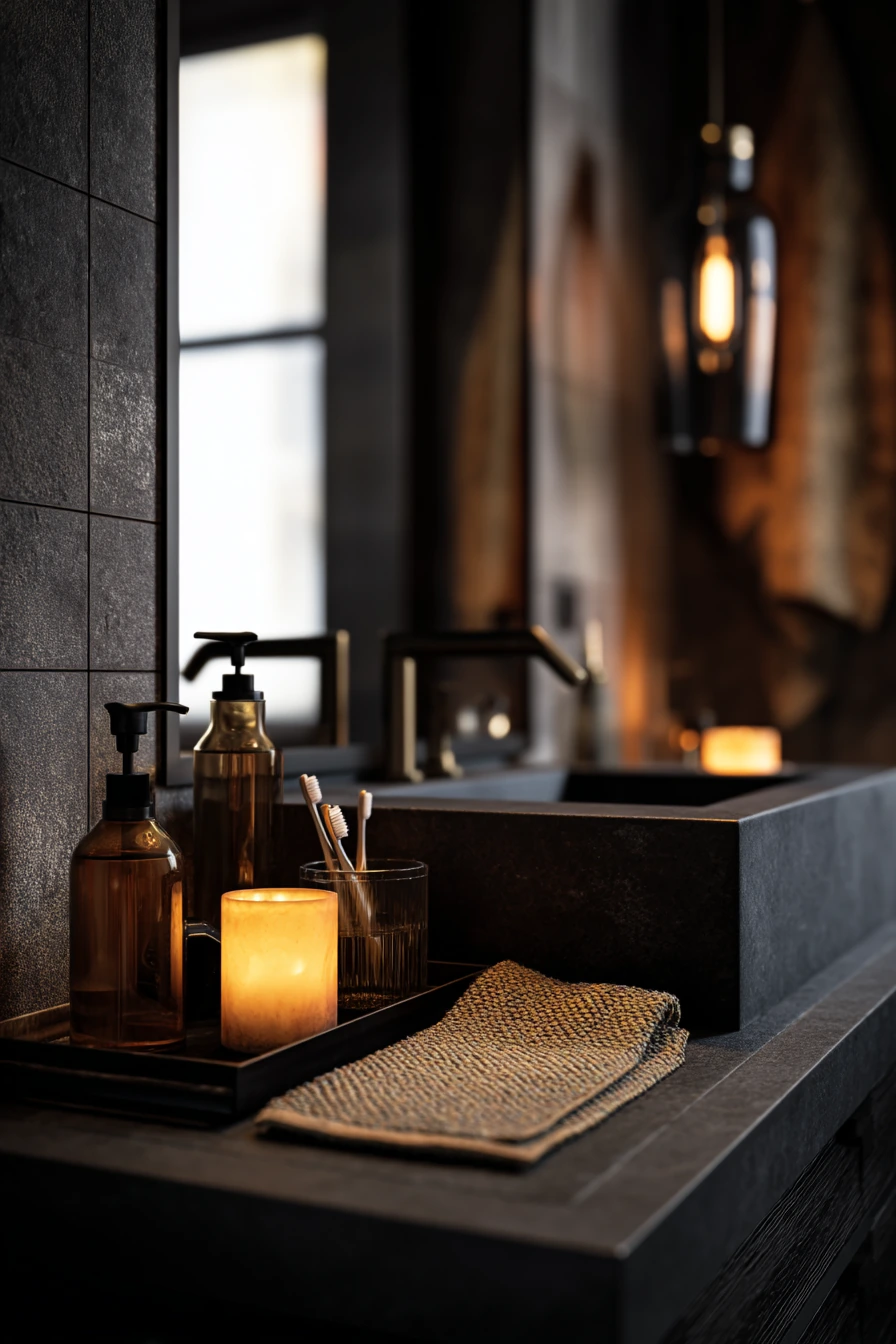
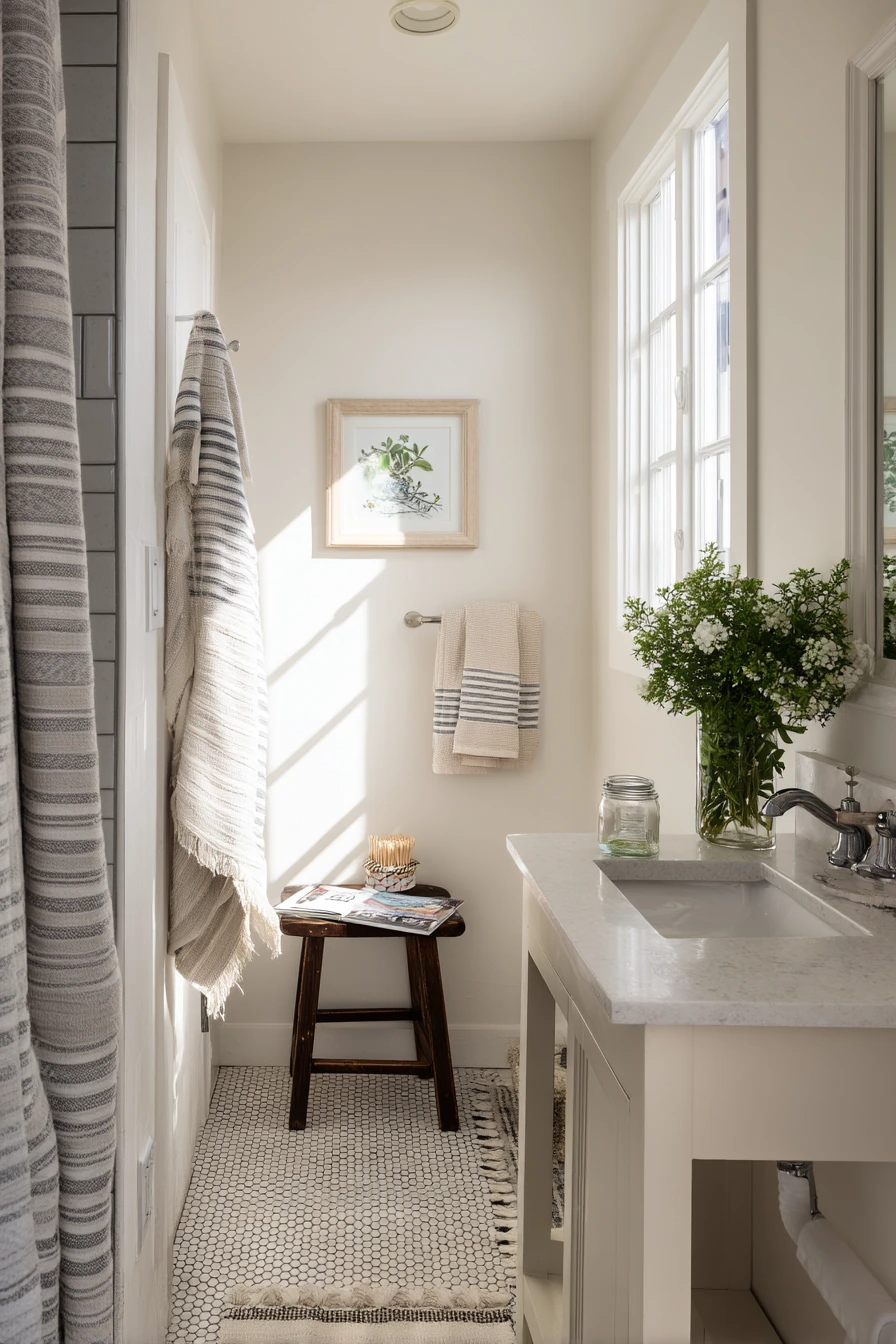
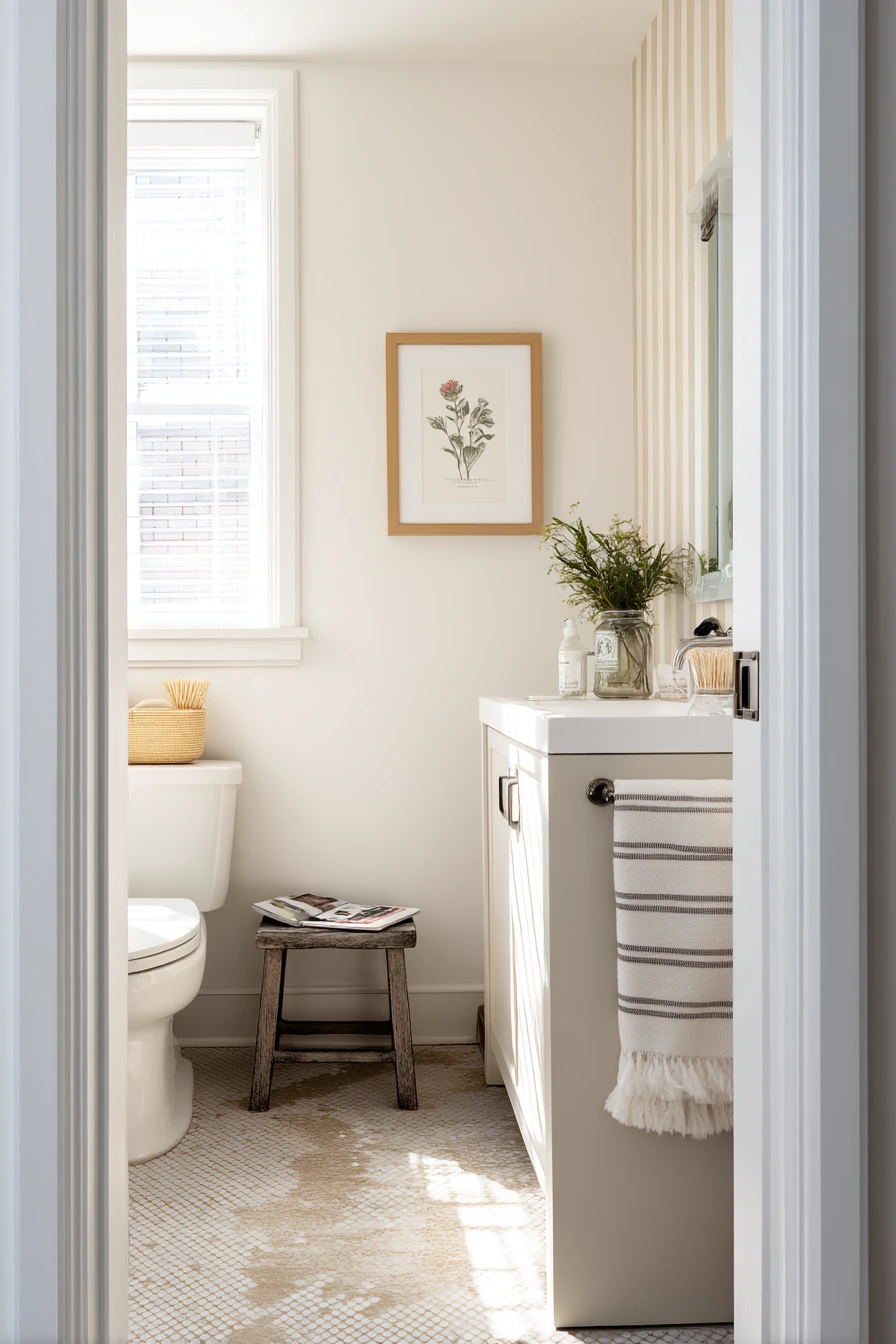
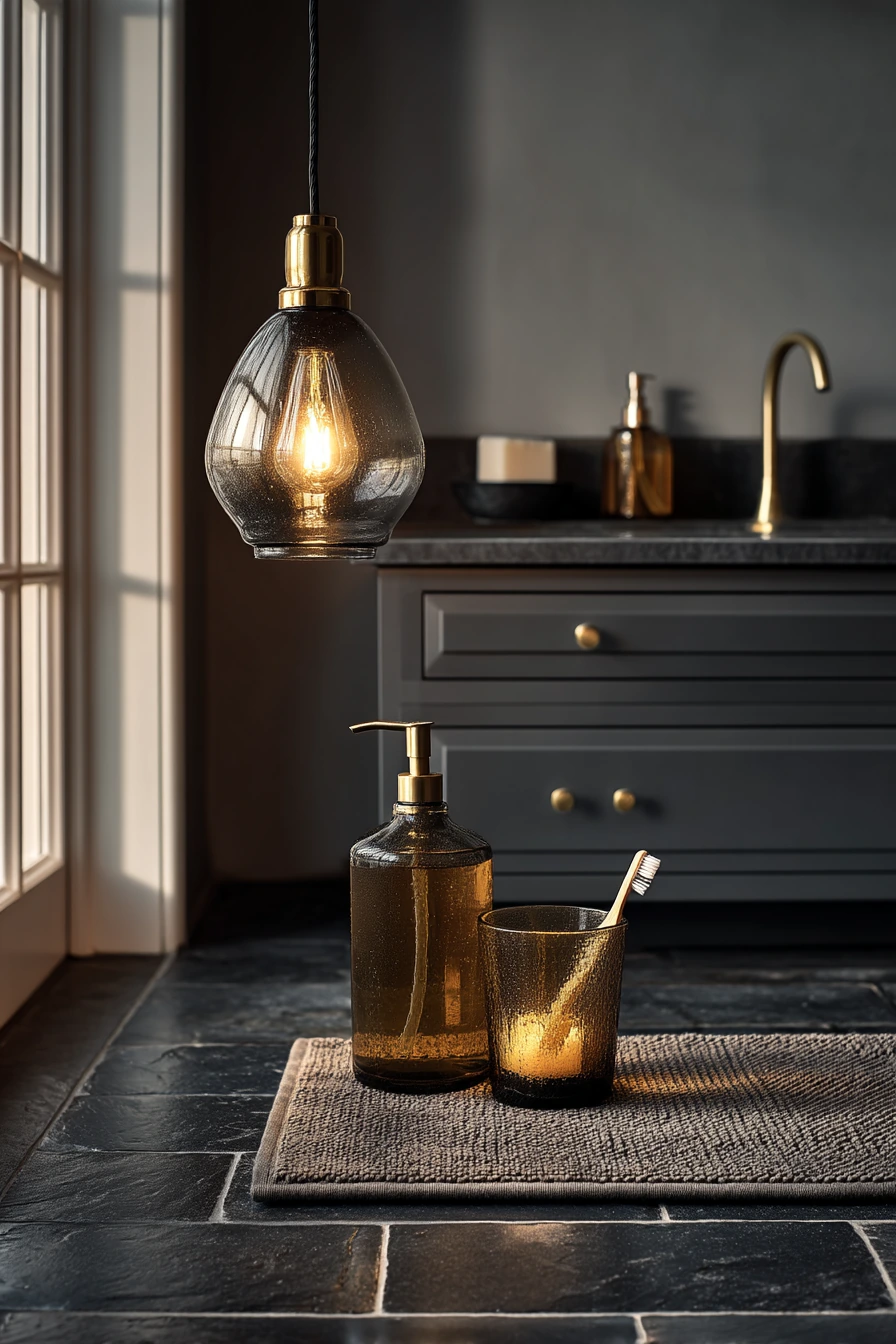
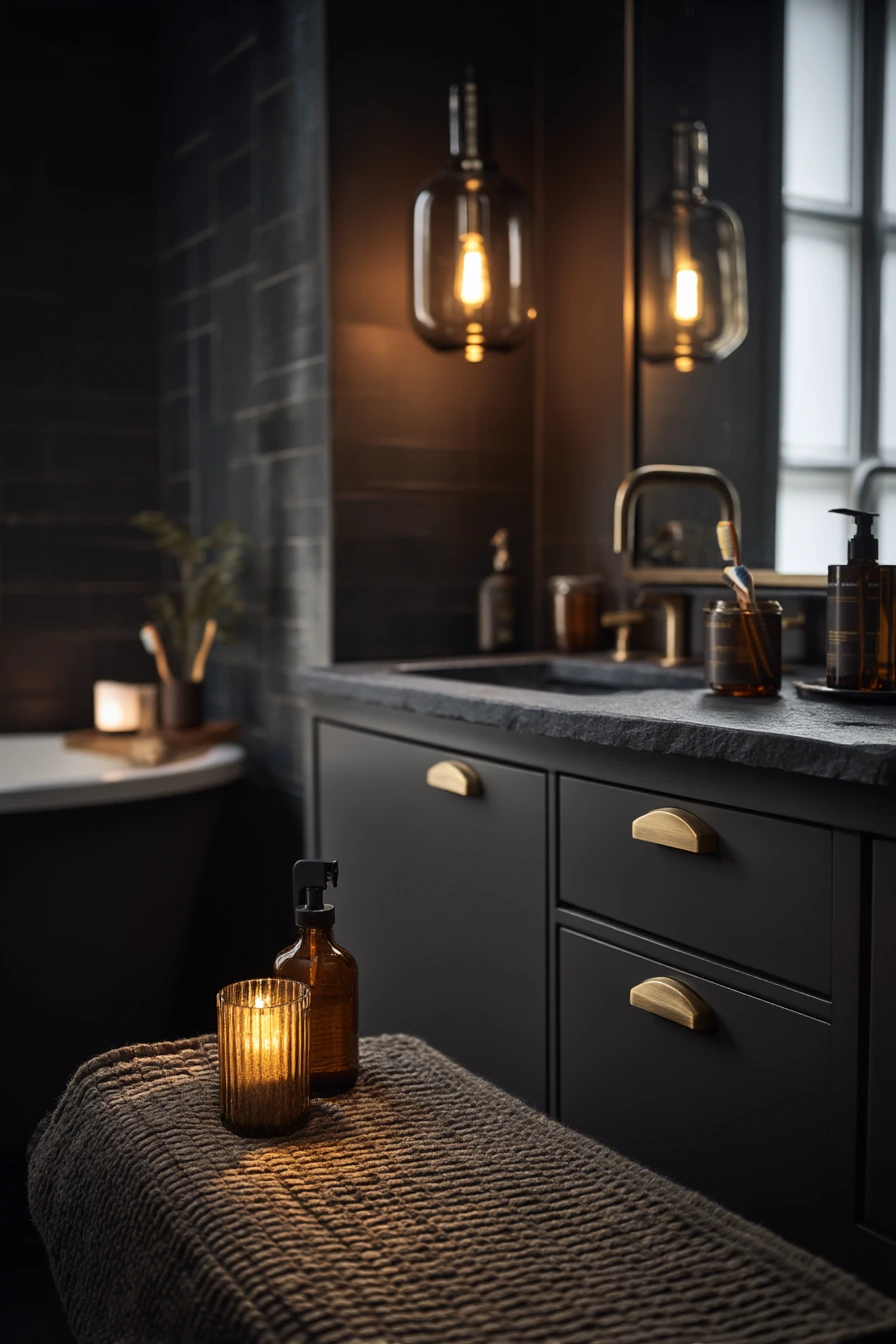
Deep slate flooring creates a moody, cocooning bathroom that still feels grounded. It looks strong with a charcoal vanity, brushed brass hardware, and a smoked glass pendant. This style works especially well in the evening, when warm lamp glow mixes with faint cool daylight and the room feels calm and private.
Slate can be real stone or a stone-look porcelain. Real slate has texture and depth, but it may need sealing and careful cleaning. Porcelain is easier to maintain and can still look rich. Add a textured bath mat to soften the dark floor, plus an amber soap bottle and a tumbler with toothbrushes to bring in warm tones. A candle just extinguished fits the vibe, but keep open flame away from towels and wood.
How to style it: balance dark surfaces with a few warm metals and soft textiles. Brass hardware helps the room feel less flat, and a warm pendant light stops the slate from looking cold. Use off-white towels to add contrast without turning it into black and white. Keep accessories simple so the dark floor feels calm, not heavy.
- Use warm lighting to prevent dark floors from feeling gloomy.
- Choose brass or bronze accents for a richer look.
- Add a high-absorbency mat to reduce water spots.
- Use a soft grout color to avoid harsh grid lines.
- Keep mirror and wall color lighter to balance the depth.
Pro Design Tip: If you use real slate, request a honed finish for a smoother feel and easier cleaning while still keeping some natural texture.
Budget Considerations: Natural slate can be expensive and may need sealing over time. Slate-look porcelain is usually cheaper, more consistent, and simpler to care for.
10. Blue Patterned Tile Flooring for a Beachy Bathroom
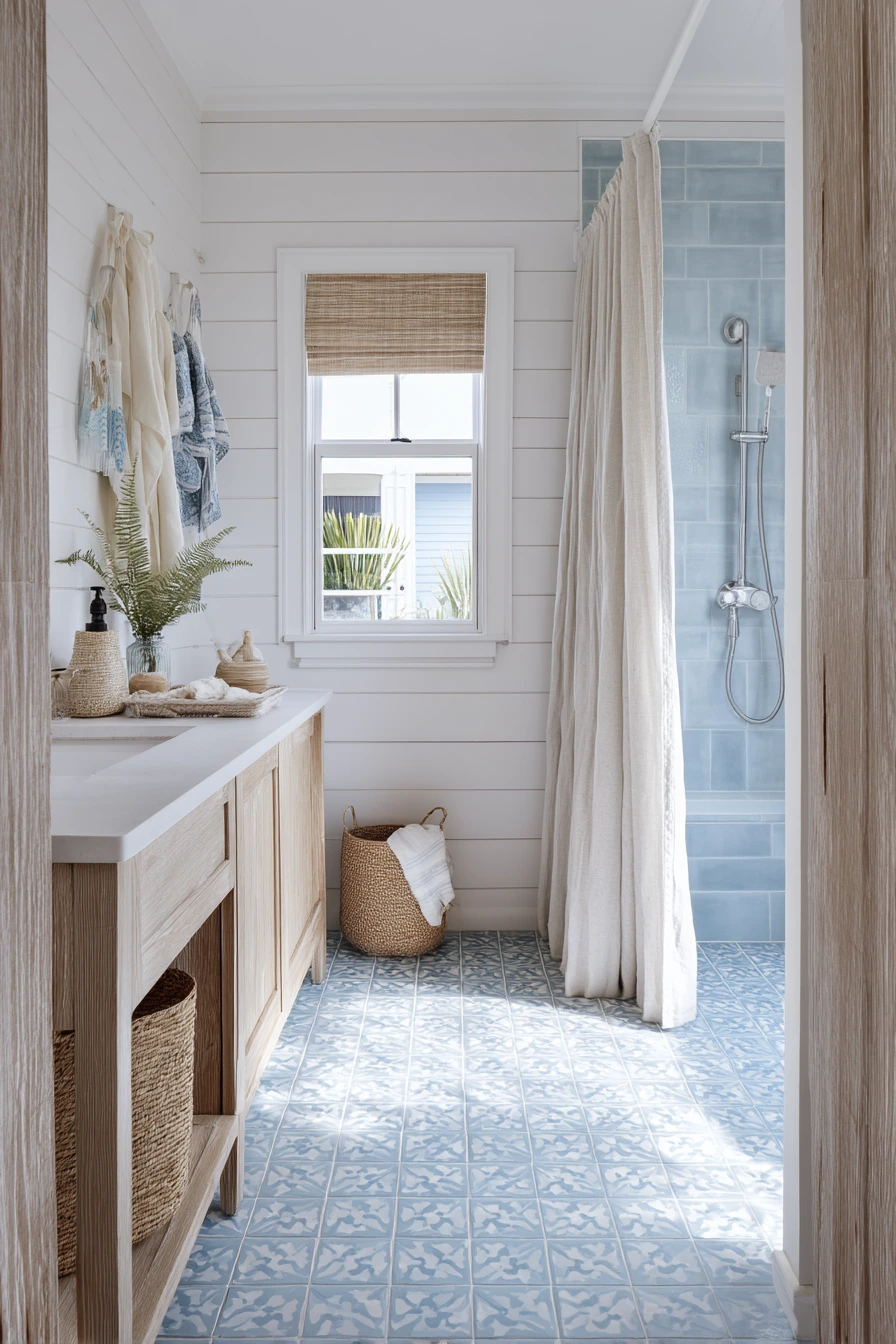

Soft blue patterned floor tiles are a great way to add color without making a bathroom feel loud. They pair naturally with white shiplap accents and a pale oak vanity. The look is breezy and relaxed, like a family beach-house space where wet feet and damp swimsuits are normal.
Patterned tile works best when the rest of the finishes are simple. Keep the vanity clean-lined, use shell-toned accessories, and store extras in a basket with rolled hand towels. Real-life details like a damp swimsuit on a hook and a few water droplets near the shower make the room feel honest and usable. If you can, keep a window open to stir a linen curtain and help the room dry out faster.
How to style it: repeat the blue tone in small ways, like a soap dispenser, a small print, or a striped towel. Use natural textures like linen and light wood so the pattern feels coastal, not busy. For a calmer look, choose a softer pattern with faded edges rather than sharp high-contrast shapes.
- Choose a pattern scale that fits the room size.
- Use white or very light grout to keep the look airy.
- Add hooks for swimsuits and towels so they dry faster.
- Use baskets for storage to match the relaxed style.
- Pick washable rugs that can handle wet sand and water.
Pro Design Tip: Match the undertone of the blue tile to your wood tone. Cool blue looks best with pale oak, while warmer blue works with honey wood.
Budget Considerations: Patterned porcelain tile ranges widely in price. If you want the feel for less, use a simple blue runner, shiplap paint, and swap hardware before replacing the floor.


Bathroom flooring ideas work best when you start with how your space is used. Busy mornings, kids, guests, and evening routines all change what is practical.
Warm oak-look planks, checkerboard tile, pale stone, patterned cement looks, marble mosaics, terracotta, concrete-look floors, muted hex, deep slate, and blue patterns can all work when the materials match the water level in the room.
If you are stuck, pick your mood first, then choose a floor that is easy to clean in your home. After that, style it with a few textures, good lighting, and storage that keeps the counter clear.
FAQ
What is the best bathroom flooring for water resistance? Porcelain tile and quality LVP are both strong choices. They handle splashes well and are easy to wipe down.
Is wood flooring okay in a bathroom? Solid wood is risky because it can swell. If you want the wood look, use LVP or wood-look porcelain.
What bathroom floor is least slippery? Small mosaics and matte finishes tend to grip better. Always check the slip rating if you are remodeling.
What color bathroom flooring hides dirt? Mid-tones like warm oak, sand, and light gray hide dust and hair better than bright white or very dark black.
Do patterned tiles make a small bathroom look smaller? Not always. Softer patterns and medium scale can add interest without closing the room in, especially with light walls.
What is the cheapest way to update bathroom flooring? Vinyl sheet or peel-and-stick tiles can be budget friendly. Pair them with fresh towels and better lighting for a bigger impact.