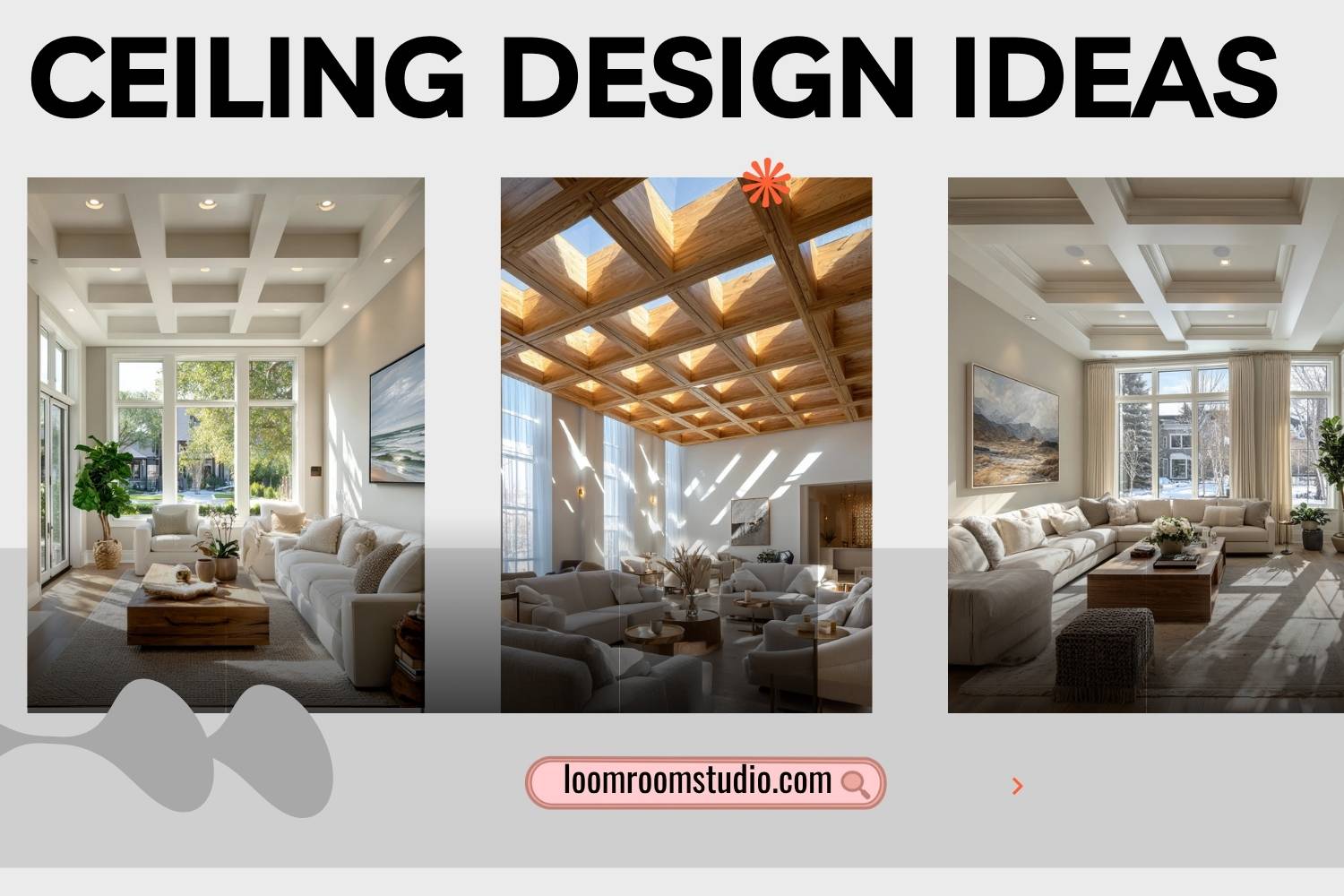

Ceiling design ideas can change how a room looks and feels, even if you keep the same paint and furniture. A ceiling can add depth, hide lighting, and make a space feel taller and brighter.
This guide shares modern ceiling styles you can save on Pinterest and actually use in real homes. You will see coffered ceilings, tray ceilings, wood beams, slatted wood, and sculptural plaster details, with simple ways to style each look.
For every idea, you will get layout tips, lighting notes (recessed LED, hidden strips, skylights), and quick styling steps that work with neutral walls, wood floors, and minimalist décor.
Use these sections to choose one ceiling direction, then match it to your room size, natural light, and budget before you start any work.
1. Coffered Ceiling with Recessed LED Lighting
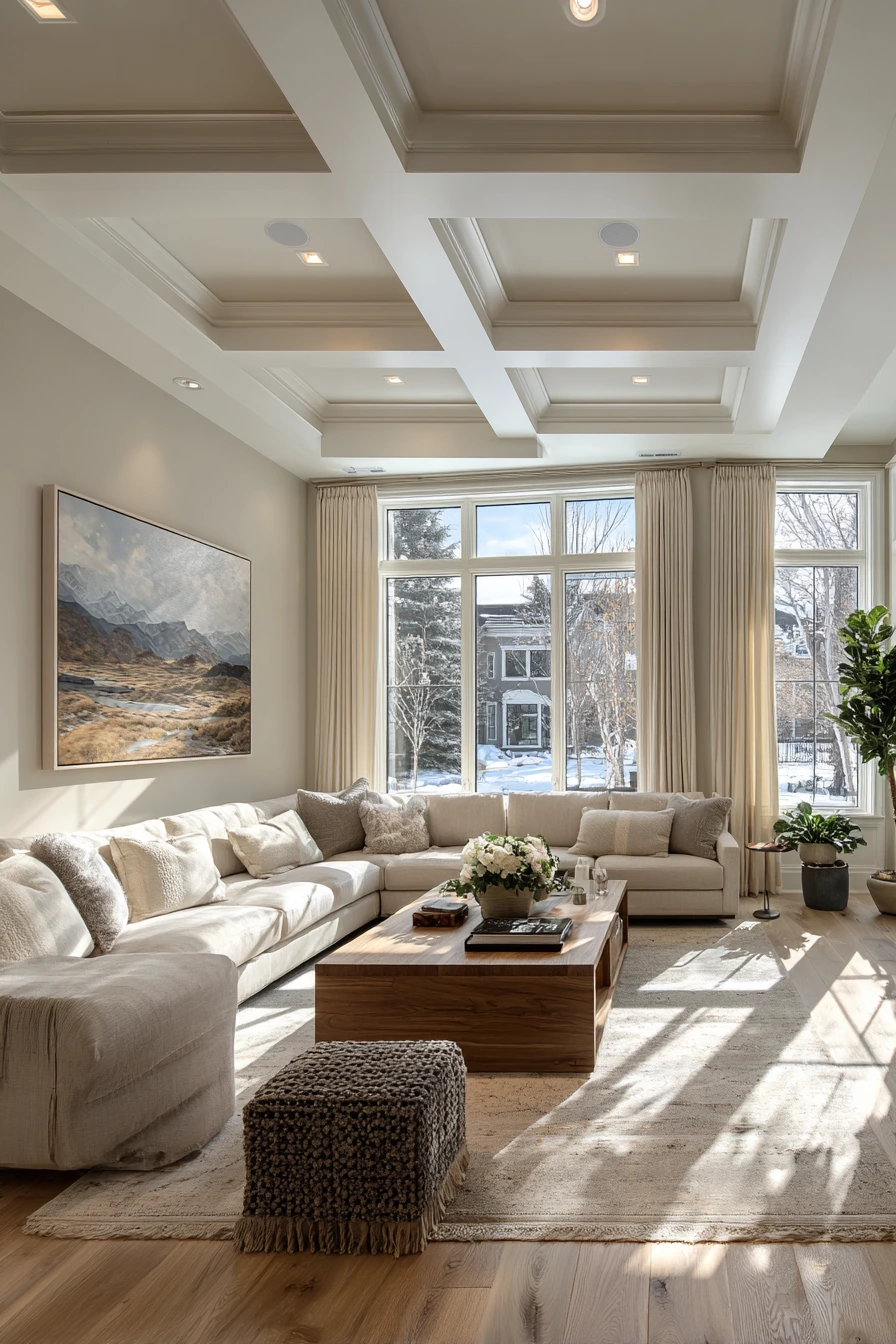
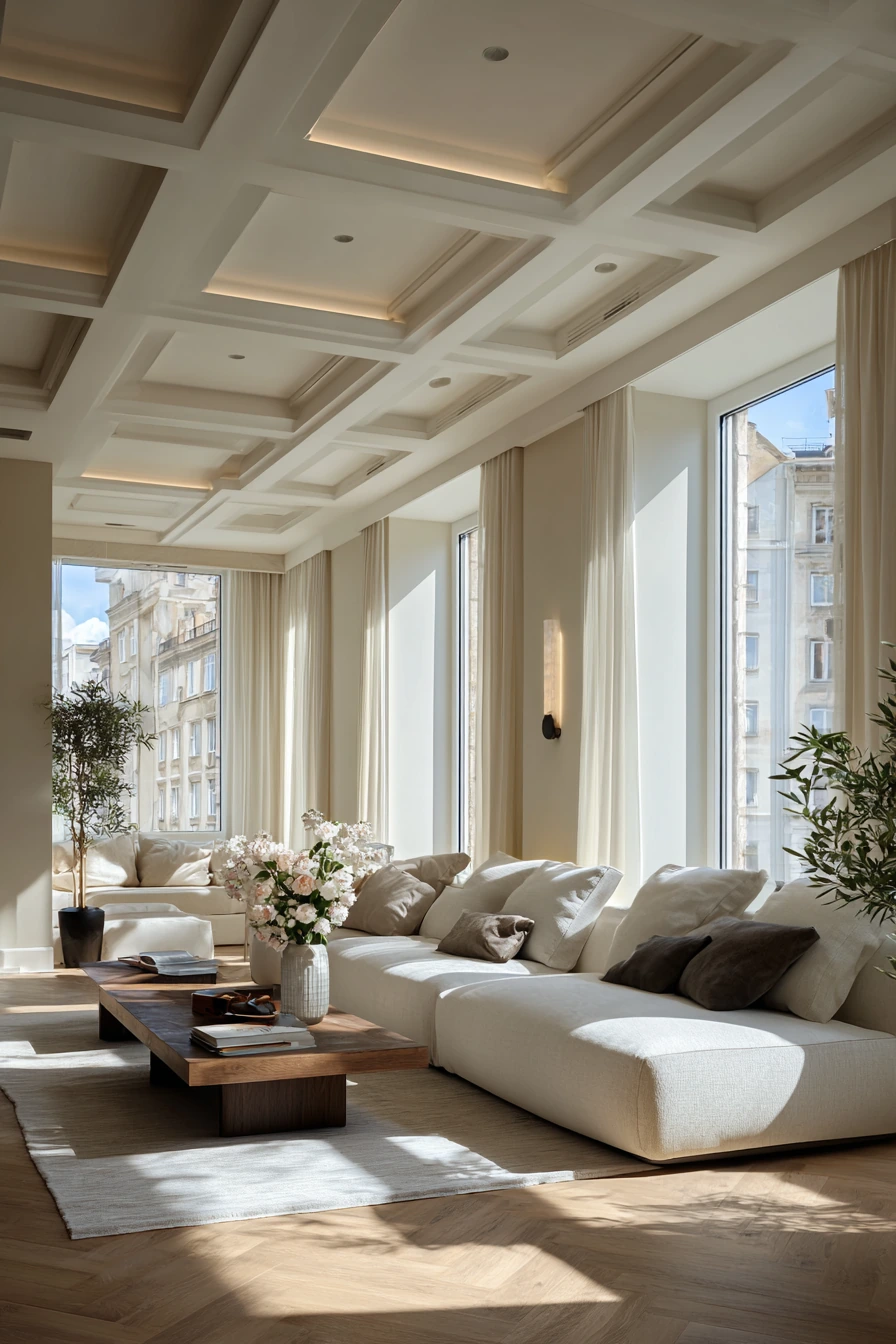
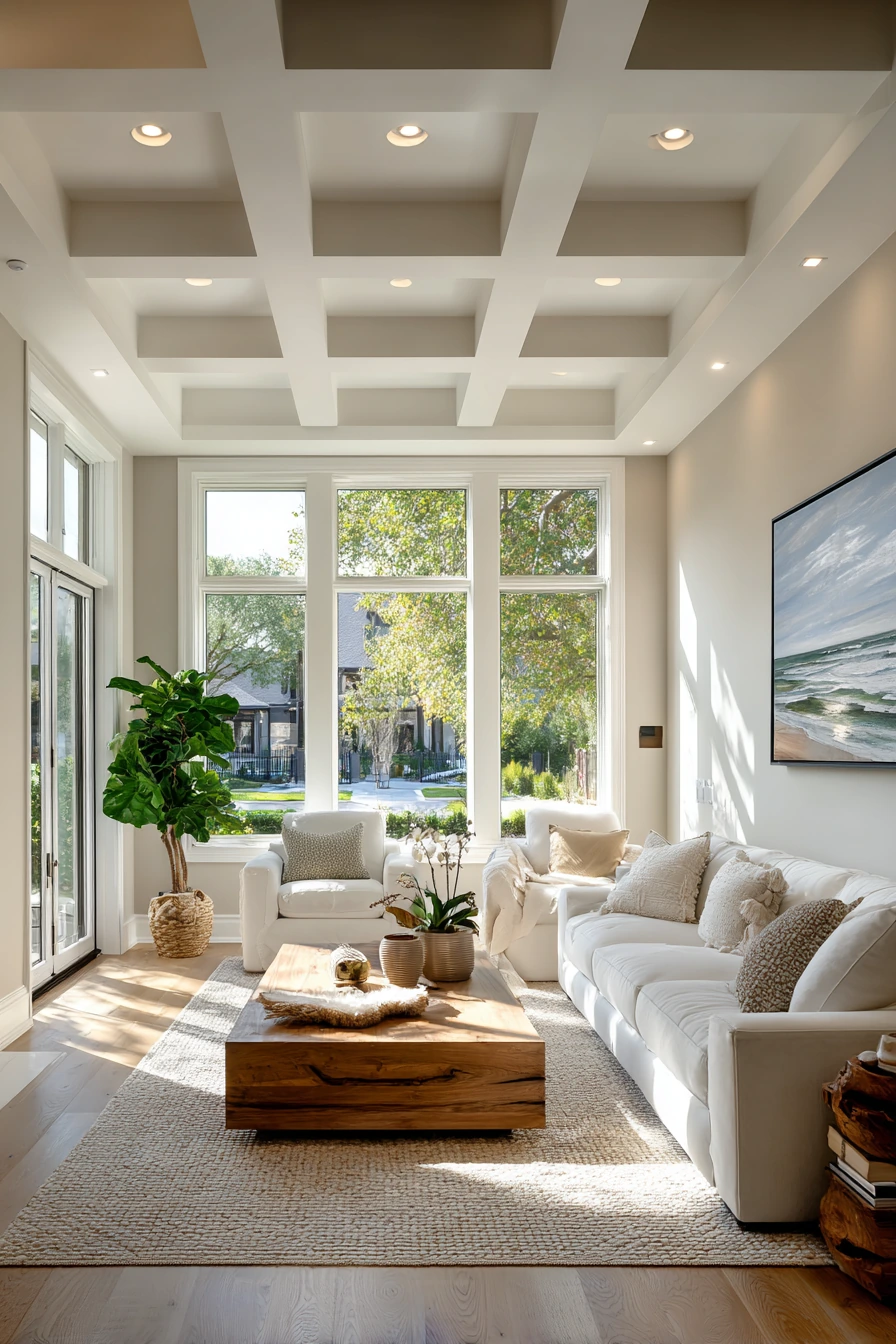
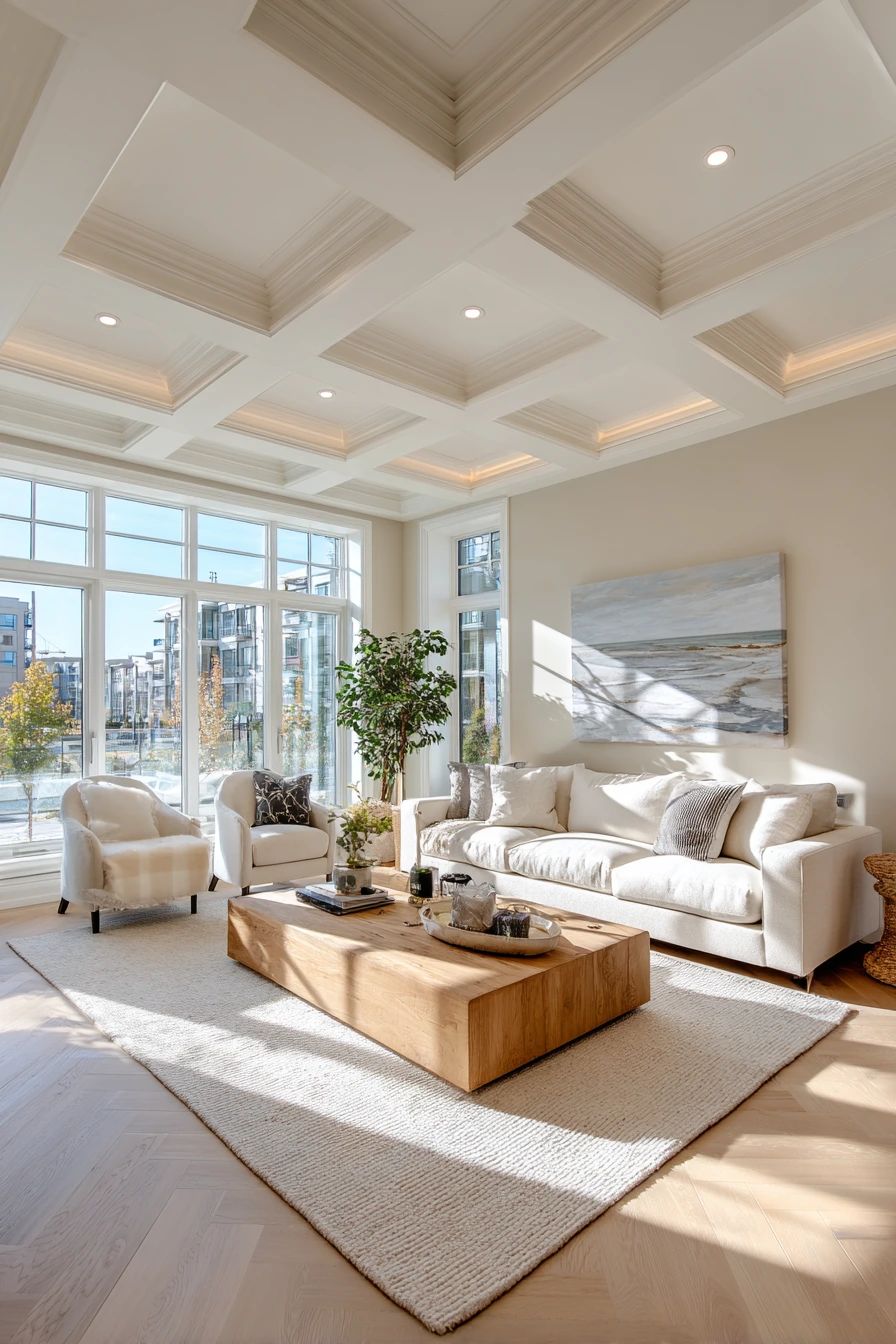
A coffered ceiling is a classic ceiling upgrade that still fits a modern living room. The grid of recessed panels adds structure overhead, and recessed LED lighting can highlight each section without making the room feel busy. In a space with beige walls and wooden flooring, soft neutral ceiling paint helps the details show up while staying calm.
To keep the look airy, use clean lines and low-profile furniture. A minimalist sofa, a slim coffee table, and simple décor let the ceiling be the main feature. If you have large windows, natural sunlight will cast gentle shadows inside each coffer, which makes the ceiling look deeper and more high-end.
How to style it: repeat the ceiling’s geometry in the room. Add a rectangular rug, squared throw pillows, and one or two boxy planters. Choose warm white bulbs so the recessed lighting matches the tone of the wood floor and reads soft at night.
- Paint the coffers one shade lighter than the walls for a seamless look.
- Place recessed lights near the edges to show depth, not in the center only.
- Use matte paint to reduce glare from daylight and LEDs.
- Keep window treatments simple so sunlight still reaches the ceiling.
- Pick décor in pairs to match the ceiling’s balanced grid.
Pro Design Tip: If the room is not large, use fewer, larger coffers. A tight grid can make a ceiling feel lower, while bigger panels keep the space open.
Budget Considerations: Coffered ceilings cost more when framing is deep or custom. For a lower-cost option, use trim molding to create a shallow coffer pattern and add a few recessed LEDs.
2. Geometric Wood Beam Grid Ceiling
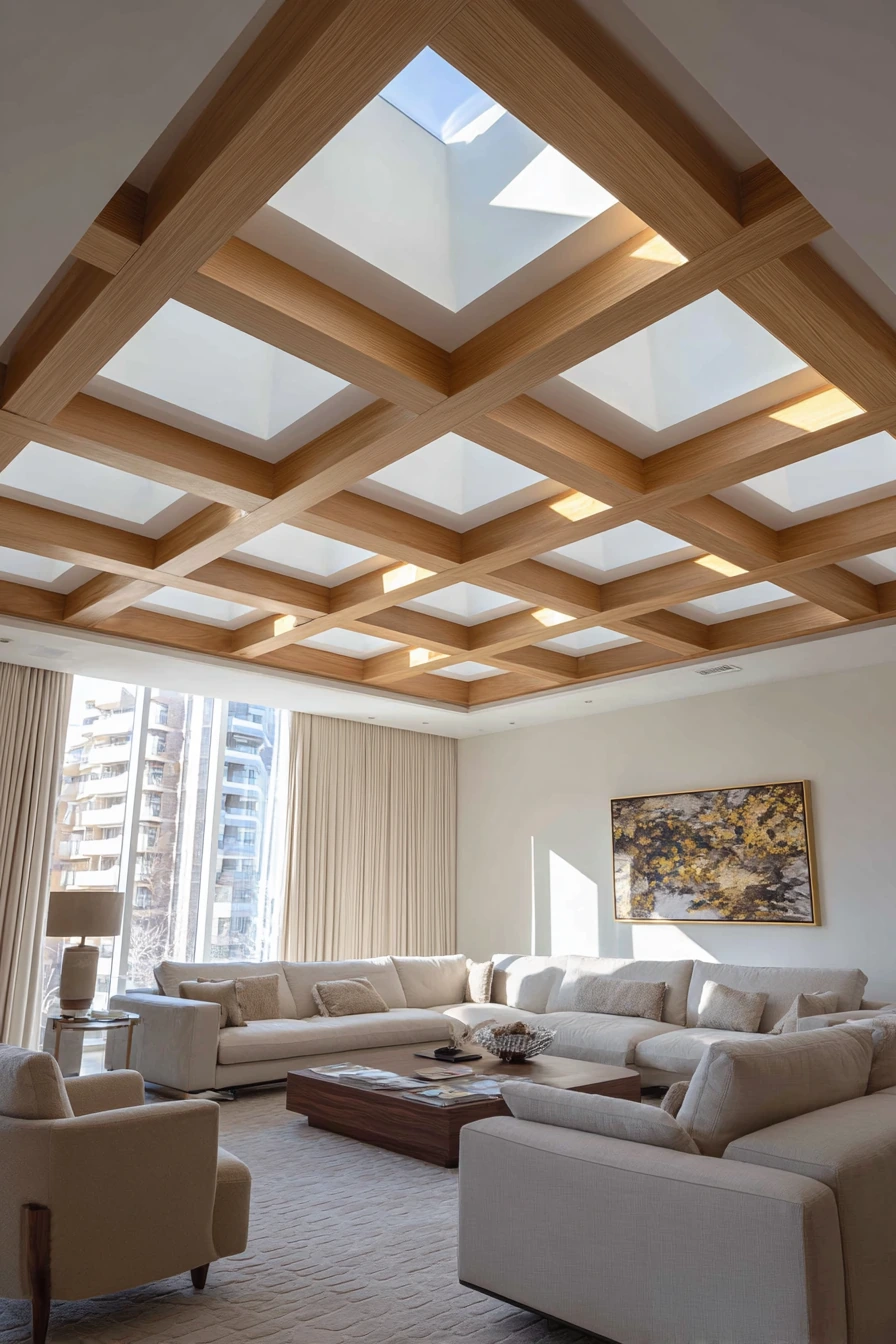
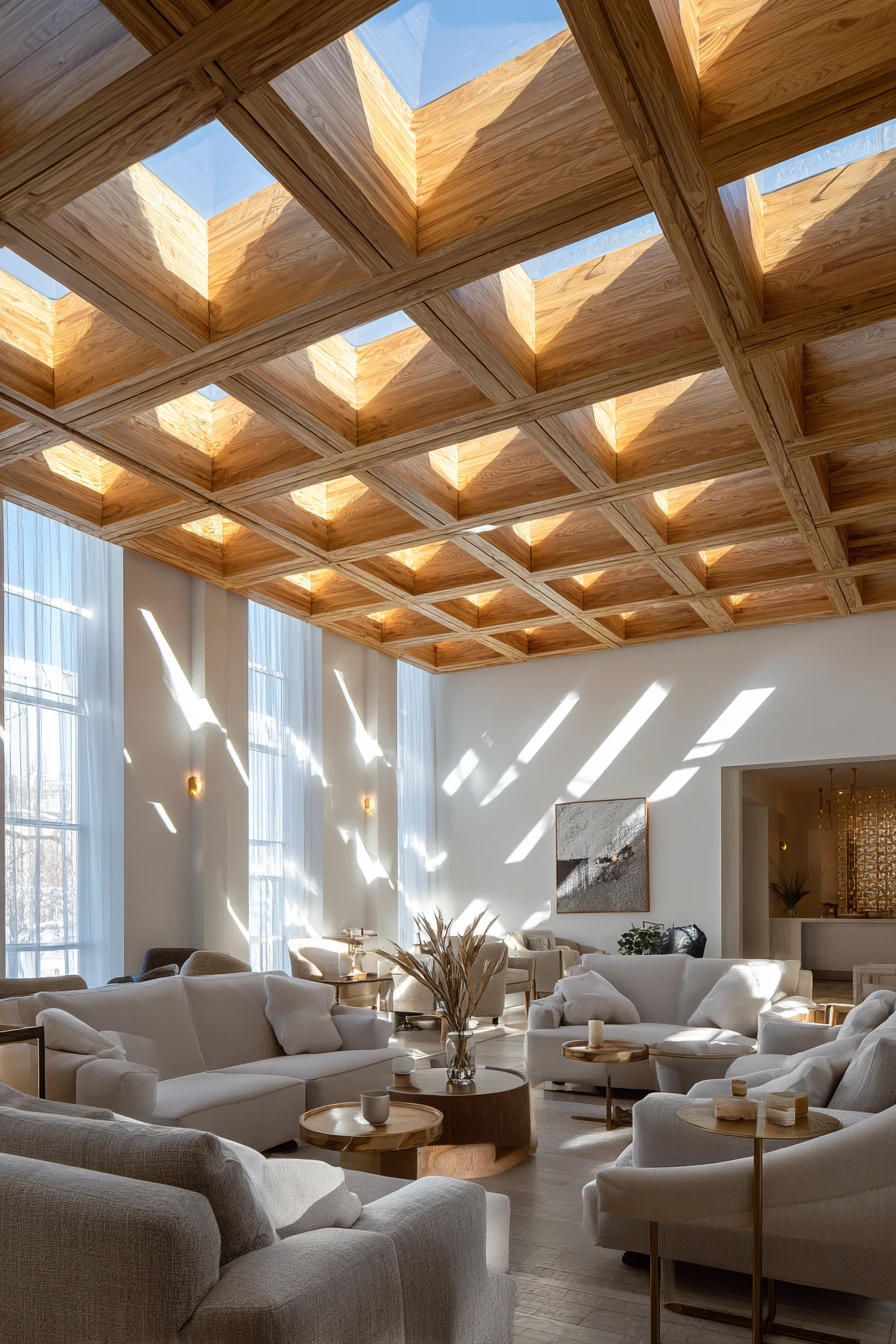
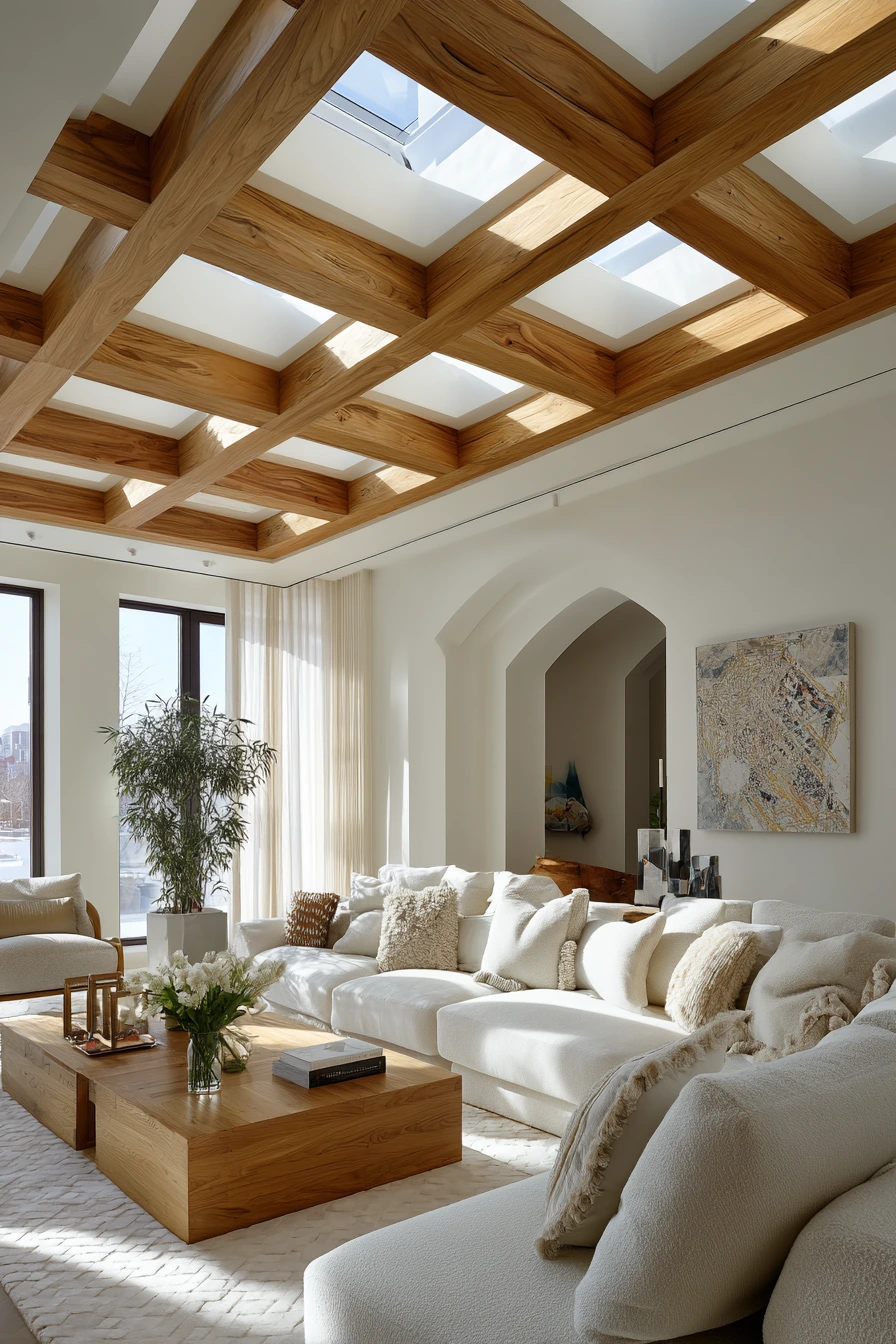
A geometric wooden beam ceiling in a grid pattern brings warmth and order to a modern space. Against smooth white plaster, the wood texture stands out without needing bold color. This style works well in contemporary rooms because it feels architectural and clean, especially when the beams align with the room’s layout.
Skylights are a great match here. Natural light from above makes the wood grain look richer and creates crisp shadows between the grid lines. To keep the room inviting, pair the ceiling with soft neutral furniture and simple shapes. This balance keeps the beams from feeling heavy.
How to style it: use wood tones in small repeats. Add a wood tray, a side table, or picture frames that match the beams. Keep metal finishes limited to one family, like black or brushed nickel, so the ceiling stays the focus.
- Match beam spacing to key room elements like the sofa width or rug size.
- Use a low-sheen sealer on beams so they look natural, not glossy.
- Choose simple ceiling fixtures that sit between grid sections.
- Keep walls light to increase contrast and brightness.
- Add texture below with a loop-pile rug or linen curtains.
Pro Design Tip: Line up the beam grid with recessed lights, sprinklers, and vents early. A clean plan avoids awkward cut beams and keeps the pattern looking sharp.
Budget Considerations: Solid wood beams can be pricey and heavy. Faux beams made from MDF or hollow wood wraps can give the same look with easier install and lower cost.

3. Warm Taupe Tray Ceiling with Crown Molding
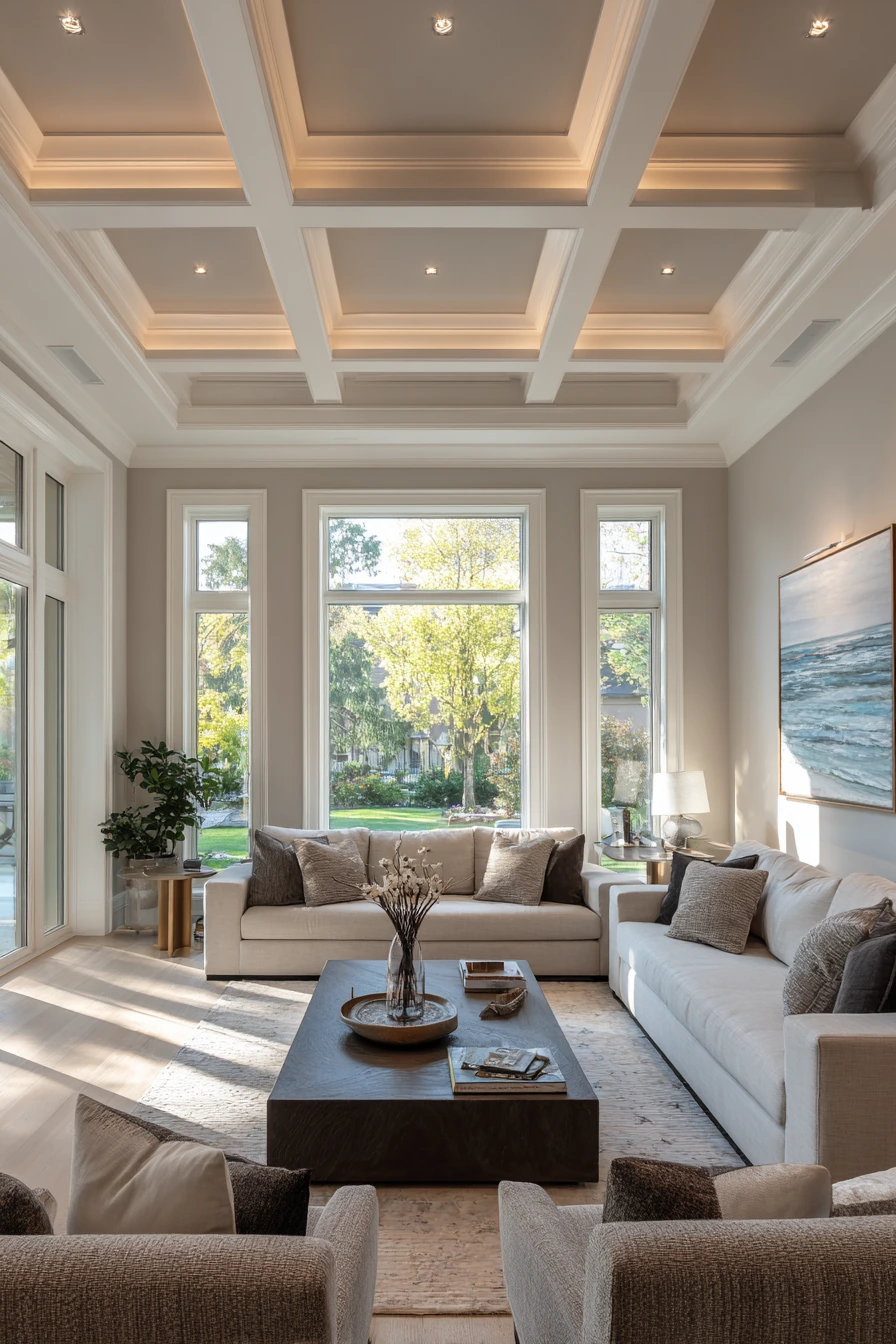

A tray ceiling adds height and soft drama without needing bold materials. With warm taupe paint and subtle crown molding, this ceiling style feels upscale but still quiet. The layered shape creates visual depth, and recessed lights can wash the edges so the tray looks crisp in the evening.
This design works best when the room has symmetry. Large windows help, too, because daylight creates gentle shadows along the molding and tray edges. In a luxury living room, keep furniture low and modern, and stick to neutral décor so the ceiling becomes the calm focal point.
How to style it: use a centered layout. Place the main seating area under the tray, then anchor it with a large rug. Add a simple center light or a flush mount that does not fight with the crown molding. Warm metals like brass can pair well with taupe, but keep the finish consistent.
- Paint the inner tray slightly lighter to make the ceiling feel taller.
- Use dimmers on recessed lights to control mood and glare.
- Keep molding profiles simple for a modern look.
- Repeat the taupe tone in small accents like pillows or art mats.
- Choose wide curtain panels to frame windows and soften the edges.
Pro Design Tip: Use hidden cove lighting at the tray edge if you want a softer glow than recessed cans. It makes the ceiling layers look deeper and more even.
Budget Considerations: Crown molding and layered drywall add labor cost. If you need to save, do a single-step tray with a simple molding profile and fewer lights.

4. Minimalist Linear Panel Ceiling with Hidden Lighting

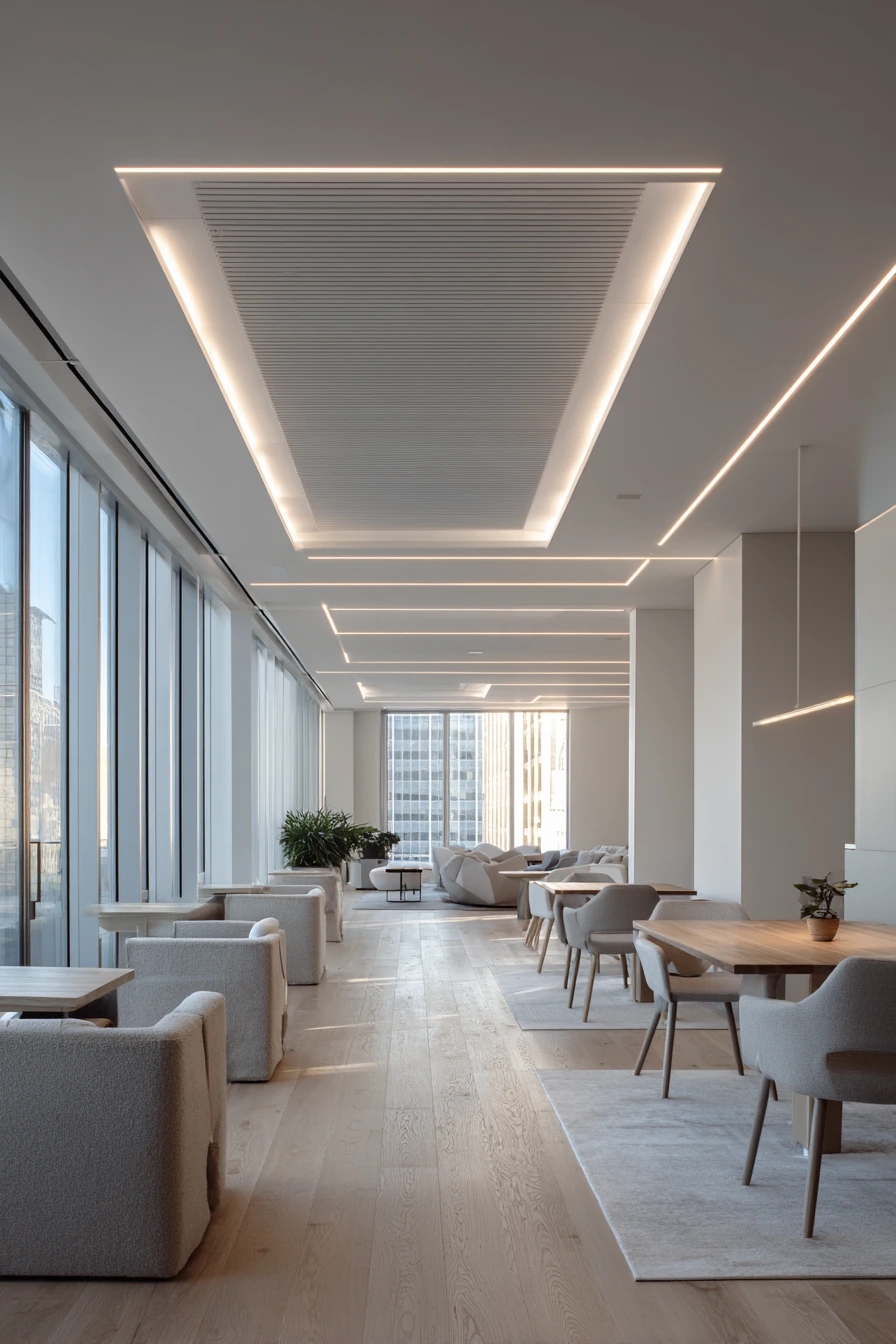
A minimalist ceiling can still be a feature when the details are clean and planned. Linear panels painted in soft gray tones create subtle texture, and hidden recessed lighting adds glow without showing bulky fixtures. This approach fits a contemporary interior with light wood floors and neutral furniture.
Floor-to-ceiling windows help this ceiling look its best. Sunlight skims across the panels and shows small shadows, which adds depth even when the color is quiet. Because the ceiling is simple, the room feels calm and open, and it is easier to decorate without visual clutter.
How to style it: keep lines consistent. Choose a long sofa, a low media console, and a simple coffee table to match the ceiling’s direction. Use one or two large art pieces instead of many small frames. For lighting, add a few wall washers or a slim floor lamp so the room has layers at night.
- Run panels in the same direction as the longest wall to stretch the room.
- Use a soft gray with warm undertones so it does not feel cold.
- Install dimmable hidden LEDs for a gentle evening glow.
- Pick matte finishes to avoid reflections on the panel seams.
- Keep décor minimal and add interest with fabric texture instead of color.
Pro Design Tip: Ask for a mock-up of panel spacing before install. Even small changes in spacing can make the ceiling feel more balanced and intentional.
Budget Considerations: Custom panel systems cost more than paint. A budget option is to use drywall reveals or simple battens to mimic panel lines, then add a short run of hidden LED tape.


5. White Vaulted Ceiling with Exposed Wood Beams

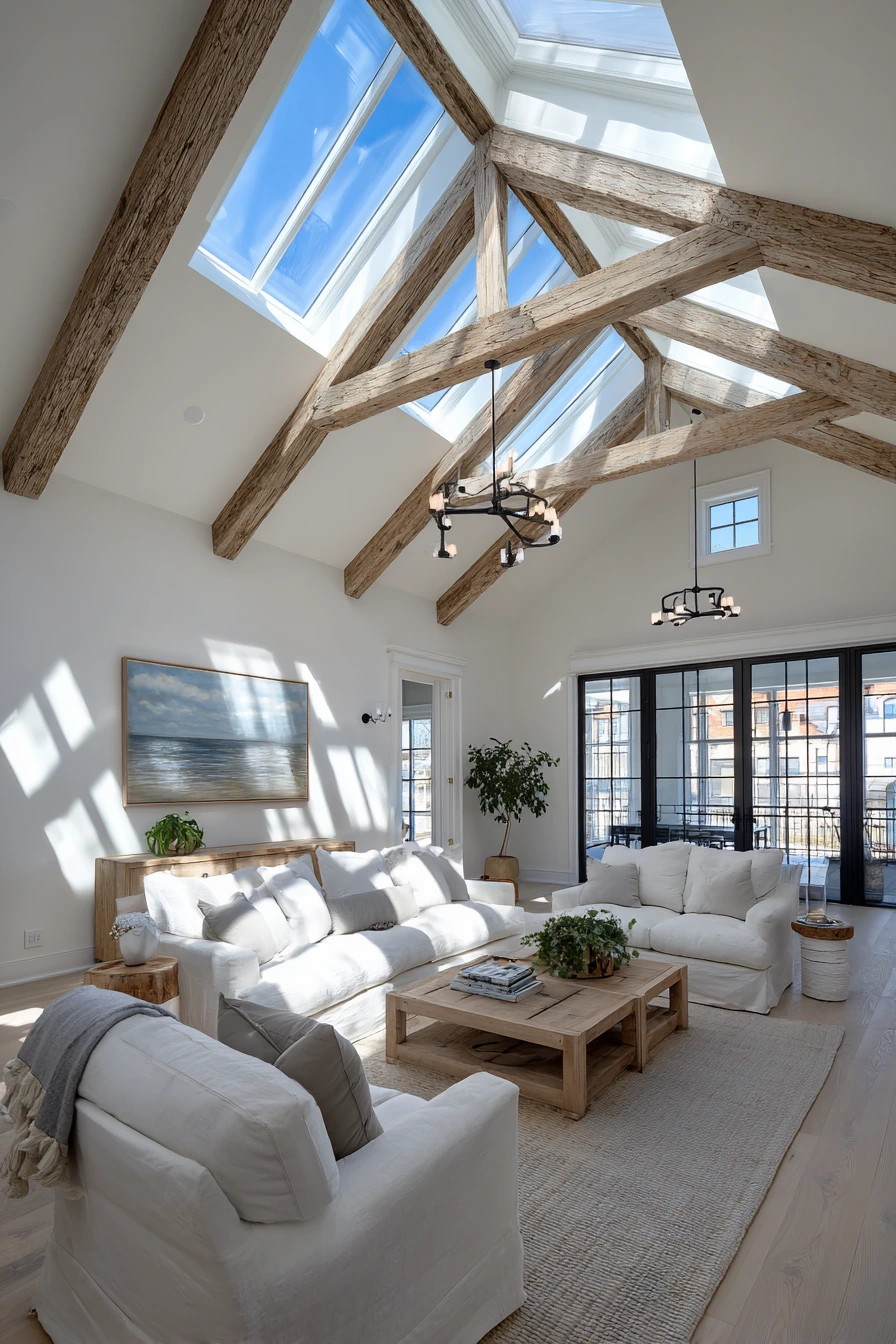
A vaulted ceiling makes a living room feel bigger right away. Painting the ceiling crisp white keeps it bright, while exposed wooden beams add contrast and a natural touch. This mix works well with modern furniture because it gives the room character without adding extra décor.
Skylights are a strong match for a vaulted ceiling. Sunlight pouring in from above creates changing shadows across the beams, walls, and flooring. That movement makes the space feel alive during the day, while the white ceiling keeps the light bouncing around the room.
How to style it: go low and simple with furniture so the ceiling stays the star. Use a low sofa with soft cushions, a minimal coffee table, and a few large-scale pieces like a tall plant or a big art canvas. Keep the color palette neutral so the wood beams read warm and grounded.
- Choose beam stains that match or complement the floor tone.
- Add a ceiling fan or simple pendant sized for the room height.
- Use layered lighting: wall lights plus table lamps for night.
- Keep window coverings light to protect the airy feel.
- Use a large rug to prevent the space from feeling echoey.
Pro Design Tip: Use beam spacing to guide the layout below. Center the seating group under a beam bay so the room feels organized, not floating.
Budget Considerations: Structural beams and skylights raise costs fast. Faux beams can cut the budget, and solar tubes can bring in daylight for less than full skylights.


6. Layered False Ceiling with Warm LED Patterns
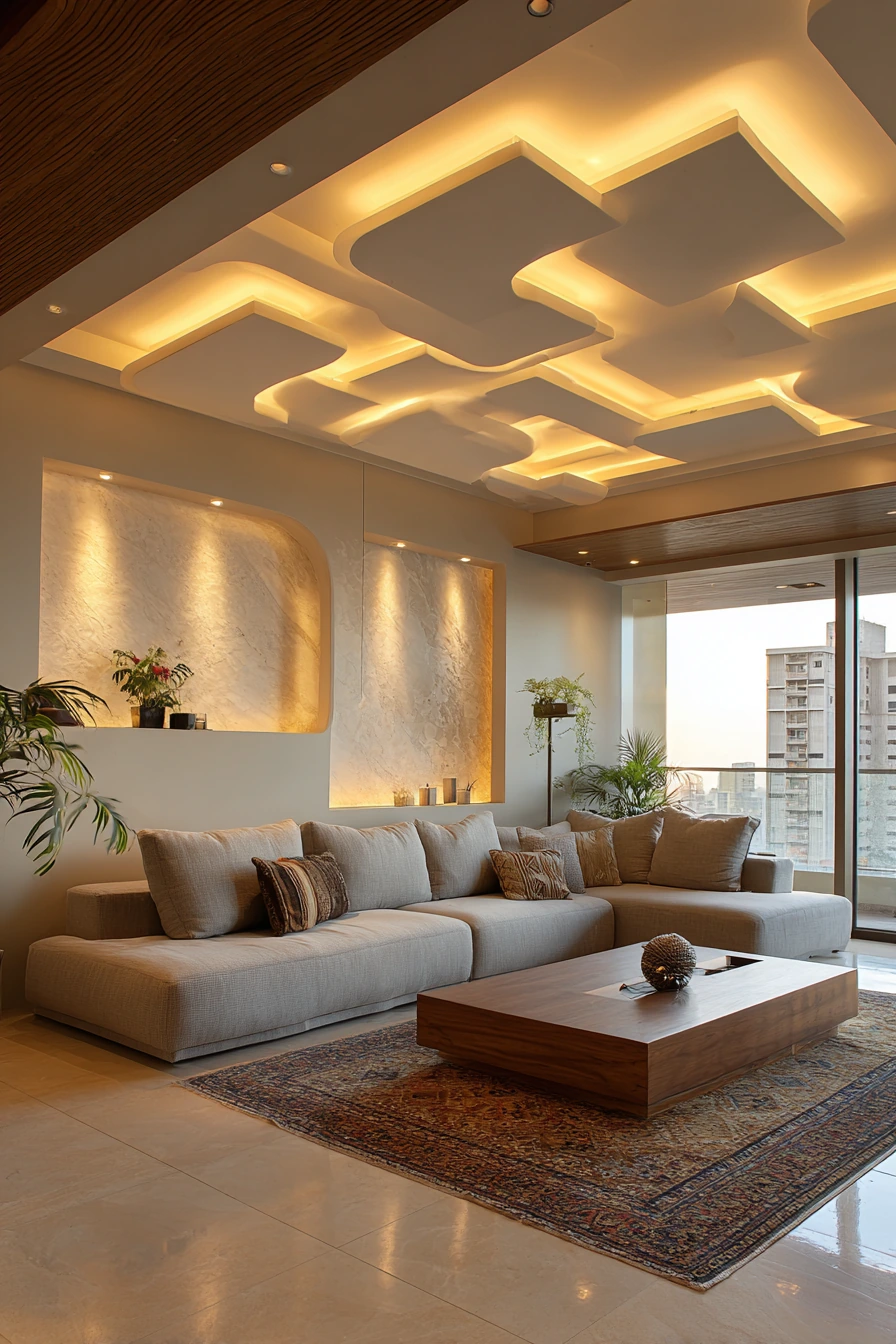
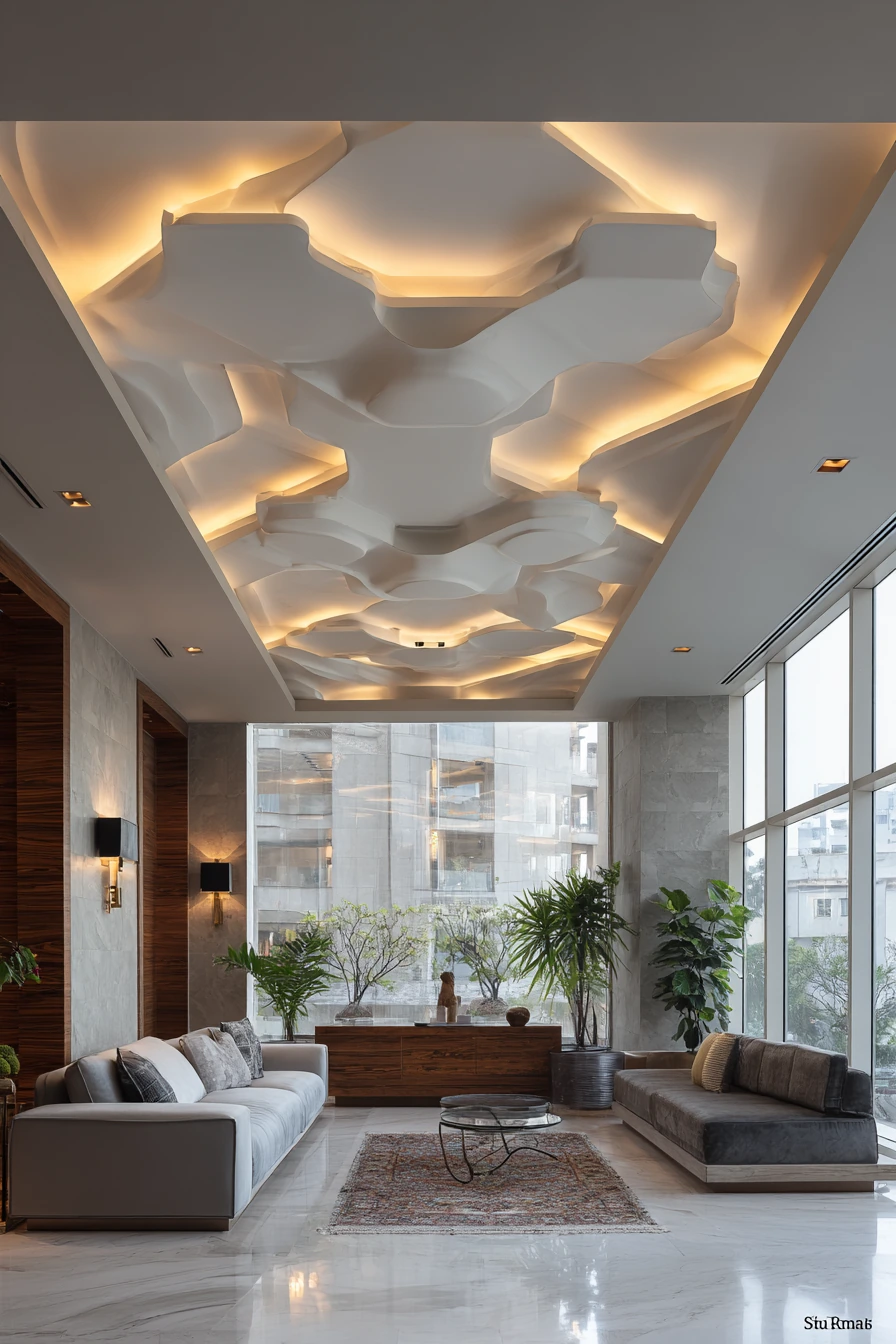
A layered false ceiling is a bold way to add depth and lighting in one project. Symmetrical layers create a structured look, and embedded warm LED lighting makes the ceiling feel like part of the décor. In a modern living room with neutral-toned walls and a low sofa, this style can look polished without needing many accessories.
The key is balance. Too many steps or shapes can feel busy, but a clear pattern with clean edges reads modern. Daylight from large windows will show the 3D depth, while the LEDs take over at night and highlight the layers.
How to style it: keep the room calm so the ceiling does the work. Choose one main texture, like a boucle chair or a woven rug, and keep the rest smooth. Pick warm white LEDs so the light feels soft against neutral paint and does not turn the room blue.
- Use symmetry to make the ceiling feel planned and tidy.
- Keep layer heights shallow if the room has a standard ceiling height.
- Hide LED strips behind a lip to avoid seeing hotspots.
- Match LED color temperature across the room for consistent light.
- Limit wall art to a few larger pieces so the room stays quiet.
Pro Design Tip: Add access points for drivers and wiring. Hidden lighting looks best when it is easy to service later, without cutting the ceiling.
Budget Considerations: False ceilings add framing and drywall costs. To save, create one main dropped border with LED strips and keep the center ceiling flat.


7. Slatted Wood Ceiling in Warm Natural Tones


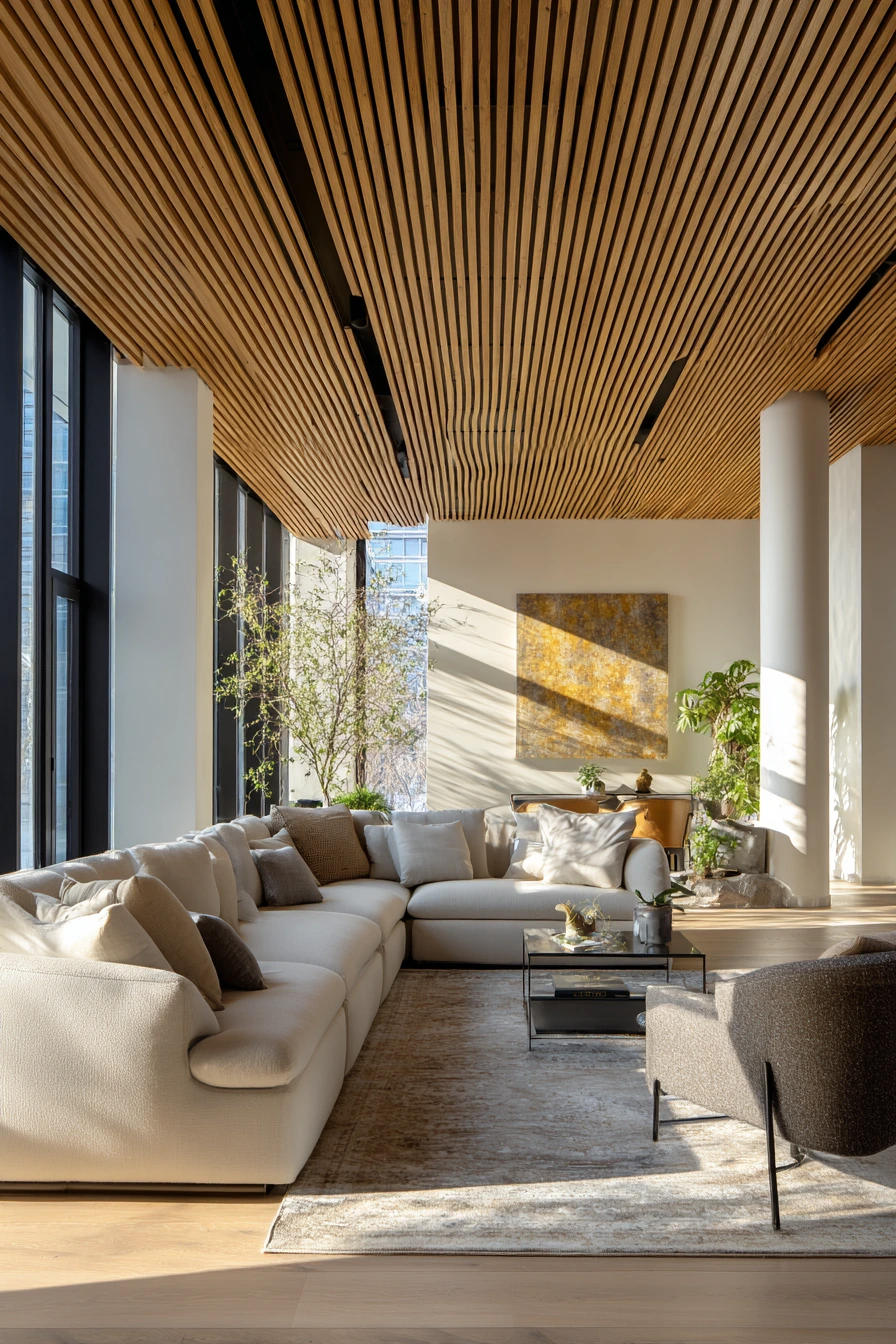
A slatted wood ceiling brings warmth and rhythm to a contemporary living space. The linear pattern guides the eye across the room and adds texture overhead, even if the rest of the design is minimalist. Warm natural tones work especially well with neutral furniture and a soft area rug.
Daylight from corner windows makes this ceiling shine. Light hits the slats at different angles, creating natural highlights and shadows on the ceiling and floor. This gives the room depth without needing bold colors or heavy décor.
How to style it: keep the rest of the room simple and let the wood be the texture hero. Use a neutral sofa, black or oak side tables, and a few ceramic pieces. If you want more softness, add linen curtains and a chunky knit throw so the room feels cozy but still modern.
- Choose slat width based on room size: wider slats for larger rooms.
- Use acoustic backing if the room feels loud or echoey.
- Repeat the wood tone in one or two small furniture pieces.
- Keep ceiling lighting minimal, like small recessed spots.
- Use a rug with a simple pattern so lines do not compete.
Pro Design Tip: Run slats in the direction you want to visually expand. Lengthwise slats can make a narrow room feel wider, depending on placement.
Budget Considerations: Real wood slats cost more and may need sealing. Veneer panels or slat kits can lower cost and speed up install while keeping a similar look.

8. Beige Coffered Ceiling with Accent Lights


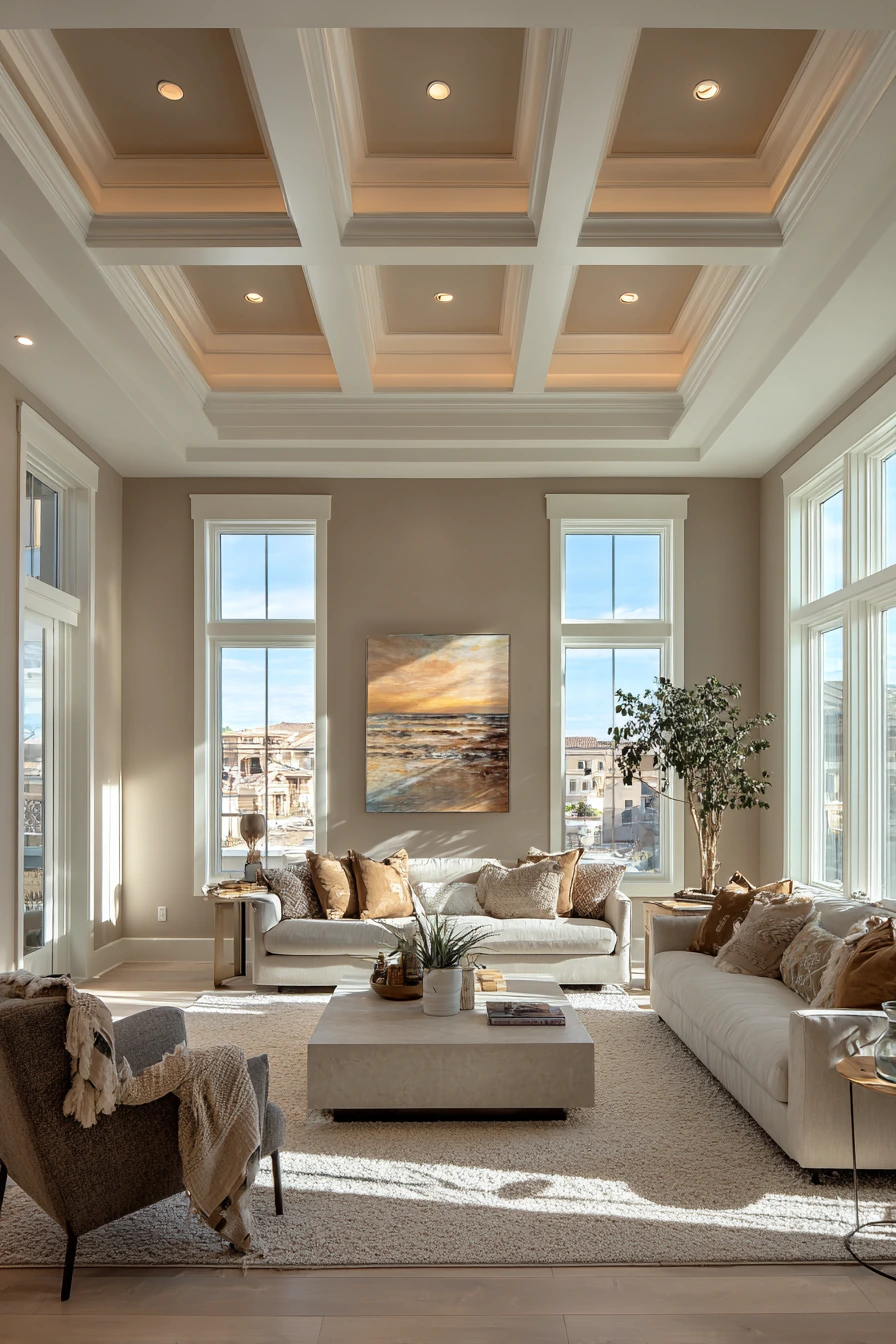
A beige coffered ceiling is a softer take on a high-detail ceiling design. Painting the coffers in a warm beige keeps the look light and relaxed, while subtle accent lighting in each recess adds a gentle glow at night. This is a strong option if you like coffered ceilings but want less contrast than bright white.
In a room with neutral-toned furniture and clean-lined décor, the ceiling becomes a sophisticated focal point without overpowering the space. Wide windows help the coffers look more dimensional. Daylight creates natural reflections and shadowing that makes each recessed panel look deeper.
How to style it: stick with a tonal palette. Use creams, sand, and light browns, then add one darker anchor like a walnut table or black metal lamp. Keep accessories simple and spaced out so the ceiling detail does not compete with clutter.
- Use warm beige paint with a matte finish for a soft, modern look.
- Choose accent lights that are dimmable and warm white.
- Keep the coffer grid aligned with the main seating area.
- Use simple trims with sharp edges for a cleaner style.
- Add one statement piece, like a large artwork, not many small items.
Pro Design Tip: Test paint in both daylight and evening light. Beige can shift yellow or gray, and the right undertone will keep the ceiling looking calm.
Budget Considerations: Adding lights to every recess increases electrical work. If you are saving, light only key sections or use fewer, brighter fixtures with good spacing.


9. Sculptural Curved Plaster Wave Ceiling
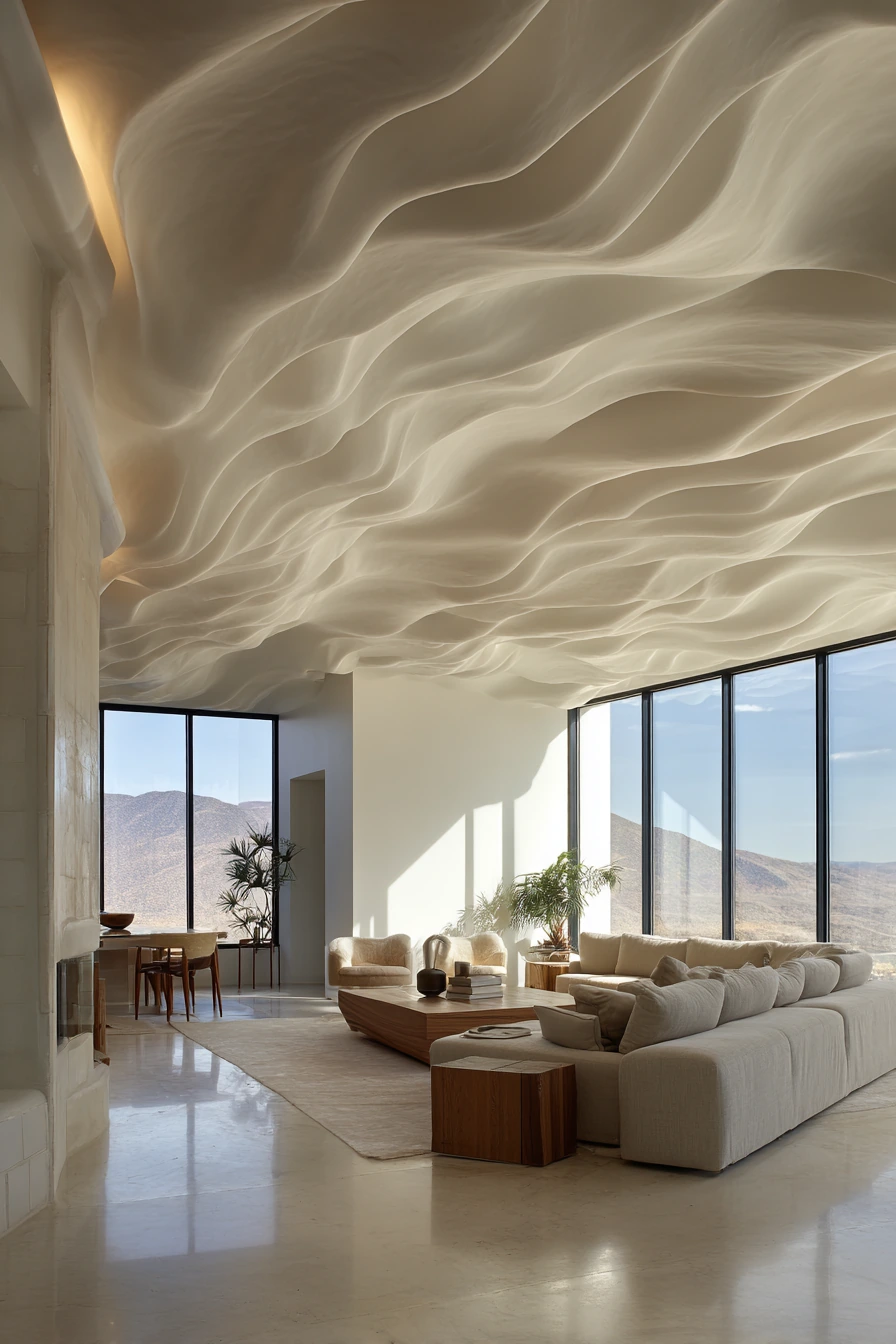

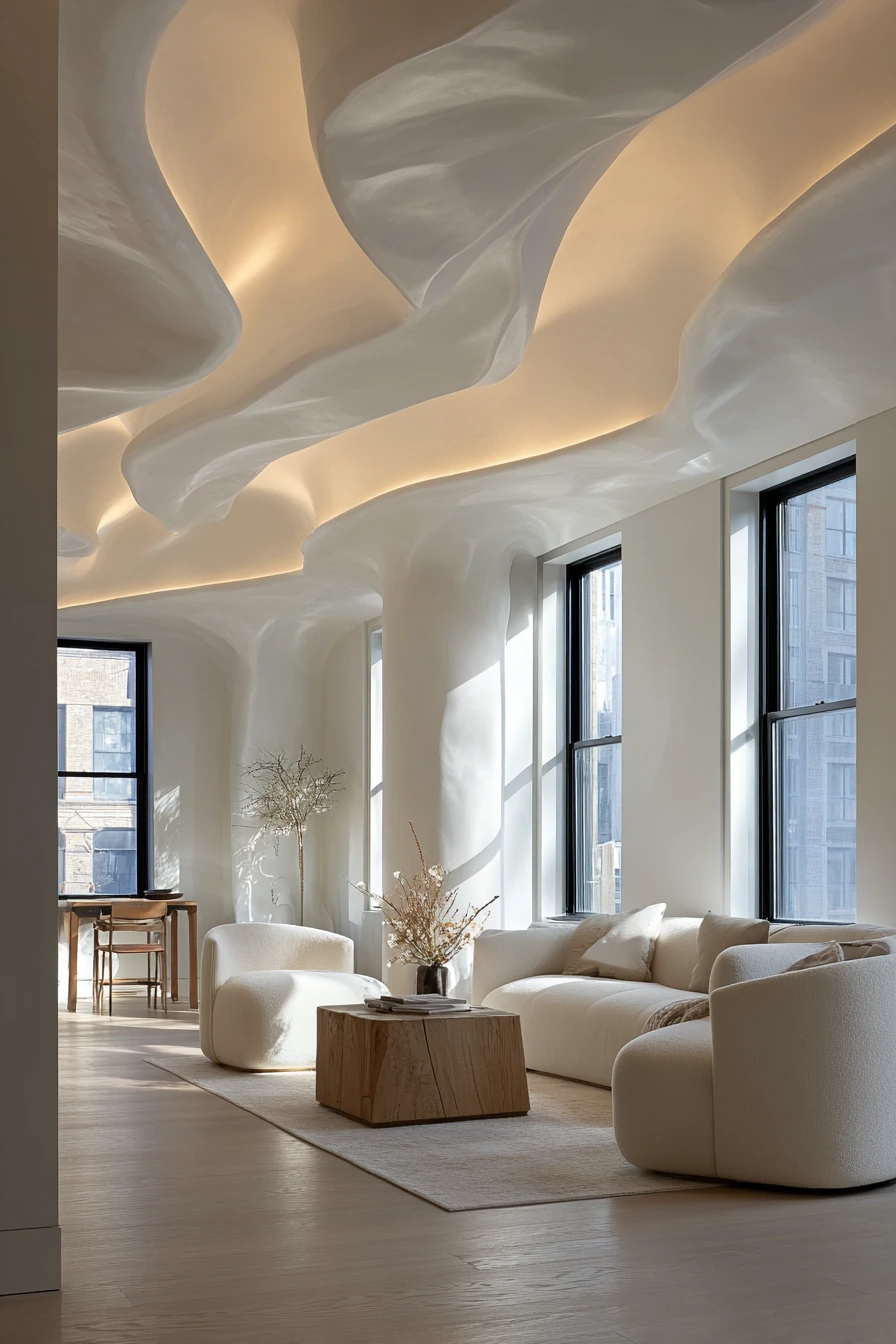
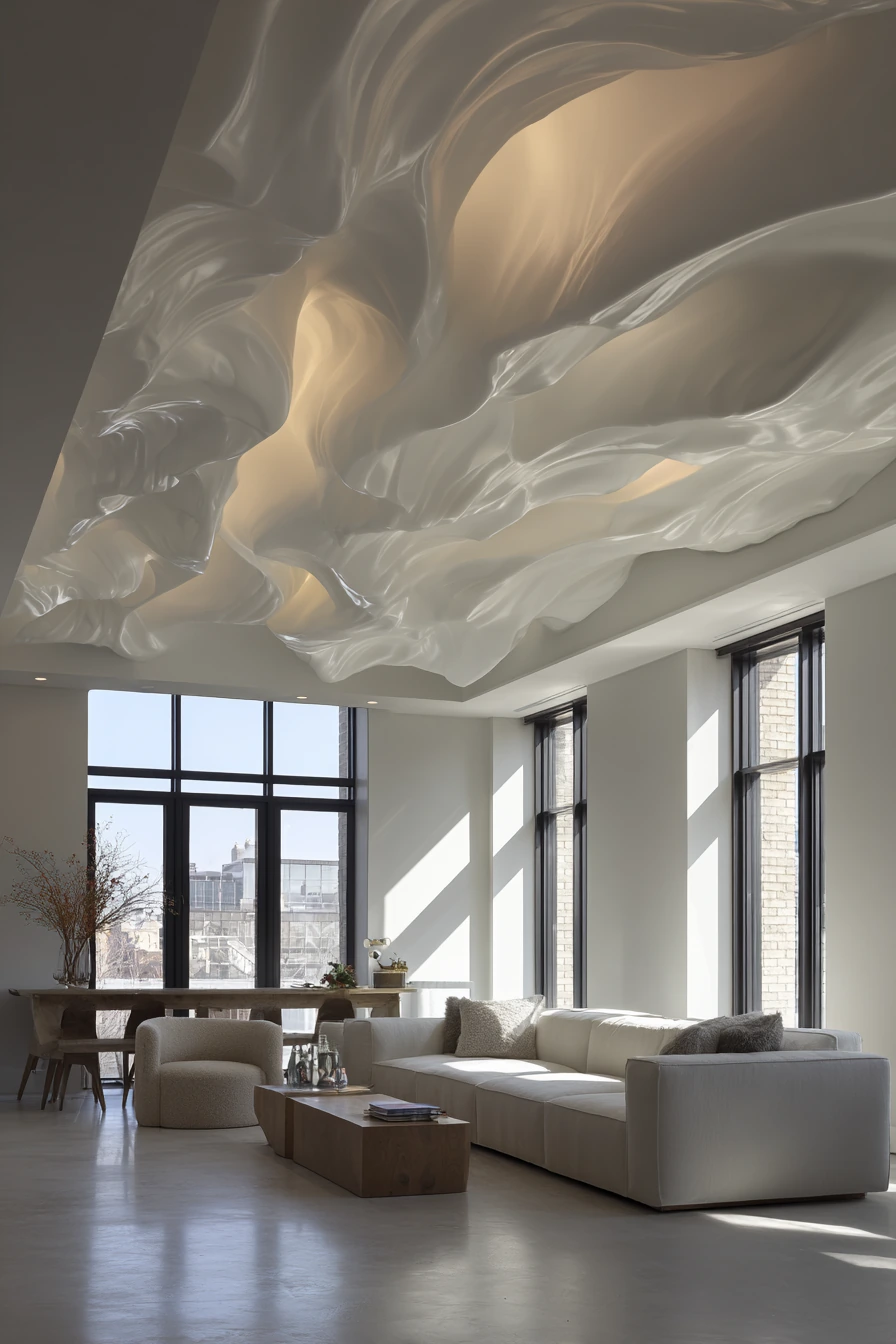
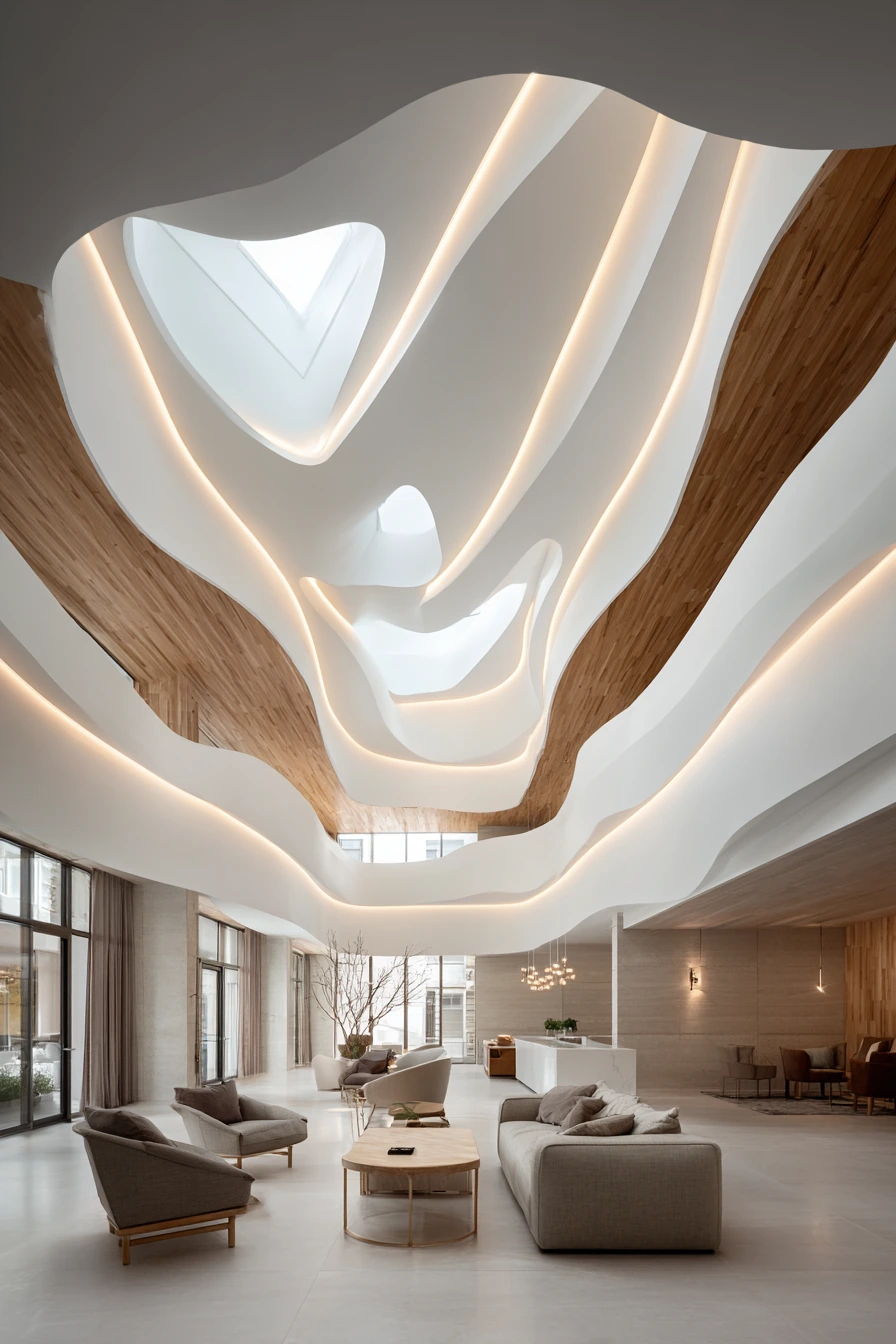
A sculptural ceiling with curved plaster waves turns the ceiling into art. Instead of straight lines, the surface flows, creating movement and a modern, serene feel. Soft recessed lighting can trace the curves and bring out gentle shadows, which is what makes this ceiling design feel special.
This style looks best with minimalist furniture and a quiet color palette. Neutral décor lets the curved form stand out, and large windows add natural sunlight that changes the shadow pattern during the day. Because the ceiling is expressive, keep the rest of the room simple and well-edited.
How to style it: choose rounded shapes below to echo the ceiling. Add a curved coffee table, a round side table, or an arched floor lamp. Use soft textiles like wool, linen, or a plush rug so the room feels comfortable and not gallery-stiff.
- Use warm recessed lighting to avoid harsh shadows.
- Keep wall colors light so the ceiling shadows read clearly.
- Pick a few curved furniture pieces to match the ceiling flow.
- Limit patterns in rugs and pillows so the ceiling stays the focus.
- Work with an experienced plaster installer for smooth finishes.
Pro Design Tip: Plan lighting with the curve layout, not after. When lights follow the wave direction, the ceiling looks intentional and the shadows feel even.
Budget Considerations: Custom plaster work is labor-heavy. For a lower-cost look, use curved drywall sections in a smaller area, like over the seating zone, instead of across the whole room.
10. Layered Tray Ceiling with Hidden LED Strips

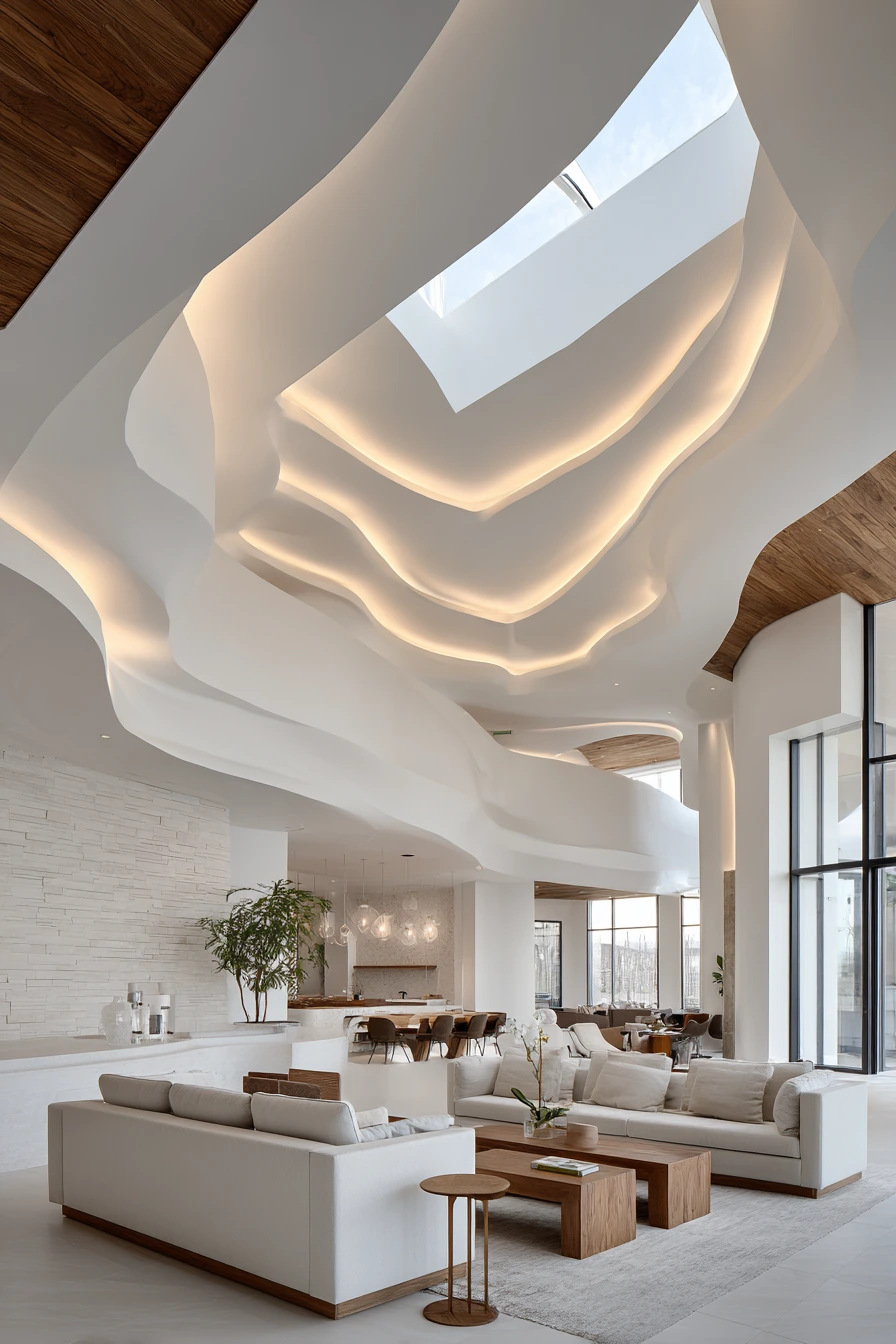
A layered tray ceiling with hidden LED strips is a modern way to add depth and glow. Each layer creates a shadow line, and concealed LED tape highlights the steps without showing the light source. Smooth white plaster keeps it clean, while subtle wooden accents add warmth and prevent the ceiling from feeling too stark.
Skylights can make this ceiling feel even more spacious. Daylight brings out the texture and depth in the layers, and at night the LED strips give a soft, even light that works well for relaxing. With neutral furniture and minimal décor, the ceiling becomes the main architectural feature.
How to style it: keep the room light and structured. Use a large rug to define the seating area, choose simple tables with thin legs, and add a few wood details to connect with the ceiling accents. Use dimmers so you can switch from bright task lighting to a low evening glow.
- Choose LED strips with high color quality for natural-looking light.
- Hide strips behind a lip to avoid seeing individual diodes.
- Keep tray steps proportional to the room size for a clean look.
- Repeat wood accents in a shelf, stool, or picture frames.
- Use a consistent warm white temperature across all fixtures.
Pro Design Tip: Specify separate lighting zones for each tray layer. Layered controls let you change the mood without adding extra fixtures.
Budget Considerations: Multi-layer trays require more framing and finishing. To cut costs, do a two-layer tray and focus spending on good LED strips, dimmers, and clean edges.

The best ceiling design ideas do two jobs at once: they add style and they improve the way light moves through the room. Whether you like coffered panels, tray ceilings, wood beams, slatted wood, or curved plaster, start with the shape that fits your ceiling height and your natural light.
Keep the rest of the room simple, repeat a few materials, and use dimmable warm lighting for a comfortable look. Small planning choices, like spacing, paint sheen, and fixture placement, often matter more than expensive finishes.
Save the ceiling styles you like most, then choose one direction and build the room around it. A clear plan will help you get a finished look that feels modern and easy to live with.
FAQ
- How do I choose the right ceiling design for a room with low height? Opt for shallow or single-step tray ceilings, minimal linear paneling, or flush-mounted slatted wood. Avoid deep coffered grids or heavy, dropped false ceilings, as these can visually compress the space and make low ceilings feel even lower.
- What is the best way to light a coffered or tray ceiling? Layer your lighting by combining recessed LED cans (to highlight overall structure) with hidden LED cove strips tucked along edges or inside recesses. This dual approach creates a soft, even evening glow while avoiding harsh, direct glares.
- Are wooden beams structurally necessary, or can I use alternatives? Most decorative beams in modern spaces are lightweight faux beams made from MDF, polyurethane, or hollow wood wraps. They offer the exact same warm, architectural look as structural timber while being significantly cheaper and easier to install.
- How do I prevent a white or neutral ceiling from looking boring or cold? Introduce natural textures like wood grains, slatted panels, or subtle matte paint finishes. Pairing these with warm white LED bulbs (around 2700K to 3000K) ensures the space always feels inviting rather than stark.
- What is the most budget-friendly way to upgrade a plain ceiling? You can add architectural character for a fraction of the cost by installing simple, lightweight trim molding to create a shallow DIY coffer pattern, or by mounting a single run of hidden LED tape along a dropped perimeter drywall edge.
- How do curved plaster or modern wave ceilings affect room acoustics? Unique sculptural shapes can sometimes bounce sound unpredictably, making a room feel echoey. To combat this, pair textured ceilings with sound-absorbing materials below, such as large area rugs, heavy linen drapery, and upholstered furniture.