Elegant decorating ideas do not need loud colors or lots of decor. The most polished rooms use calm neutral tones, strong shapes, and a few high-quality details.
In this post you will see 10 easy styles based on soft beige walls, refined textures, tailored seating, and natural sunlight. These looks fit modern homes and classic spaces.
Each section gives simple steps you can copy, plus a pro design tip and a budget note. Use these ideas to make your living room, bedroom, and open-plan space feel more calm, balanced, and pulled together.
If you are coming from Pinterest, save the sections you like, then read the styling lists to recreate the look with what you already own.
1. Timeless Elegant Living Room With Beige Walls and Molding
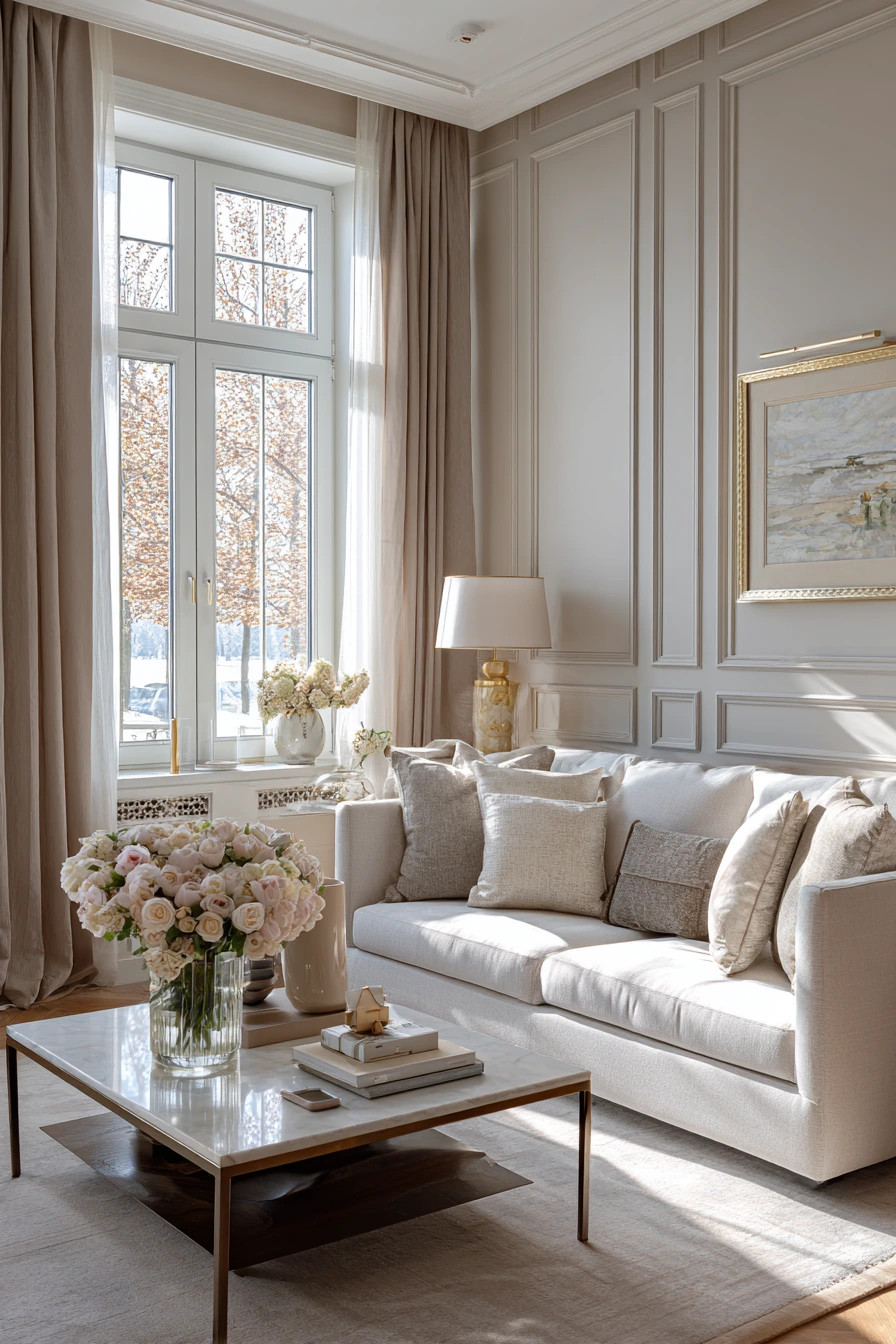
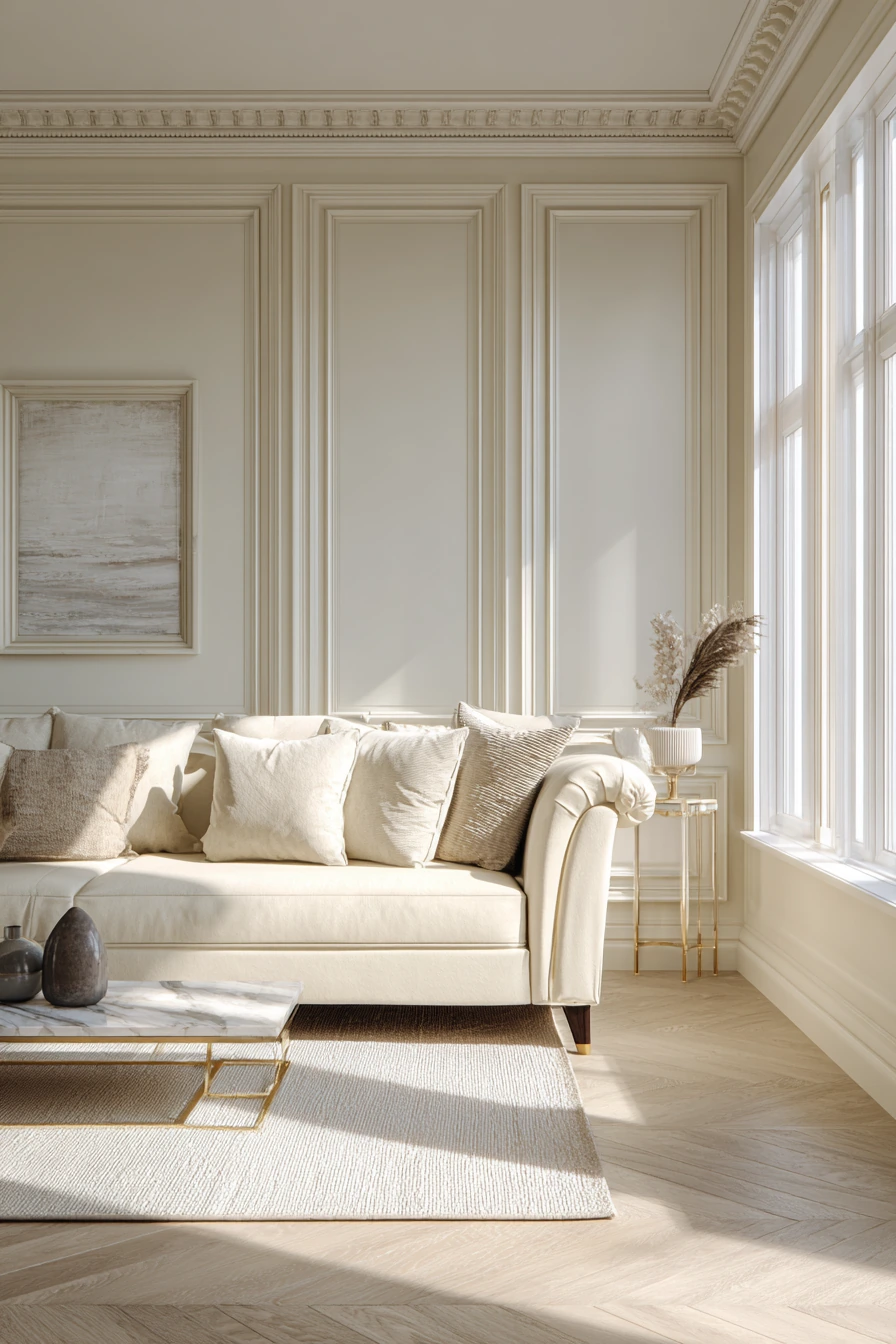
A timeless elegant living room starts with a quiet backdrop. Soft beige walls and refined wall molding add structure without making the space feel busy. This kind of trim makes even a simple room feel finished, especially when the lines are clean and the paint color is warm and light.
Keep the main seating tailored and neutral. A neutral upholstered sofa with firm, shaped cushions looks more polished than overstuffed pillows. Add a marble coffee table for a crisp focal point, then repeat subtle metallic accents in small ways, like a tray, lamp base, or frame. The goal is luxury without excess, so keep shine controlled and spread out.
For the floor, light wood flooring and a plush area rug make the room feel warm, not cold. Use decorative ceramics and minimal artwork to add personality while keeping the calm aesthetic. Let large windows do the work. Natural sunlight creates gentle shadows that highlight the molding, the rug pile, and the marble veining.
- Paint walls a soft beige and keep trim one shade lighter for a layered look.
- Choose one tailored sofa and limit extra chairs to one matching pair.
- Style the marble coffee table with a low stack of books and one ceramic bowl.
- Use one metal finish, like brushed brass or satin nickel, across the room.
- Hang simple art with wide matting to keep the wall feeling airy.
Pro Design Tip: Keep the “hard” surfaces (marble, metal, glass) to about one-third of what you see, and balance them with “soft” pieces like a plush rug and linen pillows for a calm, expensive look.
Budget Considerations: Real marble can be pricey; look for marble-look quartz, porcelain, or a vintage stone-top table from resale sites.
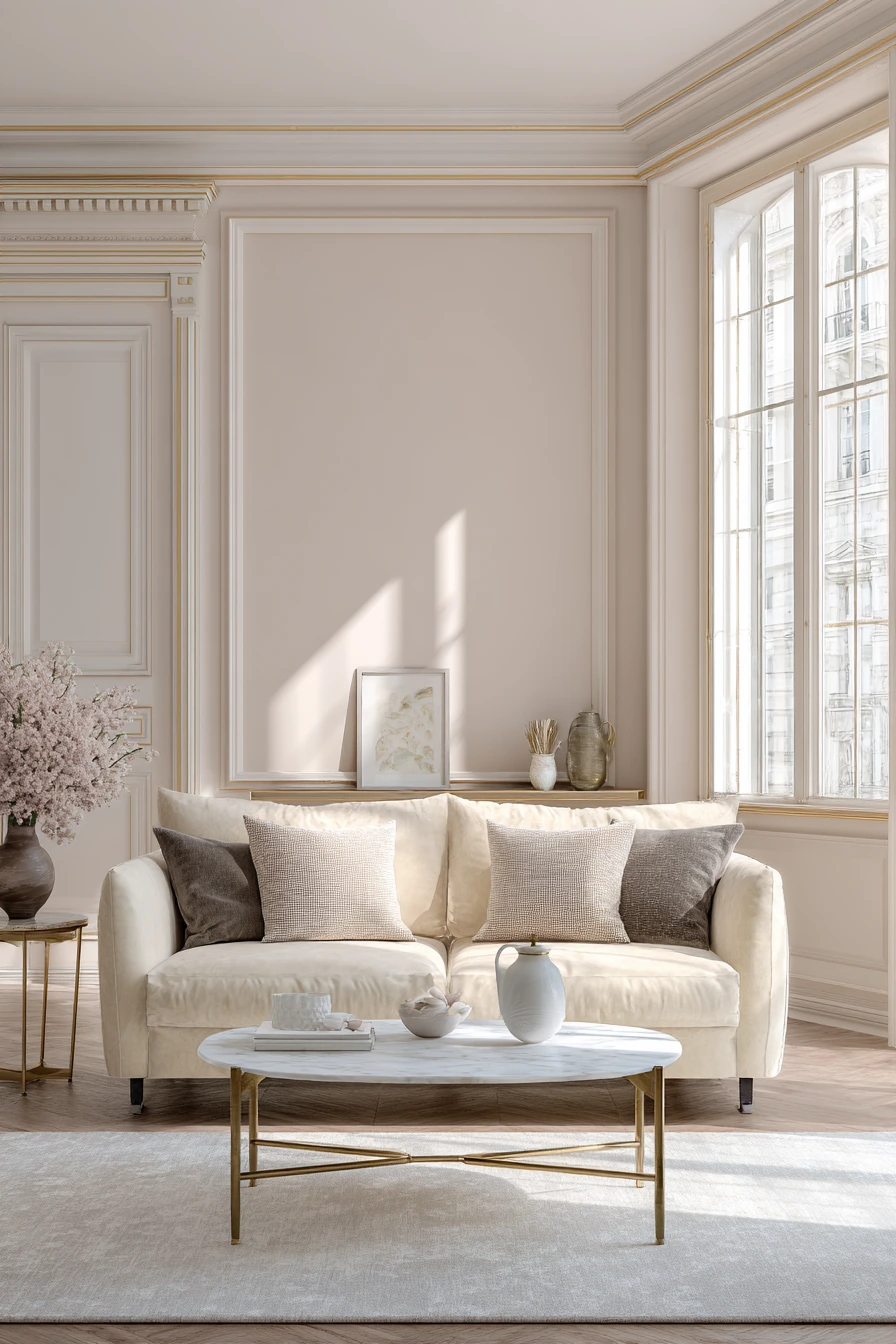

2. Modern Elegant Interior With Clean Lines and a Statement Pendant

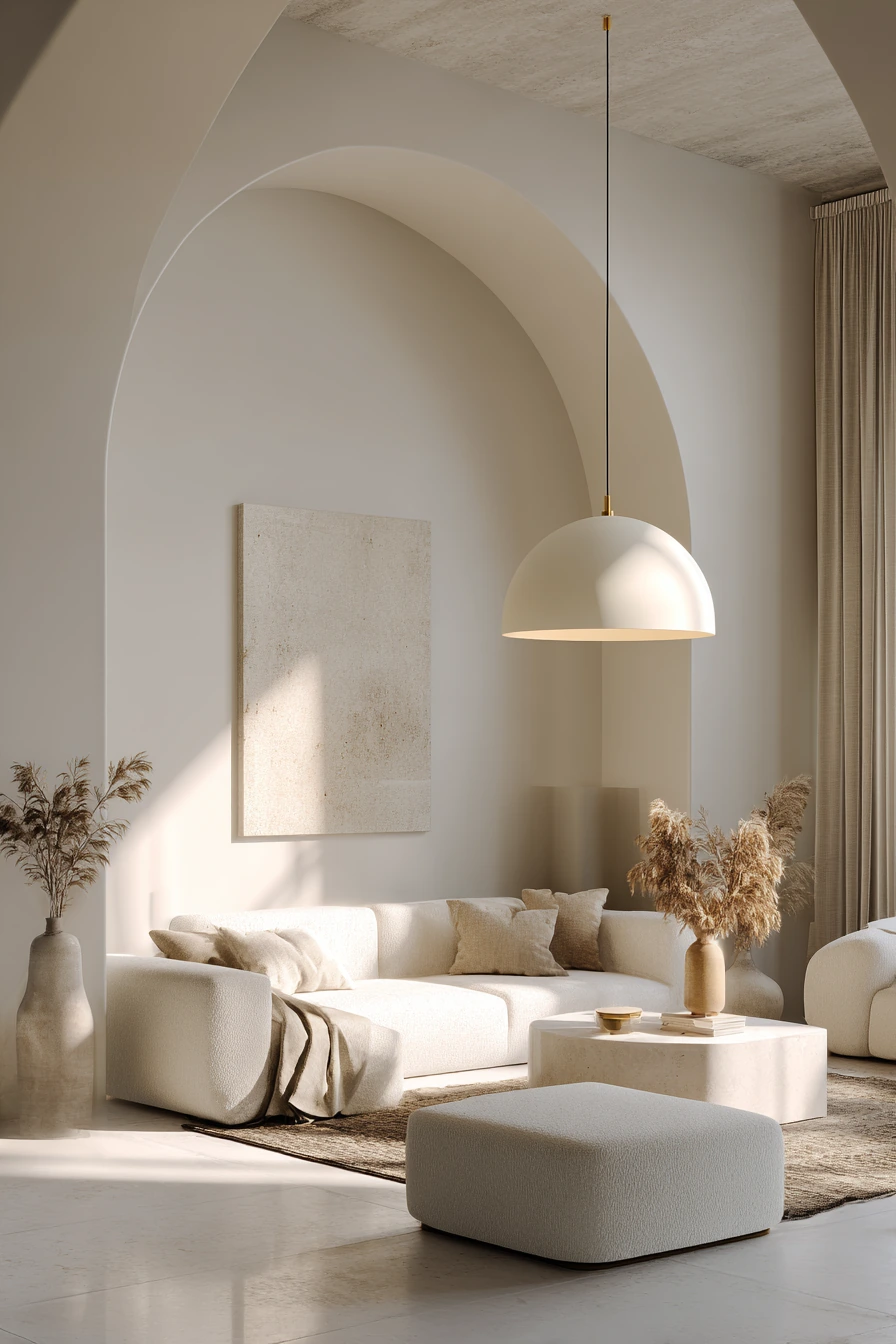
A modern elegant interior looks best when the shapes are simple and the room is not crowded. Start with smooth walls and muted neutral tones like warm white, greige, and soft taupe. These colors make clean lines stand out, and they help natural sunlight bounce around the space.
Pick sleek furniture with a low profile and good spacing between pieces. A modern sofa with slim arms, a simple side table, and a streamlined media unit can feel high-end when the proportions are right. Layered textiles add comfort without adding clutter. Think a flatweave rug plus a soft throw, or a linen curtain paired with a textured cushion.
Let one statement pendant light be the feature. The key is understated scale. It should feel intentional, not loud. Keep decor minimal: one tall vase, one sculptural bowl, and a small stack of books. This kind of styling makes the room feel graceful and easy to maintain.
- Use a tight color palette: two neutrals plus one accent material like wood or metal.
- Choose furniture with visible legs to keep the room feeling open.
- Add depth with textures: boucle, linen, wool, and matte ceramics.
- Center the pendant over the main seating or dining area for balance.
- Hide cords and remotes so surfaces stay clean and calm.
Pro Design Tip: Repeat the pendant’s shape in two smaller places, like a round tray and a curved vase, so the room feels designed, not random.
Budget Considerations: If a designer pendant is out of reach, buy a simple shade and upgrade the bulb and dimmer switch for a softer, more expensive glow.
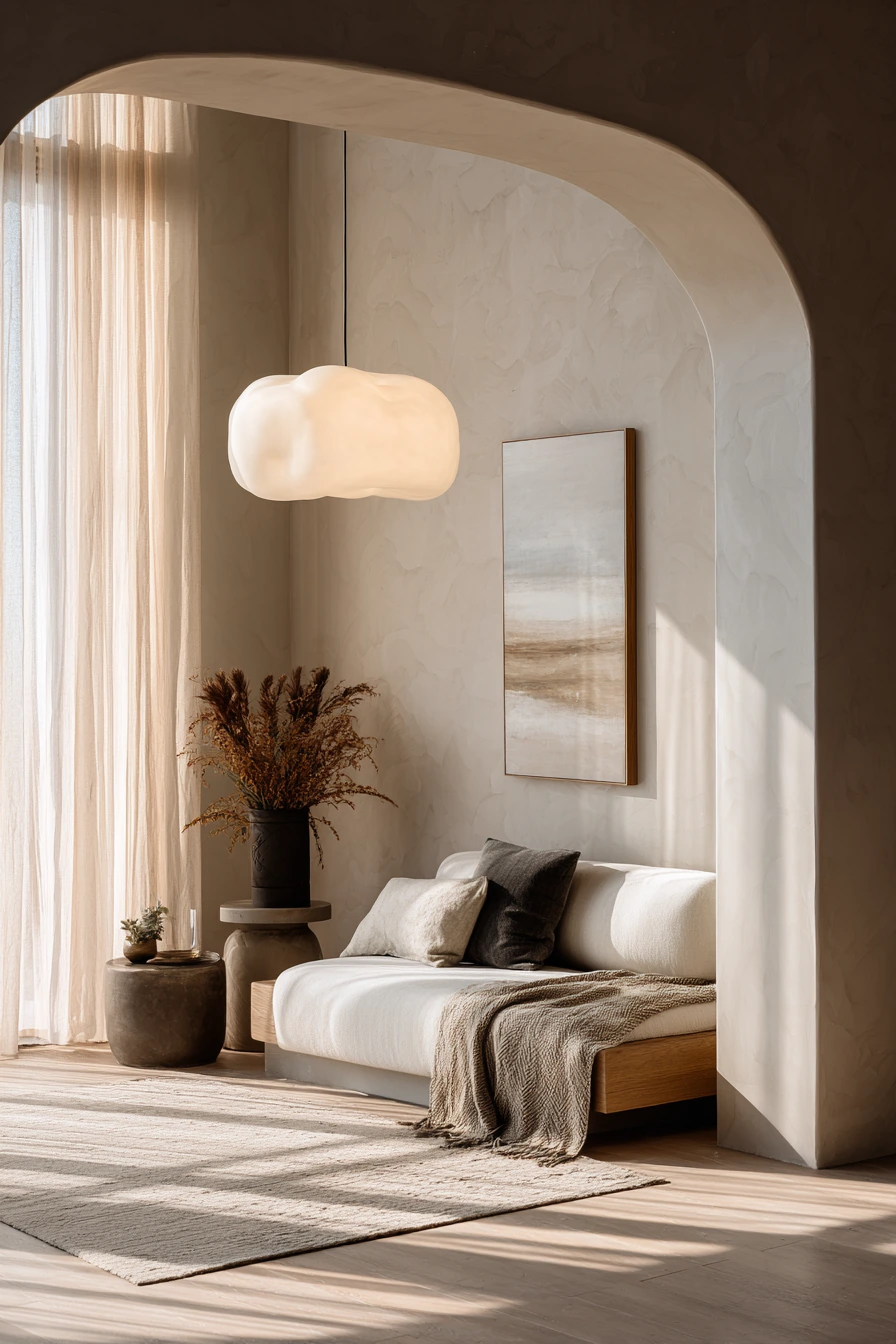

3. Soft Neutral Elegance With Curved Seating and Marble Touches


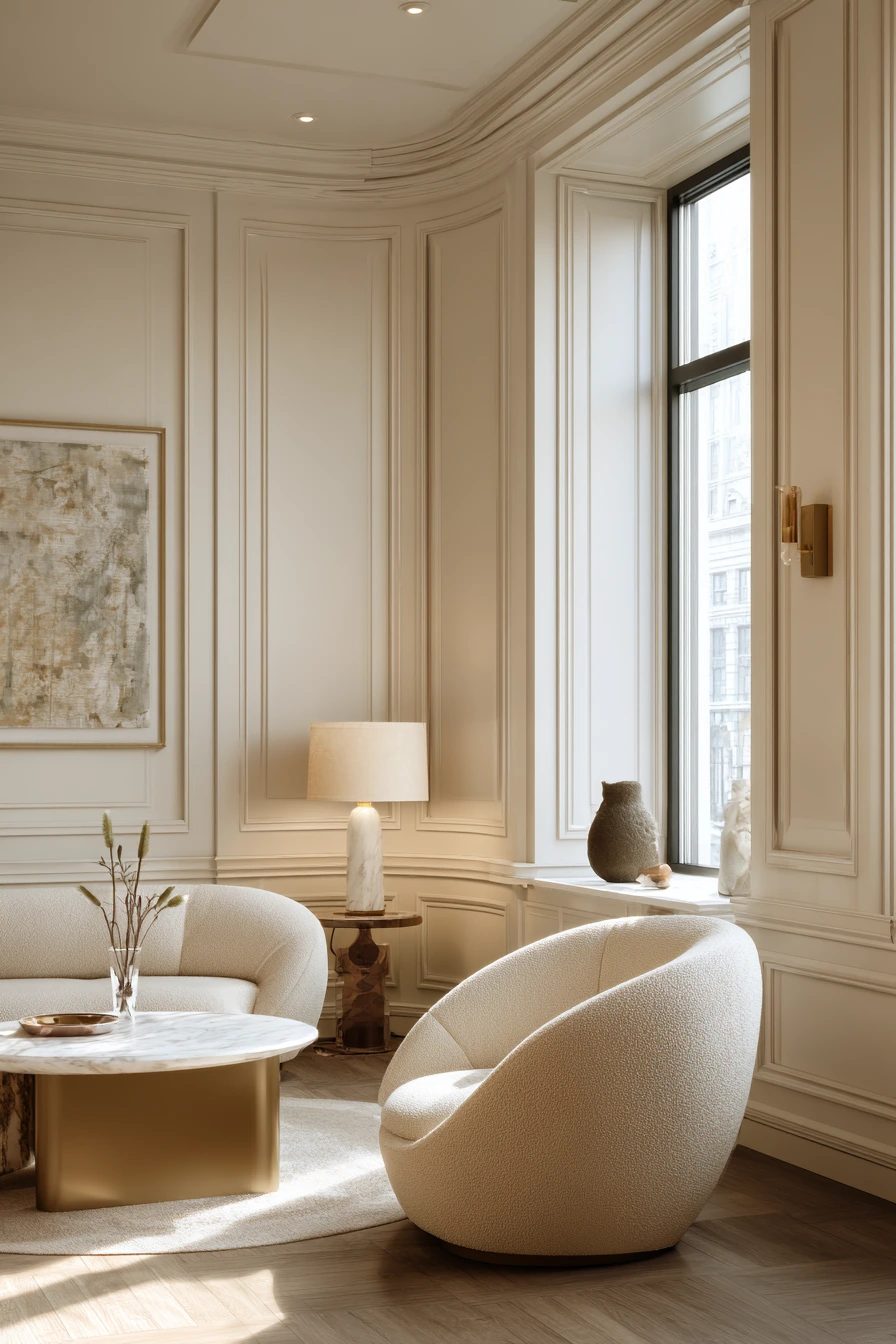
Soft neutral elegance comes from gentle contrast, not strong color. Warm cream walls and subtle paneling create a calm base that feels both classic and fresh. Paneling can be full-height, half-height, or simple box trim, as long as the lines are even and the spacing is consistent.
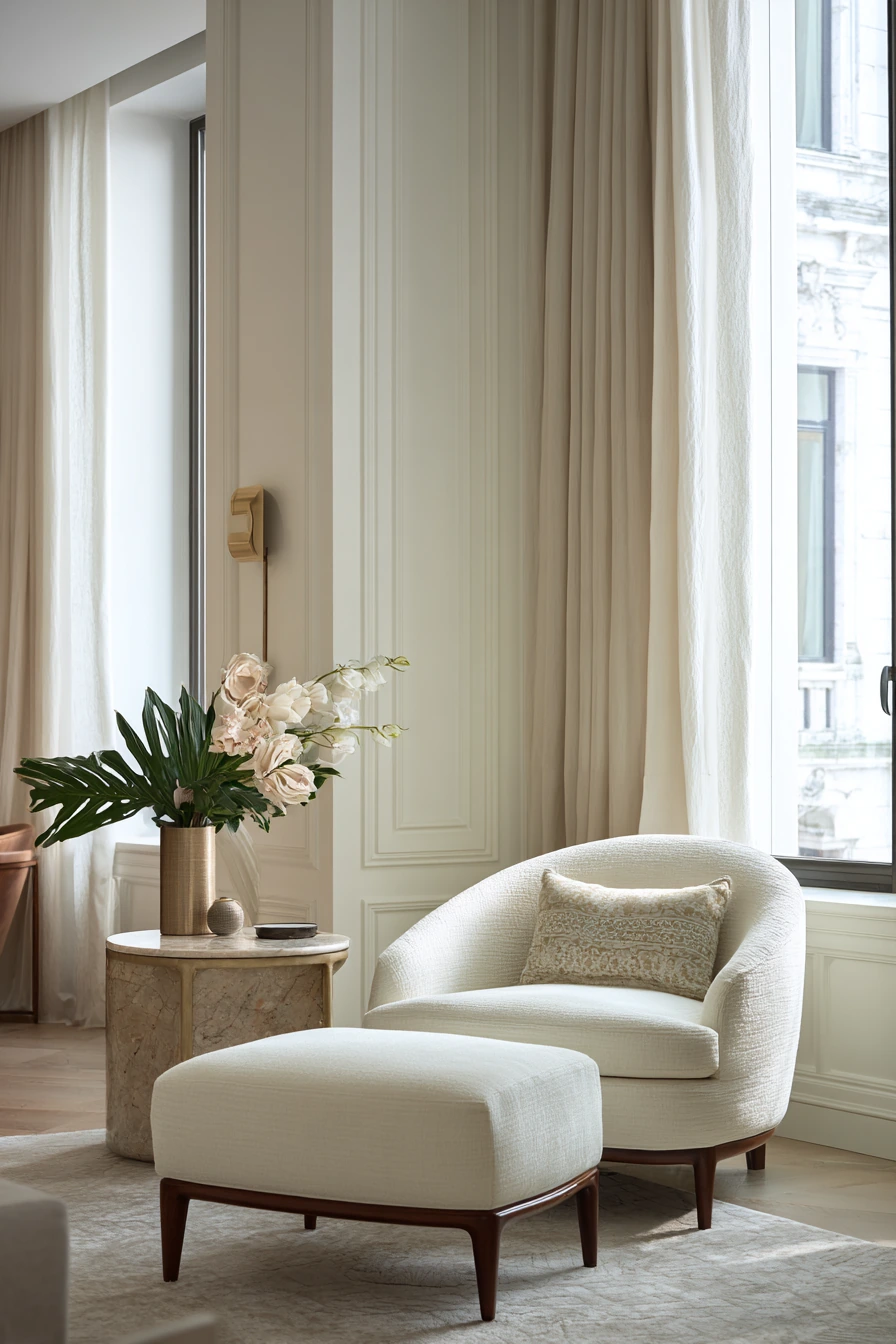
Bring in carefully curated furniture with comfort-focused shapes. Upholstered seating with gentle curves makes the room feel welcoming and refined. A rounded chair, a curved sofa arm, or an oval coffee table softens the straight lines of walls and windows. Add a stone or marble surface for quiet luxury, like a side table, console top, or tray.
Keep decorative elements minimal and intentional. Use one piece of minimal artwork, one ceramic vessel, and one small plant or branch to add life. Natural sunlight is part of the design here. Place textured items where light hits them, like a woven basket near a window or a boucle chair in a sunny corner, so the room feels calm and balanced.
- Choose cream paint with a warm undertone to avoid a gray, flat look.
- Add one curved chair to break up a boxy layout.
- Use a marble tray on a wood table for a simple mix of materials.
- Pick curtains in linen or cotton to keep light soft and natural.
- Limit surfaces to two or three styled items to avoid visual noise.
Pro Design Tip: Mix matte and smooth finishes in the same color family (matte ceramic with polished stone) to create depth without adding extra colors.
Budget Considerations: Skip full marble pieces and use small accents like marble coasters, trays, or a remnant stone slab from a local fabricator.
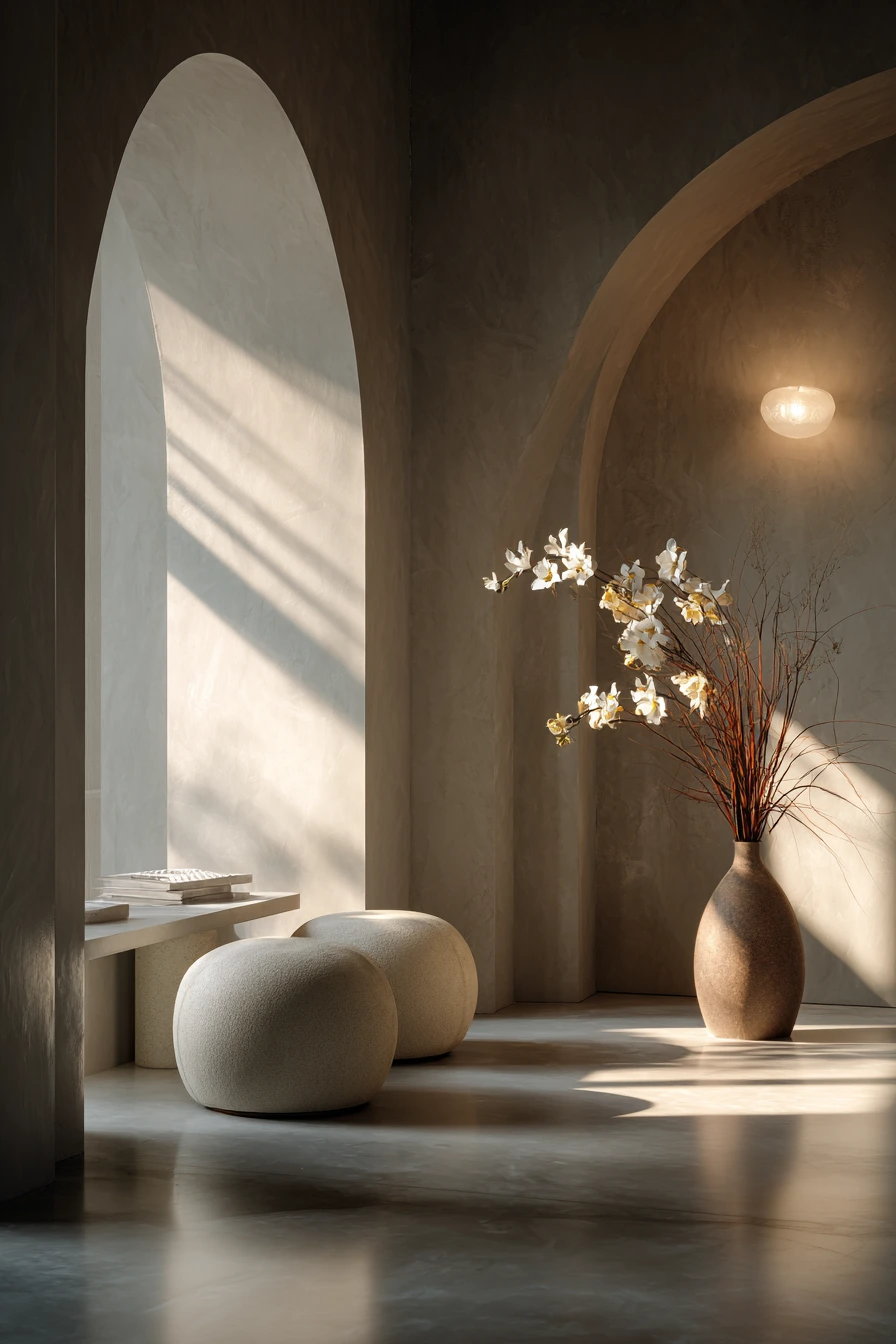
4. Luxury Minimal Room With Sculptural Furniture and One Floral Focal Point
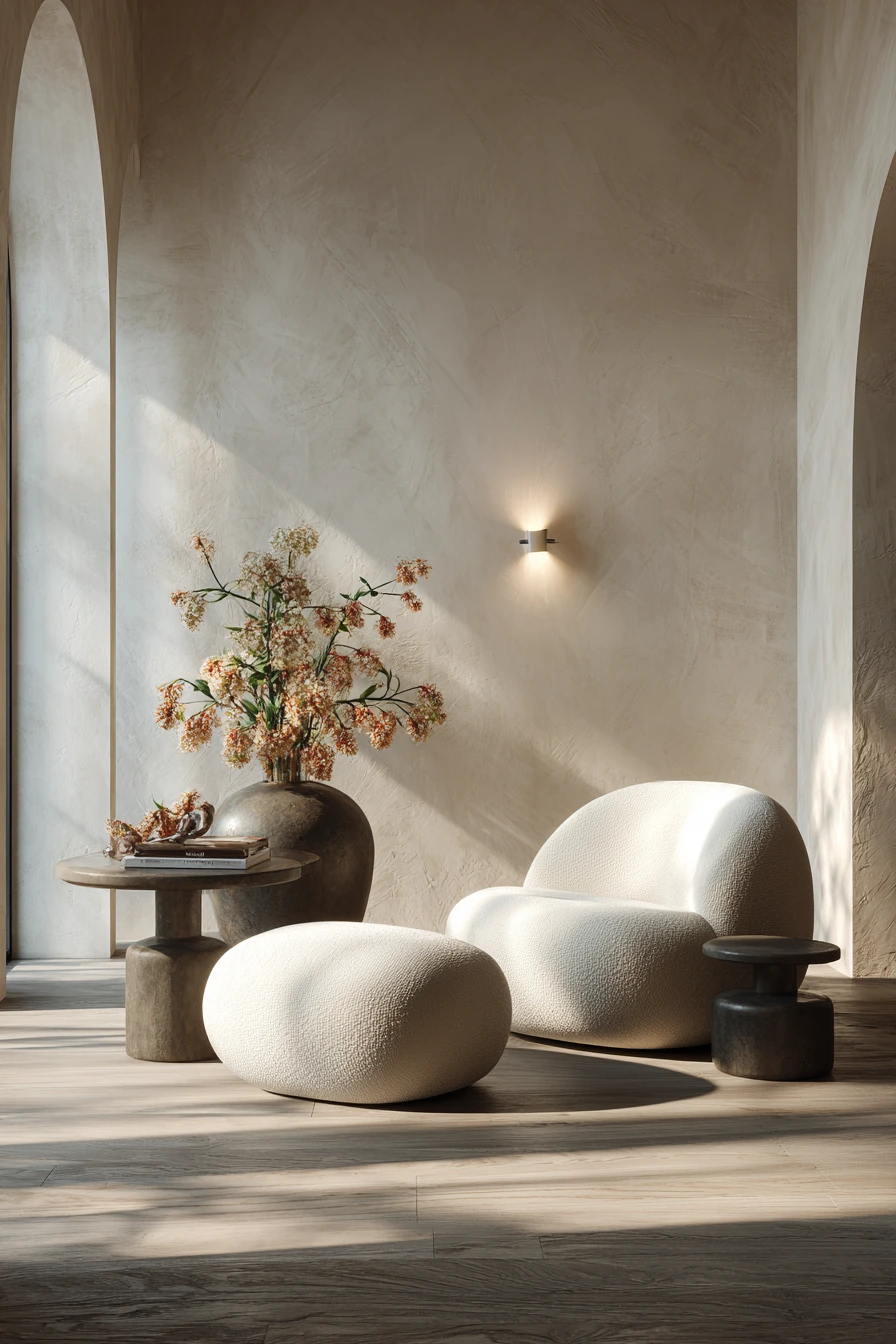
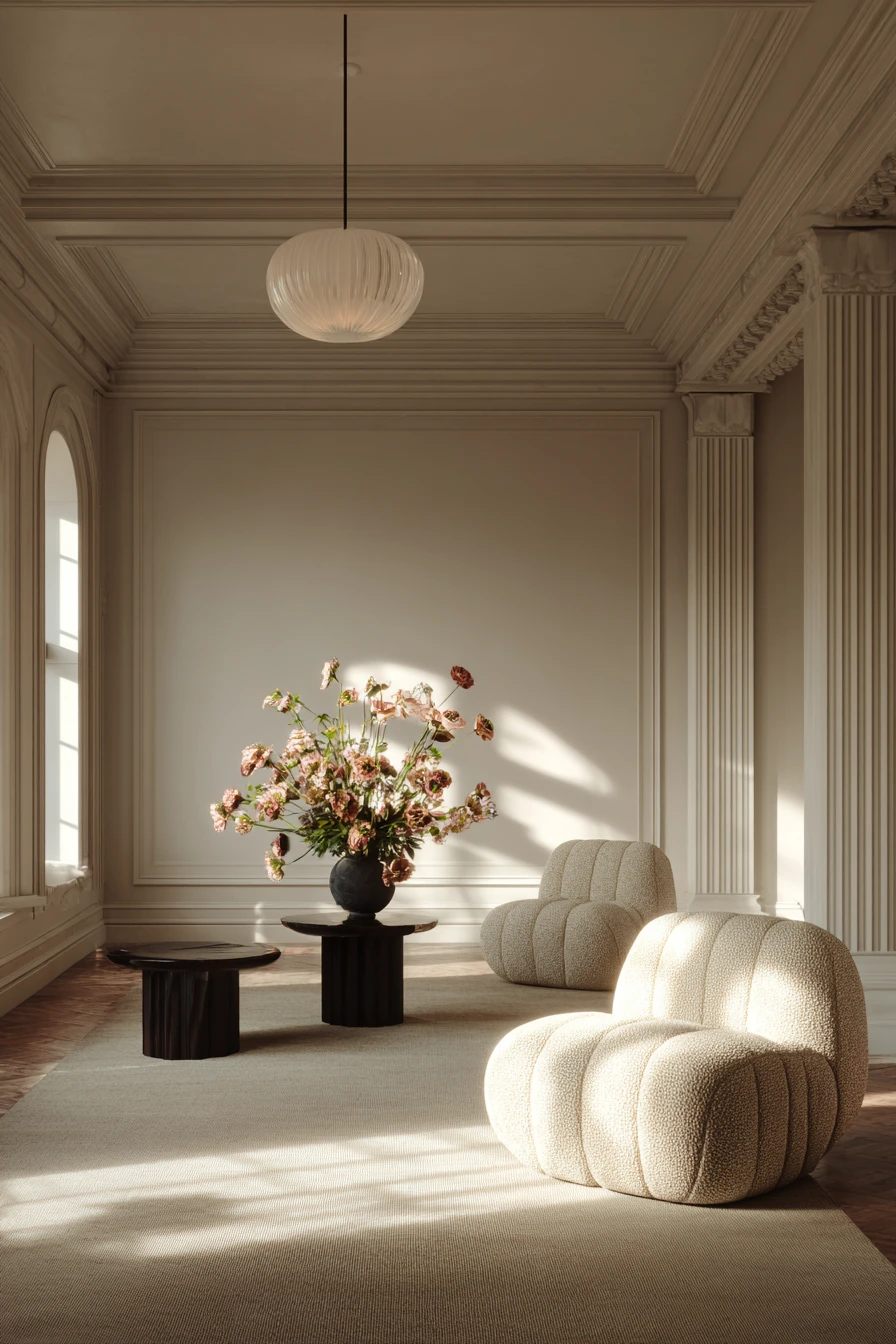
A luxury minimal room feels expensive because it uses restraint. Start with smooth neutral walls and open space. When there is less visual clutter, premium materials and clean lines stand out more. This style works well in a living room, entry, or quiet reading area.
Choose sculptural furniture that looks good from every angle. One strong chair, a simple sofa, and a low table can be enough. Look for pieces with curved edges, thick legs, or a bold silhouette, but keep the colors calm. Add one refined lighting fixture, like a pendant or a large floor lamp, to create a clear focal point without adding lots of decor.
Finish with a single floral arrangement. Use one type of stem, one vase, and keep the shape simple. Natural sunlight will highlight the texture of the fabric, the grain of wood, and the shadow lines on the wall. The room should feel modern, quiet, and refined, with nothing extra fighting for attention.
- Edit the room to the essentials: seating, table, lighting, and one accent.
- Use a large rug to anchor the space and define the layout.
- Pick one hero material, like oak, travertine, or linen, and repeat it twice.
- Keep decor low so sightlines stay open across the room.
- Use warm bulbs and a dimmer to soften the minimal look at night.
Pro Design Tip: In minimal spaces, scale matters more than quantity. Choose fewer items, but go slightly larger so the room feels intentional and not empty.
Budget Considerations: If sculptural furniture is expensive, focus on one standout piece (like a chair) and keep the rest simple from budget-friendly brands.

5. Classic Elegant Interior With Symmetry and Refined Details
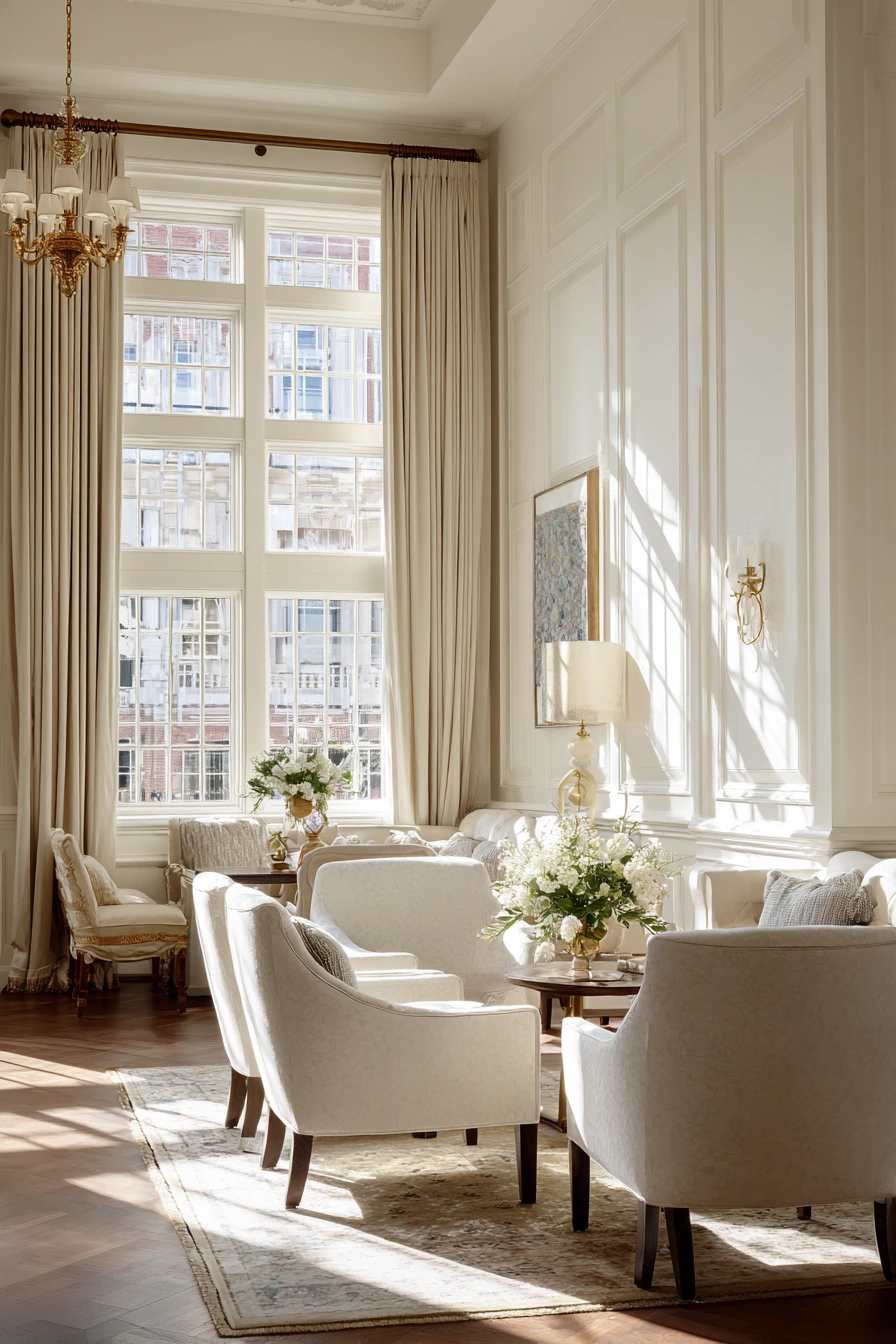
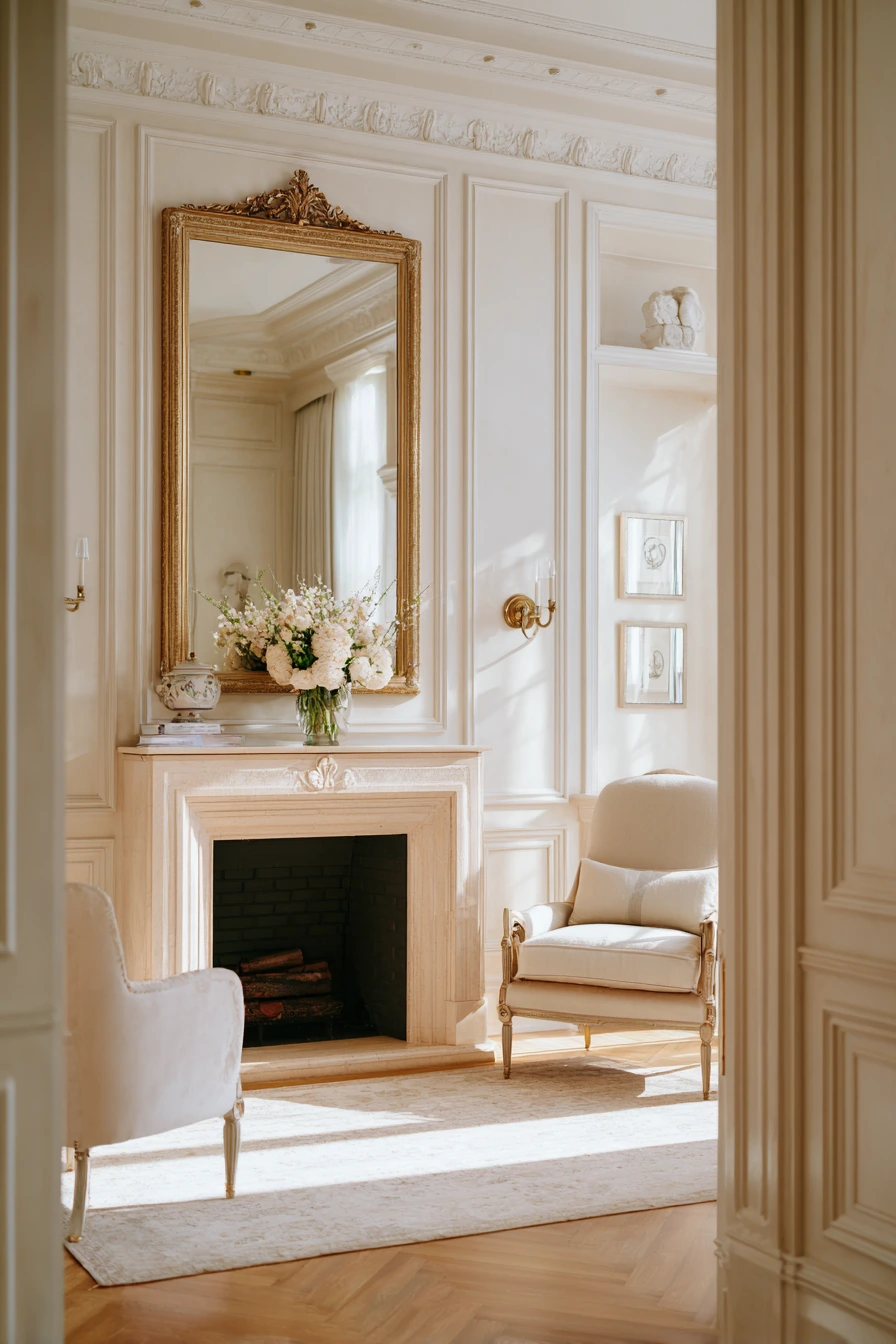
A classic elegant interior often relies on symmetry. Symmetrical furniture placement brings calm, and it makes the room feel balanced as soon as you walk in. Soft neutral walls keep the look timeless, while refined detailing like trim, tufting, or turned legs adds quiet charm.
Start by choosing a main focal point, like a fireplace, a large window, or a centered sofa. Then place matching pieces on both sides, such as two chairs, two lamps, or two side tables. Upholstered seating in a neutral fabric keeps the room comfortable, and polished surfaces like a wood console or a stone top add a subtle shine that reads as classic.
Decor should stay simple. Use a pair of matching frames, a small bowl, and a neat stack of books. Add one soft accent, like a textured throw or a small patterned pillow, to avoid a flat look. Natural sunlight will bring warmth and grace, especially when you use light-filtering curtains that keep the room bright but not harsh.
- Create pairs: lamps, chairs, or art to build symmetry fast.
- Center the rug under the main seating group for a tidy layout.
- Use one warm metal, like aged brass, for a traditional touch.
- Choose classic shapes: drum shades, rolled arms, and oval mirrors.
- Keep tabletops neat with one tray to corral small items.
Pro Design Tip: When styling symmetry, add one small “break” item, like a different vase on one side, so the room feels lived-in, not staged.
Budget Considerations: Matching pairs can add up; buy one lamp now and find the second later, or use the same shade style on two different lamp bases.


6. Contemporary Elegant Living Space With Layered Textures and Subtle Metallics
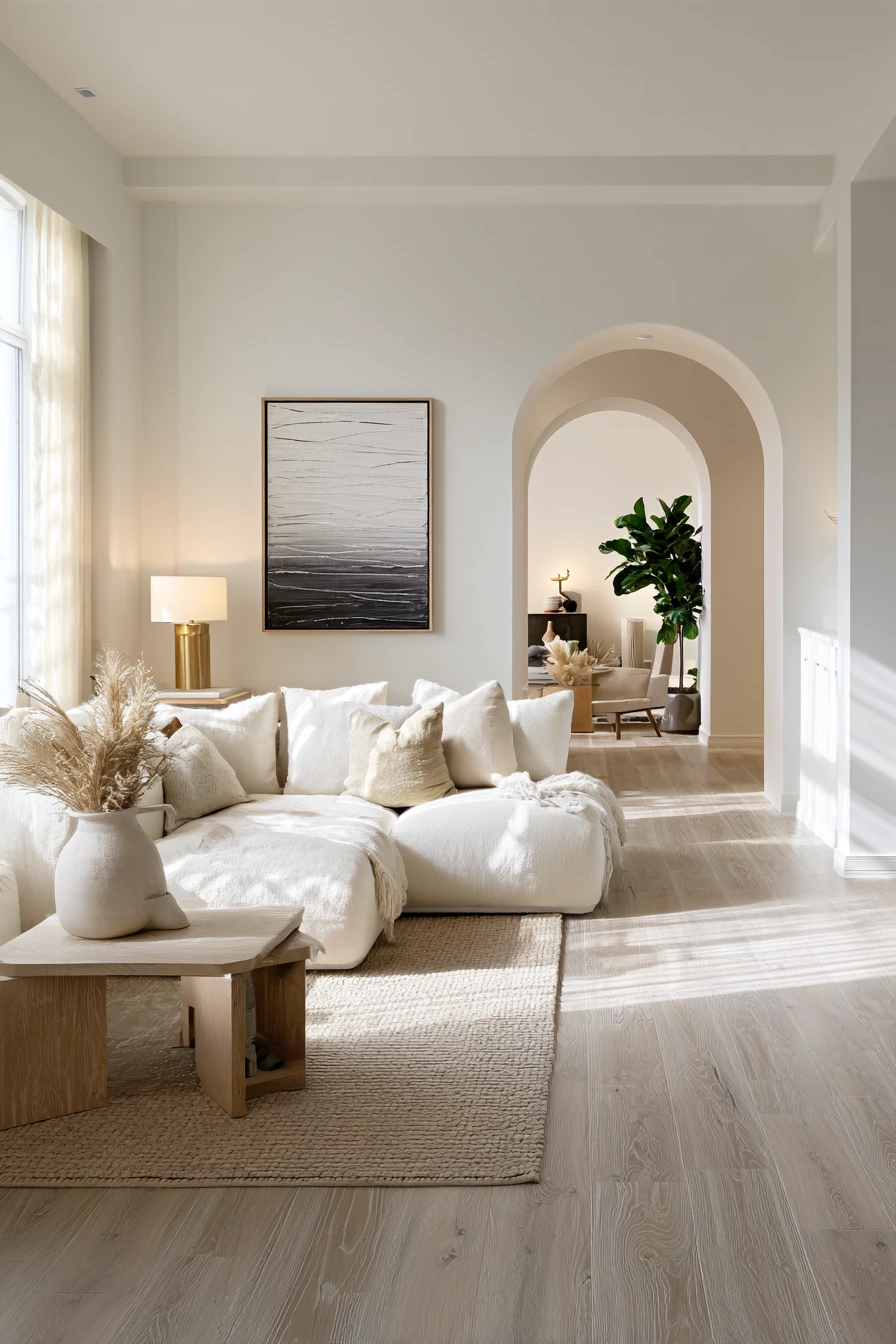
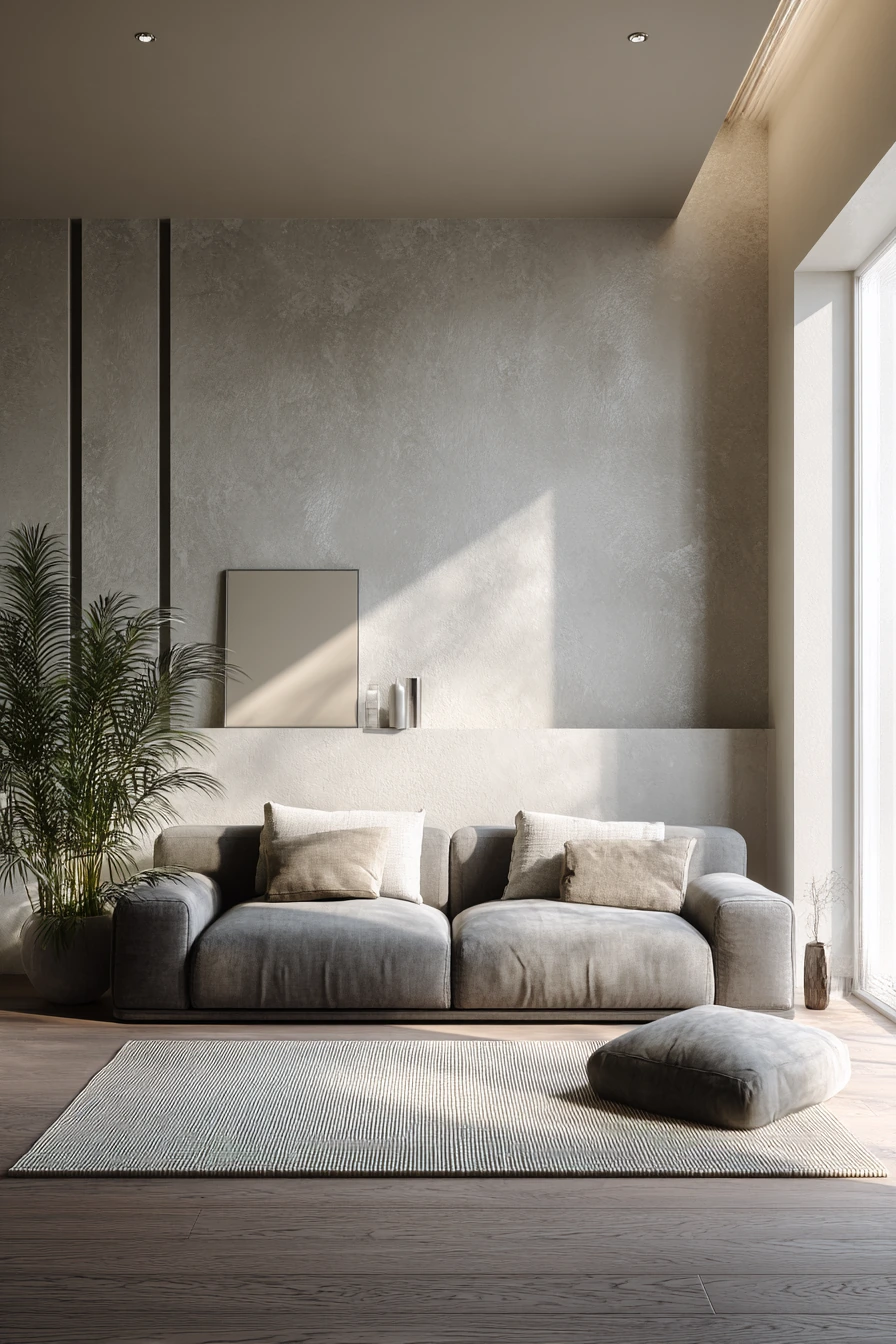
A contemporary elegant living space blends modern design with soft luxury. The base is simple: smooth walls, neutral-toned furniture, and clean geometry. The richness comes from layered textures that add depth without adding clutter or bold color.
Start with a main sofa in a durable fabric, then layer in a textured rug, a woven throw, and a mix of cushions. Keep artwork minimal and choose pieces with calm shapes, like line art or soft abstract prints. Subtle metallic accents, such as a brushed metal lamp or a slim frame, add a hint of shine that feels current and refined.
For the floor, light wood or stone flooring keeps the palette balanced. If your floors are darker, use a lighter rug to lift the room. Natural sunlight helps this style look its best, so avoid heavy window treatments. Use simple curtains or woven shades to control glare while keeping the room bright and calm.
- Choose three textures: soft (linen), nubby (boucle), and smooth (leather or metal).
- Keep art frames consistent for a cleaner, gallery-like look.
- Style shelves with negative space so each item has room to breathe.
- Use a metal accent in small repeats, like a tray and a lamp.
- Add one organic shape, like a rounded vase, to soften straight lines.
Pro Design Tip: Use “tone-on-tone” layering: mix warm whites, creams, and light taupes in different fabrics to create depth without making the room busy.
Budget Considerations: Swap in budget textiles first. A new rug, cushion covers, and curtains can change the whole room without replacing the sofa.


7. Elegant Neutral Bedroom With Layered Bedding and Refined Nightstands
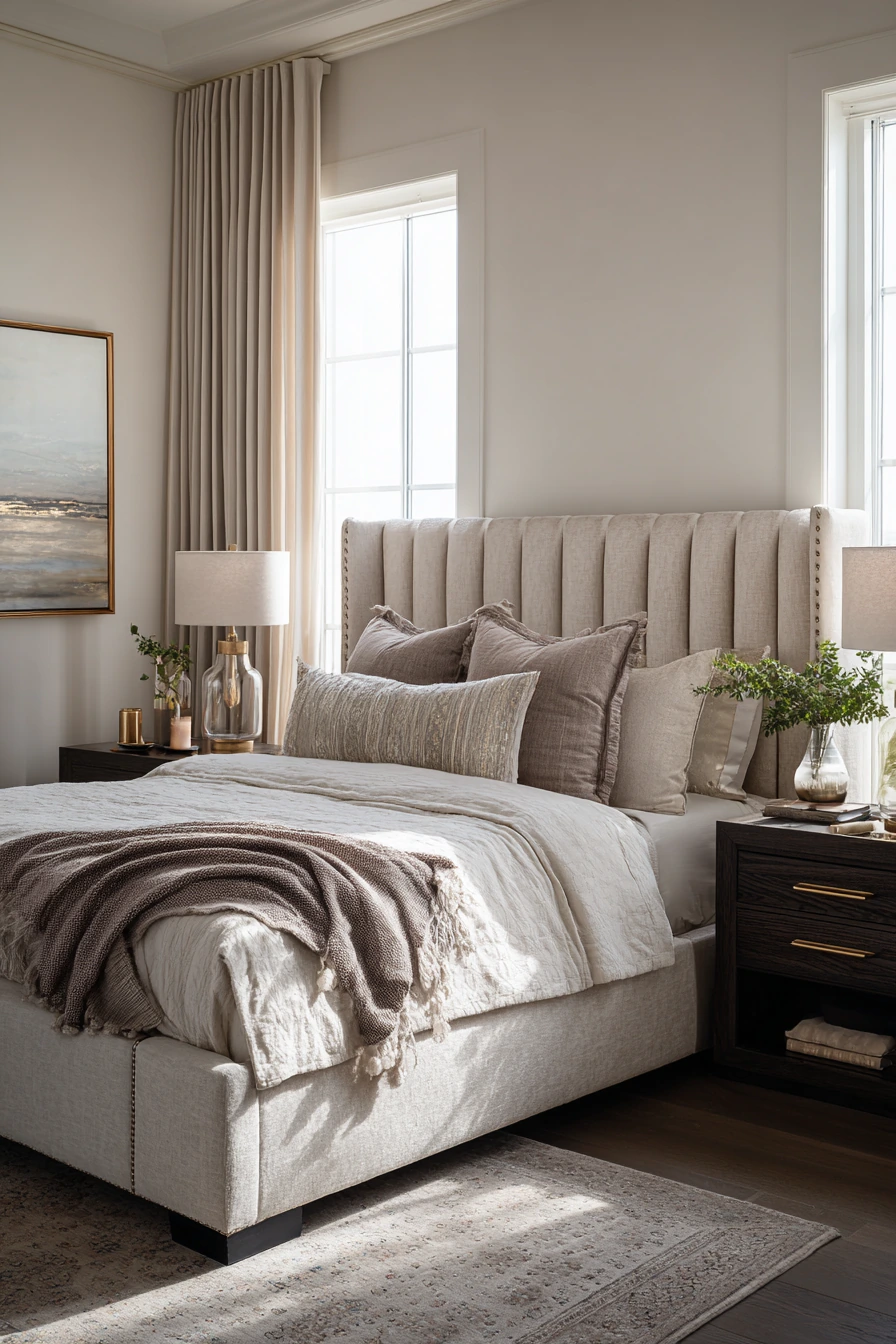

An elegant bedroom should feel calm the moment you enter. Neutral tones help the room rest, and they make it easy to mix pieces over time. A plush upholstered bed gives the space a soft focal point and makes the room feel more finished than a simple frame.
Layered bedding is where the luxury feel comes from. Start with crisp sheets, add a medium-weight quilt, then finish with a duvet or blanket folded at the foot. Use two sleeping pillows plus two larger back pillows to create a tidy, balanced look. Refined nightstands, like wood with simple hardware or a stone-top table, add function and polish.
Keep decor minimal to protect the restful mood. One lamp on each side of the bed helps the room feel even, and it supports symmetry. Add one small piece of art and one simple vase. Natural sunlight will make the textures look richer, so use curtains that filter light during the day and block it at night for better sleep.
- Choose a headboard in linen, velvet, or textured weave for soft structure.
- Stick to a simple bedding palette: white, cream, and one warm accent.
- Use matching lamps for a calm, hotel-like look.
- Add one cozy layer, like a wool throw, to bring depth.
- Clear the nightstand top and use one small tray for essentials.
Pro Design Tip: Size matters in bedrooms. Use the largest rug your layout allows so your feet land on softness when you get out of bed.
Budget Considerations: Get the look with a basic bed frame plus an upholstered headboard insert, and use high-quality pillow covers instead of buying a full new bedding set.

8. Elegant Open-Plan Decorating With Cohesive Neutrals and Consistent Materials


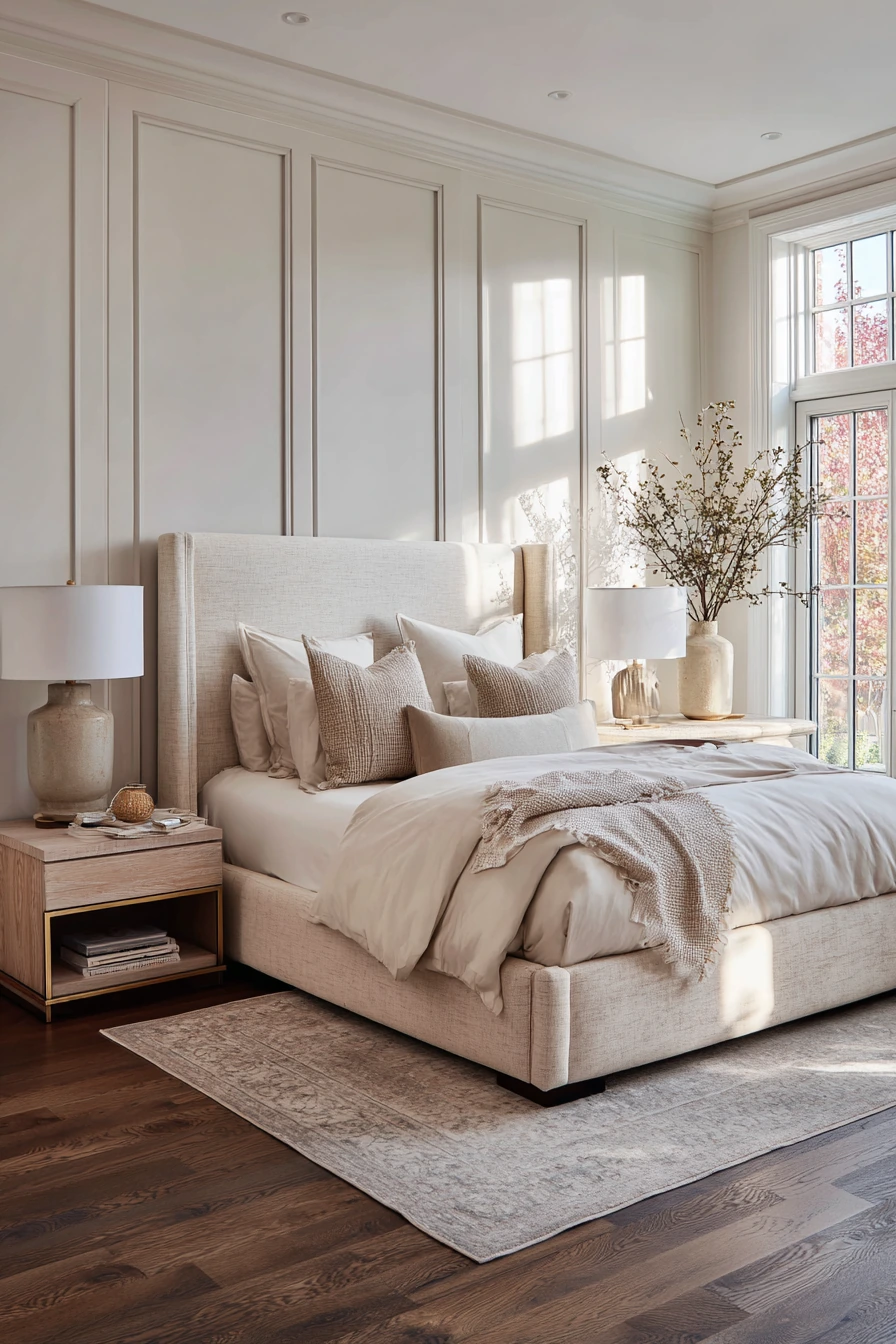
Elegant open-plan decorating works best when the whole space feels connected. In an open layout, small style changes from one zone to the next can look messy. A cohesive plan uses neutral walls, refined furniture, and repeated materials so the room flows from living to dining to kitchen.
Start with a consistent base color on walls and trim. Then choose a main wood tone and keep it steady across the space, like light oak or warm walnut. Repeat key finishes, too, such as black metal, brushed brass, or satin nickel. Clean lines help, but comfort still matters, so add softness with rugs, curtains, and upholstered seating.
Decor should be minimal yet intentional. Use a few larger pieces instead of many small ones, like one big bowl on the island, one large vase on the console, and one statement pendant over the dining table. Natural sunlight flowing through large openings makes the space feel open and understated, so keep window coverings light and simple.
- Use one rug style family so each area feels related, even if sizes differ.
- Create zones with furniture placement, not with extra decor.
- Repeat one accent material, like stone, in at least two zones.
- Keep sightlines clear by using low-profile pieces where possible.
- Limit countertop decor to one or two items to avoid clutter.
Pro Design Tip: Pick one “linking” item and repeat it across zones, like the same fabric on bar stools and dining chairs, for a designer-level open-plan look.
Budget Considerations: If replacing furniture is not possible, unify the space with matching hardware, similar lamp shades, and a consistent set of neutral textiles.


9. Warm Elegant Home Interior With Beige, Taupe, and Natural Wood Accents


A warm, elegant home interior feels inviting while still looking polished. Soft beige and taupe tones are a strong base because they read cozy, not cold. Natural wood accents bring in warmth and help the room feel grounded and real, not overly styled.
Start with upholstered seating in a neutral fabric, then add textured fabrics for comfort. A woven rug, a knit throw, and linen curtains create layers you can see and feel. Choose carefully selected decor with simple shapes, like matte ceramics, a wood bowl, or a small piece of art in earth tones. The goal is to keep the room welcoming without making it busy.
Natural sunlight should highlight the warmth, so place wood pieces where light hits them, like a console near a window or a side table by a chair. Add lighting for evening that keeps the same feeling, such as warm bulbs and soft lamp shades. This makes the space feel refined all day, not just in bright daylight.
- Use taupe as a bridge between beige walls and wood furniture.
- Mix two wood tones at most, one light and one medium, to avoid chaos.
- Add texture with woven baskets and nubby cushions instead of more decor.
- Choose art with soft contrast so it blends with the calm palette.
- Style a coffee table with one tray, one candle, and one natural object.
Pro Design Tip: To keep warm neutrals from looking dull, add contrast through texture and a few darker notes, like a charcoal cushion or a dark wood frame.
Budget Considerations: Real wood can cost more; try wood veneer, thrifted pieces you can refinish, or add warmth with wood-toned frames and cutting boards.

10. Serene Elegant Decorating With Balanced Layout and Gentle Light


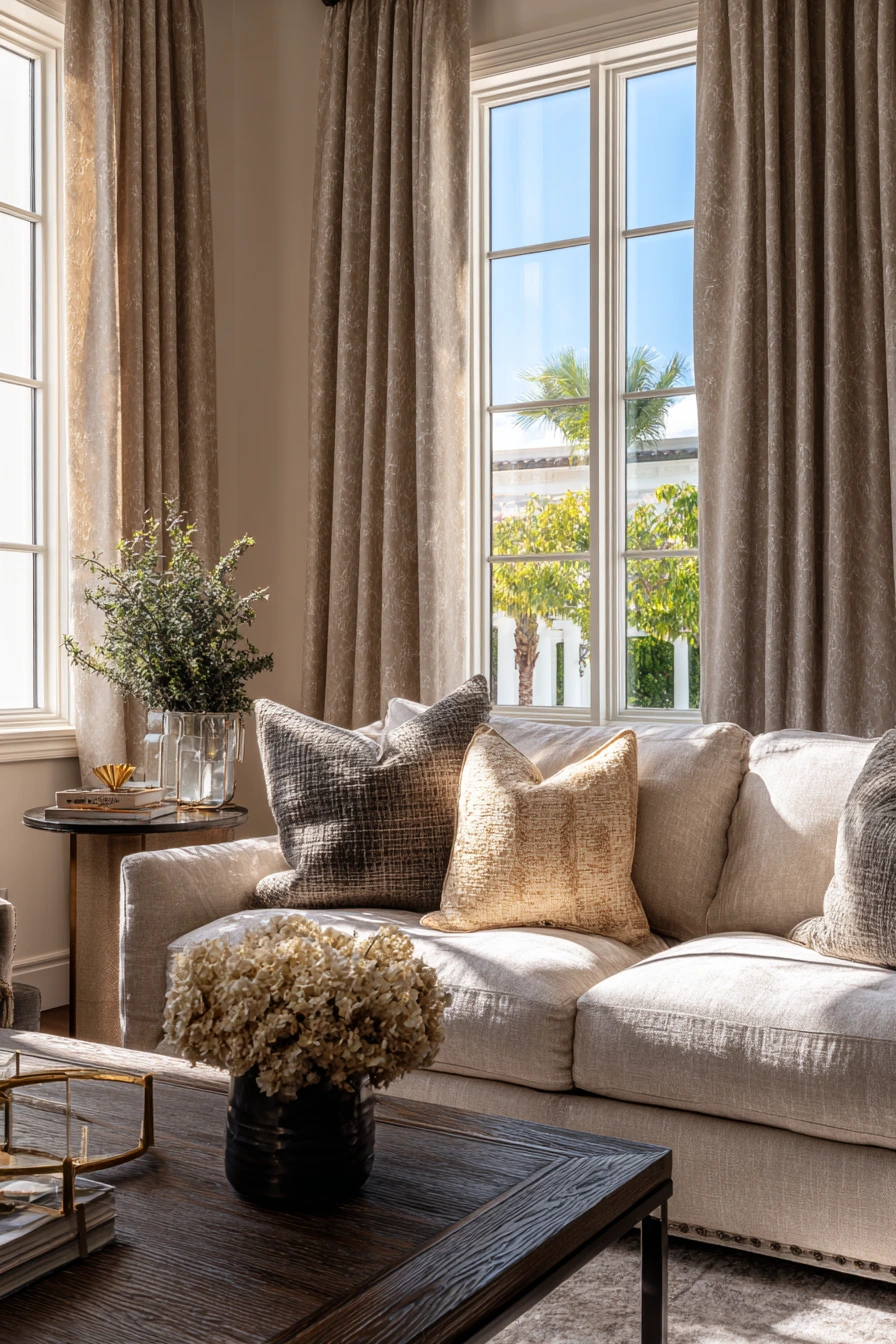
A serene elegant decorating plan focuses on balance. Smooth neutral walls, refined furniture silhouettes, and subtle details create a space that feels calm and put together. This look is great for anyone who wants a clean home that still feels soft and comfortable.
Start with the layout. Make sure the main pieces feel evenly spaced and easy to walk around. Choose furniture with simple lines, but not harsh edges. A slightly rounded sofa arm, a curved mirror, or a soft ottoman can keep the room from feeling too strict. Use soft textiles like a plush rug, linen curtains, and a few pillows in similar shades for harmony.
Lighting is a major part of serenity. Natural sunlight should fill the room, so avoid blocking windows. For night, use layers: a ceiling light on a dimmer, a table lamp, and maybe one floor lamp. Keep decor quiet and meaningful, like a single bowl, one book stack, and one small plant. When the room is uncluttered, the calm mood lasts longer because it is easier to keep clean.
- Leave open space around key pieces so the room can “breathe.”
- Choose a low-contrast palette: warm white, cream, light beige, and soft gray.
- Add one texture per surface: rug, curtains, sofa fabric, and a matte vase.
- Use gentle lighting with warm bulbs for a relaxed feel.
- Keep accessories to odd numbers, like three items on a console, for easy balance.
Pro Design Tip: Before buying anything new, remove one extra item from each surface. Editing often creates a more elegant room than adding more decor.
Budget Considerations: Good lighting changes everything; start with dimmable bulbs, simple lamp shades, and affordable curtain panels to soften the whole room.
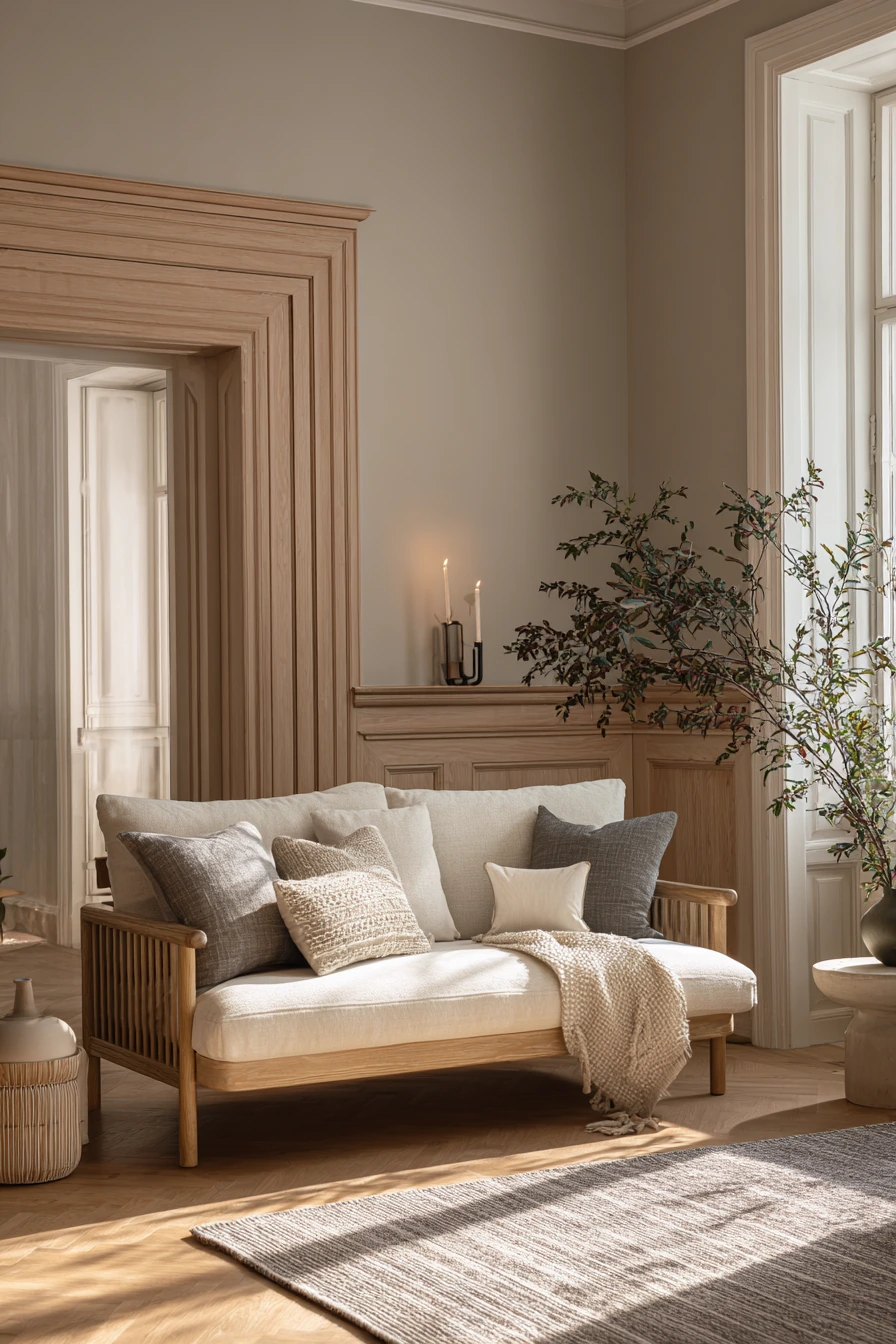
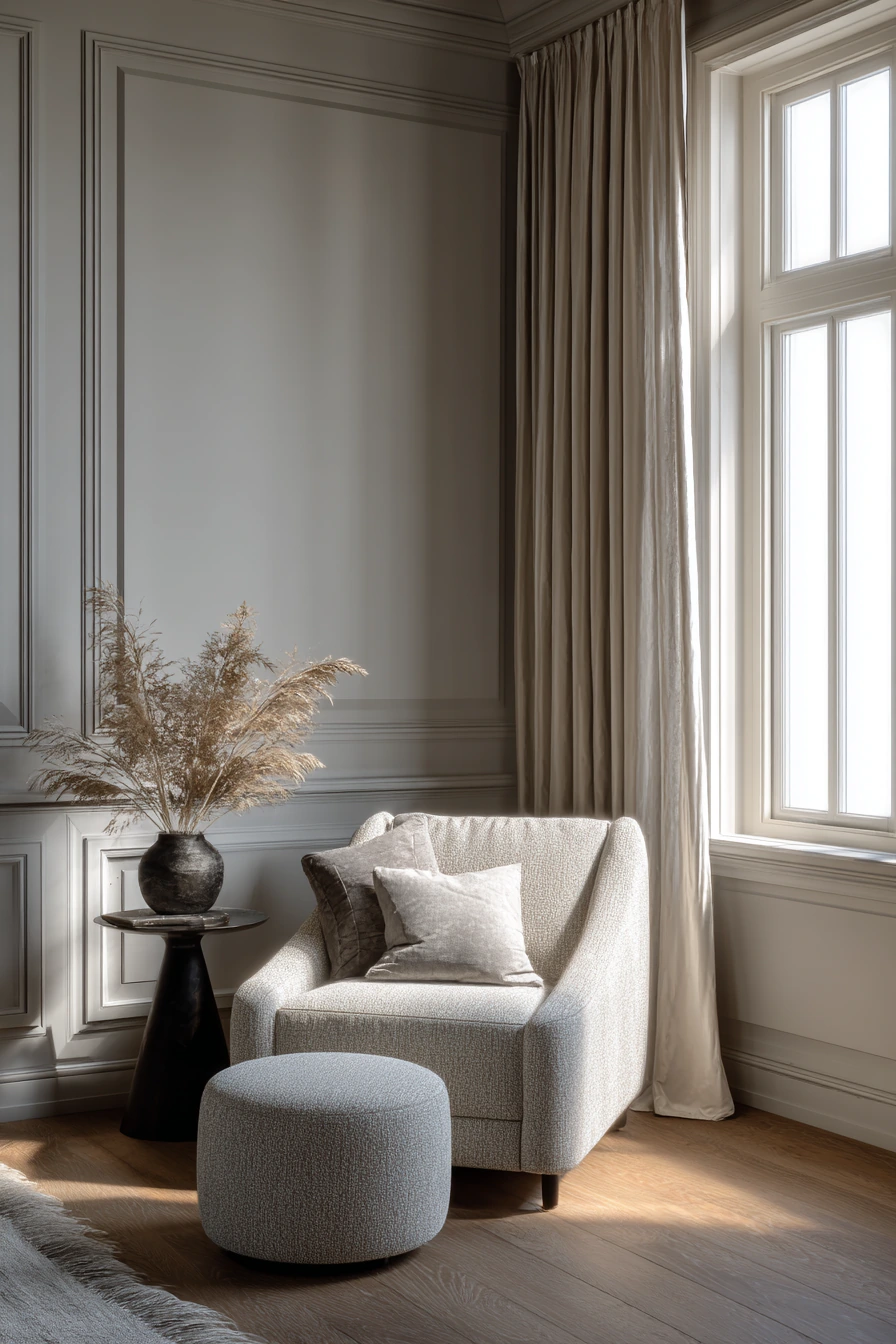
Elegant decorating ideas work best when the room has a calm palette, good spacing, and a few well-chosen materials like wood, stone, and soft textiles.
Use the section lists to copy one idea at a time, starting with paint, lighting, and one main furniture update. Small changes, repeated with intention, create a polished home that still feels warm and livable.
FAQ
1. What colors make a room look elegant?
Warm neutrals like beige, cream, taupe, and soft white look refined. Use one deeper tone in small amounts for contrast.
2. How do I decorate elegantly with a small budget?
Edit clutter, improve lighting, and upgrade textiles first. New cushion covers, curtains, and a rug can change the feel fast.
3. How can I make my living room look expensive?
Use tailored cushions, one statement light, and fewer decor pieces. Add one stone or marble accent and keep finishes consistent.
4. What is the easiest way to style a coffee table elegantly?
Use a tray, a small stack of books, and one low bowl or vase. Keep it low so it does not block sightlines.
5. Should I match all my metals and woods?
Match metals when possible, or keep to one main metal plus a small secondary. For wood, stick to one or two tones for a calmer look.
6. How do I keep a neutral room from looking boring?
Add texture and shape. Mix linen, boucle, wool, and ceramics, and include a few curved items to soften the space.