Finished basement ideas can turn an underused lower level into the most useful room in your home. With the right layout, lighting, and finishes, a basement can feel bright, warm, and easy to live in.
In this guide, you will see practical basement design ideas based on real rooms: open layouts, family lounges, home theaters, reading nooks, offices, and multipurpose spaces with a small bar area. Each one uses details like recessed ceiling lighting, egress windows, shelving, and comfortable seating to make the space work.
You will also get simple styling steps you can copy, plus a pro design tip and a budget note for every look. Use these ideas to plan a basement that feels inviting, functional, and stylish, even if you have limited daylight.
If you are coming from Pinterest, save the layout that fits your life first. Then use the checklists to choose flooring, wall color, rugs, and storage so the room looks finished, not temporary.
1. Modern Open Layout Finished Basement
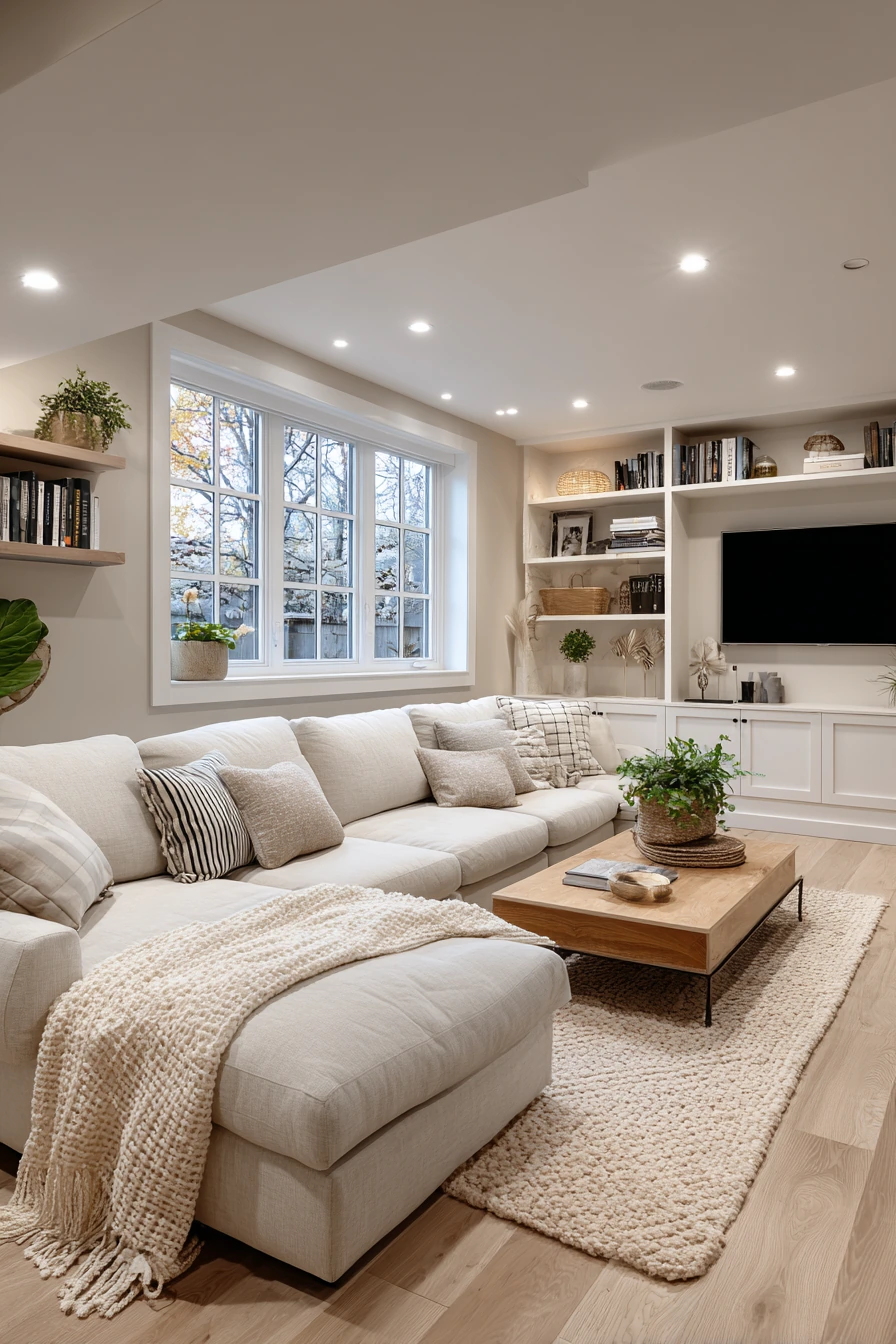
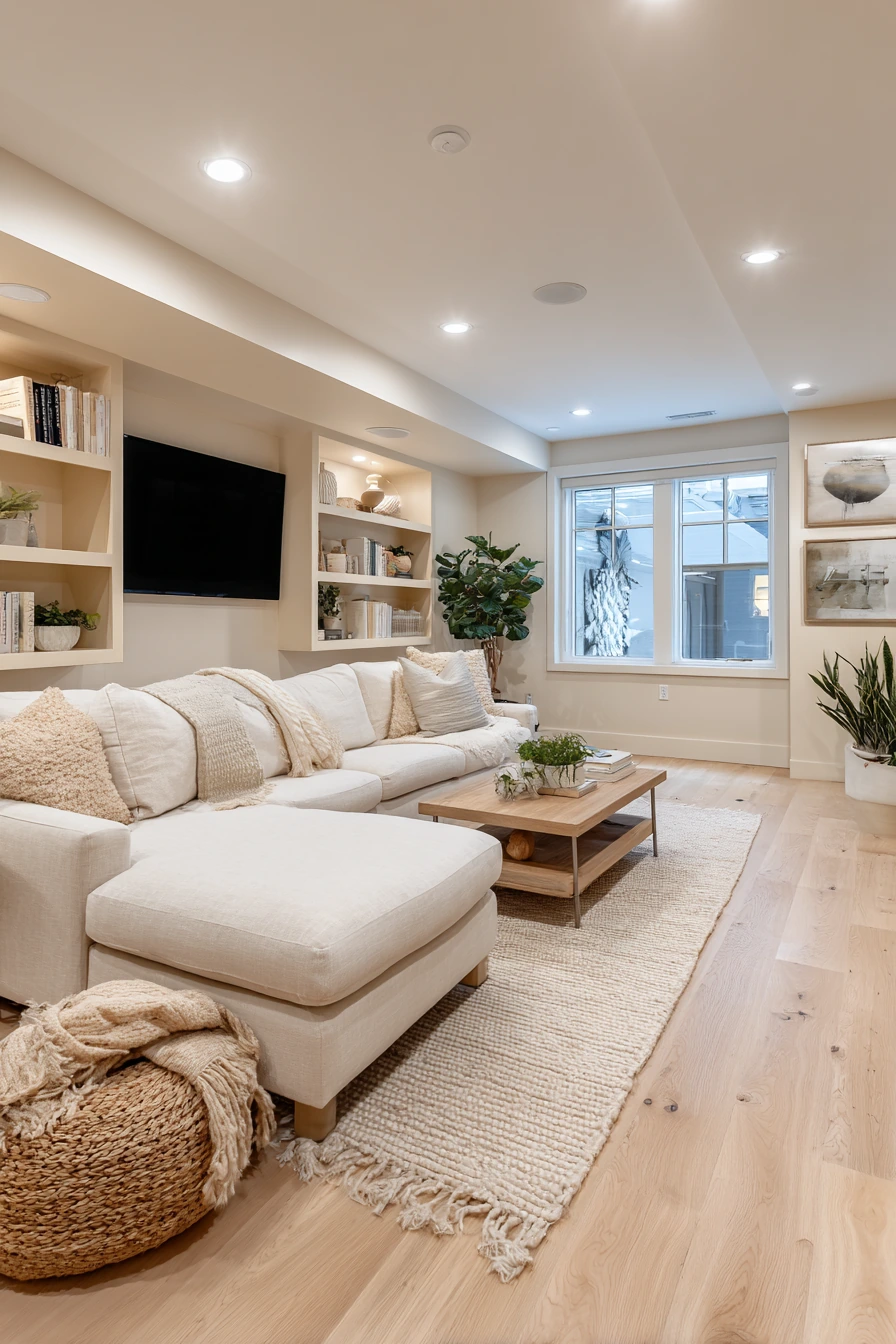
A modern finished basement with a spacious open layout works best when you plan the zones first. Start with the main seating area: a comfortable sectional sofa facing a wall-mounted TV. Keep a clear walkway around the sofa so the room feels open, not crowded. Light wood flooring and soft neutral walls help bounce light, which matters in a basement. A plush area rug under the coffee table adds warmth and helps define the lounge zone.
To make the space feel realistic and bright, use recessed ceiling lighting on a dimmer and let natural daylight do its job. If you have large egress windows, avoid heavy curtains. Use light-filtering shades so daylight can softly illuminate the room while still giving privacy. Place a floor lamp near the sectional to reduce harsh shadows at night.
For storage and style, add shelving units along one wall. Mix books with simple decorative objects so it looks lived-in. Use a small tray on the coffee table for remotes, coasters, and a candle. Keep colors tight: warm wood, cream, soft gray, and black accents for the TV wall. This keeps the space inviting and functional without looking busy.
- Choose light wood or wood-look flooring to brighten the room.
- Use a large rug to anchor the sectional and soften sound.
- Mount the TV and hide cords with a cable kit for a clean wall.
- Style shelves with books, a few vases, and one framed photo per section.
- Add one textured throw and two pillows to keep the sofa cozy.
Pro Design Tip: Place recessed lights about 4 to 5 feet apart and line them up with the seating area edges, not the room edges, so the lounge feels like a planned zone.
Budget Considerations: If egress windows are already in place, spend on lighting and a large rug first. You can use affordable IKEA-style shelving and upgrade decor over time.
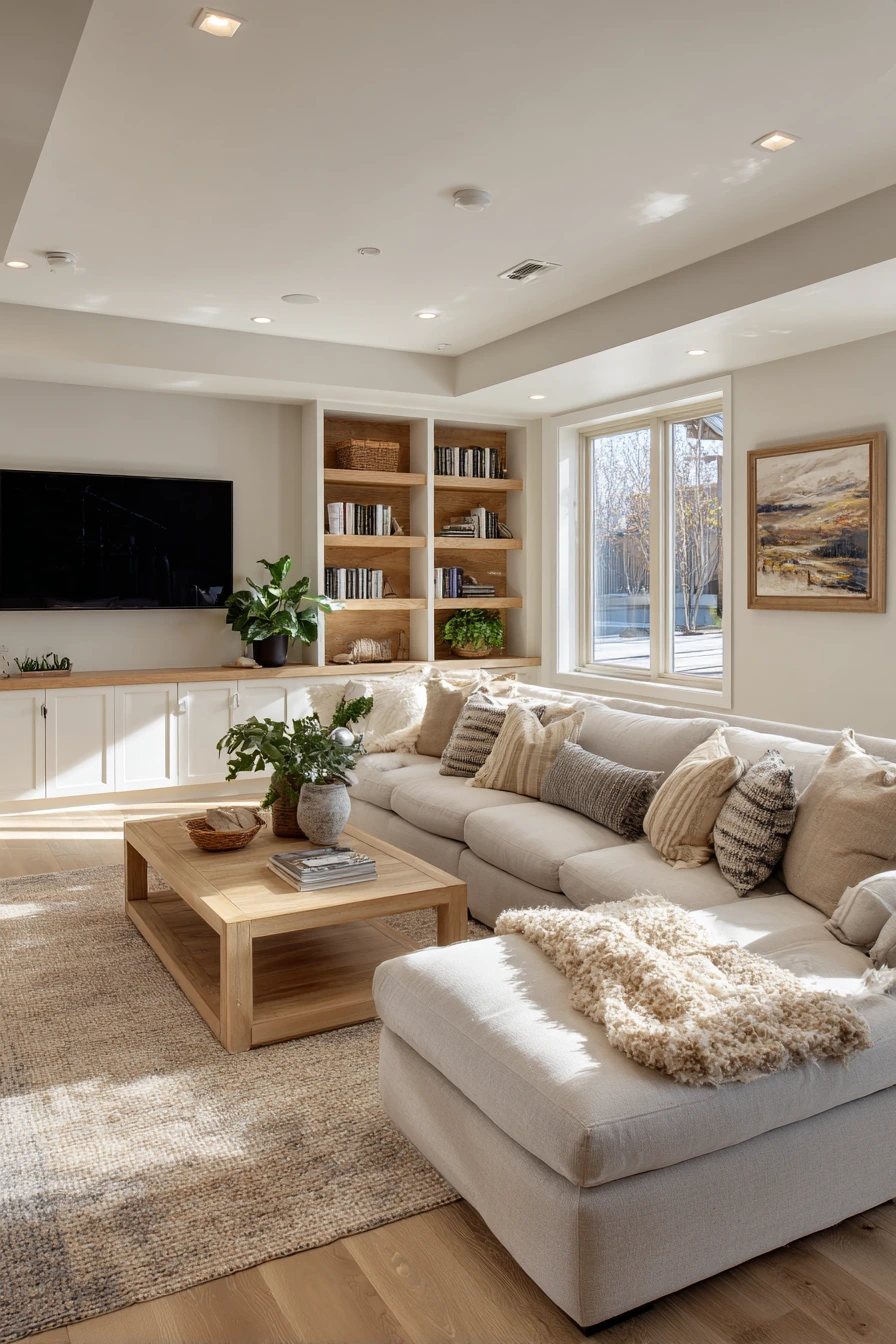

2. Cozy Family Lounge Basement with Wood Paneling
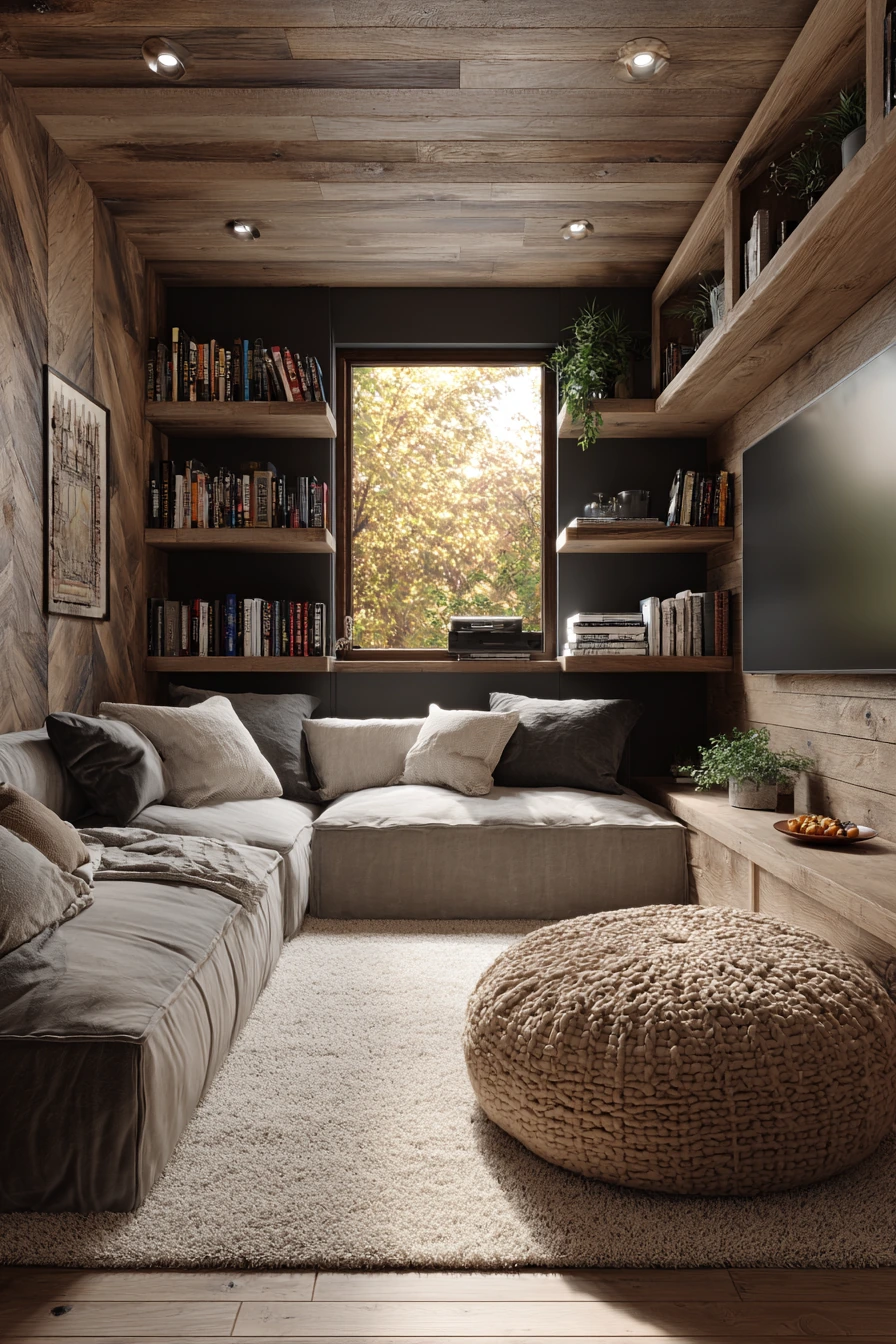
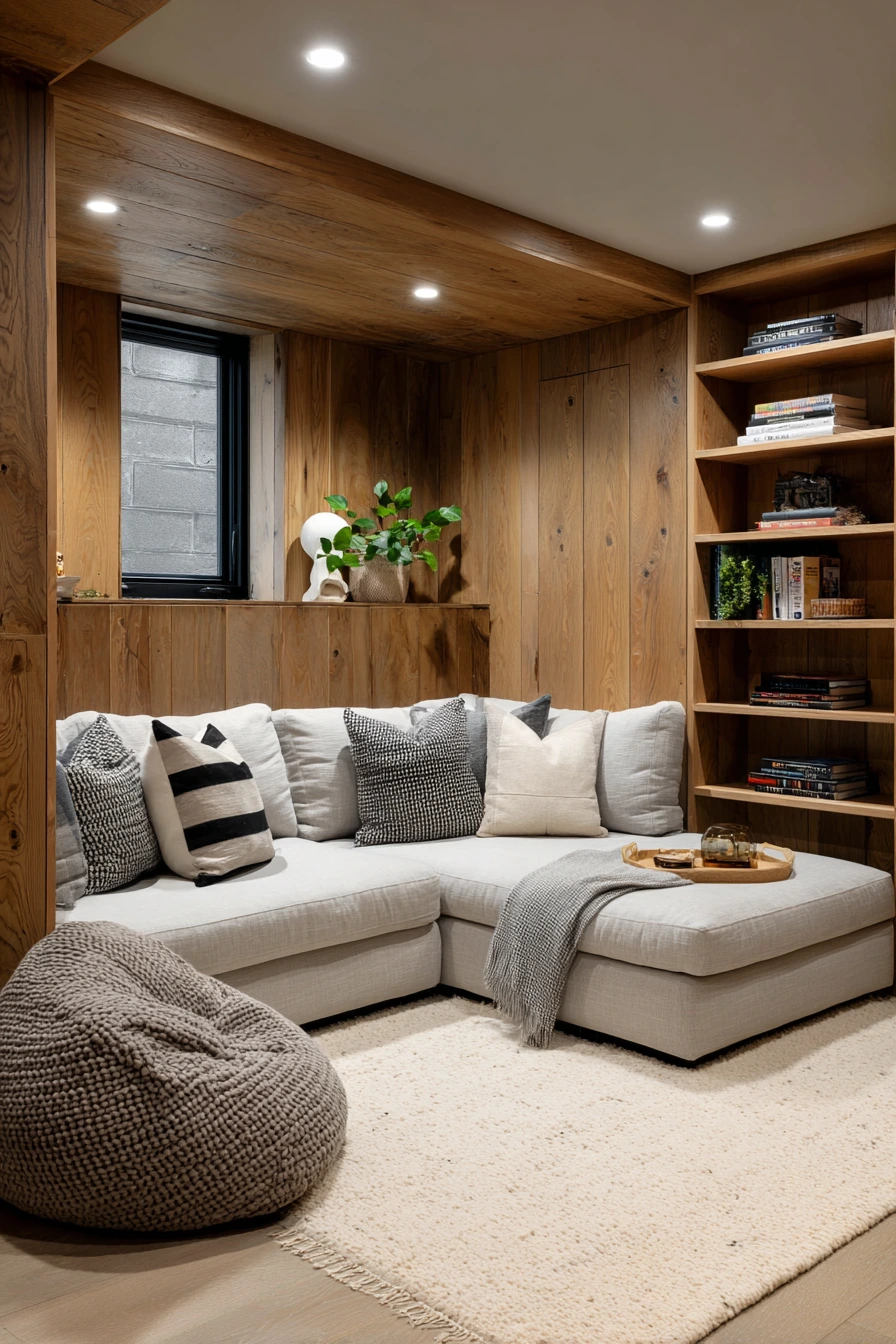
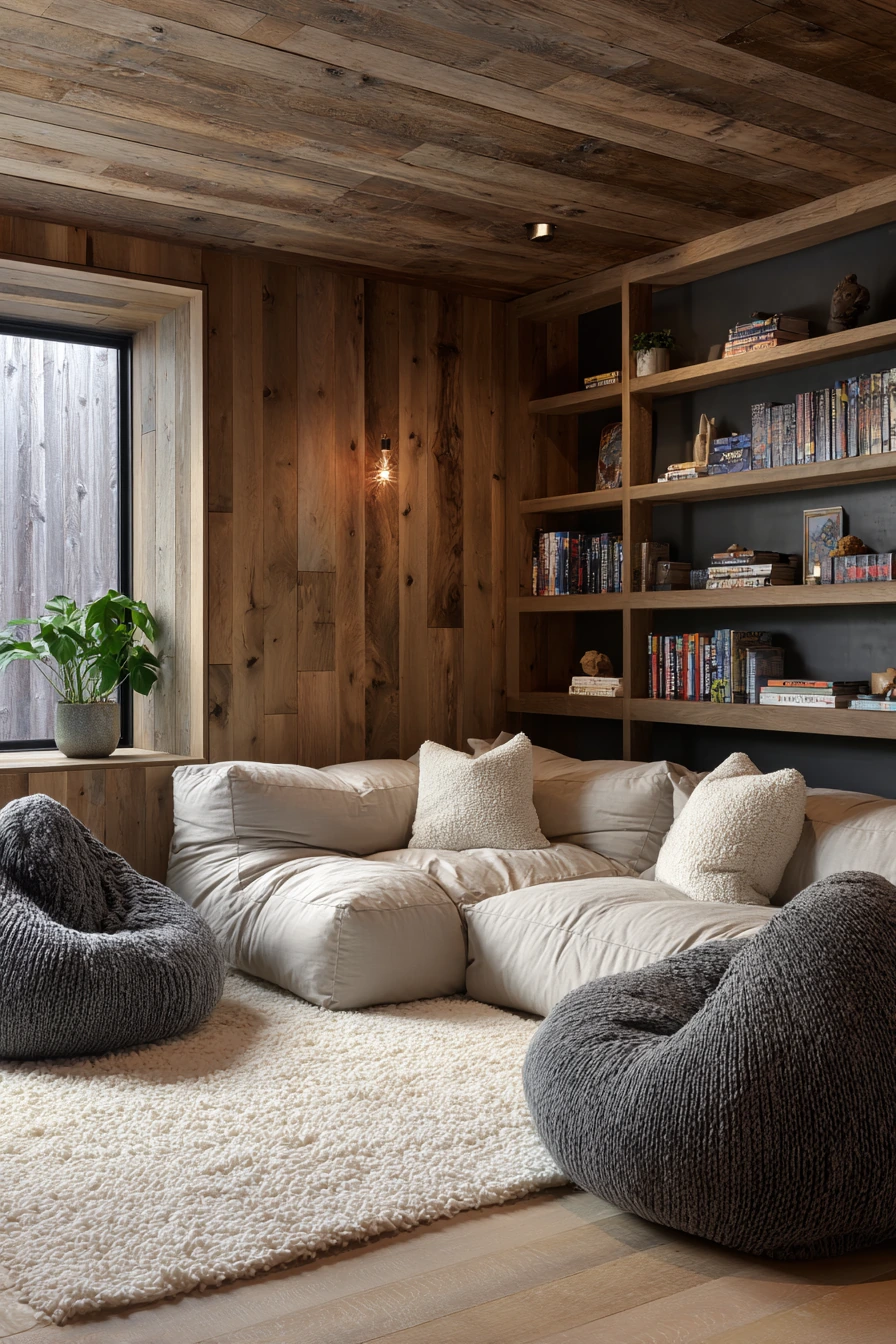
A cozy finished basement family lounge should feel soft, relaxed, and easy for everyone to use. Start with low-profile seating so the ceiling height feels taller. A simple sofa plus beanbags creates flexible seating for kids and adults. Add a soft wool rug to make the room comfortable for playing games or watching a movie on a laptop.
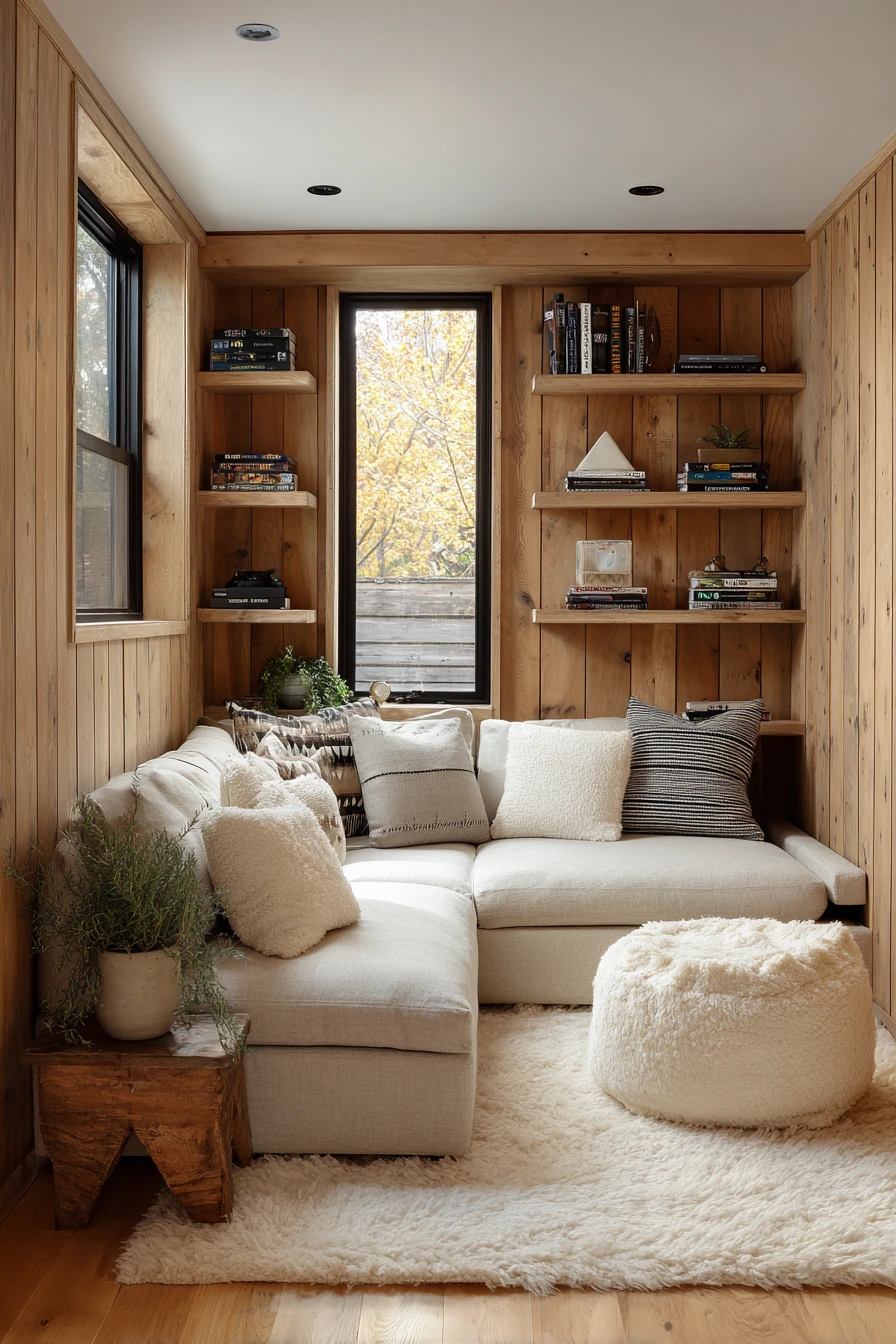
Warm wood paneling changes the whole mood. It adds texture and makes the basement feel less cold. Balance it with lighter pieces so it does not feel dark. Modern shelving is a smart match here because it holds books, games, and decor without taking up much floor space. Keep shelves organized with baskets, so cleanup is quick.
Use the corner window as a design feature. Place a reading chair or a small side table near it so the natural light gets used. If the room has only one window, add two layers of lighting: recessed lights for general light and a table lamp for warm glow. For styling, keep decor playful but not messy: a stack of board games, a framed print, and a basket of throws near the sofa.
- Pick a sofa with washable covers or performance fabric.
- Use beanbags that can be stored in a corner when not needed.
- Add closed baskets on shelves for toys, cords, and controllers.
- Choose warm bulbs (2700K to 3000K) for a cozy feel.
- Hang simple art to break up wood walls and add color.
Pro Design Tip: Mix wood paneling with matte light paint on one wall or the ceiling to keep the room from feeling heavy and to reflect more light.
Budget Considerations: Real wood paneling can be pricey; consider wood-look wall planks or painting existing paneling a warm neutral to get the same cozy effect.
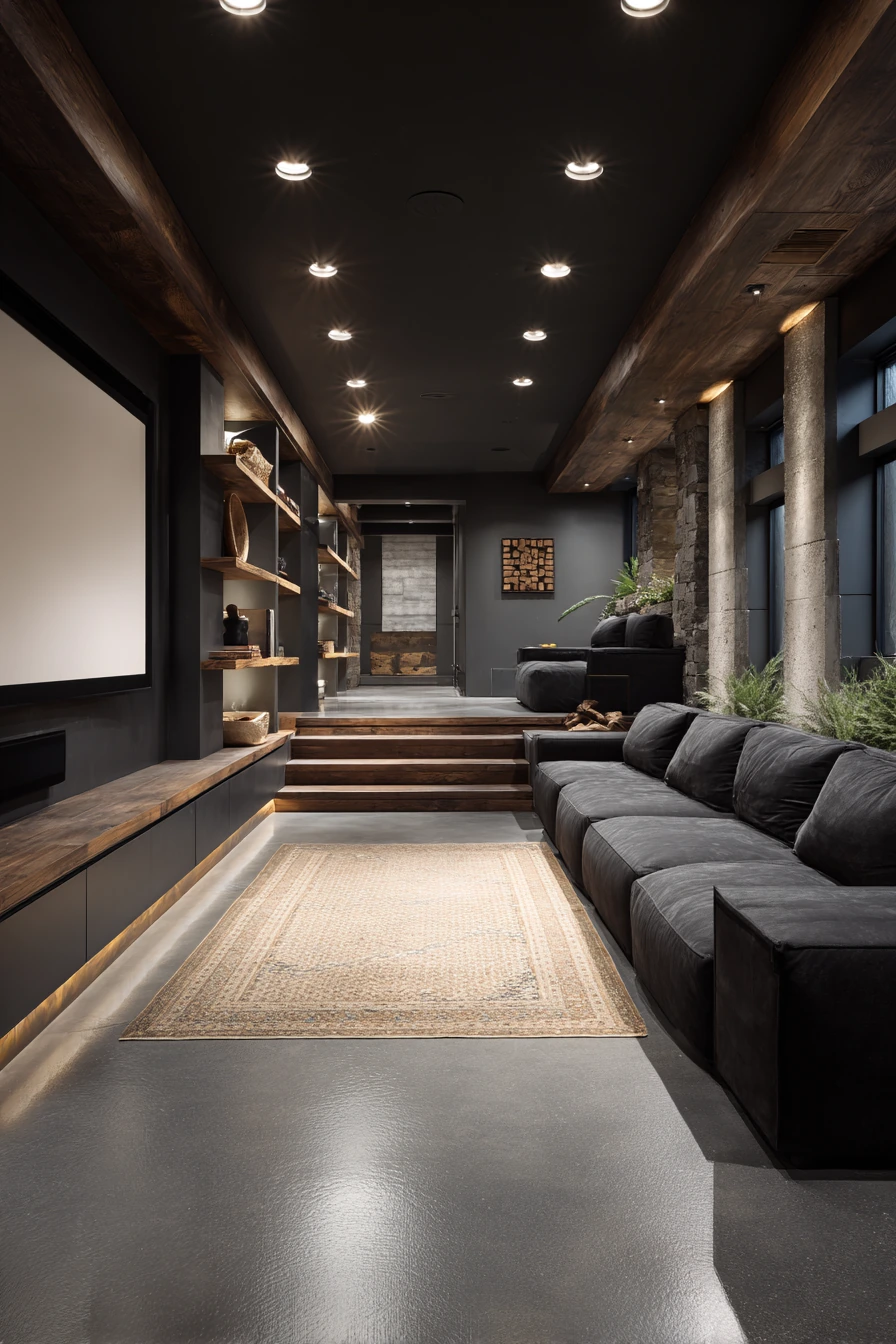
3. Luxury Finished Basement Home Theater Zone
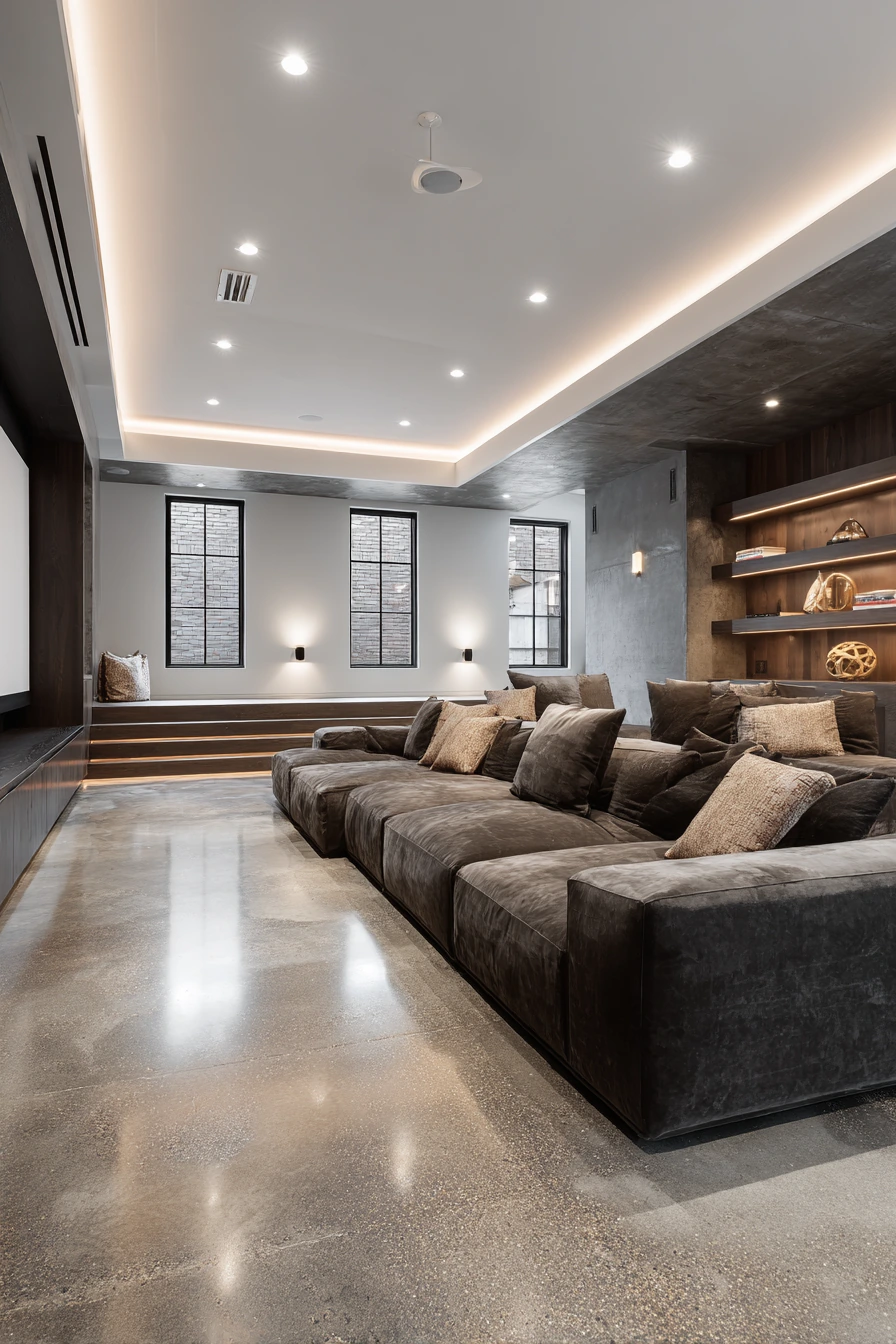

A luxury finished basement can feel high-end without being fussy when you focus on clean materials and a strong layout. Polished concrete floors look modern and are easy to maintain, especially in a basement where moisture can be a concern. Add dark wood accents on shelving or trim to bring warmth and contrast. Keep the walls simple so the space feels calm and intentional.
The home theater area should be the main feature. Tiered seating is ideal if you have enough ceiling height, since everyone gets a clear view of the large projector screen. If you do not have space for a full tier, use a raised platform for the back row with low-profile recliners. Recessed lighting is key here. Use dimmable zones so you can keep a low light level while watching, then brighten the room for snacks and cleanup.
Small basement windows can still help. Let daylight filter in during the day, but use blackout shades so you can control glare. Add minimalist shelves with a few decorative objects to keep the room balanced, not cluttered. For styling, use acoustic-friendly pieces: thick curtains, a large rug in the seating area, and upholstered chairs. These reduce echo and make the theater feel more comfortable.
- Choose a projector screen size based on viewing distance, not just wall size.
- Add a rug or carpet tiles in the theater zone to soften sound.
- Use wall sconces or step lights for safe low lighting.
- Store remotes, cables, and games in closed drawers near the screen.
- Keep decor minimal: one large art piece outside the screen wall is enough.
Pro Design Tip: Plan wiring early and run conduit behind the media wall so you can upgrade equipment later without opening walls.
Budget Considerations: Concrete floors and tiered seating can add cost; to save, use luxury vinyl tile with a concrete look and build a simple platform with plywood and carpet.
4. Scandinavian Finished Basement with Reading Nook
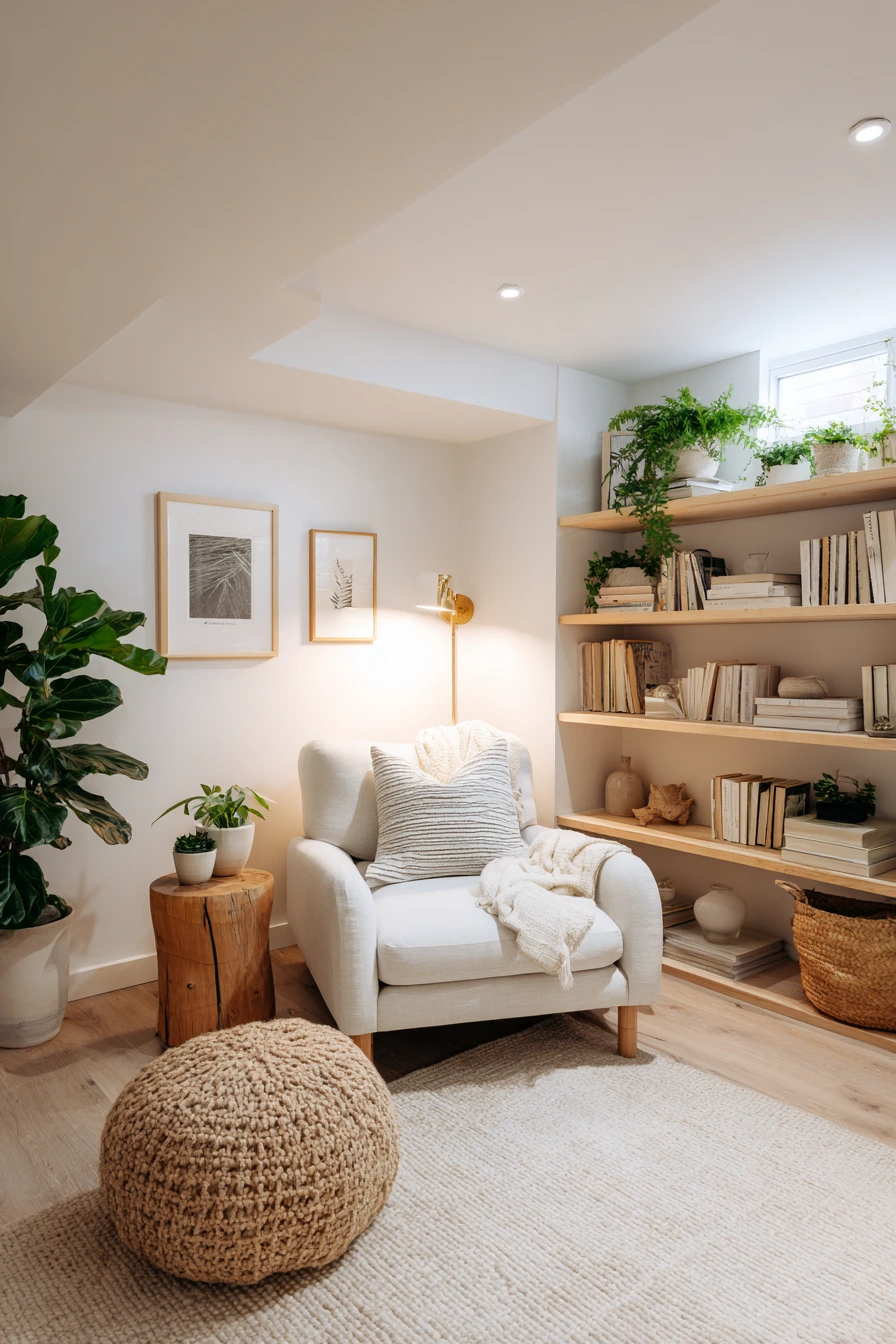

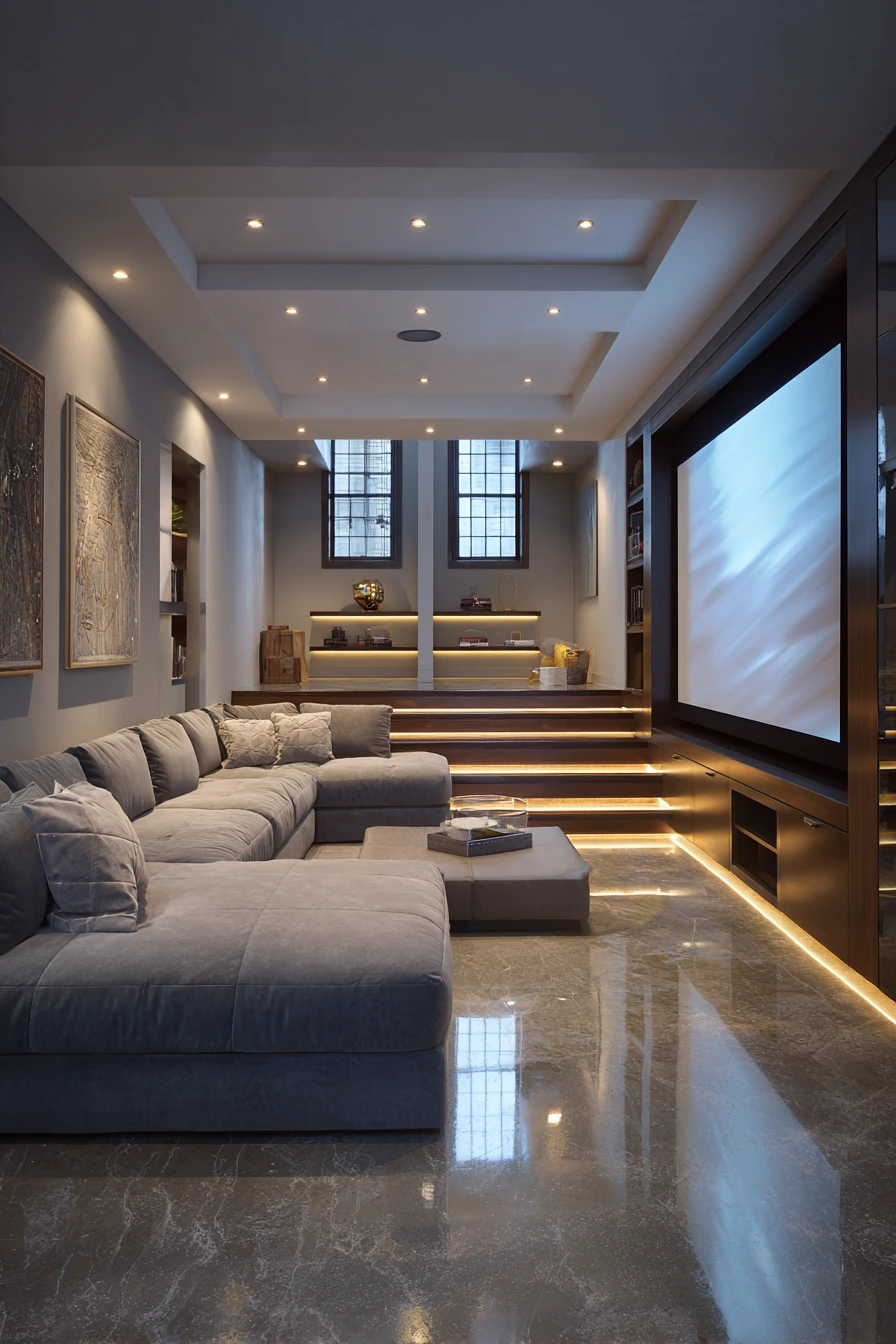
A Scandinavian-inspired finished basement is a great choice when you want an airy, peaceful look. White walls and light oak flooring brighten the space and make it feel bigger. Keep furniture minimal and choose pieces with slim legs so you can see more floor. That visual space makes a basement feel less boxed in.
Create a cozy reading nook as a focal point. Place a low armchair against a wall near an egress window, then add a floor lamp for evening light. A small side table gives you a spot for a book and a drink. Add one soft throw and one lumbar pillow for comfort without clutter. If you want extra softness underfoot, use a small woven rug in the nook.
Open shelving works well in this style because it looks light and practical. Display books with the spines facing out, and add a few plants for life and color. In basements, plants do better with bright windows or grow lights, so choose easy options like pothos or snake plant. For small gatherings, add two poufs that can tuck under a console table. Keep the color palette tight: white, beige, light wood, and small black accents.
- Use matte white paint to reduce glare and hide wall flaws.
- Pick light oak or oak-look flooring to reflect daylight.
- Style shelves with books, plants, and simple ceramic pieces.
- Add soft textures: knit throw, linen pillow covers, woven basket.
- Choose slim furniture to keep the room open for movement.
Pro Design Tip: Use one warm wood tone throughout the room (shelves, table, frames) so the space looks calm and connected.
Budget Considerations: Real oak flooring can be expensive; use quality laminate or LVP in a light oak finish and spend more on a comfortable chair and good lamp.
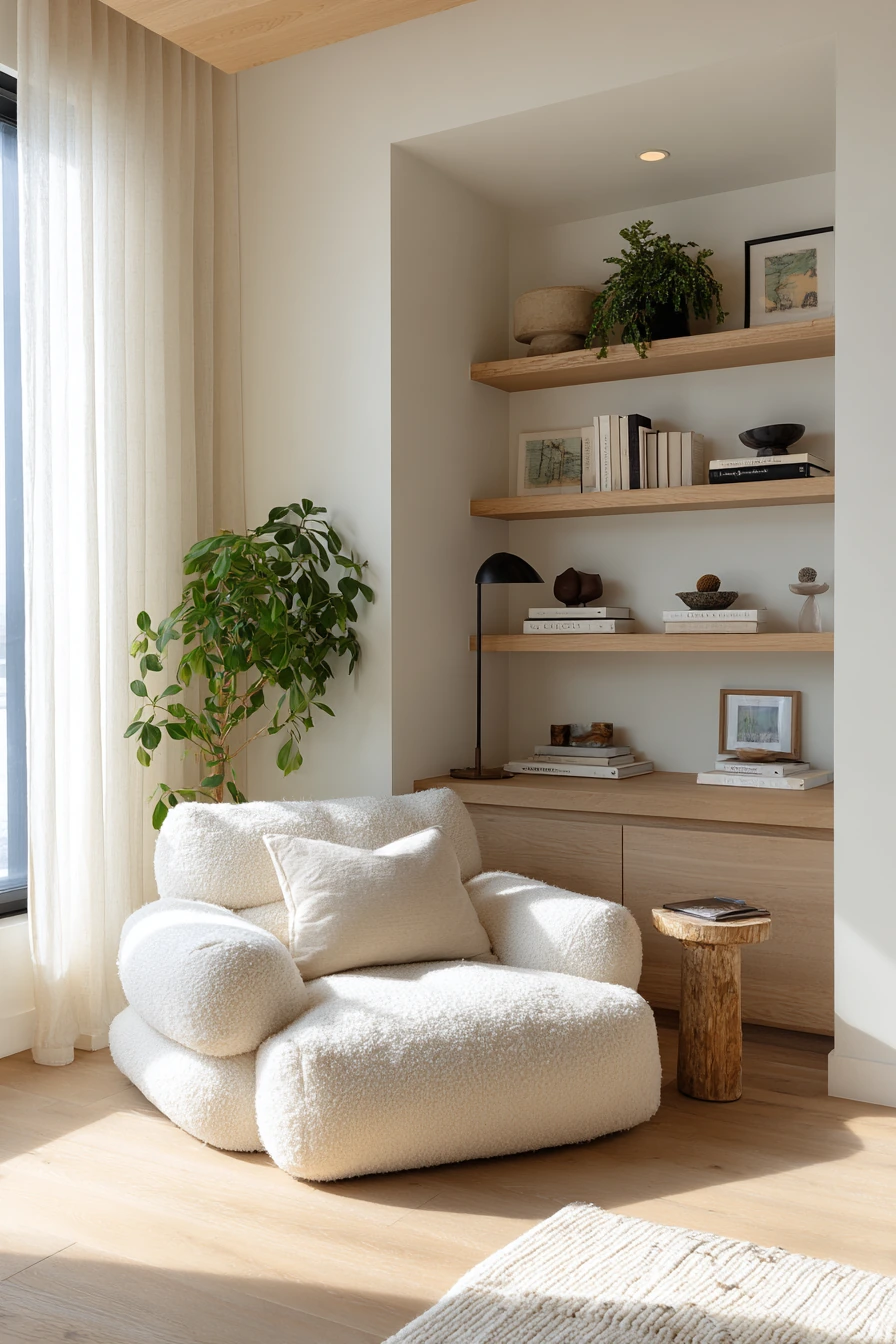

5. Multipurpose Finished Basement with Small Bar Area
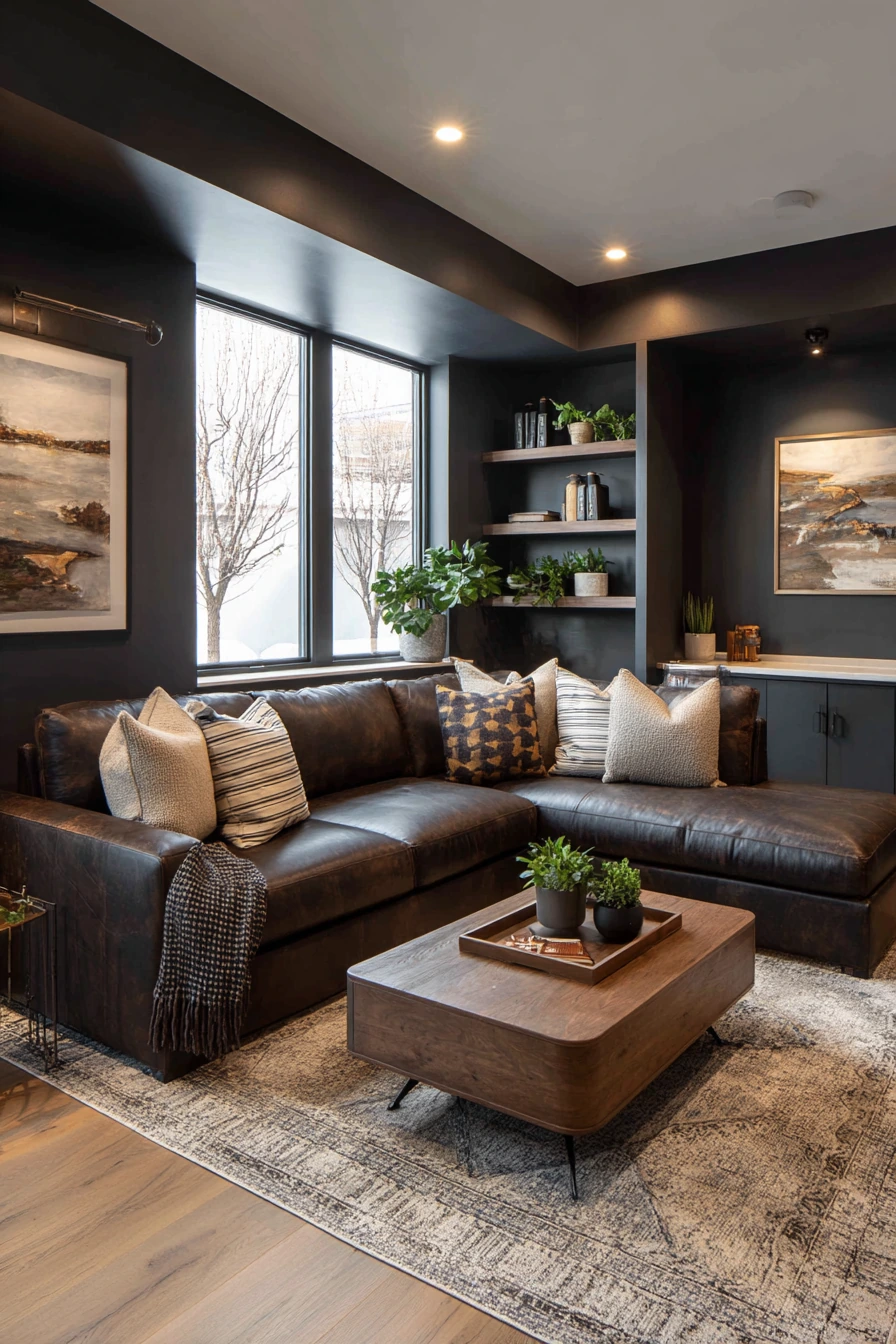

A contemporary finished basement designed as a multipurpose space needs clear zones so it feels sleek, not scattered. Start with the main lounge: a sectional sofa, a coffee table, and a large rug to anchor it. Then plan the bar area as a second zone along one wall, close to an outlet and any plumbing if you have it. Even a small bar setup can feel built-in if you use matching cabinetry and a simple backsplash.
Dark accent walls can look sharp in a basement when you balance them with light wood floors and plenty of lighting. Paint one wall deep charcoal or navy, then keep the other walls a warm off-white. This gives depth without making the whole room feel smaller. Natural sunlight from high windows will create subtle highlights, but you still need layered lighting. Use recessed ceiling lights for general light and add under-cabinet lighting in the bar area for a warm glow.
Decorative shelving helps tie the zones together. In the lounge, use shelves for books and a few objects. Near the bar, use a tray for glasses and a small framed print. For styling, repeat materials: black metal, light wood, and one accent color like rust or olive. Add two bar stools with backs so the bar is comfortable for longer hangs, not just quick drinks.
- Use a large rug to define the seating zone and reduce echo.
- Add closed storage in the bar area for bottles and snacks.
- Choose an accent wall color that pairs well with warm wood floors.
- Install dimmers so the room works for movies and hosting.
- Style the bar with a simple tray, two glasses, and one small plant.
Pro Design Tip: Keep at least 36 inches of clearance behind bar stools so people can pass comfortably, even when the room is full.
Budget Considerations: A full wet bar costs more; for a lower-cost version, use a freestanding cabinet, a mini fridge, and peel-and-stick backsplash for the same look.


6. Rustic Finished Basement with Beams and Stone Wall


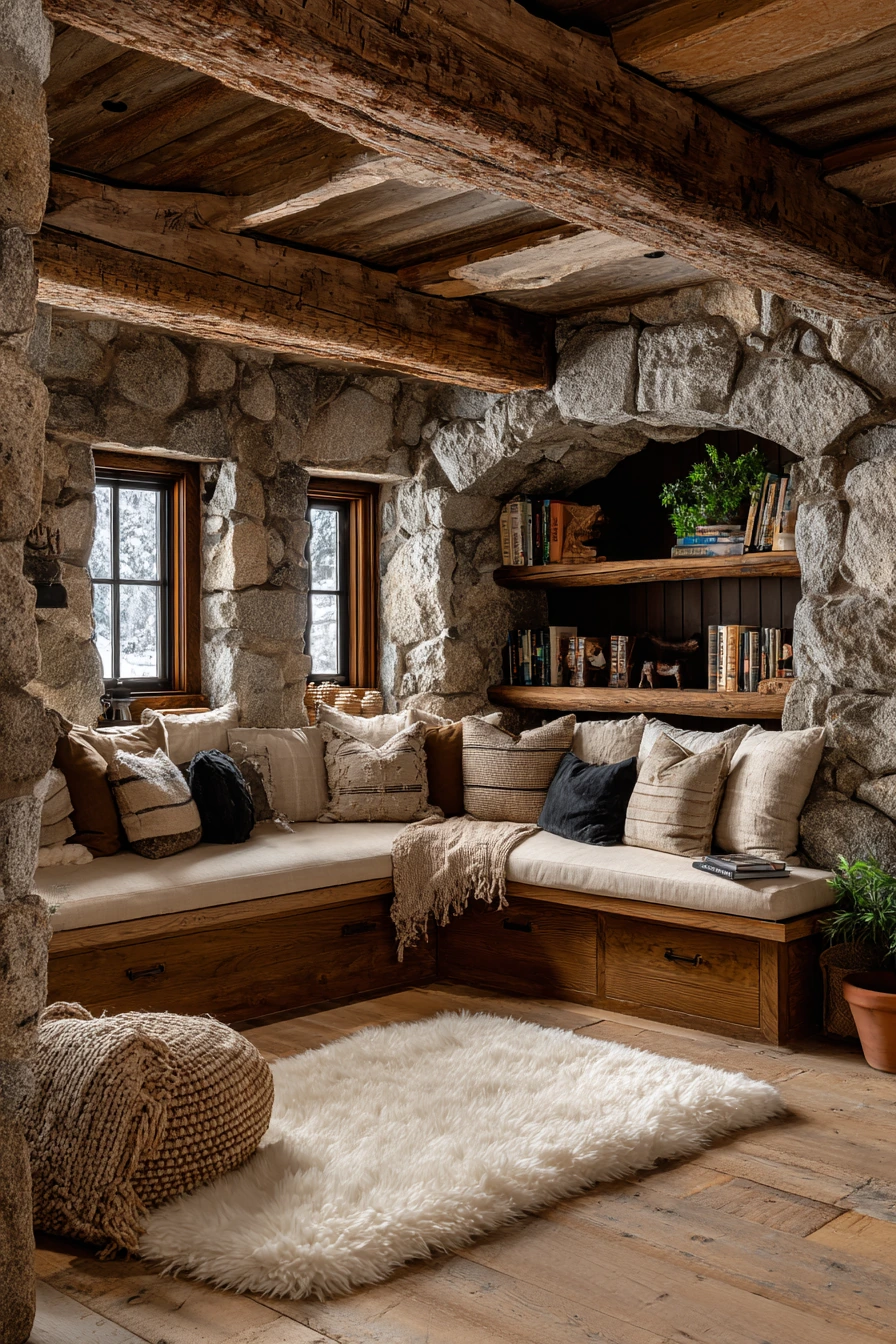
A rustic finished basement feels cozy because it leans into texture. Exposed wooden beams add character and make the space feel like a cabin, even in a suburban home. A stone accent wall brings natural pattern and hides minor wall imperfections. Warm wood flooring ties it all together and makes the room feel inviting the moment you walk in.
Comfortable seating is the key to making rustic style work for everyday life. Choose a sofa with deep cushions, then layer in pillows with different fabrics like linen, wool, and faux leather. Add a plush rug to soften the look and keep feet warm. If you have small windows, let them stay simple with light shades. Daylight will highlight the wood grain and stone texture, which is a big part of this look.
Built-in shelves make rustic rooms feel finished and useful. Use them for books, small plants, and decorative objects like bowls or framed family photos. Keep the shelves from looking cluttered by leaving empty space. For styling, add a coffee table in reclaimed wood or a black metal frame. A few warm-toned accessories, like a brass lamp or amber glass, will keep the room from feeling too dark.
- Use warm white bulbs to bring out wood and stone tones.
- Add a thick rug to reduce noise and add softness.
- Mix textures: wood, stone, knit, and leather for depth.
- Style shelves with a simple pattern: books, object, space, plant.
- Choose a sturdy coffee table that can handle family use.
Pro Design Tip: If you add a stone wall, keep the rest of the finishes simple so the room has one strong focal point instead of competing textures.
Budget Considerations: Real stone can be costly; consider stone veneer panels or a textured wall treatment that mimics stone while keeping labor and material costs lower.

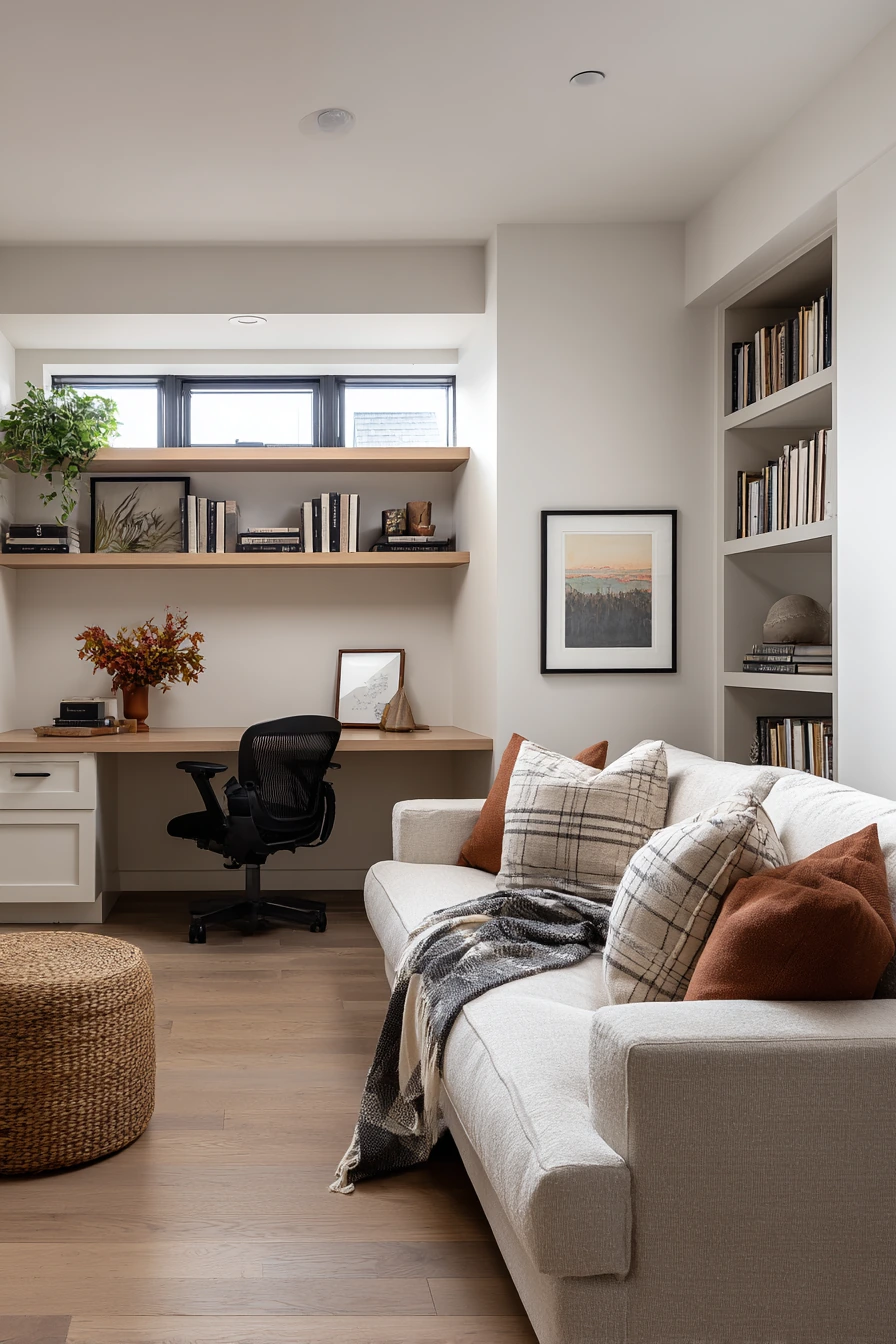
7. Finished Basement Office and Lounge Combo
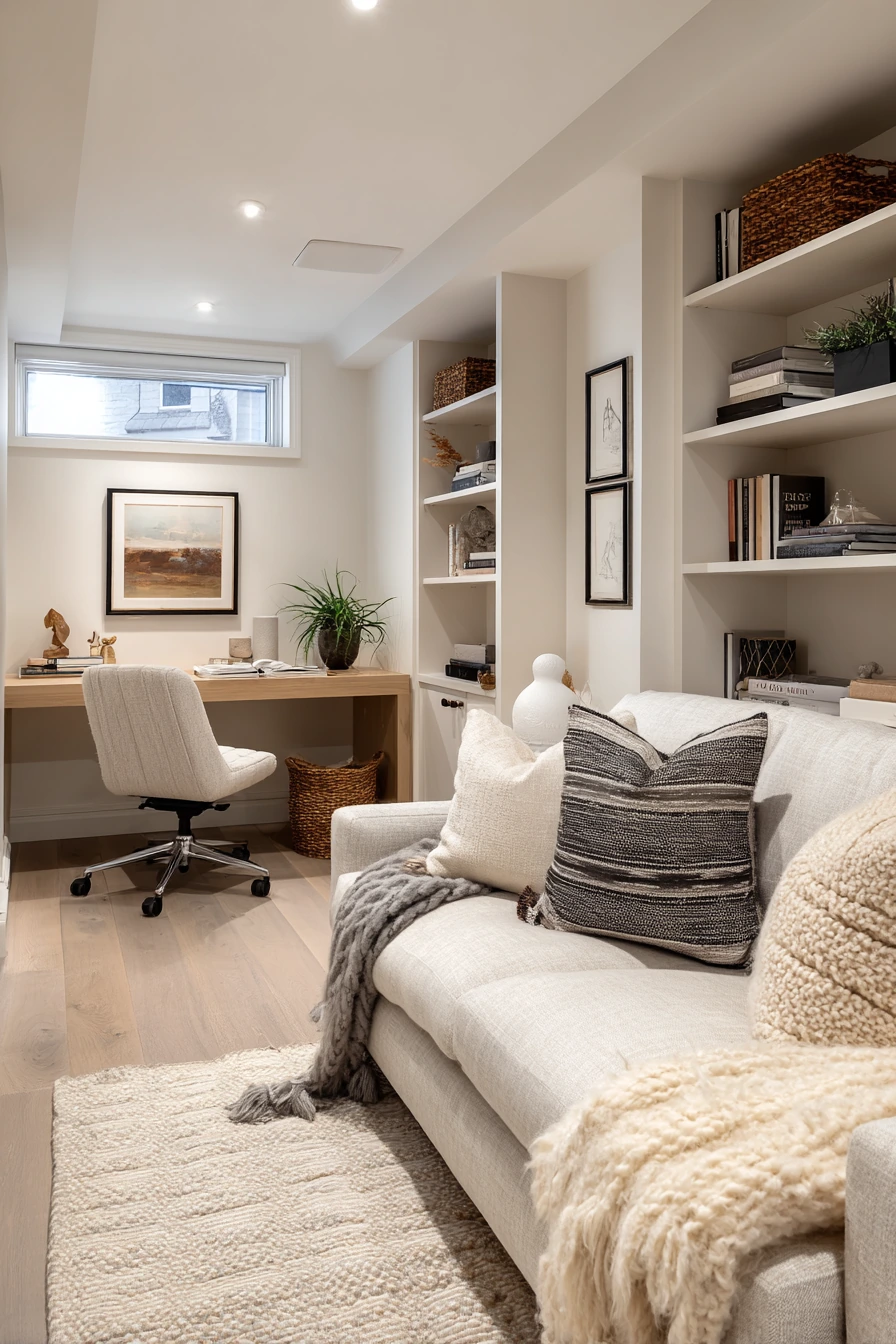
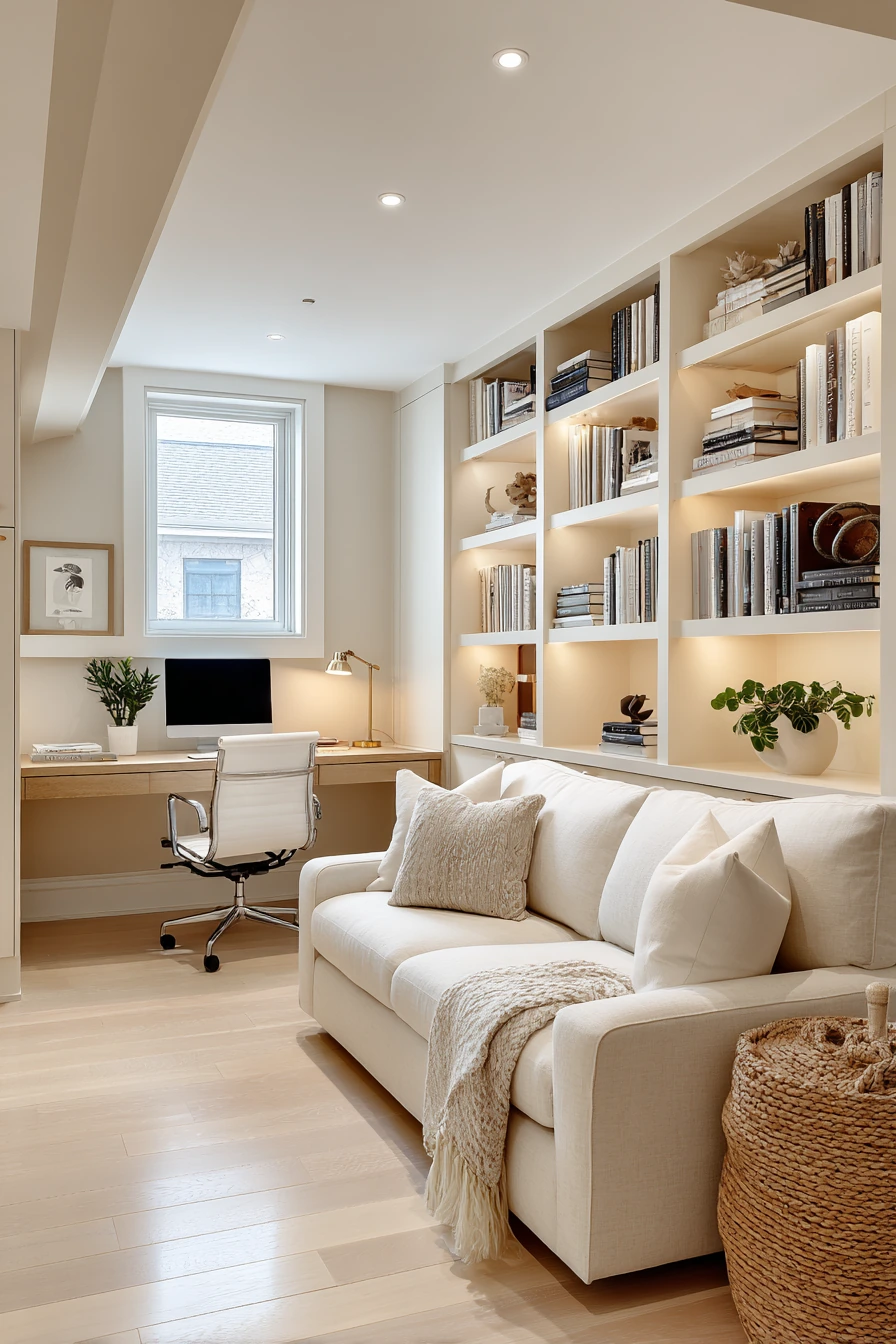
A finished basement home office and lounge hybrid is perfect when you need more function without adding an addition. The trick is to separate work and rest areas, even in one room. Place the modern desk and ergonomic chair in the brightest spot, usually near the small high windows. That daylight helps with focus. Keep the sofa area a few feet away so you can mentally switch modes after work.
Neutral walls and wood floors are a smart base because they keep the room calm. Add built-in shelving for books and storage so the office does not take over the whole basement. Use baskets or file boxes on the lower shelves to hide paper clutter. For lighting, combine natural light with subtle recessed lighting. A desk lamp with an adjustable arm helps prevent eye strain and gives task light where you need it.
For styling, make the lounge feel soft with layered throws and a few pillows. Add a small coffee table that can also hold a laptop if you like working from the sofa sometimes. Use one piece of wall art behind the desk to make video calls look better. Keep cords under control with a cable tray and a power strip mounted under the desk. That one detail makes the space feel more finished and stylish.
- Use a rug under the desk area to define the office zone.
- Choose closed storage for paperwork and tech accessories.
- Add a plant or two to soften the office corner.
- Use a small side table by the sofa for drinks and chargers.
- Install dimmers so you can shift from work light to evening light.
Pro Design Tip: Place the desk so your screen is perpendicular to the window, not facing it, to reduce glare and improve comfort.
Budget Considerations: Built-ins can raise costs; use a wall of matching bookcases with trim for a built-in look, and spend more on a quality chair since you use it every day.
8. Family-Friendly Basement Entertainment Room

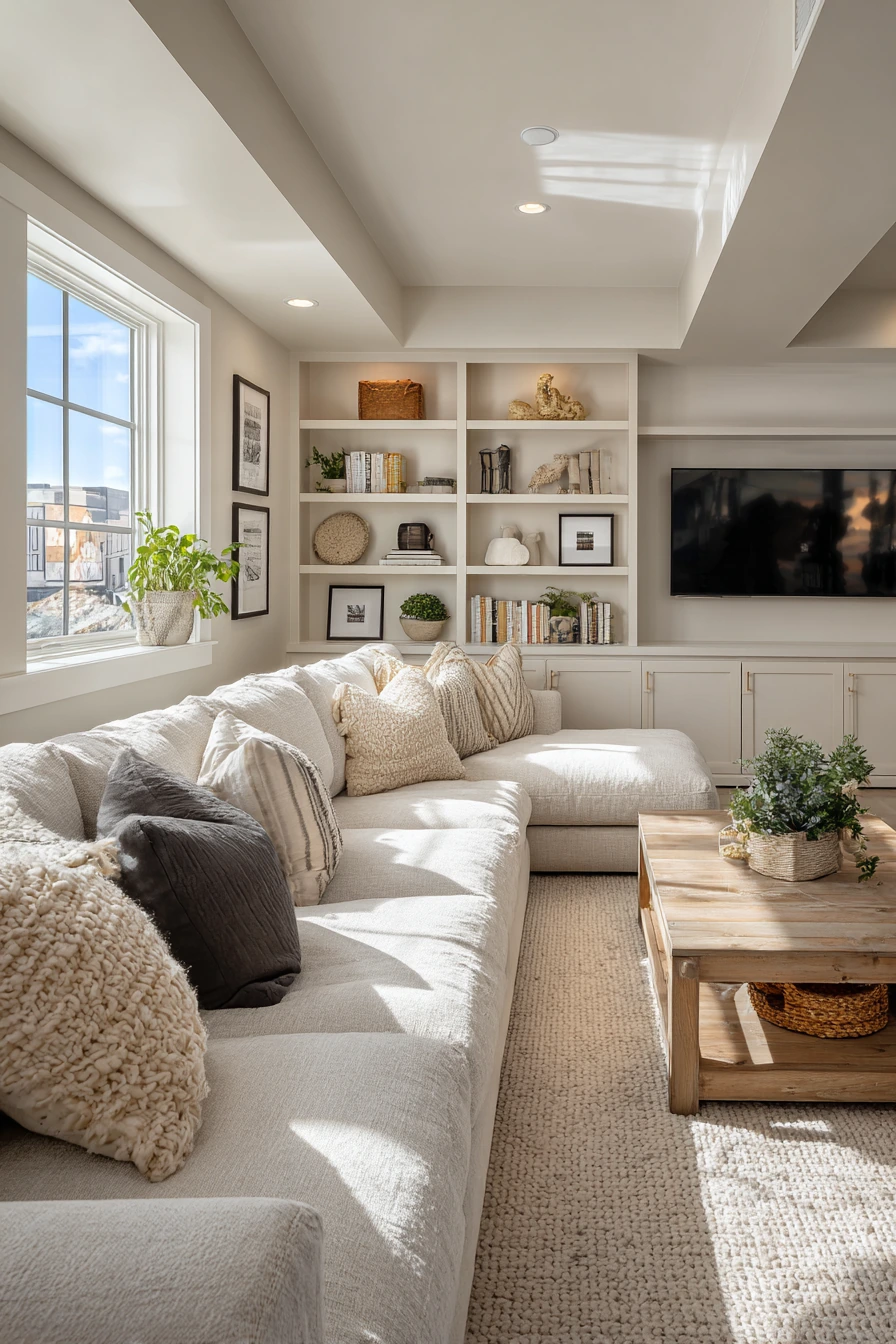
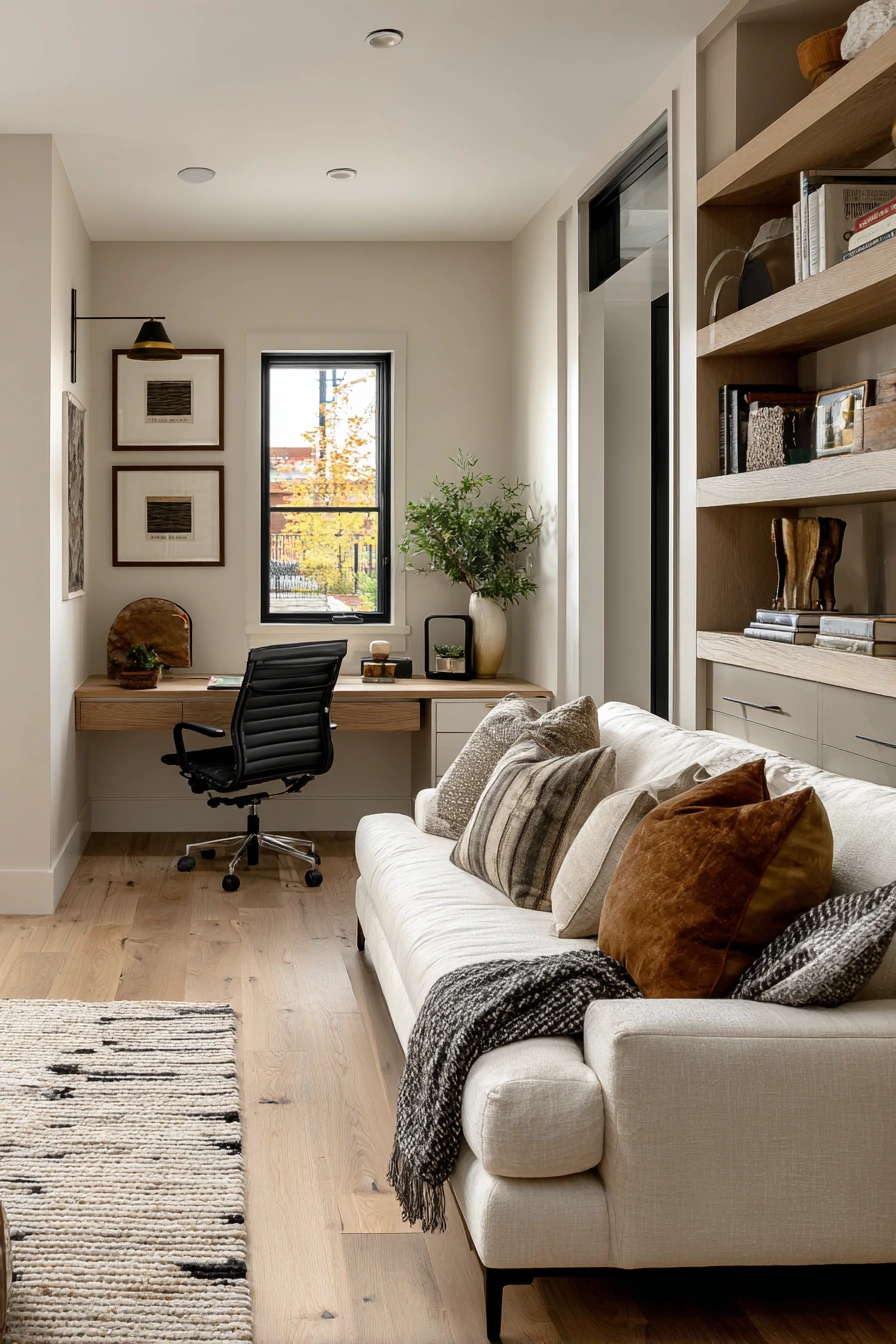
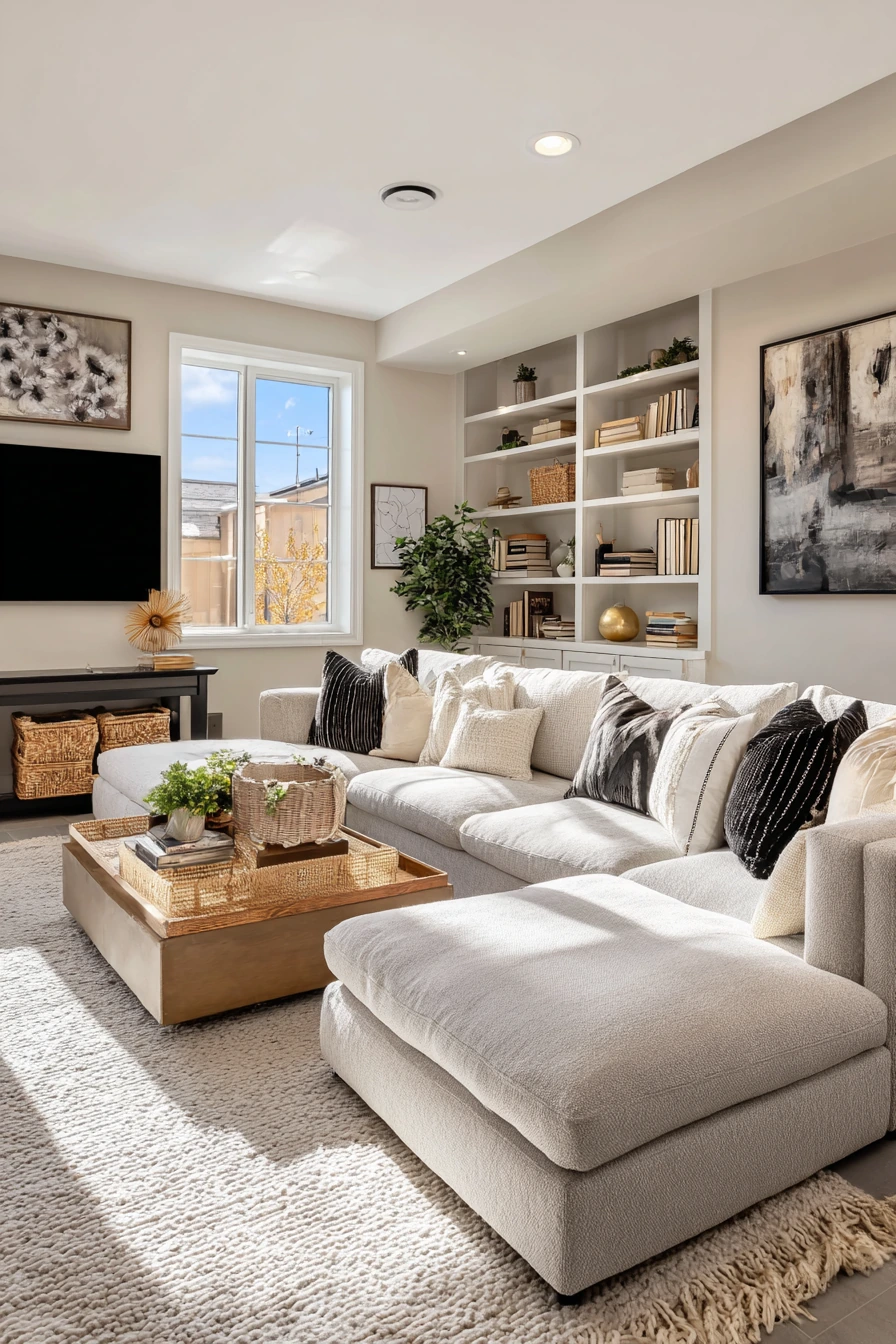
A finished basement entertainment room should be simple to use and easy to clean. Start with a large sectional sofa so the whole family can sit together. Place a coffee table in the center, and mount a flat-screen TV on the wall to free up floor space. Keep the layout open so kids can move around without bumping into sharp corners.
Soft neutral tones on the walls keep the room bright and help the TV wall feel less harsh. A thick area rug adds comfort and also helps with sound, which can bounce around in basement rooms. Decorative shelving is useful for books, artwork, and collectibles, but it also needs rules. Keep breakables on higher shelves and use bins on the bottom for toys, blankets, and gaming gear.
Sunlight from basement windows can make the room feel more normal and less like a lower level. Use light shades and keep the window area clear. Add a mix of lighting: recessed lights for overall brightness and a couple of lamps for warm corners. For styling, stick to a small color palette and repeat it in pillows, artwork, and a throw. That keeps the room modern and inviting without looking busy.
- Mount the TV at seated eye level for comfort.
- Choose a stain-resistant rug or a rug with a low pattern to hide spills.
- Use shelves to display a few items and store the rest in bins.
- Add a large tray on the coffee table to corral remotes and snacks.
- Pick round or oval tables if you have young kids.
Pro Design Tip: Add a second row of recessed lights behind the sofa to reduce screen glare and to keep faces lit during conversation.
Budget Considerations: If a new sectional is not in the budget, look for a used sofa and refresh it with washable slipcovers and new pillow covers in a matching set.

9. Cozy Basement Lounge with Built-In Bookshelves
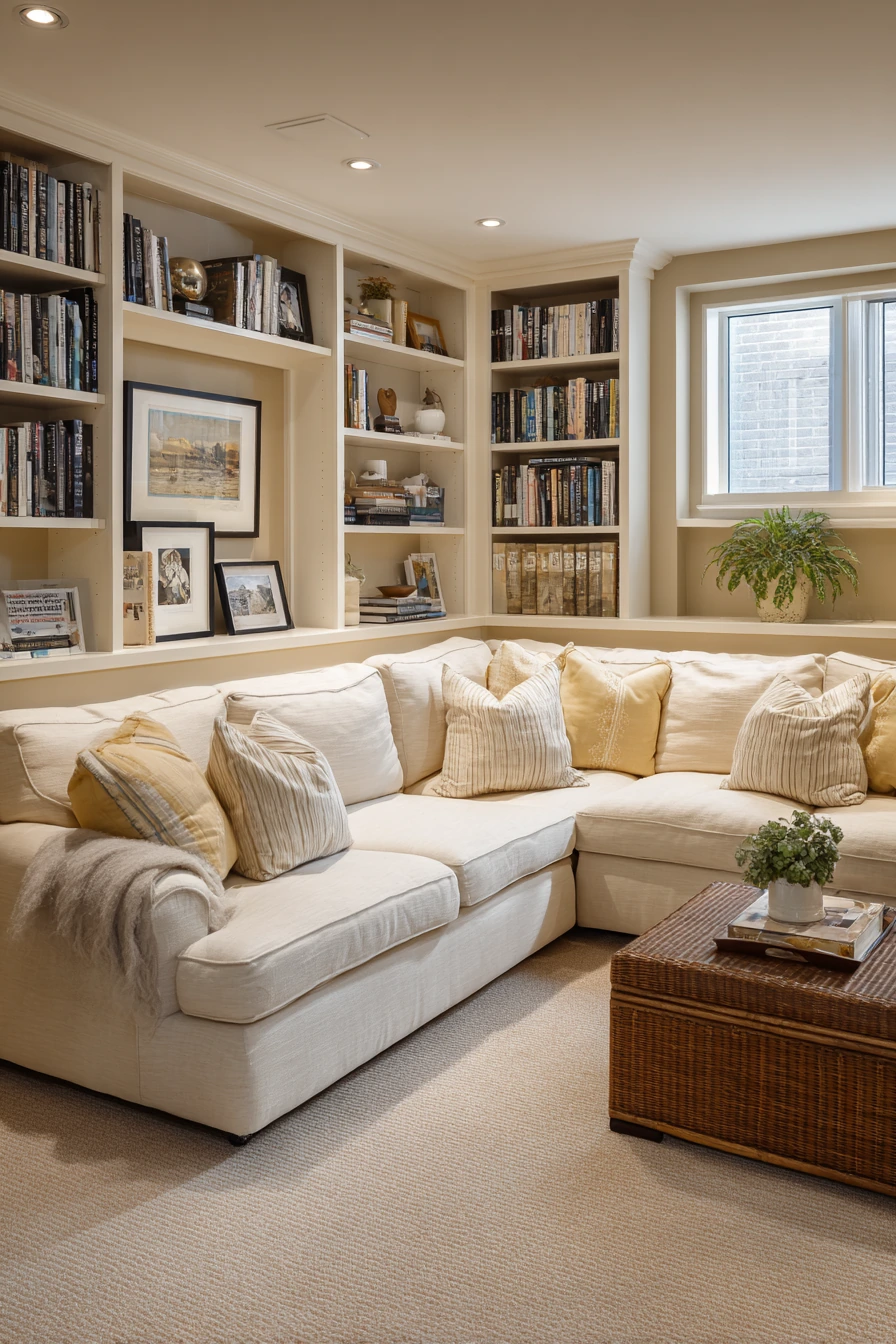
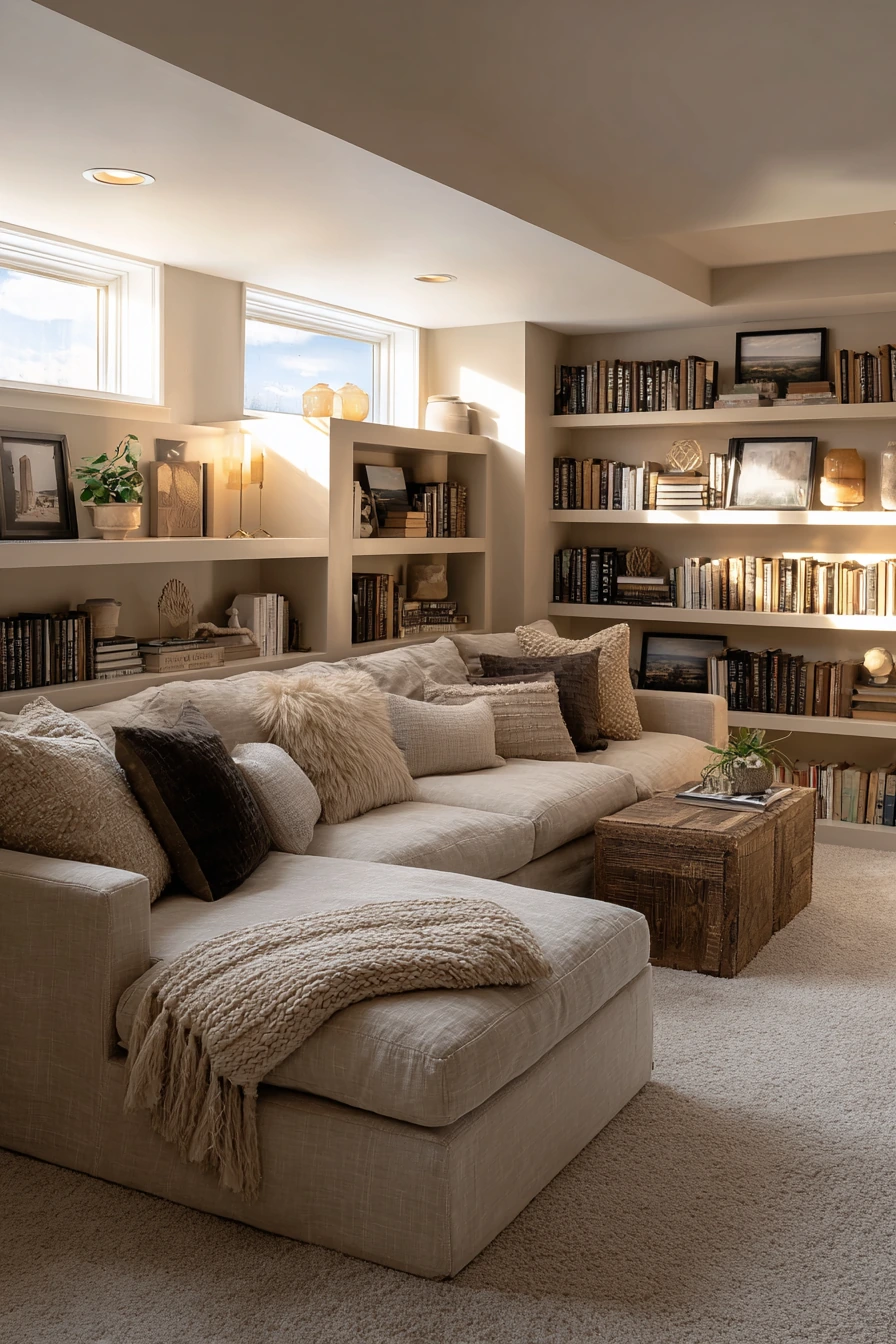
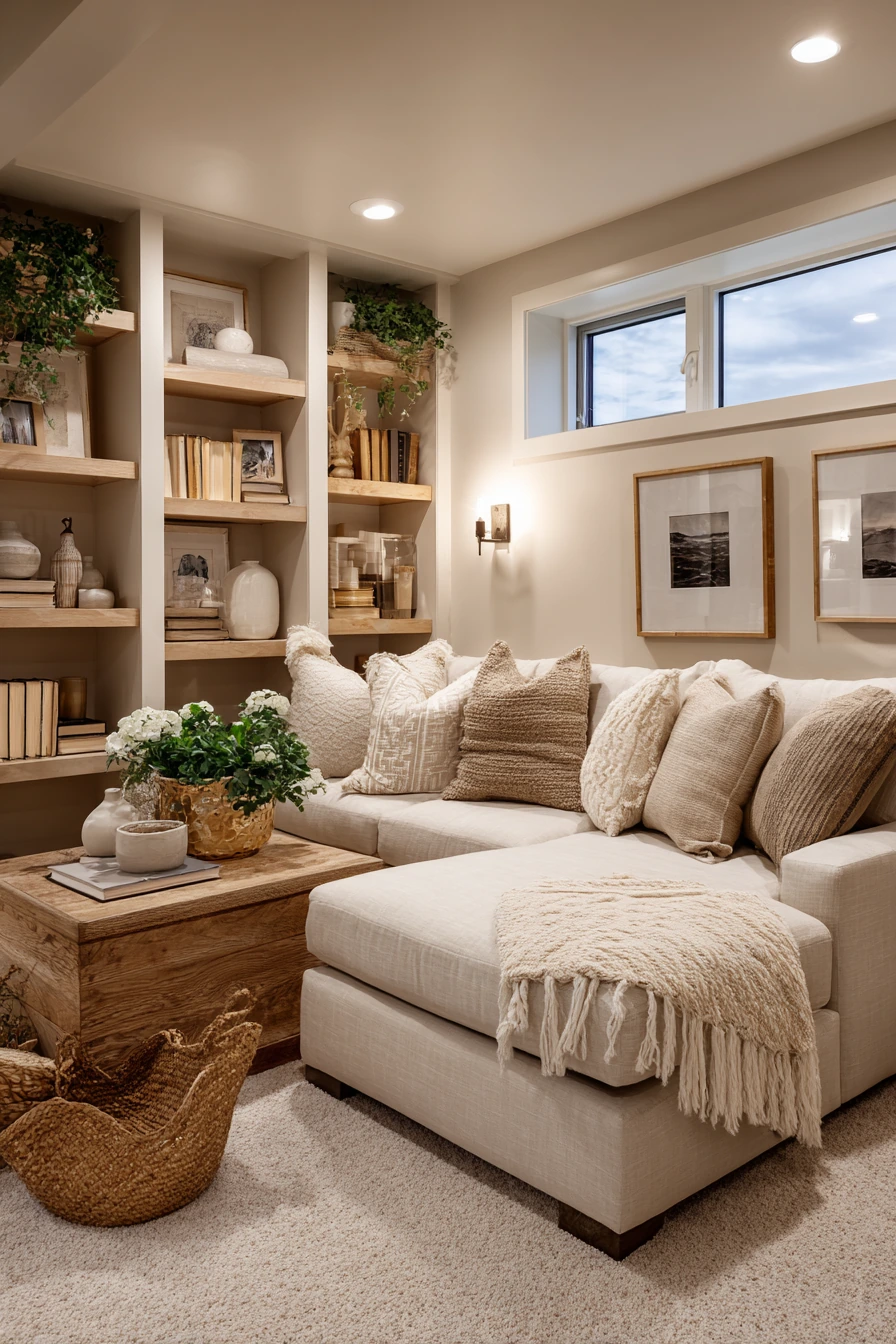
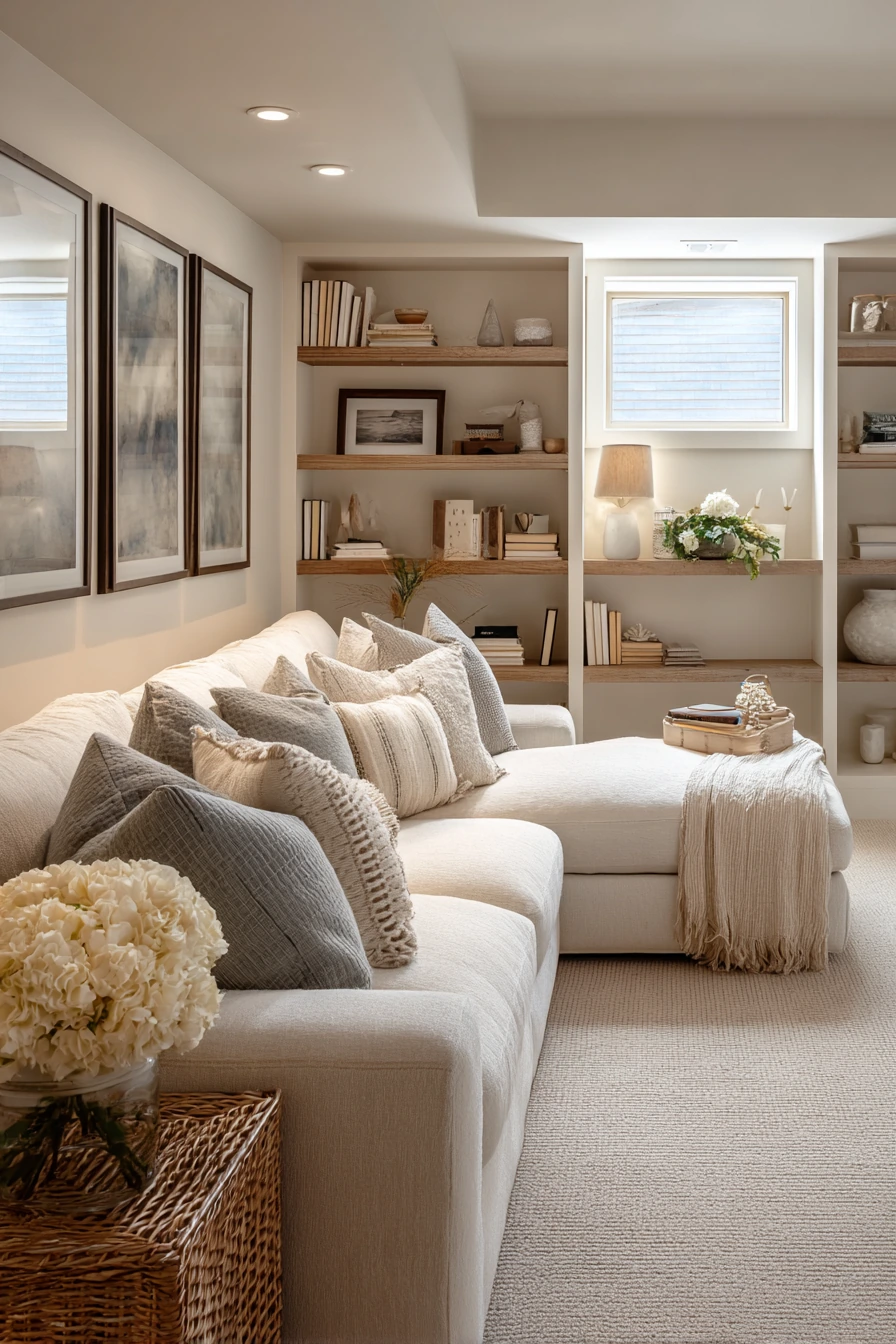
A cozy finished basement lounge with a reading corner is all about comfort. Carpeted flooring is a good choice if you want warmth and a quiet room. It also makes the space nicer for kids sitting on the floor. Use a sectional sofa with layered cushions so people can stretch out. Keep the seating close enough to talk, but leave a clear path to the shelves and the door.
Built-in shelving along one wall can hold a lot without taking up extra space. Fill it with books, framed photos, and a few decorative accents. The key is balance. Group books by height or color, then break it up with empty space and a few objects. If you have high windows, use that soft daylight to your advantage. Put the reading corner under the window with a small chair or a corner of the sectional, plus a floor lamp for night.
To style the room, use warm neutrals and add texture. Mix a knit throw, velvet or linen pillows, and a woven basket for extra blankets. Add a small side table near the reading spot for a drink and a book. If you want the room to feel more finished, add picture lights or small LED puck lights inside the shelves. That makes the bookshelves a feature and not just storage.
- Use carpet with a low pile for easier cleaning.
- Style built-ins with a mix of books, frames, and open space.
- Add a reading lamp with a warm bulb for comfort.
- Use baskets on the bottom shelves for hidden storage.
- Choose one accent color and repeat it in pillows and frames.
Pro Design Tip: Paint the back of the built-in shelves one shade darker than the wall to add depth without making the room feel smaller.
Budget Considerations: Custom built-ins can be expensive; a budget-friendly option is to line up bookcases, anchor them to the wall, and add trim and paint for a built-in look.
10. Minimalist Finished Basement Media Room


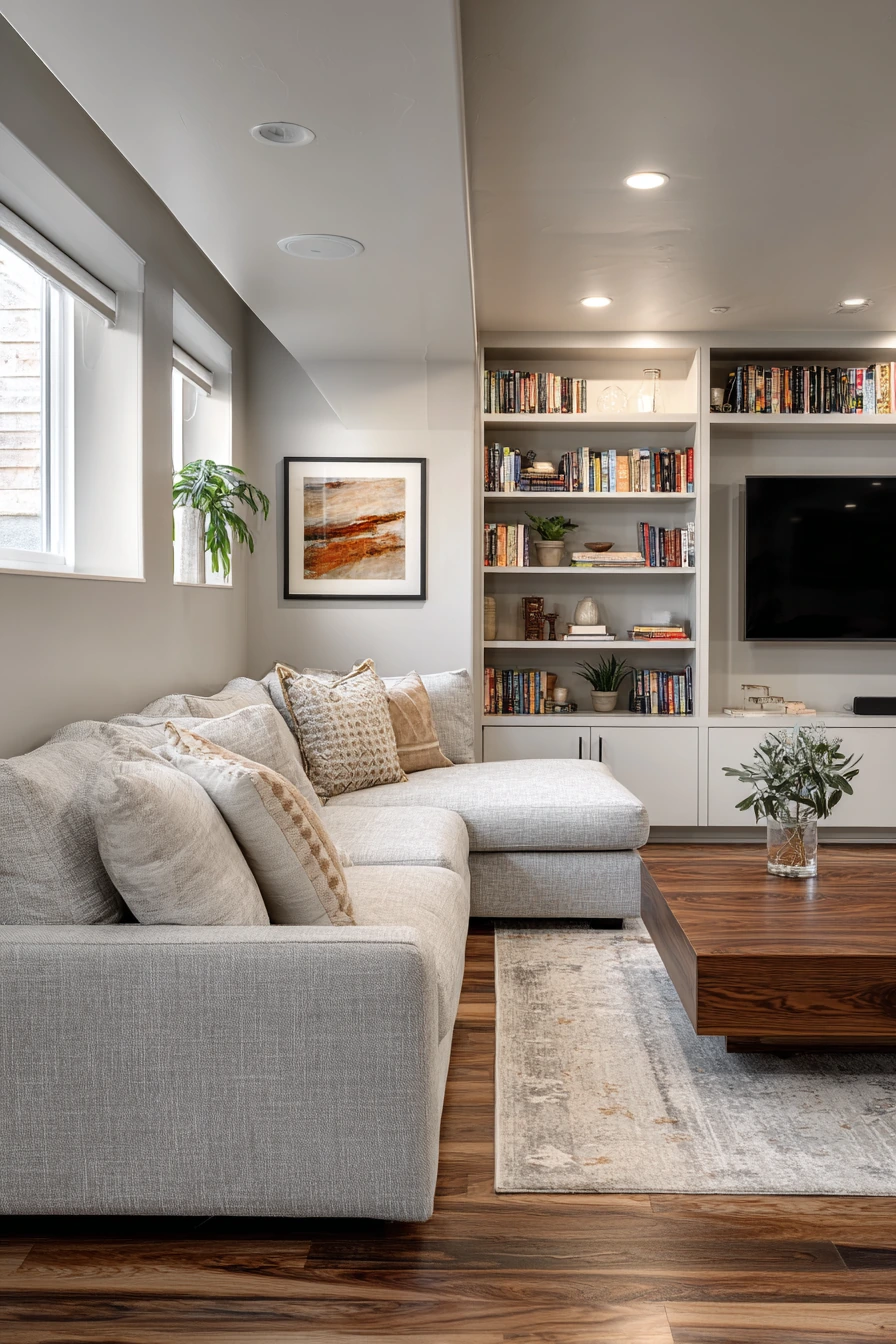
A stylish finished basement with modern minimalist design feels clean and calm. Start with light gray walls and polished wood flooring to keep things bright. Choose sleek furniture with simple shapes, like a sectional sofa with straight lines. Face it toward a media wall so the room has a clear purpose. Minimalism works best when every item has a job.
Open shelving can still fit a minimalist room if you keep it curated. Display a small set of books, one or two vases, and a few pieces of decor, then stop. Too many small items will make the shelves look messy. Use subtle lighting to create depth. Combine soft natural light from basement windows with recessed lights or a slim floor lamp. This mix helps the room feel airy and prevents dark corners.
For styling, focus on texture instead of lots of color. Add a rug with a simple pattern, a soft throw, and a couple of pillows in the same color family. Hide clutter with closed storage in a media console or baskets in a cabinet. Keep cords out of sight and mount the TV so the wall looks clean. When the room stays tidy, it will feel like a real living space, not just a basement.
- Keep the color palette to 2 to 3 main colors.
- Choose a rug that is large enough to fit under the front legs of the sectional.
- Use closed storage to hide games, blankets, and extra cables.
- Pick a few larger decor pieces instead of many small ones.
- Add dimmers to shift from bright light to movie light.
Pro Design Tip: Use the “one in, one out” rule on open shelves so the room stays curated and does not slowly turn into storage.
Budget Considerations: Minimalist spaces can be affordable because you buy fewer items; spend on a good rug and lighting, then use simple secondhand furniture with matching slipcovers.
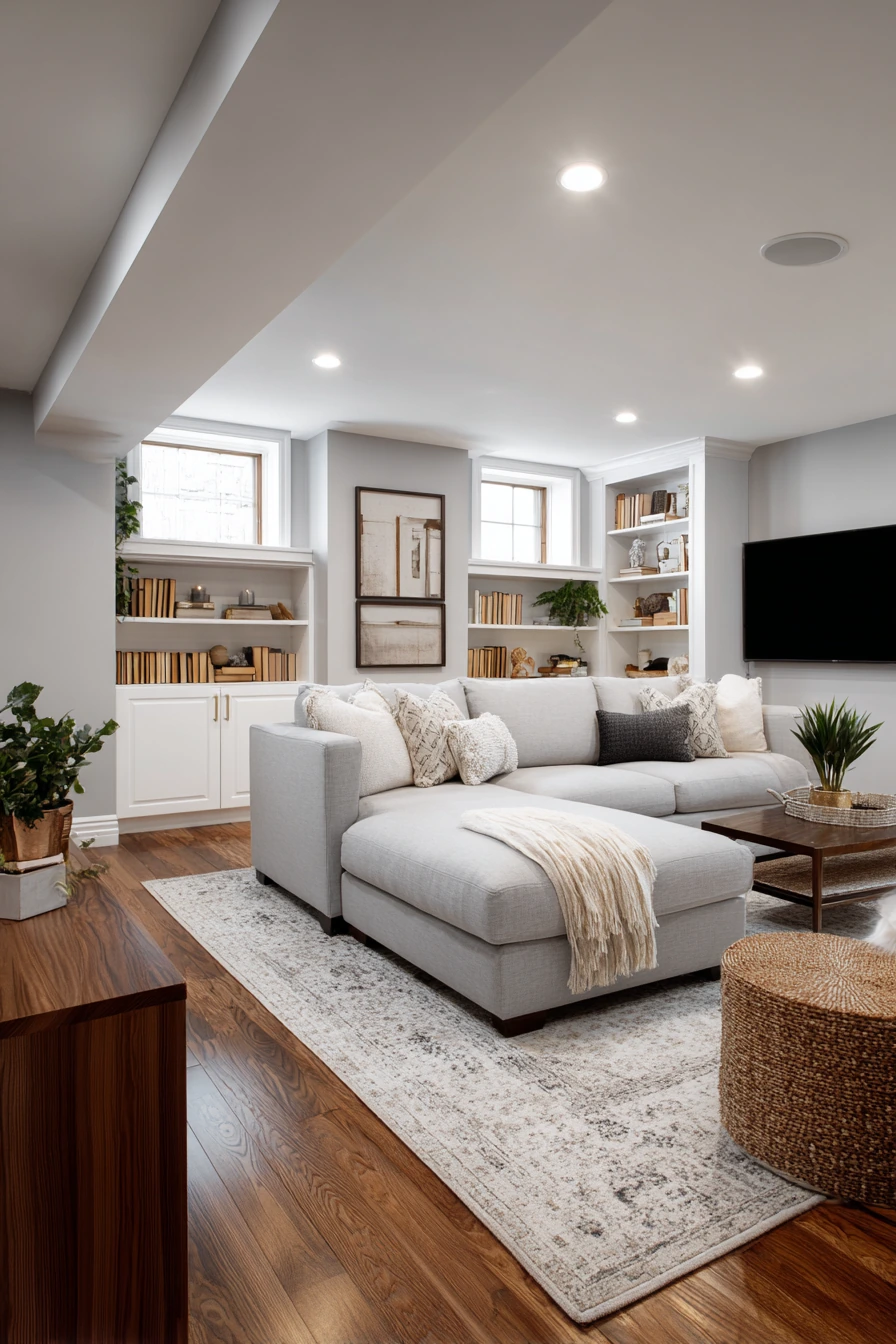
A finished basement can be bright, cozy, and practical when you plan the layout, lighting, and storage first. Pick the style that fits how you live, then copy the small styling steps to make it feel pulled together.
Before you buy furniture, measure the room, check ceiling height, and note where windows and outlets are. Then build your space in layers: floors, paint, lighting, rugs, seating, and shelving.
FAQ
1) What is the best flooring for a finished basement?
Luxury vinyl plank, laminate, and polished concrete are common choices because they handle moisture better than solid hardwood. Carpet works well for a cozy lounge if you manage humidity.
2) How can I make my basement feel brighter?
Use light wall colors, reflective finishes, and layered lighting. Keep window treatments simple so natural daylight can spread through the room.
3) Are egress windows worth it in a finished basement?
They can add safety, meet code for bedrooms, and bring in more natural light. Cost depends on your foundation and digging needs.
4) What lighting works best in a basement?
Recessed ceiling lighting on dimmers plus a few lamps for warm corners. Add task lighting in work areas and under-shelf lighting for depth.
5) How do I reduce echo in a basement media room?
Use a large rug, upholstered seating, curtains, and soft decor. Acoustic panels can help if the room still sounds hollow.
6) How should I arrange furniture in an open layout basement?
Create zones with rugs and furniture placement. Keep clear walkways and avoid pushing every item against the walls.
7) What is a low-cost way to add storage?
Use matching bookcases, cube shelves, and baskets. Paint them the same color as the wall to make the room look more built-in.
Use one idea from this list and build from there. Even small updates like a better rug, new lighting, and organized shelving can make a basement feel fully finished.